
HOW TO DETECT A BLACK HOLE Effects on
HOW TO DETECT A BLACK HOLE • Effects on matter/light outside the horizon – gravitational attraction of other bodies – “dark star” with mass • distinguish from normal star, white dwarf, neutron star • Accretion (swallowing) of gas – gas heated by compression/turbulence in strong gravity field X-rays – but need a source of gas • accretion from interstellar matter insignificant • mass transfer in binaries to the rescue
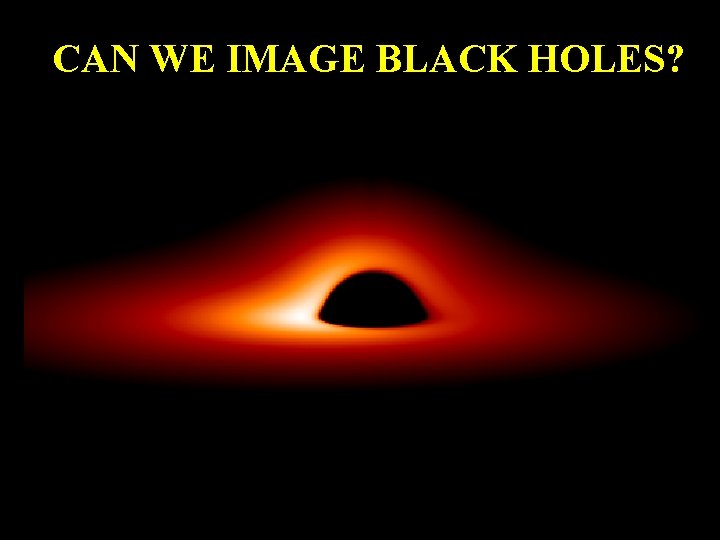
CAN WE IMAGE BLACK HOLES?
CAN WE IMAGE BLACK HOLES? …NOT YET, BUT SOMEDAY…? • HUBBLE: read newspaper @ 1 mile – Optical/UV telescope in space – Falls short by 100, 000 • VLBA: read newspaper in Philly – Transcontinental radio telescope – Falls short by 1, 000 • MAXIM: Read newspaper on moon – X-ray interferometer in space – Can do it! Ready for launch (? ) 2020 -2030
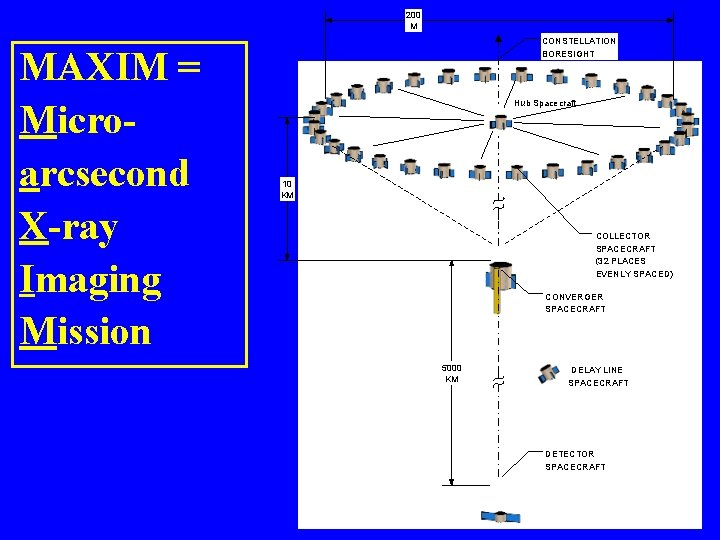
200 M MAXIM = Microarcsecond X-ray Imaging Mission CONSTELLATION BORESIGHT Hub Spacecraft 10 KM COLLECTOR SPACECRAFT (32 PLACES EVENLY SPACED) CONVERGER SPACECRAFT 5000 KM DELAY LINE SPACECRAFT DETECTOR SPACECRAFT
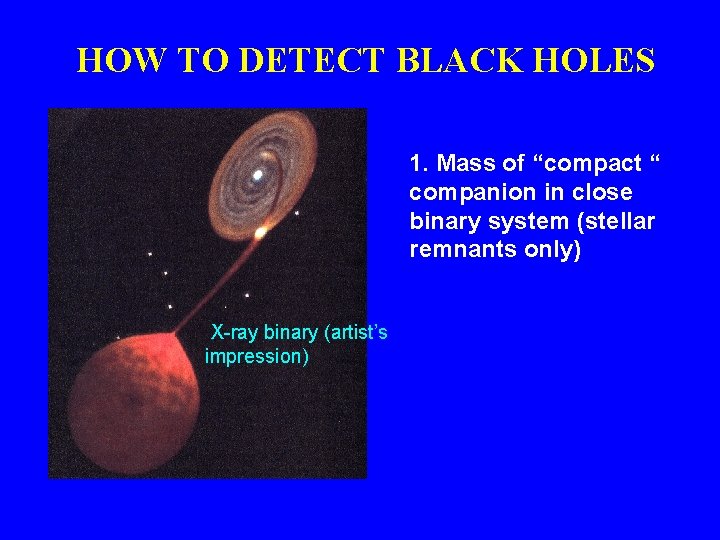
HOW TO DETECT BLACK HOLES 1. Mass of “compact “ companion in close binary system (stellar remnants only) X-ray binary (artist’s impression)
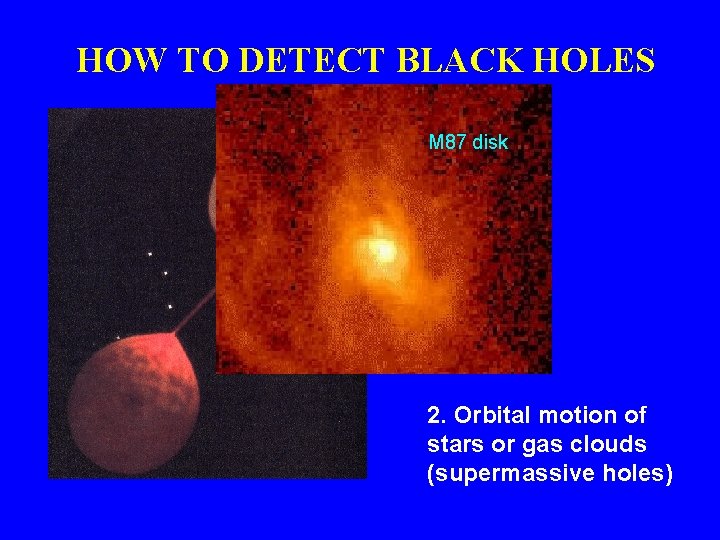
HOW TO DETECT BLACK HOLES M 87 disk 2. Orbital motion of stars or gas clouds (supermassive holes)
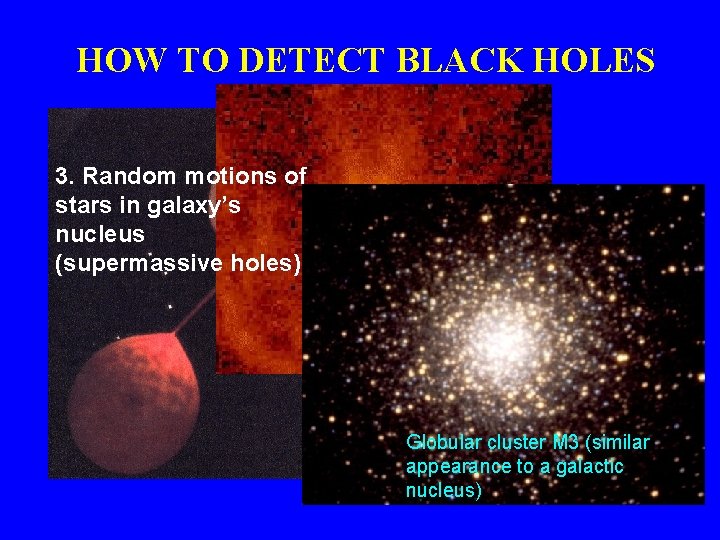
HOW TO DETECT BLACK HOLES 3. Random motions of stars in galaxy’s nucleus (supermassive holes) Globular cluster M 3 (similar appearance to a galactic nucleus)
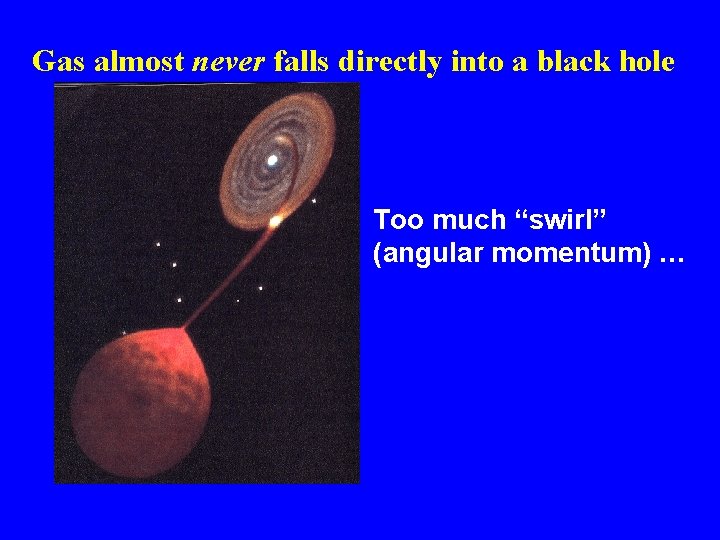
Gas almost never falls directly into a black hole Too much “swirl” (angular momentum) …
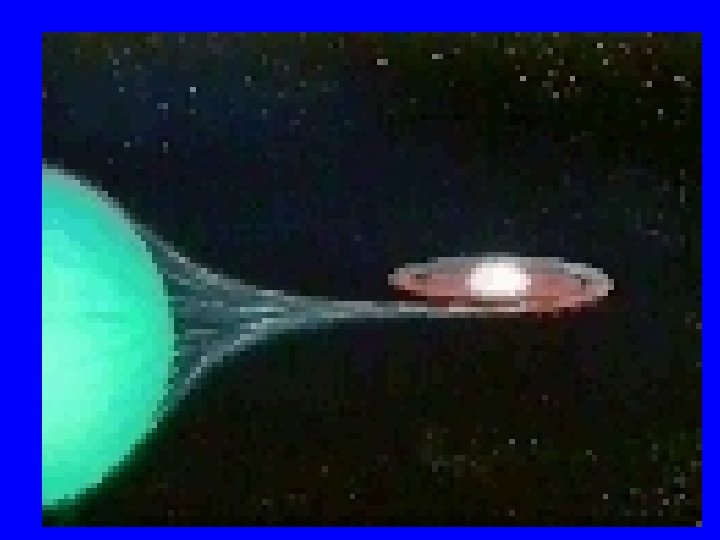
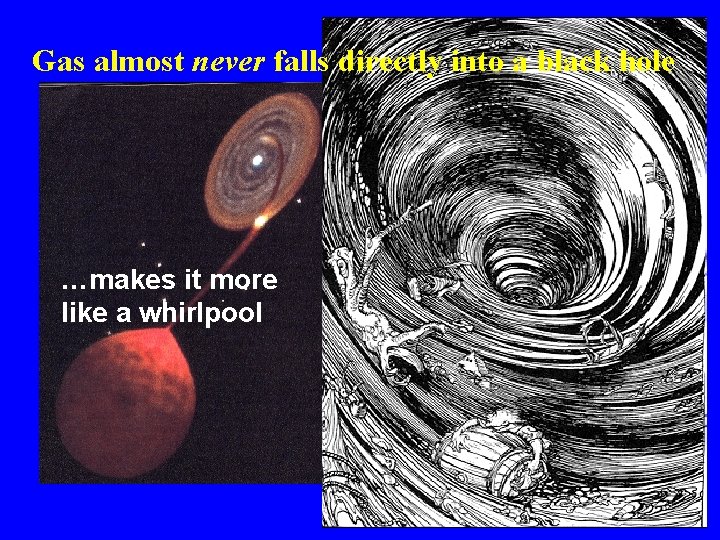
Gas almost never falls directly into a black hole …makes it more like a whirlpool Too much “swirl” (angular momentum) …
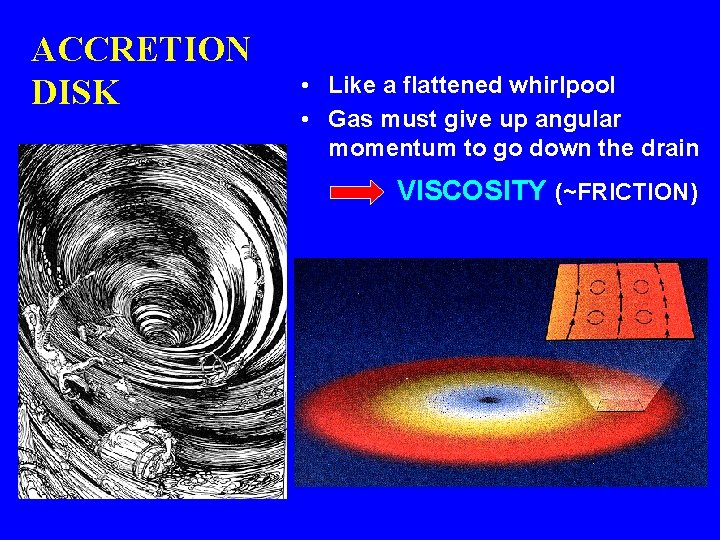
ACCRETION DISK • Like a flattened whirlpool • Gas must give up angular momentum to go down the drain VISCOSITY (~FRICTION)
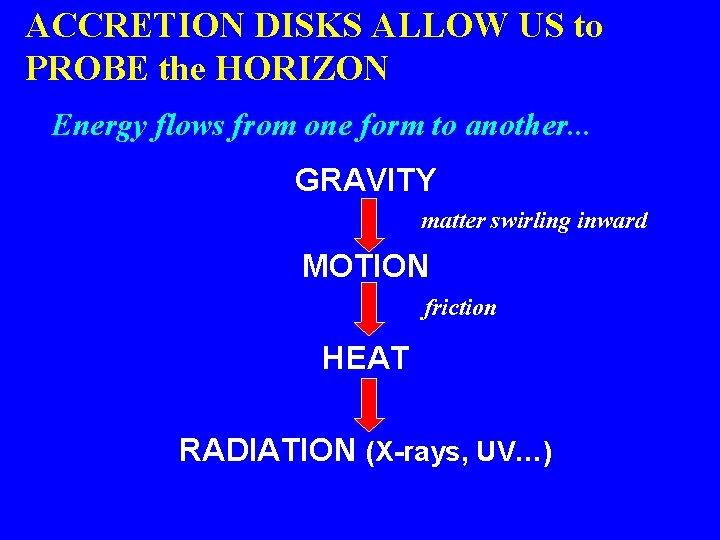
ACCRETION DISKS ALLOW US to PROBE the HORIZON Energy flows from one form to another. . . GRAVITY matter swirling inward MOTION friction HEAT RADIATION (X-rays, UV…)
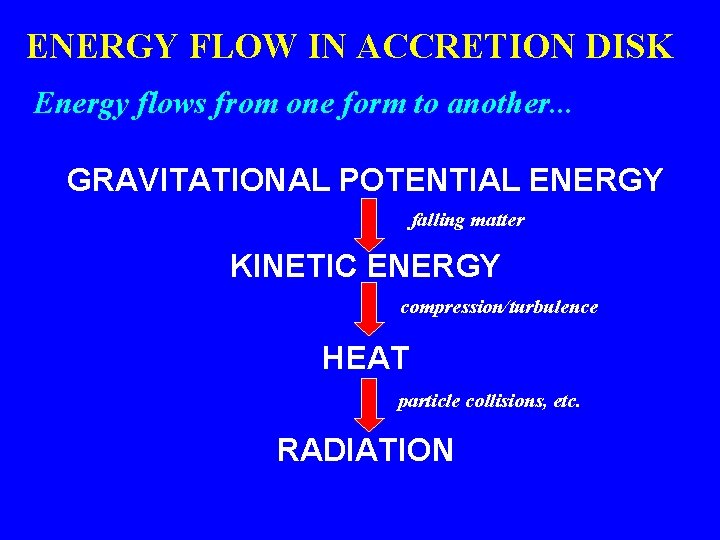
ENERGY FLOW IN ACCRETION DISK Energy flows from one form to another. . . GRAVITATIONAL POTENTIAL ENERGY falling matter KINETIC ENERGY compression/turbulence HEAT particle collisions, etc. RADIATION
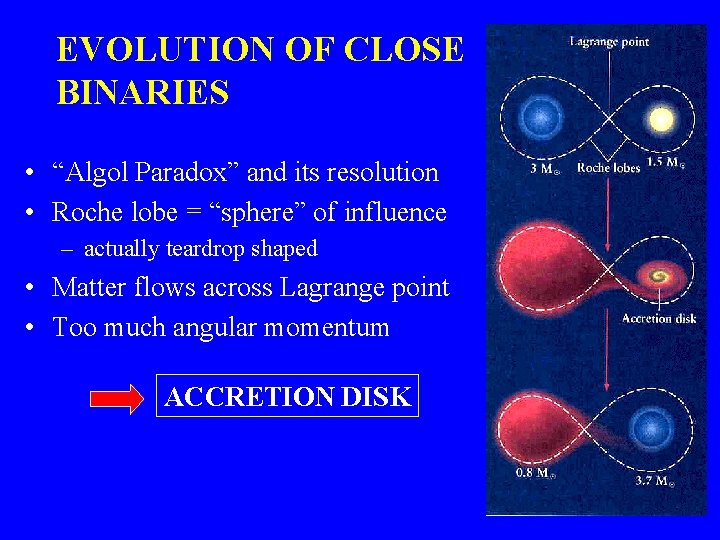
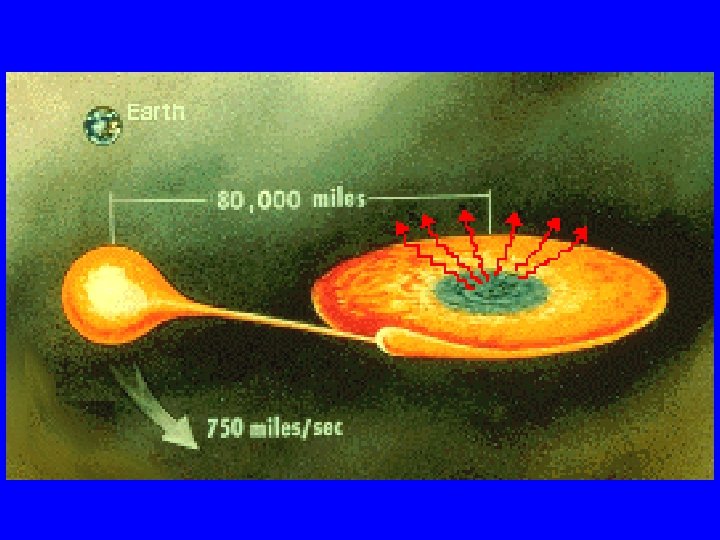
EVOLUTION OF CLOSE BINARIES • “Algol Paradox” and its resolution • Roche lobe = “sphere” of influence – actually teardrop shaped • Matter flows across Lagrange point • Too much angular momentum ACCRETION DISK
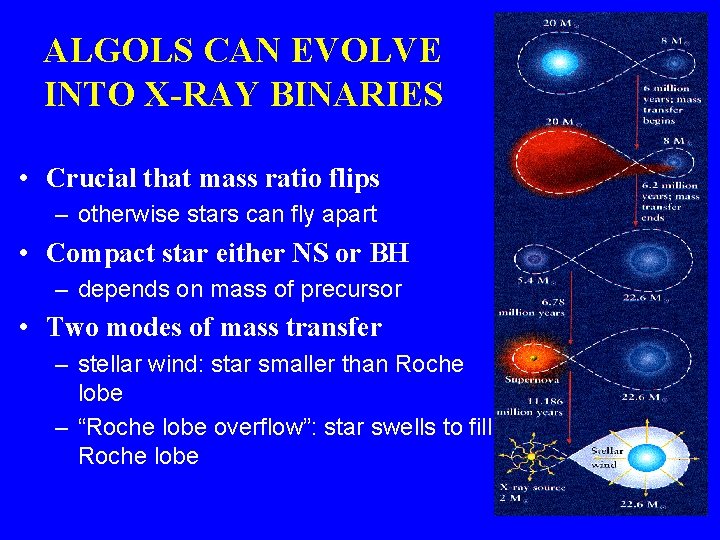
ALGOLS CAN EVOLVE INTO X-RAY BINARIES • Crucial that mass ratio flips – otherwise stars can fly apart • Compact star either NS or BH – depends on mass of precursor • Two modes of mass transfer – stellar wind: star smaller than Roche lobe – “Roche lobe overflow”: star swells to fill Roche lobe
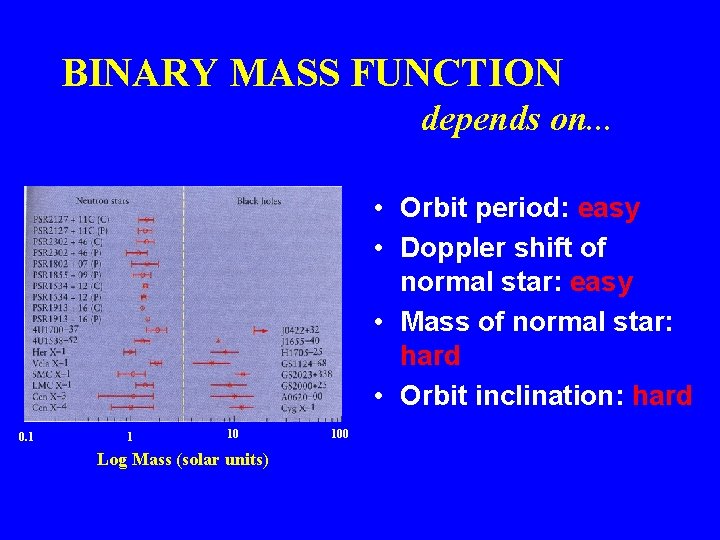
BINARY MASS FUNCTION depends on. . . • Orbit period: easy • Doppler shift of normal star: easy • Mass of normal star: hard • Orbit inclination: hard 0. 1 1 10 Log Mass (solar units) 100
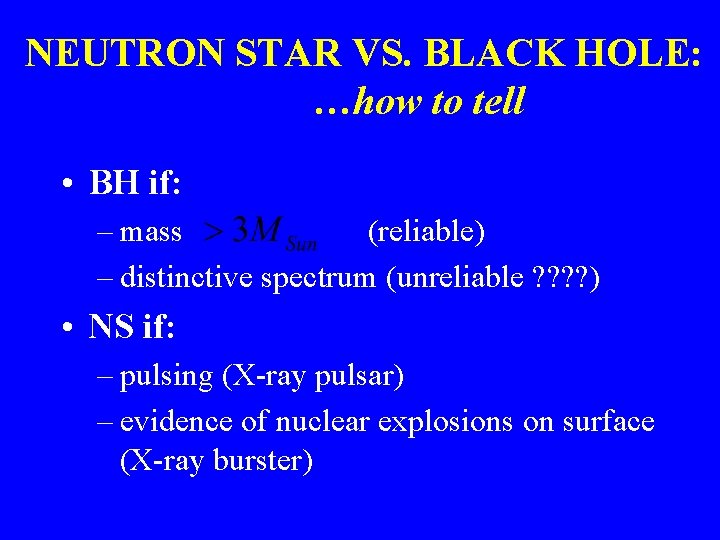
NEUTRON STAR VS. BLACK HOLE: …how to tell • BH if: – mass (reliable) – distinctive spectrum (unreliable ? ? ) • NS if: – pulsing (X-ray pulsar) – evidence of nuclear explosions on surface (X-ray burster)
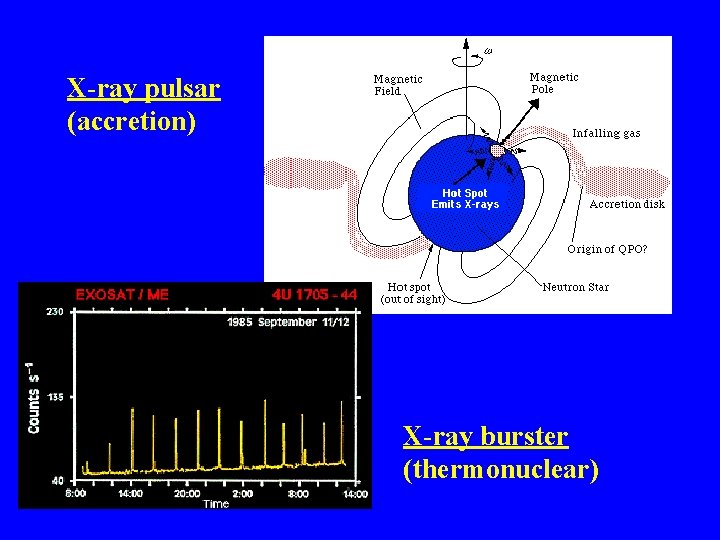
X-ray pulsar (accretion) X-ray burster (thermonuclear)
- Slides: 20