
How to design and organize a public deliberation
How to design and organize a public deliberation project Gy Larsen Ida-Elisabeth Larsen The Danish Board of Technology
How to design and organize a public deliberation project • Structure of presentation – What kind of issue/problem? – – What role is the project going to play? – Purposes? – How to select an issue? – Who are going to be involved? – What kind of methodology is possible and/or necessary?
Technology means: • engineering and technics – and • conditions surrounding their application. Ideally then • a solution to a problem. solves more problems than it creates.
Issues - examples • New applications to gene technology – new gene plants • Toxicology and Nanotechnology • Sustainable urban living • Surveillance • Energy system – future development • Brain Science – new development and uses
Proactive – Reactive TA • upcoming technology • regulation of technology • dissemintation and wider use of technology
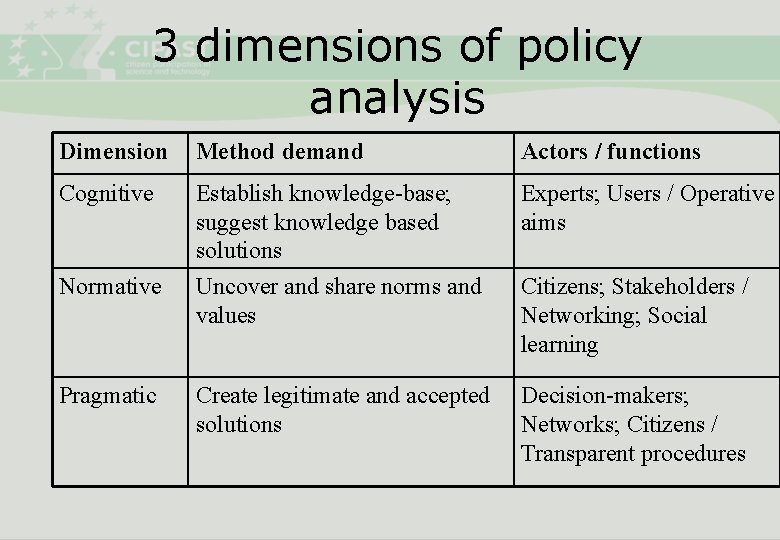
3 dimensions of policy analysis Dimension Method demand Actors / functions Cognitive Establish knowledge-base; suggest knowledge based solutions Uncover and share norms and values Experts; Users / Operative aims Create legitimate and accepted solutions Decision-makers; Networks; Citizens / Transparent procedures Normative Pragmatic Citizens; Stakeholders / Networking; Social learning
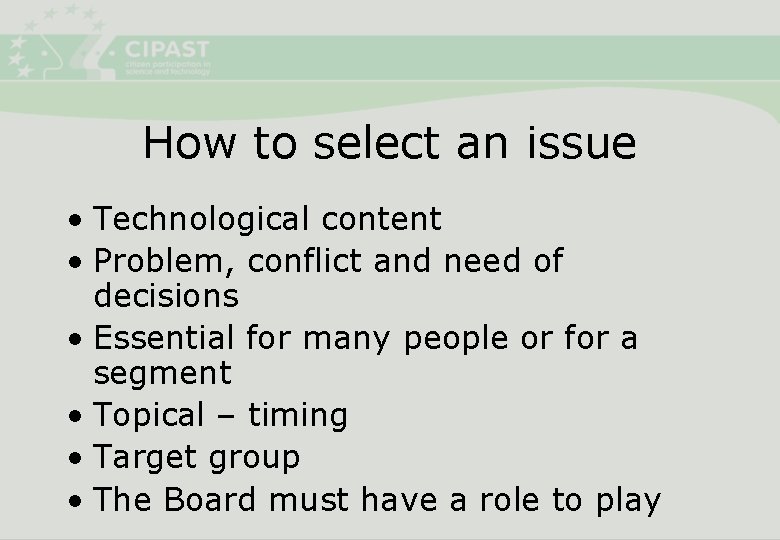
How to select an issue • Technological content • Problem, conflict and need of decisions • Essential for many people or for a segment • Topical – timing • Target group • The Board must have a role to play
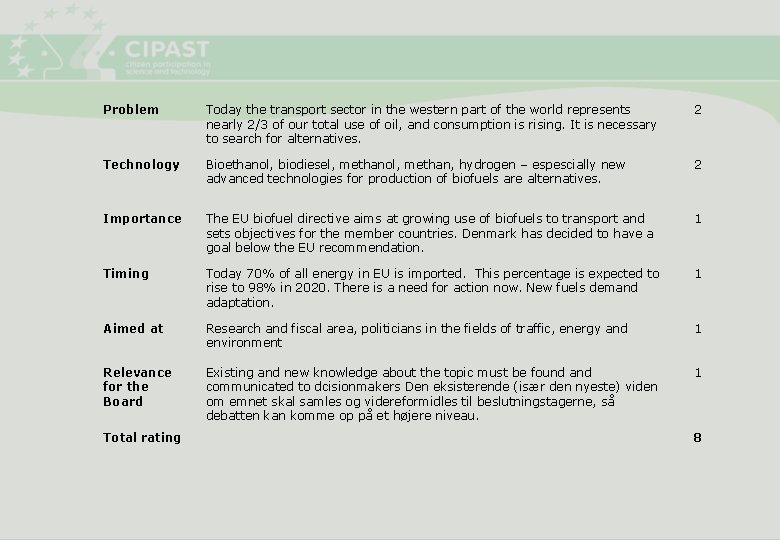
Problem Today the transport sector in the western part of the world represents nearly 2/3 of our total use of oil, and consumption is rising. It is necessary to search for alternatives. 2 Technology Bioethanol, biodiesel, methanol, methan, hydrogen – espescially new advanced technologies for production of biofuels are alternatives. 2 Importance The EU biofuel directive aims at growing use of biofuels to transport and sets objectives for the member countries. Denmark has decided to have a goal below the EU recommendation. 1 Timing Today 70% of all energy in EU is imported. This percentage is expected to rise to 98% in 2020. There is a need for action now. New fuels demand adaptation. 1 Aimed at Research and fiscal area, politicians in the fields of traffic, energy and environment 1 Relevance for the Board Existing and new knowledge about the topic must be found and communicated to dcisionmakers Den eksisterende (især den nyeste) viden om emnet skal samles og videreformidles til beslutningstagerne, så debatten kan komme op på et højere niveau. 1 Total rating 8
Who should be involved? • • • Is new knowledge and solutions needed? Do we know too little about public opinion? Is it time for new agenda setting? A conflict in society dealing with the issue? Do politicians need an advice? Or?
Considerations • An expert group process • Stakeholder involvement • Citizen consultation • Involving politicians • Or?
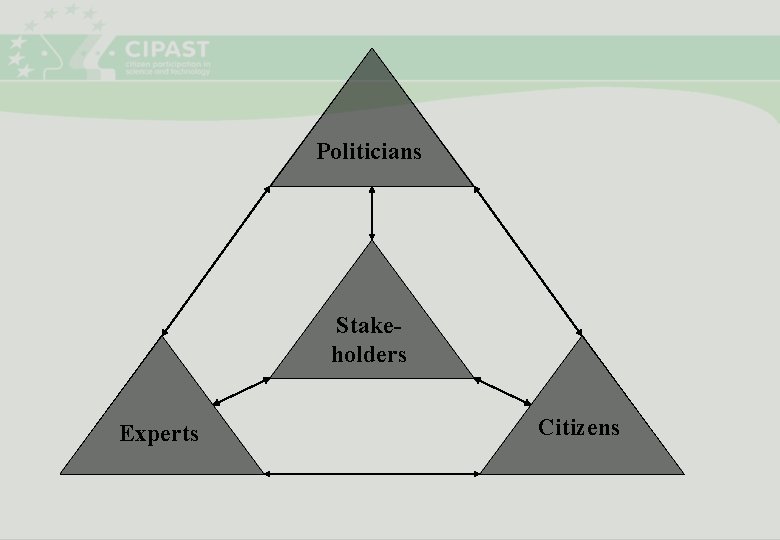
Politicians Stakeholders Experts Citizens
Laypeople • Lack of knowledge – a vessel to be filled with expert information • No, laypeople do have knowledge and engagement in society • Laypeople have their own perspective on technology
Democratic dimension • Expert have to communicate with and not only to citizens • There is a worry in society to deal with • Interaction between citizens and the representative democracy • New knowledge to stakeholders from citizens on controversial matters
Goals when involving citizens • Proactive discussions on upstream technologies • Consultation on how to use technology • Debate resistance in society against technology • To involve the involved
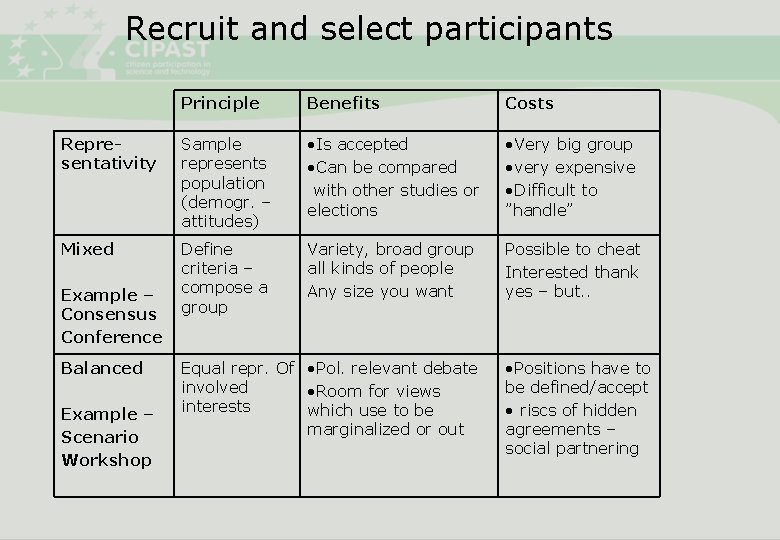
Recruit and select participants Principle Benefits Costs Representativity Sample represents population (demogr. – attitudes) • Is accepted • Can be compared with other studies or elections • Very big group • very expensive • Difficult to ”handle” Mixed Define criteria – compose a group Variety, broad group all kinds of people Any size you want Possible to cheat Interested thank yes – but. . Example – Consensus Conference Balanced Example – Scenario Workshop Equal repr. Of • Pol. relevant debate involved • Room for views interests which use to be marginalized or out • Positions have to be defined/accept • riscs of hidden agreements – social partnering
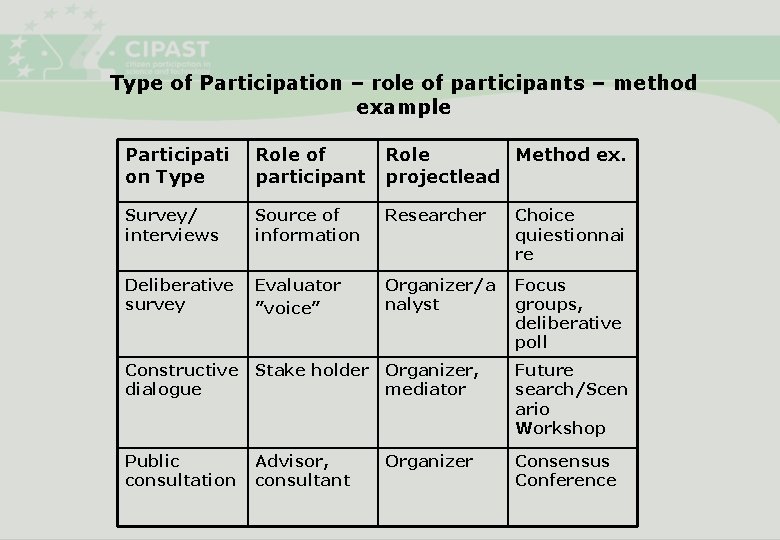
Type of Participation – role of participants – method example Participati on Type Role of participant Role Method ex. projectlead Survey/ interviews Source of information Researcher Choice quiestionnai re Deliberative survey Evaluator ”voice” Organizer/a nalyst Focus groups, deliberative poll Constructive dialogue Stake holder Organizer, mediator Future search/Scen ario Workshop Public consultation Advisor, consultant Organizer Consensus Conference
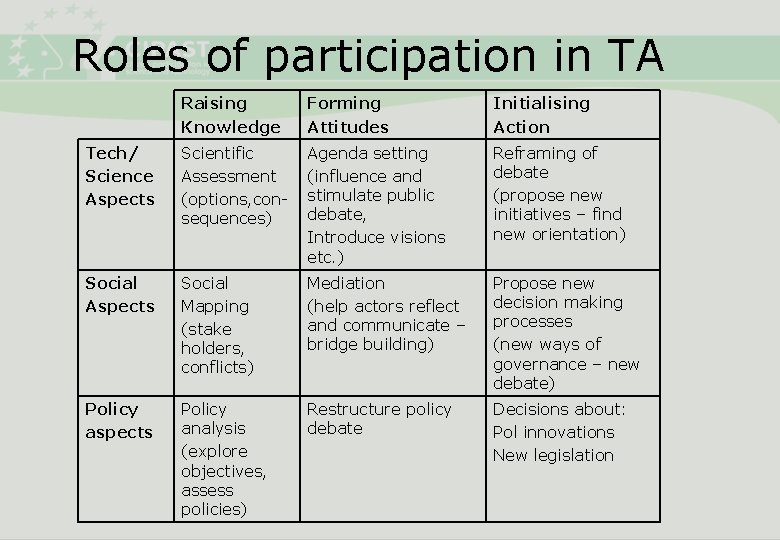
Roles of participation in TA Raising Knowledge Forming Attitudes Initialising Action Tech/ Science Aspects Scientific Assessment (options, consequences) Agenda setting (influence and stimulate public debate, Introduce visions etc. ) Reframing of debate (propose new initiatives – find new orientation) Social Aspects Social Mapping (stake holders, conflicts) Mediation (help actors reflect and communicate – bridge building) Propose new decision making processes (new ways of governance – new debate) Policy aspects Policy analysis (explore objectives, assess policies) Restructure policy debate Decisions about: Pol innovations New legislation
Be aware of pitfalls • Do not underestimate citizens or other participants • Hidden conflicts • Too narrow and unreflected use of methods • Method not suitable for local problems • Forget to involve some important actors • A mistake to avoid the critical voices
- Slides: 18