
How to Design a Safe and Efficient Science
- Slides: 20
How to Design a Safe and Efficient Science Laboratory
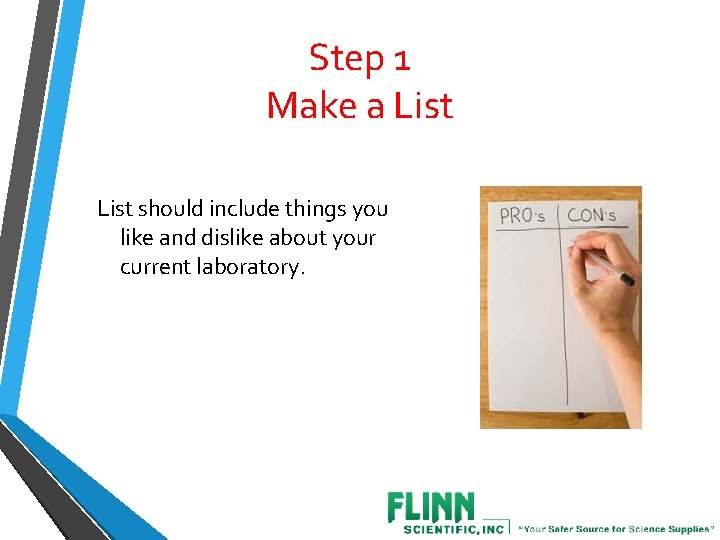
Step 1 Make a List should include things you like and dislike about your current laboratory.
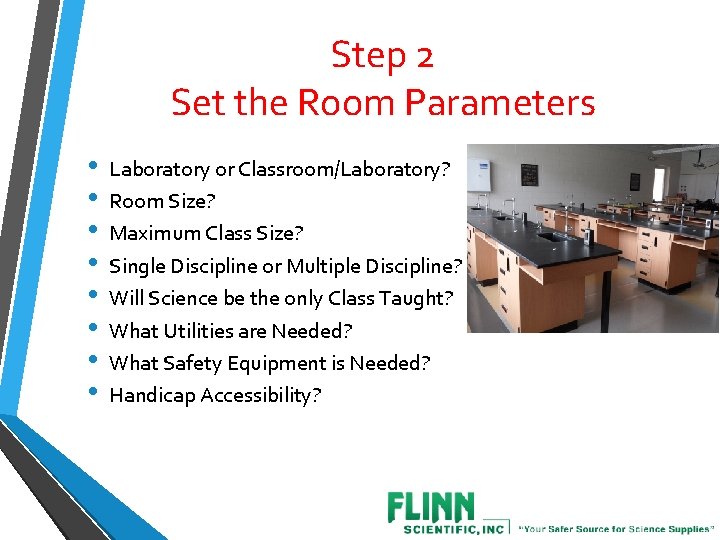
Step 2 Set the Room Parameters • • Laboratory or Classroom/Laboratory? Room Size? Maximum Class Size? Single Discipline or Multiple Discipline? Will Science be the only Class Taught? What Utilities are Needed? What Safety Equipment is Needed? Handicap Accessibility?
Step 3 List all the features you would like included in your new laboratory. • Be sure to include all those items you liked about your current lab from. • Build the list as if money was no object. • Think about how science will be taught 20 -30 years from now.
Step 4 Visit Schools • Find out what schools have built new science facilities in your area and arrange a visit. • If possible visit schools that have worked with the architect your school is using. • Take pictures! • Talk with teachers using the new laboratories.
Step 5 Research Laboratory Furniture and Designs • Contact Laboratory Furniture Companies for furnishing and design ideas. • See if any or all of them will work with you to develop a layout of your room.
Step 6 Develop a List of Priorities • Develop lists for laboratory and storage/preparation areas. • Remember different science disciplines (chemistry, biology, physics, STEM) will have different priorities.
Why are Priorities Important? • Priorities keep focus on what are the important features of the laboratory. • Priorities give direction to architects, builders, and planners. • Priorities help with making the tough budget decisions. • Priorities help to prevent important items from being left off the plan.
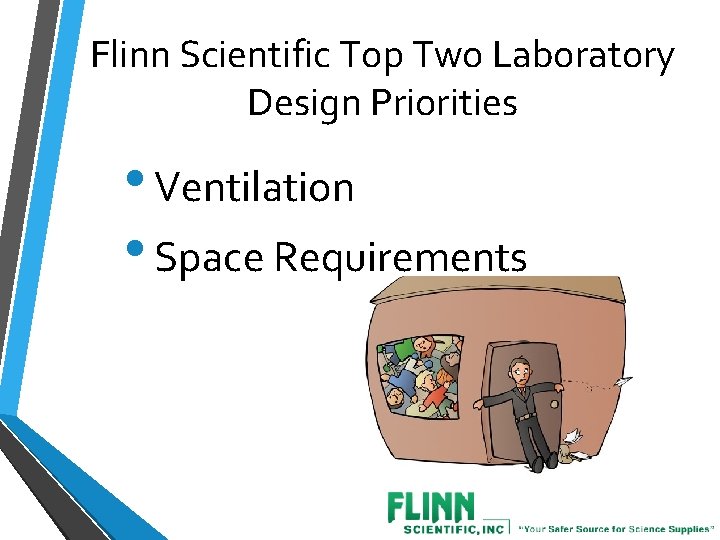
Flinn Scientific Top Two Laboratory Design Priorities • Ventilation • Space Requirements
Ventilation • Important for the safety of you and your students. • Overlooked in the planning phase. • Required by Federal OSHA • • • OSHA 1910. 1450 Appendix A OSHA 1910. 106 (d)(4)(iv)
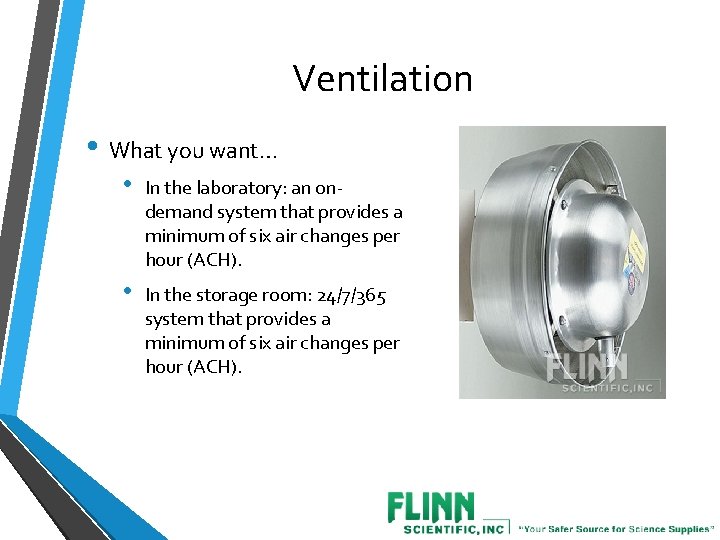
Ventilation • What you want… • In the laboratory: an ondemand system that provides a minimum of six air changes per hour (ACH). • In the storage room: 24/7/365 system that provides a minimum of six air changes per hour (ACH).
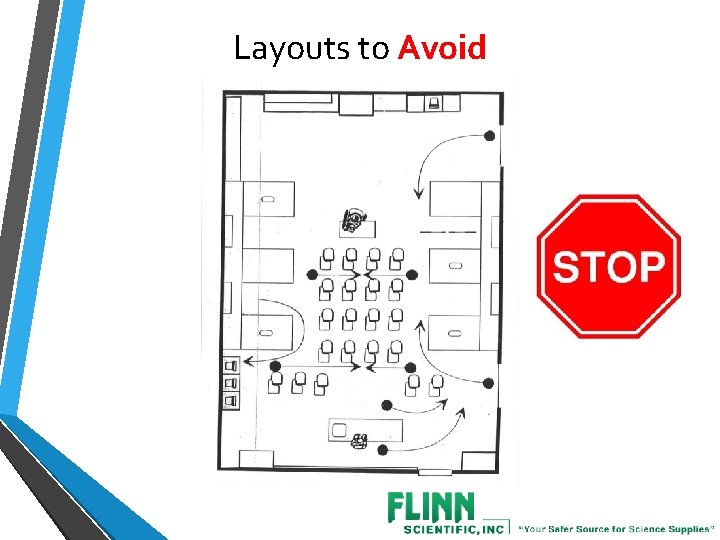
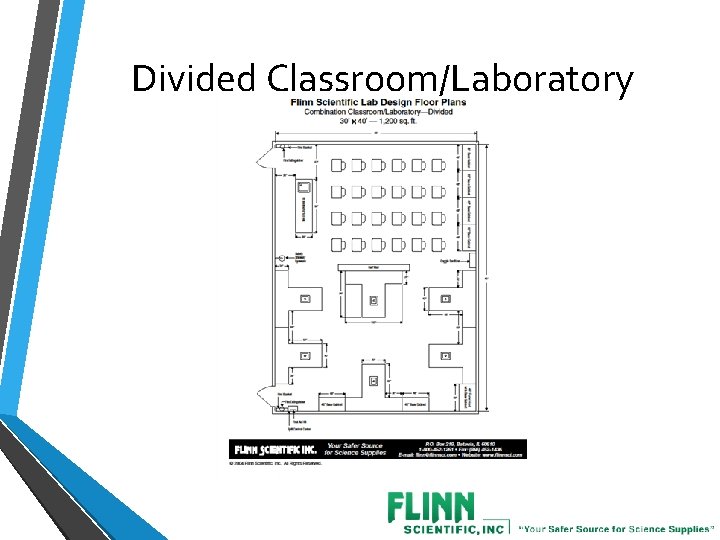
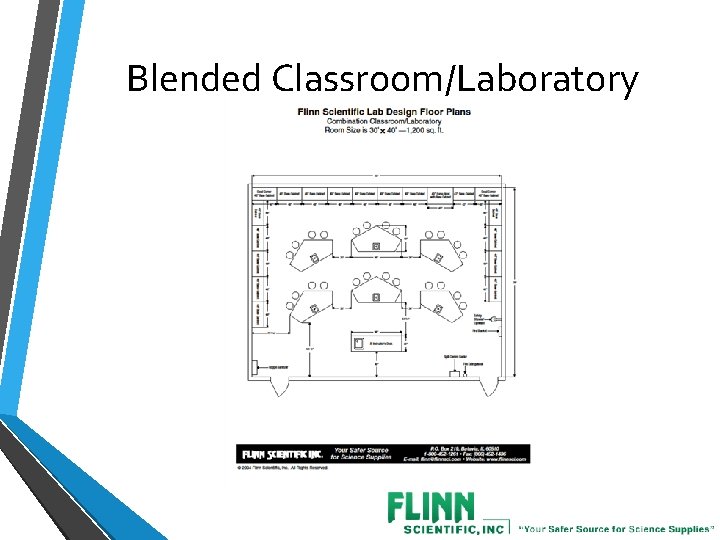
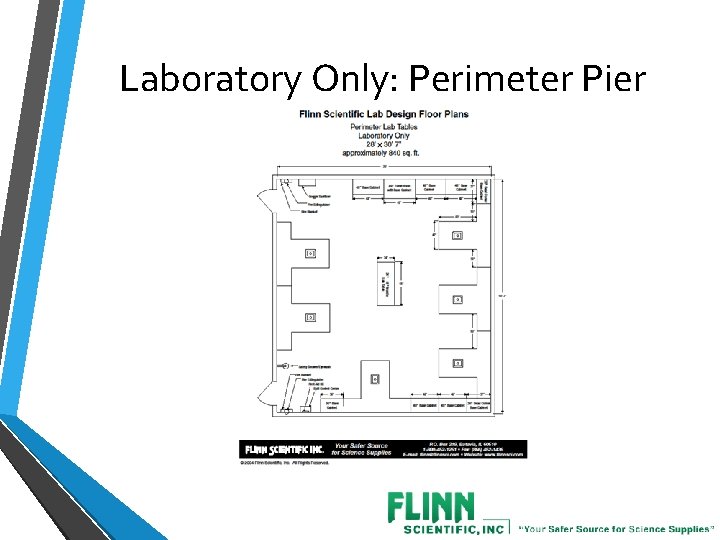
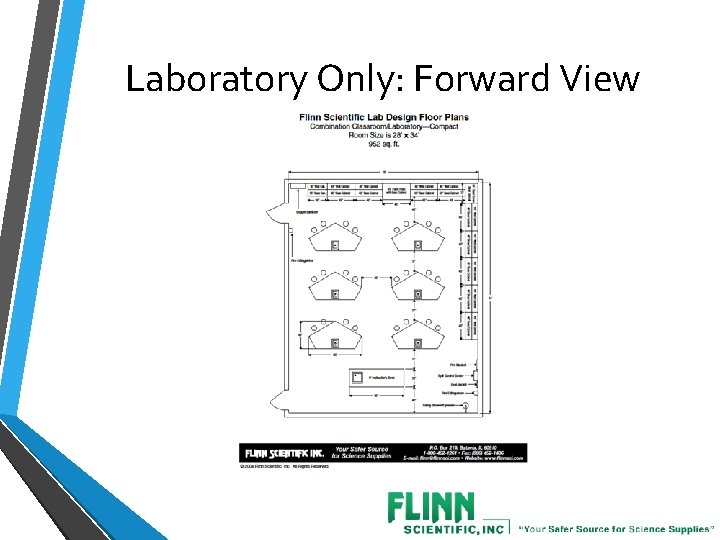
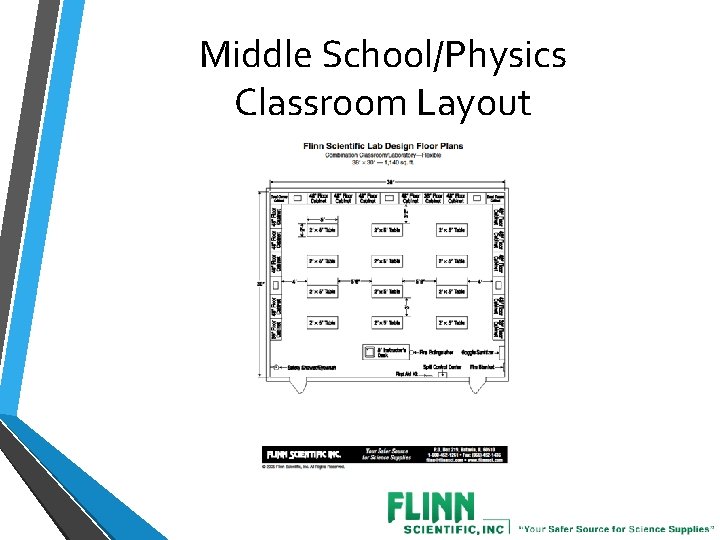
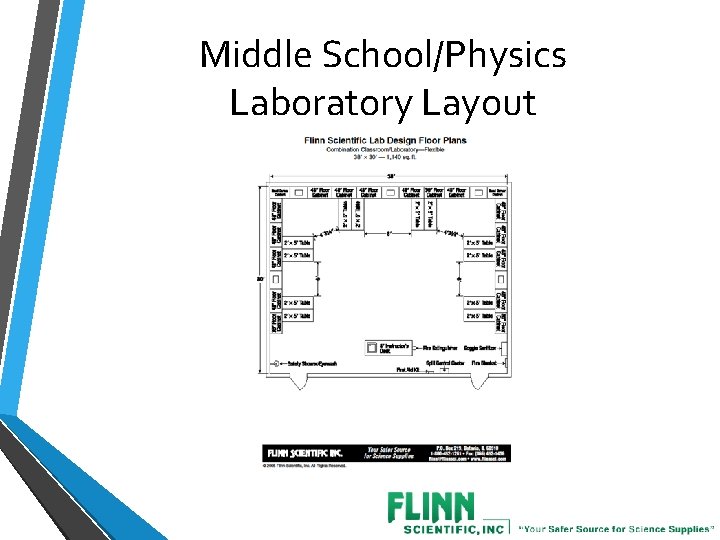
Space Requirements • An optimal educational science laboratory should provide: • 45 sq. ft. – 50 sq. ft. per student for a dedicated laboratory room or middle school. • 60 sq. ft. per student for a dedicated combination classroom/laboratory room. • • Clear routes of travel. Good sight line for supervision.
Layouts to Avoid
Divided Classroom/Laboratory
Blended Classroom/Laboratory
Laboratory Only: Perimeter Pier
Laboratory Only: Forward View
Middle School/Physics Classroom Layout
Middle School/Physics Laboratory Layout
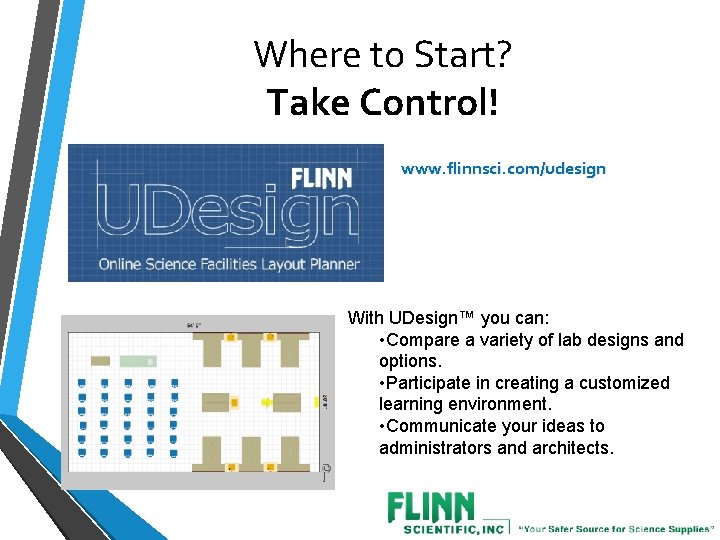
Where to Start? Take Control! www. flinnsci. com/udesign With UDesign™ you can: • Compare a variety of lab designs and options. • Participate in creating a customized learning environment. • Communicate your ideas to administrators and architects.