
How to deliver effective Group Training Share a







- Slides: 32
How to deliver effective Group Training
Share a memory of a learning experience you have benefitted from. Explain why it was an effective learning experience and what it was about the experience that enabled you to learn in a way that worked for you. For example: • • • Lesson at school or college Learning to drive or other practical skill Attending a training course
What do you want from today and what will success look like for you?
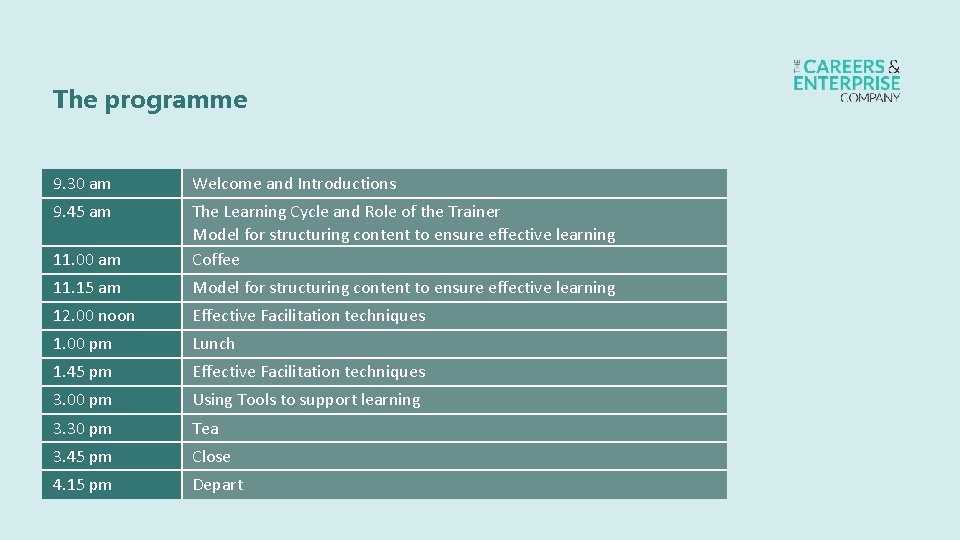
The programme 9. 30 am Welcome and Introductions 9. 45 am 11. 00 am The Learning Cycle and Role of the Trainer Model for structuring content to ensure effective learning Coffee 11. 15 am Model for structuring content to ensure effective learning 12. 00 noon Effective Facilitation techniques 1. 00 pm Lunch 1. 45 pm Effective Facilitation techniques 3. 00 pm Using Tools to support learning 3. 30 pm Tea 3. 45 pm Close 4. 15 pm Depart
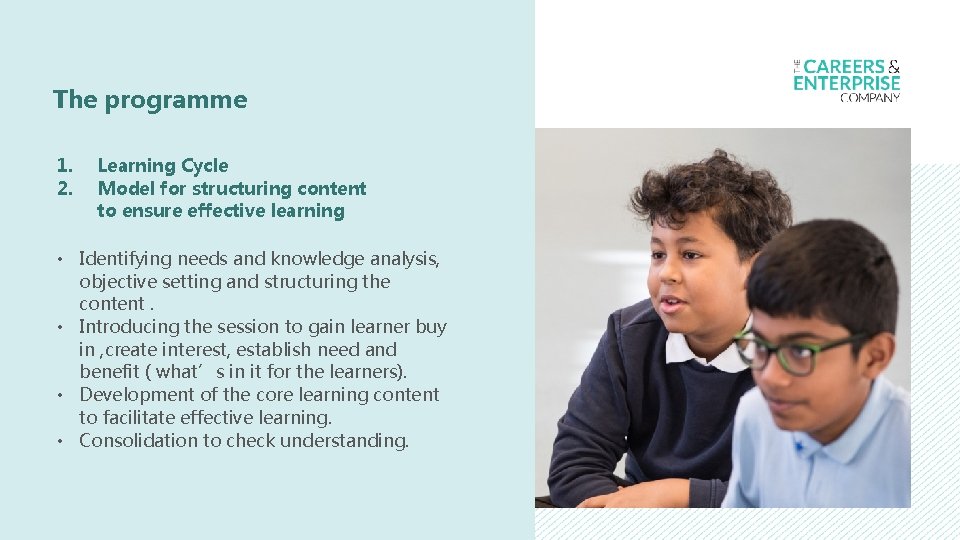
The programme 1. 2. Learning Cycle Model for structuring content to ensure effective learning • Identifying needs and knowledge analysis, objective setting and structuring the content. • Introducing the session to gain learner buy in , create interest, establish need and benefit ( what’s in it for the learners). • Development of the core learning content to facilitate effective learning. • Consolidation to check understanding.
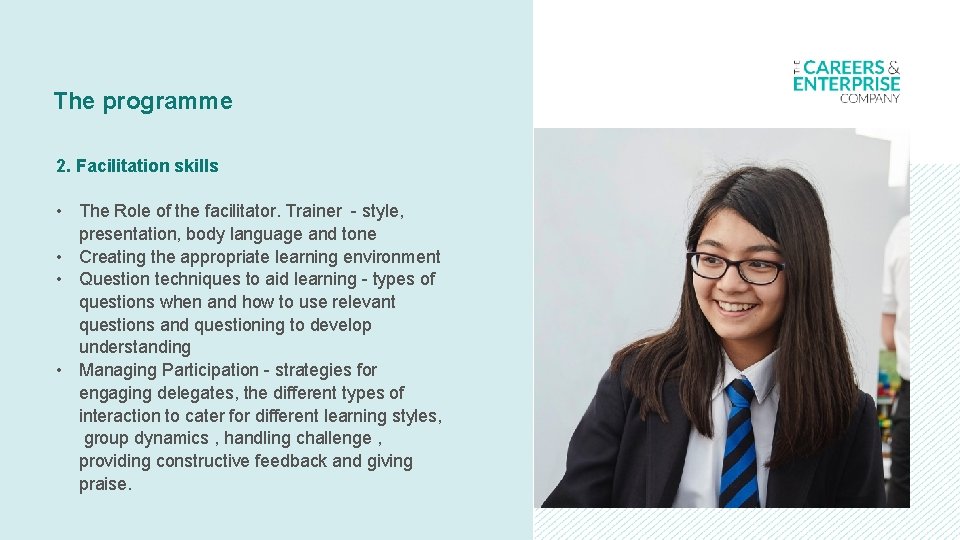
The programme 2. Facilitation skills • The Role of the facilitator. Trainer - style, presentation, body language and tone • Creating the appropriate learning environment • Question techniques to aid learning - types of questions when and how to use relevant questions and questioning to develop understanding • Managing Participation - strategies for engaging delegates, the different types of interaction to cater for different learning styles, group dynamics , handling challenge , providing constructive feedback and giving praise.
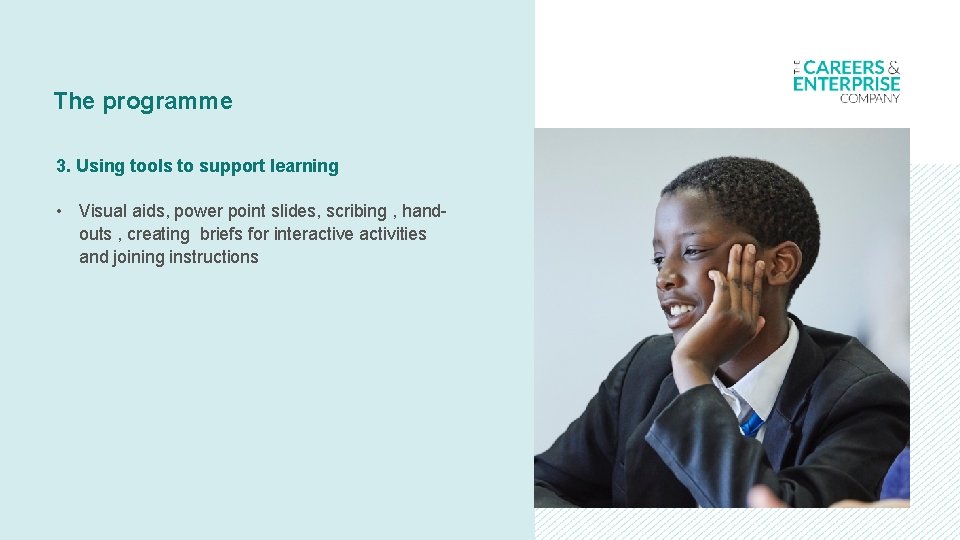
The programme 3. Using tools to support learning • Visual aids, power point slides, scribing , handouts , creating briefs for interactive activities and joining instructions
Session aims By the end of the programme you will be able to: • Identify the structural elements involved in creating a training session or programme for groups of delegates and apply this learning to your chosen topic. • Complete a knowledge analysis and objective setting for your chosen topic and begin to develop the content for your session • Understand apply the techniques for engaging delegates and managing delegate participation. • Understand apply the principle techniques for effective facilitation.
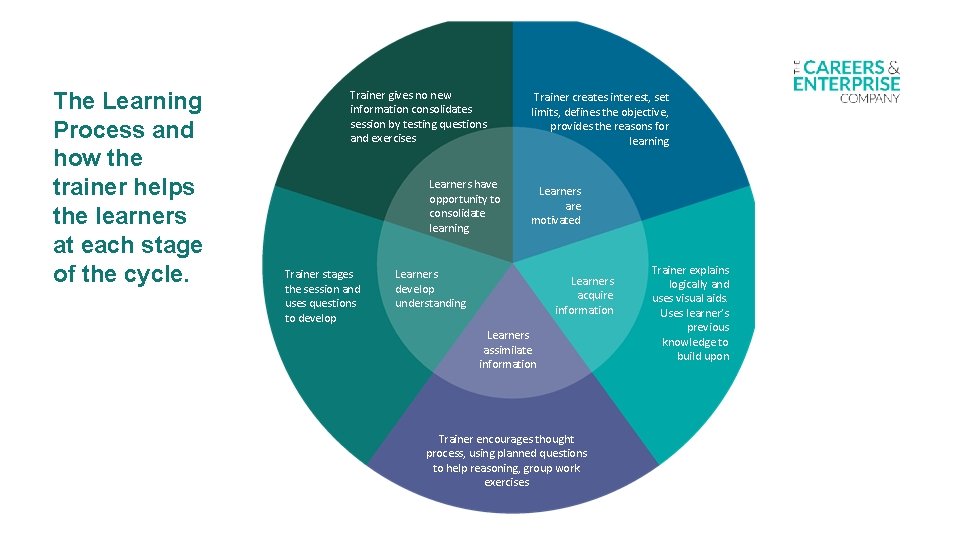
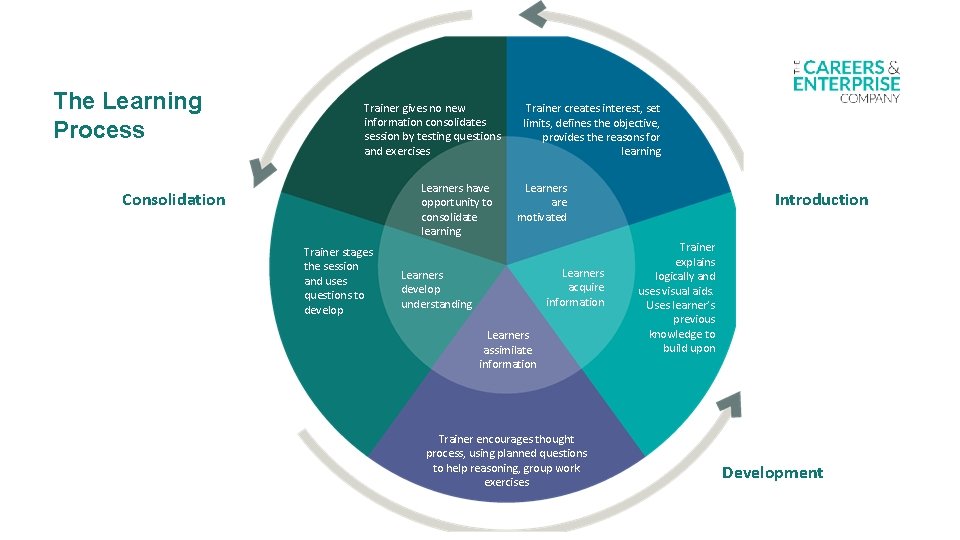
The Learning Process and how the trainer helps the learners at each stage of the cycle. Trainer gives no new information consolidates session by testing questions and exercises Learners have opportunity to consolidate learning Trainer stages the session and uses questions to develop Trainer creates interest, set limits, defines the objective, provides the reasons for learning Learners are motivated Learners develop understanding Learners acquire information Learners assimilate information Trainer encourages thought process, using planned questions to help reasoning, group work exercises Trainer explains logically and uses visual aids. Uses learner’s previous knowledge to build upon
Structure of a training session
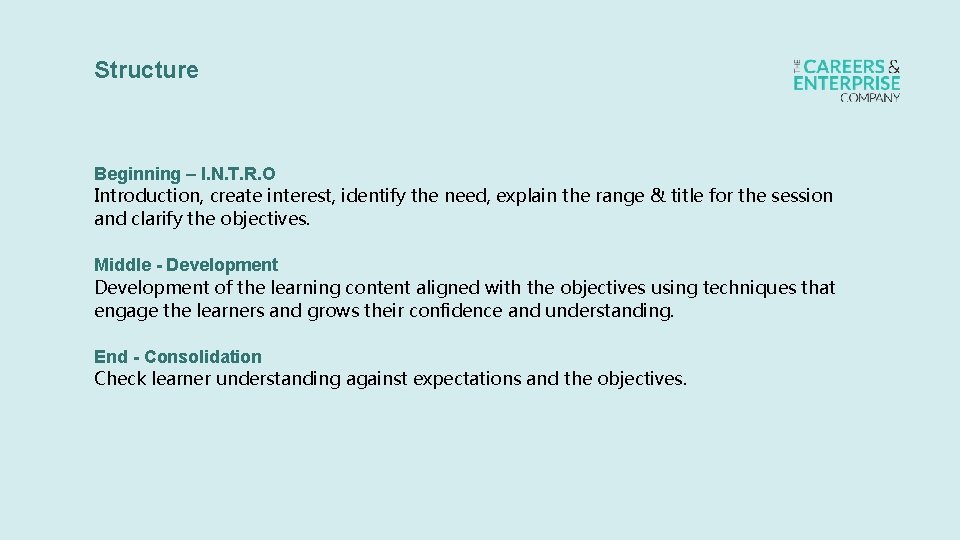
Structure Beginning – I. N. T. R. O Introduction, create interest, identify the need, explain the range & title for the session and clarify the objectives. Middle - Development of the learning content aligned with the objectives using techniques that engage the learners and grows their confidence and understanding. End - Consolidation Check learner understanding against expectations and the objectives.
Structure I. N. T. R. O • Create interest and an set the tone • Identify the need/benefit at an individual level • Title - keep it short if possible • Explain the range of activity and engagement • Clarify the learning outcomes or objectives – S. M. A. R. T principles
Structure SMART objectives • Specific • Measurable • Achievable/ Attainable • Realistic/ Relevant • Time bounded /Timely
Structure Middle The bulk of the learning takes place during this part of the factors to consider are : • Knowledge analysis to achieve the objectives • Logic and flow to the content • Bitesize bundles – as identified by the knowledge analysis • Methods you will use to develop the learning
Structure Knowledge Analysis – mind mapping or using a spider gram • Helps to organise the content that is relevant for the session • Breaks the content into bitesize chunks • Checks the flow of the learning is logical • Helps you make decisions about which content is directly relevant to the objectives • Keeps the session focussed on the objectives
Structure Consolidation Check the learners have achieved their objectives using a range of testing questions of activities / exercises that demonstrate understanding and completion of the objectives.
The Learning Process Trainer gives no new information consolidates session by testing questions and exercises Learners have opportunity to consolidate learning Consolidation Trainer stages the session and uses questions to develop Trainer creates interest, set limits, defines the objective, provides the reasons for learning Learners are motivated Learners acquire information Learners develop understanding Learners assimilate information Trainer encourages thought process, using planned questions to help reasoning, group work exercises Introduction Trainer explains logically and uses visual aids. Uses learner’s previous knowledge to build upon Development
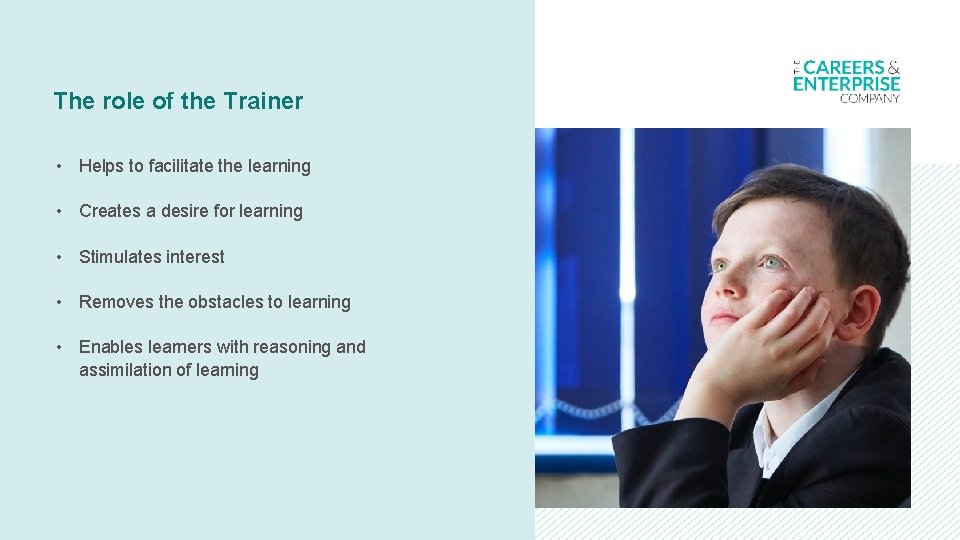
The role of the Trainer • Helps to facilitate the learning • Creates a desire for learning • Stimulates interest • Removes the obstacles to learning • Enables learners with reasoning and assimilation of learning
Facilitation
Facilitation – role of the Trainer The trainer helps to facilitate learning as opposed to teaching. The role of the trainer is to create the desire to learn, stimulate interest, remove obstacles to learning The Learning Environment • Logistics are important in creating a learning environment of an optimum level Materials • • The trainer should know the materials well in advance of the session Understand the needs of their audience of learners. Preparation is key to an effective learning experience for the learners.
Facilitation – role of the Trainer What are the characteristics of an effective trainer? Enthusiastic and confident but within professional boundaries An interesting speaker with integrity Able to use humour is appropriate Able to adjust language and keep it simple and concise- relevant to the audience Be passionate and committed to the subject Able to manage the group dynamics Provide constructive and targeted feedback, and praise Can manage the distribution and level of engagement from all learners Be inclusive of all learners in the group Can interpret nonverbal cues from learners, respond adjust pace and style accordingly • Respond to relevant learning opportunities that arise in the room • Be an active listener with strong powers of observation. • High standards of personal presentation appropriate for the learning setting and audience • • •
Facilitation – question techniques Why we ask questions? To establish existing knowledge of the learners To recap on previous sessions To gain interest in the subject To maintain interest and keep group members alert To get maximum involvement of learners , particularly the more shy and quieter members of the group • To encourage learners to reason things out for themselves • To check understanding at the end of the session • • •
Facilitation – question techniques Testing Questions which test the learner’s knowledge • During the introduction to create interest or refer back to previous sessions • During the development phase to recap if necessary • During the consolidation phase to test whether all the new information has been understood and can be accurately recalled Teaching questions • Questions on points that have not yet been taught but must be reasoned out by the learners, providing answers based on their experience , observation and the information already established during the training session.
Facilitation – question techniques Framing questions • Start by knowing the answer you require i. e. the information you want to transfer to the learners • Questions should start with Who, What, When, Where, How, and Why. • Funnels and spider webs to support reasoning
How? Who? Why? What? Where? Why? Where? When? Why? Who? How?
Facilitation – question techniques Posing Questions The pose, pause pounce approach helps manage learner engagement • Pose - the question to the group • Pause - So that the whole group can be thinking about the answer and • Pounce - on the person you would like to answer the question
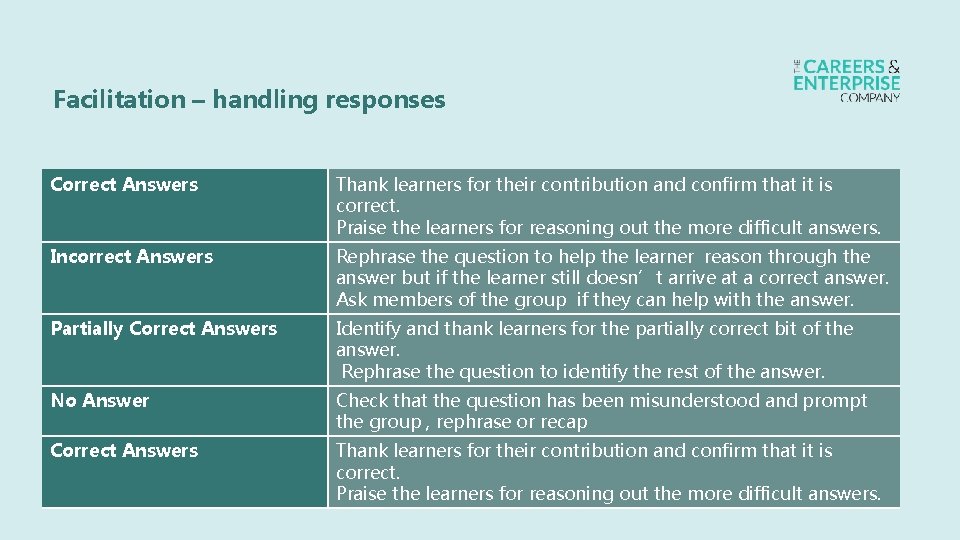
Facilitation – handling responses Correct Answers Thank learners for their contribution and confirm that it is correct. Praise the learners for reasoning out the more difficult answers. Incorrect Answers Rephrase the question to help the learner reason through the answer but if the learner still doesn’t arrive at a correct answer. Ask members of the group if they can help with the answer. Partially Correct Answers Identify and thank learners for the partially correct bit of the answer. Rephrase the question to identify the rest of the answer. No Answer Check that the question has been misunderstood and prompt the group , rephrase or recap Correct Answers Thank learners for their contribution and confirm that it is correct. Praise the learners for reasoning out the more difficult answers.
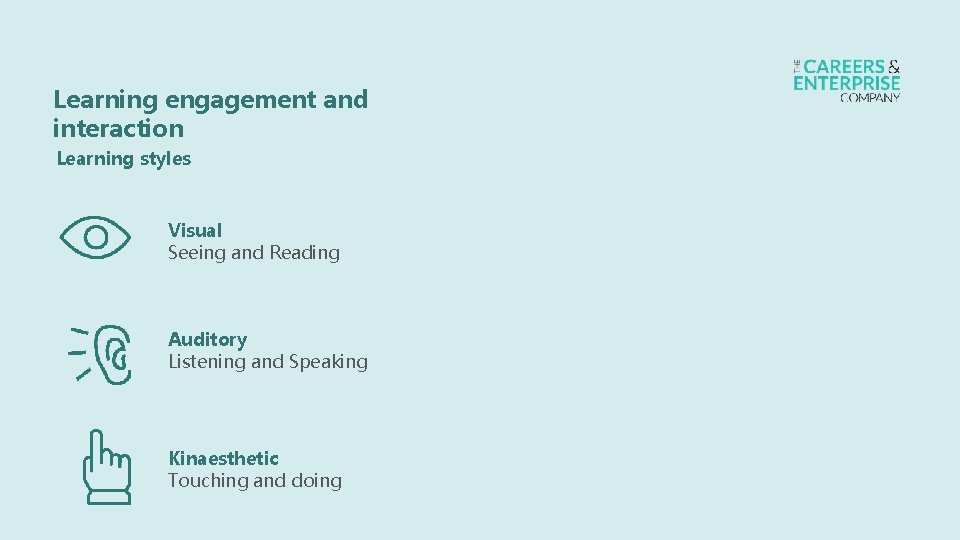
Learning engagement and interaction Learning styles Visual Seeing and Reading Auditory Listening and Speaking Kinaesthetic Touching and doing
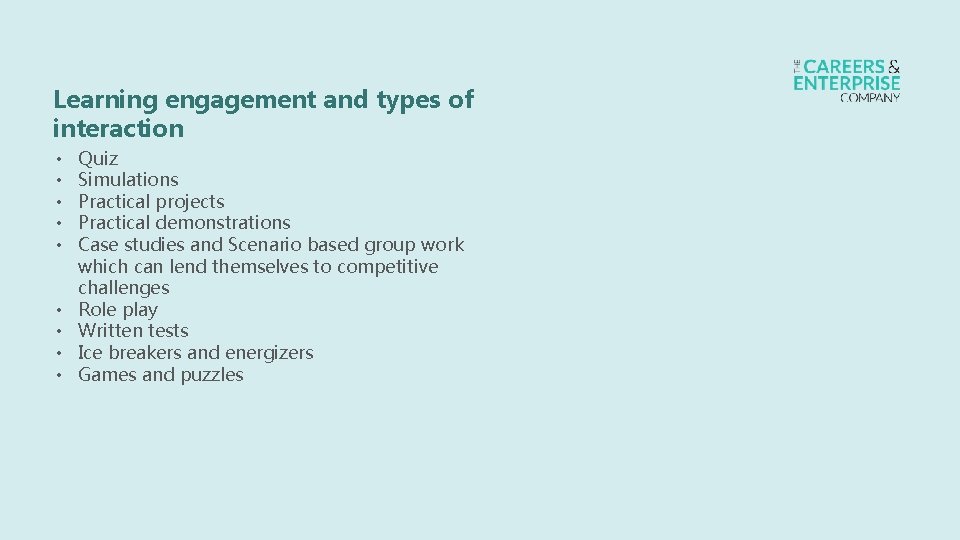
Learning engagement and types of interaction • • • Quiz Simulations Practical projects Practical demonstrations Case studies and Scenario based group work which can lend themselves to competitive challenges Role play Written tests Ice breakers and energizers Games and puzzles
Practice role play Putting learning into practice
Facilitation – top tips • • • Know who is in your audience What do they expect to be taught What questions might they have What do they hope to do with what you have taught them Prepare to succeed always plan your session carefully Promote interactive discussion Ask stimulating questions to encourage reasoning and curiosity Inspire ideas Respond to learning opportunities
Any questions?