
HOW TO CREATE AND ANALYSE A CLIMATE GRAPH



- Slides: 13
HOW TO CREATE AND ANALYSE A CLIMATE GRAPH Ana María de Pablo Campos
Draw one horizontal axis and two vertical axis. (Previously, you need to look at your data to work out what size your axis need to be!)
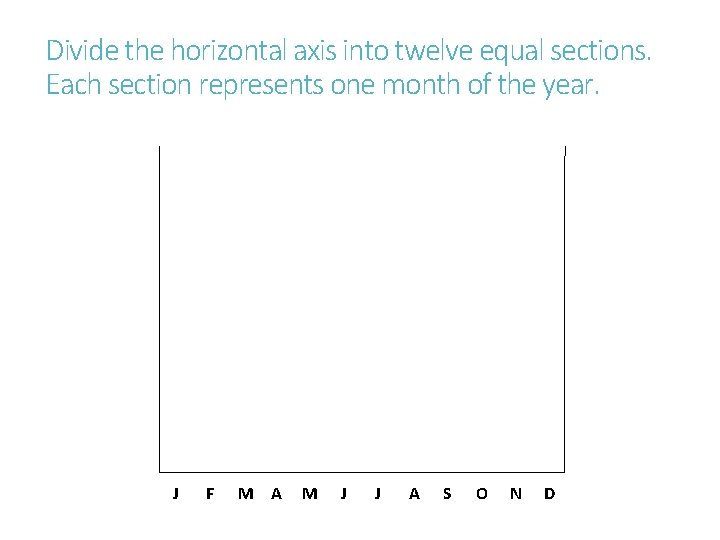
Divide the horizontal axis into twelve equal sections. Each section represents one month of the year. J F M A M J J A S O N D
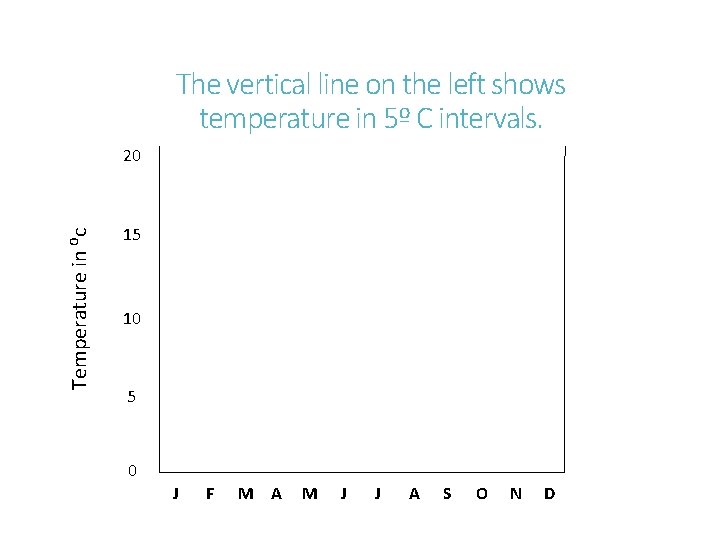
The vertical line on the left shows temperature in 5º C intervals. Temperature in ⁰c 20 15 10 5 0 J F M A M J J A S O N D
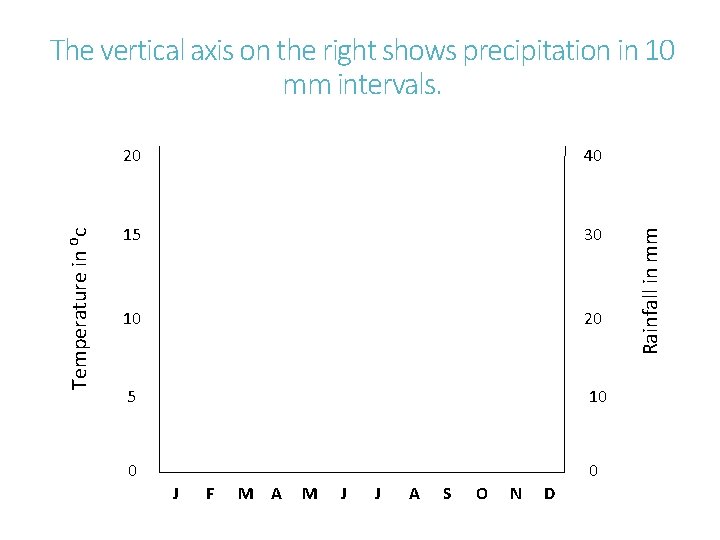
20 40 15 30 10 20 5 10 0 0 J F M A M J J A S O N D Rainfall in mm Temperature in ⁰c The vertical axis on the right shows precipitation in 10 mm intervals.
Now you’re ready to add the data!
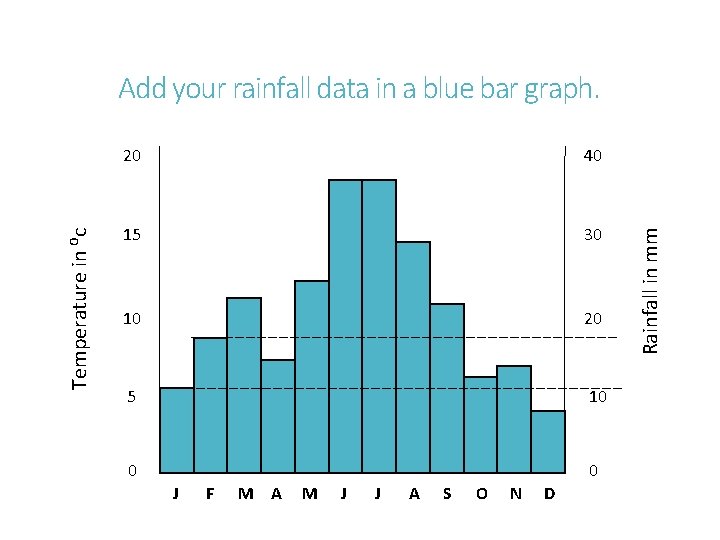
20 40 15 30 10 20 5 10 0 0 J F M A M J J A S O N D Rainfall in mm Temperature in ⁰c Add your rainfall data in a blue bar graph.
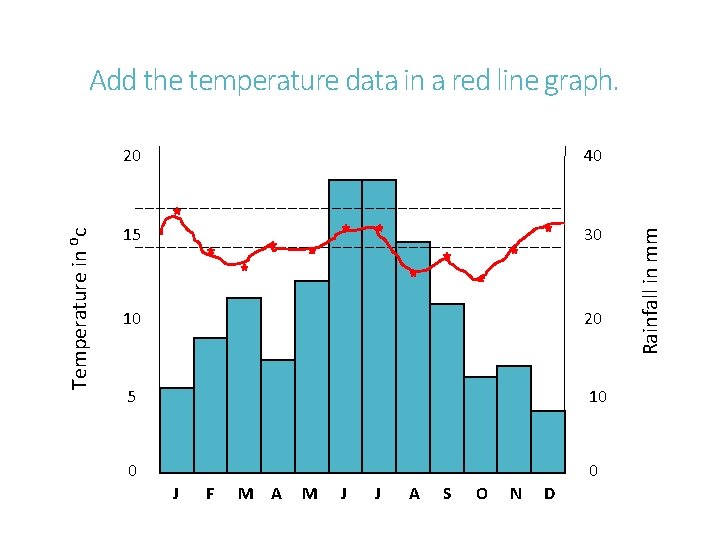
20 40 15 30 10 20 5 10 0 0 J F M A M J J A S O N D Rainfall in mm Temperature in ⁰c Add the temperature data in a red line graph.
To analyse your climate graph you need to study…
AVERAGE ANNUAL TEMPERATURE - Cold climate (less tan 10º C) - Temperate climate (10 -20º C) - Warm climate (above 20º C)
ANNUAL TEMPERATURE RANGE (Difference between the temperature of the warmest month and the temperature of the coldest month) - Areas near the Equator: up to 5º C - Temperate areas close to the polar circles: over 25º C
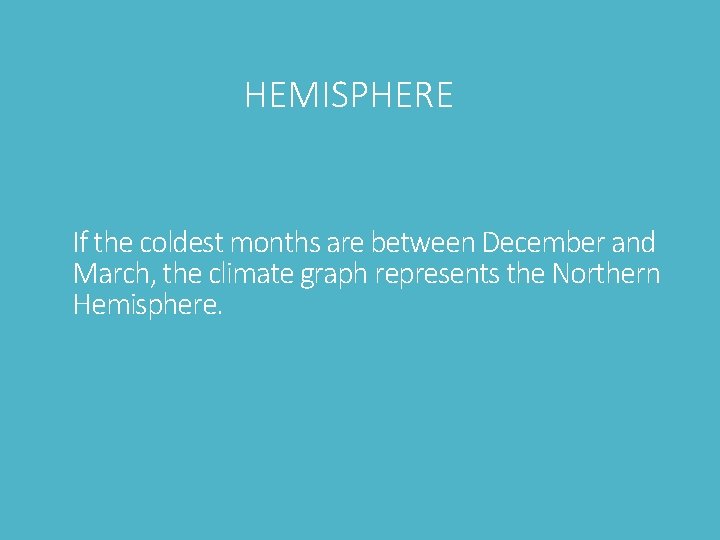
HEMISPHERE If the coldest months are between December and March, the climate graph represents the Northern Hemisphere.
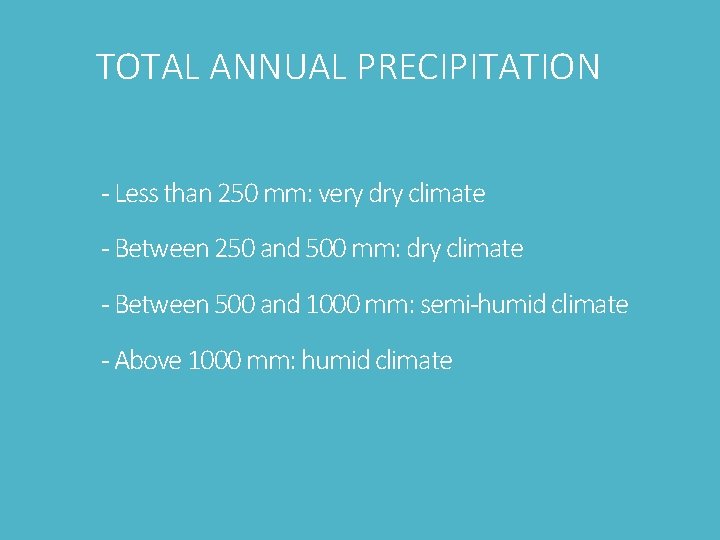
TOTAL ANNUAL PRECIPITATION - Less than 250 mm: very dry climate - Between 250 and 500 mm: dry climate - Between 500 and 1000 mm: semi-humid climate - Above 1000 mm: humid climate