
How to Create a Well Structured Lesson Environment




- Slides: 15
How to Create a Well. Structured Lesson Environment By: Ayodele Ibrahim Olatunji. HOD Science, Imaad Schools, Lekki.
Contents: 01 Contents Modalities for creating engaging processes to accomplish a well-structured lesson 02 Contents How to avoid distractions and create an excellent atmosphere of learning 03 Contents Use of instructional aids to produce positive learning outcome 04 Contents Questions and Answers
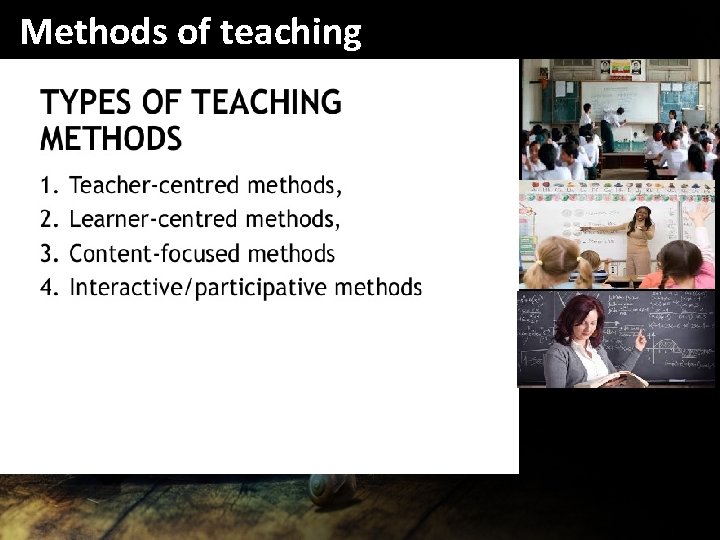
Methods of teaching • Infographic Style
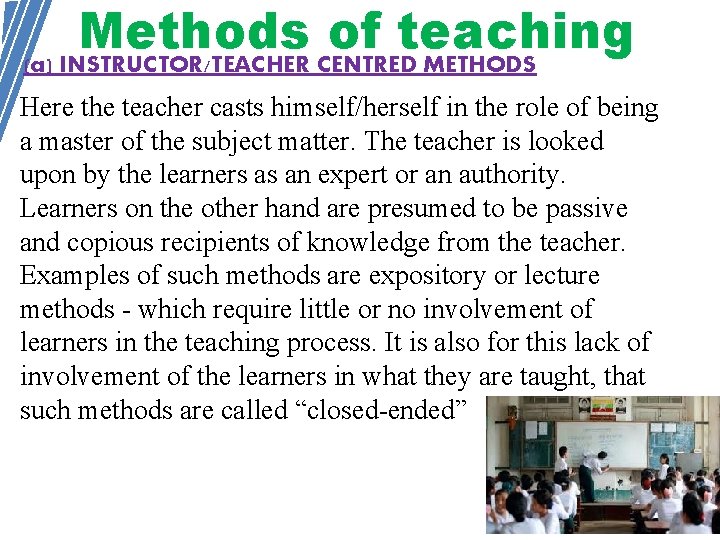
Methods of teaching (a) INSTRUCTOR/TEACHER CENTRED METHODS Here the teacher casts himself/herself in the role of being a master of the subject matter. The teacher is looked upon by the learners as an expert or an authority. Learners on the other hand are presumed to be passive and copious recipients of knowledge from the teacher. Examples of such methods are expository or lecture methods - which require little or no involvement of learners in the teaching process. It is also for this lack of involvement of the learners in what they are taught, that such methods are called “closed-ended”
Methods of teaching (b) LEARNER-CENTRED METHODS In learner-centred methods, the teacher/instructor is both a teacher and a learner at the same time. In the words of Lawrence Stenhouse, the teacher plays a dual role as a learner as well “so that in his classroom extends rather than constricts his intellectual horizons”. The teacher also learns new things everyday which he/she didn’t know in the process of teaching. The teacher, “becomes a resource rather than an authority”. Examples of learnercentred methods are discussion method, discovery or inquiry based approach and the Hill’s model of learning through discussion (LTD).
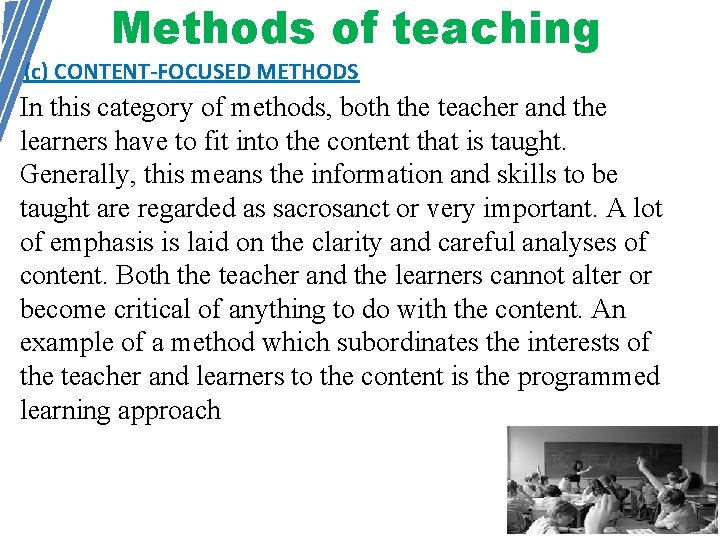
Methods of teaching (c) CONTENT-FOCUSED METHODS In this category of methods, both the teacher and the learners have to fit into the content that is taught. Generally, this means the information and skills to be taught are regarded as sacrosanct or very important. A lot of emphasis is laid on the clarity and careful analyses of content. Both the teacher and the learners cannot alter or become critical of anything to do with the content. An example of a method which subordinates the interests of the teacher and learners to the content is the programmed learning approach
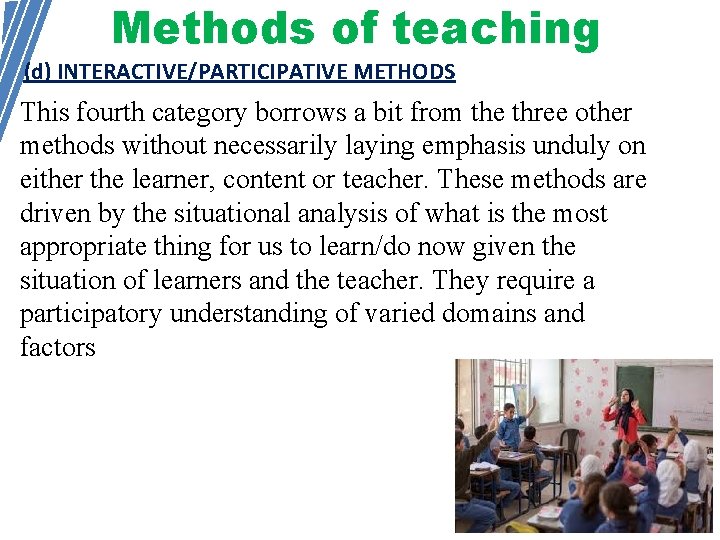
Methods of teaching (d) INTERACTIVE/PARTICIPATIVE METHODS This fourth category borrows a bit from the three other methods without necessarily laying emphasis unduly on either the learner, content or teacher. These methods are driven by the situational analysis of what is the most appropriate thing for us to learn/do now given the situation of learners and the teacher. They require a participatory understanding of varied domains and factors
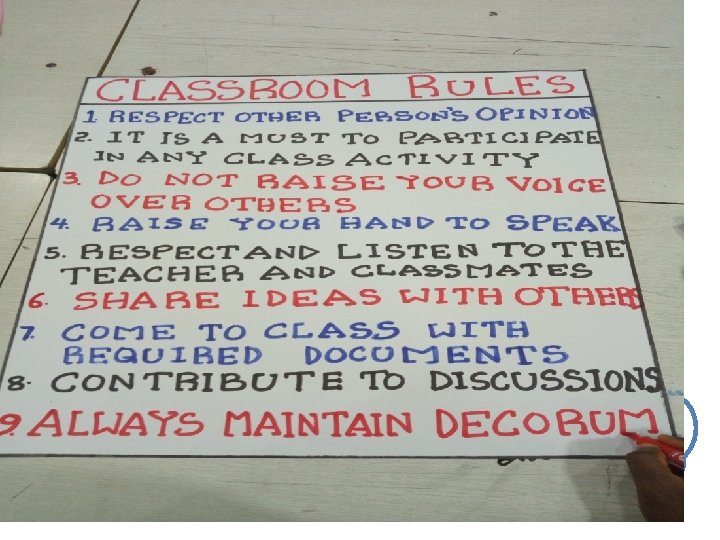
• Content 1 • Modalities for creating engaging processes to accomplish a well-structured lesson 1. Choose the best teaching methodology especially the 4 th typed mentioned 01 2. Plan your lesson in a well structured process. 3. Use of ABL and PBL (Activity and project based learning) in the class 04 03 4. State your classroom rules. Involve the learners in stating the rules 5. Engage them in assessment of learning and for learning 02 05
Content 2: How to avoid distractions and create an excellent atmosphere of learning 1. Be friendly, firm and focused. 2. Start lessons with proper starters 3. State classroom rules and monitor strictly 4. Engage most disruptive learners in the classroom 5. Use a lot of instructional aids
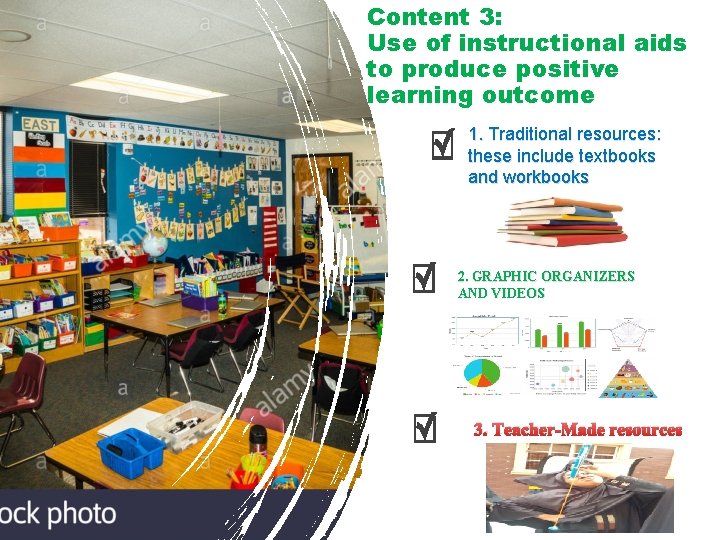
Content 3: Use of instructional aids to produce positive learning outcome 1. Traditional resources: these include textbooks and workbooks 2. GRAPHIC ORGANIZERS AND VIDEOS 3. Teacher-Made resources
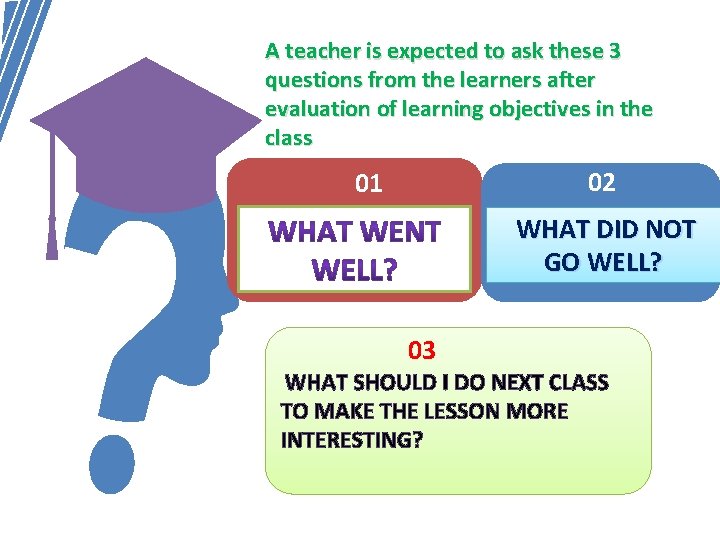
A teacher is expected to ask these 3 questions from the learners after evaluation of learning objectives in the class 02 01 WHAT DID NOT GO WELL? 03 WHAT SHOULD I DO NEXT CLASS TO MAKE THE LESSON MORE INTERESTING?
Thank you