
How To Create a Display Board Plan Using
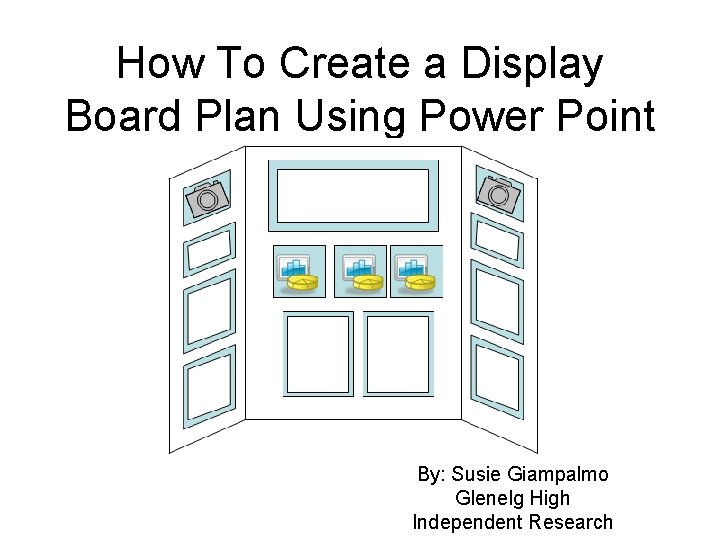
How To Create a Display Board Plan Using Power Point By: Susie Giampalmo Glenelg High Independent Research
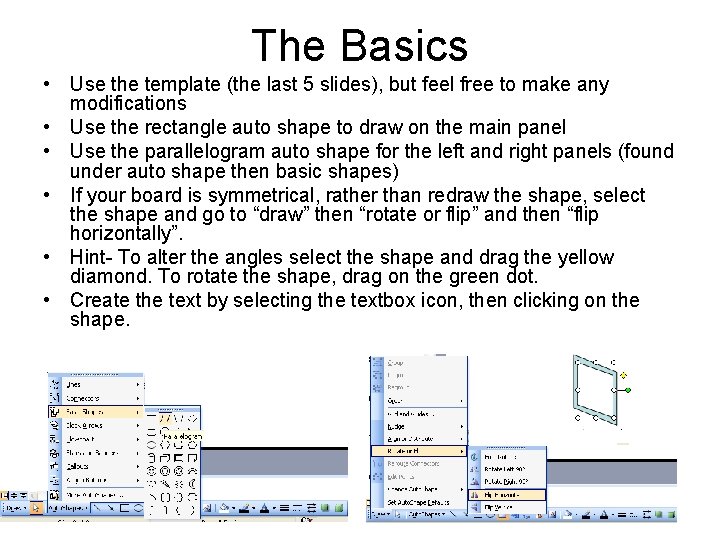
The Basics • Use the template (the last 5 slides), but feel free to make any modifications • Use the rectangle auto shape to draw on the main panel • Use the parallelogram auto shape for the left and right panels (found under auto shape then basic shapes) • If your board is symmetrical, rather than redraw the shape, select the shape and go to “draw” then “rotate or flip” and then “flip horizontally”. • Hint- To alter the angles select the shape and drag the yellow diamond. To rotate the shape, drag on the green dot. • Create the text by selecting the textbox icon, then clicking on the shape.
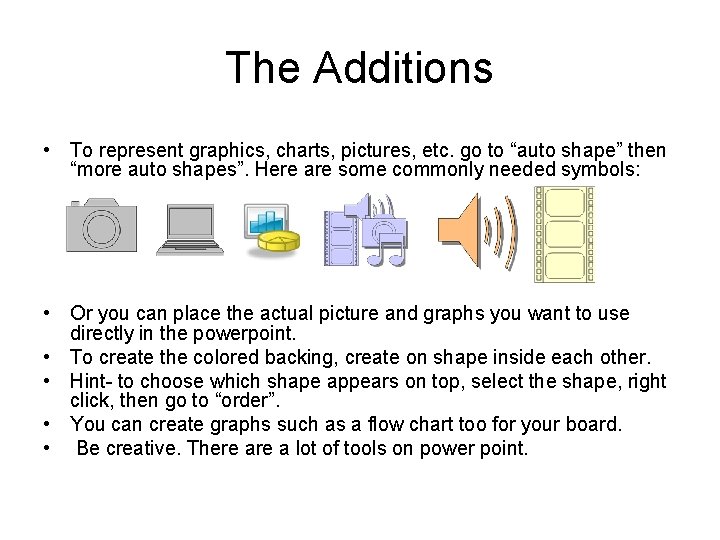
The Additions • To represent graphics, charts, pictures, etc. go to “auto shape” then “more auto shapes”. Here are some commonly needed symbols: • Or you can place the actual picture and graphs you want to use directly in the powerpoint. • To create the colored backing, create on shape inside each other. • Hint- to choose which shape appears on top, select the shape, right click, then go to “order”. • You can create graphs such as a flow chart too for your board. • Be creative. There a lot of tools on power point.
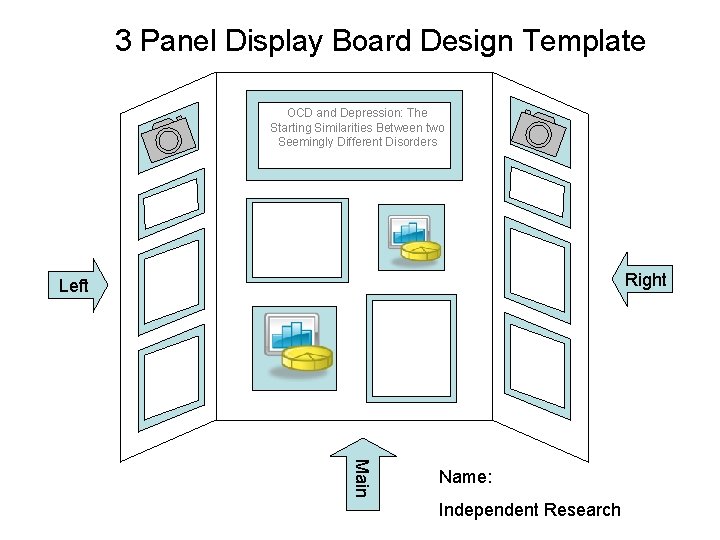
3 Panel Display Board Design Template OCD and Depression: The Starting Similarities Between two Seemingly Different Disorders Right Left Main Name: Independent Research
Title. OCD and Depression: The Starting Similarities Between two Seemingly Different Disorders
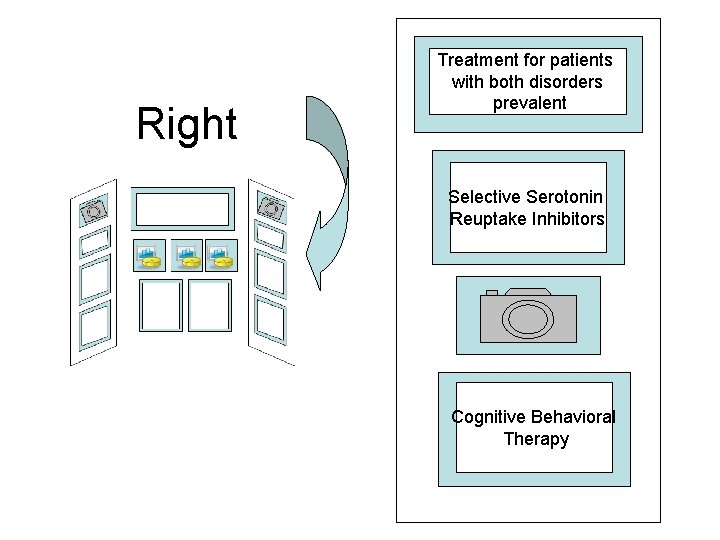
Right Treatment for patients with both disorders prevalent Selective Serotonin Reuptake Inhibitors Cognitive Behavioral Therapy
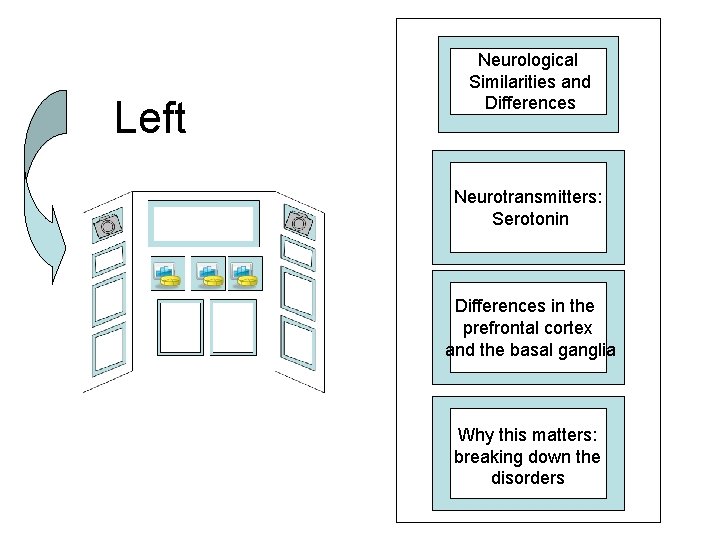
Left Neurological Similarities and Differences Neurotransmitters: Serotonin Differences in the prefrontal cortex and the basal ganglia Why this matters: breaking down the disorders
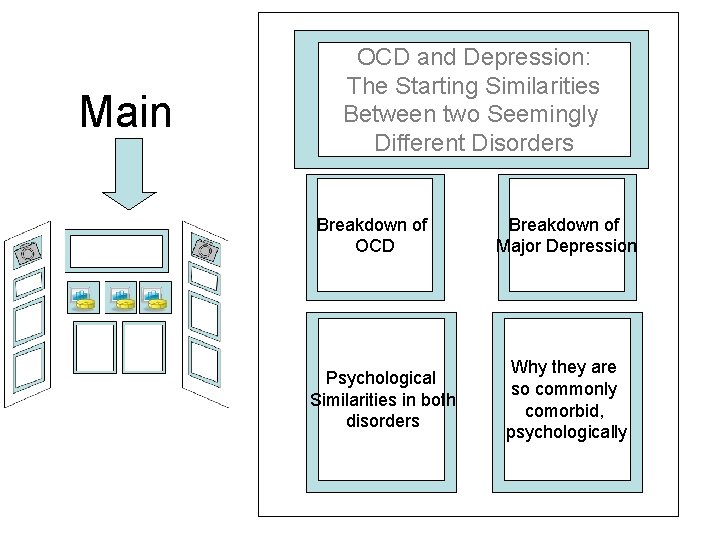
Main OCD and Depression: The Starting Similarities Between two Seemingly Different Disorders Breakdown of OCD Psychological Similarities in both disorders Breakdown of Major Depression Why they are so commonly comorbid, psychologically
- Slides: 8