
How to correctly simulate with the SPS impedance
- Slides: 12
How to correctly simulate with the SPS impedance model? M. Schwarz Acknowledgements: D. Quartullo, J. Repond, BLon. D dev team 05/18/18 BLon. D meeting 1
Content SPS impedance model • RF fast-sine vs rf-kick-interp •
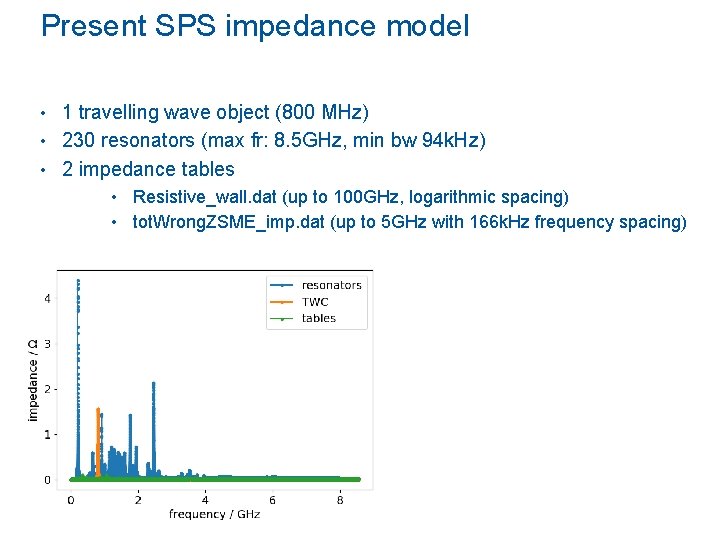
Present SPS impedance model 1 travelling wave object (800 MHz) • 230 resonators (max fr: 8. 5 GHz, min bw 94 k. Hz) • 2 impedance tables • • Resistive_wall. dat (up to 100 GHz, logarithmic spacing) • tot. Wrong. ZSME_imp. dat (up to 5 GHz with 166 k. Hz frequency spacing)
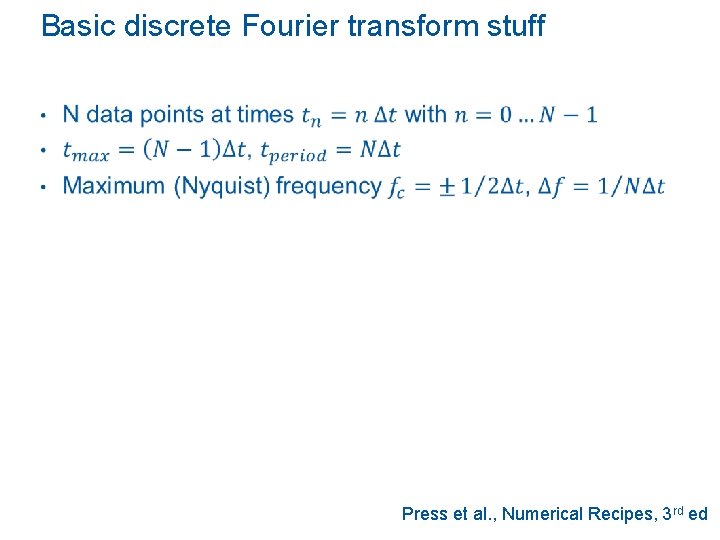
Basic discrete Fourier transform stuff Press et al. , Numerical Recipes, 3 rd ed
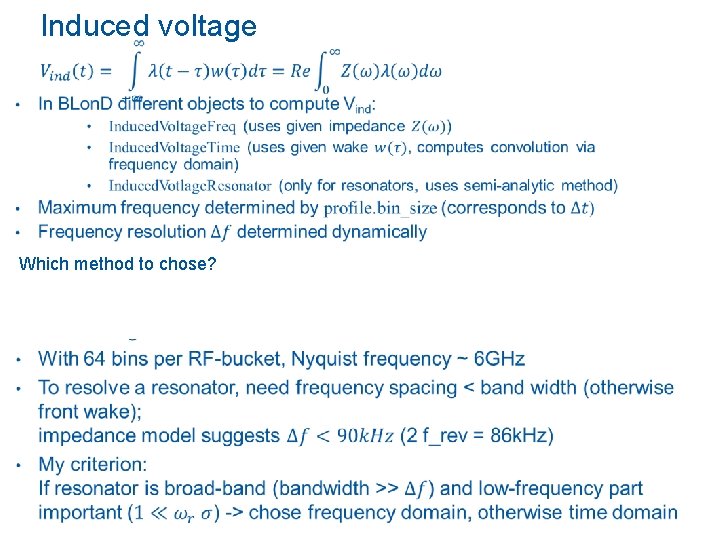
Induced voltage Which method to chose?
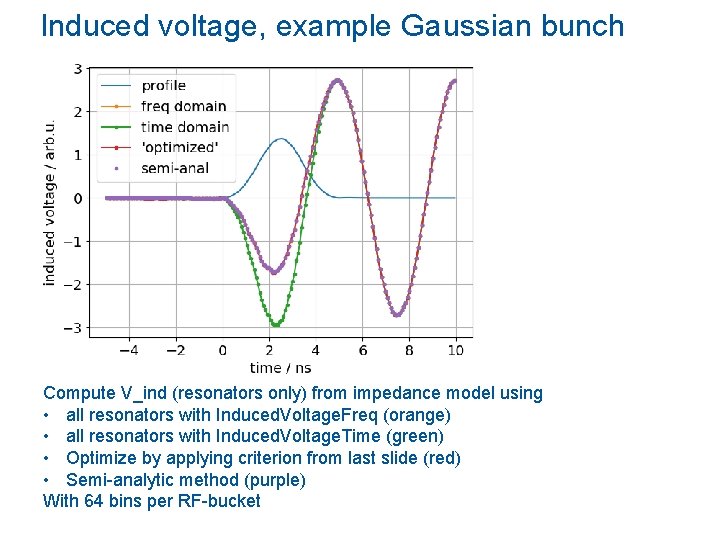
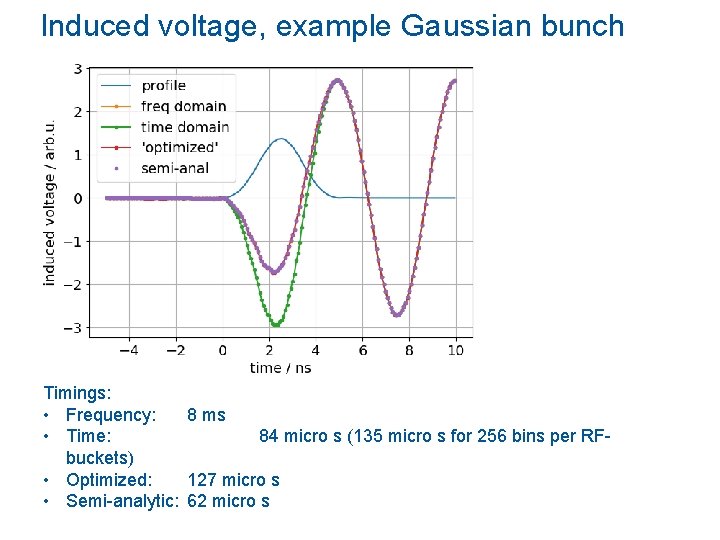
Induced voltage, example Gaussian bunch Compute V_ind (resonators only) from impedance model using • all resonators with Induced. Voltage. Freq (orange) • all resonators with Induced. Voltage. Time (green) • Optimize by applying criterion from last slide (red) • Semi-analytic method (purple) With 64 bins per RF-bucket
Induced voltage, example Gaussian bunch Timings: • Frequency: 8 ms • Time: 84 micro s (135 micro s for 256 bins per RFbuckets) • Optimized: 127 micro s • Semi-analytic: 62 micro s
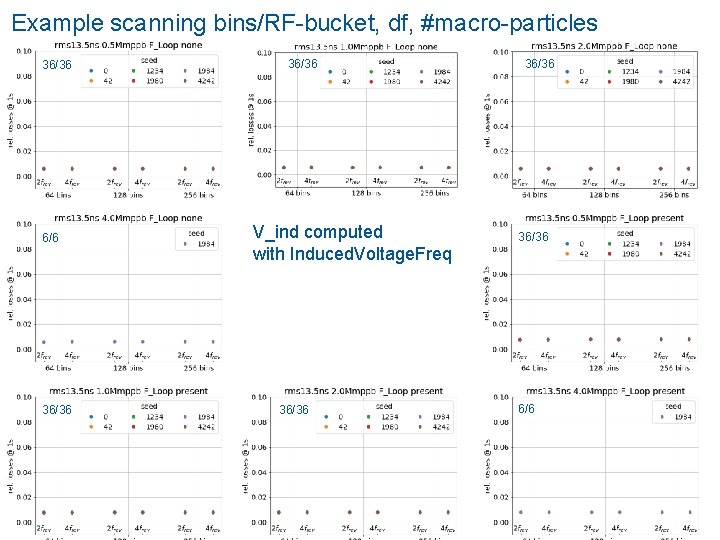
Example scanning bins/RF-bucket, df, #macro-particles 36/36 6/6 36/36 V_ind computed with Induced. Voltage. Freq 36/36 6/6
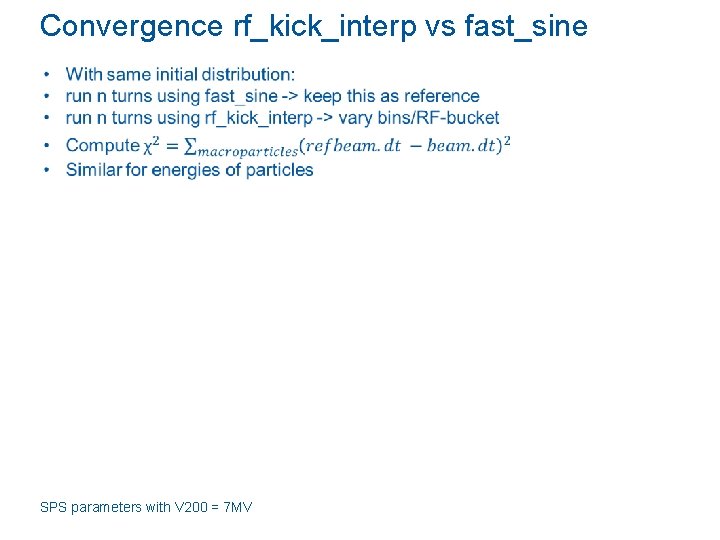
Convergence rf_kick_interp vs fast_sine SPS parameters with V 200 = 7 MV
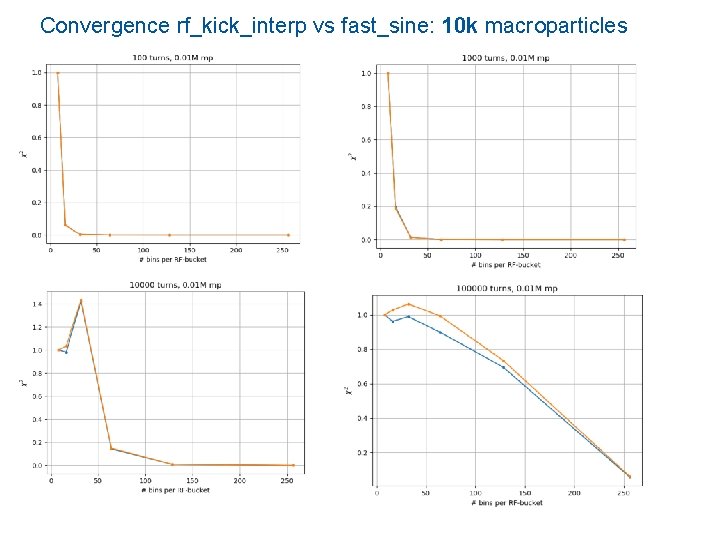
Convergence rf_kick_interp vs fast_sine: 10 k macroparticles
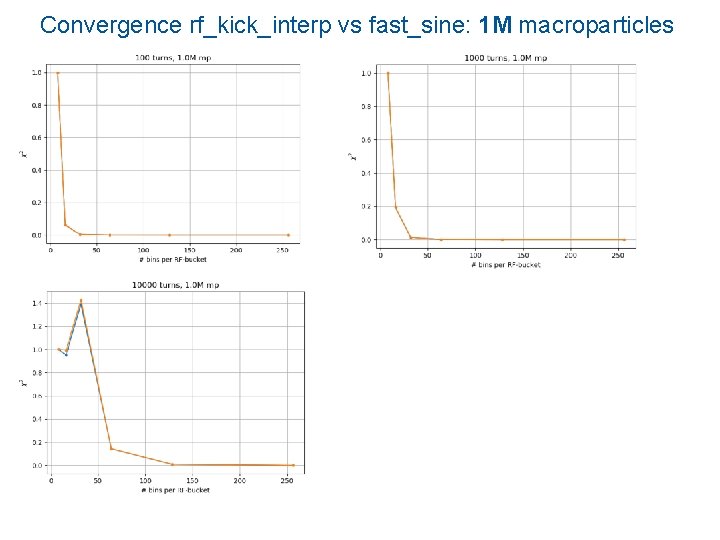
Convergence rf_kick_interp vs fast_sine: 1 M macroparticles
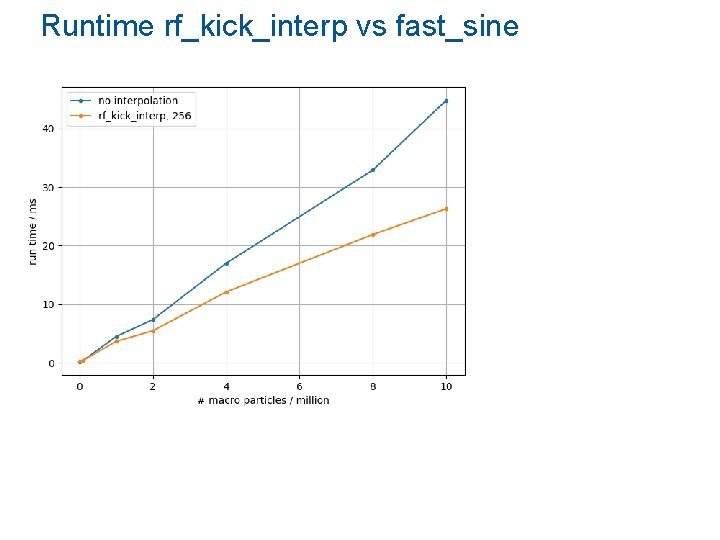
Runtime rf_kick_interp vs fast_sine