
How to Control Repetitive Hand Wrist Tasks Ergonomics
- Slides: 23
How to Control Repetitive Hand Wrist Tasks Ergonomics Design Guidelines to prevent Strain, Sprain and Overuse injuries (SSO)
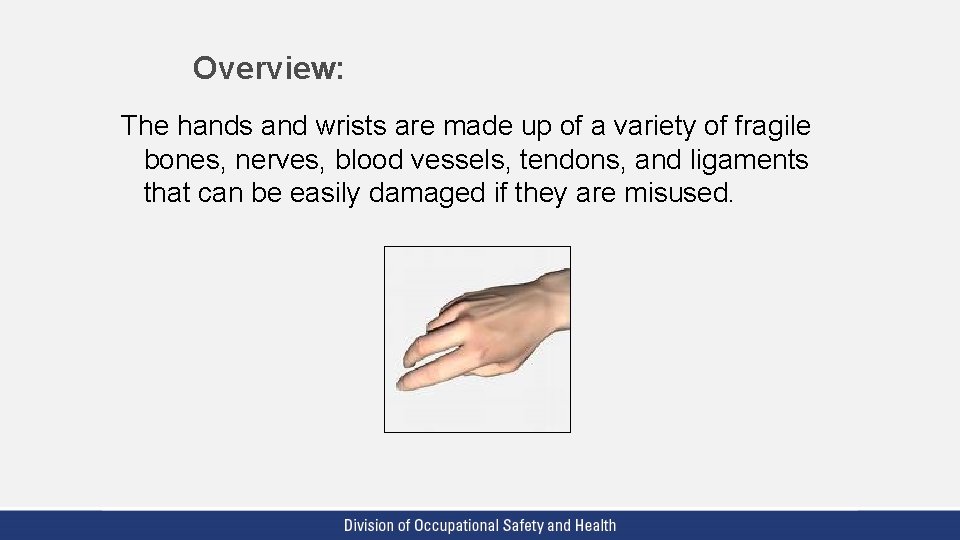
Overview: The hands and wrists are made up of a variety of fragile bones, nerves, blood vessels, tendons, and ligaments that can be easily damaged if they are misused.
Overview: The following are some of the conditions that can cause hand wrist illnesses: • Frequent or repetitive movement of the hand or wrist, usually associated with awkward wrist bending • Inappropriate tool and equipment design • Vibrating knives and saws • Poor work station design and arrangement • Cold environments
Reduce Repetitions and Automate § Reduce the number of repetitions per shift – For example, improve the layout of the work station so fewer movements are necessary § Try to semi or fully automate
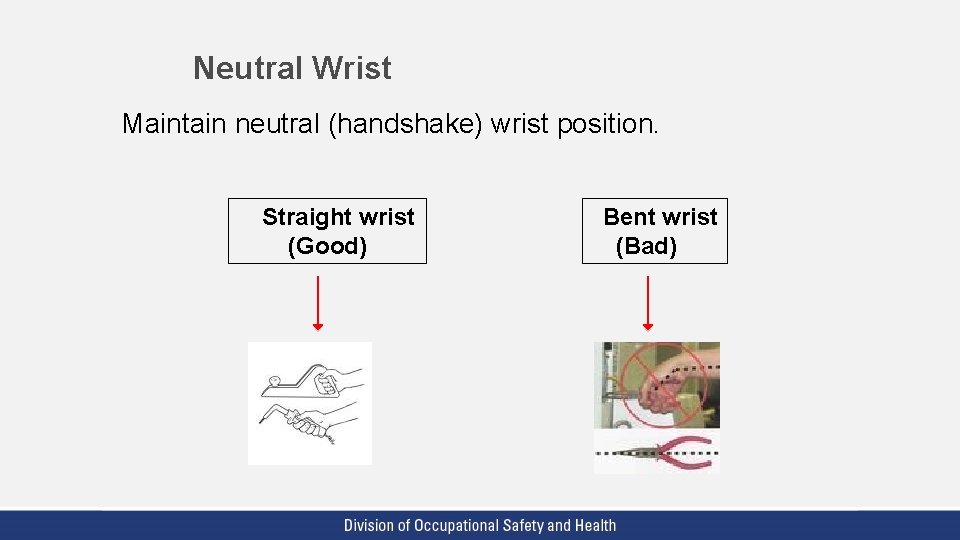
Neutral Wrist Maintain neutral (handshake) wrist position. Straight wrist (Good) Bent wrist (Bad)
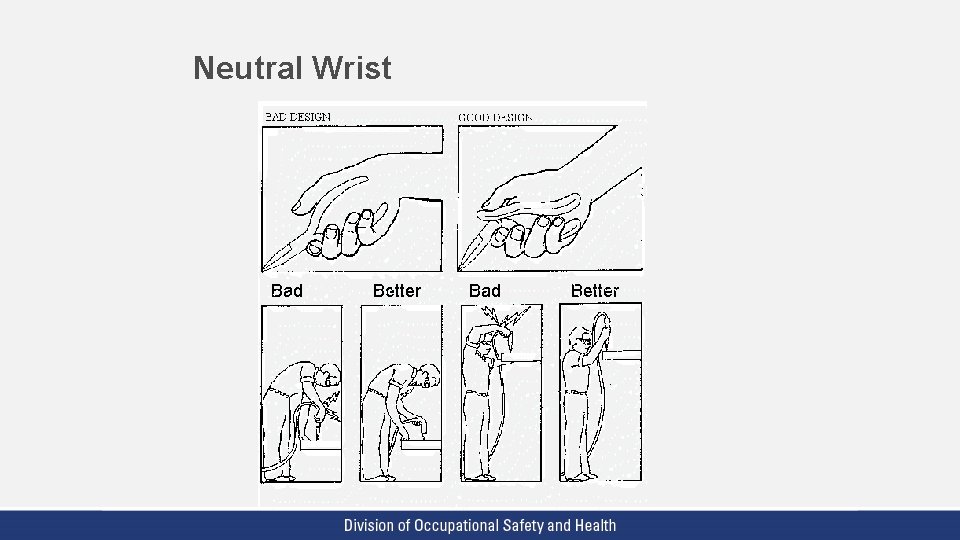
Neutral Wrist Bad Better
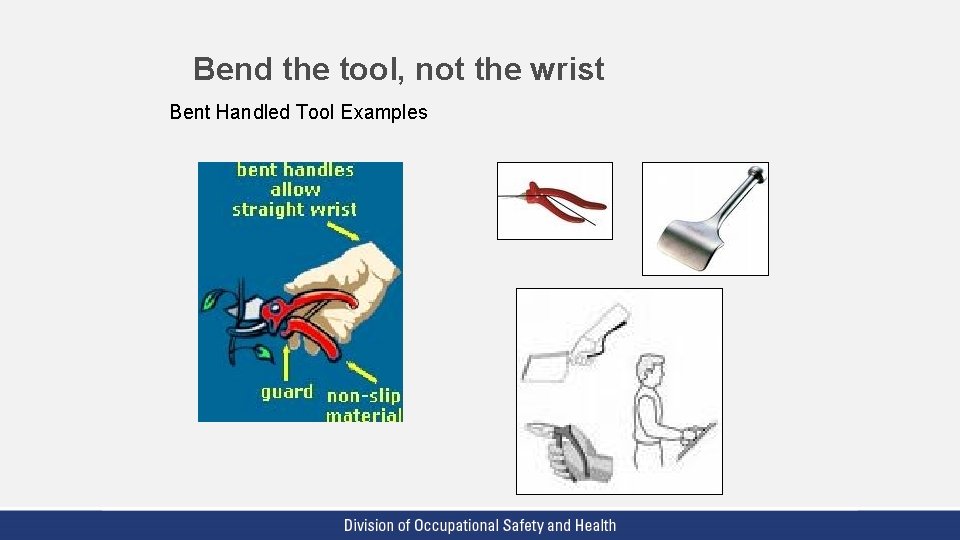
Bend the tool, not the wrist Bent Handled Tool Examples
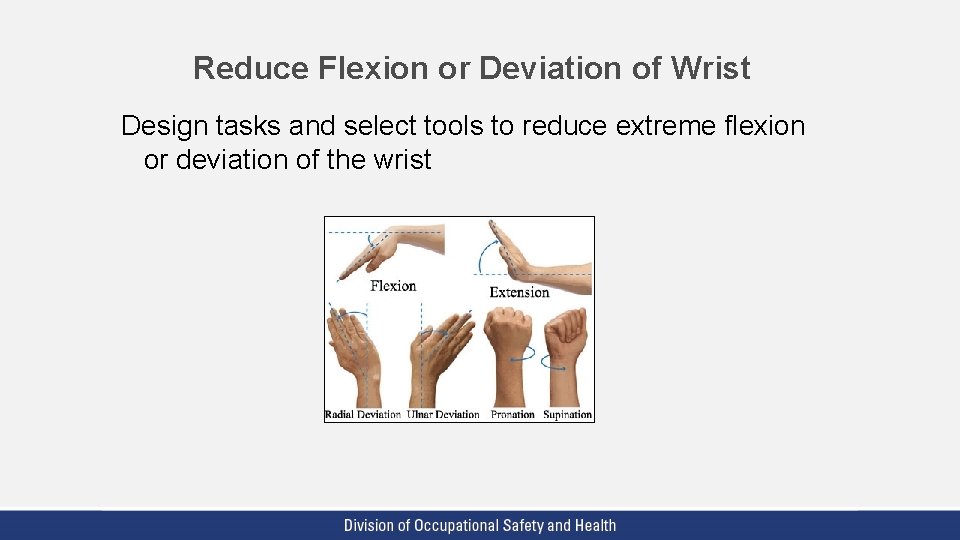
Reduce Flexion or Deviation of Wrist Design tasks and select tools to reduce extreme flexion or deviation of the wrist
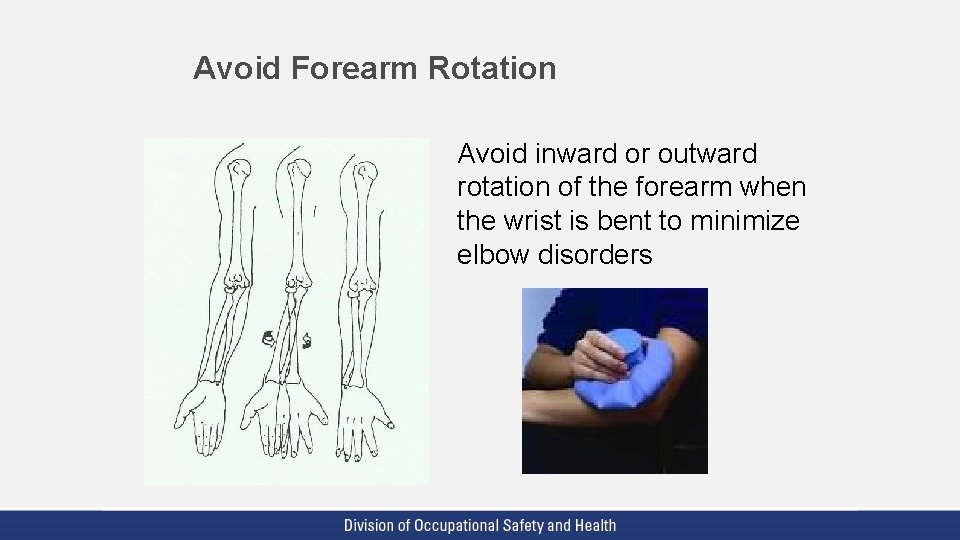
Avoid Forearm Rotation Avoid inward or outward rotation of the forearm when the wrist is bent to minimize elbow disorders
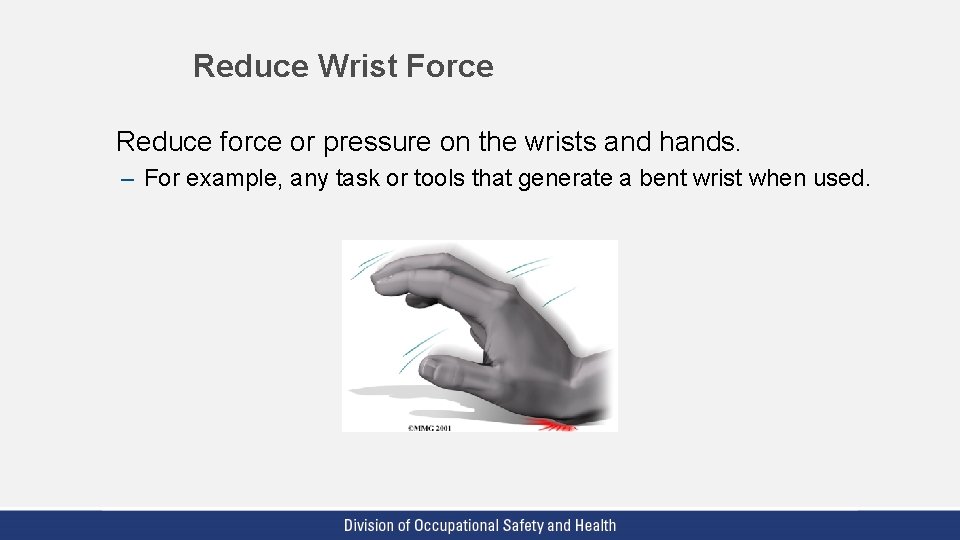
Reduce Wrist Force Reduce force or pressure on the wrists and hands. – For example, any task or tools that generate a bent wrist when used.
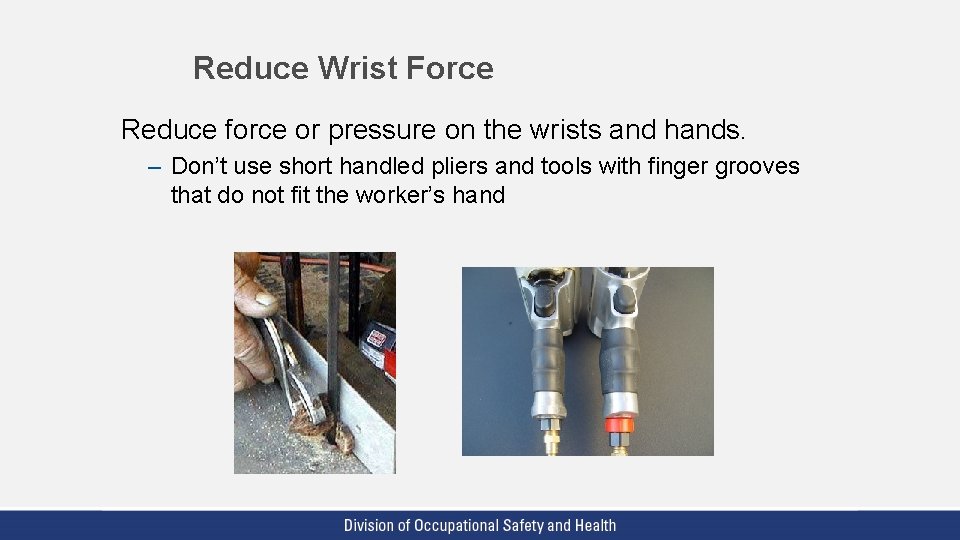
Reduce Wrist Force Reduce force or pressure on the wrists and hands. – Don’t use short handled pliers and tools with finger grooves that do not fit the worker’s hand
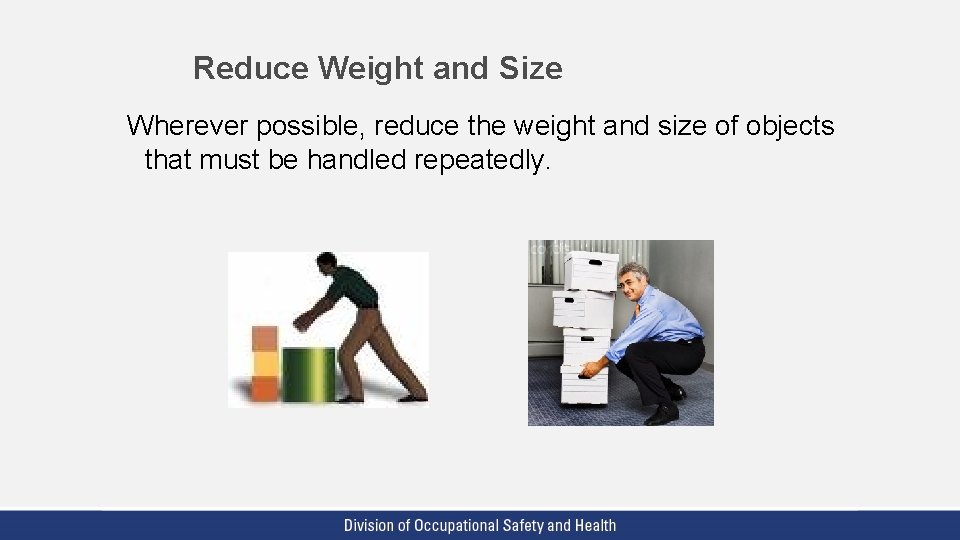
Reduce Weight and Size Wherever possible, reduce the weight and size of objects that must be handled repeatedly.
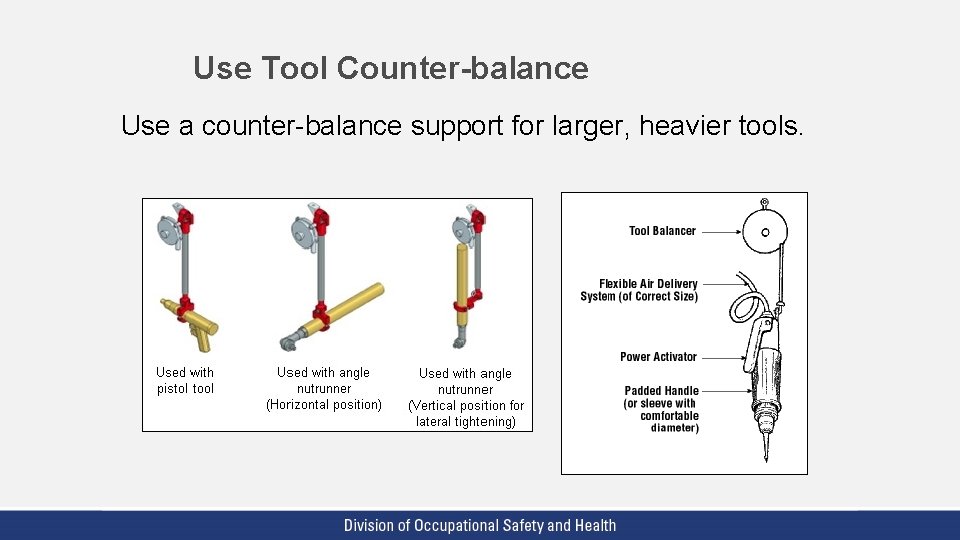
Use Tool Counter-balance Use a counter-balance support for larger, heavier tools.
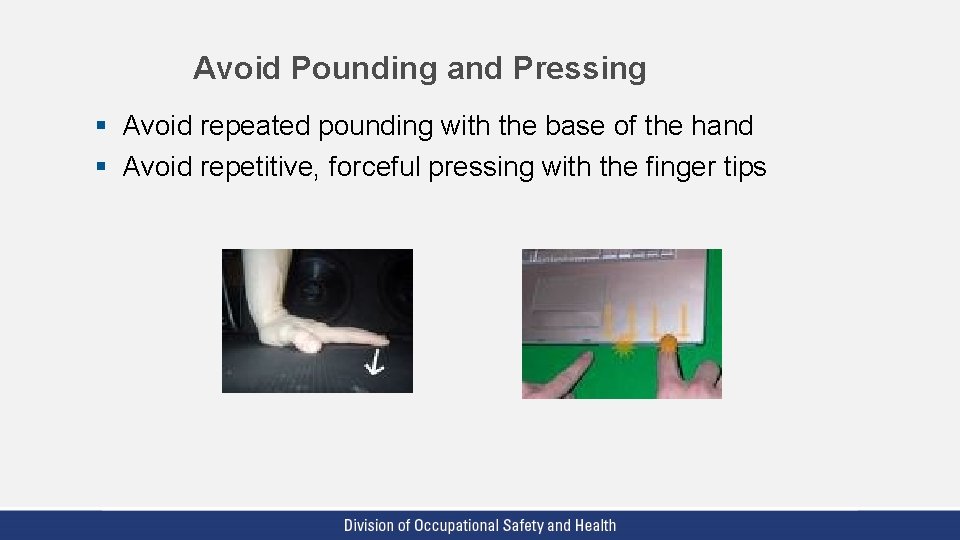
Avoid Pounding and Pressing § Avoid repeated pounding with the base of the hand § Avoid repetitive, forceful pressing with the finger tips
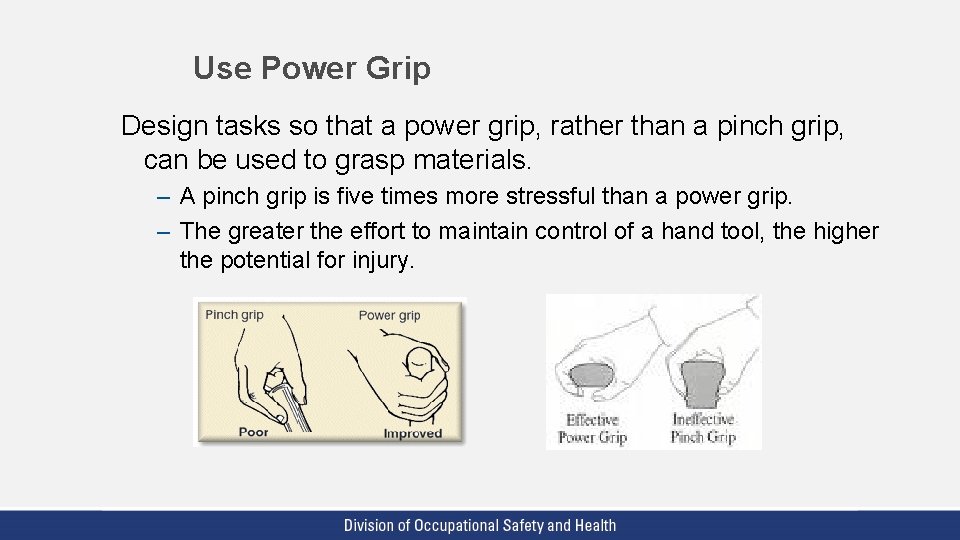
Use Power Grip Design tasks so that a power grip, rather than a pinch grip, can be used to grasp materials. – A pinch grip is five times more stressful than a power grip. – The greater the effort to maintain control of a hand tool, the higher the potential for injury.
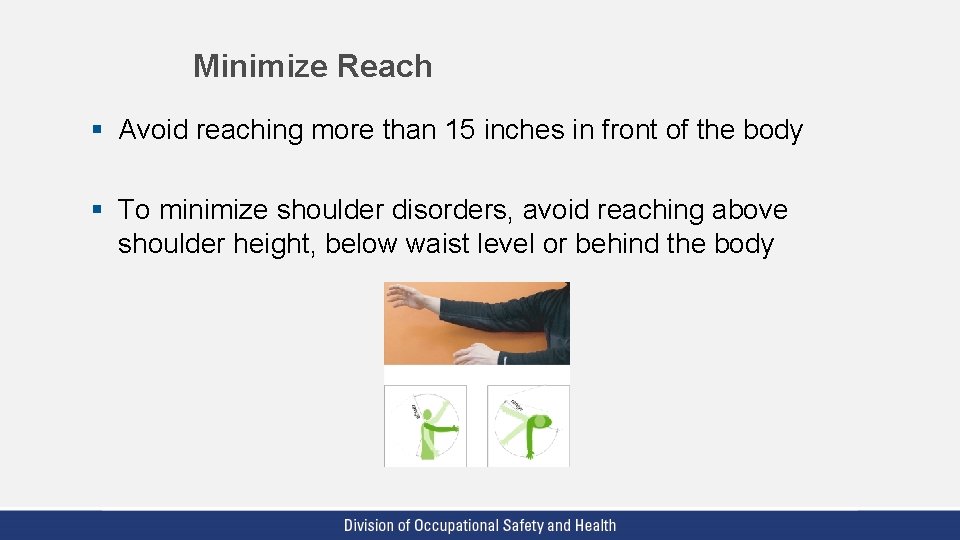
Minimize Reach § Avoid reaching more than 15 inches in front of the body § To minimize shoulder disorders, avoid reaching above shoulder height, below waist level or behind the body
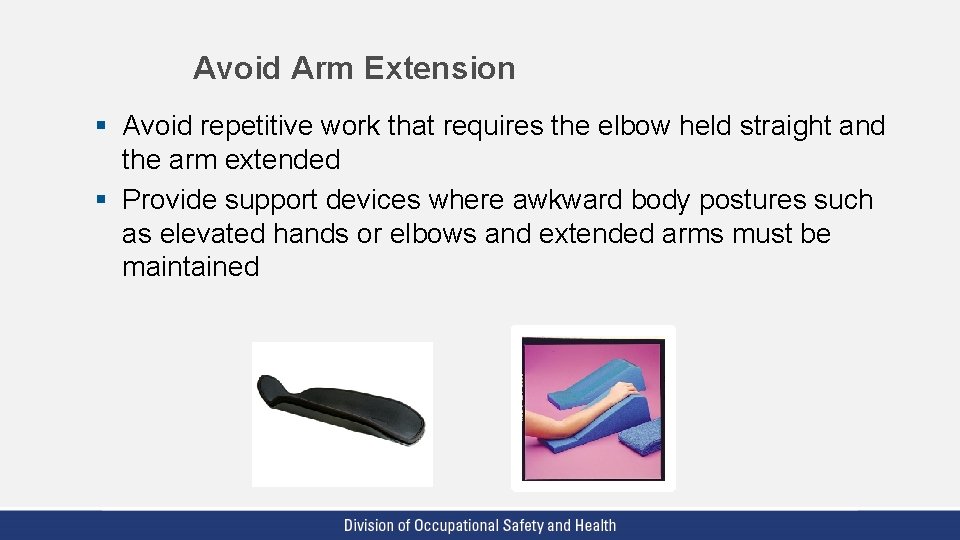
Avoid Arm Extension § Avoid repetitive work that requires the elbow held straight and the arm extended § Provide support devices where awkward body postures such as elevated hands or elbows and extended arms must be maintained
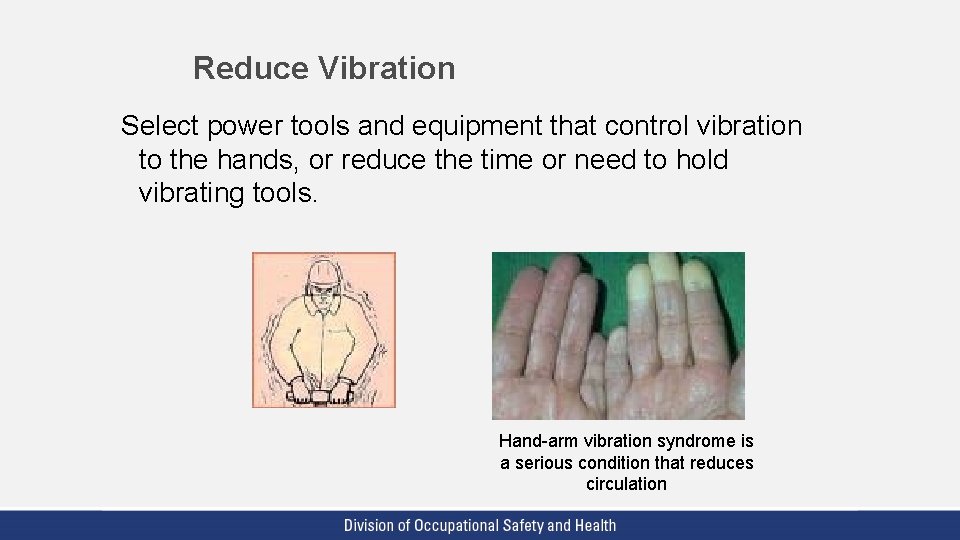
Reduce Vibration Select power tools and equipment that control vibration to the hands, or reduce the time or need to hold vibrating tools. Hand-arm vibration syndrome is a serious condition that reduces circulation
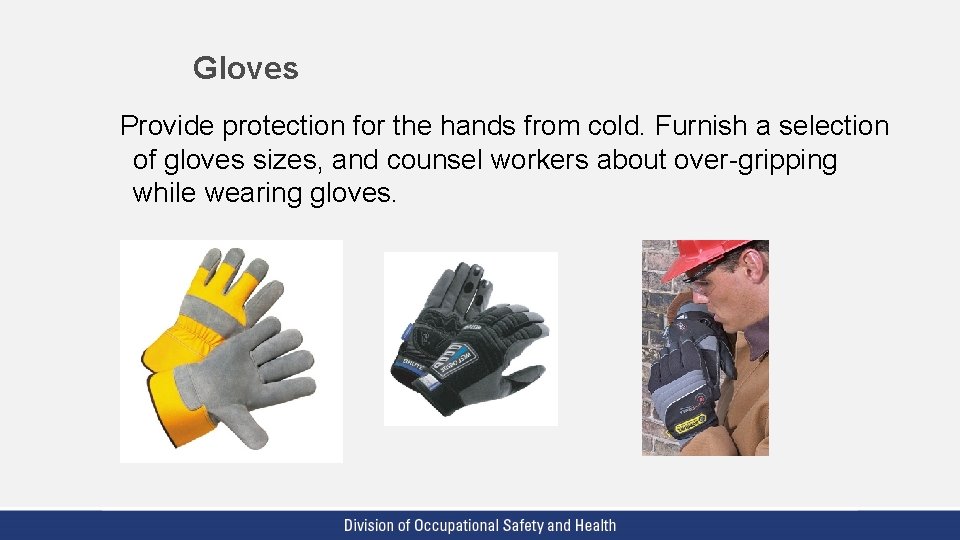
Gloves Provide protection for the hands from cold. Furnish a selection of gloves sizes, and counsel workers about over-gripping while wearing gloves.
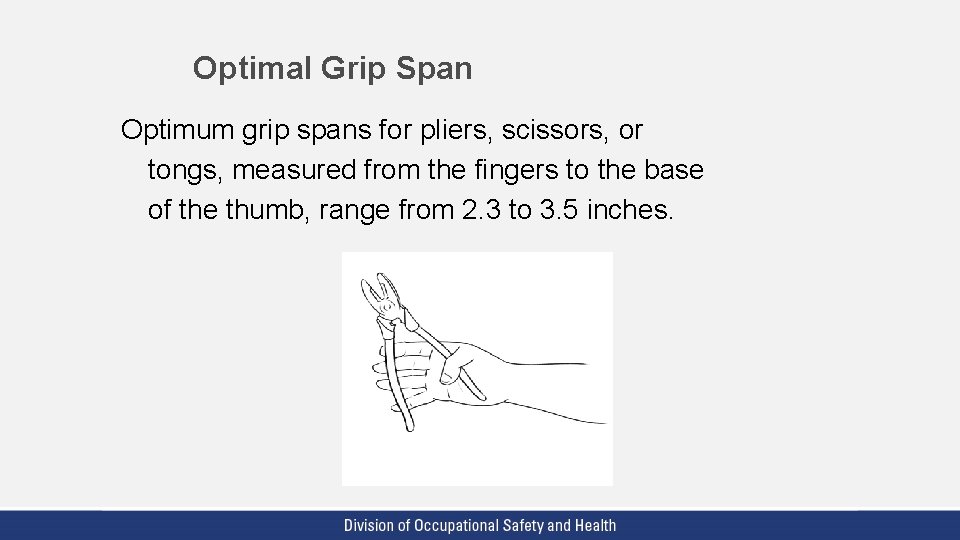
Optimal Grip Span Optimum grip spans for pliers, scissors, or tongs, measured from the fingers to the base of the thumb, range from 2. 3 to 3. 5 inches.
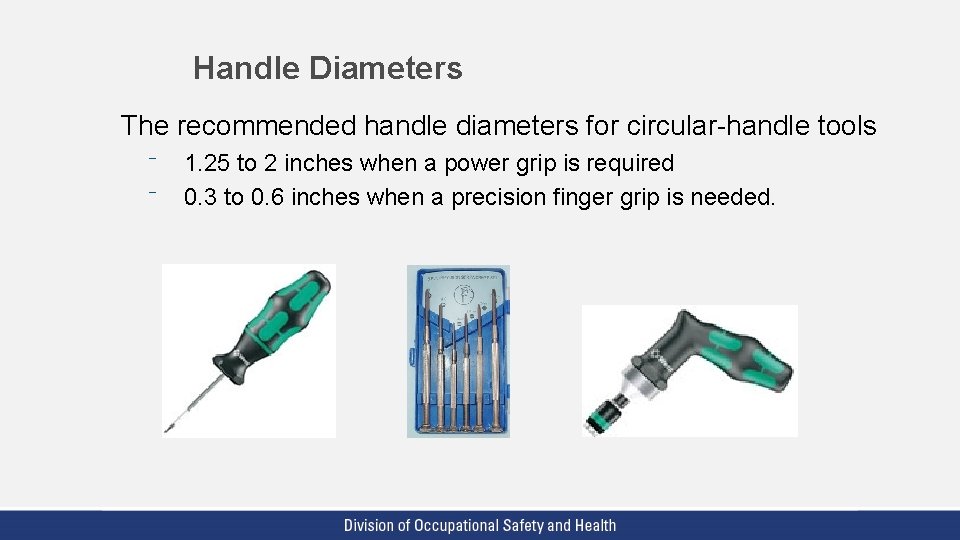
Handle Diameters The recommended handle diameters for circular-handle tools ⁻ ⁻ 1. 25 to 2 inches when a power grip is required 0. 3 to 0. 6 inches when a precision finger grip is needed.
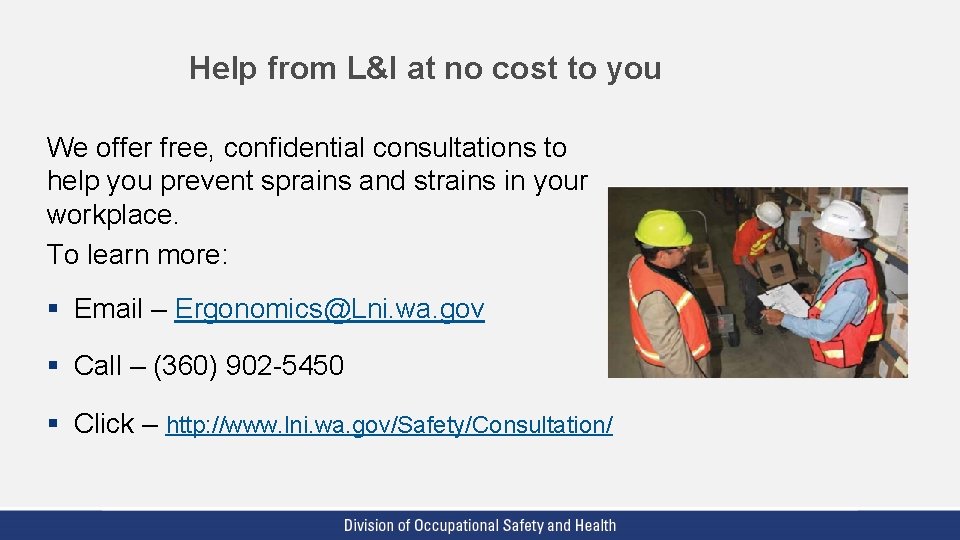
Help from L&I at no cost to you We offer free, confidential consultations to help you prevent sprains and strains in your workplace. To learn more: § Email – Ergonomics@Lni. wa. gov § Call – (360) 902 -5450 § Click – http: //www. lni. wa. gov/Safety/Consultation/
Thank you for taking the time to learn about safety and health and how to prevent injuries and illnesses.