
How to Control Head Lice A tutorial for
- Slides: 10
How to Control Head Lice A tutorial for school officials and concerned parents
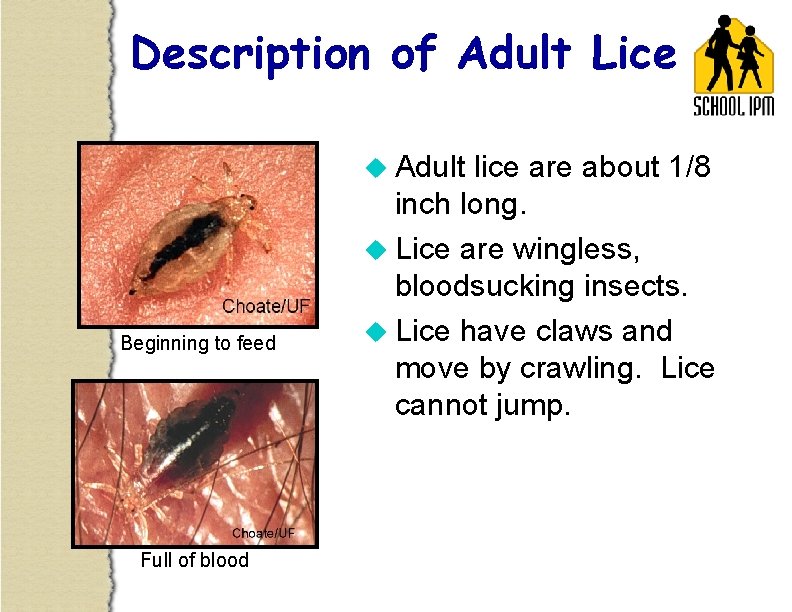
Description of Adult Lice u Adult Beginning to feed Full of blood lice are about 1/8 inch long. u Lice are wingless, bloodsucking insects. u Lice have claws and move by crawling. Lice cannot jump.
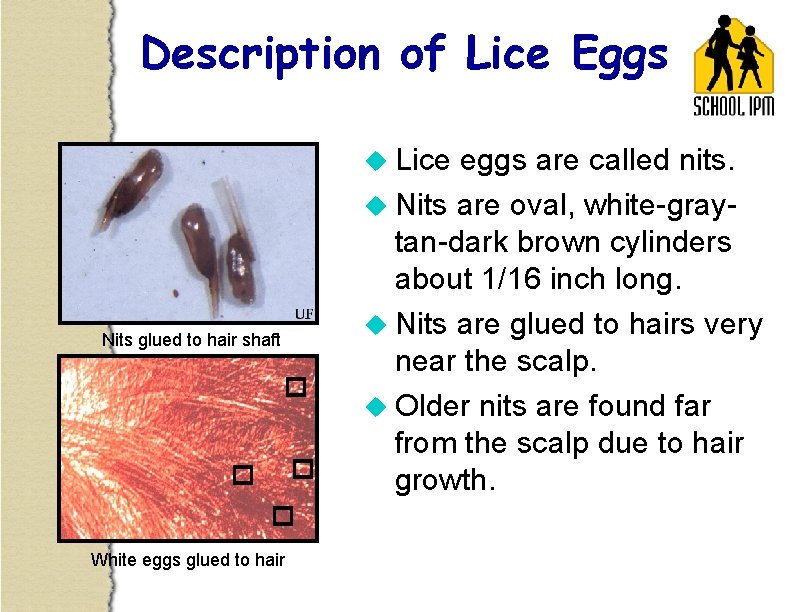
Description of Lice Eggs u Lice Nits glued to hair shaft White eggs glued to hair eggs are called nits. u Nits are oval, white-graytan-dark brown cylinders about 1/16 inch long. u Nits are glued to hairs very near the scalp. u Older nits are found far from the scalp due to hair growth.
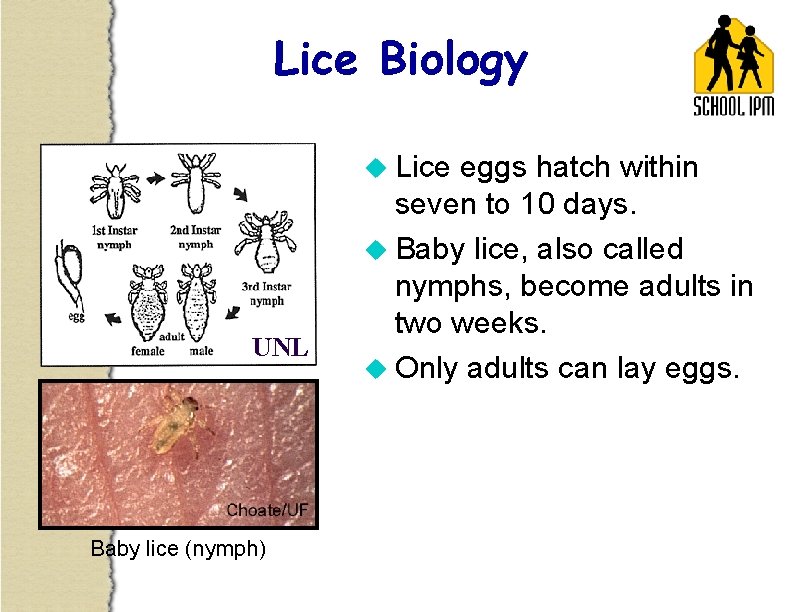
Lice Biology u Lice UNL Baby lice (nymph) eggs hatch within seven to 10 days. u Baby lice, also called nymphs, become adults in two weeks. u Only adults can lay eggs.
4 Steps to Lice Eradication u Prevention: Inspect frequently. u Treatment: May include use of lice shampoo. u Treatment of Belongings: Wash bedding and clothing in hot soapy water. Dry using “high heat” cycle. Bag other items. u Post-treatment Inspection: Inspect individuals up to 10 days following treatment.
Prevention of Head Lice u Head lice are spread by infested people. u Pets cannot get or spread head lice. u Only people get head lice. u Children should not share combs, hats and personal belongings. u Frequent inspections are a must. u Search entire head, especially back of head and neck. u Part hair section by section. u Remove lice with tweezers or lice comb. u Be careful not to spread lice to others while inspecting.
Option #1 Non-chemical Control 1 2 3 Remove lice and nits using lice comb. Place lice and nits in soapy water or freeze. Wash all bedding and personal belongings in hot soapy water. Dry on “high heat” cycle. As a Last Resort u Shave u Even child’s head. a very short haircut can aid in detection and removal of lice.
Option #2 Treatment with Lice Shampoo 1 2 3 4 5 Wash hair with household shampoo. Completely wet hair with lice shampoo. Add warm water, leave product on head for recommended time - usually 10 minutes. Rinse thoroughly with warm water while removing any dead lice and nits. Retreatment may be necessary in seven to 10 days as this kills hatching eggs.
Do Not Treat Classrooms u Lice live their entire life cycle on the human body. u Lice die within 24 hours after falling off the host. u Treatment of classrooms with insecticidal sprays is unnecessary and may be hazardous.
Acknowledgements Author: Clay W. Scherer, University of Florida Photos: Paul M. Choate, University of Florida Clay W. Scherer, University of Florida Life Cycle Graphic: University of Nebraska-Lincoln Design: Matthew B. Downey, University of Florida This is one of several presentations available at the School IPM World Wide Web Site http: //schoolipm. ifas. ufl. edu/ Entomology and Nematology Department Copyright University of Florida 1998