
How to construct an equitemp from an equiloc
- Slides: 10
How to construct an equitemp from an equiloc of a given observer
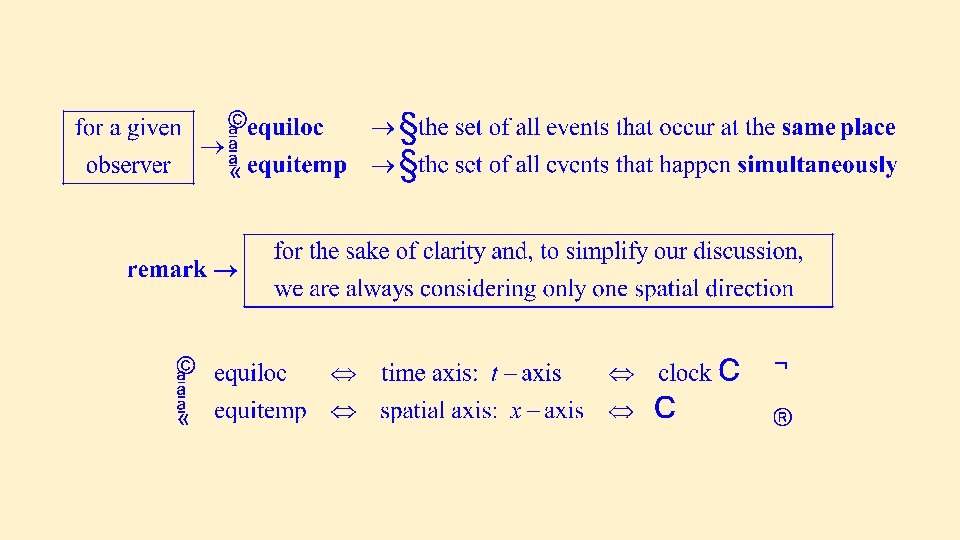
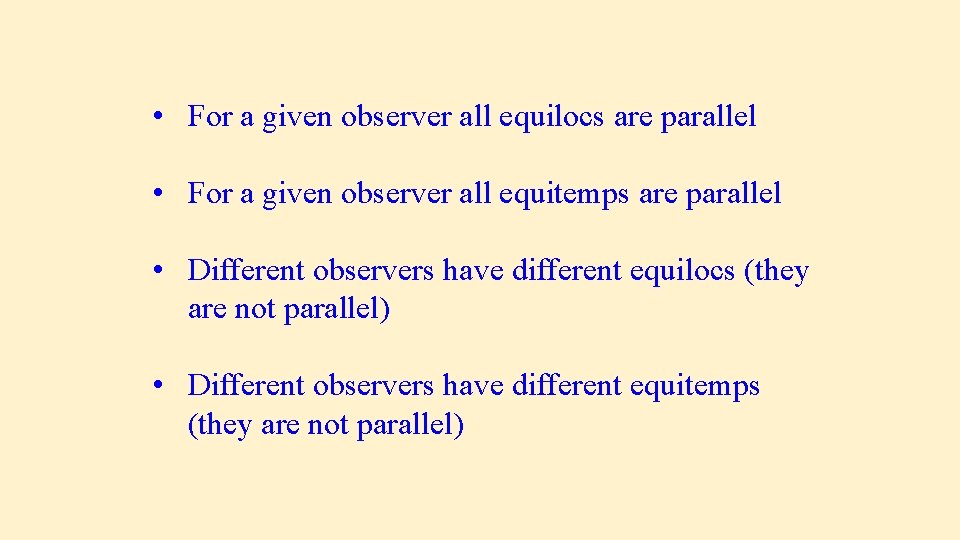
• For a given observer all equilocs are parallel • For a given observer all equitemps are parallel • Different observers have different equilocs (they are not parallel) • Different observers have different equitemps (they are not parallel)
• The concept of parallelism is not metric dependent • The orthogonality concept is metric dependent • This means that “perpendicular” depends on the observer • Euclidean orthogonality (like stating that horizontal is perpendicular to vertical) is not applicable to special relativity • In special relativity and, for a given observer, any equitemp is orthogonal to any equiloc
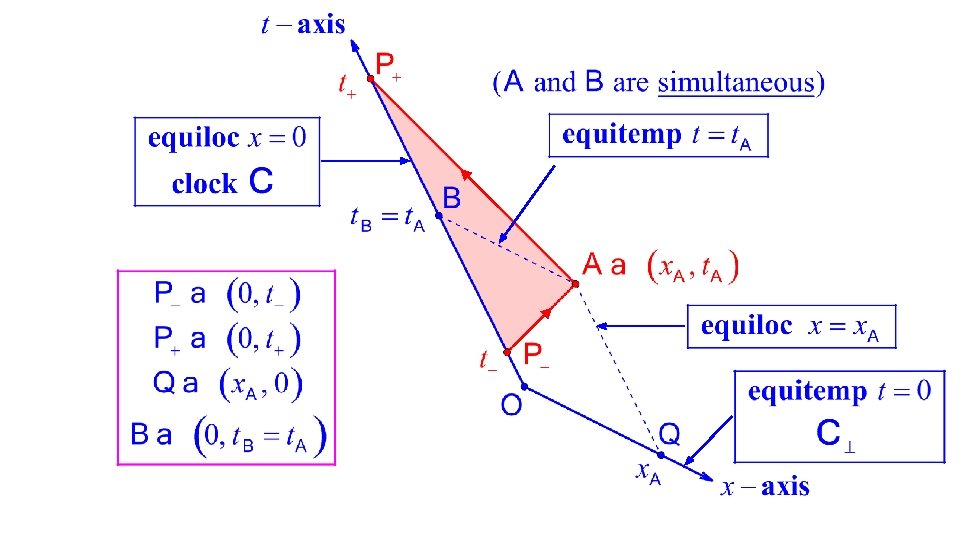
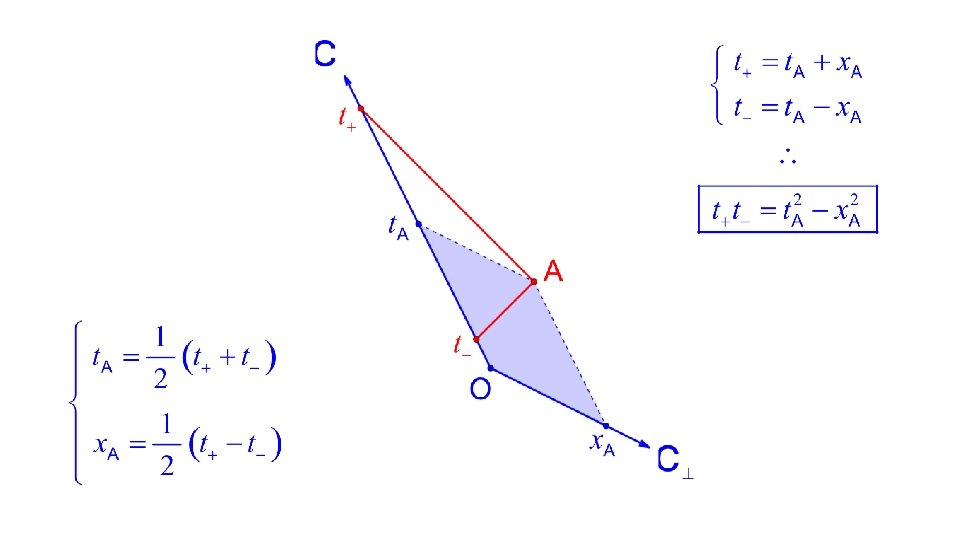
• How can we construct equitemps (for a given observer) after an equiloc (i. e. , the t – axis or clock) is defined (for that observer) ? • We first define the t – axis (an equiloc for the observer) • Then, for an event A (which is not on that equiloc), we determine event B (on that equiloc) which – for this specific observer – is simultaneous with A • Accordingly, the straight line through A and B is an equitemp • The x – axis is the equitemp that passes through the origin O
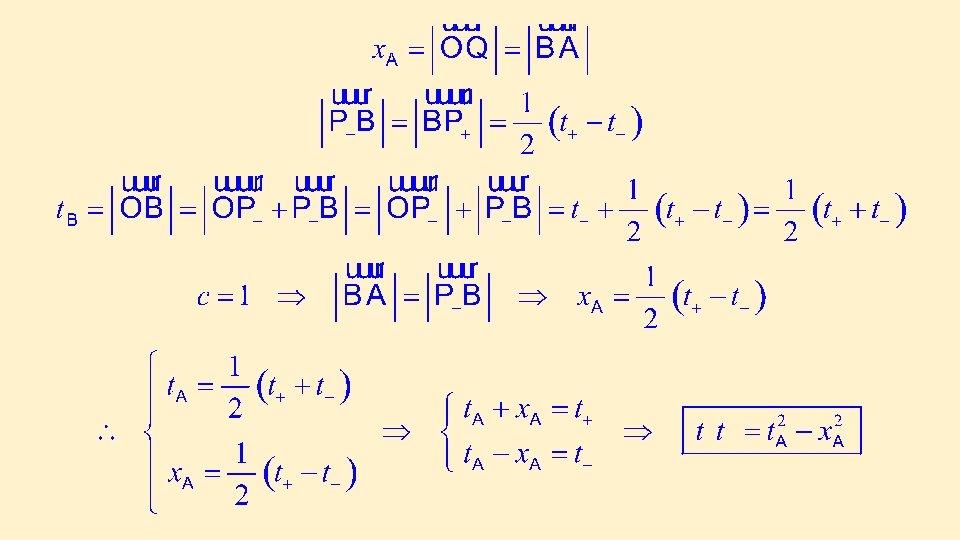
• Events P– and P+ define an equiloc for our observer • At event P– an electromagnetic signal in sent to event A • At event A that electromagnetic signal (received from P– ) is reflected to event P+ (sent back to the equiloc) • Light takes the same time to travel from P– to A as it takes to travel back from A to P+ • Event B, midway between P– and P+, is then simultaneous with event A