
How to compute a derivative Computing derivatives of
- Slides: 58
How to compute a derivative
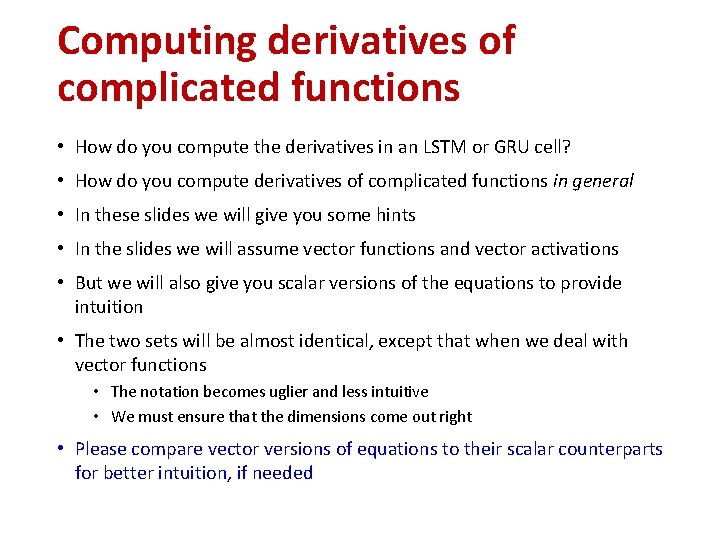
Computing derivatives of complicated functions • How do you compute the derivatives in an LSTM or GRU cell? • How do you compute derivatives of complicated functions in general • In these slides we will give you some hints • In the slides we will assume vector functions and vector activations • But we will also give you scalar versions of the equations to provide intuition • The two sets will be almost identical, except that when we deal with vector functions • The notation becomes uglier and less intuitive • We must ensure that the dimensions come out right • Please compare vector versions of equations to their scalar counterparts for better intuition, if needed
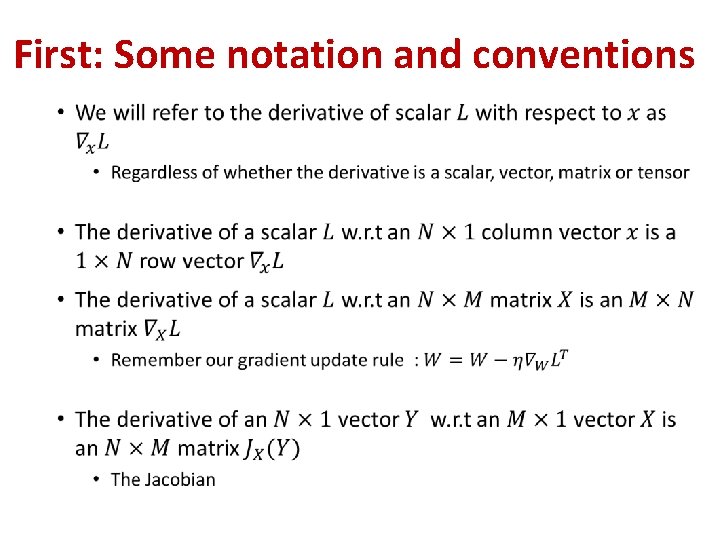
First: Some notation and conventions •
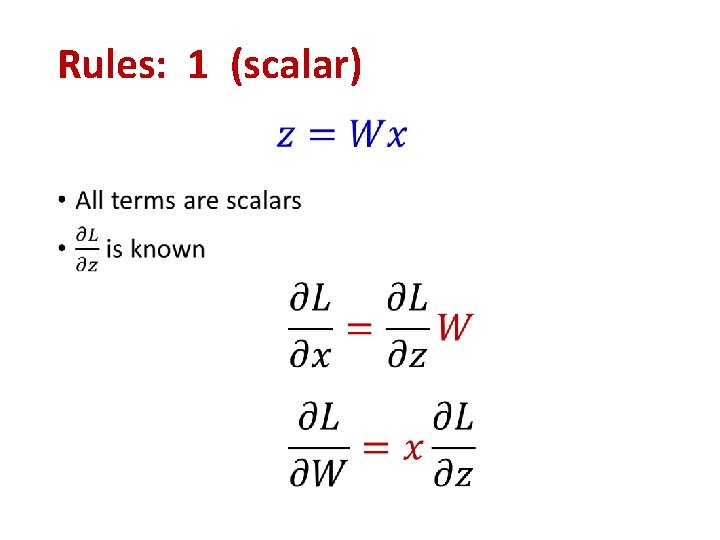
Rules: 1 (scalar) •
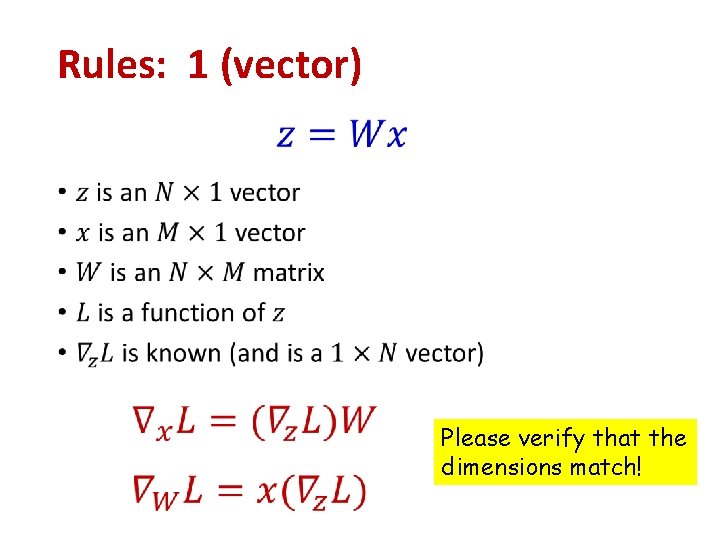
Rules: 1 (vector) • Please verify that the dimensions match!
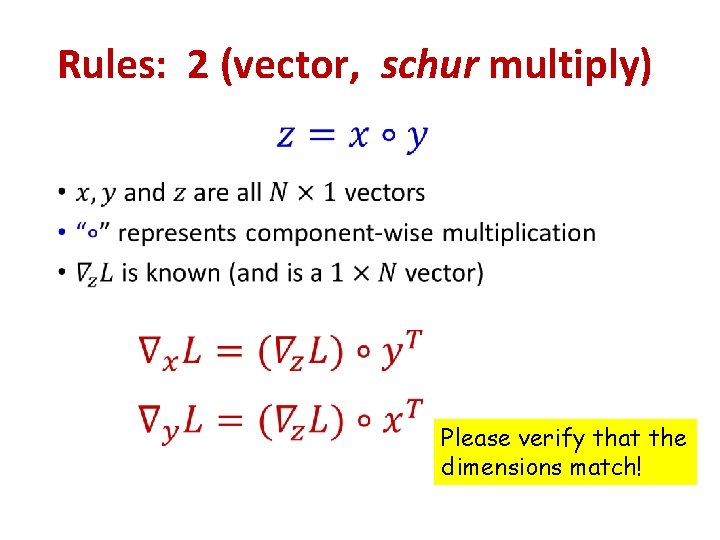
Rules: 2 (vector, schur multiply) • Please verify that the dimensions match!
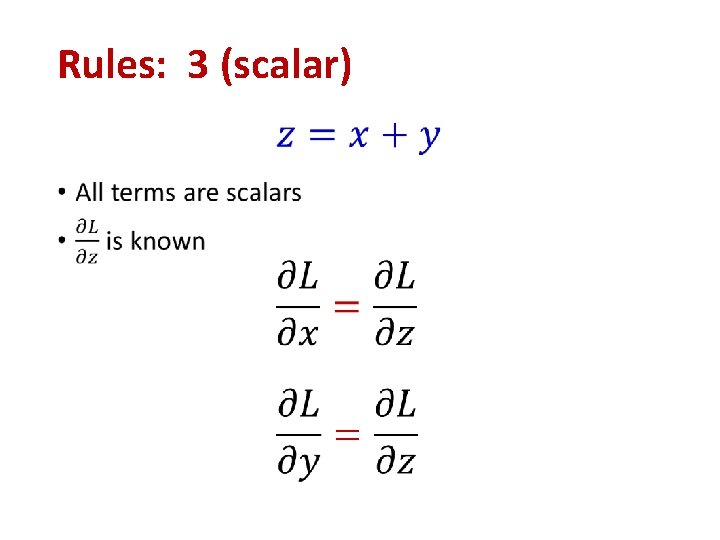
Rules: 3 (scalar) •
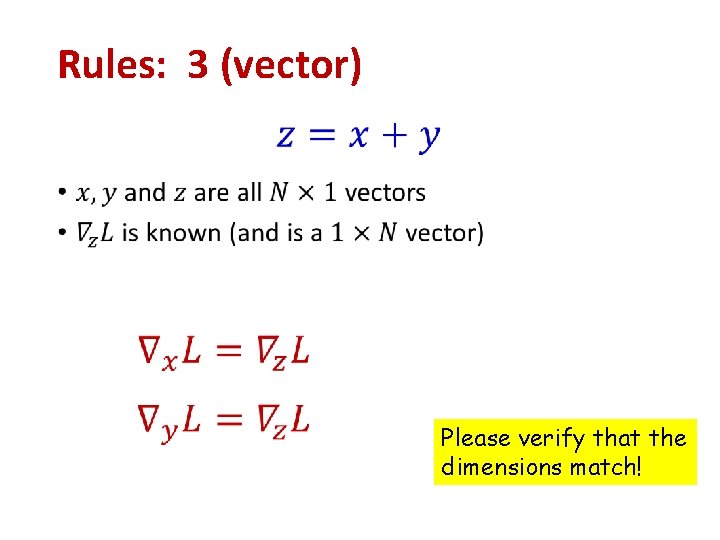
Rules: 3 (vector) • Please verify that the dimensions match!
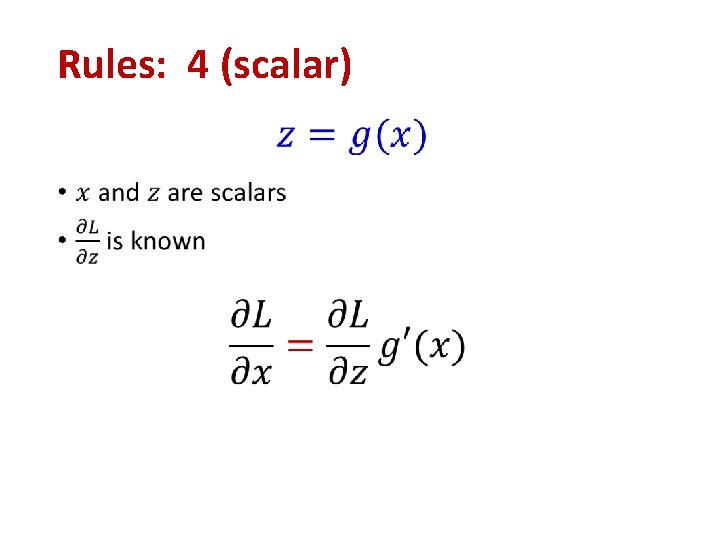
Rules: 4 (scalar) •
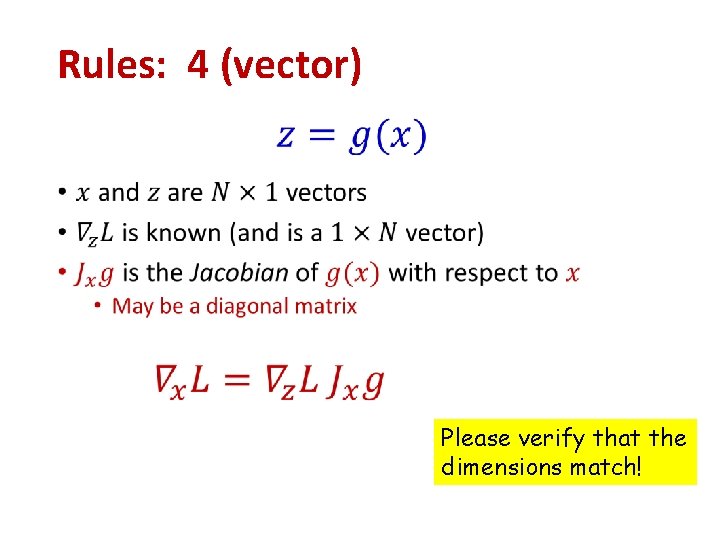
Rules: 4 (vector) • Please verify that the dimensions match!
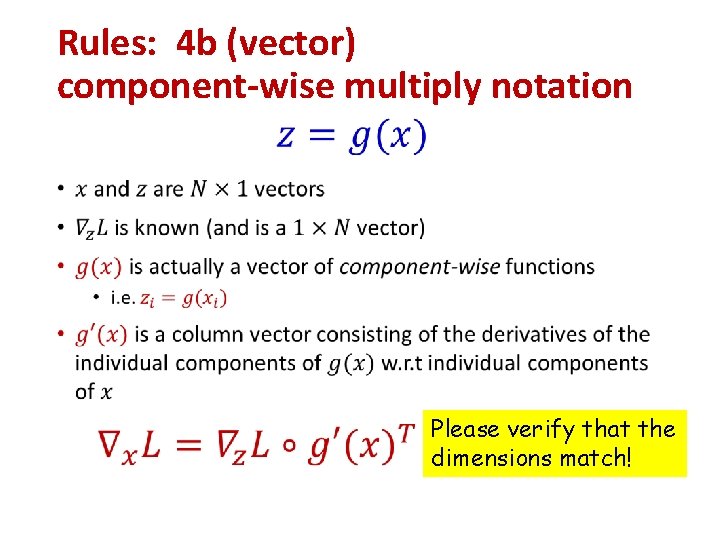
Rules: 4 b (vector) component-wise multiply notation • Please verify that the dimensions match!
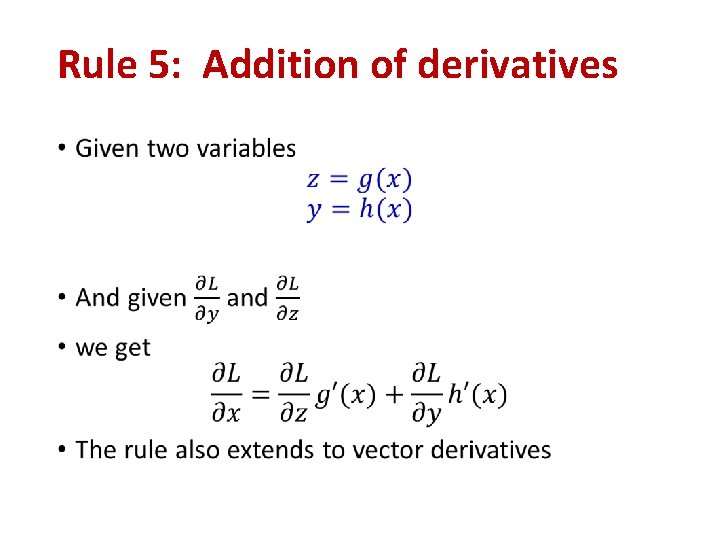
Rule 5: Addition of derivatives •
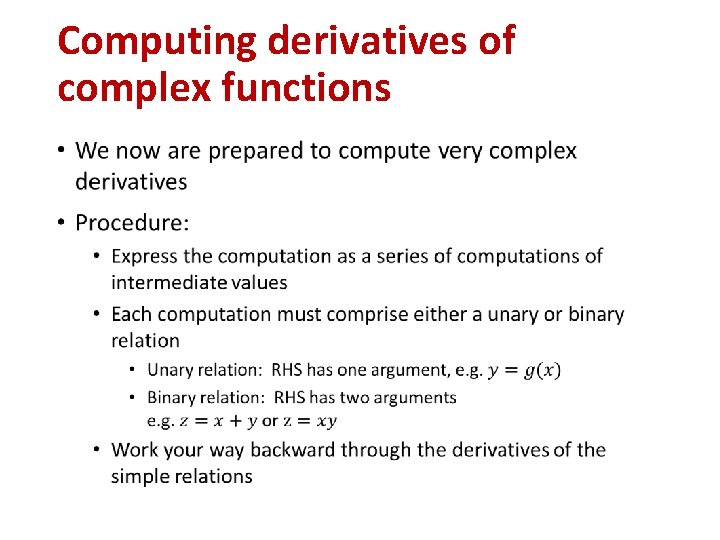
Computing derivatives of complex functions •
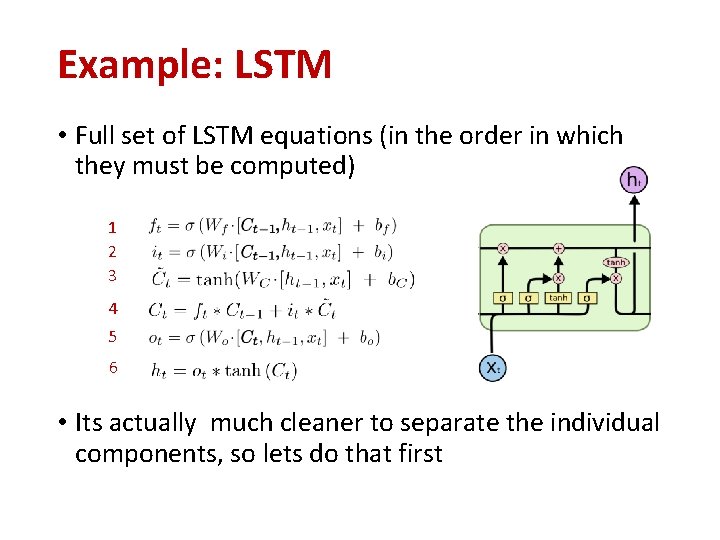
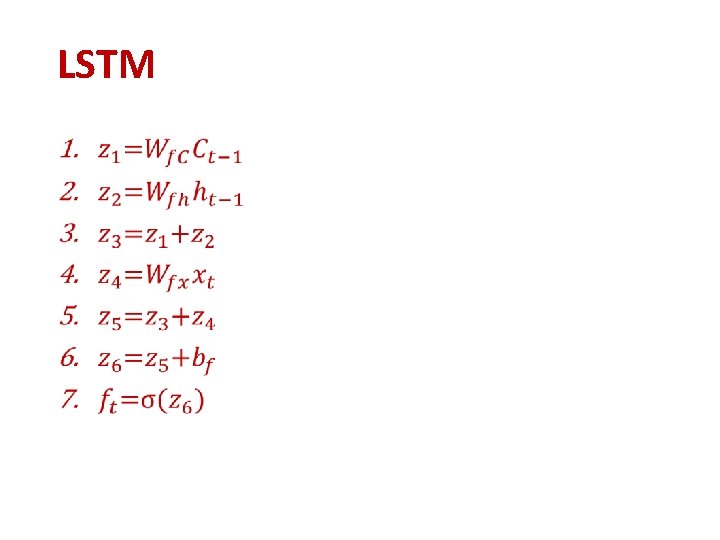
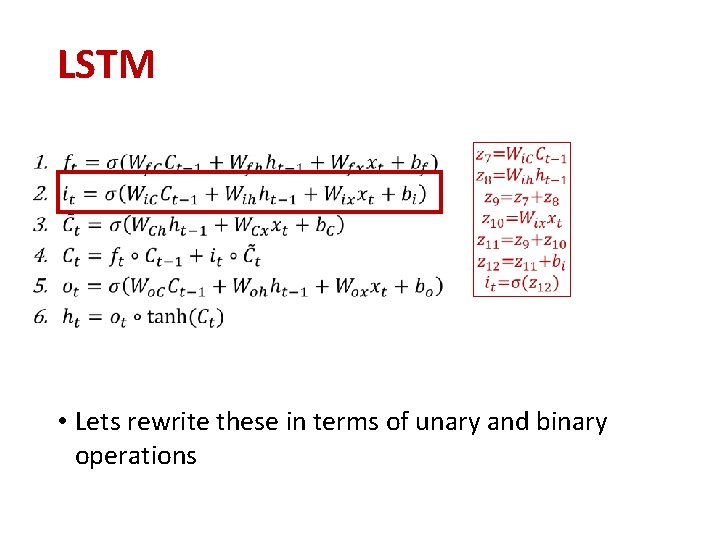
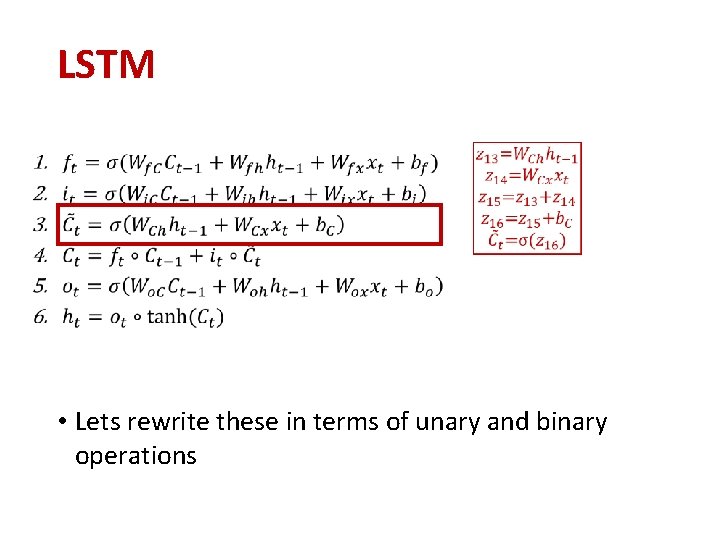
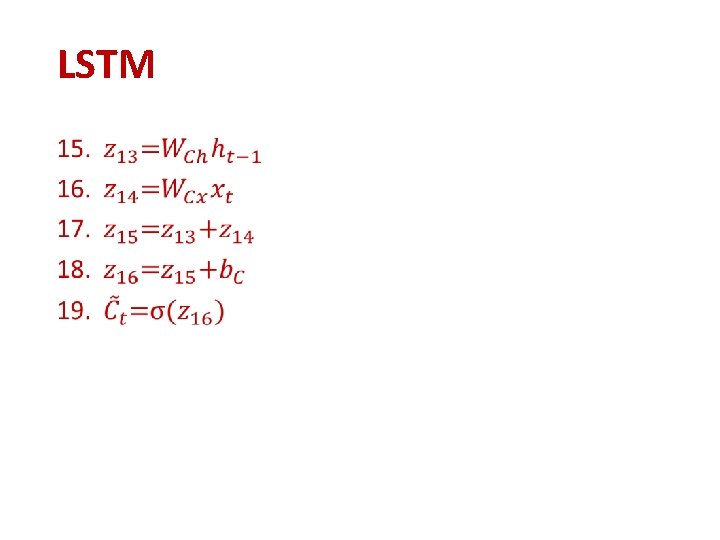
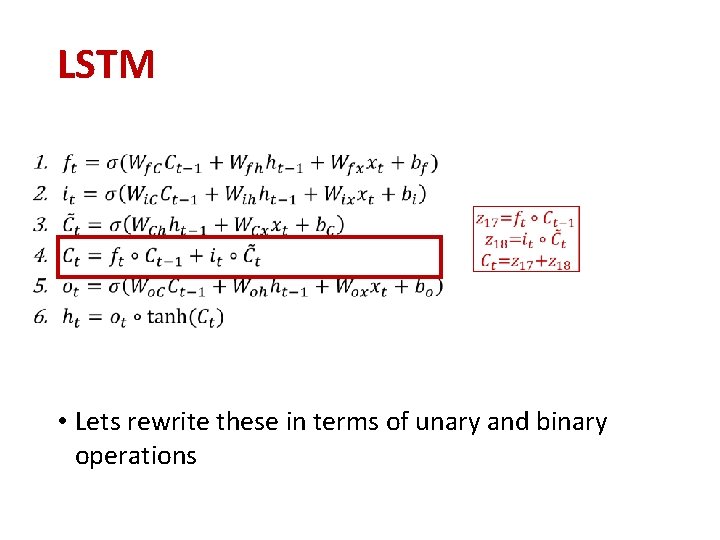
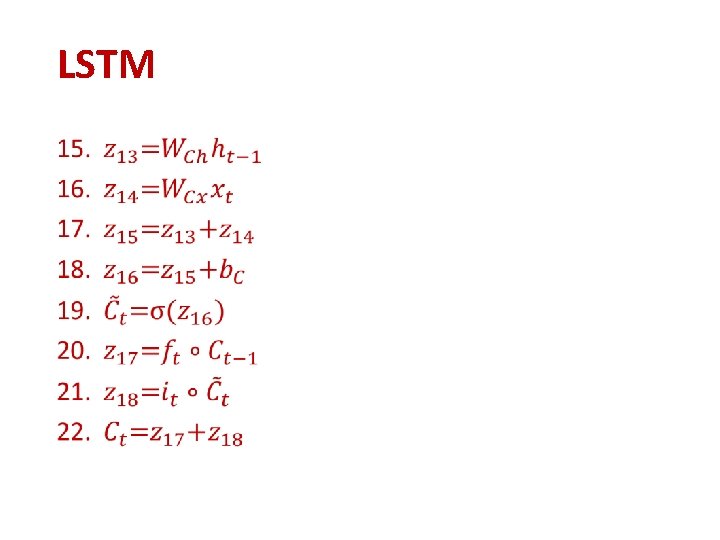
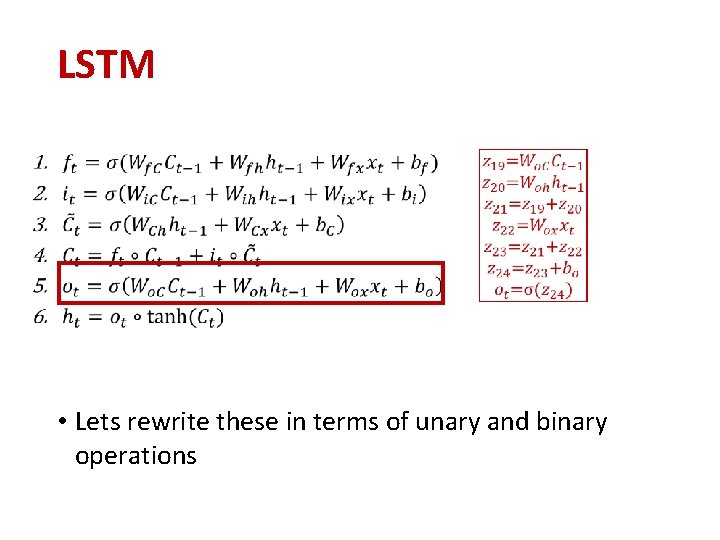
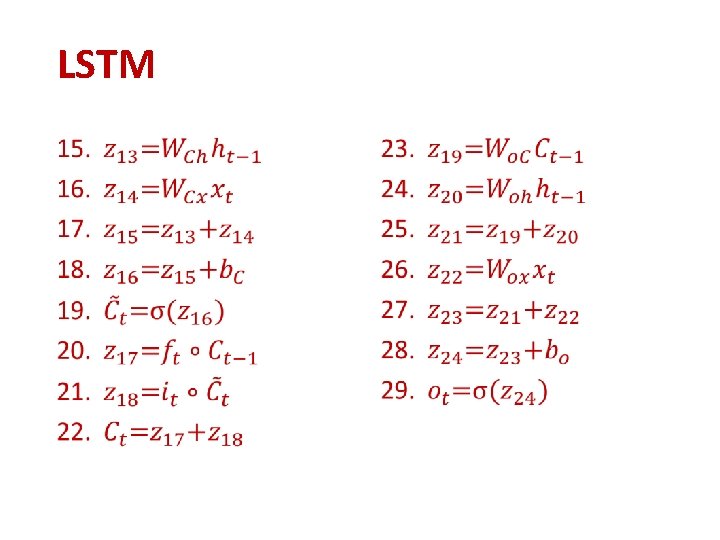
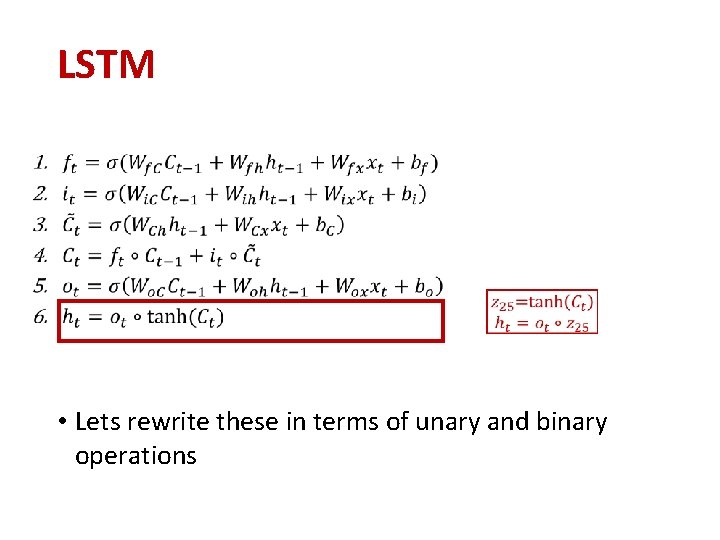
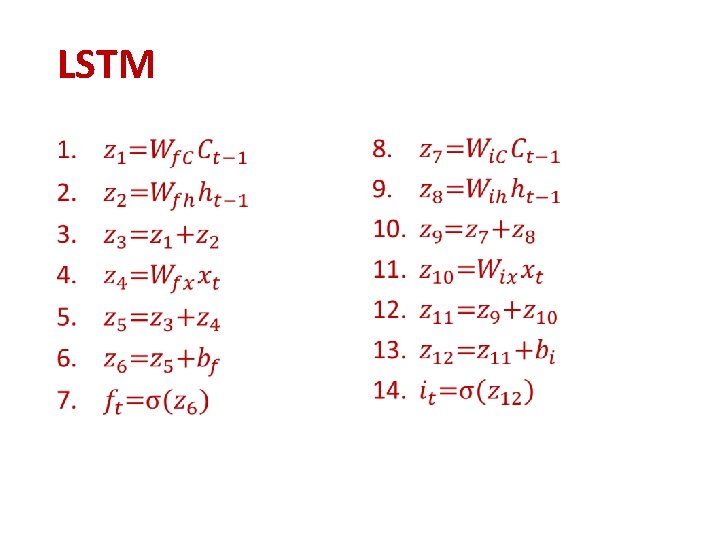
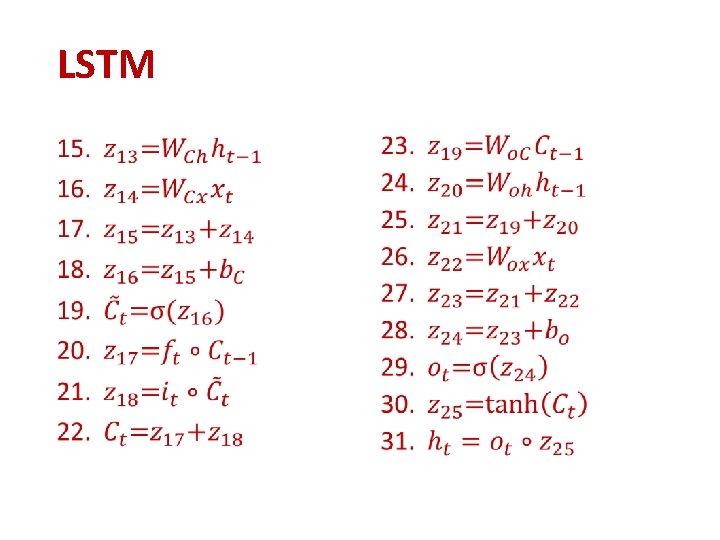
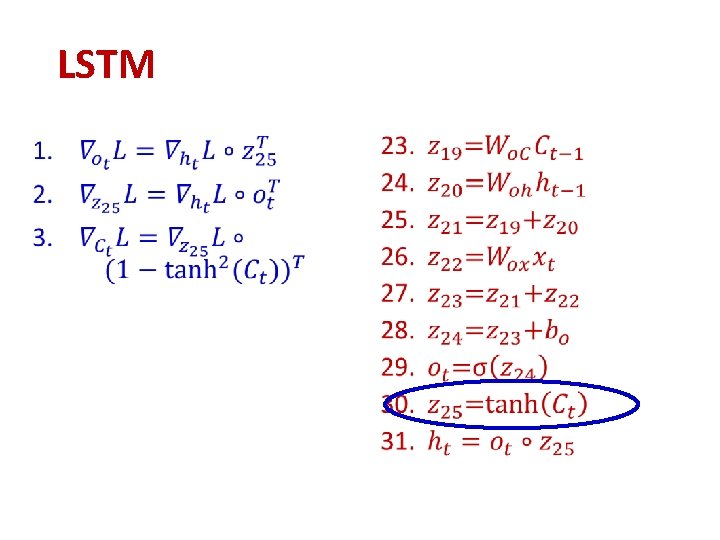
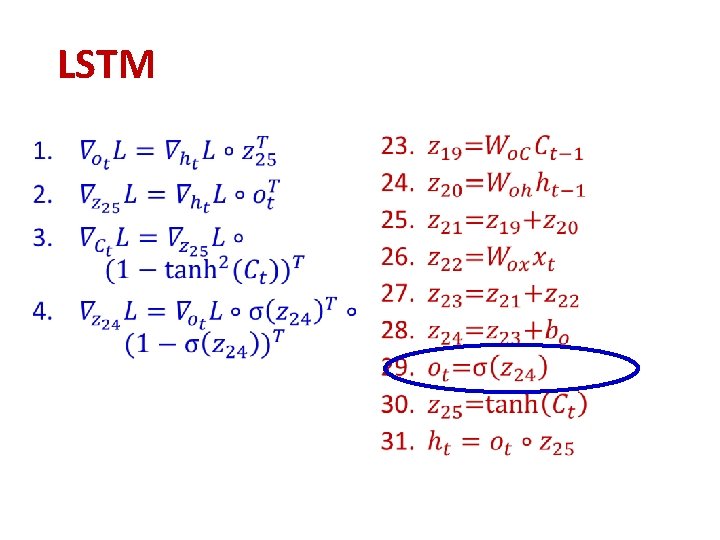
Example: LSTM • Full set of LSTM equations (in the order in which they must be computed) 1 2 3 4 5 6 • Its actually much cleaner to separate the individual components, so lets do that first
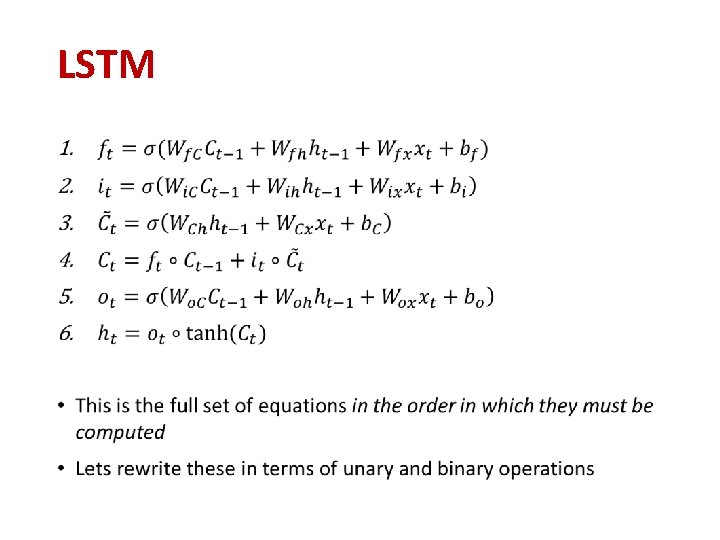
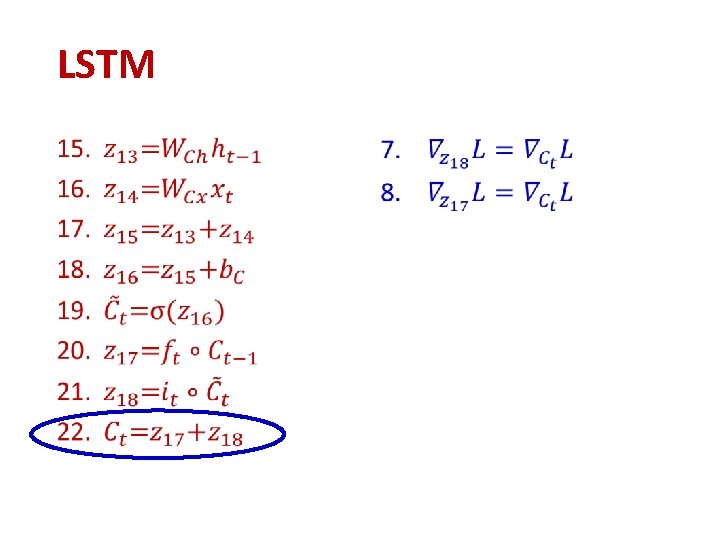
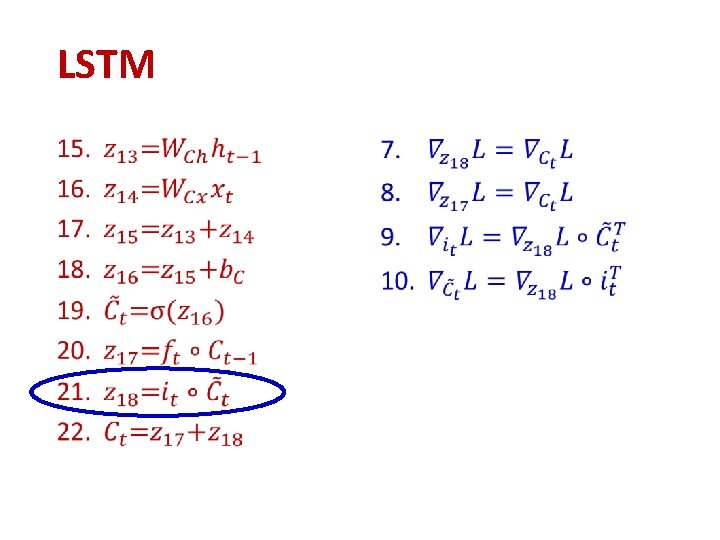
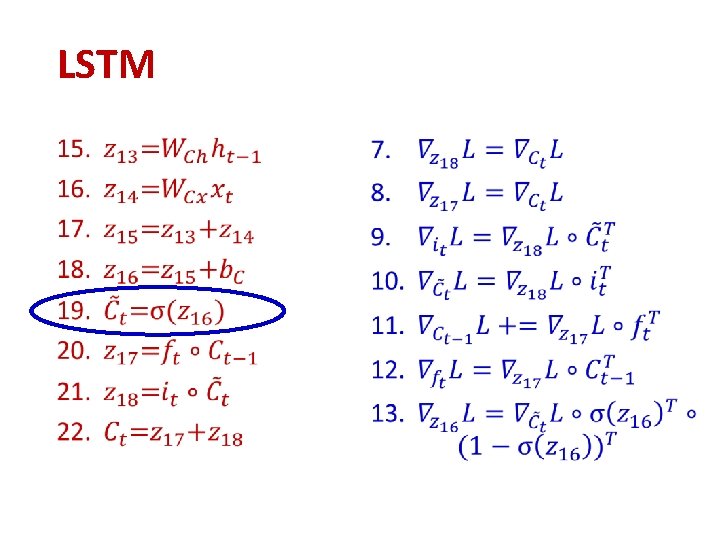
LSTM •
LSTM • Lets rewrite these in terms of unary and binary operations
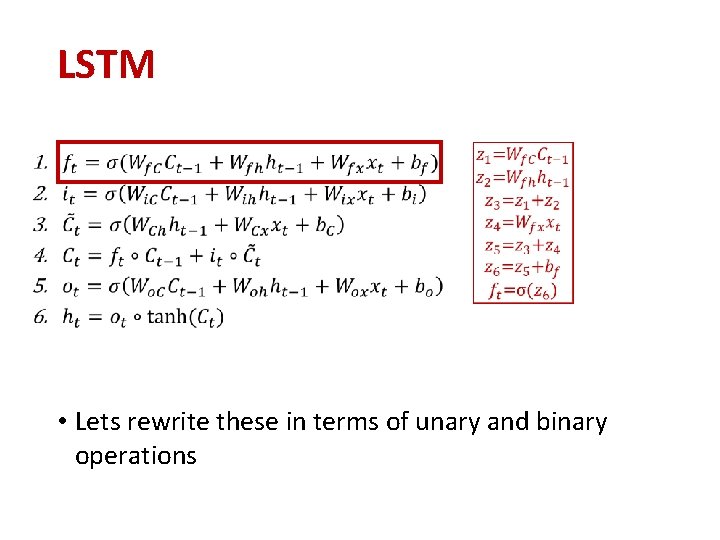
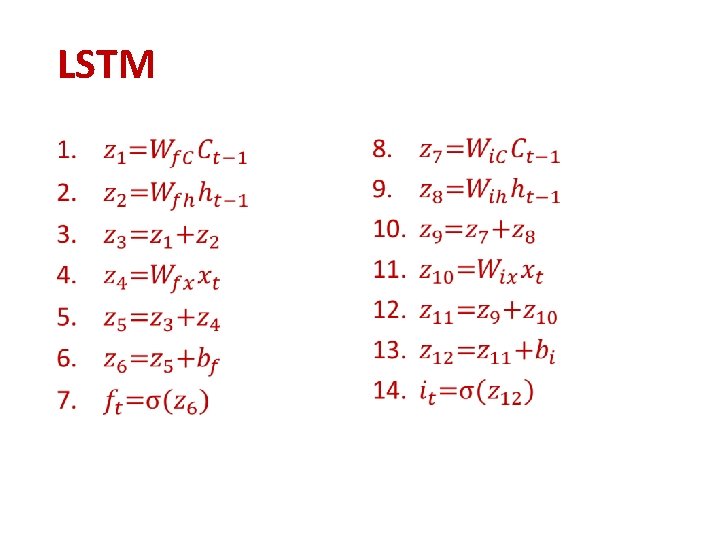
LSTM •
LSTM • Lets rewrite these in terms of unary and binary operations
LSTM •
LSTM • Lets rewrite these in terms of unary and binary operations
LSTM •
LSTM • Lets rewrite these in terms of unary and binary operations
LSTM •
LSTM • Lets rewrite these in terms of unary and binary operations
LSTM •
LSTM • Lets rewrite these in terms of unary and binary operations
LSTM •
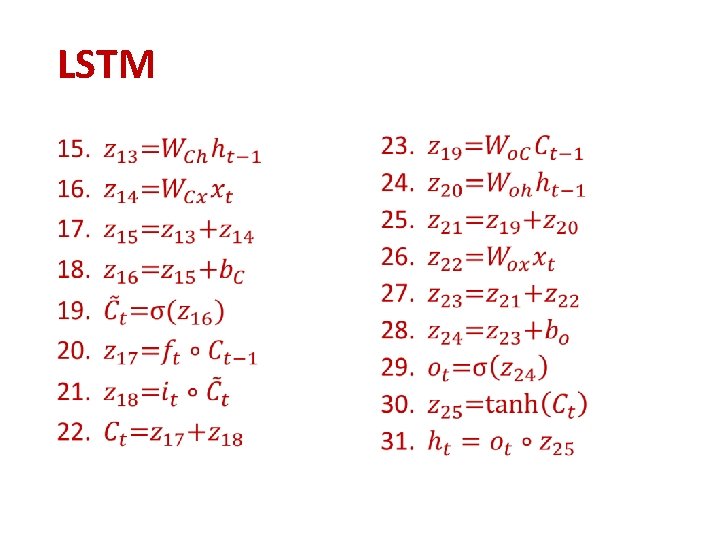
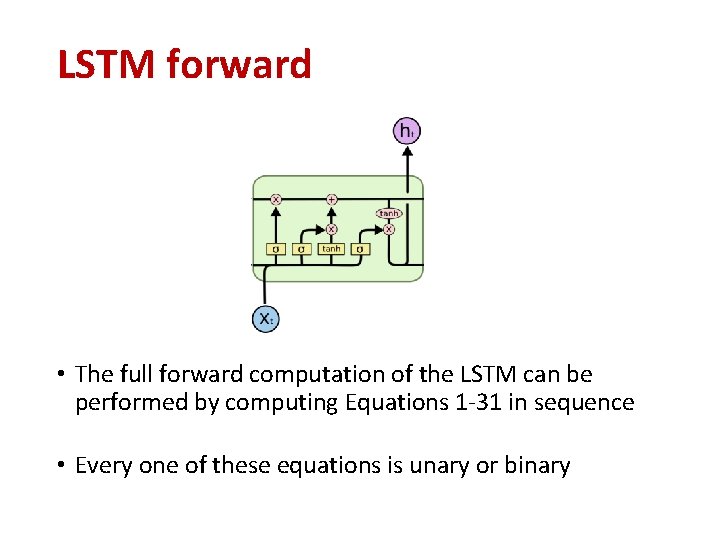
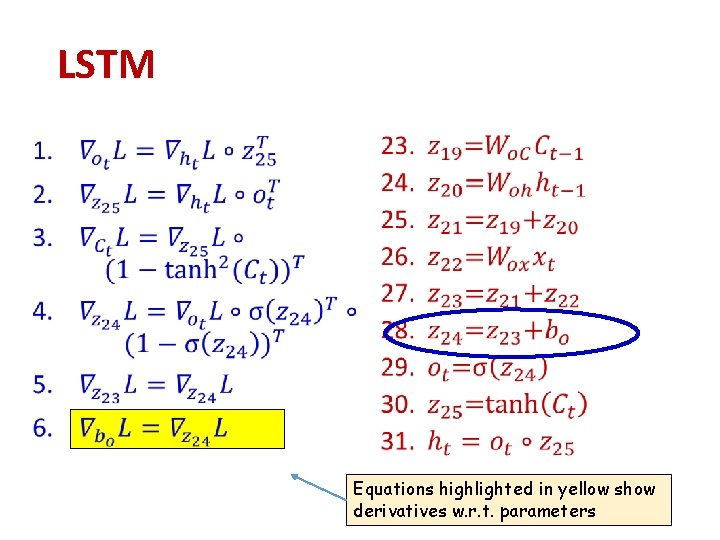
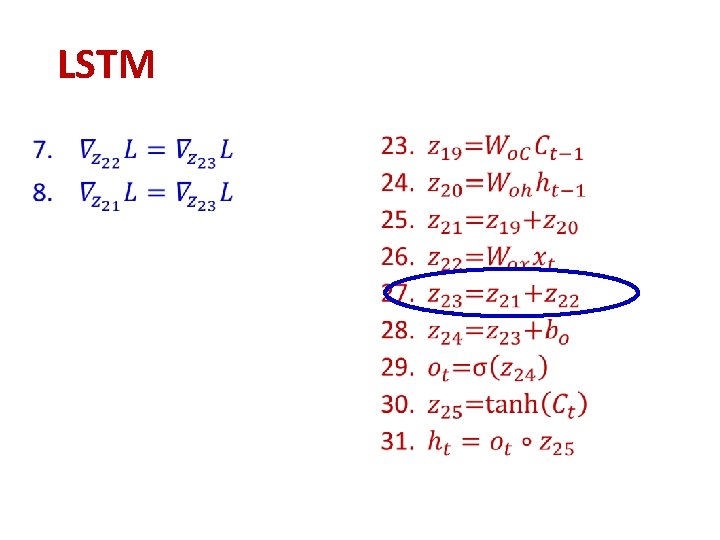
LSTM forward • The full forward computation of the LSTM can be performed by computing Equations 1 -31 in sequence • Every one of these equations is unary or binary
LSTM •
LSTM •
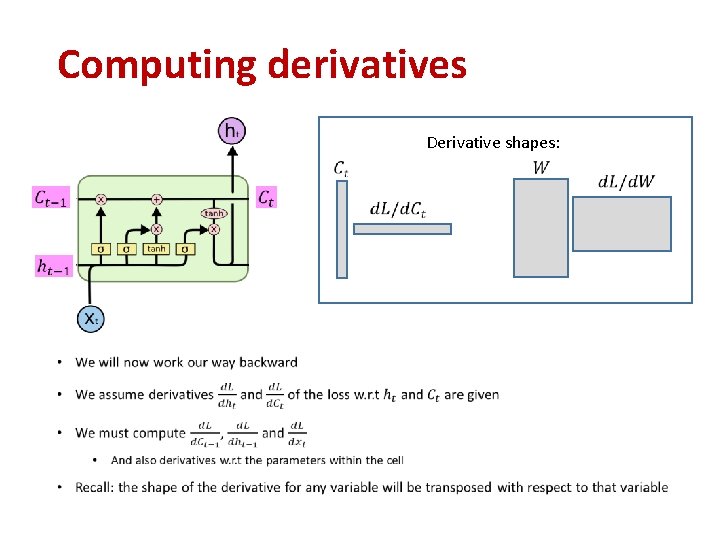
Computing derivatives Derivative shapes: •
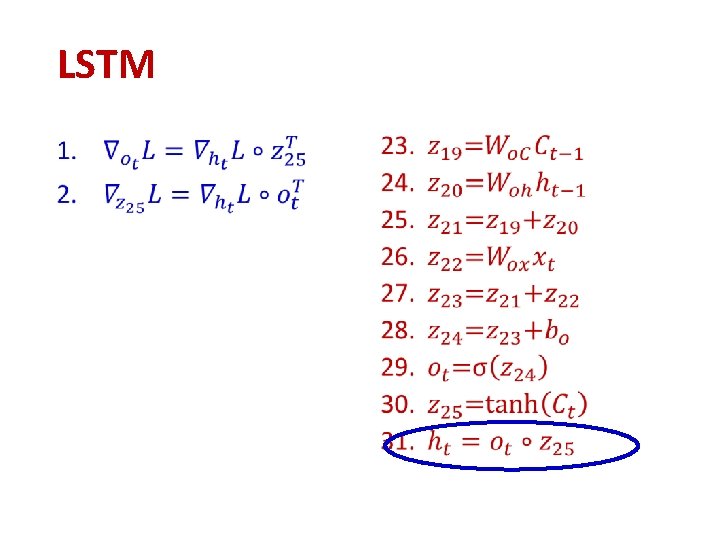
LSTM •
LSTM •
LSTM •
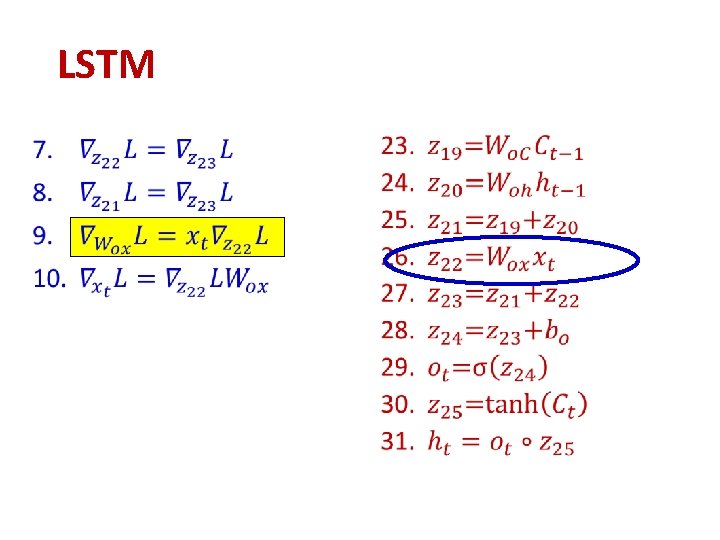
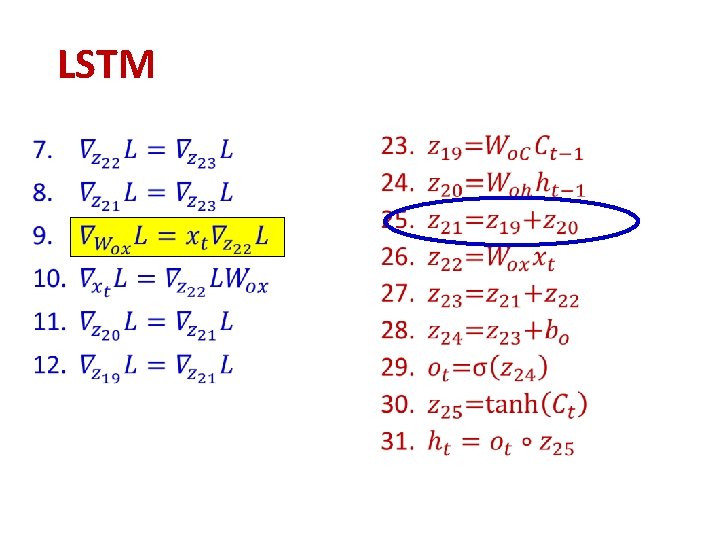
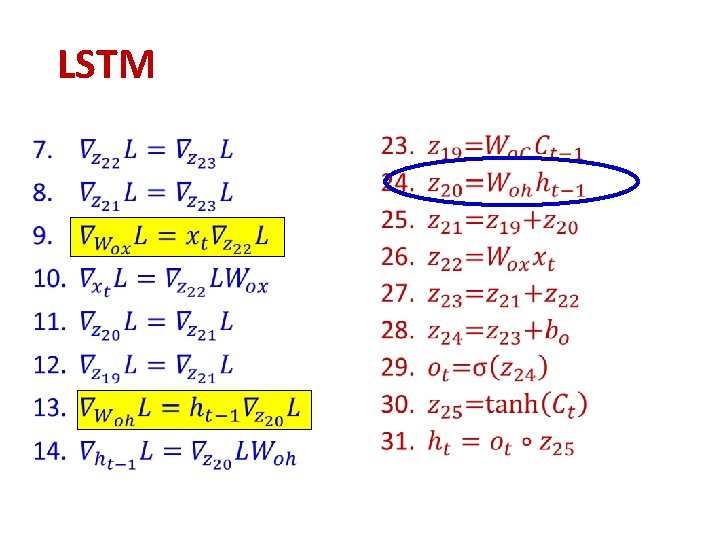
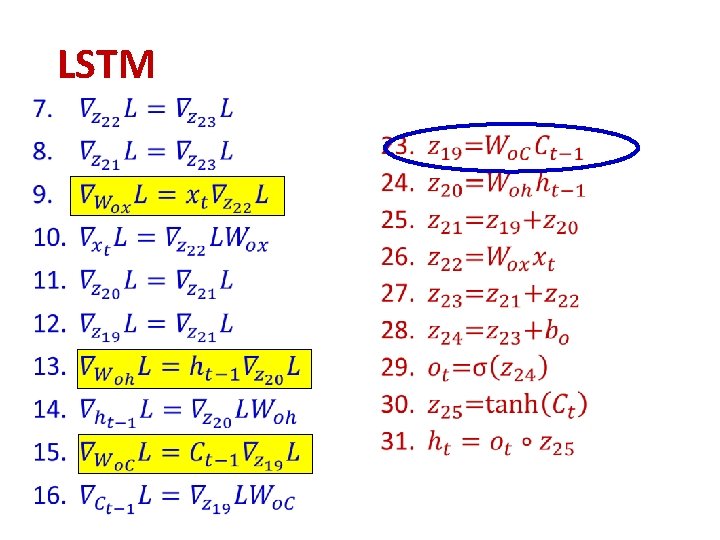
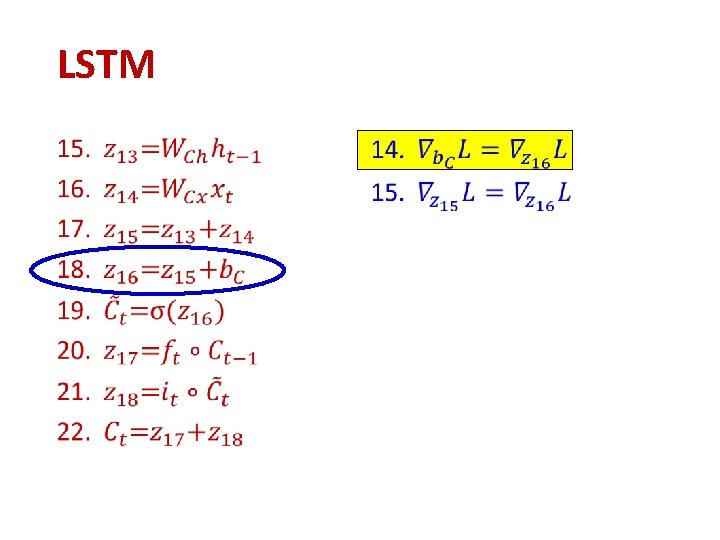
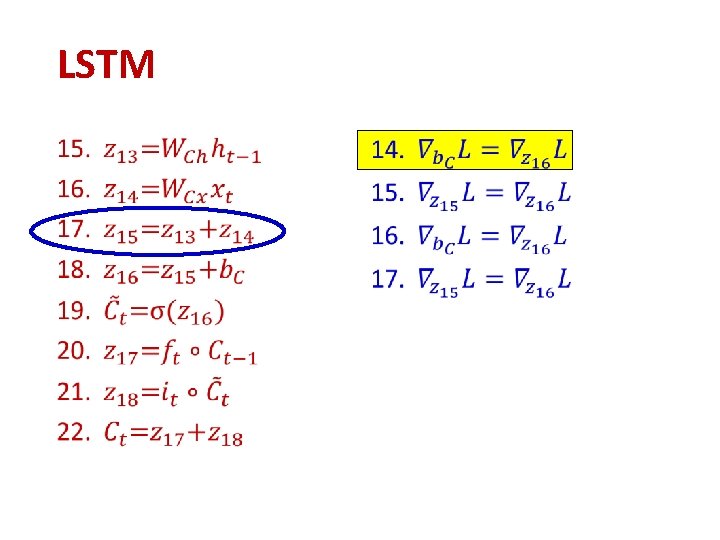
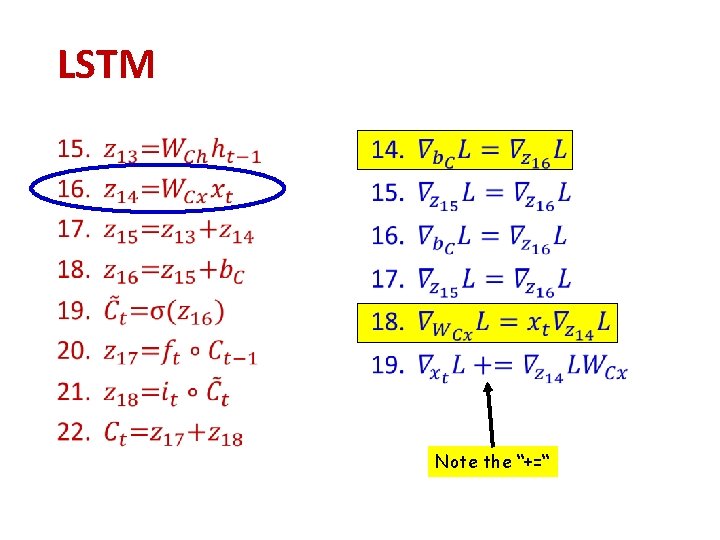
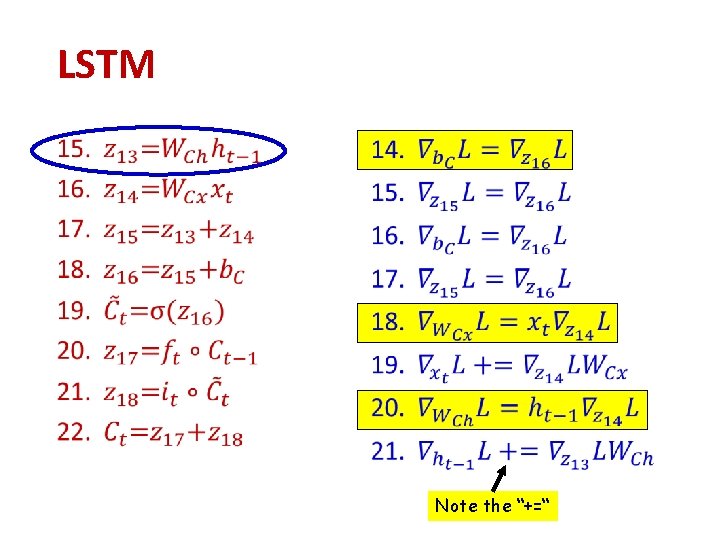
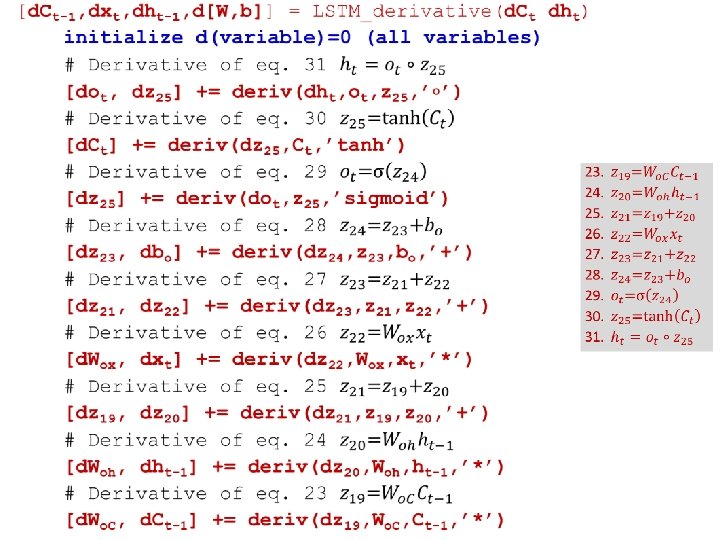
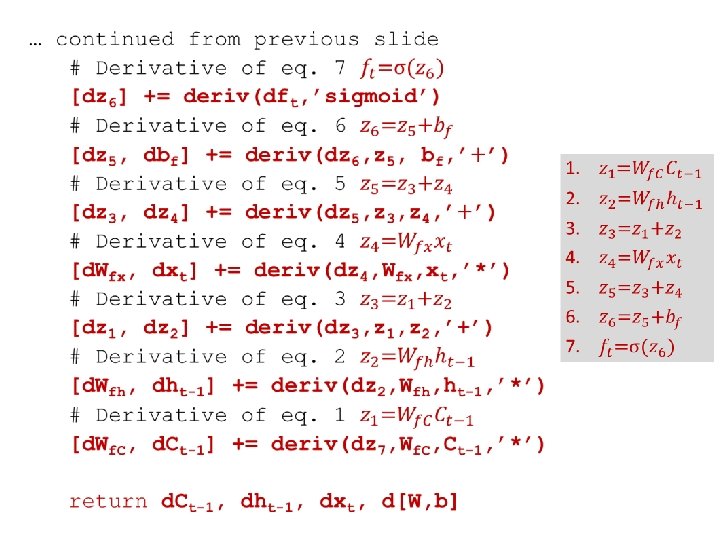
LSTM • Equations highlighted in yellow show derivatives w. r. t. parameters
LSTM •
LSTM •
LSTM •
LSTM •
LSTM •
LSTM •
LSTM •
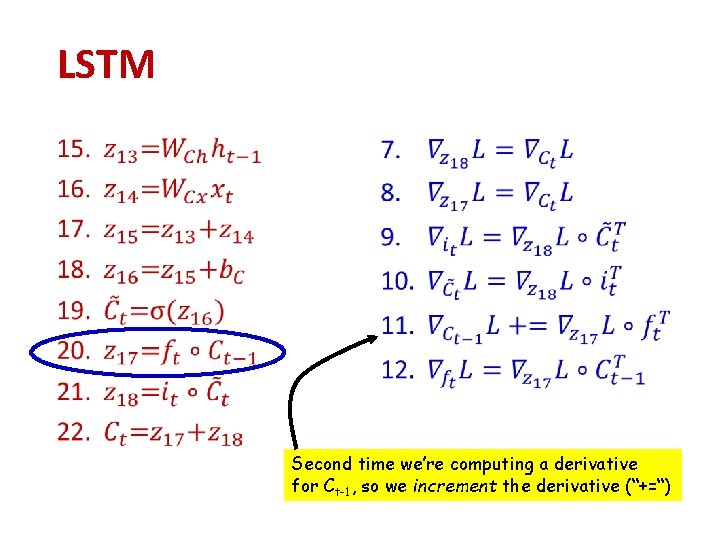
LSTM • Second time we’re computing a derivative for Ct-1, so we increment the derivative (“+=“)
LSTM •
LSTM •
LSTM •
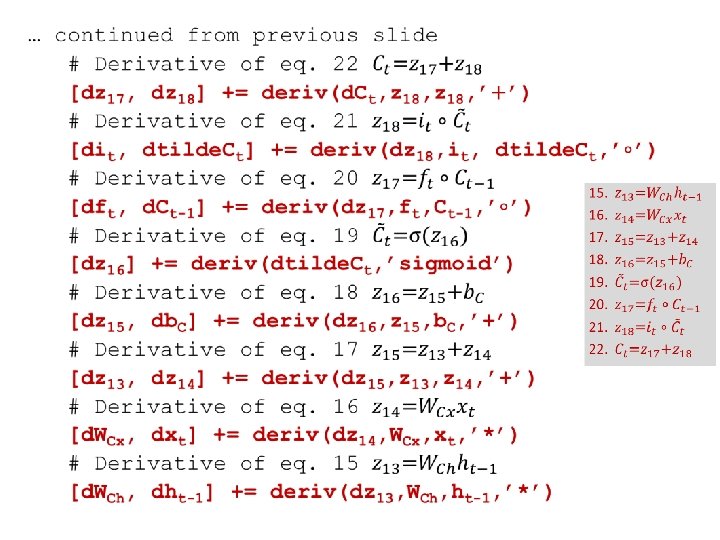
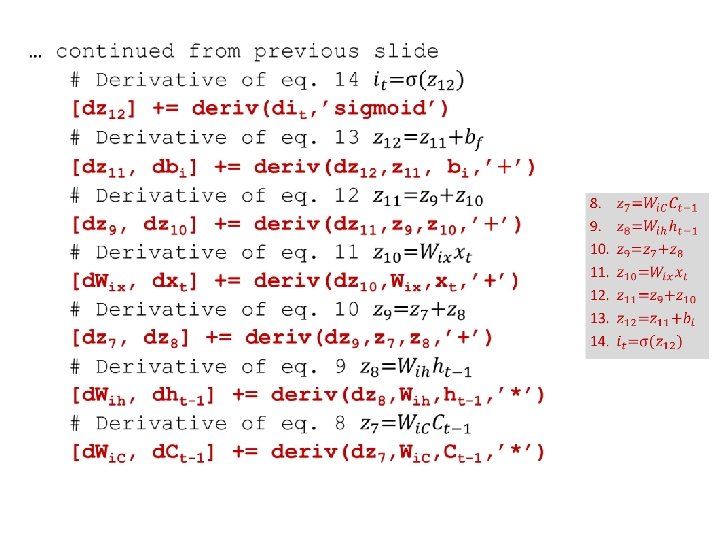
LSTM • Note the “+=“
LSTM • Note the “+=“
Continuing the computation • Continue the backward progression until the derivatives from forward Equation 1 have been computed • At this point all derivatives will be computed.
Overall procedure • Express the overall computation as a sequence of unary or binary operations • Can be automated • Computes derivatives incrementally, going backward over the sequence of equations! • Since each atomic computation is simple and belongs to one of a small set of possibilities, the conversion to derivatives is trivial once the computation is serialized as above
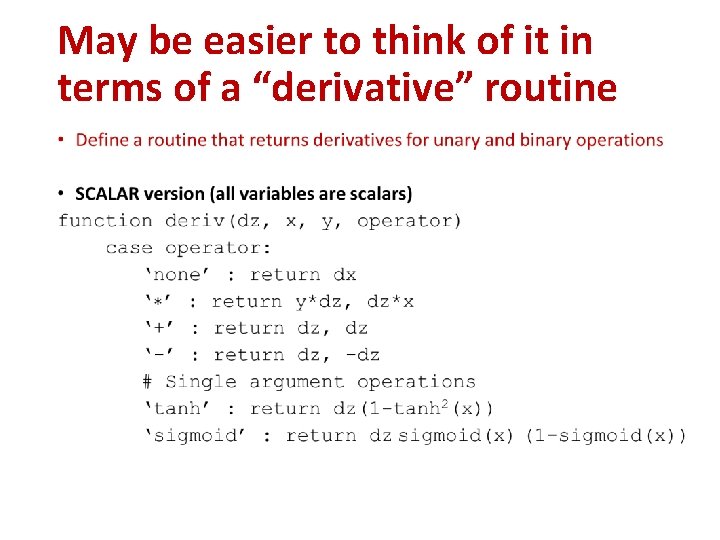
May be easier to think of it in terms of a “derivative” routine •
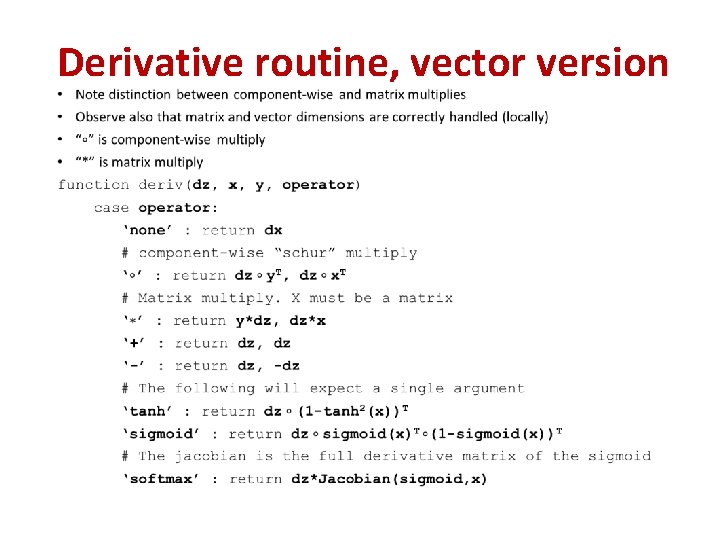
Derivative routine, vector version •
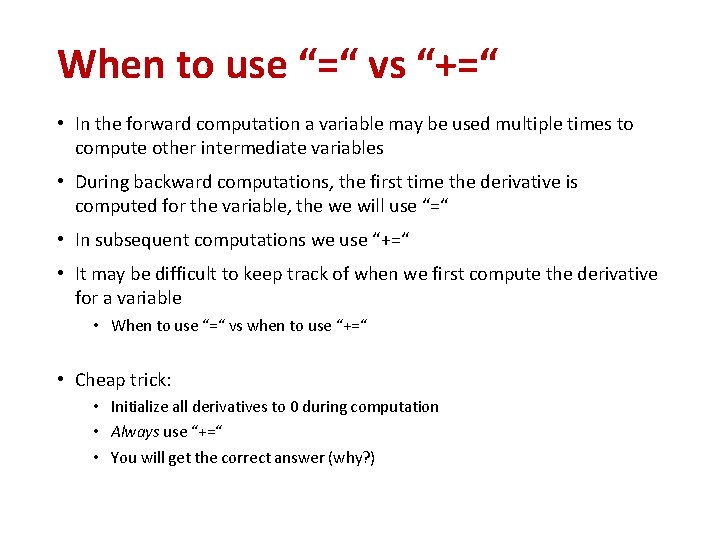
When to use “=“ vs “+=“ • In the forward computation a variable may be used multiple times to compute other intermediate variables • During backward computations, the first time the derivative is computed for the variable, the we will use “=“ • In subsequent computations we use “+=“ • It may be difficult to keep track of when we first compute the derivative for a variable • When to use “=“ vs when to use “+=“ • Cheap trick: • Initialize all derivatives to 0 during computation • Always use “+=“ • You will get the correct answer (why? )
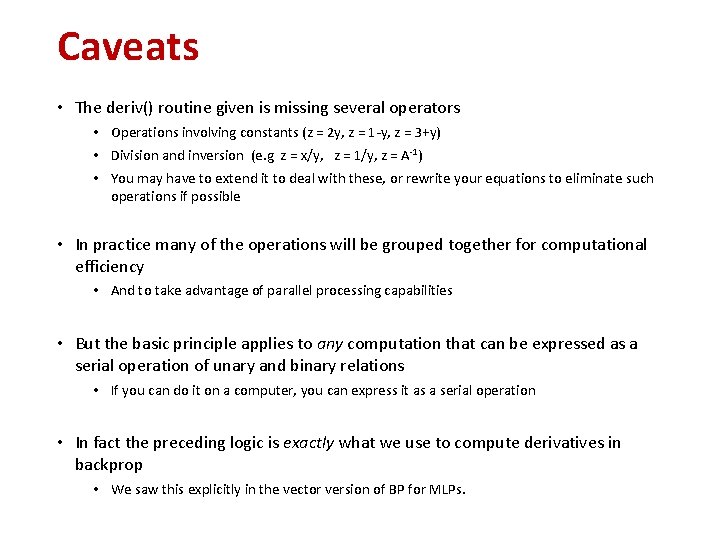
Caveats • The deriv() routine given is missing several operators • Operations involving constants (z = 2 y, z = 1 -y, z = 3+y) • Division and inversion (e. g z = x/y, z = 1/y, z = A-1) • You may have to extend it to deal with these, or rewrite your equations to eliminate such operations if possible • In practice many of the operations will be grouped together for computational efficiency • And to take advantage of parallel processing capabilities • But the basic principle applies to any computation that can be expressed as a serial operation of unary and binary relations • If you can do it on a computer, you can express it as a serial operation • In fact the preceding logic is exactly what we use to compute derivatives in backprop • We saw this explicitly in the vector version of BP for MLPs.