
How to calculate spinspin coupling and spinrotation coupling
- Slides: 27
How to calculate spin-spin coupling and spin-rotation coupling strengths and their uncertainties from spectroscopic data: Application to 6, 6 Li 2 c(13Σg+) Nike Dattani Xuan Li Oxford University Lawrence Berkeley National Lab
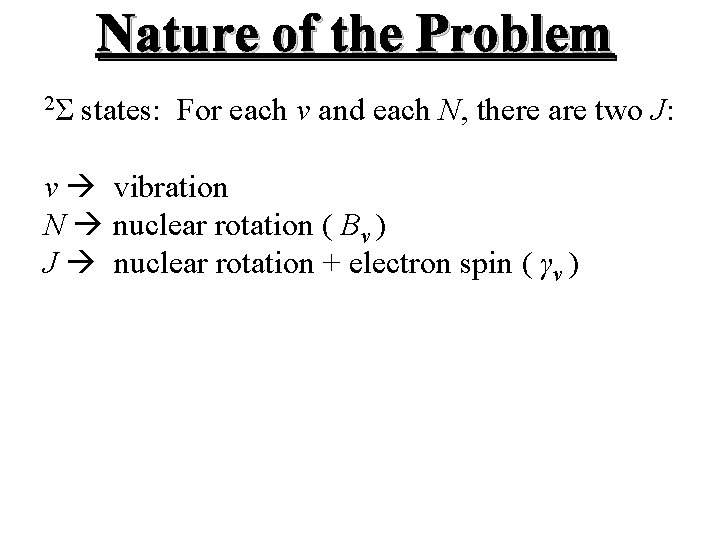
Nature of the Problem 2Σ states: For each v and each N, there are two J: v vibration N nuclear rotation ( Bv ) J nuclear rotation + electron spin ( γv )
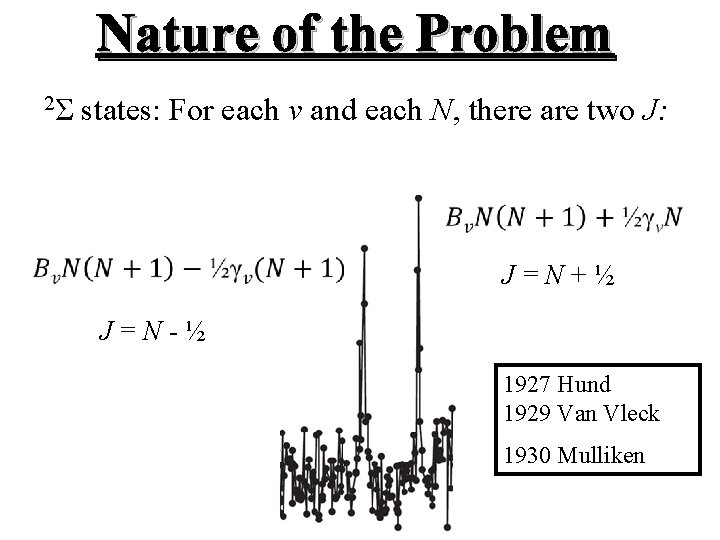
Nature of the Problem 2Σ states: For each v and each N, there are two J: J=N+½ J=N-½ 1927 Hund 1929 Van Vleck 1930 Mulliken
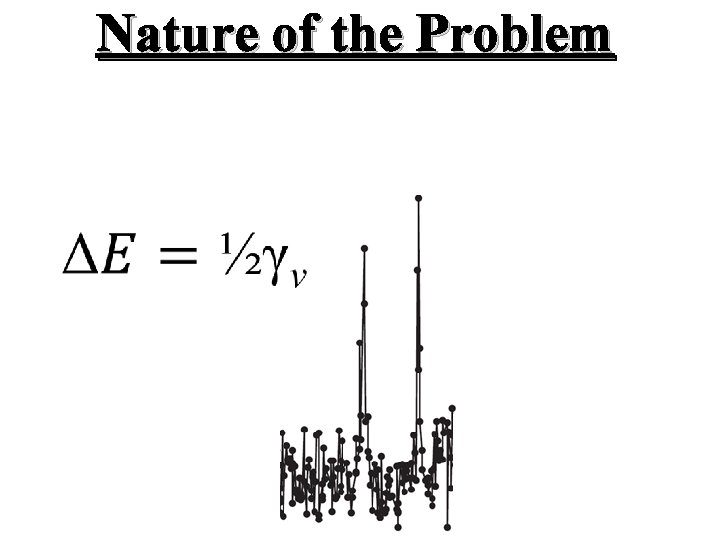
Nature of the Problem
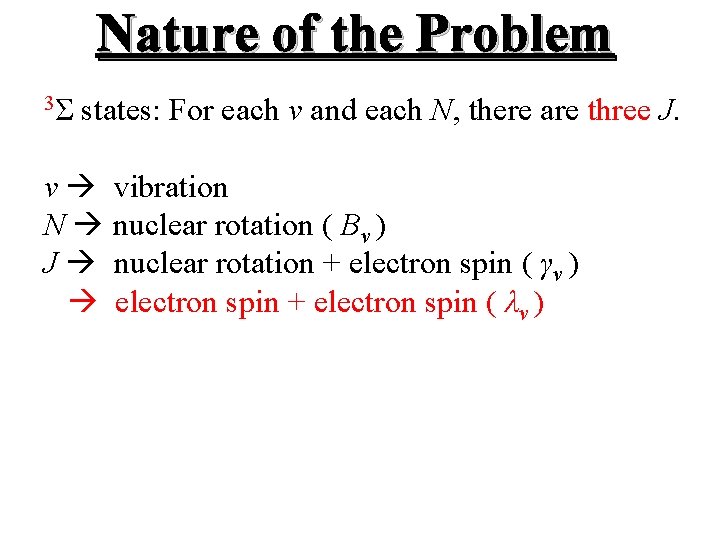
Nature of the Problem 3Σ states: For each v and each N, there are three J. v vibration N nuclear rotation ( Bv ) J nuclear rotation + electron spin ( γv ) electron spin + electron spin ( λv )
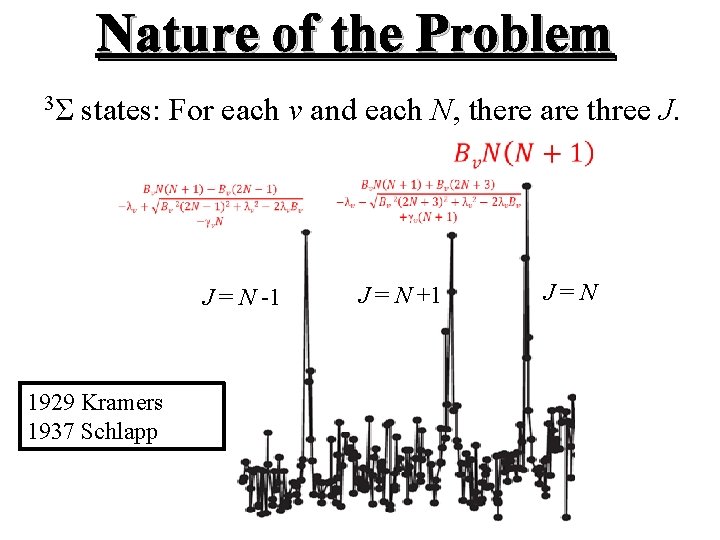
Nature of the Problem 3Σ states: For each v and each N, there are three J. J = N -1 1929 Kramers 1937 Schlapp J = N +1 J=N
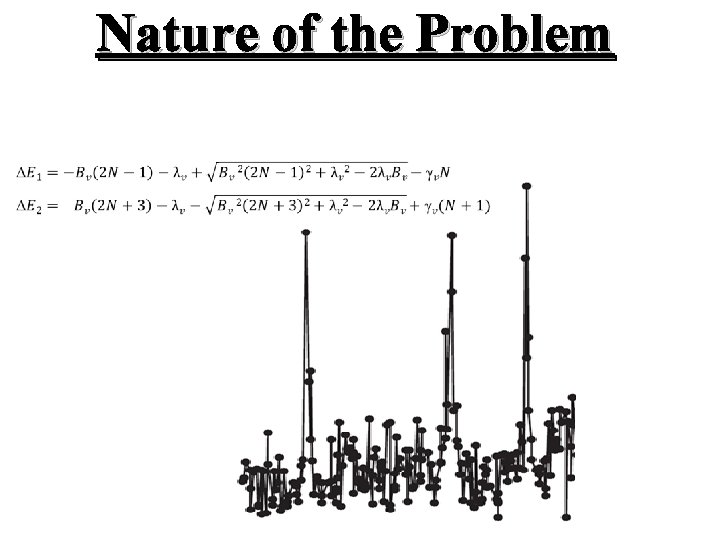
Nature of the Problem
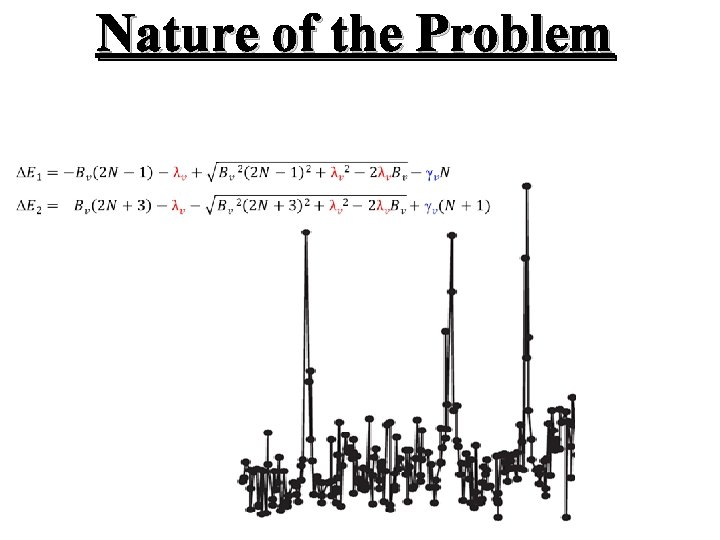
Nature of the Problem
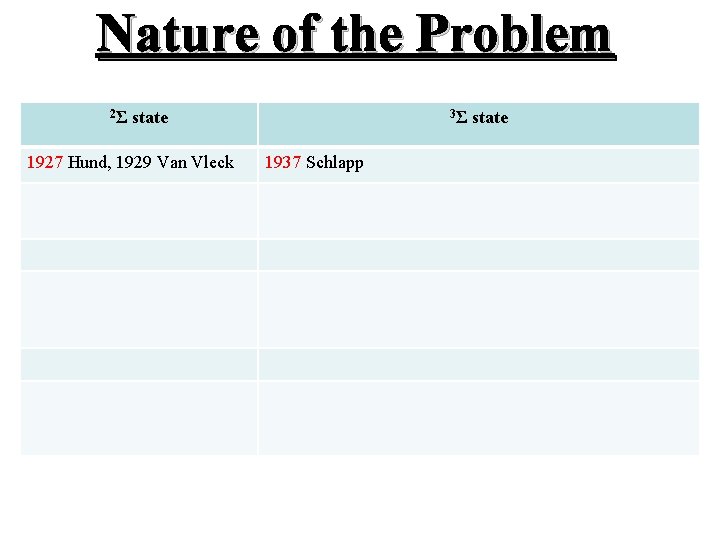
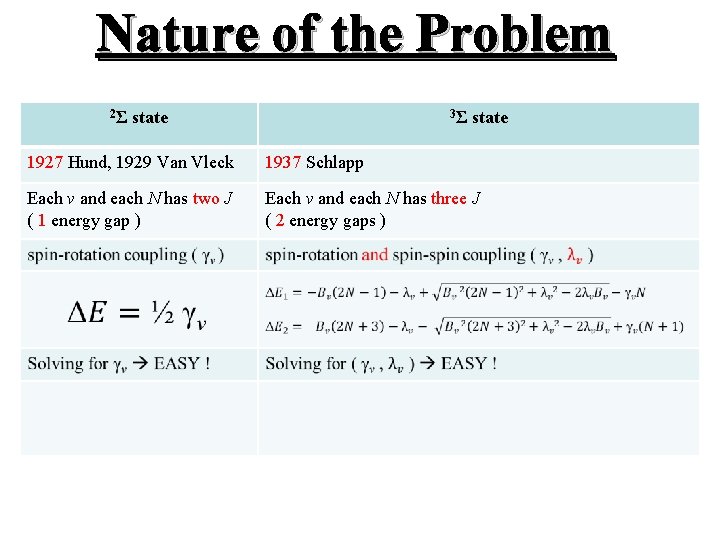
Nature of the Problem 2Σ state 1927 Hund, 1929 Van Vleck 3Σ 1937 Schlapp state
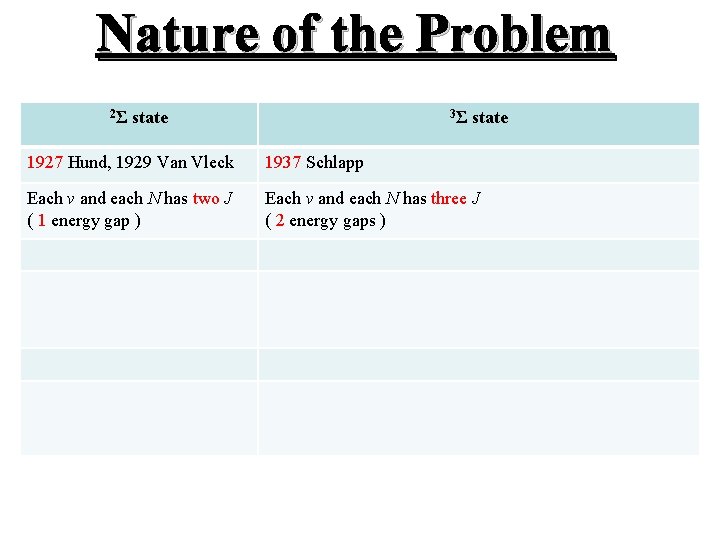
Nature of the Problem 2Σ state 3Σ state 1927 Hund, 1929 Van Vleck 1937 Schlapp Each v and each N has two J ( 1 energy gap ) Each v and each N has three J ( 2 energy gaps )
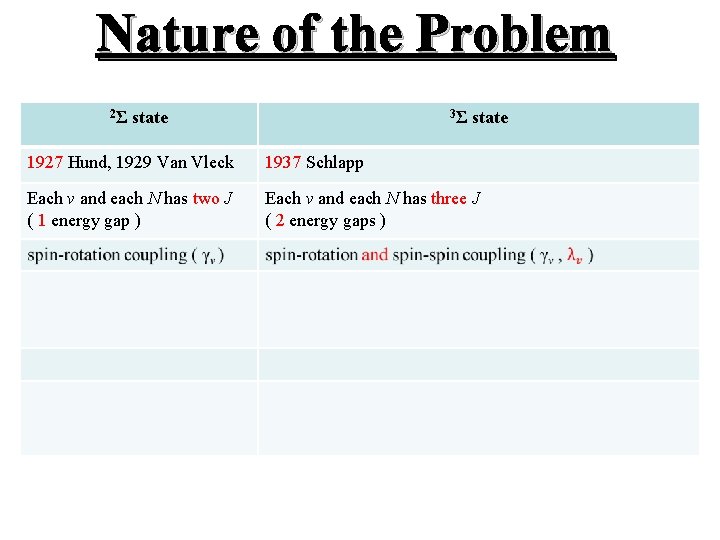
Nature of the Problem 2Σ state 3Σ state 1927 Hund, 1929 Van Vleck 1937 Schlapp Each v and each N has two J ( 1 energy gap ) Each v and each N has three J ( 2 energy gaps )
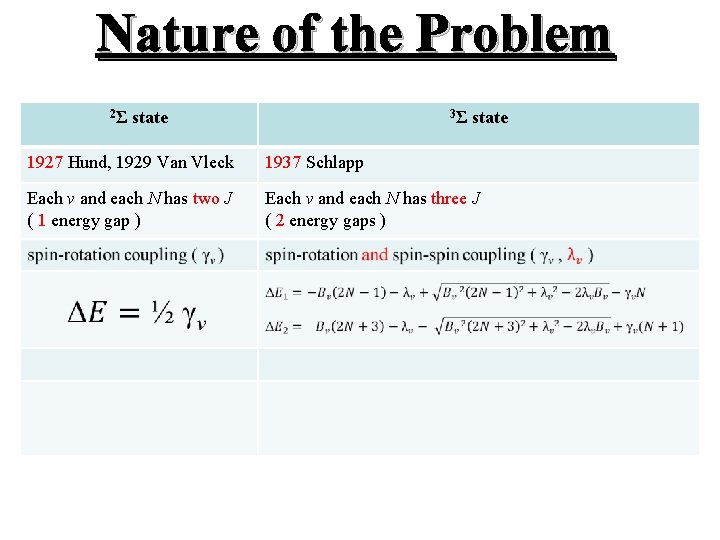
Nature of the Problem 2Σ state 3Σ state 1927 Hund, 1929 Van Vleck 1937 Schlapp Each v and each N has two J ( 1 energy gap ) Each v and each N has three J ( 2 energy gaps )
Nature of the Problem 2Σ state 3Σ state 1927 Hund, 1929 Van Vleck 1937 Schlapp Each v and each N has two J ( 1 energy gap ) Each v and each N has three J ( 2 energy gaps )
Nature of the Problem 2Σ state 3Σ state 1927 Hund, 1929 Van Vleck 1937 Schlapp Each v and each N has two J ( 1 energy gap ) Each v and each N has three J ( 2 energy gaps )
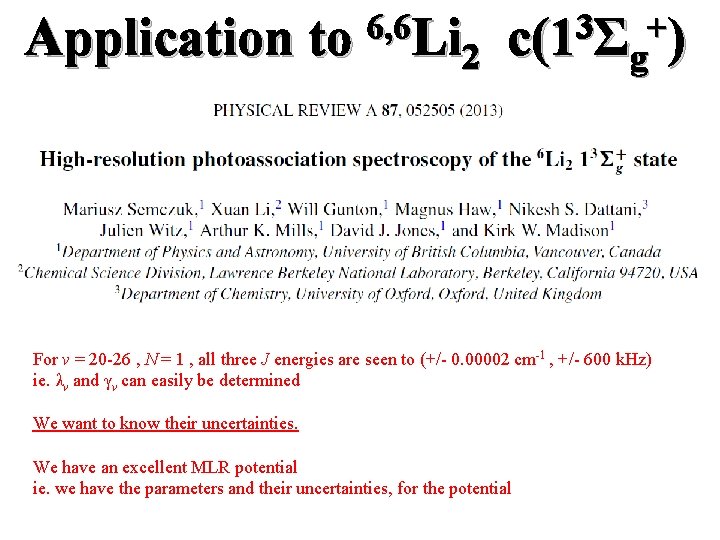
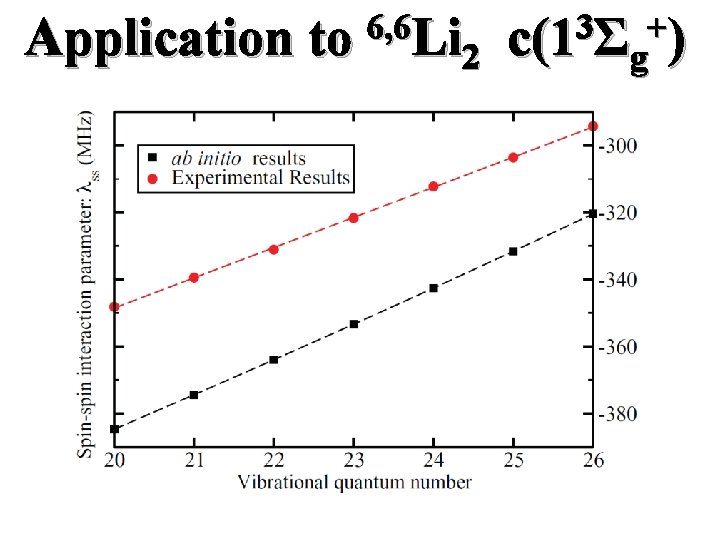
Application to 6, 6 Li 2 3 + c(1 Σg ) For v = 20 -26 , N = 1 , all three J energies are seen to (+/- 0. 00002 cm-1 , +/- 600 k. Hz) ie. λv and γv can easily be determined We want to know their uncertainties. We have an excellent MLR potential ie. we have the parameters and their uncertainties, for the potential
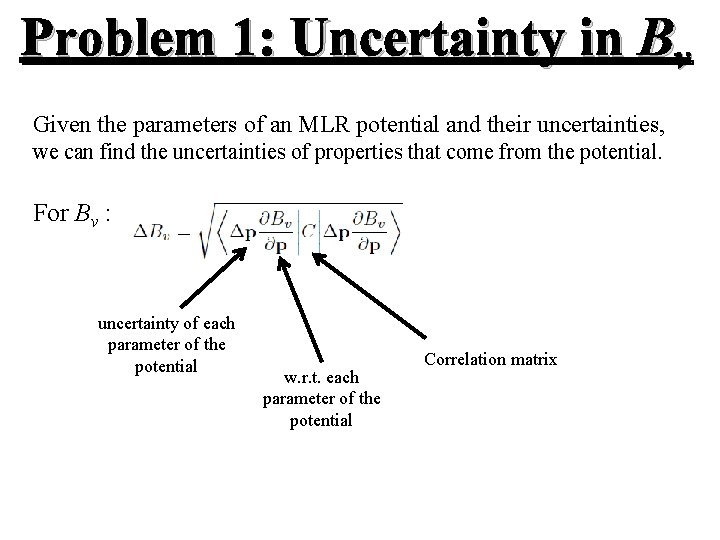
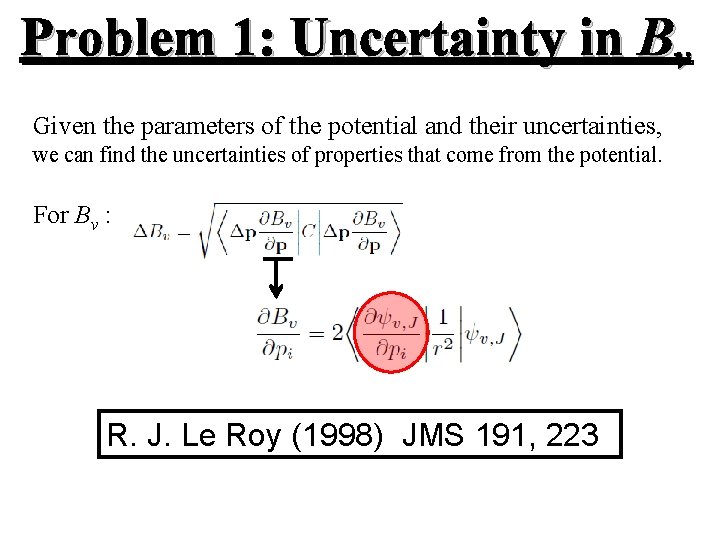
Problem 1: Uncertainty in Bv Given the parameters of an MLR potential and their uncertainties, we can find the uncertainties of properties that come from the potential. For Bv : uncertainty of each parameter of the potential w. r. t. each parameter of the potential Correlation matrix
Problem 1: Uncertainty in Bv Given the parameters of the potential and their uncertainties, we can find the uncertainties of properties that come from the potential. For Bv : R. J. Le Roy (1998) JMS 191, 223
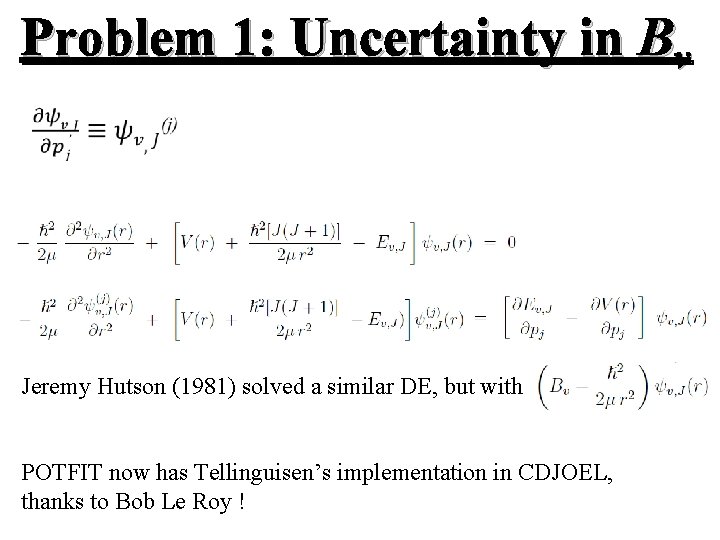
Problem 1: Uncertainty in Bv Jeremy Hutson (1981) solved a similar DE, but with POTFIT now has Tellinguisen’s implementation in CDJOEL, thanks to Bob Le Roy !
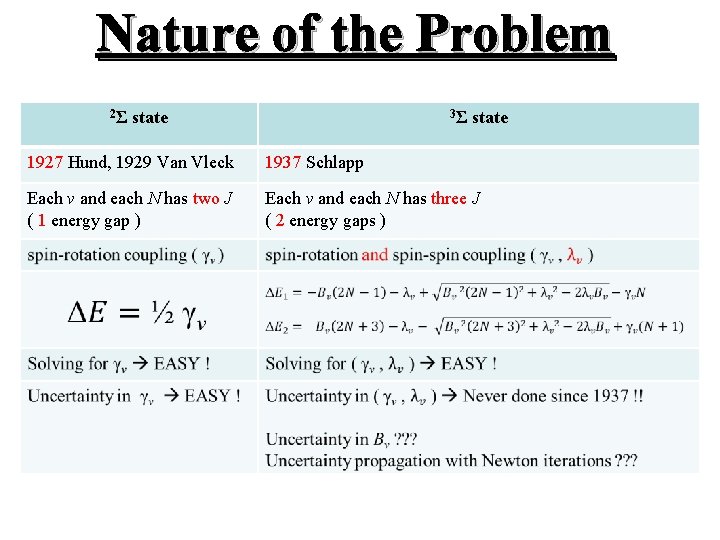
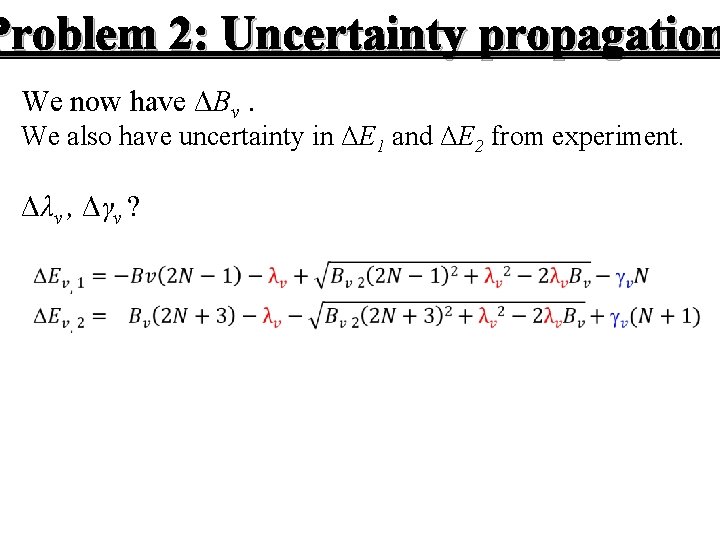
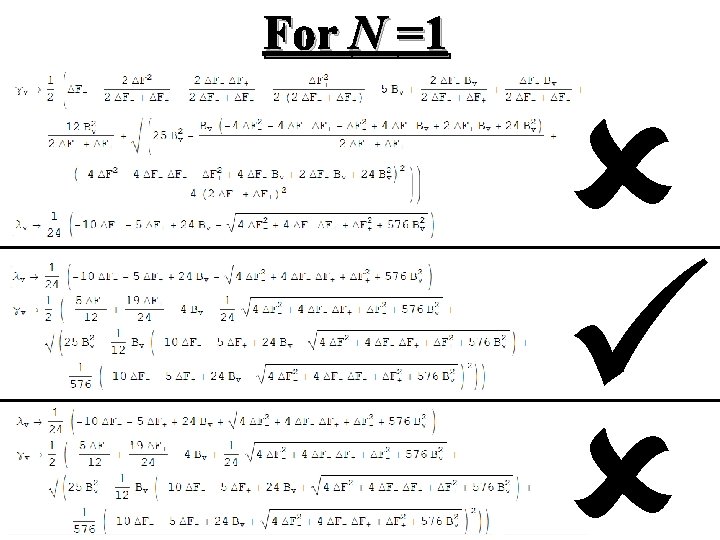
Problem 2: Uncertainty propagation We now have ΔBv. We also have uncertainty in ΔE 1 and ΔE 2 from experiment. Δλv , Δγv ?
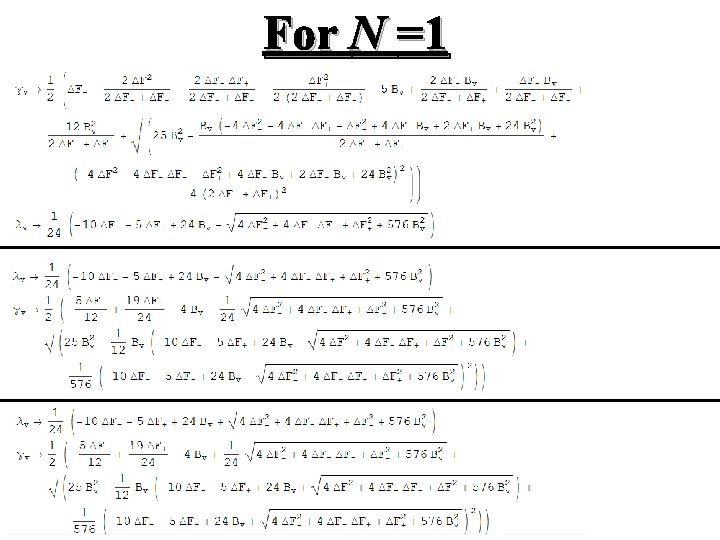
For N =1
For N =1
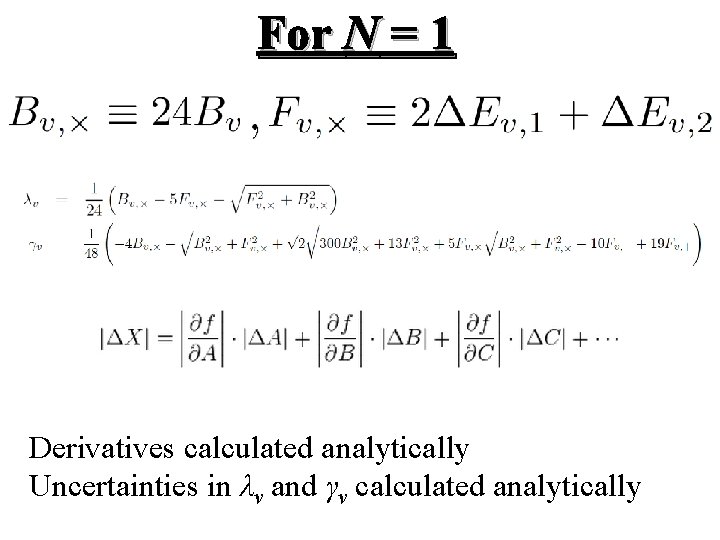
For N = 1 Derivatives calculated analytically Uncertainties in λv and γv calculated analytically
Application to 6, 6 Li 2 3 + c(1 Σg )
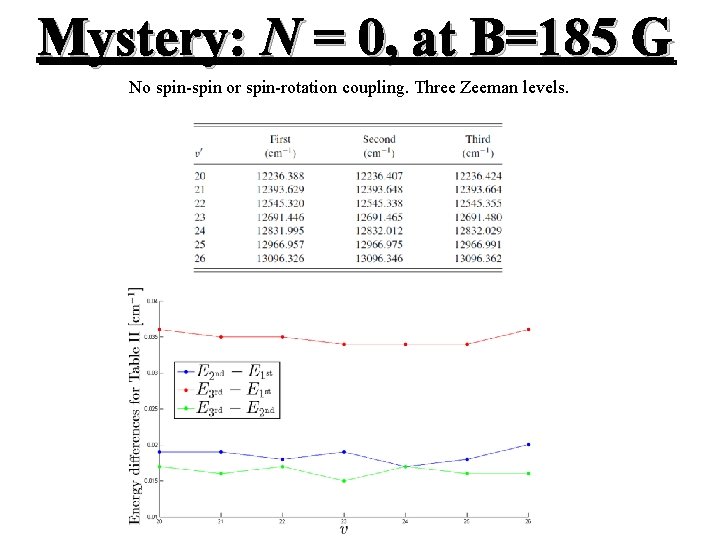
Mystery: N = 0, at B=185 G No spin-spin or spin-rotation coupling. Three Zeeman levels.
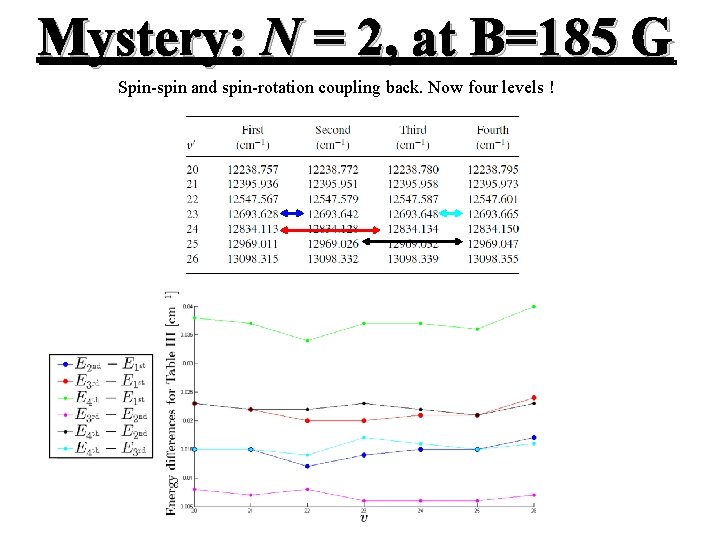
Mystery: N = 2, at B=185 G Spin-spin and spin-rotation coupling back. Now four levels !
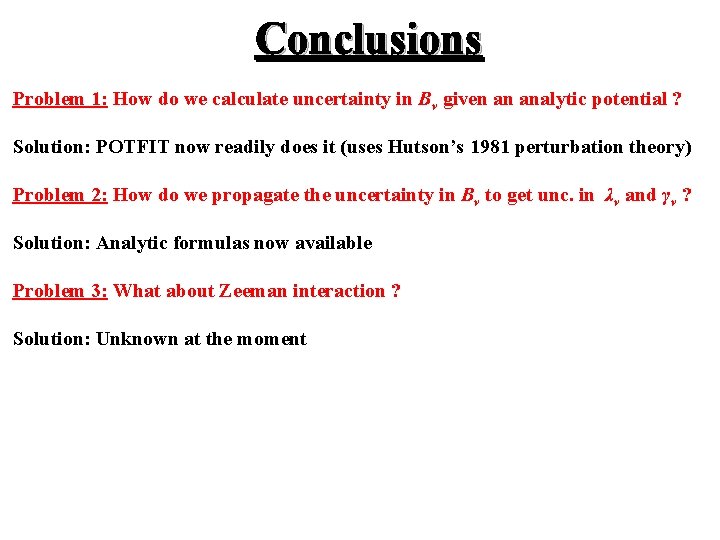
Conclusions Problem 1: How do we calculate uncertainty in Bv given an analytic potential ? Solution: POTFIT now readily does it (uses Hutson’s 1981 perturbation theory) Problem 2: How do we propagate the uncertainty in Bv to get unc. in λv and γv ? Solution: Analytic formulas now available Problem 3: What about Zeeman interaction ? Solution: Unknown at the moment
Thanks to: Prof. Bob Le. Roy (discussions) Prof. Kirk Madison Mariusz Semczuk Will Gunton Magnus Haw (experiments) Julien Witz Dr. Art Mills Prof. David J. Jones