
How to build high quality CPD for support

How to build high quality CPD for support staff 11 th July 2017
About us Jessica Brosnan- @jessmbrosnan Senior Network Officer, Teacher Development Trust. Former Music teacher. Jessica. Brosnan@tdtrust. org Bridget Clay- @bridget 89 ec Director of School Programmes, Teacher Development Trust. Former Maths teacher and education consultant for Cf. BT Education Trust. Bridget. Clay@tdtrust. org 2
The current picture • Unclear career routes • Less likely to have performance management • Less likely to have input into school priorities • More likely to have one-off external CPD • More likely to have statutory CPD • Less likely to have time allocated to their CPD • CPD is much less likely to meet their needs
What do we know about professional learning? 1. Culture 2. Sustained and focussed 3. Focussed on clear outcomes 4. Collaborative 5. Practical and theoretical 6. Evaluated 7. Challenging 8. Subject-specific
What do we know about professional learning? 1. Culture 2. Sustained and focussed 3. Focussed on clear outcomes 4. Collaborative 5. Practical and theoretical 6. Evaluated 7. Challenging 8. Subject-specific
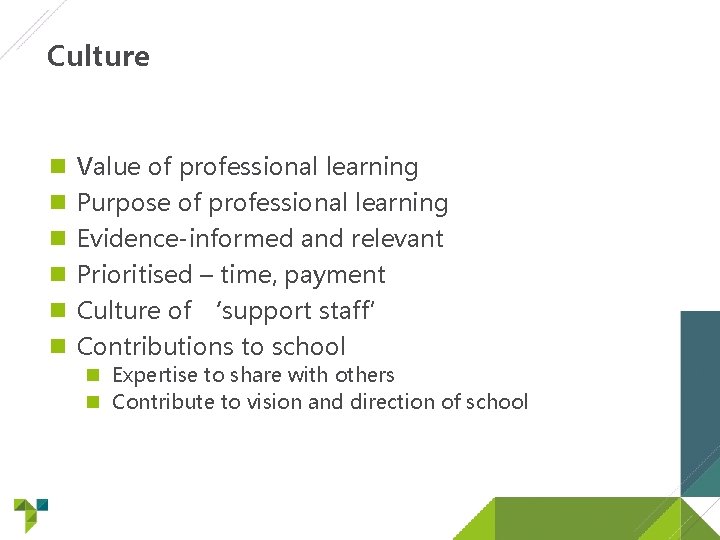
Culture Value of professional learning Purpose of professional learning Evidence-informed and relevant Prioritised – time, payment Culture of ‘support staff’ Contributions to school Expertise to share with others Contribute to vision and direction of school
School example: New Headteacher started in September 2015 Met with governors, mandated training days and pay for support staff Has increased the number of opportunities for support staff (both teaching and general)
![“[Previously], we didn’t feel as valued. Now, we are the backbone of the school](http://slidetodoc.com/presentation_image_h2/18d11e5df2281df9c2fca8088477b7ca/image-8.jpg "“[Previously], we didn’t feel as valued. Now, we are the backbone of the school")
“[Previously], we didn’t feel as valued. Now, we are the backbone of the school and feel more recognised and feel more important. ” - Member of support staff (attendance officer)
What do we know about professional learning? 1. Culture 2. Sustained and focussed 3. Focussed on clear outcomes 4. Collaborative 5. Practical and theoretical 6. Evaluated 7. Challenging 8. Subject-specific
Sustained and Iterative Clear focus Awareness/knowledge Implement procedure Change regular practice Time provided Iterative opportunities to engage Line management conversations
School example: At this particular High School – teaching support staff are involved in Learning Hubs, at the same time as teachers Hubs meet twice every half term, and have a defined focus Engage with research and try a strategy in pairs within the hub Feed back to the rest of the hub General support staff – given time to reflect on external input
“CPD feels more formalised with a proper structure. We can revisit ideas and discuss our pupils” - Level 3 Teaching assistant
What do we know about professional learning? 1. Culture 2. Sustained and focussed 3. Focussed on clear outcomes 4. Collaborative 5. Practical and theoretical 6. Evaluated 7. Challenging 8. Subject-specific
Focussed on clear outcomes Student-focussed (where relevant) What would success look like? What impact will that have on you? What impact will that have on the school?
School example For TAs – ensuring a strong pupil-focus through threads through their performance management Which pupils can they focus on for their own development? TA became responsible for EAL pupils – Met with other EAL specialist in MAT and received Excel training. Local EAL conference/networks Invited onto Teaching and Learning team This is harder for general support staff! But not impossible… Administrative staff member moved into attendance, now also responsible for school career night
“The role has been really developmental, a chance to formalise EAL – its opened the doors to local conferences, put me in teaching and learning team, got access to wider school priorities … They trust me to identify my needs … I requested whole local EAL network to meet here, was largest group we have had! Helped to raise the profile of EAL here – by sharing the practice from elsewhere. ” - EAL Teaching Assistant
What do we know about professional learning? 1. Culture 2. Sustained and focussed 3. Focussed on clear outcomes 4. Collaborative 5. Practical and theoretical 6. Evaluated 7. Challenging 8. Subject-specific
Collaborative Time to collaborate Focussed collaboration Line management conversations
School example: This school has developed new performance management structures Have built in half termly line management meetings across MAT for general support staff Opportunity to talk about overall strengths, identify as a potential facilitator of training for other support staff Every new member of support staff receives a mentor as part of buddy system
“There is a culture here of being able to move up, consolidating what you have both been doing as part of a team. ” - HR Manager
What do we know about professional learning? 1. Culture 2. Sustained and focussed 3. Focussed on clear outcomes 4. Collaborative 5. Practical and theoretical 6. Evaluated 7. Challenging 8. Subject-specific
Practical and theoretical Engaging with external expertise Engaging with other schools Engaging with research Time to contextualise and embed in one’s own context
School example: Receptionist gained 6 month secondment as an attendance officer Headteacher facilitated multiple visits to other local schools, shadowing opportunities Then asked this member of staff to review their current practice around attendance
“SLT are approachable and will support us going out if we can benefit the school. There are opportunities for internal promotion as well. ” - Attendance officer and Clerk to the governors
What do we know about professional learning? 1. Culture 2. Sustained and focussed 3. Focussed on clear outcomes 4. Collaborative 5. Practical and theoretical 6. Evaluated 7. Challenging 8. Subject-specific
Evaluated What would success look like? What is the impact of my learning Awareness/knowledge Career development Procedural knowledge Daily practice School systems
What do we know about professional learning? 1. Culture 2. Sustained and focussed 3. Focussed on clear outcomes 4. Collaborative 5. Practical and theoretical 6. Evaluated 7. Challenging 8. Subject-specific
Challenging Career development Line management Develop in role Role can contribute to school
School example: Receptionist for SENCO and admin in pupil office Developed interest alongside colleague around how careers night was structured and delivered Approached Head with feedback Headteacher asked them to design the next careers night
“Very nervous about taking it on, but we created the careers night for pupils. It was a huge step outside of my comfort zone!!! Had to present a 3 min talk which was nerve wracking! But we rose to the challenge. ” - Receptionist to SENCO and admin in pupil office
What do we know about professional learning? 1. Culture 2. Sustained and focussed 3. Focussed on clear outcomes 4. Collaborative 5. Practical and theoretical 6. Evaluated 7. Challenging 8. Subject-specific
Non-generic Student focussed Role-specific Contextualise general knowledge to specific context
Case Study – St Mark’s, Bromley
- Slides: 33