
HOW TO BUILD AN INTEGRATED MARKETING PLAN THAT
HOW TO BUILD AN INTEGRATED MARKETING PLAN THAT ACTUALLY WORKS SETH ODELL, HELIX EDUCATION
OVERVIEW What We’ll Cover • What it is • Why we do it • How we do it • Phase 1: Research • Phase 2: Strategy • Phase 3: Creative • Phase 4: Campaign • Tips & Predictions • Q&A 2
OVERVIEW How We’ll Cover It • Step-by-step guide • Crowd sourced content • Tips & Tricks along the way • Live exercise • Constant Q&A 3
WHAT IS AN INTEGRATED MARKETING PLAN? 4
THE ANATOMY OF A TRULY INTEGRATED CAMPAIGN • All channels • All audiences • Uses a multi-tiered messaging approach • Works from brand to programmatic • Beyond carbon copy creative • Is both BRAND and DIRECT 5
WHY DO WE DO IT? 6
WHY DO WE DO IT? • Drive enrollment • Shape class • Raise money • Engage community • Increase awareness • Increase affinity 7
HOW DO WE DO IT? 8
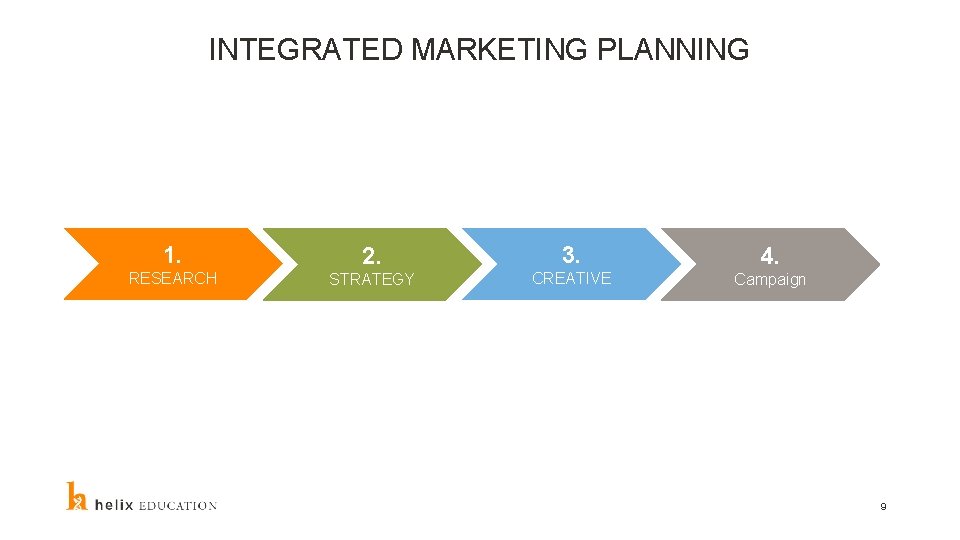
INTEGRATED MARKETING PLANNING 1. 2. 3. 4. RESEARCH STRATEGY CREATIVE Campaign 9

RESEARCH
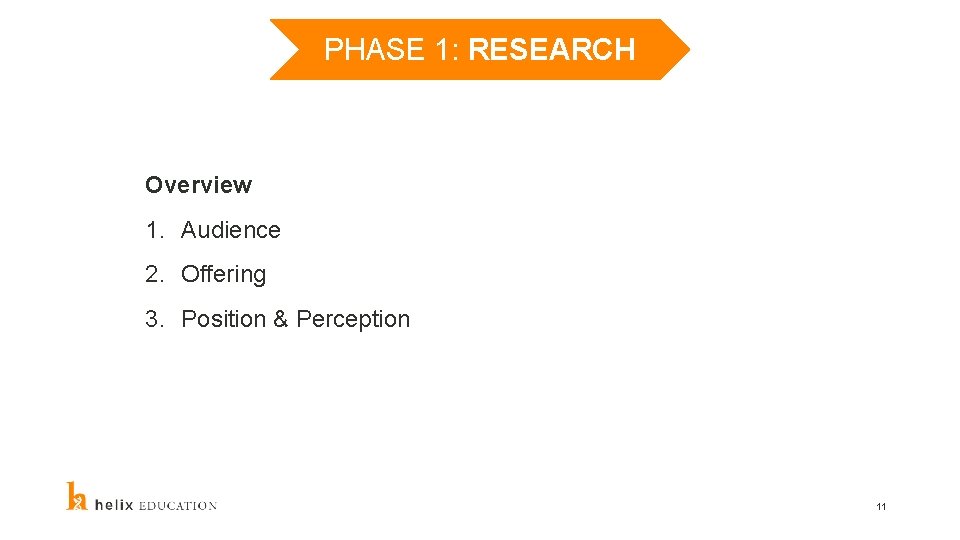
PHASE 1: RESEARCH Overview 1. Audience 2. Offering 3. Position & Perception 11
AUDIENCE: WHO IS OUR AUDIENCE?
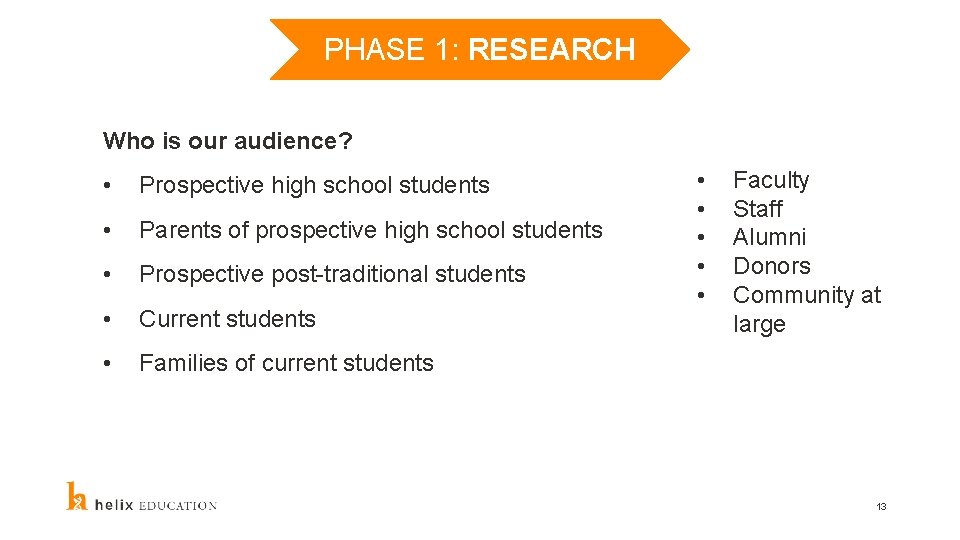
PHASE 1: RESEARCH Who is our audience? • Prospective high school students • Parents of prospective high school students • Prospective post-traditional students • Current students • Families of current students • • • Faculty Staff Alumni Donors Community at large 13
AUDIENCE: WHAT ARE THEY LIKE?
PHASE 1: RESEARCH What are they like? • Age • Ethnicity • Gender • Religious affiliation • Income level • Education level • Marital status • Family status • • • Employment status Institutional affiliation Hobbies and interests Media consumption habits Location 15
AUDIENCE: WHERE ARE THEY?
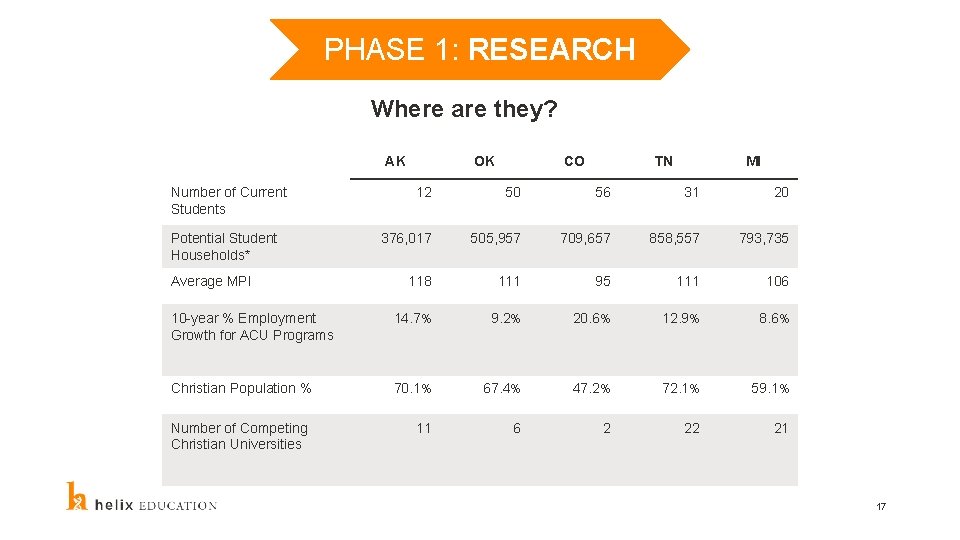
PHASE 1: RESEARCH Where are they? AK Number of Current Students OK CO TN MI 12 50 56 31 20 376, 017 505, 957 709, 657 858, 557 793, 735 118 111 95 111 106 10 -year % Employment Growth for ACU Programs 14. 7% 9. 2% 20. 6% 12. 9% 8. 6% Christian Population % 70. 1% 67. 4% 47. 2% 72. 1% 59. 1% 11 6 2 22 21 Potential Student Households* Average MPI Number of Competing Christian Universities 17
AUDIENCE: WHERE DO THEY GET THEIR INFORMATION?
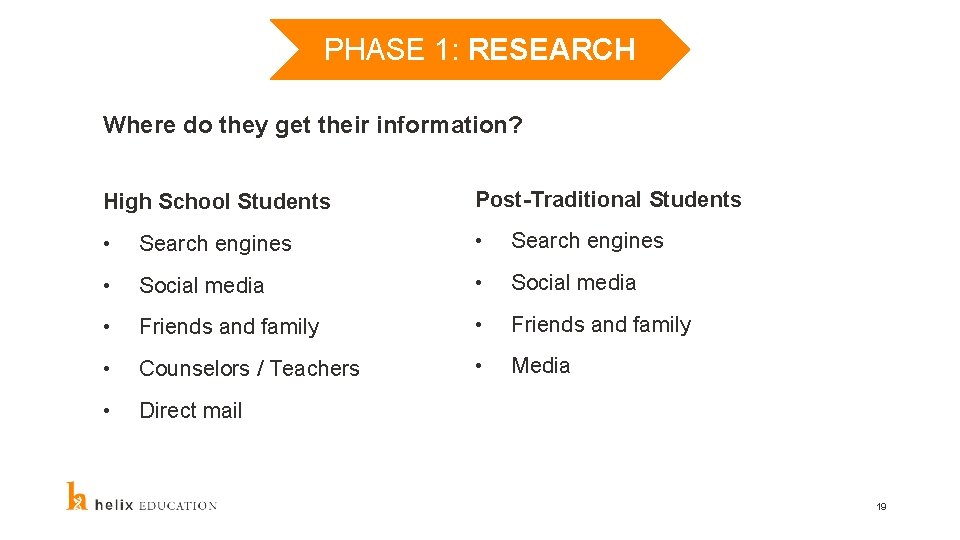
PHASE 1: RESEARCH Where do they get their information? High School Students Post-Traditional Students • Search engines • Social media • Friends and family • Counselors / Teachers • Media • Direct mail 19
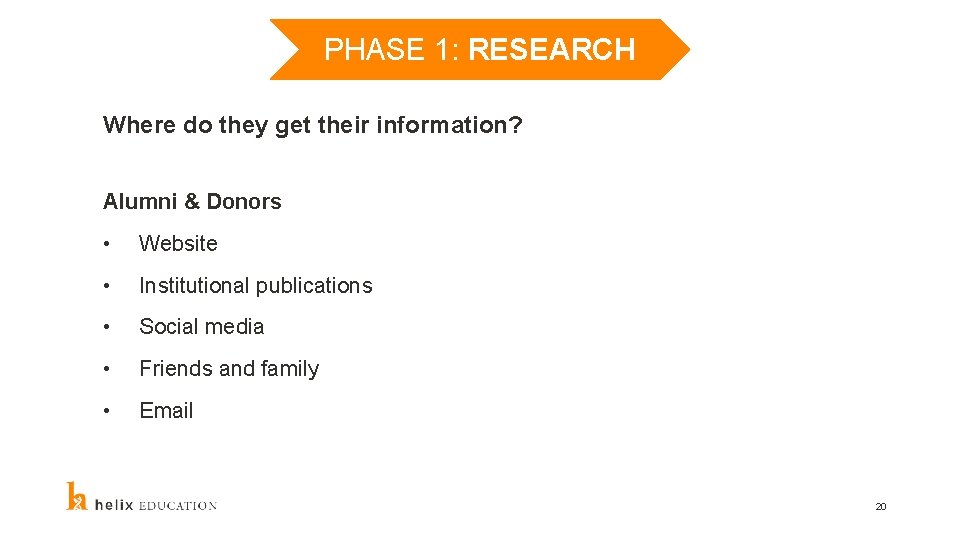
PHASE 1: RESEARCH Where do they get their information? Alumni & Donors • Website • Institutional publications • Social media • Friends and family • Email 20
OFFERING: WHAT DO WE WANT OUR AUDIENCE TO DO?
PHASE 1: RESEARCH What do we want our audience to do? Primary Action • Enroll • Donate • Support 22
OFFERING: WHAT DOES OUR AUDIENCE WANT FROM US?
PHASE 1: RESEARCH What does our audience want from us? Areas for additional research • Consumer demand • Employer demand 24
WHAT ELSEOFFERING: SHOULD WE BE OFFERING?
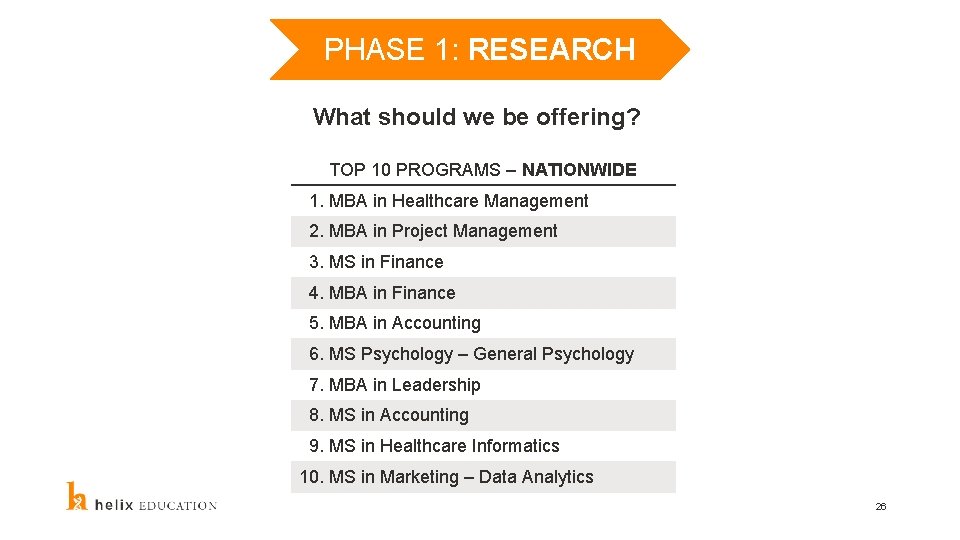
PHASE 1: RESEARCH What should we be offering? TOP 10 PROGRAMS – NATIONWIDE 1. MBA in Healthcare Management 2. MBA in Project Management 3. MS in Finance 4. MBA in Finance 5. MBA in Accounting 6. MS Psychology – General Psychology 7. MBA in Leadership 8. MS in Accounting 9. MS in Healthcare Informatics 10. MS in Marketing – Data Analytics 26
OFFERING: WHAT DOES THE DECISION MAKING PROCESS LOOK LIKE?
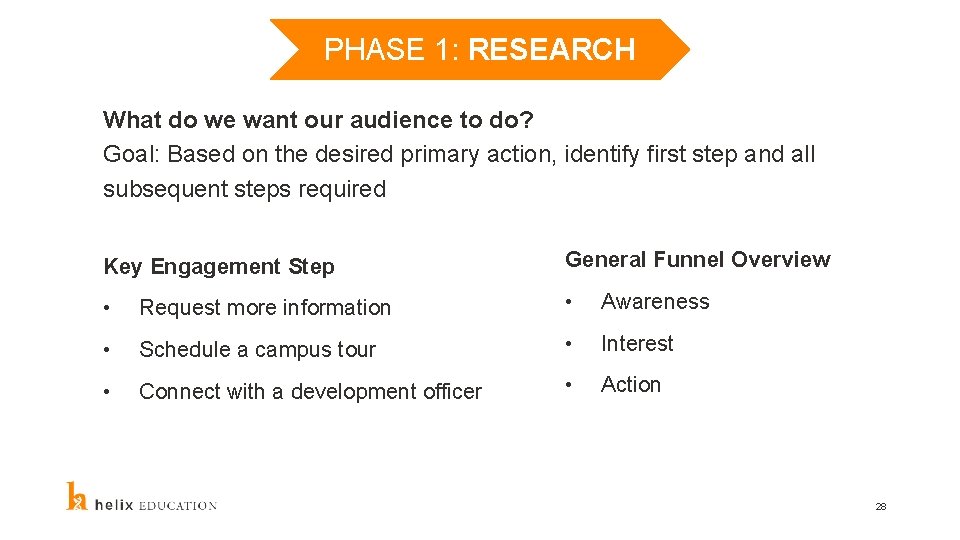
PHASE 1: RESEARCH What do we want our audience to do? Goal: Based on the desired primary action, identify first step and all subsequent steps required Key Engagement Step General Funnel Overview • Request more information • Awareness • Schedule a campus tour • Interest • Connect with a development officer • Action 28
POSITION & PERCEPTION: COMPETITIVE ANALYSIS
PHASE 1: RESEARCH Competitive Analysis: Questions to Answer Areas to Cover • Who are our competitors? • Competitive penetration • What is our real competition? • Programmatic offerings • Where are we in market? • Cost to consumer • Modality • Media 30

POSITION & PERCEPTION: MARKET POSITION
PHASE 1: RESEARCH Market Position Goal: Understand our size, influence and relevance within all applicable DMAs 32
POSITION & PERCEPTION: MARKET PERCEPTION
PHASE 1: RESEARCH Market Perception Opportunities • Focus groups • Email surveys • Anecdotal feedback • Workshops and brainstorms 34
POSITION & PERCEPTION: BRAND & WHITESPACE ANALYSIS
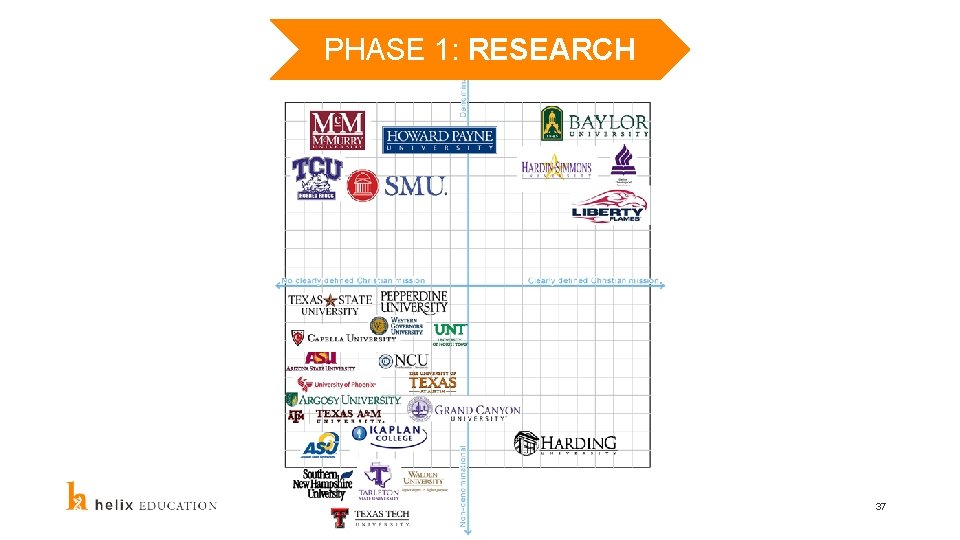
PHASE 1: RESEARCH Brand Whitespace Analysis 36
PHASE 1: RESEARCH 37
PHASE 1: RESEARCH REVIEW Audience 1. Who is our audience? 2. What are they like? 3. Where are they? 4. How do they get their information? 38
PHASE 1: RESEARCH REVIEW Offering 1. What do we want our audience to do? 2. What does our audience want from us? 3. What else should we offer? 4. What does the decision making process look like? 39
PHASE 1: RESEARCH REVIEW Position & Perception 1. Competitive analysis 2. Market position 3. Market perception 4. Brand white space analysis 40
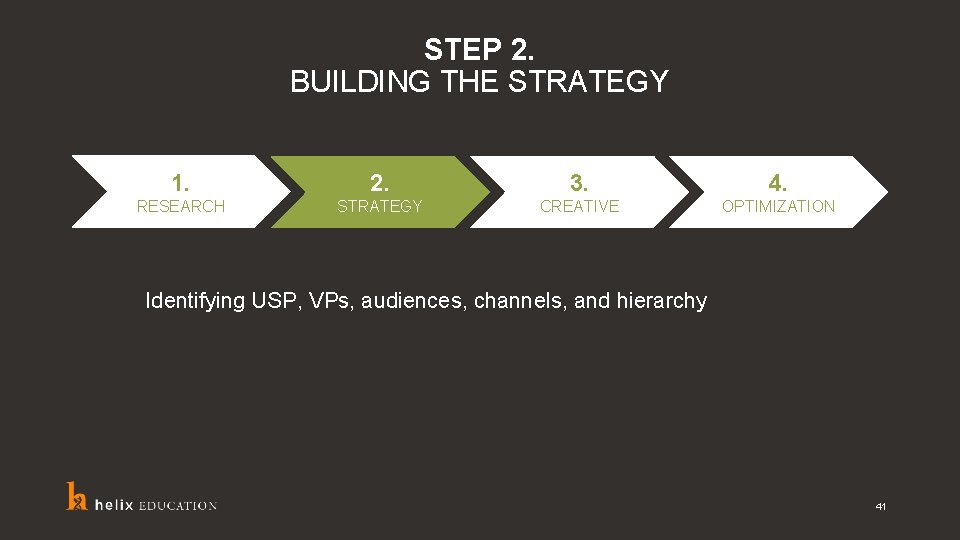
STEP 2. BUILDING THE STRATEGY 1. 2. 3. 4. RESEARCH STRATEGY CREATIVE OPTIMIZATION Identifying USP, VPs, audiences, channels, and hierarchy 41
PHASE 2: STRATEGY Lay the Foundation • Who are we? • Where are we today? • Where do we want to go? • What do we do? • Why do we do it? • Why us? 42
PHASE 2: STRATEGY Finalize the Fundamentals • What is our unique selling proposition? • What are our value propositions? • What are our primary and secondary reasons to believe? 43
PHASE 2: STRATEGY Develop a Messaging Hierarchy A messaging hierarchy ensures your ability to deliver the right message, on the right channel, to the right audience, at the right time. 44
PHASE 2: STRATEGY Example: How We Communicate Outcome High School Students: It’s all about experience High School Parents: It’s all about the data Post-Traditional Students: It’s all about relationships 45
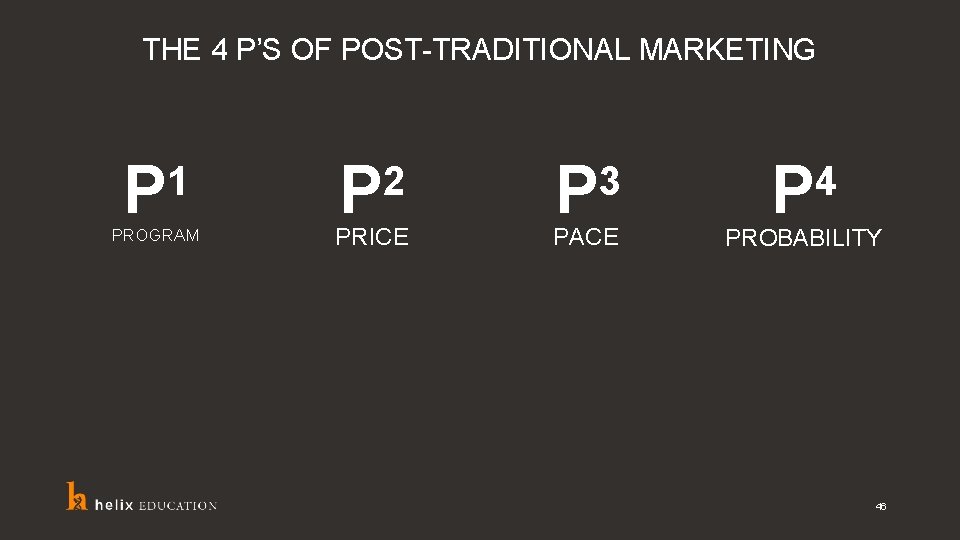
THE 4 P’S OF POST-TRADITIONAL MARKETING P 1 PROGRAM P 2 PRICE P 3 PACE P 4 PROBABILITY 46
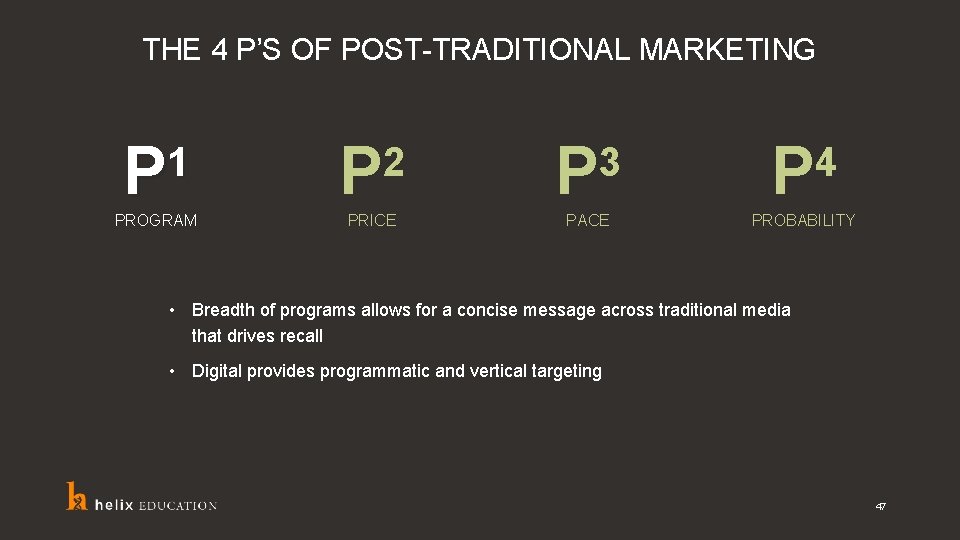
THE 4 P’S OF POST-TRADITIONAL MARKETING P 1 PROGRAM P 2 PRICE P 3 PACE P 4 PROBABILITY • Breadth of programs allows for a concise message across traditional media that drives recall • Digital provides programmatic and vertical targeting 47
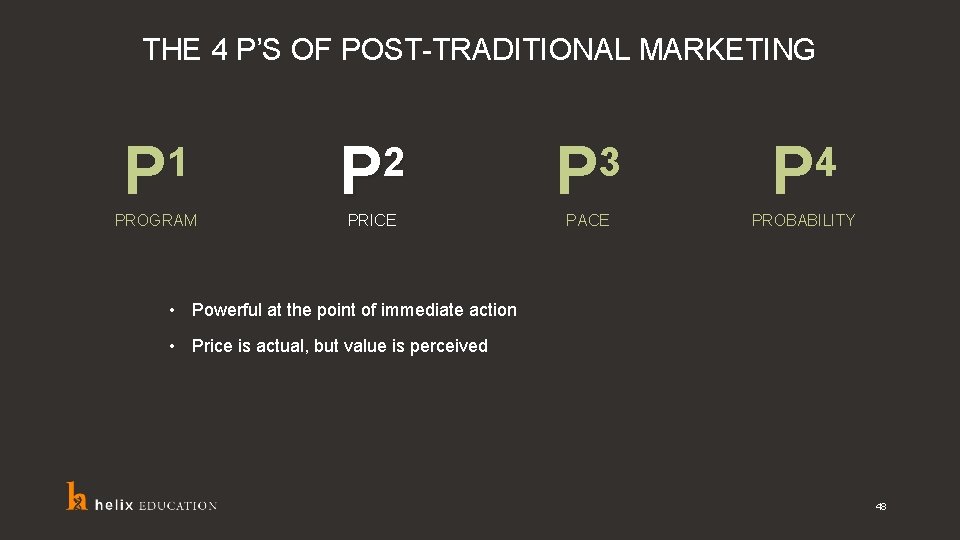
THE 4 P’S OF POST-TRADITIONAL MARKETING P 1 PROGRAM P 2 PRICE P 3 PACE P 4 PROBABILITY • Powerful at the point of immediate action • Price is actual, but value is perceived 48
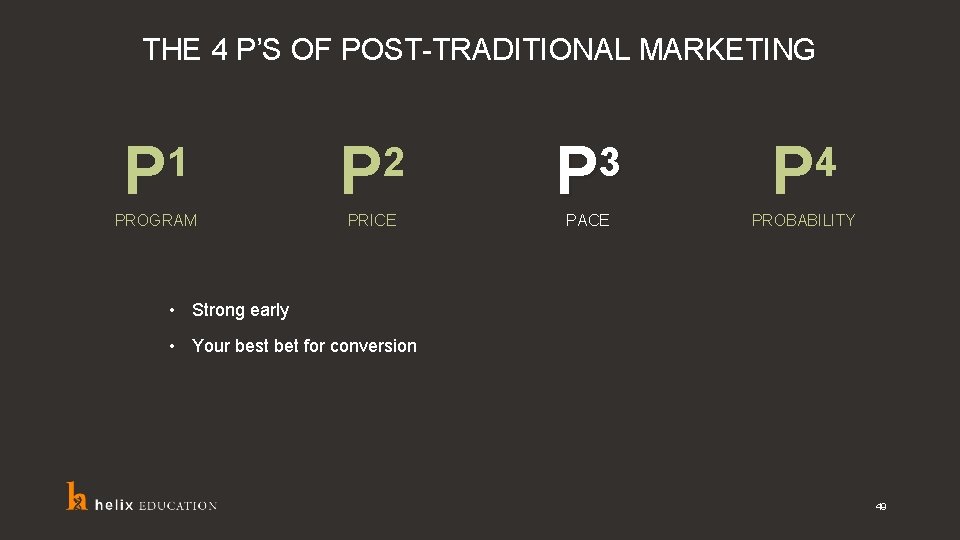
THE 4 P’S OF POST-TRADITIONAL MARKETING P 1 PROGRAM P 2 PRICE P 3 PACE P 4 PROBABILITY • Strong early • Your best bet for conversion 49
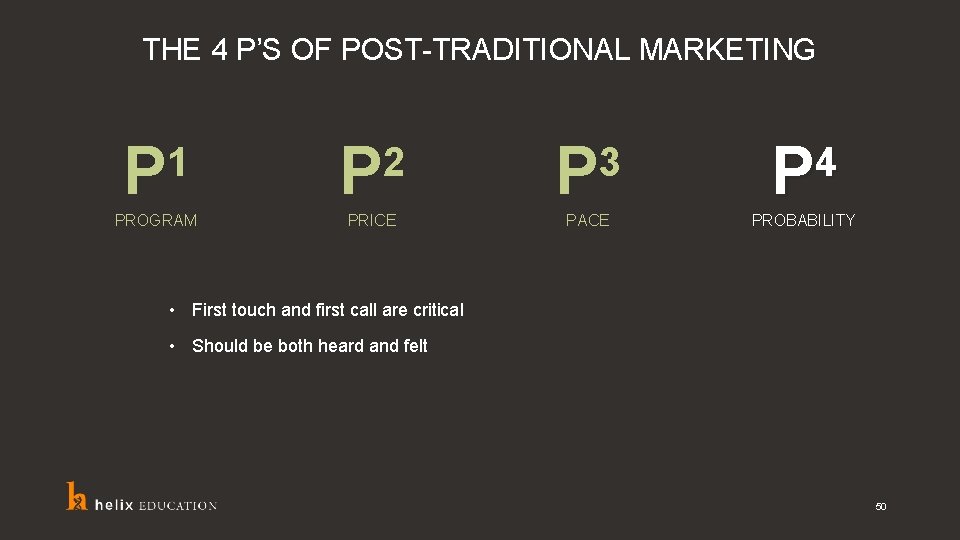
THE 4 P’S OF POST-TRADITIONAL MARKETING P 1 PROGRAM P 2 PRICE P 3 PACE P 4 PROBABILITY • First touch and first call are critical • Should be both heard and felt 50
PHASE 2: STRATEGY Secret Shopping • Secret shopping the competition is one of the best ways to understand what you’re up against and what prospective students are experiencing • Secret shopping your own institution is a critical step in ensuring effective execution of strategy, as well as identifying areas for improvement and continued optimization 51
STEP 3. CREATIVE DEVELOPMENT 1. 2. 3. 4. RESEARCH STRATEGY CREATIVE OPTIMIZATION Bringing bold strategy to life 52
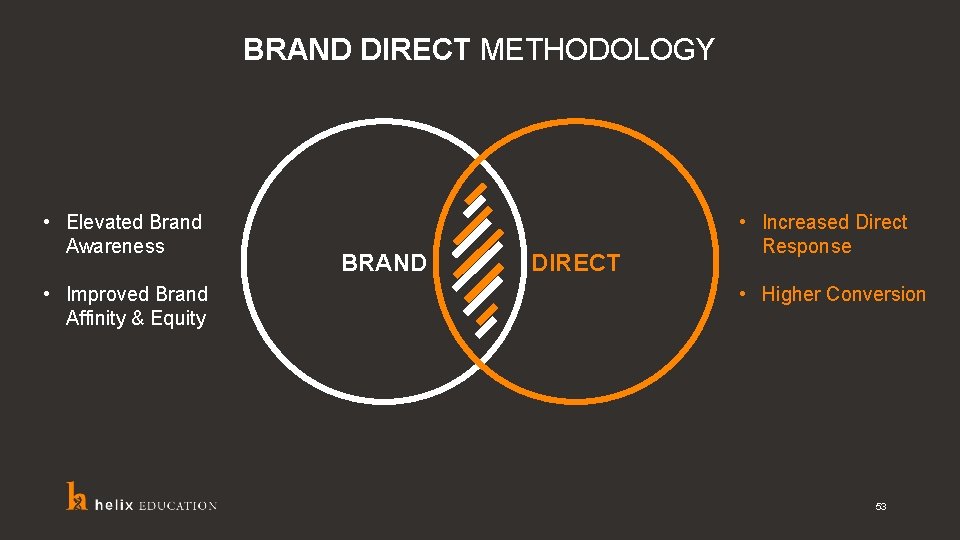
BRAND DIRECT METHODOLOGY • Elevated Brand Awareness • Improved Brand Affinity & Equity BRAND DIRECT • Increased Direct Response • Higher Conversion 53
PHASE 3: CREATIVE #1: Determining Our Point of Differentiation If what we do isn’t different, how we communicate it has to be 54
PHASE 3: CREATIVE #2: Appealing to the Elephant and the Rider It’s critical to understand how our first-touch communication can break through the noise and connect with our audience. Leveraging emotion can often enhance our ability to be seen, heard, and felt. 55
PHASE 3: CREATIVE #3: Blend the Best of Art and Science • Understand how we scan • Use questions instead of headlines to prompt folks to read on • CTA copy and color • Benefit driven copy (“get” “find”) often works best • The color you use on your CTA shouldn’t appear anywhere else on page • Don’t be afraid to borrow • If you have limited data, look to the larger players in our space for basic CRO best practices • Get personal • Email open rates improve when you use [First name] in subject 56
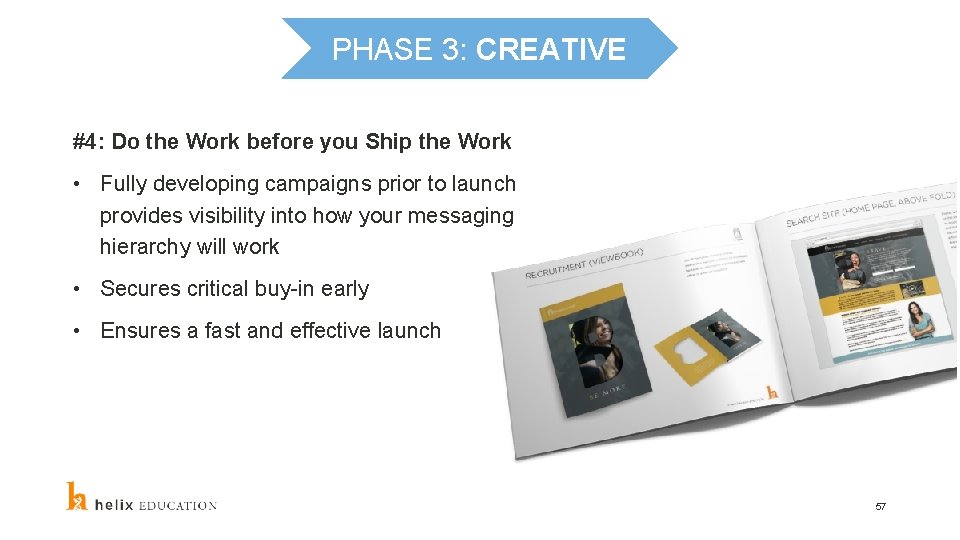
PHASE 3: CREATIVE #4: Do the Work before you Ship the Work • Fully developing campaigns prior to launch provides visibility into how your messaging hierarchy will work • Secures critical buy-in early • Ensures a fast and effective launch 57
STEP 4. ATTRIBUTION & OPTIMIZATION 1. 2. 3. 4. RESEARCH STRATEGY CREATIVE Campaign Real-time campaign performance 58
PHASE 4: CAMPAIGN #1 Start with the Goal in Mind • What is our enrollment goal? • What is our budget? • What is our timeline? 59
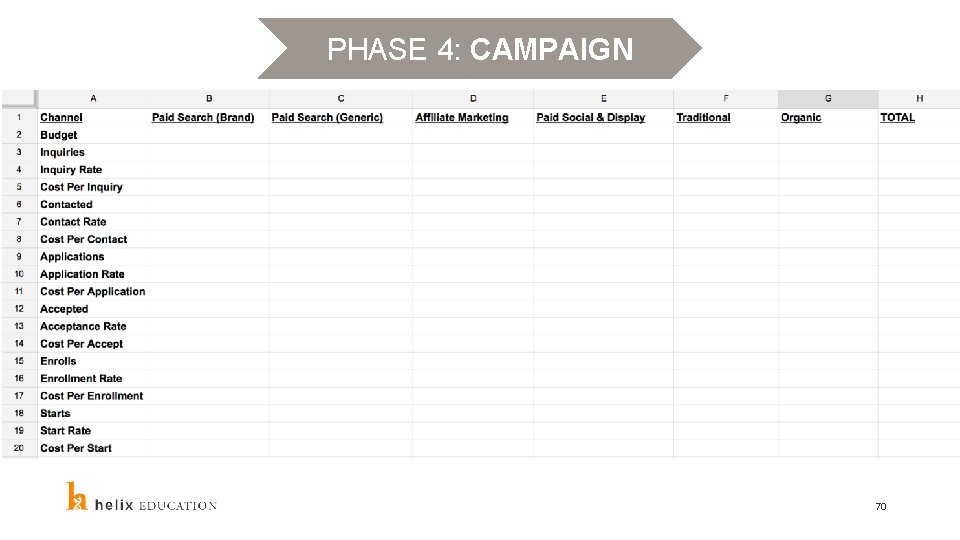
PHASE 4: CAMPAIGN #2 What is our current cost per? • Inquiry • Contact • App • Accept • Enroll • Start 60
PHASE 4: CAMPAIGN #3 What are our target cost pers? • Inquiry • Contact • App • Accept • Enroll • Start 61
IS OUR CAMPAIGN EVEN FEASIBLE? 62
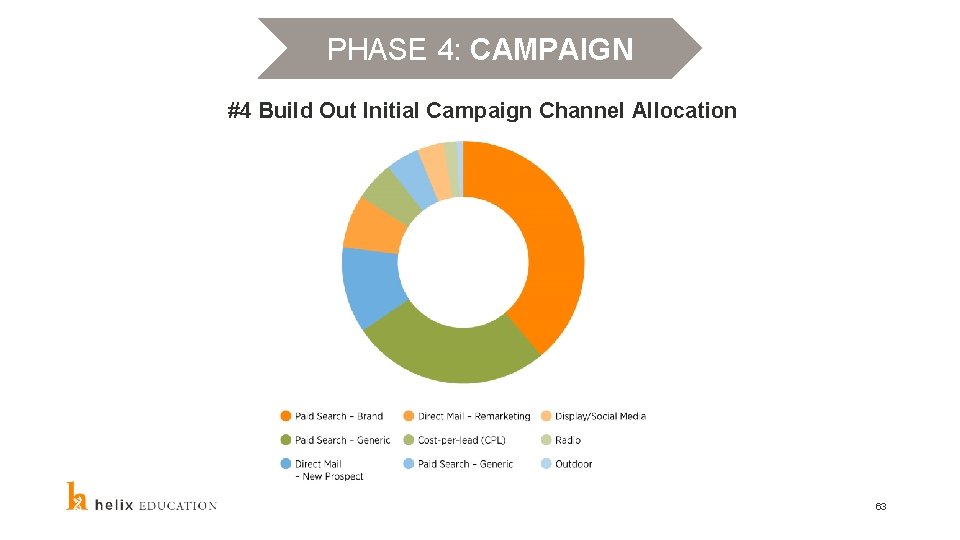
PHASE 4: CAMPAIGN #4 Build Out Initial Campaign Channel Allocation 63
PHASE 4: CAMPAIGN #4 Build Out Initial Campaign Channel Allocation Post-Traditional Campaign Example • Paid Search: Brand • Paid Search: Generic • Affiliate Marketing • Paid Social / Display • Traditional Media 64
TIP 1: FUNNEL NAVIGATION ALWAYS BUILD YOUR WAY UP THE FUNNEL 65
TIP 2: DIRECT RESPONSE FIRST IF IT’S TRACKABLE, AND VIABLE, START THERE 66
TIP 3: IDENTIFY YOUR MILE MARKERS TRACK TOWARDS THE MOST CRITICAL STEPS IN THE DECISION MAKING PROCESS 67
TIP 4: AGGRESSIVELY TEST EVERYTHING STARTS WITH A PROOF OF CONCEPT. DON’T BE AFRAID TO BE EXTREME IN DEVELOPING YOUR TESTS. 68
TIP 5: KEEP SCORE YOU CAN’T KEEP SCORE WITHOUT A SCOREBOARD 69
PHASE 4: CAMPAIGN 70
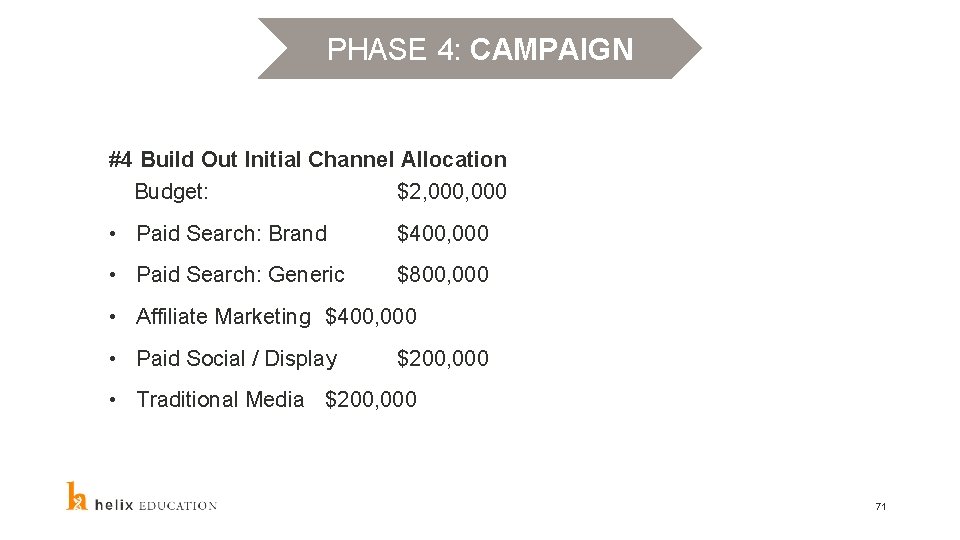
PHASE 4: CAMPAIGN #4 Build Out Initial Channel Allocation Budget: $2, 000 • Paid Search: Brand $400, 000 • Paid Search: Generic $800, 000 • Affiliate Marketing $400, 000 • Paid Social / Display $200, 000 • Traditional Media $200, 000 71
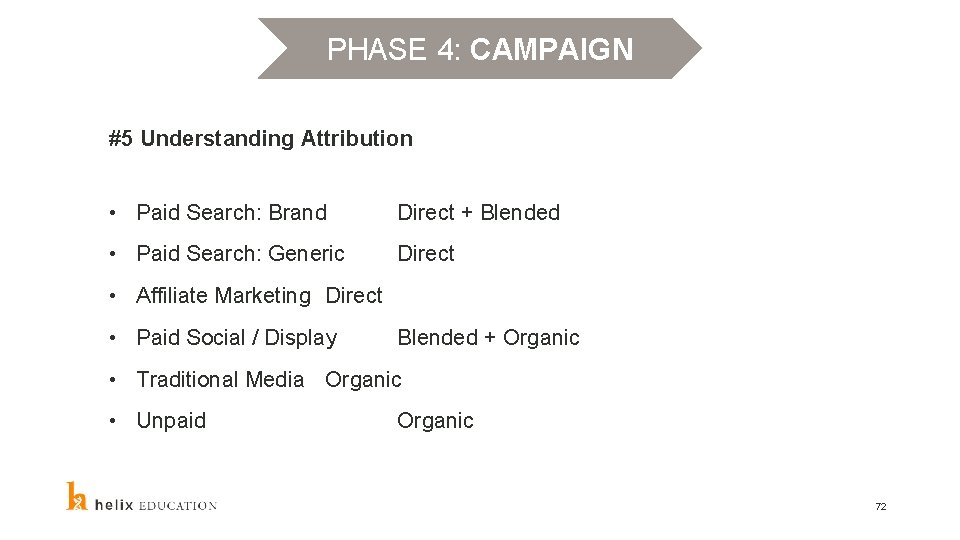
PHASE 4: CAMPAIGN #5 Understanding Attribution • Paid Search: Brand Direct + Blended • Paid Search: Generic Direct • Affiliate Marketing Direct • Paid Social / Display Blended + Organic • Traditional Media Organic • Unpaid Organic 72
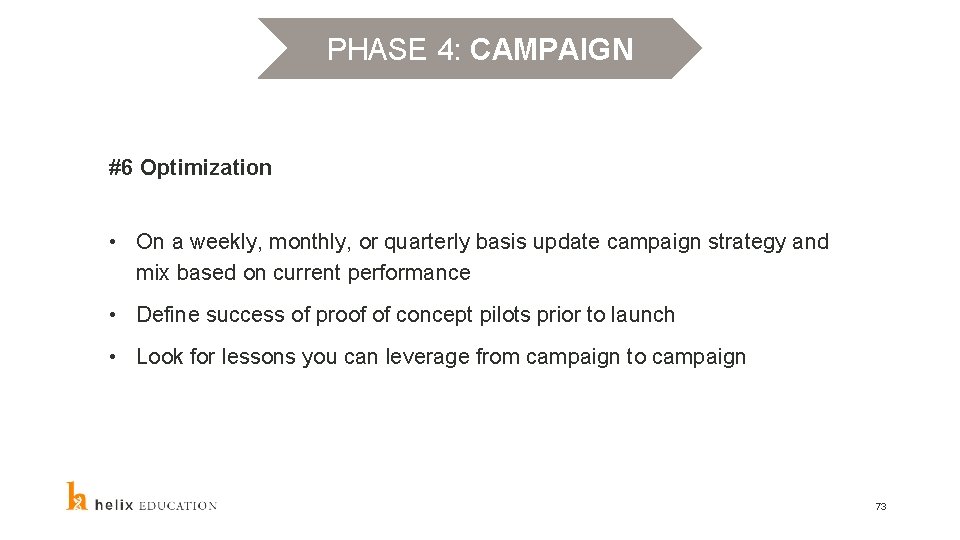
PHASE 4: CAMPAIGN #6 Optimization • On a weekly, monthly, or quarterly basis update campaign strategy and mix based on current performance • Define success of proof of concept pilots prior to launch • Look for lessons you can leverage from campaign to campaign 73
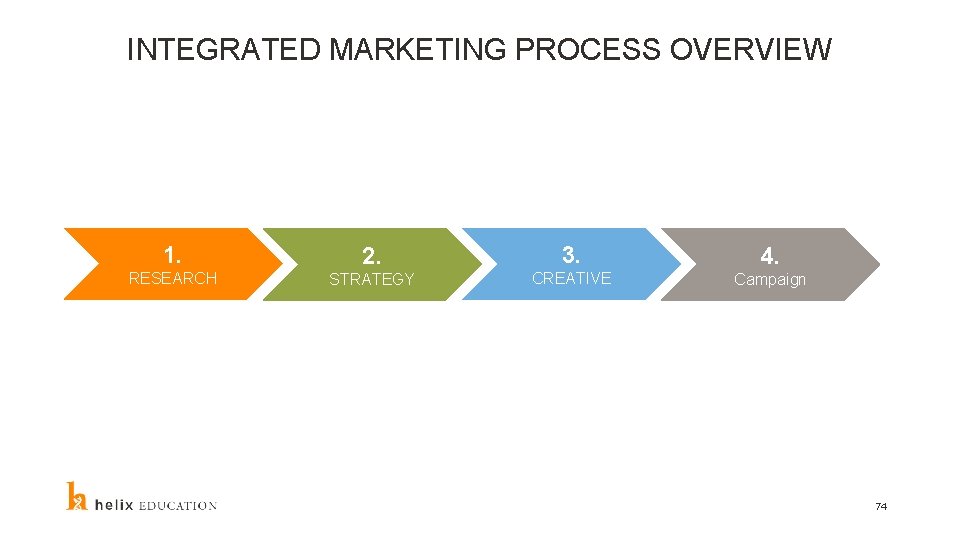
INTEGRATED MARKETING PROCESS OVERVIEW 1. 2. 3. 4. RESEARCH STRATEGY CREATIVE Campaign 74
PREDICTIONS 75
INTEGRATED MEDIA PLANNING PREDICTIONS 1. Generic paid search will become largely unviable as a recruitment channel for many mainstream programs 2. If our web experience isn’t strong, it’s almost already too late 3. Maximizing our existing investment will be a necessity, requiring us to focus more on conversion opportunities, as well as retention and holistic student success initiatives 4. We will need a dedicated data analyst on our marketing or enrollment team 5. Our number one investment must be the experience 76
IT IS NOT RESOURCES, BUT RESOURCEFULNESS THAT WILL DETERMINE OUR ABILITY TO SUCCEED 77
Q+A 78
THANK YOU Seth Odell GM, Marketing Services Helix Education sodell@helixeducation. com c: 1 (310) 435. 4645 @Seth. Odell
- Slides: 79