
How to Become the President Electoral College System
How to Become the President
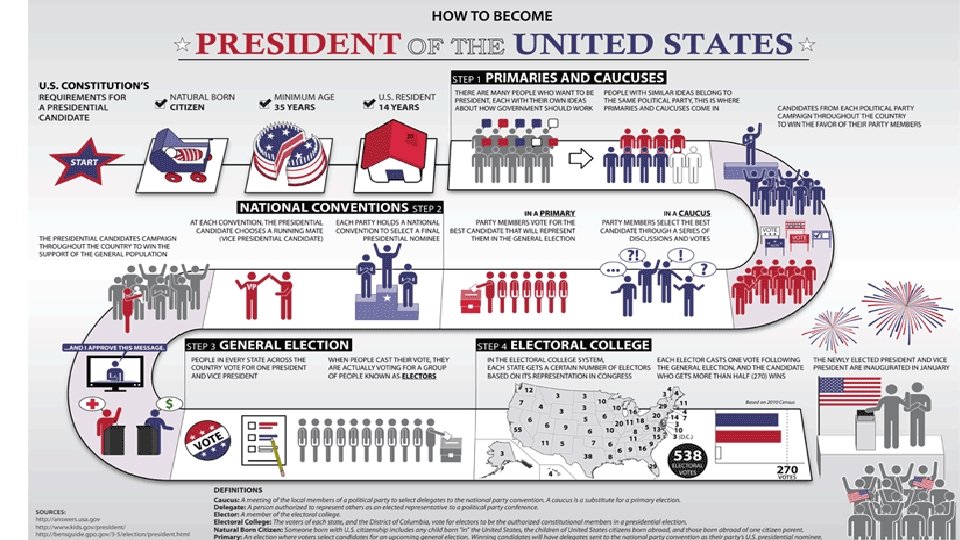
Electoral College System • Formal Qualifications (Constitutional Requirements): • A natural born US Citizen • 35 Years Old • Living in US for 14 years before taking office • Informal Qualifications • Money!! • Political Experience • Political Beliefs
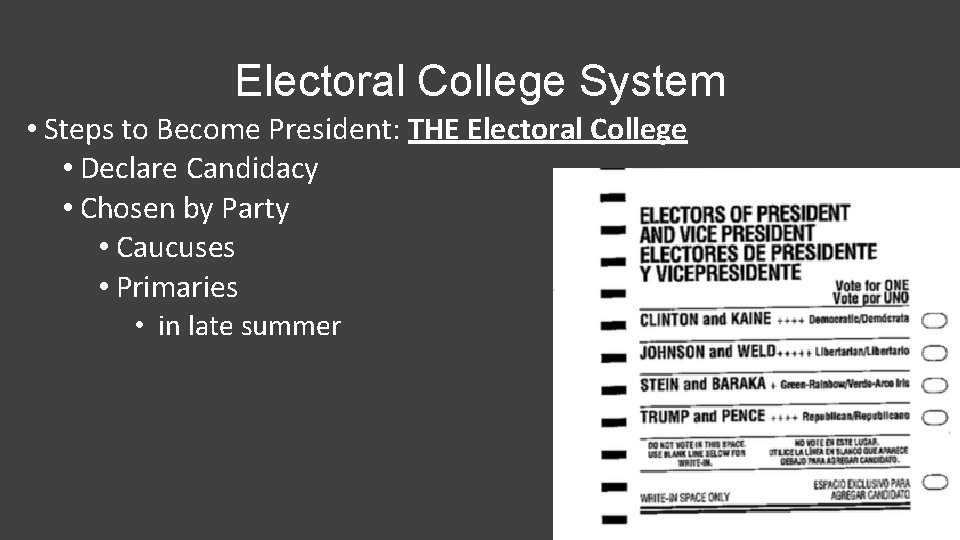
Electoral College System • Steps to Become President: THE Electoral College • Declare Candidacy • Chosen by Party • Caucuses • Primaries • in late summer
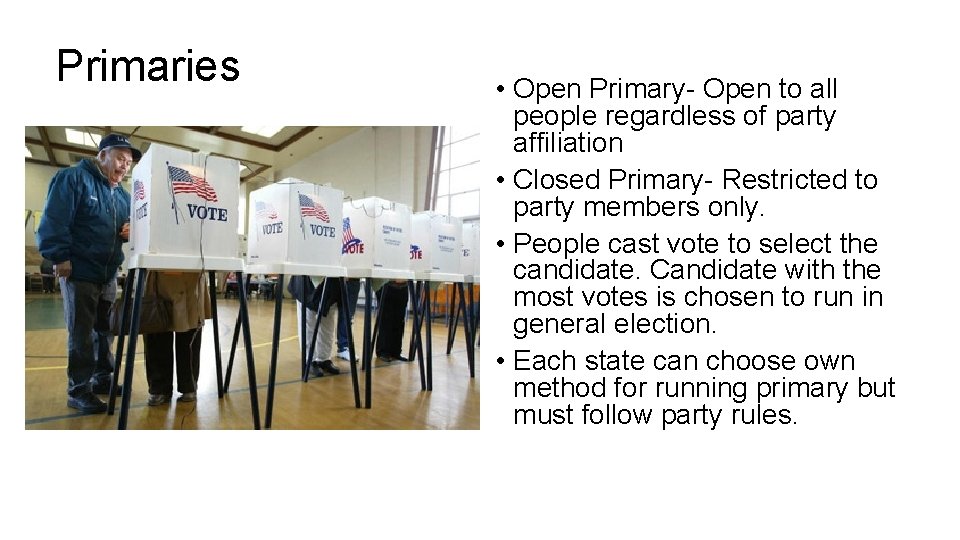
Primaries • Open Primary- Open to all people regardless of party affiliation • Closed Primary- Restricted to party members only. • People cast vote to select the candidate. Candidate with the most votes is chosen to run in general election. • Each state can choose own method for running primary but must follow party rules.
Open vs. Closed Primaries Supporters of Closed Opponents of Closed 1. Prevents raiding from other 1. Forces people to publicly show party political preference 2. Keeps candidate responsive to 2. Excludes independent voters party 3. Forces voters to consider party choices.
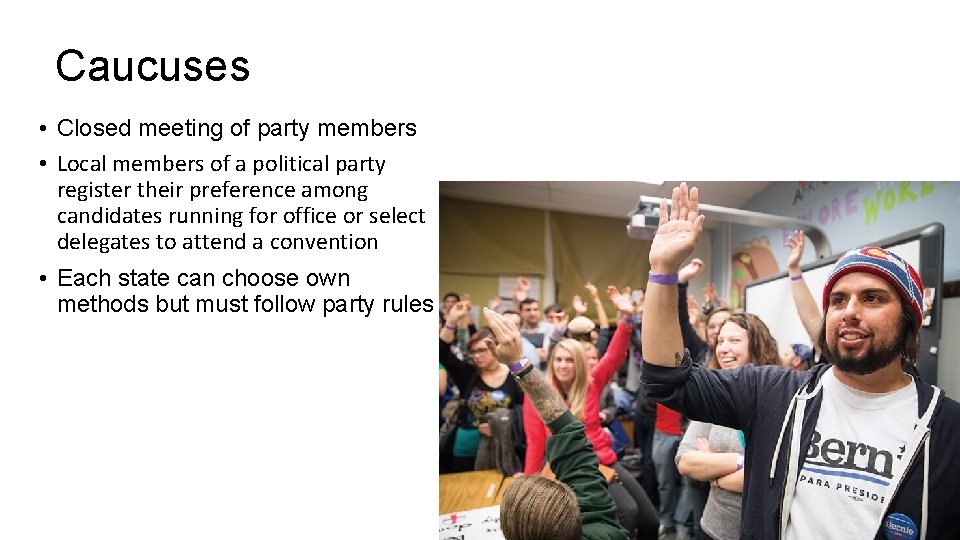
Caucuses • Closed meeting of party members • Local members of a political party register their preference among candidates running for office or select delegates to attend a convention • Each state can choose own methods but must follow party rules
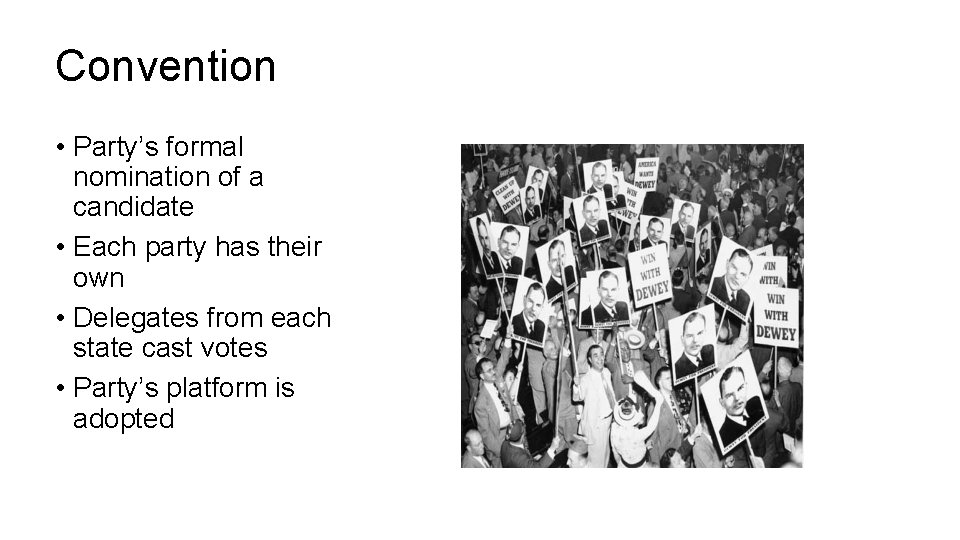
Convention • Party’s formal nomination of a candidate • Each party has their own • Delegates from each state cast votes • Party’s platform is adopted
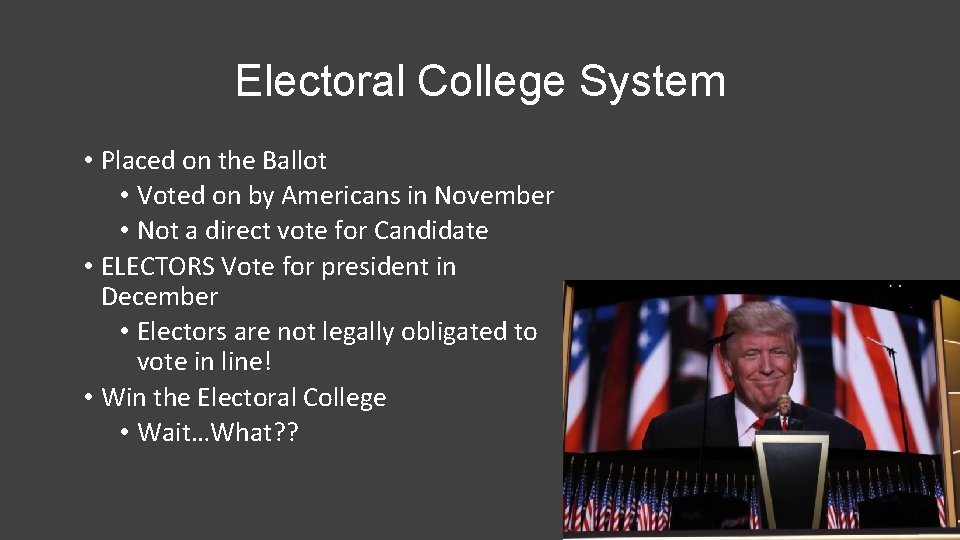
Electoral College System • Placed on the Ballot • Voted on by Americans in November • Not a direct vote for Candidate • ELECTORS Vote for president in December • Electors are not legally obligated to vote in line! • Win the Electoral College • Wait…What? ?
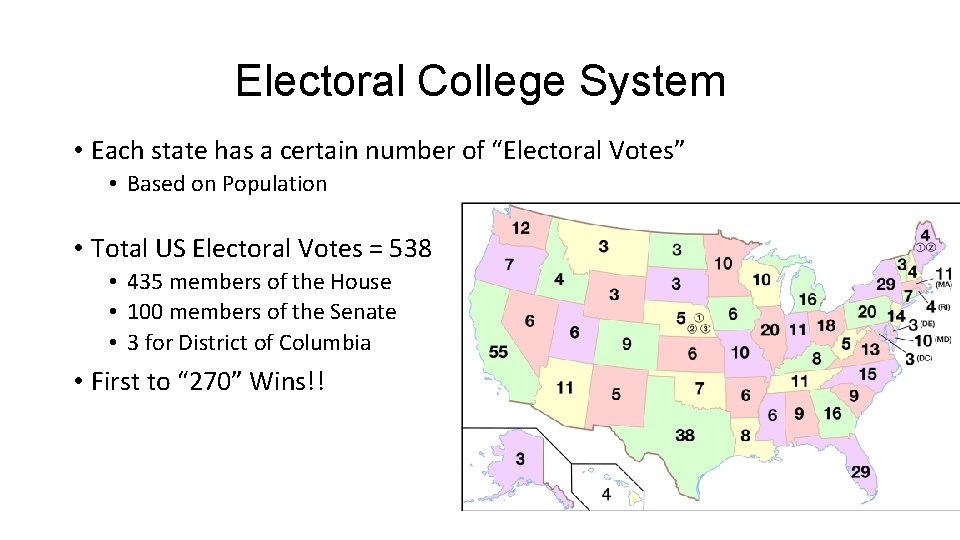
Electoral College System • Each state has a certain number of “Electoral Votes” • Based on Population • Total US Electoral Votes = 538 • 435 members of the House • 100 members of the Senate • 3 for District of Columbia • First to “ 270” Wins!!
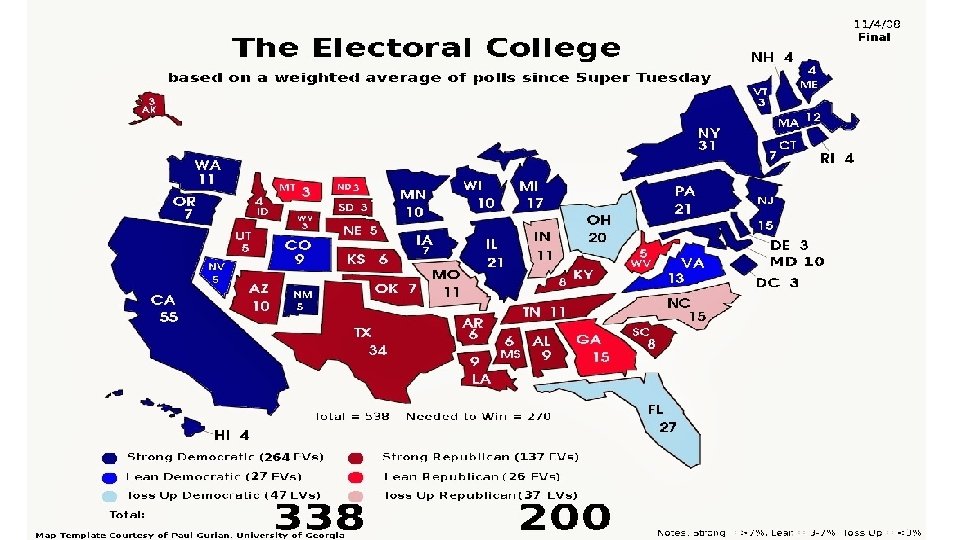
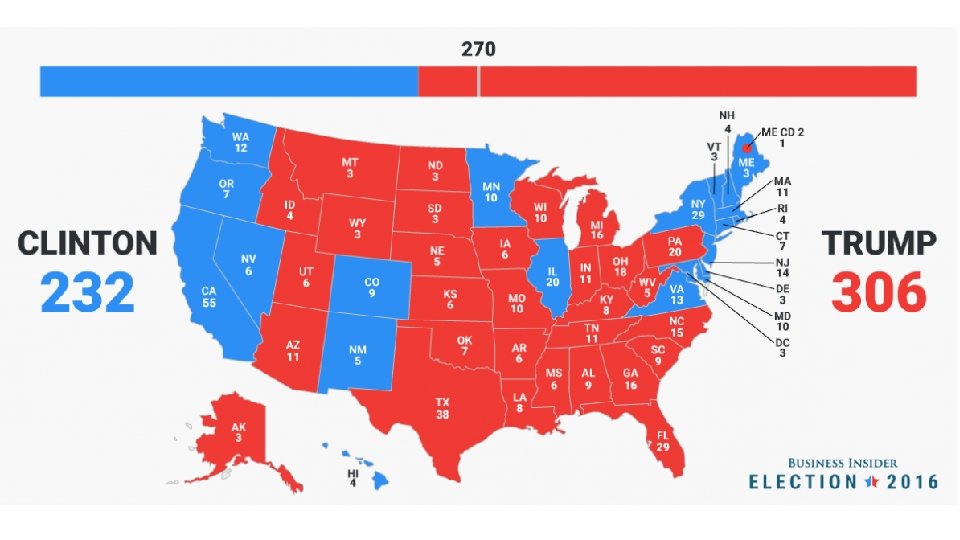
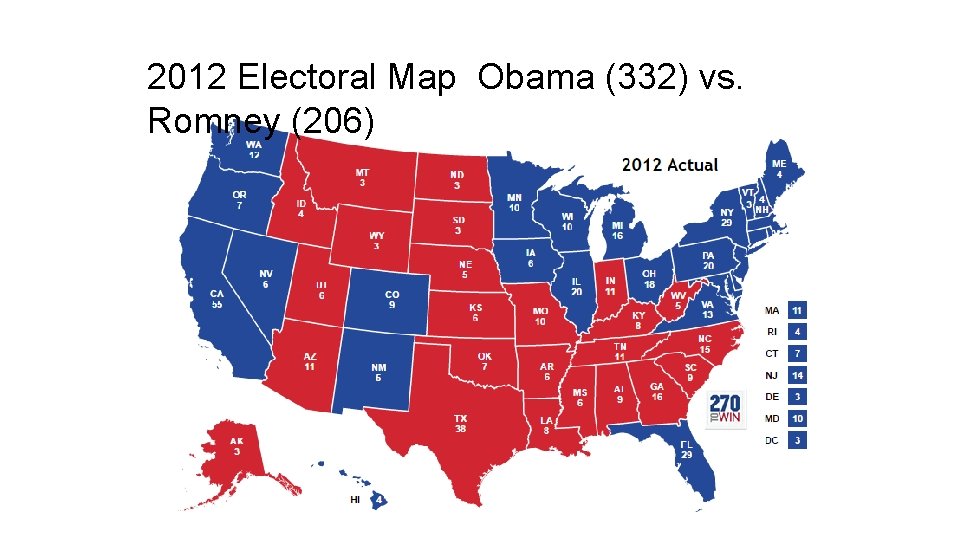
2012 Electoral Map Obama (332) vs. Romney (206)
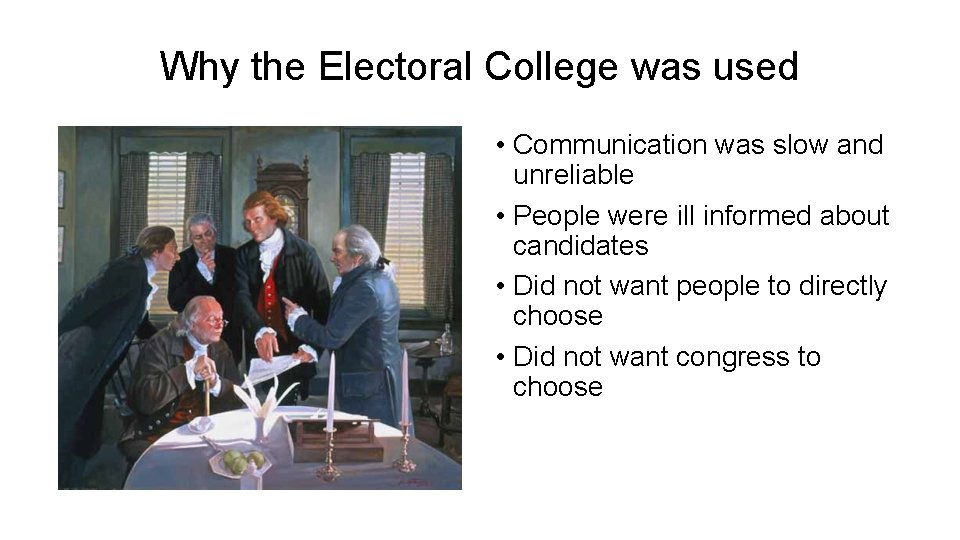
Why the Electoral College was used • Communication was slow and unreliable • People were ill informed about candidates • Did not want people to directly choose • Did not want congress to choose
• Possible Flaws? ? Electoral College System • Winner Take all System • Winner of Popular vote in State receives all Electoral Votes • (Exceptions are Maine and Nebraska) • You can lose National Popular Vote and still win electoral vote • 3 rd Party Candidates Trump : 62, 984, 825 Clinton: 65, 853, 516 • Take electoral votes from other Candidates? • Bargain off Electoral Votes • Election by the House • If no Candidate receives 270, House votes (50 votes) • What if a State can’t decide? ?
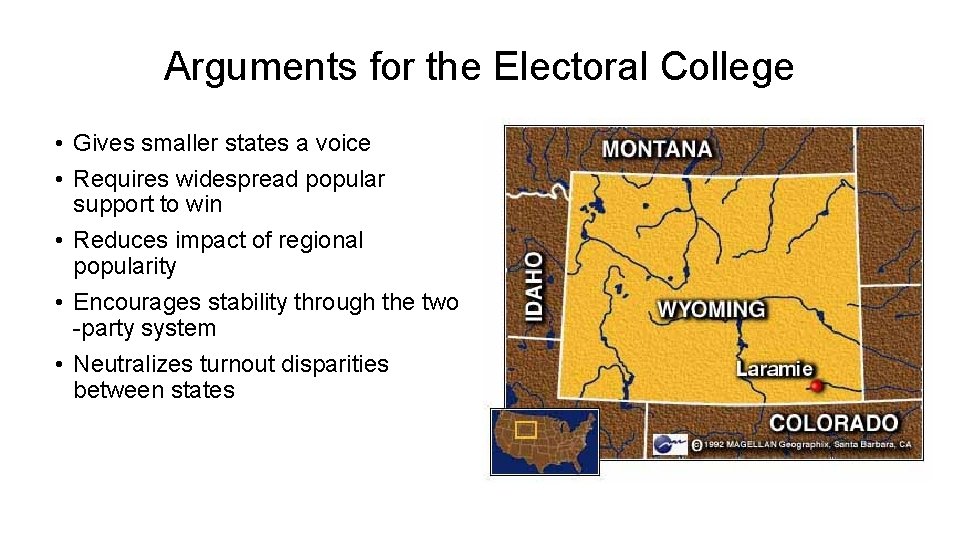
Arguments for the Electoral College • Gives smaller states a voice • Requires widespread popular support to win • Reduces impact of regional popularity • Encourages stability through the two -party system • Neutralizes turnout disparities between states
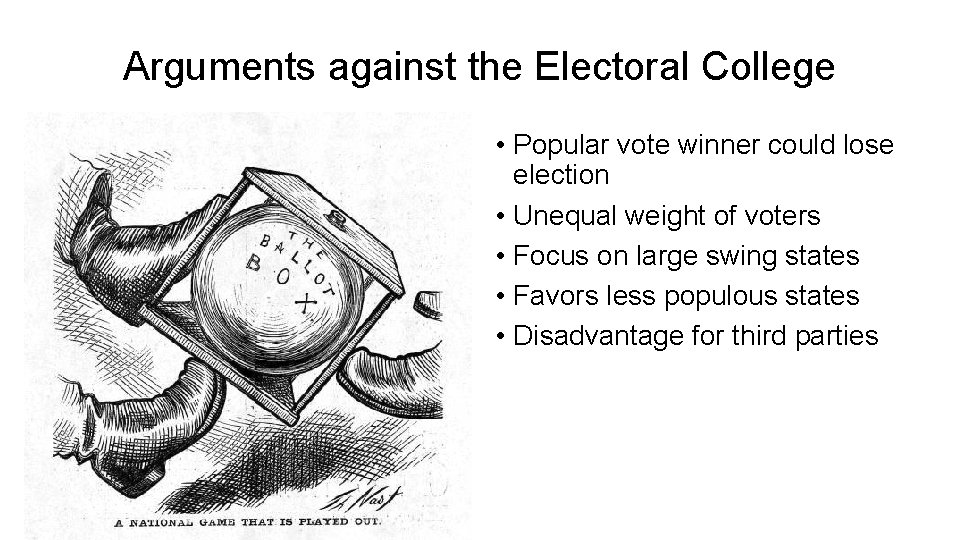
Arguments against the Electoral College • Popular vote winner could lose election • Unequal weight of voters • Focus on large swing states • Favors less populous states • Disadvantage for third parties
- Slides: 17