
How to Become an Everyday Hero Donate Life
How to Become an Everyday Hero! Donate Life: Organ, Tissue and Eye Donation Education for Teens
Why are organ and tissue donations needed? Which organs and tissues can be donated? What does registering as an organ donor mean?
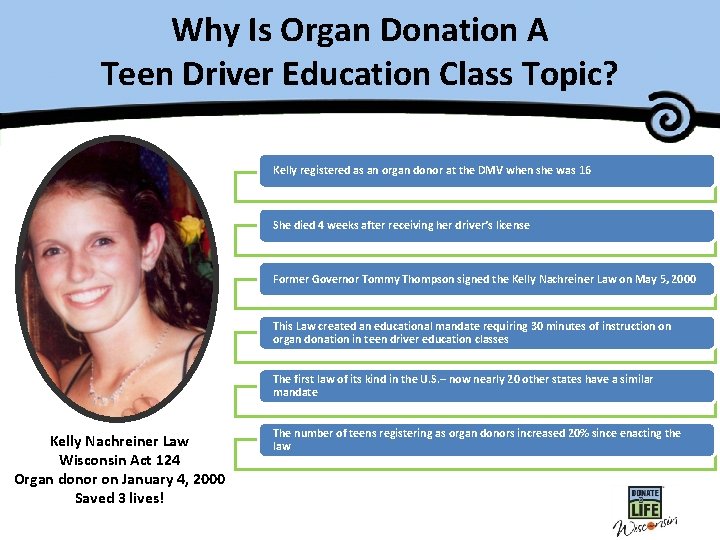
Why Is Organ Donation A Teen Driver Education Class Topic? Kelly registered as an organ donor at the DMV when she was 16 She died 4 weeks after receiving her driver’s license Former Governor Tommy Thompson signed the Kelly Nachreiner Law on May 5, 2000 This Law created an educational mandate requiring 30 minutes of instruction on organ donation in teen driver education classes The first law of its kind in the U. S. – now nearly 20 other states have a similar mandate Kelly Nachreiner Law Wisconsin Act 124 Organ donor on January 4, 2000 Saved 3 lives! The number of teens registering as organ donors increased 20% since enacting the law
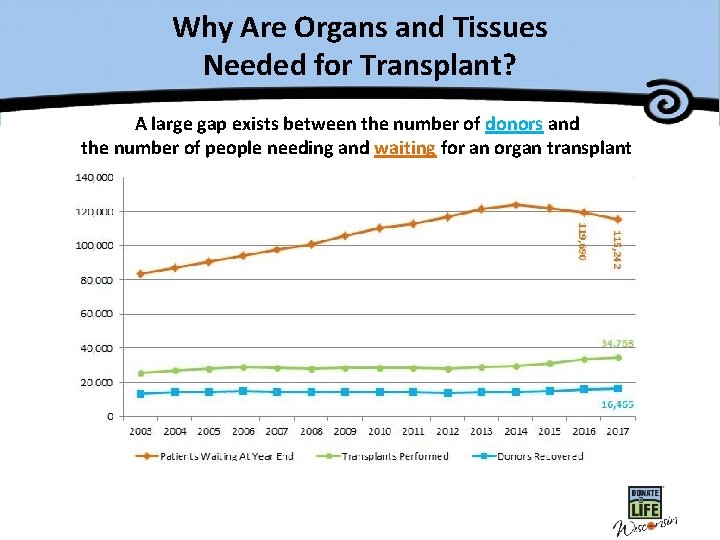
Why Are Organs and Tissues Needed for Transplant? A large gap exists between the number of donors and the number of people needing and waiting for an organ transplant
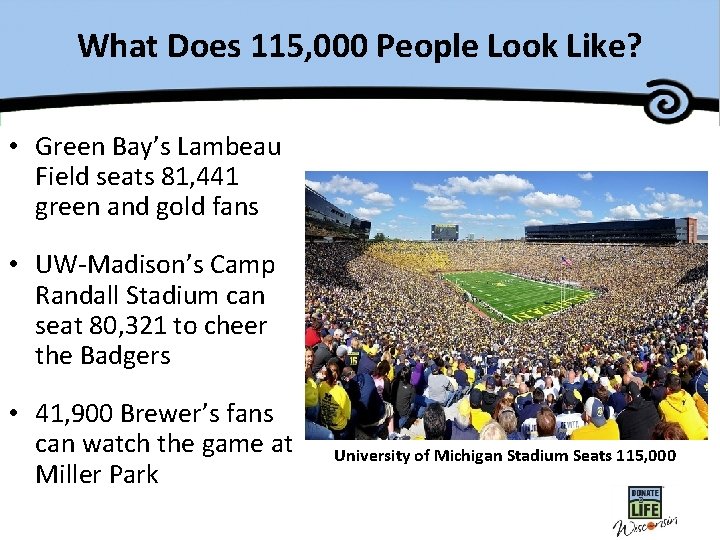
What Does 115, 000 People Look Like? • Green Bay’s Lambeau Field seats 81, 441 green and gold fans 81, 441 fans • UW-Madison’s Camp Randall Stadium can seat 80, 321 to cheer the Badgers 80, 321 fans • 41, 900 Brewer’s fans can watch the game at Miller Park 34, 921 fans 41, 900 University of Michigan Stadium Seats 115, 000 fans
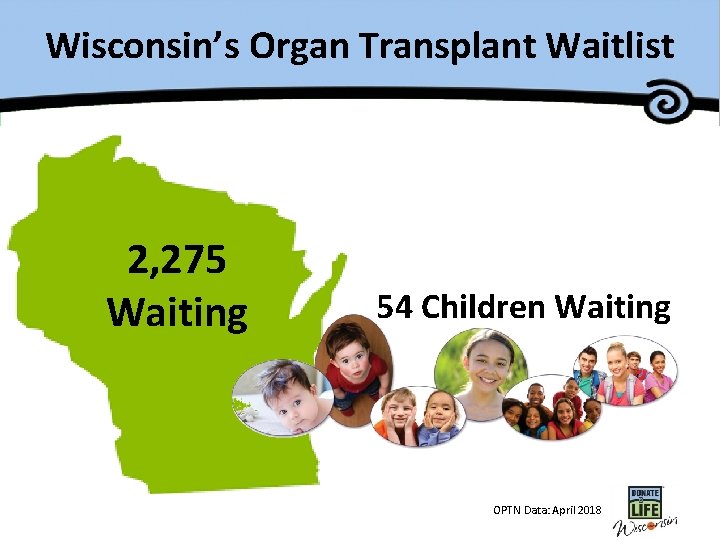
Wisconsin’s Organ Transplant Waitlist 2, 275 Waiting 54 Children Waiting OPTN Data: April 2018
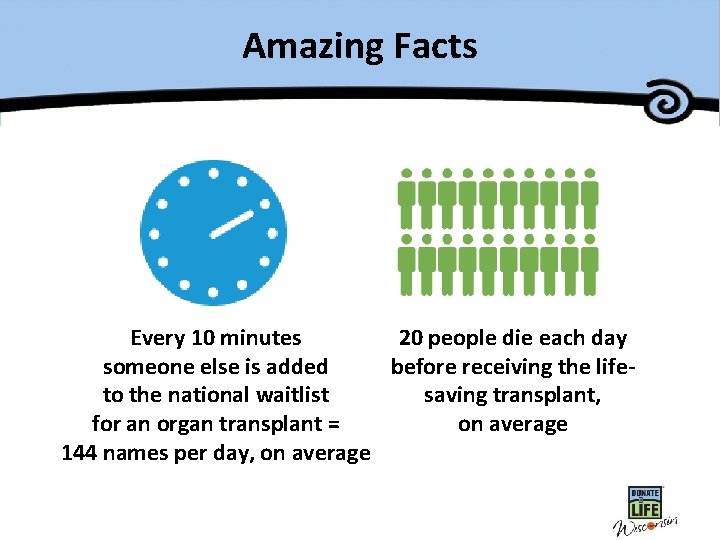
Amazing Facts Every 10 minutes 20 people die each day someone else is added before receiving the lifeto the national waitlist saving transplant, for an organ transplant = on average 144 names per day, on average
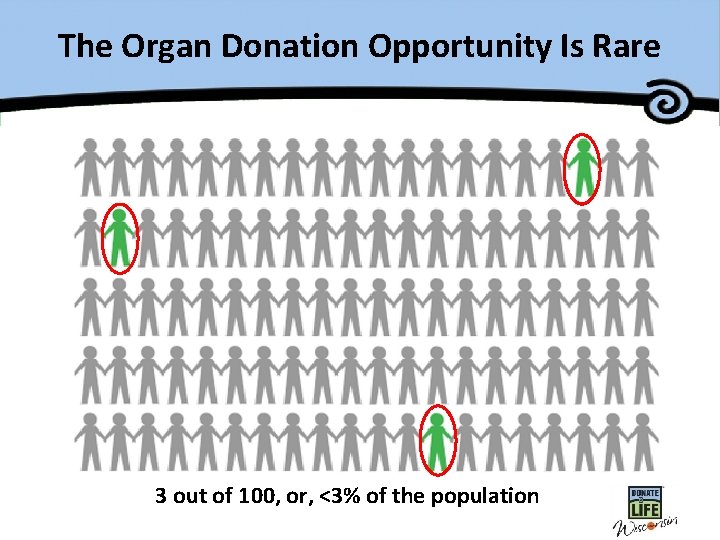
The Organ Donation Opportunity Is Rare 3 out of 100, or, <3% of the population
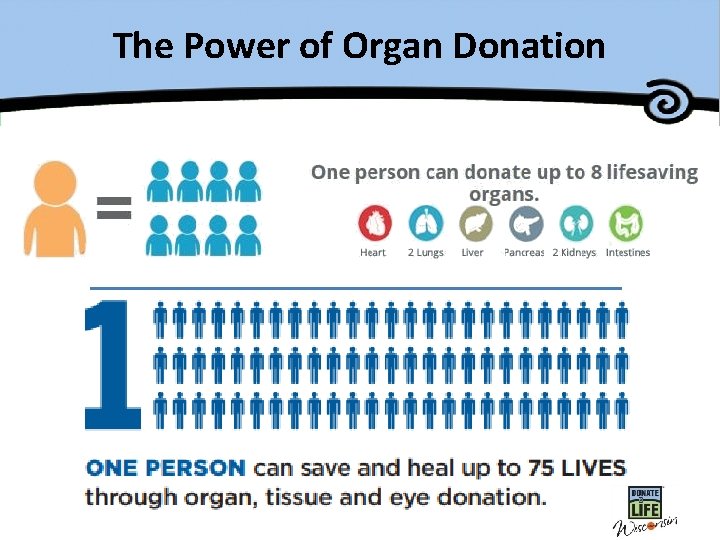
The Power of Organ Donation
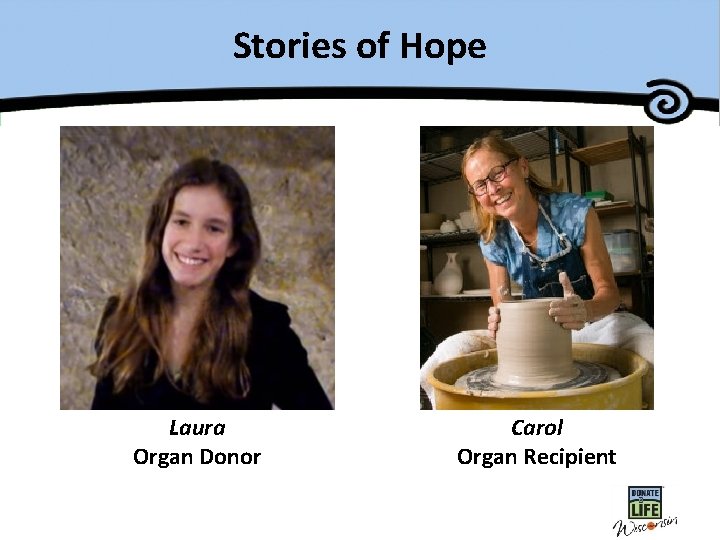
Stories of Hope Laura Organ Donor Carol Organ Recipient
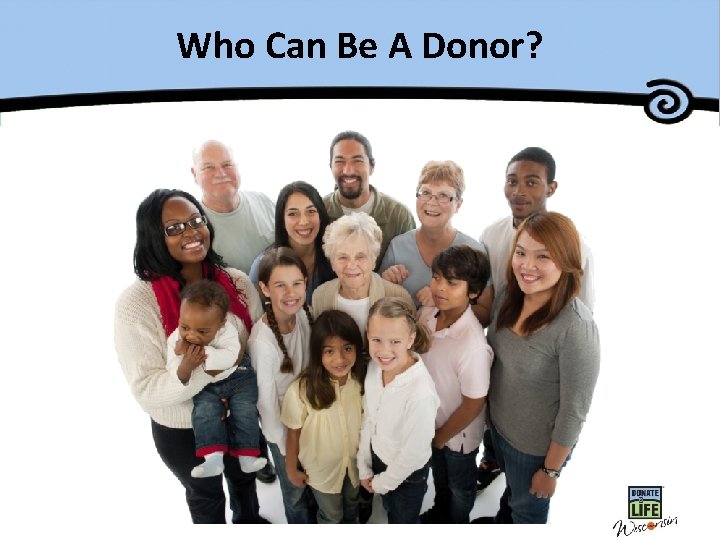
Who Can Be A Donor?
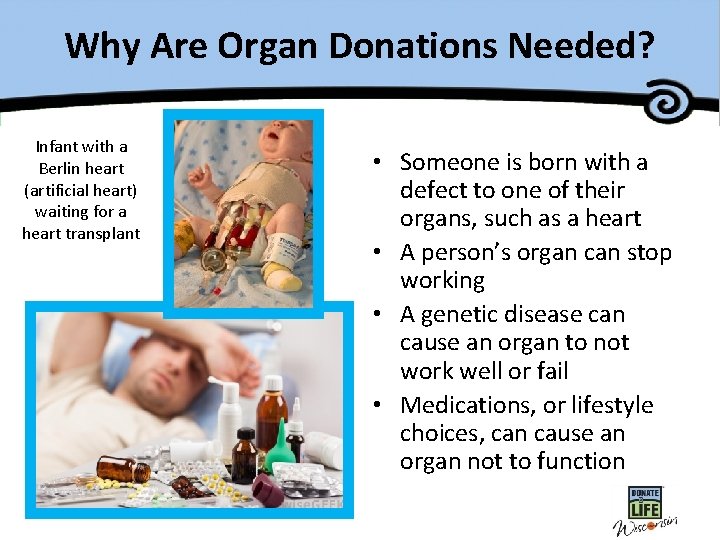
Why Are Organ Donations Needed? Infant with a Berlin heart (artificial heart) waiting for a heart transplant • Someone is born with a defect to one of their organs, such as a heart • A person’s organ can stop working • A genetic disease can cause an organ to not work well or fail • Medications, or lifestyle choices, can cause an organ not to function
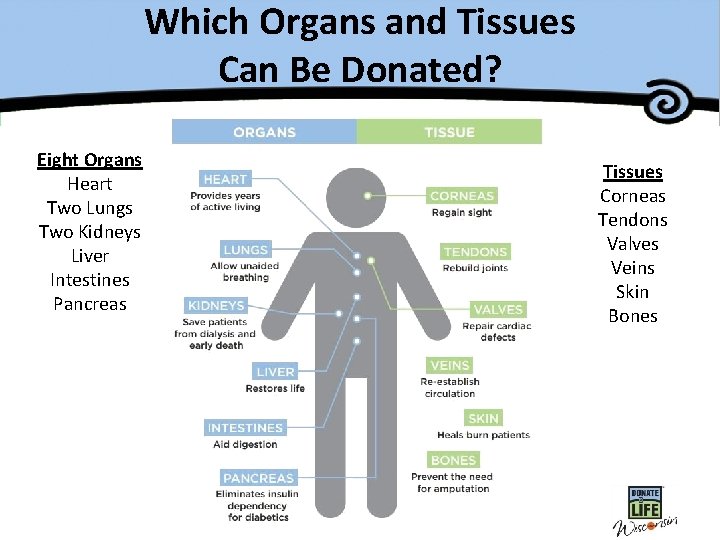
Which Organs and Tissues Can Be Donated? Eight Organs Heart Two Lungs Two Kidneys Liver Intestines Pancreas Tissues Corneas Tendons Valves Veins Skin Bones
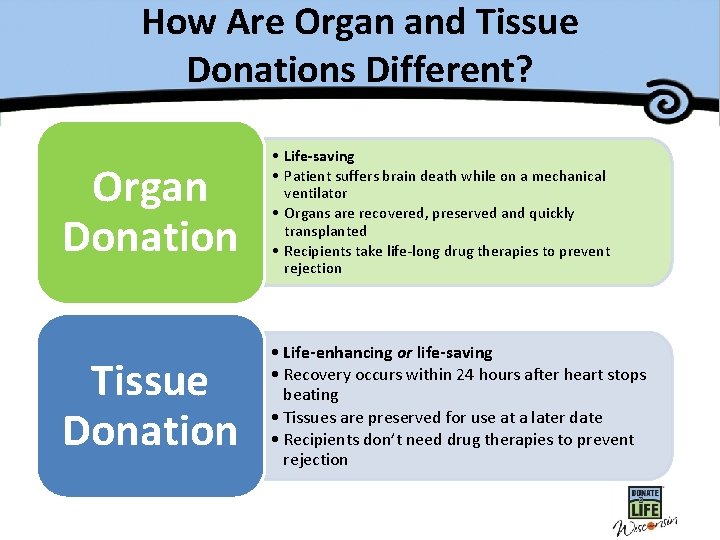
How Are Organ and Tissue Donations Different? Organ Donation • Life-saving • Patient suffers brain death while on a mechanical ventilator • Organs are recovered, preserved and quickly transplanted • Recipients take life-long drug therapies to prevent rejection Tissue Donation • Life-enhancing or life-saving • Recovery occurs within 24 hours after heart stops beating • Tissues are preserved for use at a later date • Recipients don’t need drug therapies to prevent rejection
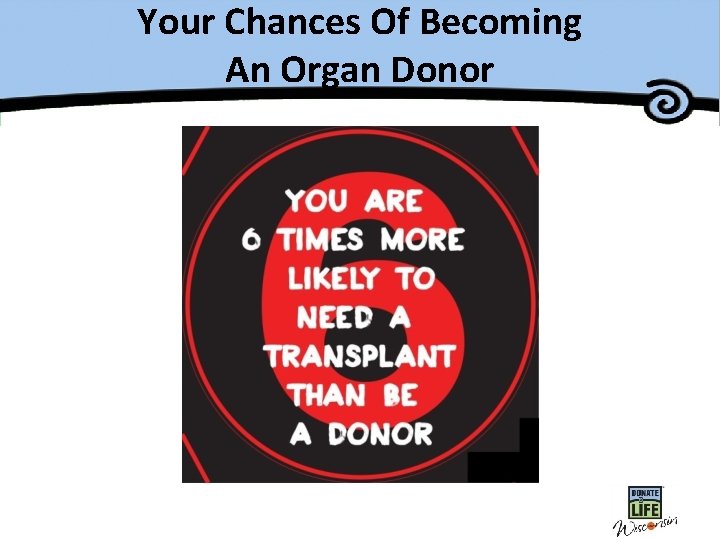
Your Chances Of Becoming An Organ Donor
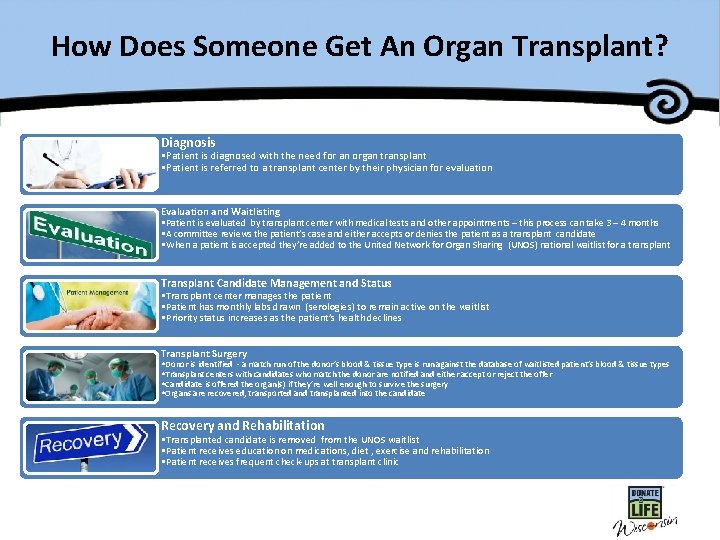
How Does Someone Get An Organ Transplant? Diagnosis • Patient is diagnosed with the need for an organ transplant • Patient is referred to a transplant center by their physician for evaluation Evaluation and Waitlisting • Patient is evaluated by transplant center with medical tests and other appointments – this process can take 3 – 4 months • A committee reviews the patient’s case and either accepts or denies the patient as a transplant candidate • When a patient is accepted they’re added to the United Network for Organ Sharing (UNOS) national waitlist for a transplant Transplant Candidate Management and Status • Transplant center manages the patient • Patient has monthly labs drawn (serologies) to remain active on the waitlist • Priority status increases as the patient’s health declines Transplant Surgery • Donor is identified - a match run of the donor’s blood & tissue type is run against the database of waitlisted patient’s blood & tissue types • Transplant centers with candidates who match the donor are notified and either accept or reject the offer • Candidate is offered the organ(s) if they’re well enough to survive the surgery • Organs are recovered, transported and transplanted into the candidate Recovery and Rehabilitation • Transplanted candidate is removed from the UNOS waitlist • Patient receives education on medications, diet , exercise and rehabilitation • Patient receives frequent check-ups at transplant clinic
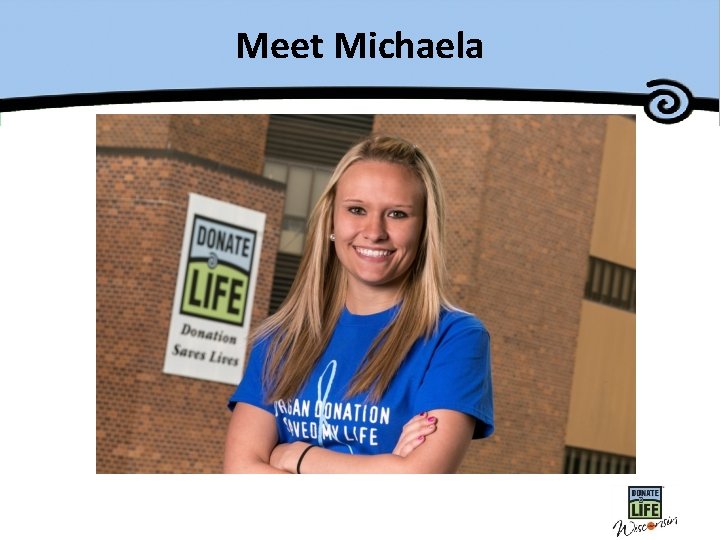
Meet Michaela

Gratitude For A Second Chance!

Meet Aaron

Super Heroes
Why Register As An Organ Donor? It’s Gift to Your Family • Your family doesn’t have to decide on your behalf • Families can find great comfort and their grief journey can be eased when their loved one is a donor, leaving a legacy for others It’s Free And Easy To Be An Everyday Hero • There is no cost to you or your family if you’re a donor • It’s easy to register online and saves a trip to the DMV Your Donation Can Help Others • In most instances, your donation stays in your local area • An organ and tissue donor can have a positive impact on a large number of people, including the family and friends of the organ, tissue or cornea recipient
How Do I Register? At the DMV Online at www. Donate. Life. Wisconsin. org Online in Spanish at Done. Vida. Wisconsin. org
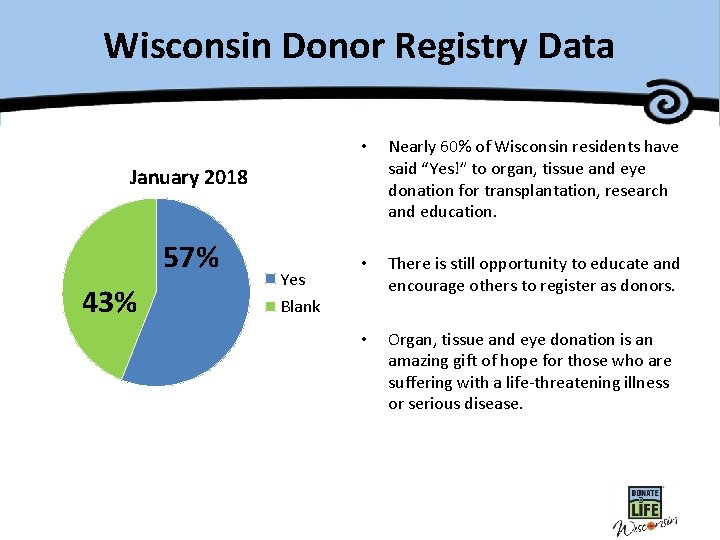
Wisconsin Donor Registry Data • Nearly 60% of Wisconsin residents have said “Yes!” to organ, tissue and eye donation for transplantation, research and education. • There is still opportunity to educate and encourage others to register as donors. • Organ, tissue and eye donation is an amazing gift of hope for those who are suffering with a life-threatening illness or serious disease. January 2018 57% 43% Yes Blank
How Does Registering As A Donor Affect Me? First, we can need a transplant at any time – you never know what tomorrow may bring. Second, consider if you had a family member or friend who suffers with one of these medical issues… • Organ failure • severe burns over a large part of their body • bone cancer and a bone transplant would prevent amputation • Is legally blind due to damaged corneas Wouldn’t you want the “gift of hope” with an organ, tissue or corneal transplant to be available for you or those you know who are in need?
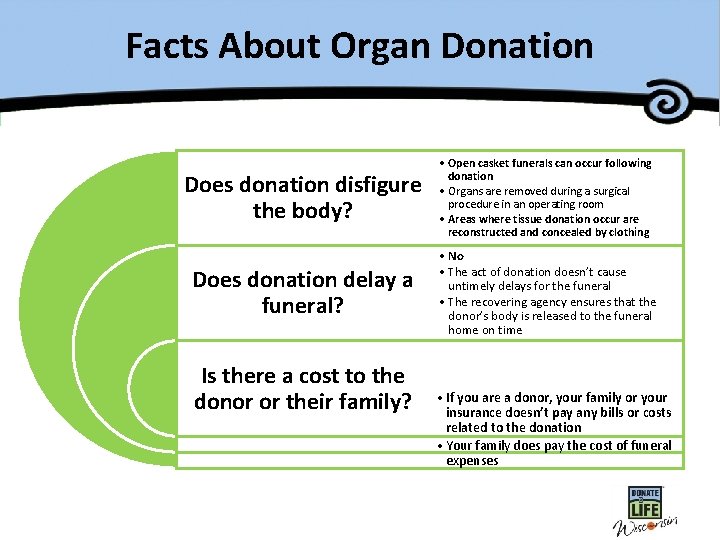
Facts About Organ Donation Does donation disfigure the body? • Open casket funerals can occur following donation • Organs are removed during a surgical procedure in an operating room • Areas where tissue donation occur are reconstructed and concealed by clothing Does donation delay a funeral? • No • The act of donation doesn’t cause untimely delays for the funeral • The recovering agency ensures that the donor’s body is released to the funeral home on time Is there a cost to the donor or their family? • If you are a donor, your family or your insurance doesn’t pay any bills or costs related to the donation • Your family does pay the cost of funeral expenses
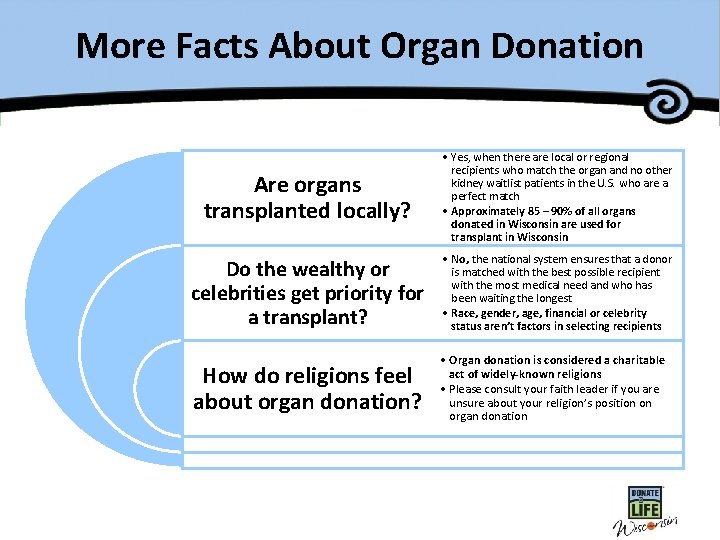
More Facts About Organ Donation Are organs transplanted locally? • Yes, when there are local or regional recipients who match the organ and no other kidney waitlist patients in the U. S. who are a perfect match • Approximately 85 – 90% of all organs donated in Wisconsin are used for transplant in Wisconsin Do the wealthy or celebrities get priority for a transplant? • No, the national system ensures that a donor is matched with the best possible recipient with the most medical need and who has been waiting the longest • Race, gender, age, financial or celebrity status aren’t factors in selecting recipients How do religions feel about organ donation? • Organ donation is considered a charitable act of widely-known religions • Please consult your faith leader if you are unsure about your religion’s position on organ donation
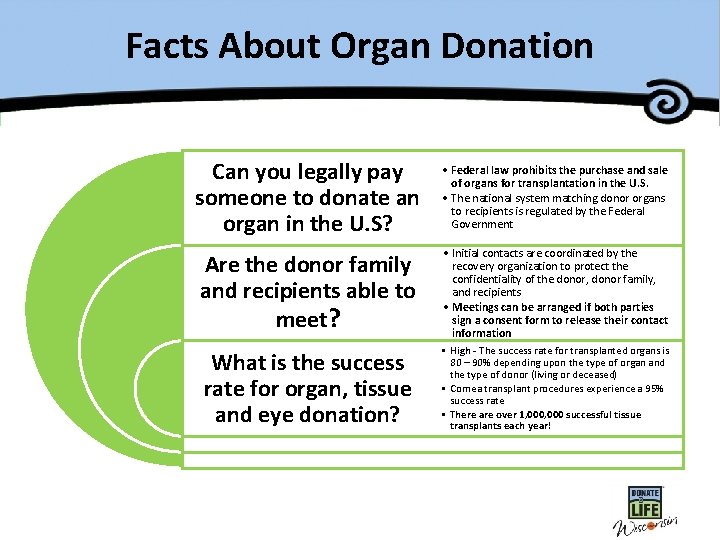
Facts About Organ Donation Can you legally pay someone to donate an organ in the U. S? • Federal law prohibits the purchase and sale of organs for transplantation in the U. S. • The national system matching donor organs to recipients is regulated by the Federal Government Are the donor family and recipients able to meet? • Initial contacts are coordinated by the recovery organization to protect the confidentiality of the donor, donor family, and recipients • Meetings can be arranged if both parties sign a consent form to release their contact information What is the success rate for organ, tissue and eye donation? • High - The success rate for transplanted organs is 80 – 90% depending upon the type of organ and the type of donor (living or deceased) • Cornea transplant procedures experience a 95% success rate • There are over 1, 000 successful tissue transplants each year!
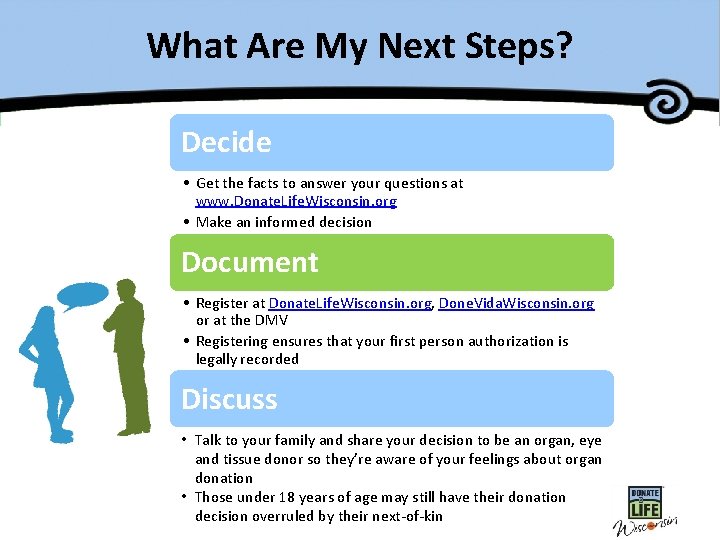
What Are My Next Steps? Decide • Get the facts to answer your questions at www. Donate. Life. Wisconsin. org • Make an informed decision Document • Register at Donate. Life. Wisconsin. org, Done. Vida. Wisconsin. org or at the DMV • Registering ensures that your first person authorization is legally recorded Discuss • Talk to your family and share your decision to be an organ, eye and tissue donor so they’re aware of your feelings about organ donation • Those under 18 years of age may still have their donation decision overruled by their next-of-kin
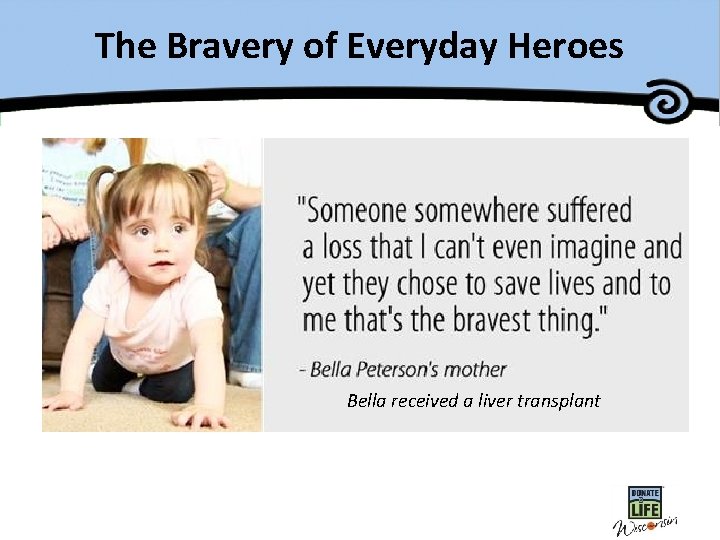
The Bravery of Everyday Heroes Bella received a liver transplant

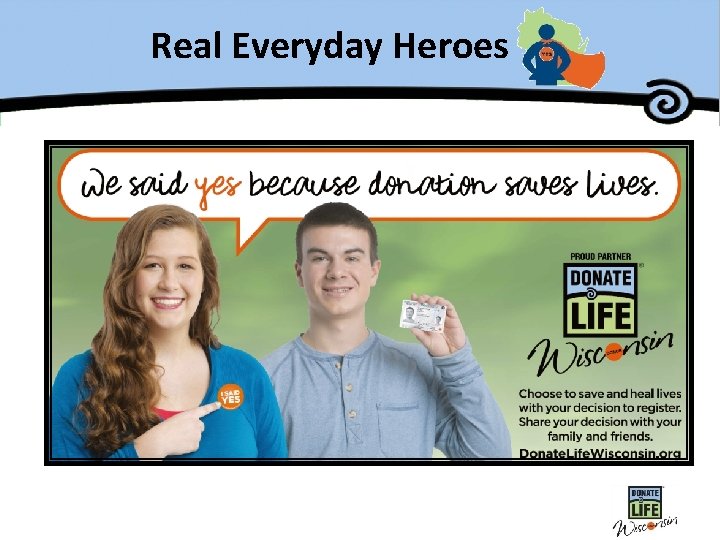
Real Everyday Heroes

- Slides: 32