
HOW TO BE MORE STRENGTHBASED TO DEVELOP POSITIVE
HOW TO BE MORE STRENGTH-BASED TO DEVELOP POSITIVE CONNECTIONS WITH YOUTH, FAMILIES AND STAFF BY: ALISON BLACK, AMERICA SCORES CLEVELAND
LEARNING OBJECTIVES Participants will be able to…. ▪ Have a basic understanding of the strengths-based framework. ▪ Understand how the Strength-Based framework is a way to respond to trauma. ▪ Understand the impact of strength-based culture. ▪ Implement Strength-Based in simple (low cost) ways. The goal is to build your skills and capacities so that you can build the skills and capacities of the youth you serve to increase their self efficacy.
Disclaimer: Strength-based does not mean zero consequences or no structure. These still exist! (and are part of the foundation)
GROUND RULES ►Always be kid-focus ► Come from personal responsibility ► Be strength-based in our language ► Participate fully ►Share open and honestly and without blame ►Respect others points of view ► Actively seek connections and assume good intentions ►Align with what you’ll support and let go when it’s time ►Keep it confidential
ABOUT THE PRESENTER ► Have been working in the field of Children, Youth & families, mainly in the urban setting for 13 years ► Started as a Juvenile Probation Intern in Dayton, OH ► Mercy Home for Boys & Girls, Residential Facility, Chicago, IL ► This is where my foundation of Strength-Based framework comes from. ► Graduate from Case Western Reserve University, MSASS with a MSSA. Concentration: Children, Youth & Families and School Social Work ► 7 years worked in the Cleveland schools: Intern, Therapist, Social Worker/Wraparound Coordinator ► Now working for America SCORES Cleveland in Cleveland, OH as the Development Manager
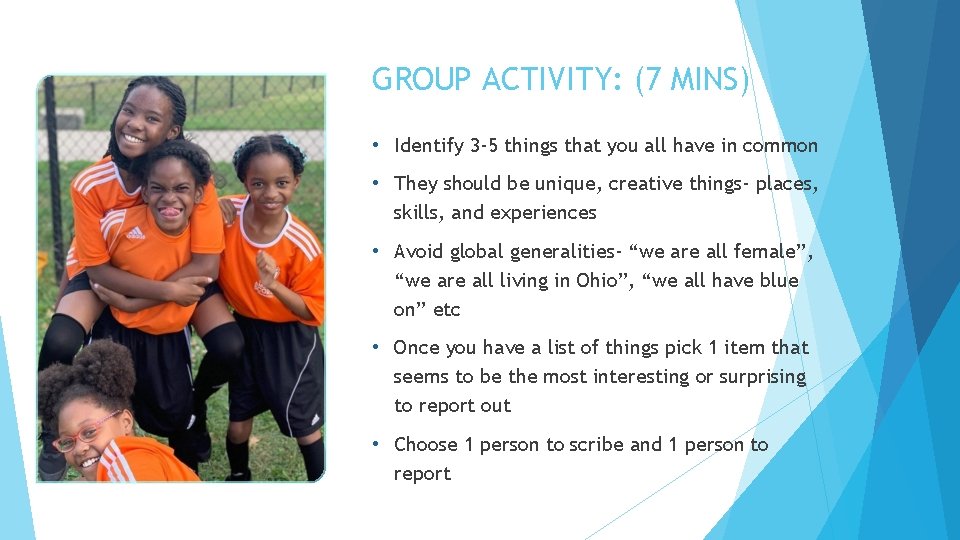
GROUP ACTIVITY: (7 MINS) • Identify 3 -5 things that you all have in common • They should be unique, creative things- places, skills, and experiences • Avoid global generalities- “we are all female”, “we are all living in Ohio”, “we all have blue on” etc • Once you have a list of things pick 1 item that seems to be the most interesting or surprising to report out • Choose 1 person to scribe and 1 person to report
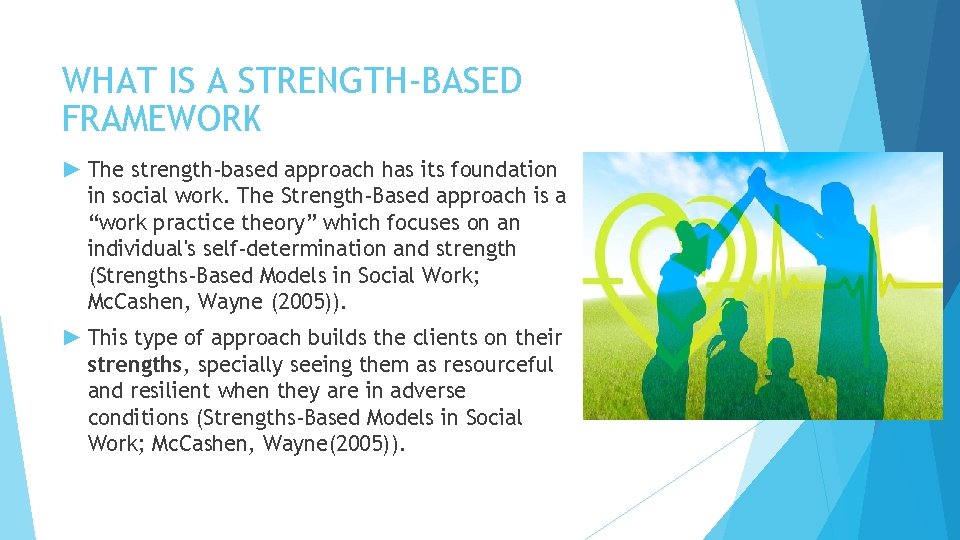
WHAT IS A STRENGTH-BASED FRAMEWORK ► The strength-based approach has its foundation in social work. The Strength-Based approach is a “work practice theory” which focuses on an individual's self-determination and strength (Strengths-Based Models in Social Work; Mc. Cashen, Wayne (2005)). ► This type of approach builds the clients on their strengths, specially seeing them as resourceful and resilient when they are in adverse conditions (Strengths-Based Models in Social Work; Mc. Cashen, Wayne(2005)).

Strength-Based Framework This emphasis on strengths is founded on the following beliefs ► All people (and communities) have strengths and capacities. ► People can change. ► Given the right conditions and resources, a person’s capacity to learn and grow can be nurtured and realized. ► People change and grow through their strengths and capacities. ► People are experts of their own situation. ► The problem is the problem, not the person. ► Problems can blind people from noticing and appreciating their strengths and capacity to find their own meaningful solutions. ► All people want good things for themselves (and their kids) and have good intentions. ► People are doing the best they can in light of their experiences to date. ► The ability to change is within us – it is our story. (Rapp & Goscha, 2006; Alvord & Grados, 2005).
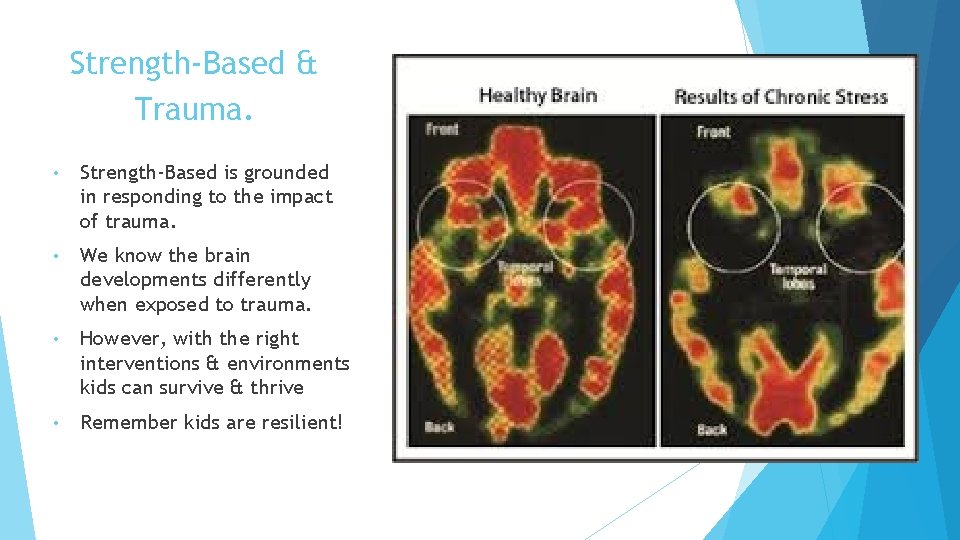
Strength-Based & Trauma. • Strength-Based is grounded in responding to the impact of trauma. • We know the brain developments differently when exposed to trauma. • However, with the right interventions & environments kids can survive & thrive • Remember kids are resilient!
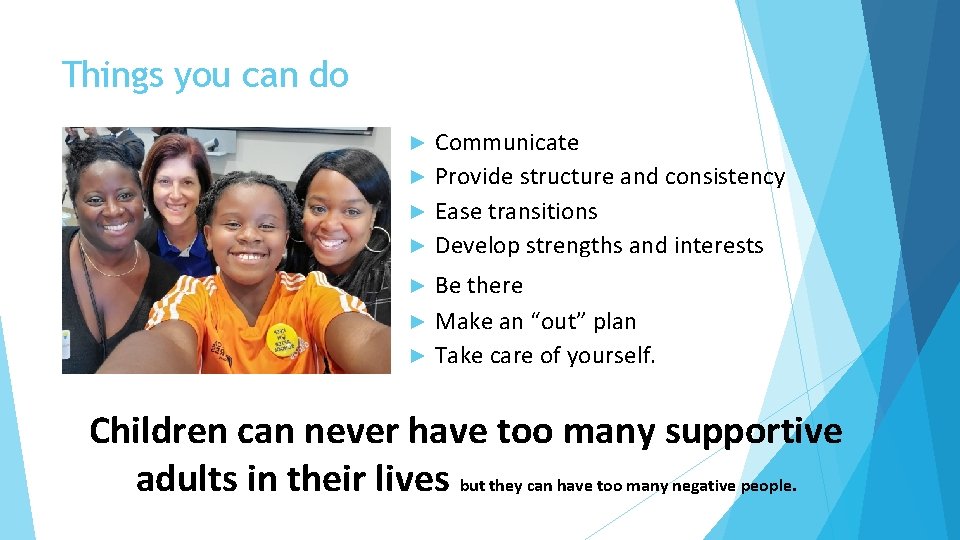
Things you can do Communicate ► Provide structure and consistency ► Ease transitions ► Develop strengths and interests ► Be there ► Make an “out” plan ► Take care of yourself. ► Children can never have too many supportive adults in their lives but they can have too many negative people.

Examples ► Start each day with a “soft” start ► How Full is Your Bucket ► Have students make “Soul Collages” (for themselves or for each other) Can get free resources at Teacher Pay Teacher

Table Activity • Think of a client, family, person, staff you have worked with in the past who you couldn’t build strong rapport with or who you struggled to see the positives in them. • Talk about this person at your table - think about what words you use to describe them.
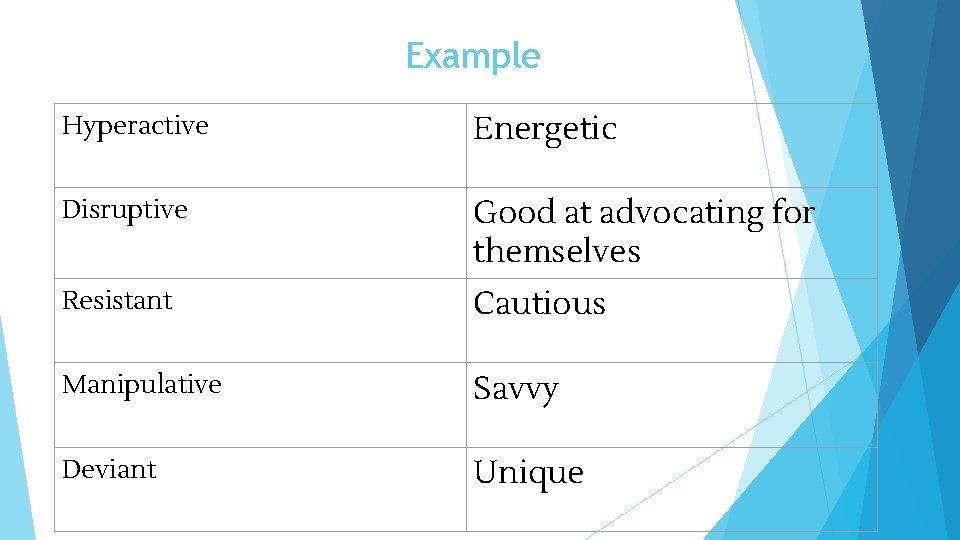
Example Hyperactive Energetic Disruptive Good at advocating for themselves Resistant Cautious Manipulative Savvy Deviant Unique
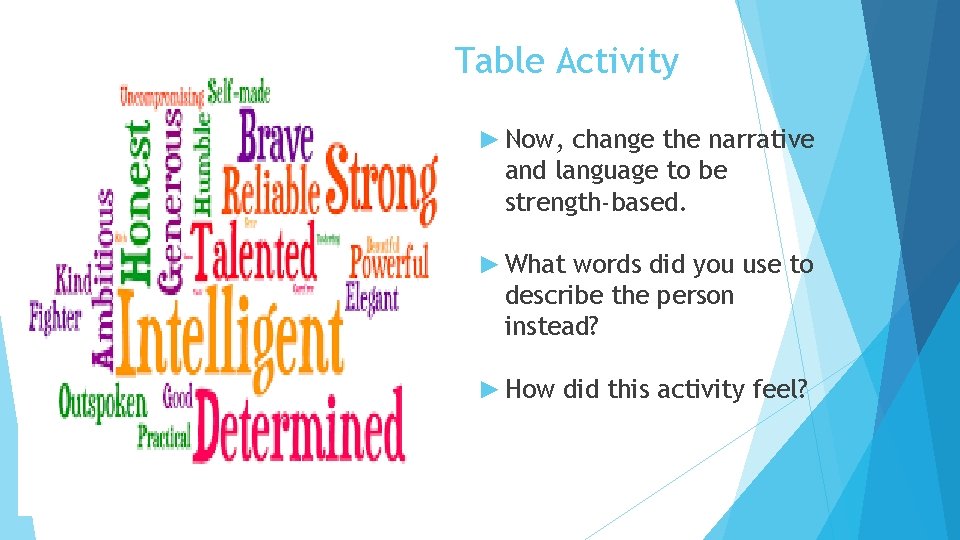
Table Activity ► Now, change the narrative and language to be strength-based. ► What words did you use to describe the person instead? ► How did this activity feel?
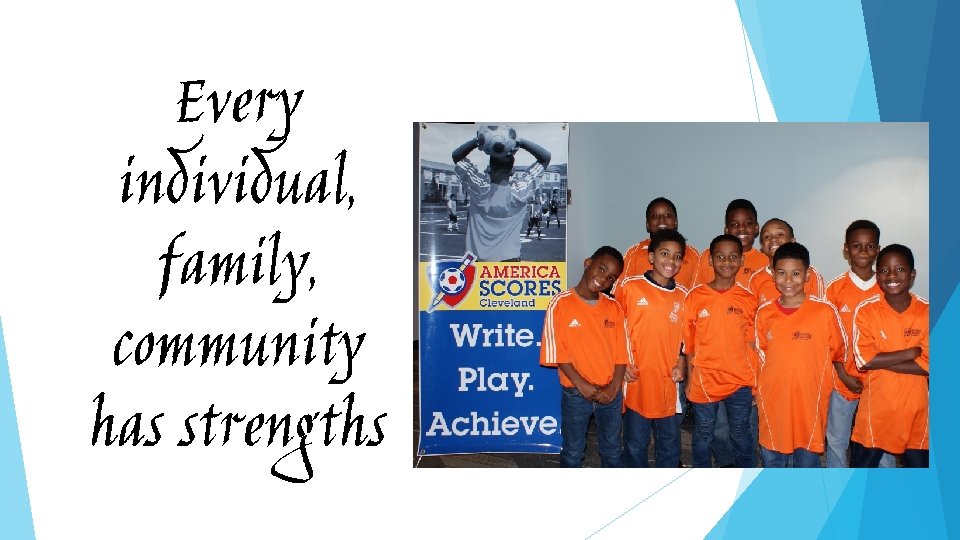
Every individual, family, community has strengths
“CULTURE EATS STRATEGY FOR BREAKFAST” PETER DRUCKER
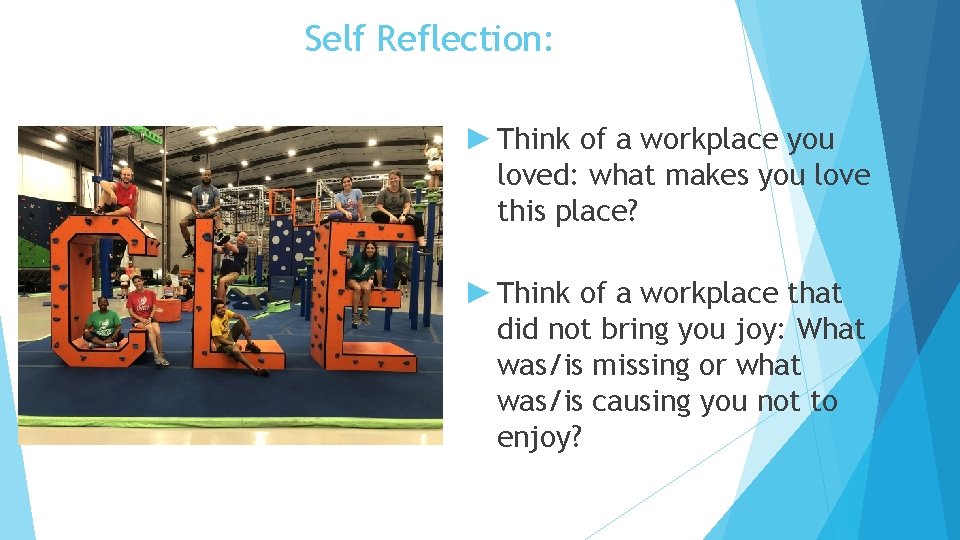
Self Reflection: ► Think of a workplace you loved: what makes you love this place? ► Think of a workplace that did not bring you joy: What was/is missing or what was/is causing you not to enjoy?
Impact of being strength-based ► Strong relationships between staff, youth and their families ► Increased learning ► Decrease negative behaviors ► There is lasting impact on changing student behavior than other methods. ► Less staff burn-out and higher retention "The difference between work and play is only a matter of attitude. Work, fully done, is play. " ~ Gerald May
How to implement Strength-Based Framework at LOW-NO Cost ► Create Kid-Focused, Strength-Based Ground Rules ► Change the language you use! ► Create a warm welcoming environment ► Have positive words, posters, bright friendly environment ► Use the How Full is Your Bucket activities ► Build strong relationships through multiple, consistent, and daily relational interactions. ► Have simple icebreakers every day with kids ► “Soft starts” to the day ► Teach emotional intelligence competencies to understand self and others. ► Incorporate play and fun into learning as a way to shift affect and prepare for learning.
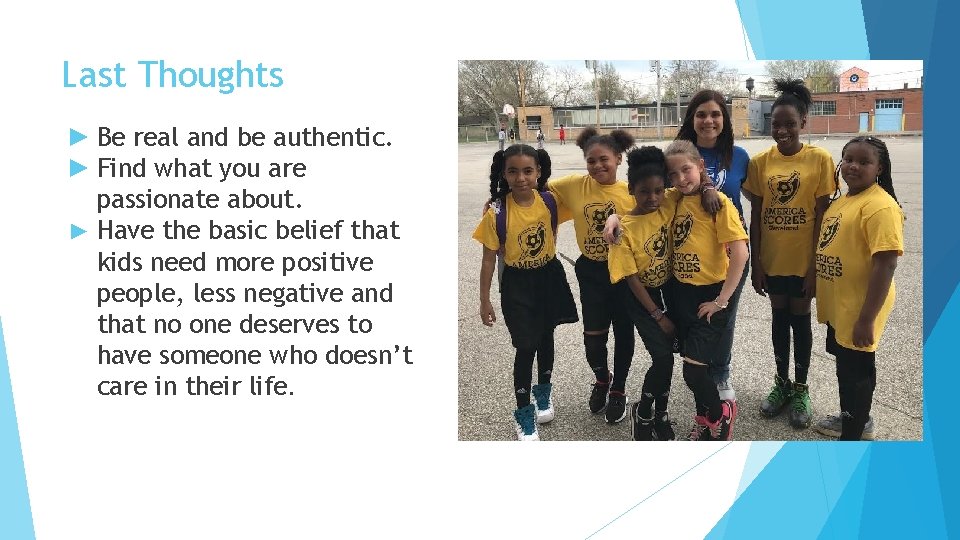
Last Thoughts ► Be real and be authentic. ► Find what you are passionate about. ► Have the basic belief that kids need more positive people, less negative and that no one deserves to have someone who doesn’t care in their life.
Resources/Citations ► Charles A. Rapp Ph. D, Carrie A. Pettus Ph. D & Richard J. Goscha Ph. D, MSW (2006) Principles of Strengths-Based Policy, Journal of Policy Practice, 5: 4, 3 -18, DOI: 10. 1300/J 508 v 05 n 04_02 ► Brunzell, T. , Waters, L. , & Stokes, H. (2015). Teaching with strengths in trauma-affected students: A new approach to healing and growth in the classroom. American Journal of Orthopsychiatry, 85(1), 3– 9. doi: 10. 1037/ort 0000048 ► Appelstein, C. D. (2018). No such thing as a bad kid: understanding and responding to kids with emotional and behavioral challenges using a positive, strength-based approach. Salem, NH: Soaring Wings Press. ► Hammond, W. , & Zimmerman, R. (n. d. ). A Strength Based Perspective. Resiliency Initiatives. https: //www. esd. ca/Programs/Resiliency/Documents/RSL_STRENGTH_BASED_PERSPECTIVE. pdf ► Venet, A. S. (2016, February 29). Helping Students Who Have Experienced Trauma. Retrieved from https: //www. edutopia. org/blog/helping-students-who-experienced-trauma-alex-shevrin ► Venet, A. S. (2014, September 14). 8 Ways to Support Students Who Experience Trauma. Retrieved from https: //www. edutopia. org/discussion/8 -ways-support-students-who-experience -trauma
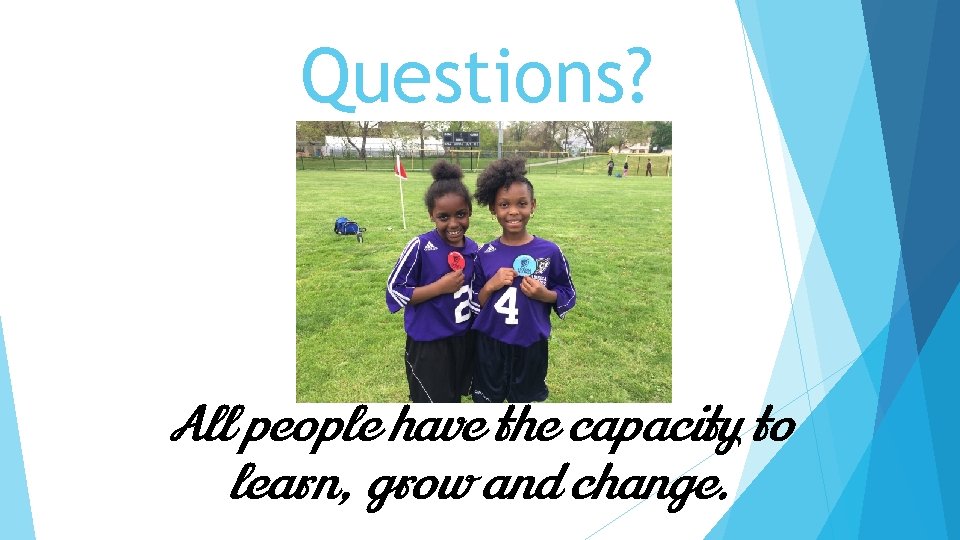
Questions? All people have the capacity to learn, grow and change.
- Slides: 22