
How to Avoid Common Mistakes in Line Drawings


- Slides: 15
How to Avoid Common Mistakes in Line Drawings ritten by Mandy Hallenius
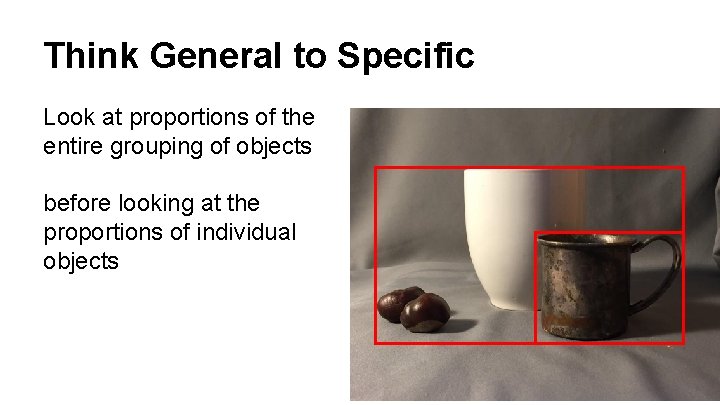
Think General to Specific Look at proportions of the entire grouping of objects before looking at the proportions of individual objects
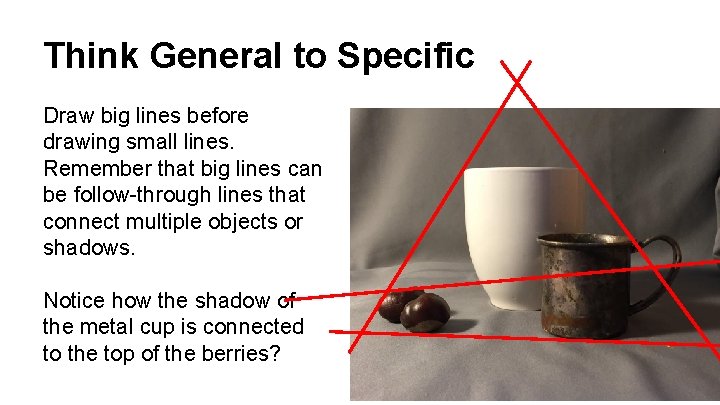
Think General to Specific Draw big lines before drawing small lines. Remember that big lines can be follow-through lines that connect multiple objects or shadows. Notice how the shadow of the metal cup is connected to the top of the berries?
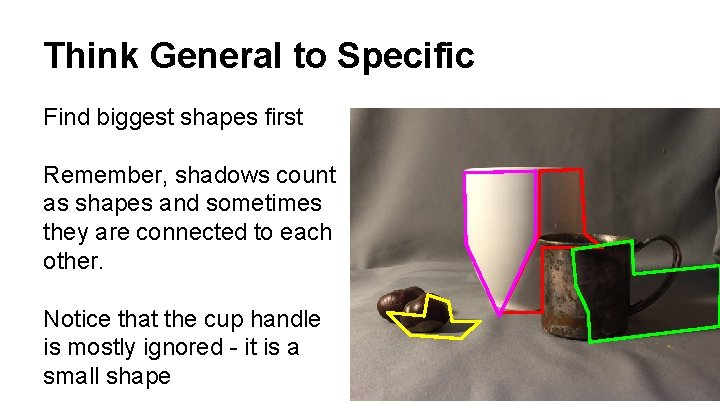
Think General to Specific Find biggest shapes first Remember, shadows count as shapes and sometimes they are connected to each other. Notice that the cup handle is mostly ignored - it is a small shape
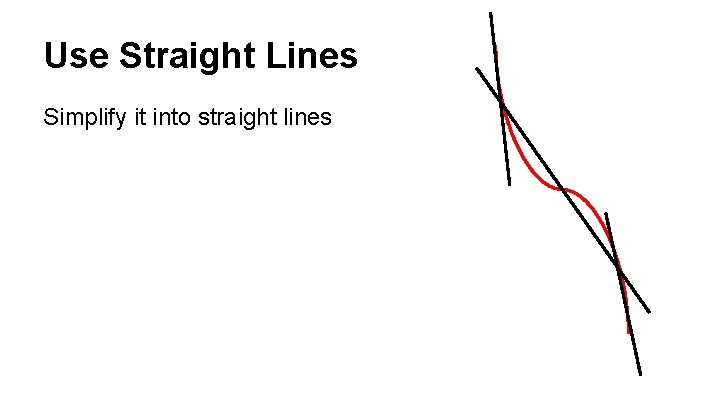
Use Straight Lines Straight lines are easier to see and to place accurately than curved lines are. For example, if you observed this curved line and wanted to recreate it on your paper. .
Use Straight Lines Simplify it into straight lines
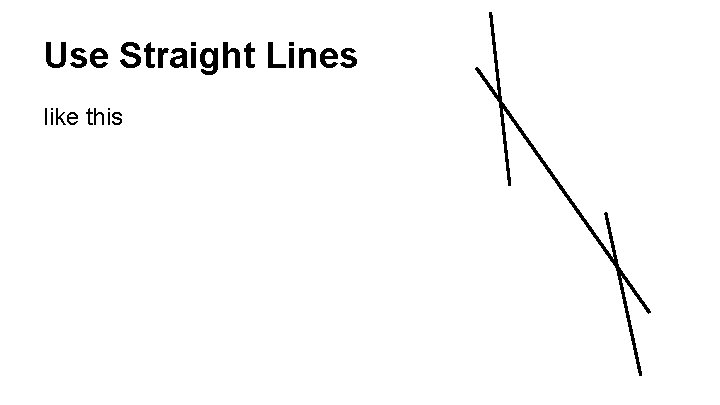
Use Straight Lines like this
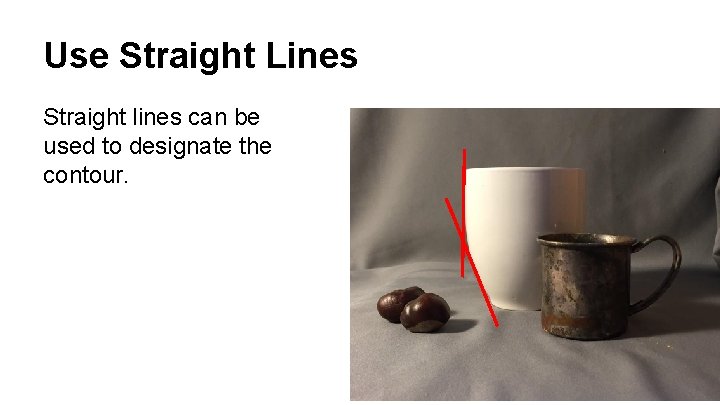
Use Straight Lines Straight lines can describe many different kinds of visual information, including ● shadows ● divisions between lights and shadows ● contours
Use Straight Lines Straight lines can be used to designate shadow shapes.
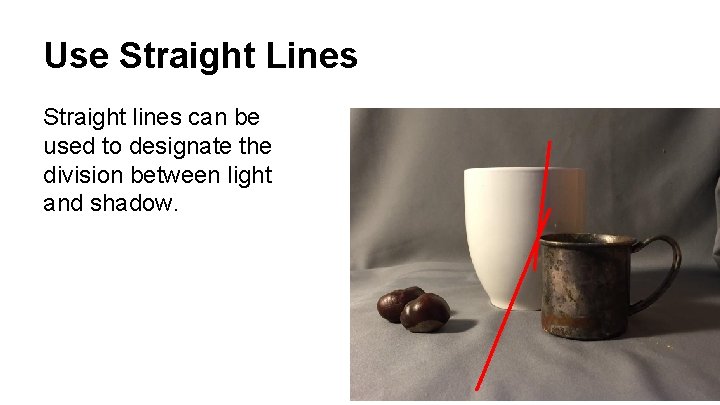
Use Straight Lines Straight lines can be used to designate the division between light and shadow.
Use Straight Lines Straight lines can be used to designate the contour.
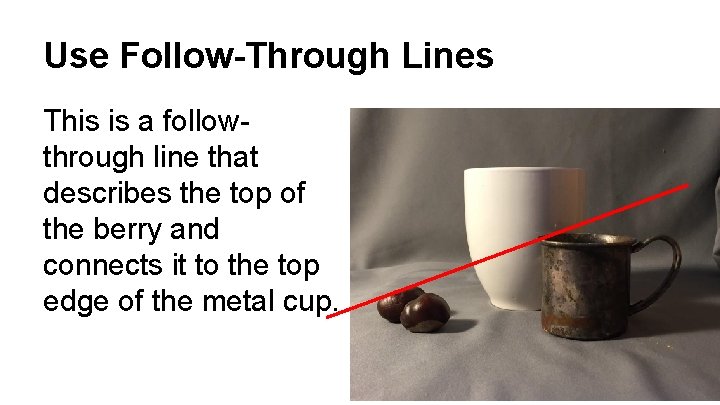
Use Follow-Through Lines A follow through line is a line that connects parts of objects and/or shadows
Use Follow-Through Lines This is a followthrough line that describes the top of the berry and connects it to the top edge of the metal cup.
Why Are Follow-Through Lines So Important? ● they prevent skewed proportions ● helps students make well observed shapes and contours instead of generic ones.
Try it! Try setting up a still life of your own and drawing it with these three concepts in mind: ● Think general to specific ● Use straight lines ● Use follow-through lines