
How to avoid a rear end crash According

- Slides: 20
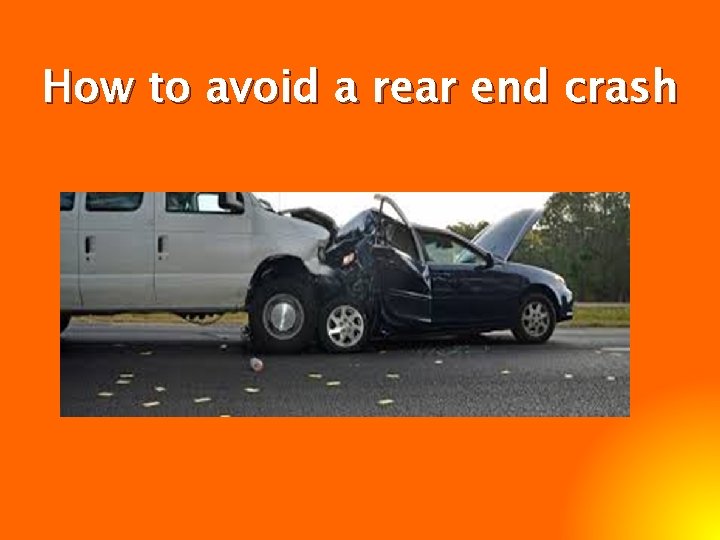
How to avoid a rear end crash
According to figures from the National Highway Traffic Safety Administration (NHTSA), out of the 6 million car accidents that happen on U. S. roads every year, over 40% of them (2. 5 million) are rear-end collisions. For relatively minor injuries with no ongoing complications, such as 'soft tissue' or 'whiplash', the average settlement will tend to be between $10, 000 and $25, 000. The rules for workers’ compensation differs from state to state, typically as long as injuries are work-related, benefits will be awarded. Workers’ compensation benefits would cover employees’ medical expenses, lost wages, and other accommodations even if the accident was the fault of the employee.
When stopped at a traffic light and the light turns green • Maintain one car length of space in front of you when stopped in traffic. • Count 1, 2, 3 after the vehicle in front of you has started to move. • This automatically establishes a space cushion.
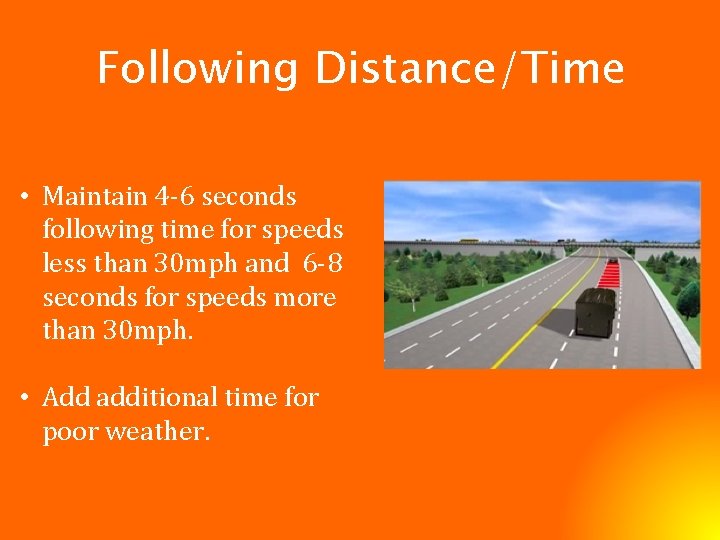
Following Distance/Time • Maintain 4 -6 seconds following time for speeds less than 30 mph and 6 -8 seconds for speeds more than 30 mph. • Add additional time for poor weather.
Maintain 8 – 12 second eye lead time By giving yourself 8 -12 seconds of eyelead time, you provide yourself with the time needed to adjust to ever-changing road conditions around you.
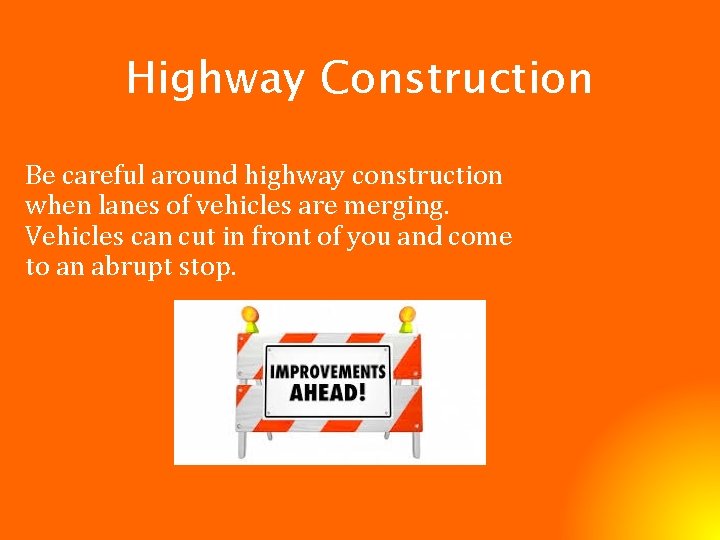
Highway Construction Be careful around highway construction when lanes of vehicles are merging. Vehicles can cut in front of you and come to an abrupt stop.
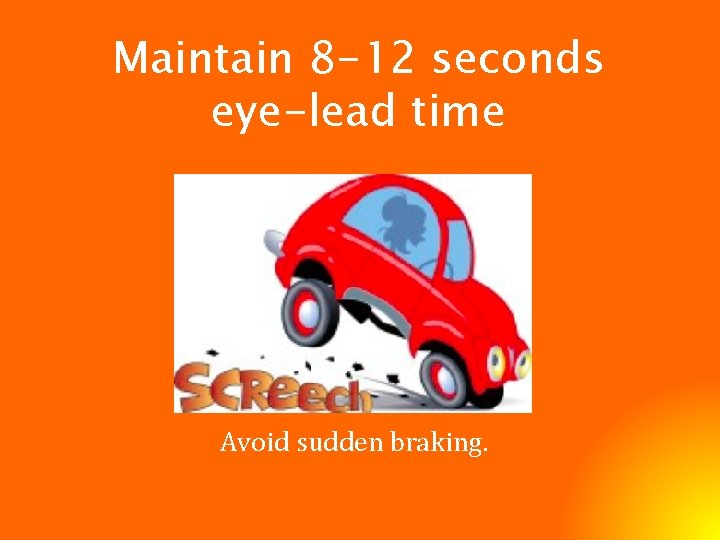
Maintain 8 -12 seconds eye-lead time Avoid sudden braking.
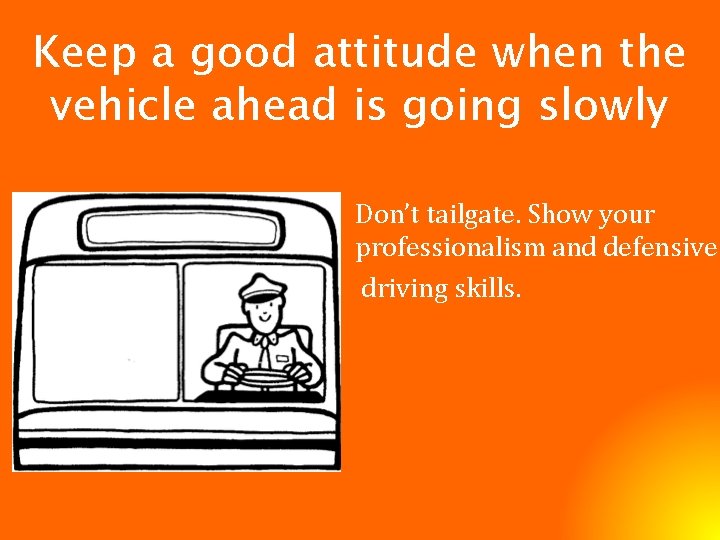
Keep a good attitude when the vehicle ahead is going slowly Don’t tailgate. Show your professionalism and defensive driving skills.
Avoid distractions while driving • Because they can adversely impact your attention to vehicles that suddenly slow or stop ahead. • Distractions are anything that takes your eyes and focus off the ever-changing traffic conditions around ahead of you.
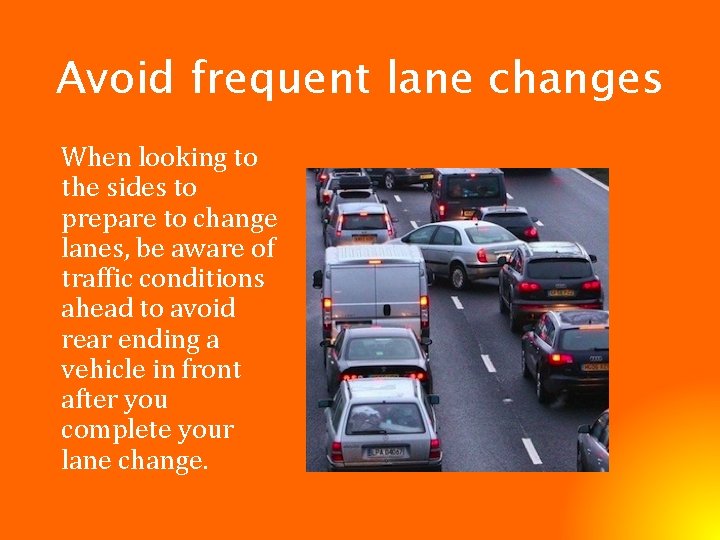
Avoid frequent lane changes When looking to the sides to prepare to change lanes, be aware of traffic conditions ahead to avoid rear ending a vehicle in front after you complete your lane change.
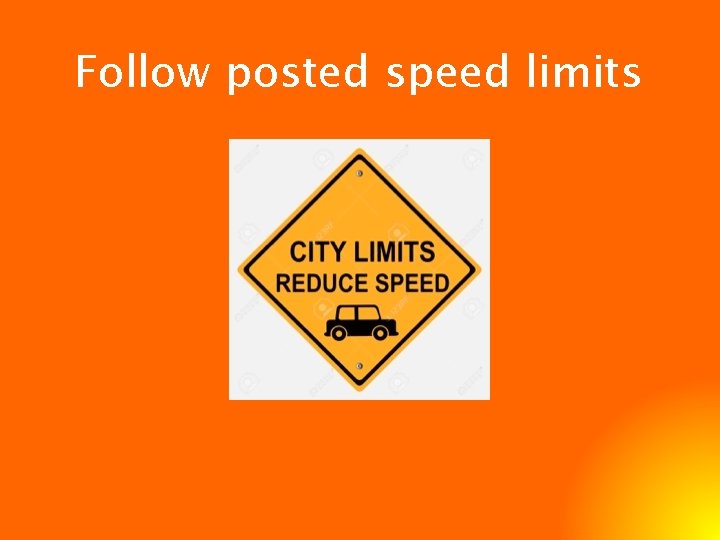
Follow posted speed limits
Be aware of reaction distance Your vehicle travels 132 feet from the time you recognize the hazard and when you brake at 60 miles per hour.
Be aware of braking distance It will take an average of 304 feet to stop after going 60 miles per hours after seeing danger to stop.
A six second following rule allows time to look away from the road for two to three seconds. True or False
If you find that cars are often cutting in front of you and then braking, you are following too closely. True or False True
When stopped in traffic how many car lengths should be between you and the car in front of you? 1 car length
8 12 –second eye lead time make it easy to adjust to any change in road conditions. True or False True
It’s ok to tailgate as long as you’re paying close attention. True or False