
How to assess scientific posters a practical guide
- Slides: 16
How to assess scientific posters: a practical guide Jon Otter, Ph. D FRCPath Imperial College Healthcare NHS Trust. jonathan. otter@kcl. ac. uk www. jonotter. net (to download these slides) www. Reflections. IPC. com (blog) @jonotter
Disclosures I am a consultant to Gama. I have received payment for producing educational material for 3 M. Research funding from Pfizer and the Guy’s & St Thomas’ Charity.
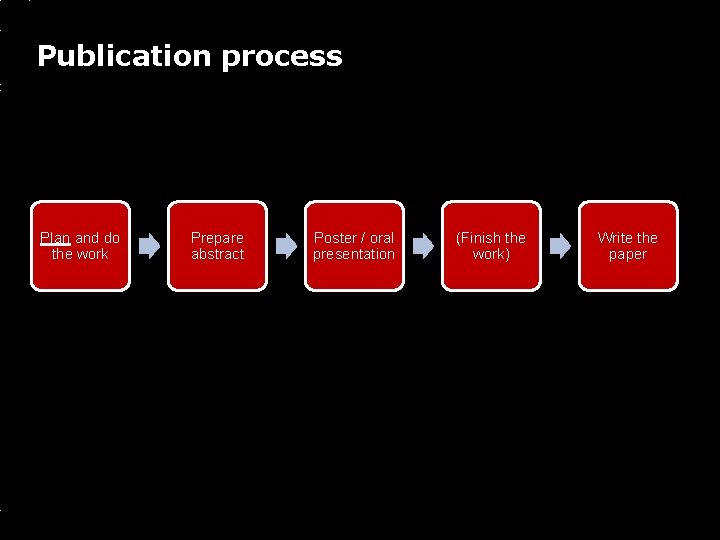
Publication process Plan and do the work Prepare abstract Poster / oral presentation (Finish the work) Write the paper
Abstract peer-review § Submitted abstracts will undergo peer review to assess their content and presentation. § A small proportion of abstracts will be selected to be presented as oral presentations. The majority of abstracts will be presented as posters. § Some abstracts will be rejected. IPS will give you some feedback as to why the abstract was rejected.
Why publish your work? It is important to: § Prevent the re-invention of the wheel. § Share and stimulate changes in practice. § Challenge the status quo. § Disseminate your research or quality improvement initiatives. § Develop your professional skills. § Requirement of your clinical or academic role.
What to look for? § § § Important to practice or service delivery. Something new. Innovative. Transferable. Relevant and accessible.
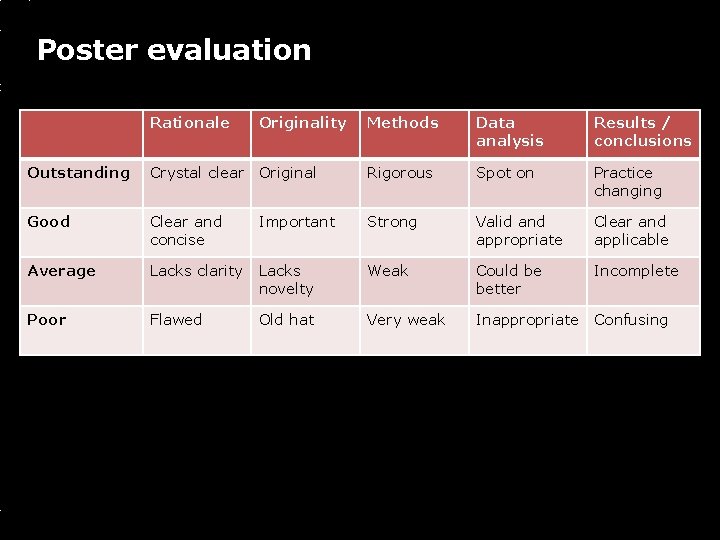
Poster evaluation Rationale Originality Methods Data analysis Results / conclusions Outstanding Crystal clear Original Rigorous Spot on Practice changing Good Clear and concise Important Strong Valid and appropriate Clear and applicable Average Lacks clarity Lacks novelty Weak Could be better Incomplete Poor Flawed Old hat Very weak Inappropriate Confusing
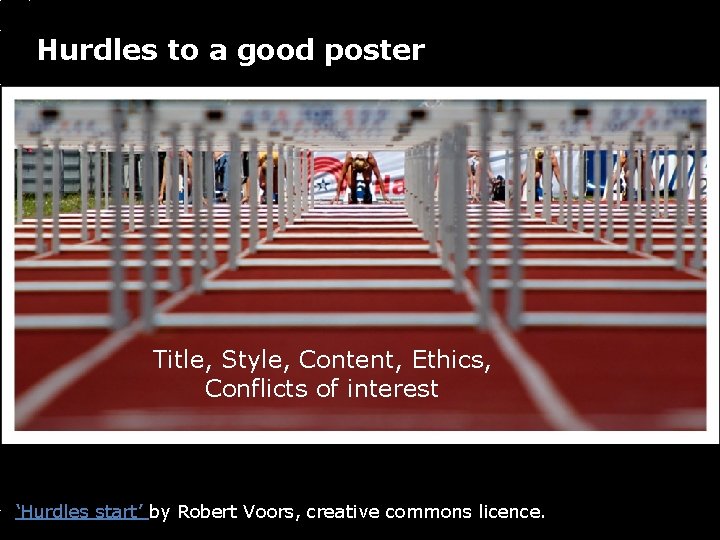
Hurdles to a good poster Title, Style, Content, Ethics, Conflicts of interest ‘Hurdles start’ by Robert Voors, creative commons licence.
Hurdles: the title (the hook) § § Keep it short and to the point (10 to 15 word max) Use the key words in the title Be interesting and creative… …but don’t be too obscure.
Hurdles: style ü ü ü Eye catching – draws the viewer in Graphical, not text based Not cluttered Good use of colour Clear ‘flow’ from one section to the next Key findings communicated clearly • Use of arrows / boxes to highlight clear areas Contains more detailed information for those that want it Correct size for the board (check the guidelines!) Not an essay / epic; it’s designed to stimulate discussion No intricate fonts that are difficult to read Watch out for fuzzy low-res graphics You can’t include all your data – be selective
Hurdles: content § Spend time selecting the appropriate structure for the content and the reader: § Scientific (IMRa. D) § Quality Improvement § Systematic Review § Good structure is like a good Sat Nav – effortlessly leads you through the paper § Requires planning, discipline, patience and experience.
Hurdles: ethics “Guidelines on good publication practice” from the Committee on Publication Ethics (COPE) Available free at www. publicationethics. org. uk
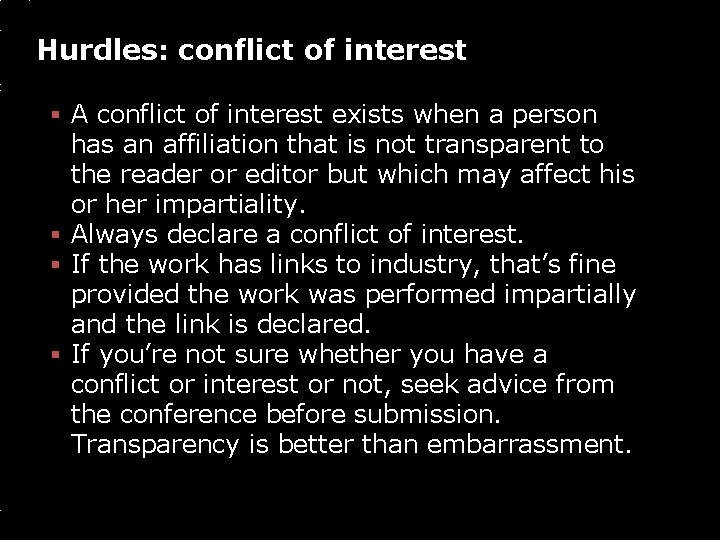
Hurdles: conflict of interest § A conflict of interest exists when a person has an affiliation that is not transparent to the reader or editor but which may affect his or her impartiality. § Always declare a conflict of interest. § If the work has links to industry, that’s fine provided the work was performed impartially and the link is declared. § If you’re not sure whether you have a conflict or interest or not, seek advice from the conference before submission. Transparency is better than embarrassment.
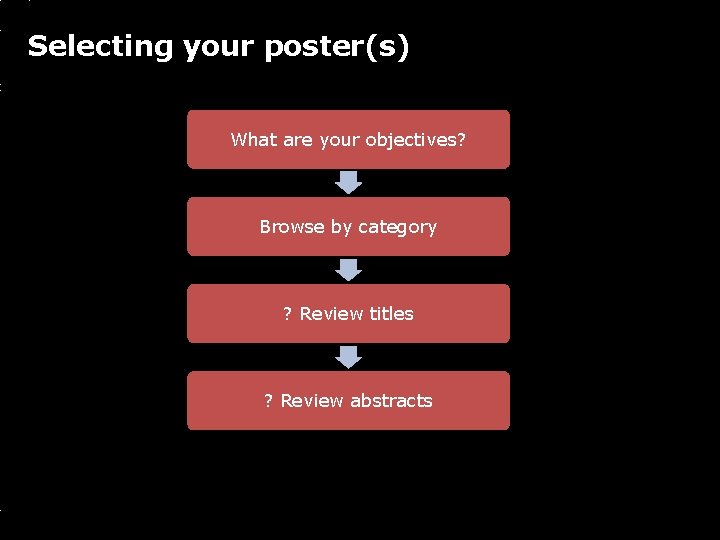
Selecting your poster(s) What are your objectives? Browse by category ? Review titles ? Review abstracts
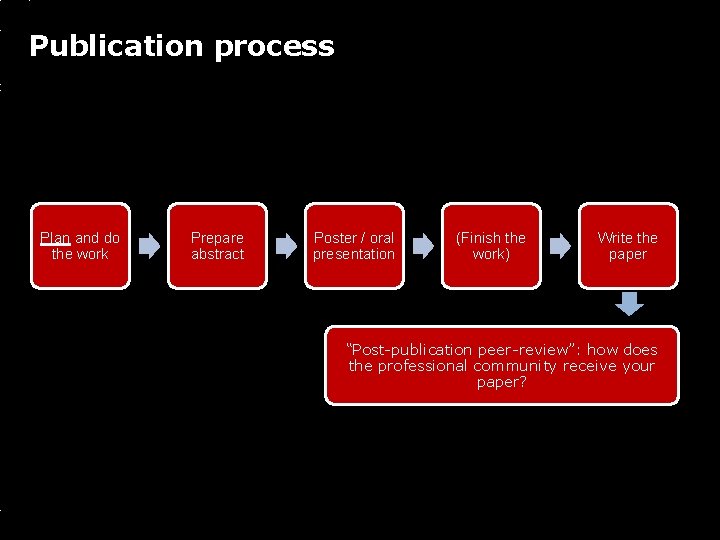
Publication process Plan and do the work Prepare abstract Poster / oral presentation (Finish the work) Write the paper “Post-publication peer-review”: how does the professional community receive your paper?
How to assess scientific posters: a practical guide Jon Otter, Ph. D FRCPath Imperial College Healthcare NHS Trust. jonathan. otter@kcl. ac. uk www. jonotter. net (for slides) www. Reflections. IPC. com (blog) @jonotter