
How to Approach your Horse 1 TIP Remember
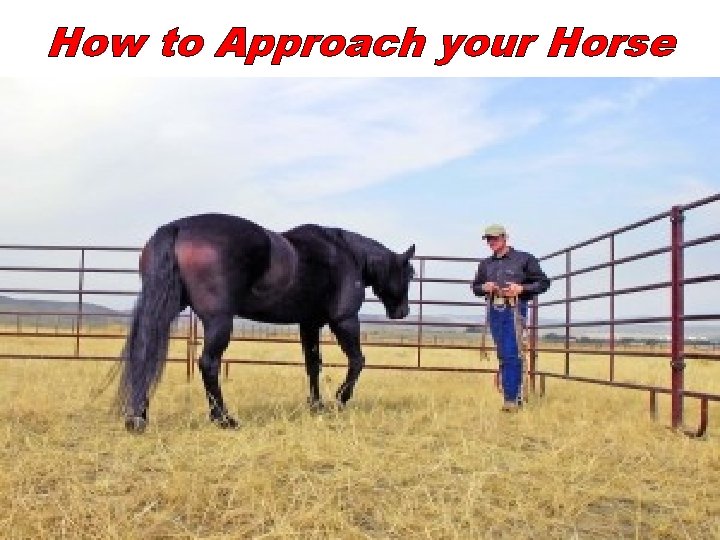
How to Approach your Horse
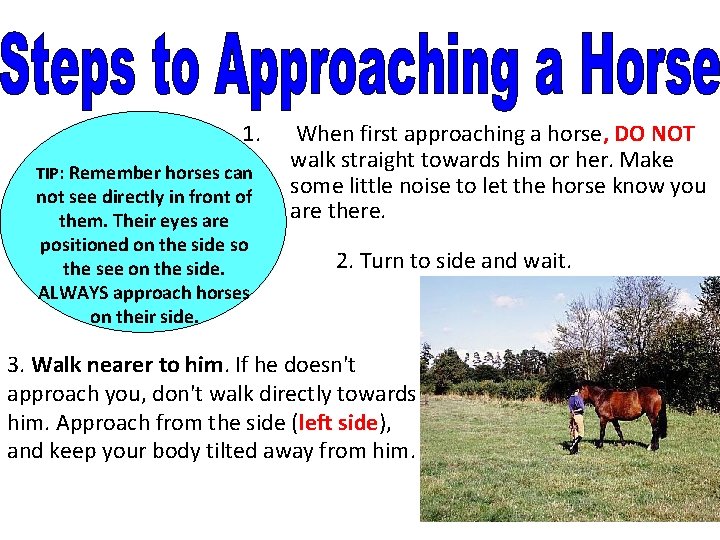
1. TIP: Remember horses can not see directly in front of them. Their eyes are positioned on the side so the see on the side. ALWAYS approach horses on their side. When first approaching a horse, DO NOT walk straight towards him or her. Make some little noise to let the horse know you are there. 2. Turn to side and wait. 3. Walk nearer to him. If he doesn't approach you, don't walk directly towards him. Approach from the side (left side), and keep your body tilted away from him.
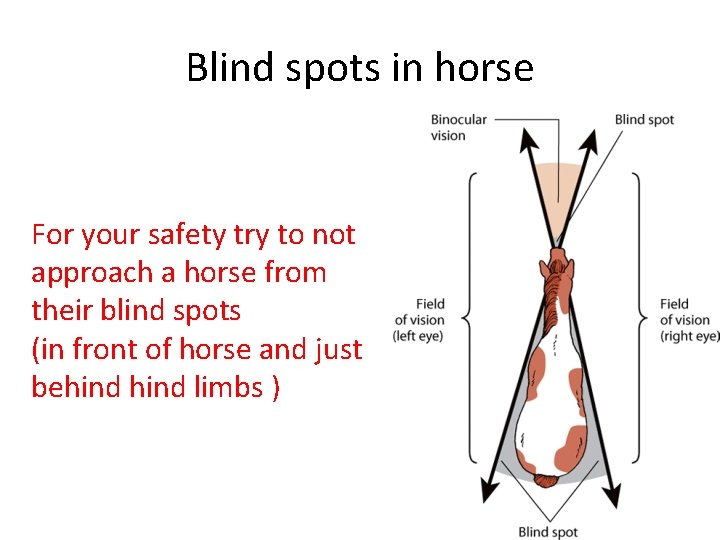
Blind spots in horse For your safety try to not approach a horse from their blind spots (in front of horse and just behind limbs )
4 -Wait for his reaction. • If he backs away: , stop and wait. • If he doesn't back away, you can offer him your hand for him to sniff. 5 - Repeat this process and eventually the horse will realize your not a threat If he knows you, you can slowly turn to face him
WARNINGS • Never approach a horse you don’t know, or without the owner’s permission • Walking in a fast manner. This is akin to the approach of a predator • Do not look your horse straight in the eye. Only predators look them straight in the eye. The horse might get scared

• Avoid Approaching from directly behind or in front the horse. Because horses' eyes are on the sides of their heads, they cannot see directly behind or in front of themselves. Always approach from the side(left or near side)
For Approaching the Equines • The safest area to approach is at the shoulder, preferably on the left approach • Do not never approach from the backside of the animal. • Always speak softly to the horse and move slow and steady. • Horses can recognize people who are fearful. • Don’t completely rely on what owner is telling about the animal
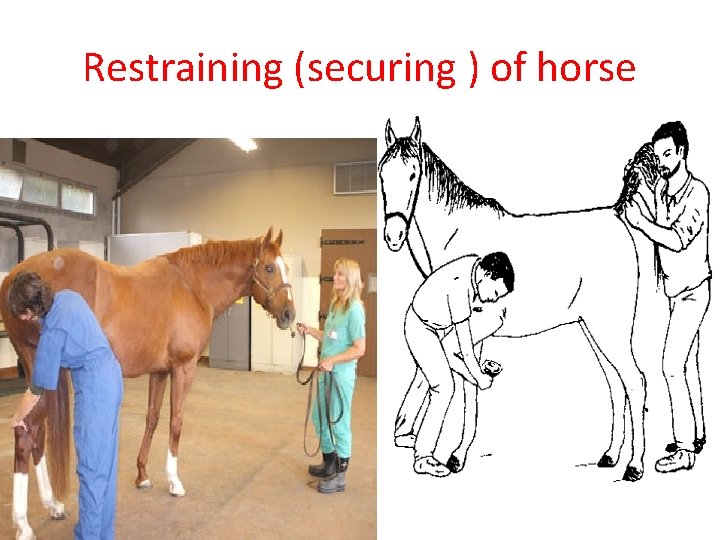
Restraining (securing ) of horse
• Aim : restraint is the most important aspect of the equine physical examination. Without adequate restraint, the examiner will be unable to complete a meaningful examination • Horses can bite and they do kick. Horses kick straight back but have been known to cow kick (kick to the side)
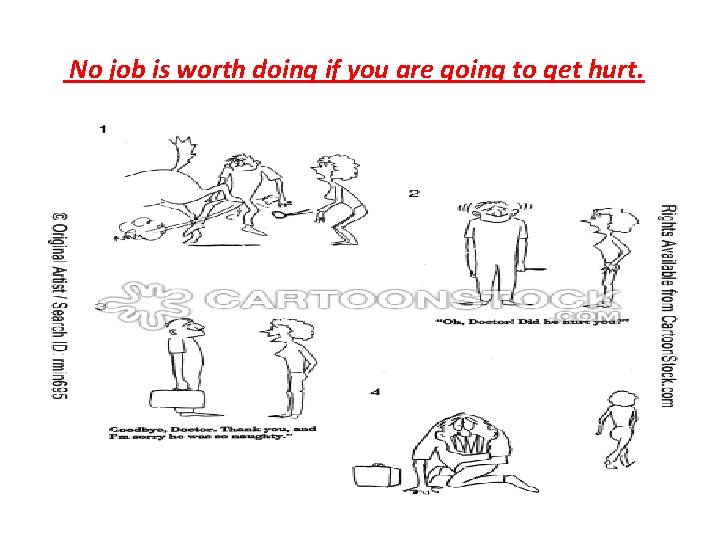
No job is worth doing if you are going to get hurt.

Types of Restraining • There are 3 basic type of restraining 1. Behavioral restraining 2. Chemical restraining 3. Physical restraining
Behavioral Restraining • To distract the attention of animal friendly, without any physical object and without causing much discomfort Untoward Body Language of Horse q. High head Alert or Fearful q. Wide eyes Alert or Fearful q. Forward ears Frightened or Focused on • Forehead • Skin over neck something • Ears • Poll • q. Eyes • Lips Mad and gums Backward ears or Aggressive • Nostrils • Bars of the mouth q. Lifting hind leg Warning for kick
Control points on the horse • The horse has many sensitive areas on the body and head which can be used to control or distract the horse, these areas include: o Lips and gums o Bars of the mouth (on the gums inside the mouth) o Bridge of the nose o Chin o Ears o Skin over neck and shoulders o Poll (on head behind the ears)
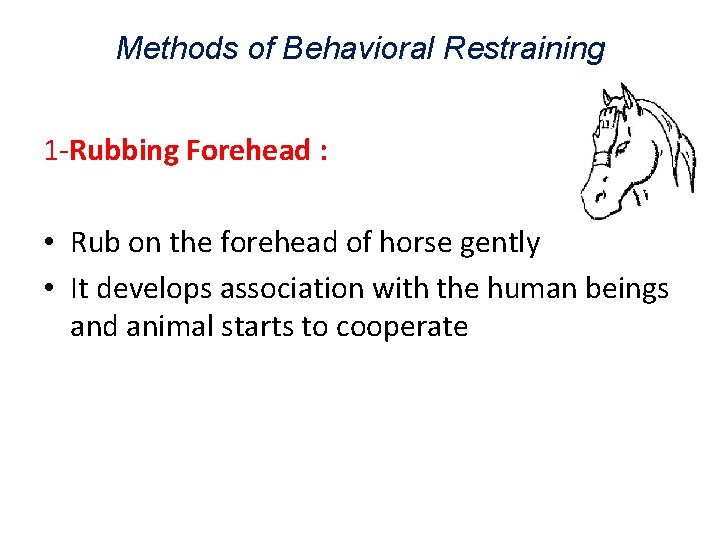
Methods of Behavioral Restraining 1 -Rubbing Forehead : • Rub on the forehead of horse gently • It develops association with the human beings and animal starts to cooperate
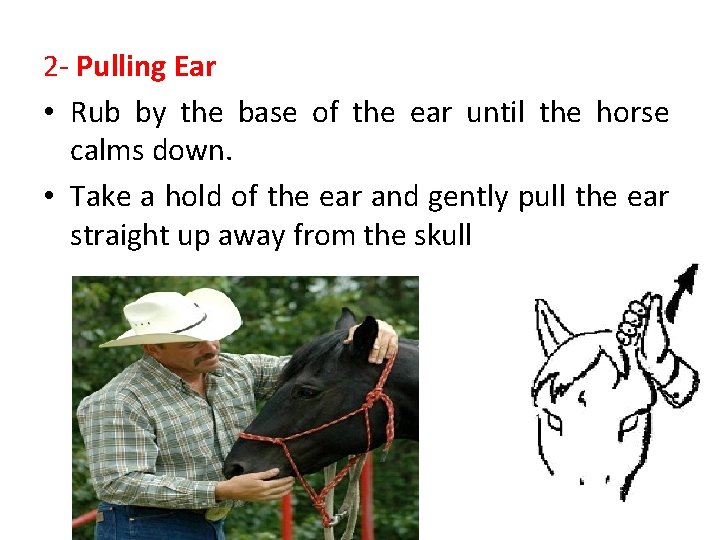
2 - Pulling Ear • Rub by the base of the ear until the horse calms down. • Take a hold of the ear and gently pull the ear straight up away from the skull
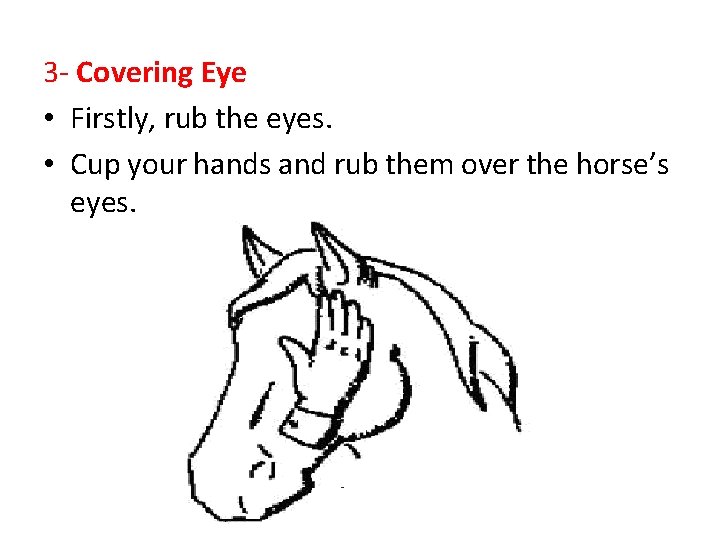
3 - Covering Eye • Firstly, rub the eyes. • Cup your hands and rub them over the horse’s eyes.
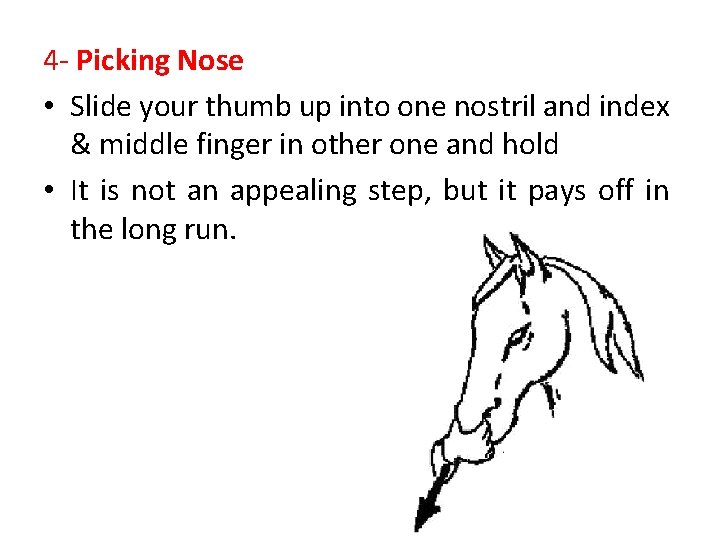
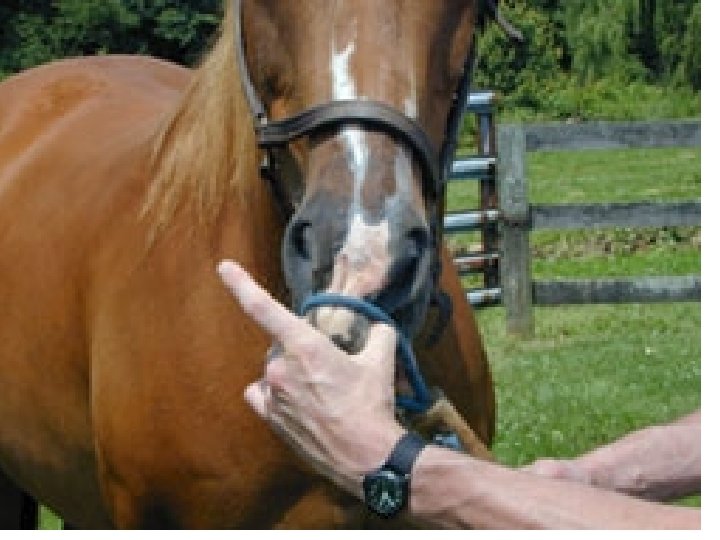
4 - Picking Nose • Slide your thumb up into one nostril and index & middle finger in other one and hold • It is not an appealing step, but it pays off in the long run.
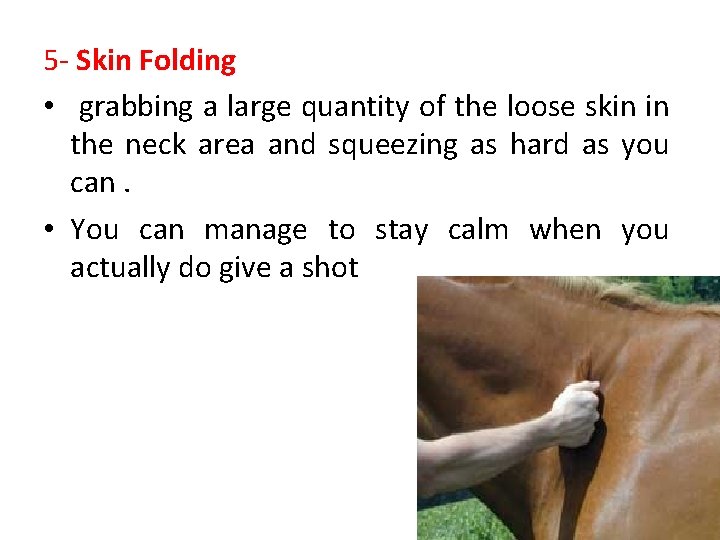
5 - Skin Folding • grabbing a large quantity of the loose skin in the neck area and squeezing as hard as you can. • You can manage to stay calm when you actually do give a shot
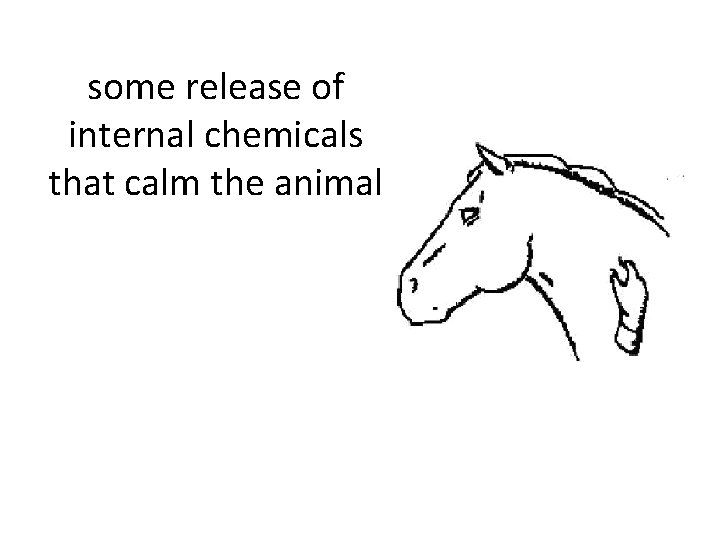
some release of internal chemicals that calm the animal
Chemical Restraining • To restrain with the aid of sedatives and tranquillizers • This include the sedative drugs that cool down a hyper horse • The choice of drug and dose depend on the length of procedure • This method is now a days preferred by animal welfare organization
• This is the preferred method while the examination or procedure is painful. • Examples of chemical sedatives : Ø Azaperone (0. 7 -0. 9 mg/kg) i/m Ø Xylazine (2. 0 mg/kg intramuscularly) Ø Acepromazine (0. 1 -0. 2 mg/kg intramuscularly )
Physical Restraining • To restrain the animal forcefully causing pain or disturbing the standing equilibrium of the animal • Mainly by using instruments
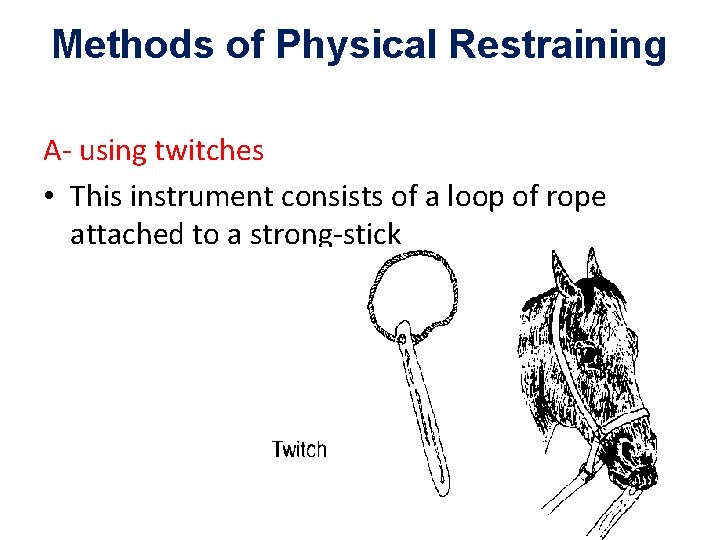
Methods of Physical Restraining A- using twitches • This instrument consists of a loop of rope attached to a strong-stick
Aim : Horse is twitched for inducing artificial pain to divert its attention away from site of examination, and injection or site of restraint. A twitch is applied immediately before the purpose and removed immediately after the purpose is served
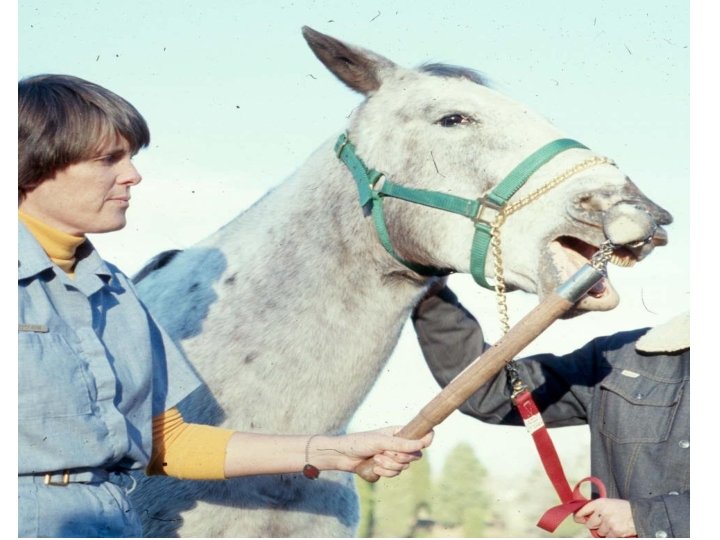
Types of Twitches 1 - Stick(ordinary / wooden) Twitch: • Consists of a piece of wood and at its end there is a hole where a piece of rope pass • Through this hole rope is inserted • Put the thumb and last three fingers of left hand through loop of twitch , but leave index finger out to prevent slipping of rope over wrist.
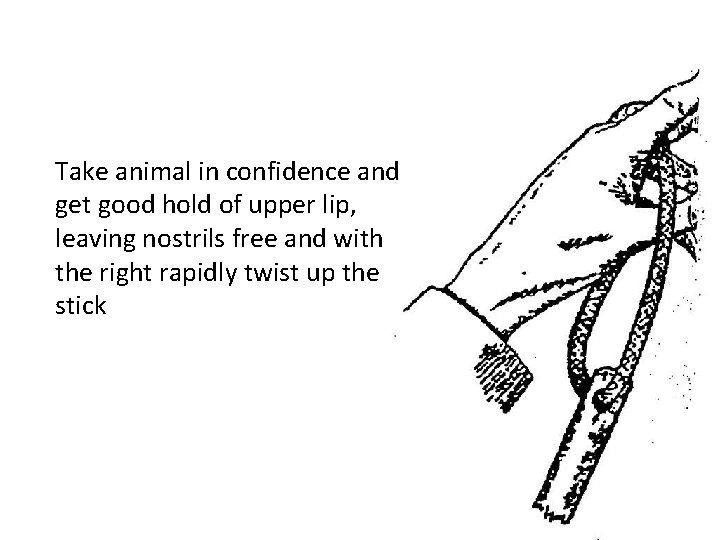
Take animal in confidence and get good hold of upper lip, leaving nostrils free and with the right rapidly twist up the stick
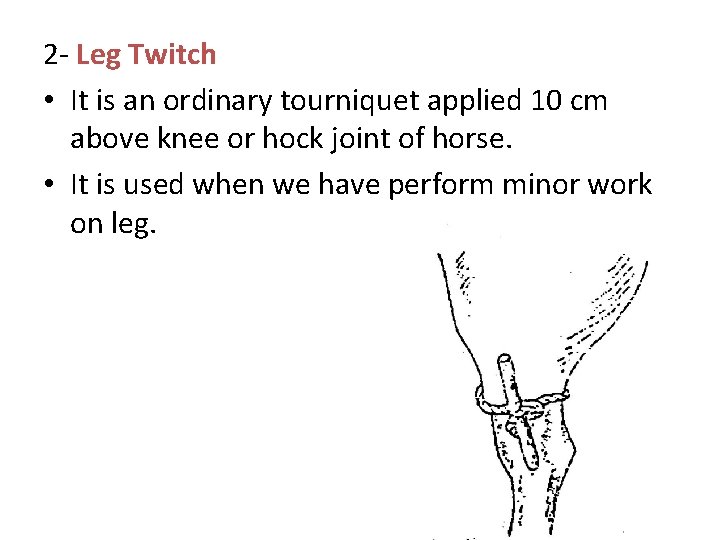
2 - Leg Twitch • It is an ordinary tourniquet applied 10 cm above knee or hock joint of horse. • It is used when we have perform minor work on leg.
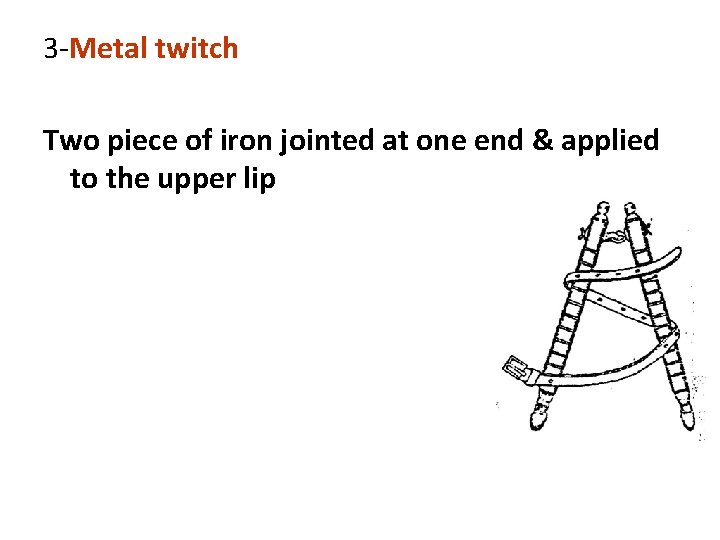
3 -Metal twitch Two piece of iron jointed at one end & applied to the upper lip
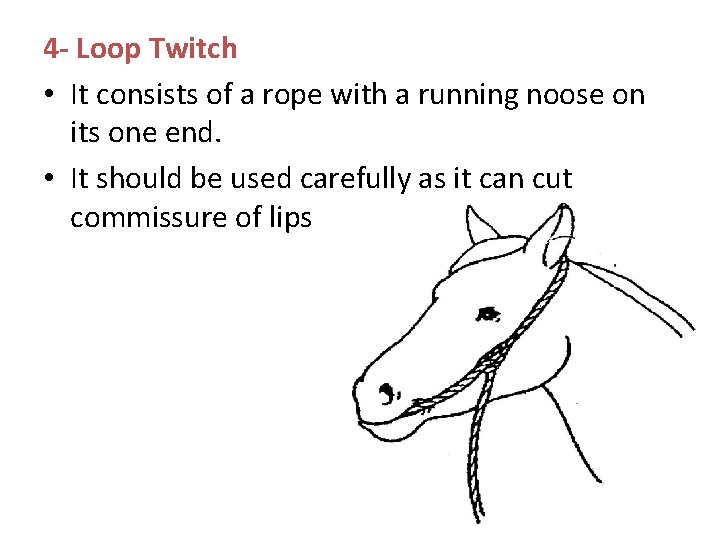
4 - Loop Twitch • It consists of a rope with a running noose on its one end. • It should be used carefully as it can cut commissure of lips

5 - humane twitch
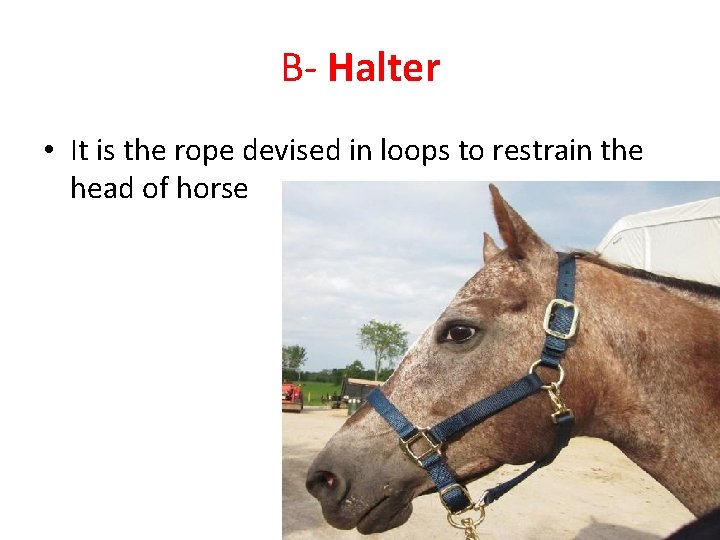
B- Halter • It is the rope devised in loops to restrain the head of horse
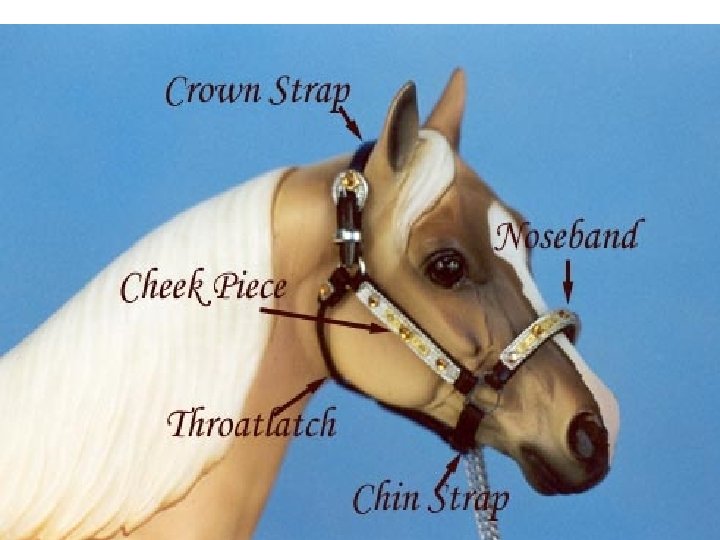

Head collar
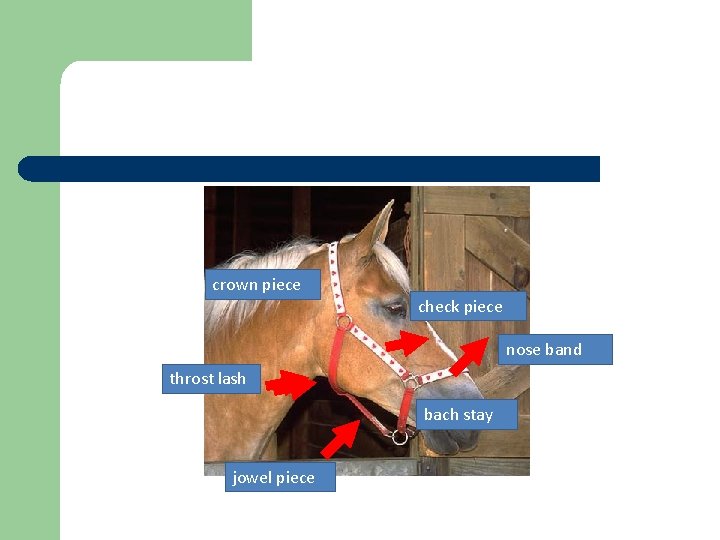
crown piece check piece nose band throst lash bach stay jowel piece
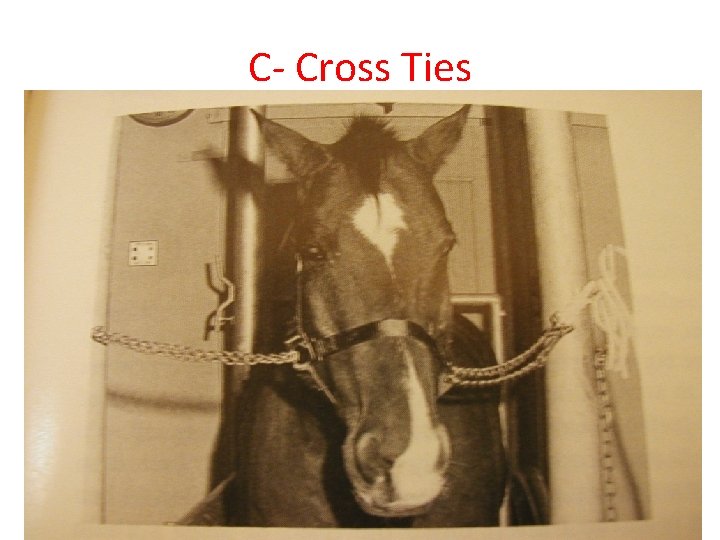
C- Cross Ties
• The cross tie is the most common way of fastening a horse to a stationary object inside the barn an on some horse farms, there may be cross ties available outside as well. It will keep the horse in one area while leaving the handler free to work on the horse. You may use it to groom a horse prior to procedures like radiography while the vet prepares the equipment. By using the cross ties, you limit the horse’s range of movement around the central point.
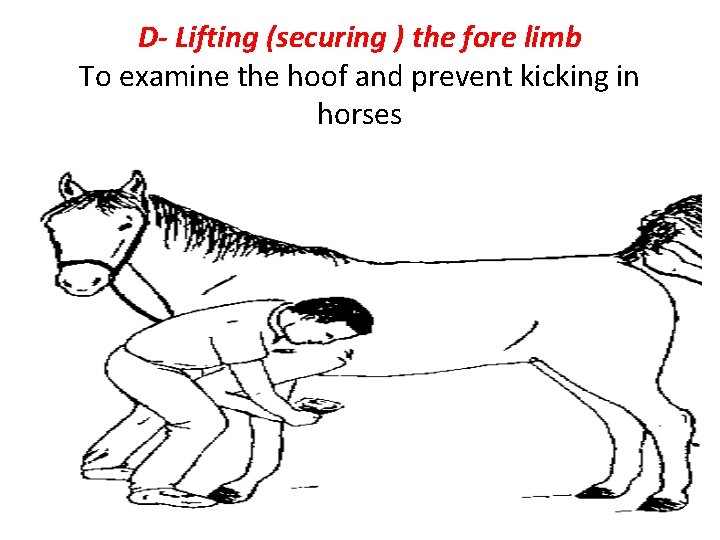
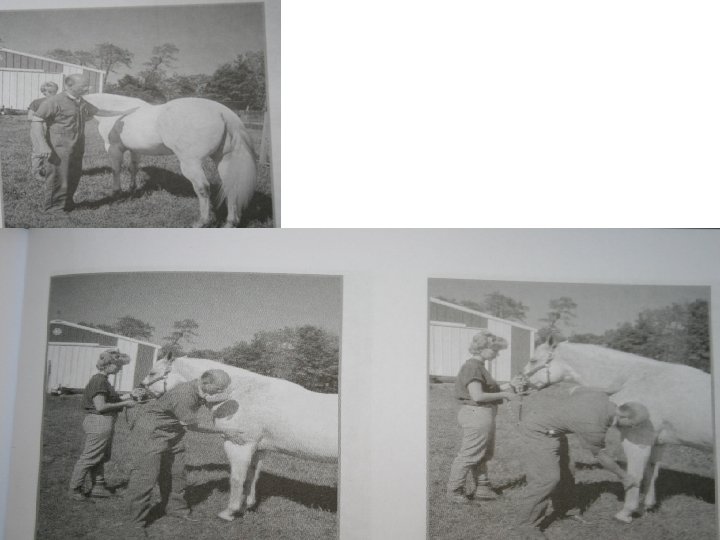
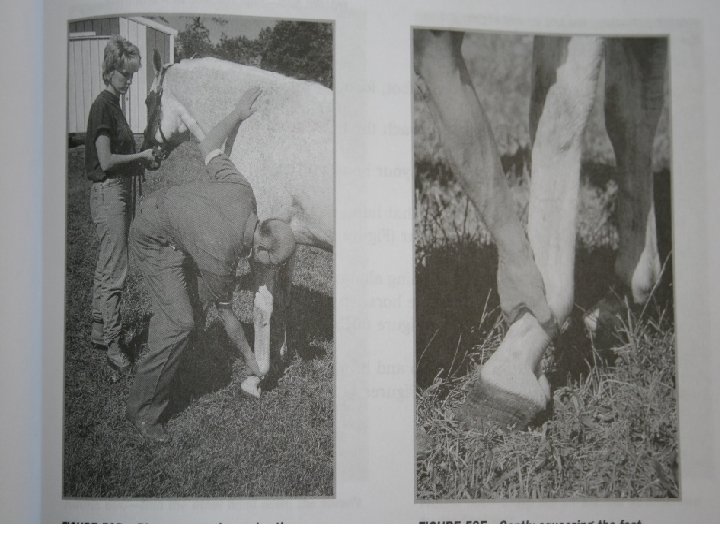
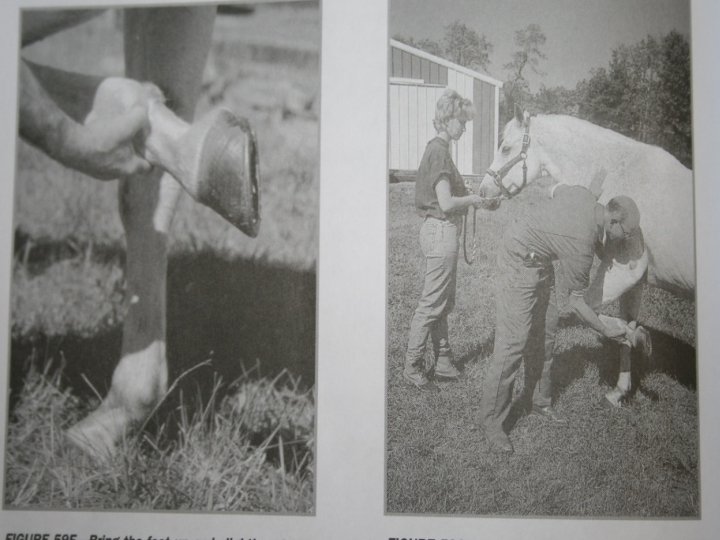
D- Lifting (securing ) the fore limb To examine the hoof and prevent kicking in horses
- Approach quietly from the near side. - Stand beside the shoulder facing the tail - Patting by passing the left hand down the neck, withers and elbow. - Grasp the back tendon by your near hand (left hand) - Pick up the pastern by off hand (right hand) - Pick up the pastern by your near hand stand up right. - On releasing the fore limb, keep grasping the pastern till the foot tough the ground.
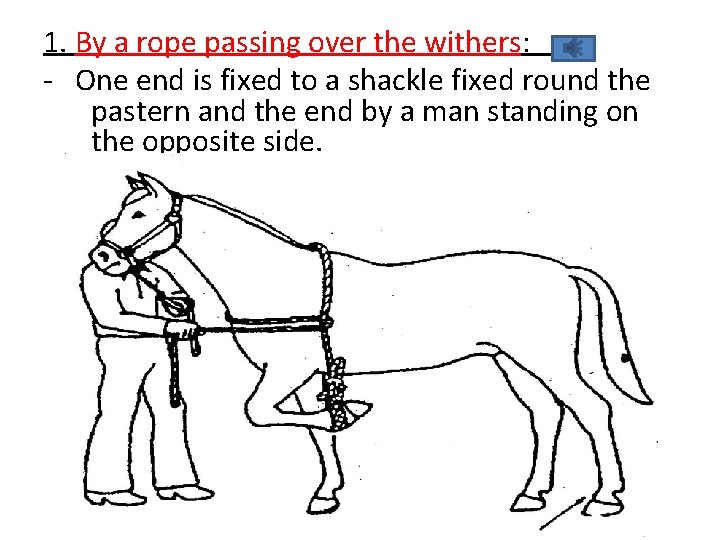
1. By a rope passing over the withers: - One end is fixed to a shackle fixed round the pastern and the end by a man standing on the opposite side.
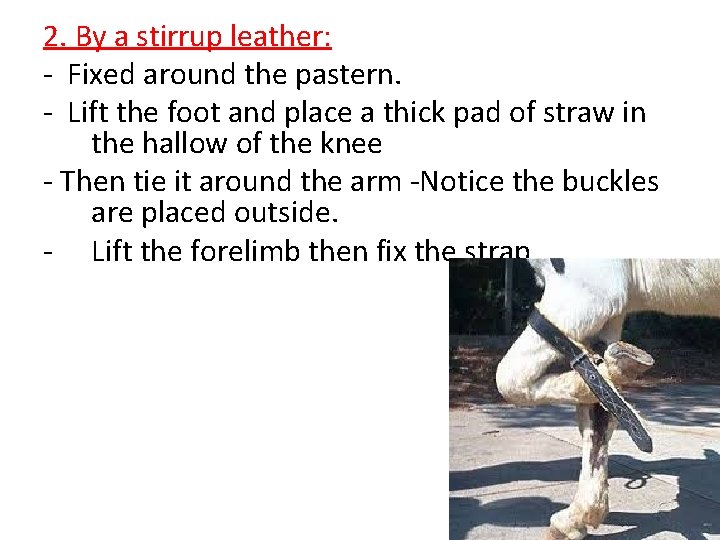
2. By a stirrup leather: - Fixed around the pastern. - Lift the foot and place a thick pad of straw in the hallow of the knee - Then tie it around the arm -Notice the buckles are placed outside. - Lift the forelimb then fix the strap
E- Lifting (securing)the hind limb to prevent kicking • Approach quietly from the near side. • Stand beside the near flank facing the tail • Patting by passing the left hand down the back; quarters, buttocks, hock and hind cannon. • Grasp the leg up and forward by your near hand (left hand) • Pick up the pastern by off hand (right hand) • Grasp the Achilles tendon by your near hand take a , step forwards with your left leg and rest the hoof on your left thigh. • On releasing the hind limb, keep grasping the Achilles tendon till the foot tough the ground.
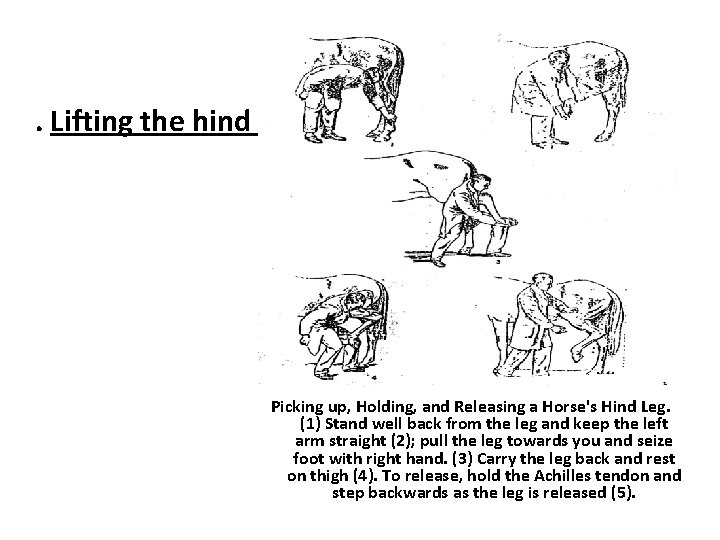
. Lifting the hind limb Picking up, Holding, and Releasing a Horse's Hind Leg. (1) Stand well back from the leg and keep the left arm straight (2); pull the leg towards you and seize foot with right hand. (3) Carry the leg back and rest on thigh (4). To release, hold the Achilles tendon and step backwards as the leg is released (5).
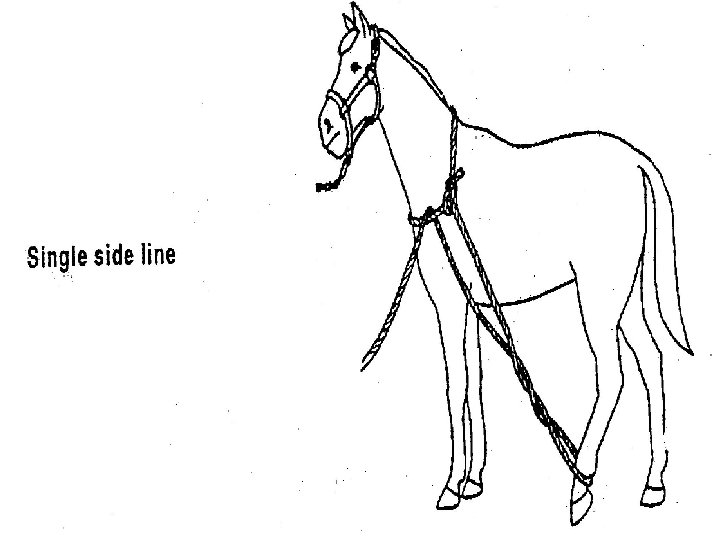
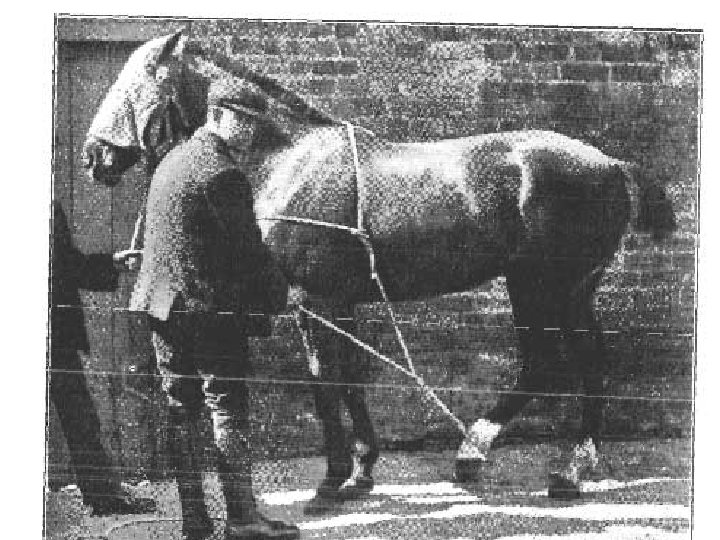
1 -Single side line • A chain is applied to hind leg, make a large loop at the end of a long rope and slip it over the horse's head and then pass the free end of the rope through the leg and twist it 2 -3 times.
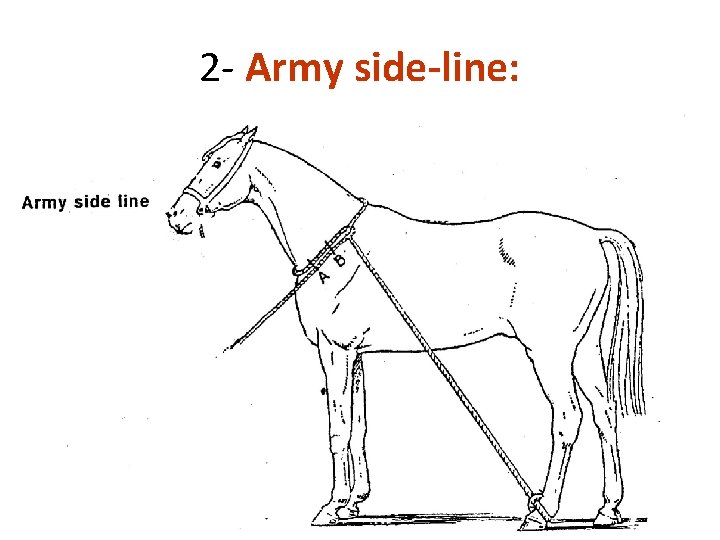
2 - Army side-line:
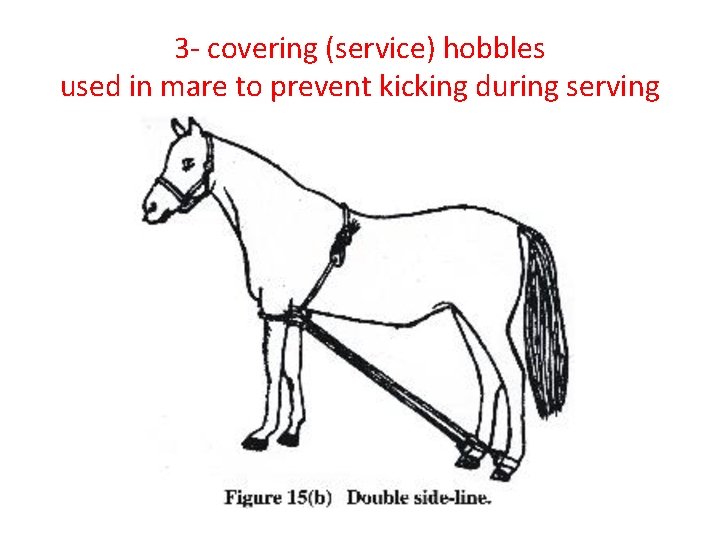
3 - covering (service) hobbles used in mare to prevent kicking during serving
• Used to secure both hind legs for operations as docking or to prevent injury of the stallion when serving a mare • There are 2 main methods: 1 - rings on shackles are applied to the hind pasterns Then either with 2 short ropes make a knot (8 -figure) at breast and quick release knot on withers. 2 - r roll the ropes around fore arms and quick release knot on the back. Single long rope (10 -15 meter) can be doubled used instead.


4 - tail methods
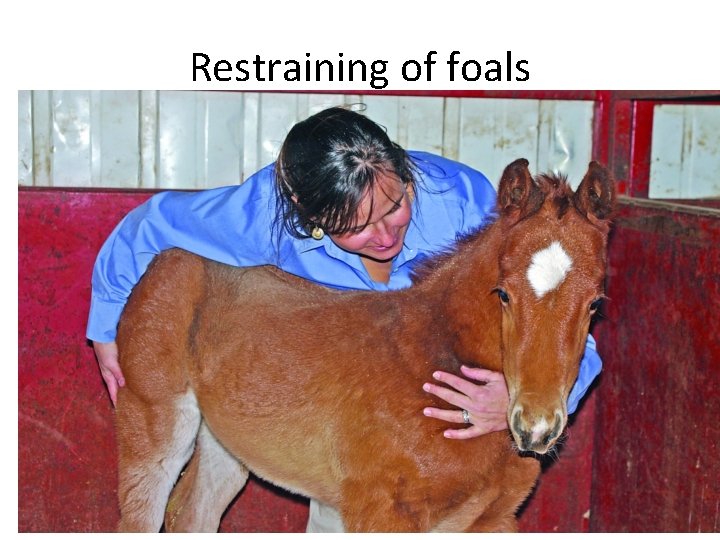
Restraining of foals
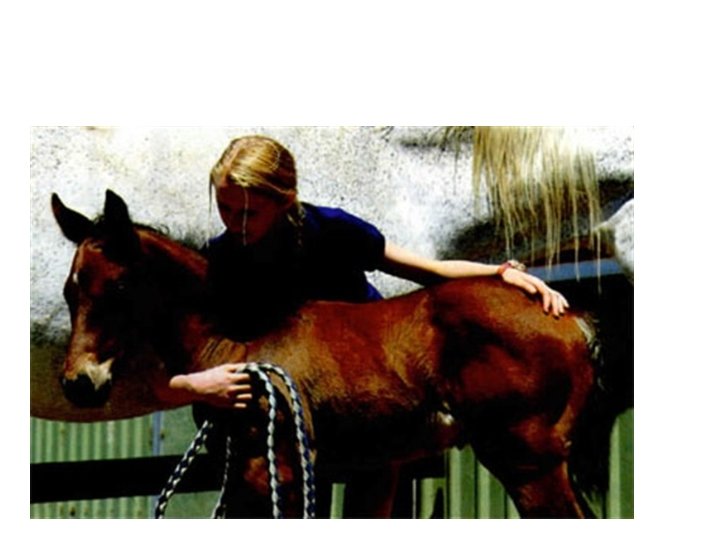
• Arm in front of chest and arm behind rump while grabbing tail • If you need the foal to remain as still as possible--perhaps for an injection--then place one of your arms around his chest and gently elevate the tail with the other hand • Do not bend the tail all the way over the foal's back, and never pull on the tail. • Make sure you keep an eye on the mare
- Slides: 58