
HOW TO ANALYZE THE DEVELOPMENT OF THEME I
- Slides: 22
HOW TO ANALYZE THE DEVELOPMENT OF THEME
I can analyze the development of a theme. Analyze = break into parts or find some new understanding from the text Development of theme = how the true statement about life is created over the course of the story
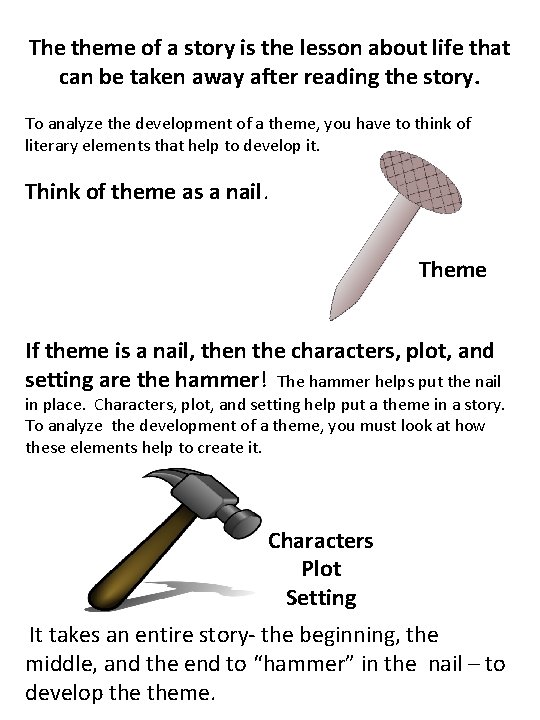
The theme of a story is the lesson about life that can be taken away after reading the story. To analyze the development of a theme, you have to think of literary elements that help to develop it. Think of theme as a nail. Theme If theme is a nail, then the characters, plot, and setting are the hammer! The hammer helps put the nail in place. Characters, plot, and setting help put a theme in a story. To analyze the development of a theme, you must look at how these elements help to create it. Characters Plot Setting It takes an entire story- the beginning, the middle, and the end to “hammer” in the nail – to develop theme.
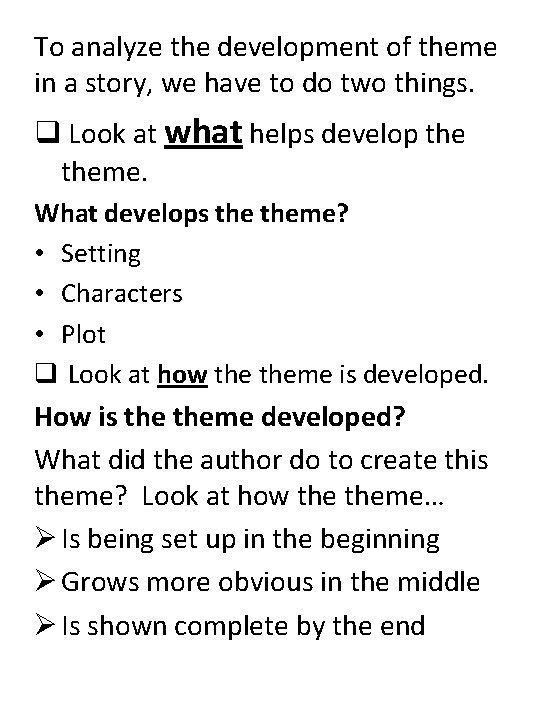
To analyze the development of theme in a story, we have to do two things. q Look at what helps develop theme. What develops theme? • Setting • Characters • Plot q Look at how theme is developed. How is theme developed? What did the author do to create this theme? Look at how theme… Ø Is being set up in the beginning Ø Grows more obvious in the middle Ø Is shown complete by the end
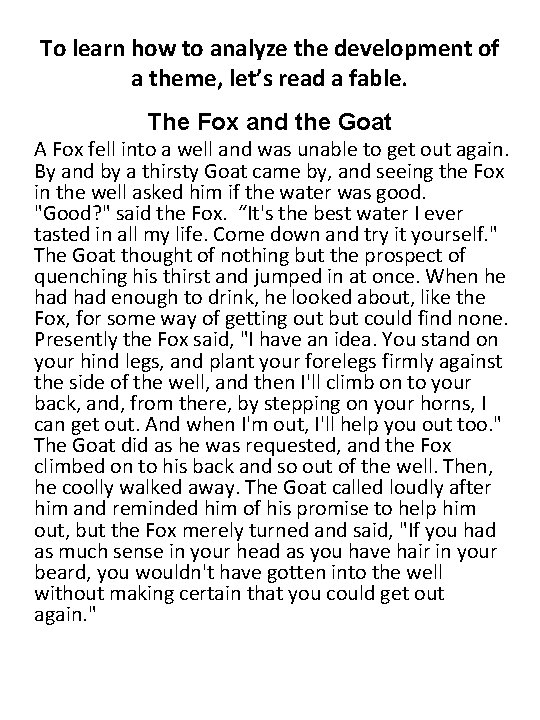
To learn how to analyze the development of a theme, let’s read a fable. The Fox and the Goat A Fox fell into a well and was unable to get out again. By and by a thirsty Goat came by, and seeing the Fox in the well asked him if the water was good. "Good? " said the Fox. “It's the best water I ever tasted in all my life. Come down and try it yourself. " The Goat thought of nothing but the prospect of quenching his thirst and jumped in at once. When he had enough to drink, he looked about, like the Fox, for some way of getting out but could find none. Presently the Fox said, "I have an idea. You stand on your hind legs, and plant your forelegs firmly against the side of the well, and then I'll climb on to your back, and, from there, by stepping on your horns, I can get out. And when I'm out, I'll help you out too. " The Goat did as he was requested, and the Fox climbed on to his back and so out of the well. Then, he coolly walked away. The Goat called loudly after him and reminded him of his promise to help him out, but the Fox merely turned and said, "If you had as much sense in your head as you have hair in your beard, you wouldn't have gotten into the well without making certain that you could get out again. "
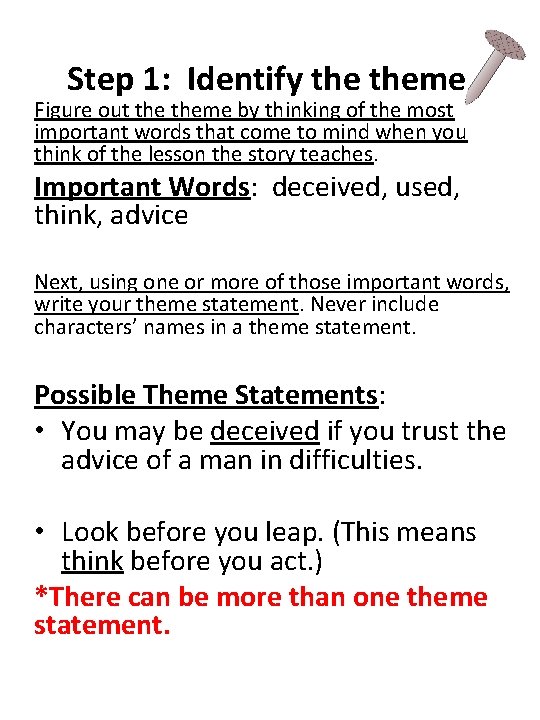
Step 1: Identify theme Figure out theme by thinking of the most important words that come to mind when you think of the lesson the story teaches. Important Words: deceived, used, think, advice Next, using one or more of those important words, write your theme statement. Never include characters’ names in a theme statement. Possible Theme Statements: • You may be deceived if you trust the advice of a man in difficulties. • Look before you leap. (This means think before you act. ) *There can be more than one theme statement.
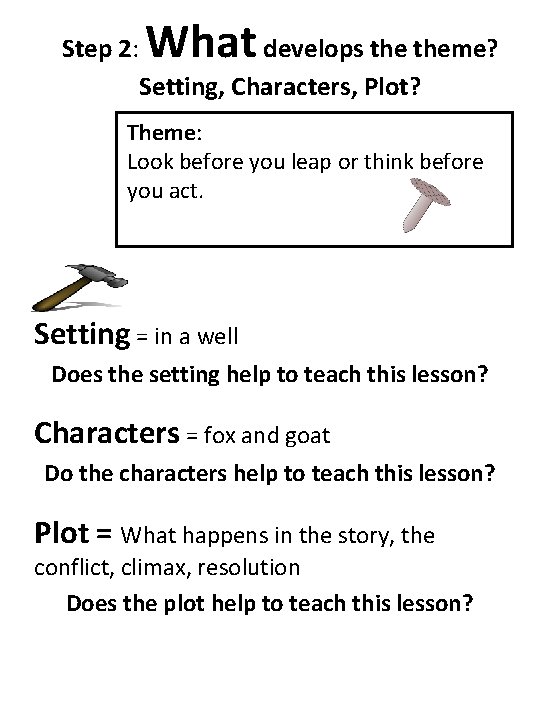
Step 2: What develops theme? Setting, Characters, Plot? Theme: Look before you leap or think before you act. Setting = in a well Does the setting help to teach this lesson? Characters = fox and goat Do the characters help to teach this lesson? Plot = What happens in the story, the conflict, climax, resolution Does the plot help to teach this lesson?
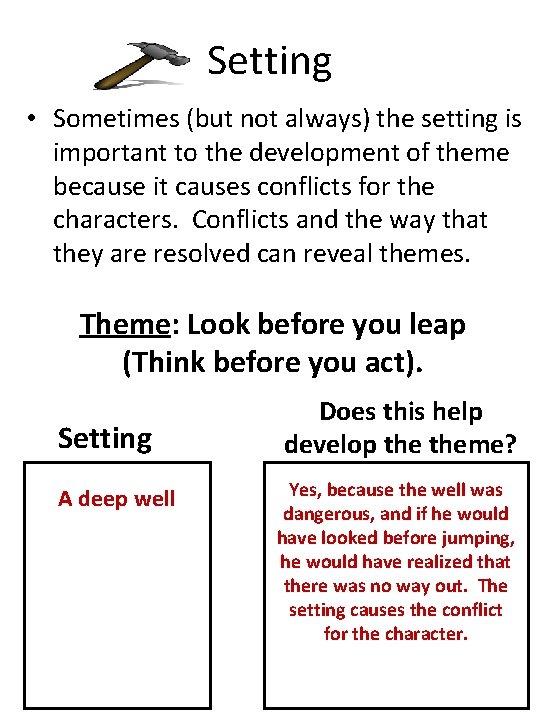
Setting • Sometimes (but not always) the setting is important to the development of theme because it causes conflicts for the characters. Conflicts and the way that they are resolved can reveal themes. Theme: Look before you leap (Think before you act). Setting A deep well Does this help develop theme? Yes, because the well was dangerous, and if he would have looked before jumping, he would have realized that there was no way out. The setting causes the conflict for the character.
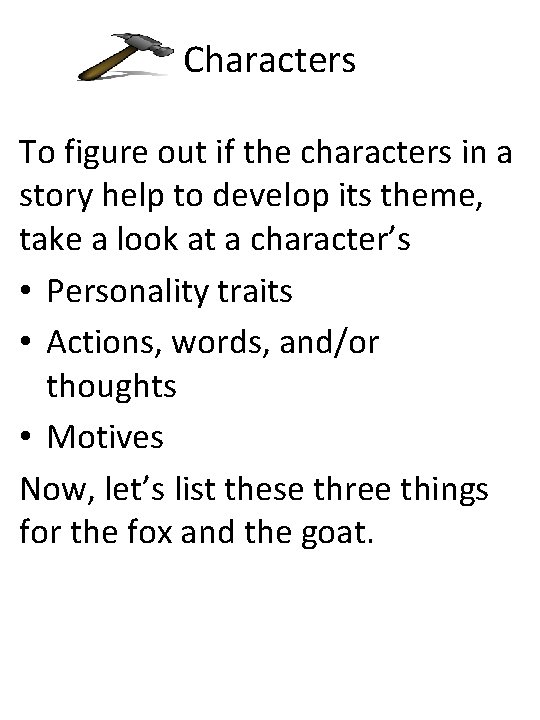
Characters To figure out if the characters in a story help to develop its theme, take a look at a character’s • Personality traits • Actions, words, and/or thoughts • Motives Now, let’s list these three things for the fox and the goat.
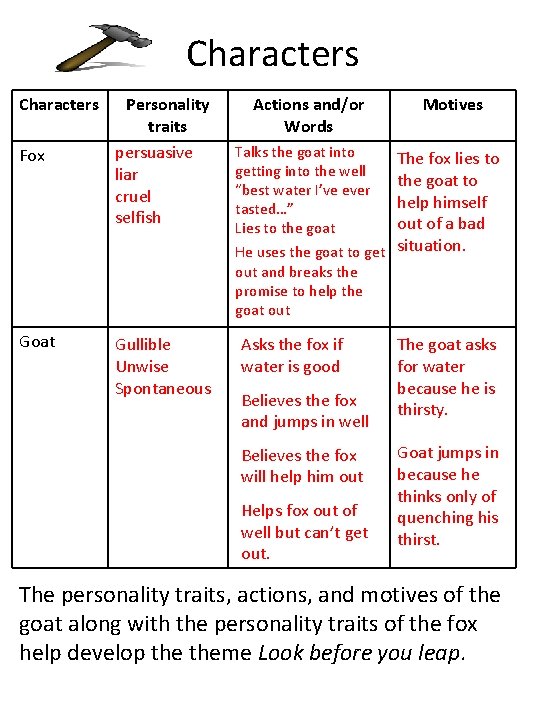
Characters Fox Goat Personality traits persuasive liar cruel selfish Gullible Unwise Spontaneous Actions and/or Words Talks the goat into getting into the well “best water I’ve ever tasted…” Lies to the goat He uses the goat to get out and breaks the promise to help the goat out Asks the fox if water is good Believes the fox and jumps in well Believes the fox will help him out Helps fox out of well but can’t get out. Motives The fox lies to the goat to help himself out of a bad situation. The goat asks for water because he is thirsty. Goat jumps in because he thinks only of quenching his thirst. The personality traits, actions, and motives of the goat along with the personality traits of the fox help develop theme Look before you leap.
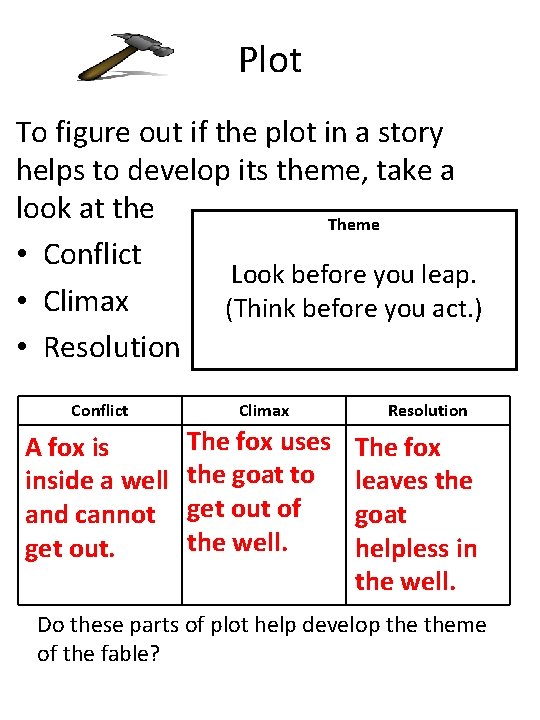
Plot To figure out if the plot in a story helps to develop its theme, take a look at the Theme • Conflict Look before you leap. • Climax (Think before you act. ) • Resolution Conflict Climax A fox is inside a well and cannot get out. The fox uses the goat to get out of the well. Resolution The fox leaves the goat helpless in the well. Do these parts of plot help develop theme of the fable?
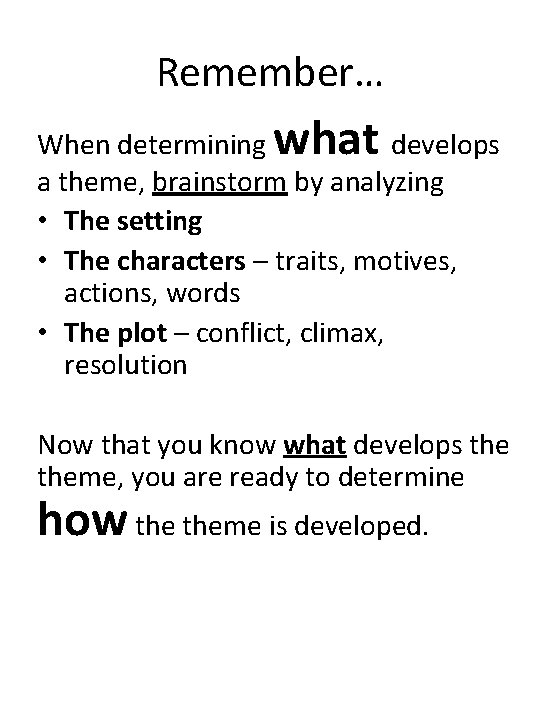
Remember… what When determining develops a theme, brainstorm by analyzing • The setting • The characters – traits, motives, actions, words • The plot – conflict, climax, resolution Now that you know what develops theme, you are ready to determine how theme is developed.
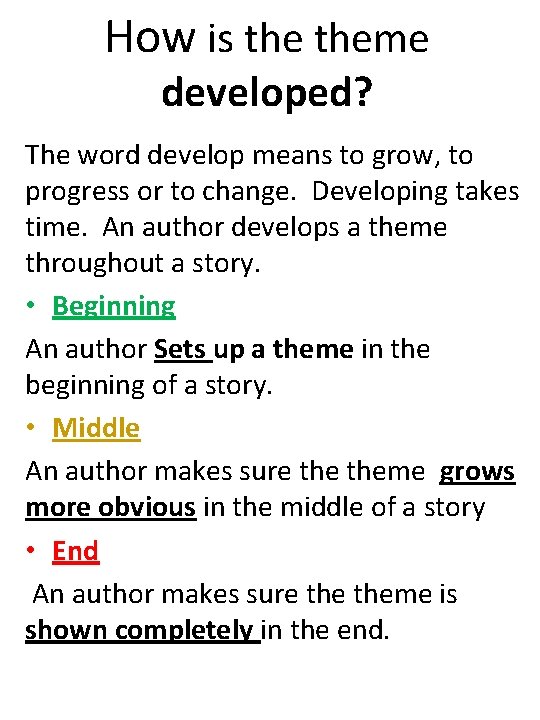
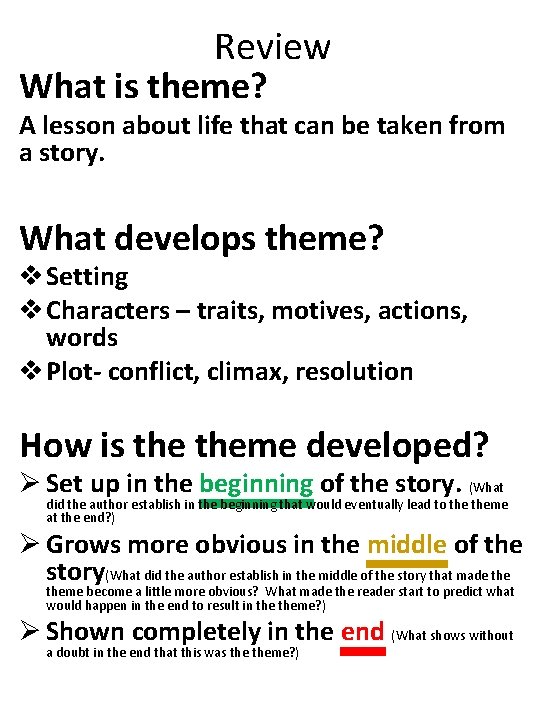
How is theme developed? The word develop means to grow, to progress or to change. Developing takes time. An author develops a theme throughout a story. • Beginning An author Sets up a theme in the beginning of a story. • Middle An author makes sure theme grows more obvious in the middle of a story • End An author makes sure theme is shown completely in the end.
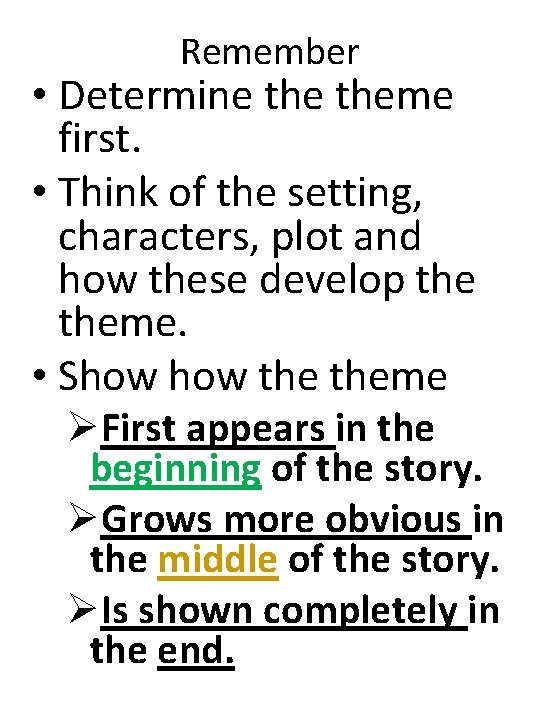
Remember • Determine theme first. • Think of the setting, characters, plot and how these develop theme. • Show the theme ØFirst appears in the beginning of the story. ØGrows more obvious in the middle of the story. ØIs shown completely in the end.
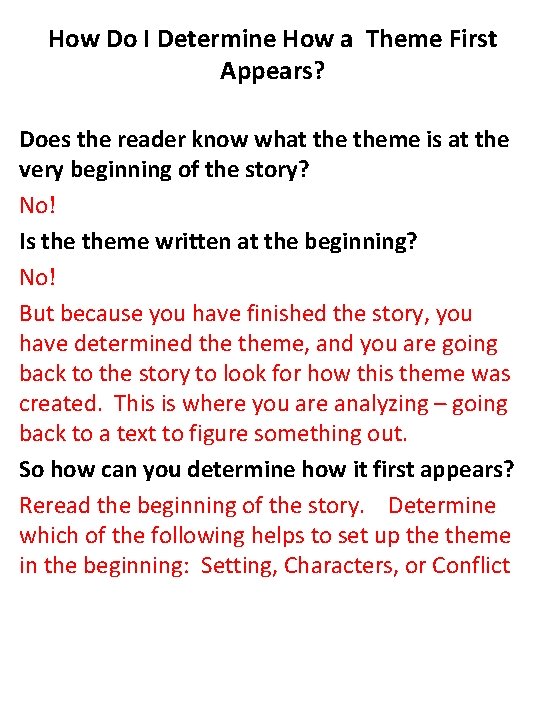
How Do I Determine How a Theme First Appears? Does the reader know what theme is at the very beginning of the story? No! Is theme written at the beginning? No! But because you have finished the story, you have determined theme, and you are going back to the story to look for how this theme was created. This is where you are analyzing – going back to a text to figure something out. So how can you determine how it first appears? Reread the beginning of the story. Determine which of the following helps to set up theme in the beginning: Setting, Characters, or Conflict
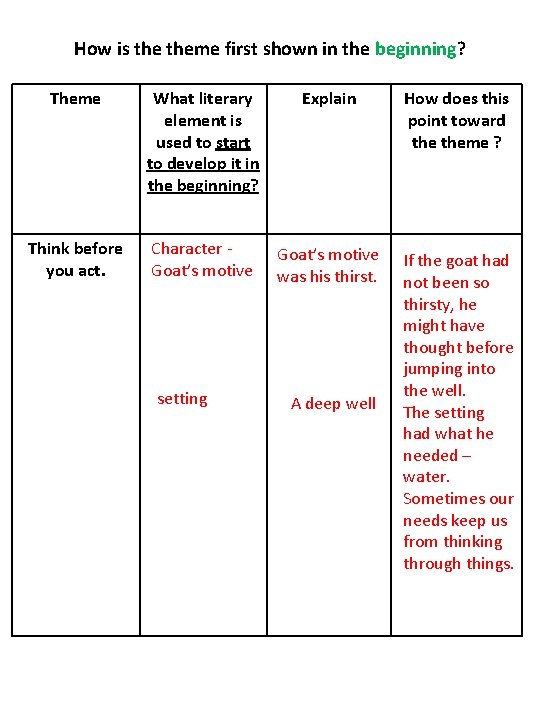
How is theme first shown in the beginning? Theme What literary element is used to start to develop it in the beginning? Explain How does this point toward theme ? Think before you act. Character Goat’s motive was his thirst. If the goat had not been so thirsty, he might have thought before jumping into the well. The setting had what he needed – water. Sometimes our needs keep us from thinking through things. setting A deep well
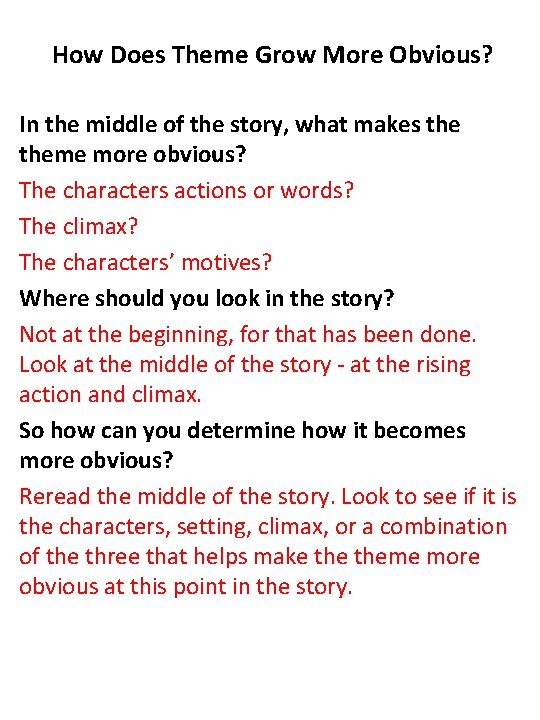
How Does Theme Grow More Obvious? In the middle of the story, what makes theme more obvious? The characters actions or words? The climax? The characters’ motives? Where should you look in the story? Not at the beginning, for that has been done. Look at the middle of the story - at the rising action and climax. So how can you determine how it becomes more obvious? Reread the middle of the story. Look to see if it is the characters, setting, climax, or a combination of the three that helps make theme more obvious at this point in the story.
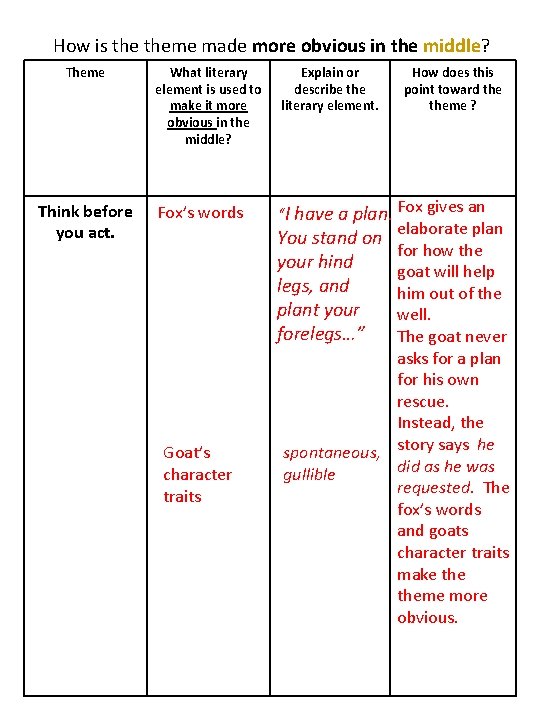
How is theme made more obvious in the middle? Theme Think before you act. What literary element is used to make it more obvious in the middle? Explain or describe the literary element. Fox’s words “I have a plan. Fox gives an elaborate plan You stand on for how the your hind goat will help legs, and him out of the plant your well. forelegs…” The goat never asks for a plan for his own rescue. Instead, the spontaneous, story says he did as he was gullible requested. The fox’s words and goats character traits make theme more obvious. Goat’s character traits How does this point toward theme ?
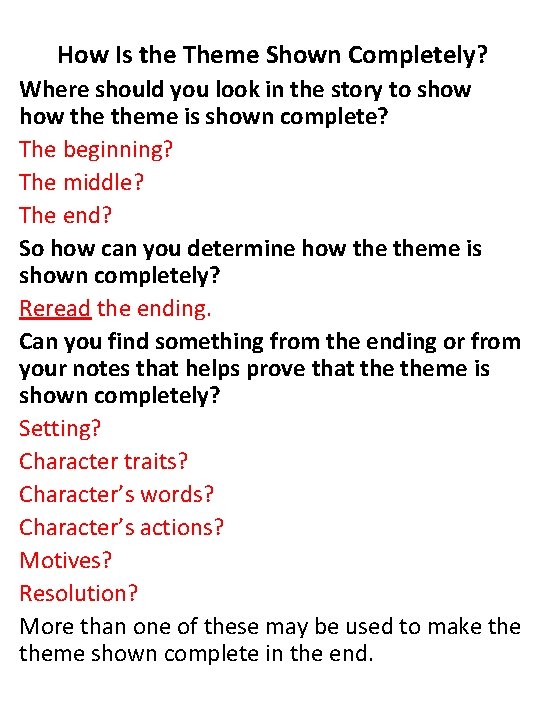
How Is the Theme Shown Completely? Where should you look in the story to show the theme is shown complete? The beginning? The middle? The end? So how can you determine how theme is shown completely? Reread the ending. Can you find something from the ending or from your notes that helps prove that theme is shown completely? Setting? Character traits? Character’s words? Character’s actions? Motives? Resolution? More than one of these may be used to make theme shown complete in the end.
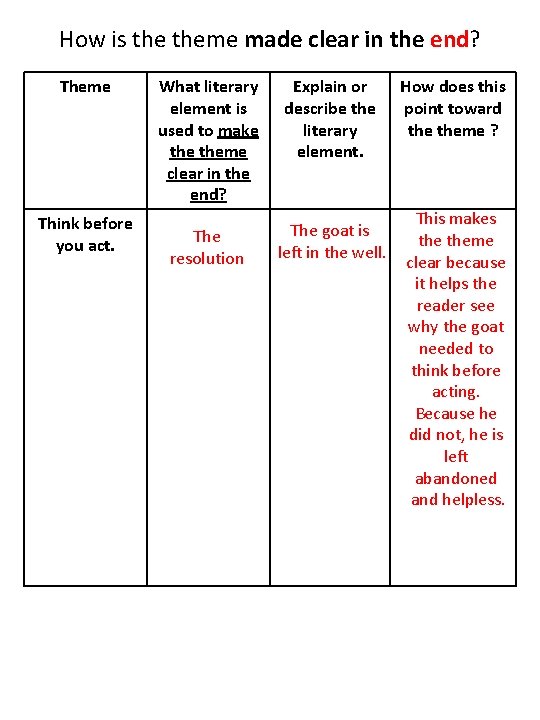
How is theme made clear in the end? Theme Think before you act. What literary element is used to make theme clear in the end? Explain or describe the literary element. The resolution The goat is left in the well. How does this point toward theme ? This makes theme clear because it helps the reader see why the goat needed to think before acting. Because he did not, he is left abandoned and helpless.
Review What is theme? A lesson about life that can be taken from a story. What develops theme? v Setting v Characters – traits, motives, actions, words v Plot- conflict, climax, resolution How is theme developed? Ø Set up in the beginning of the story. (What did the author establish in the beginning that would eventually lead to theme at the end? ) Ø Grows more obvious in the middle of the story(What did the author establish in the middle of the story that made theme become a little more obvious? What made the reader start to predict what would happen in the end to result in theme? ) Ø Shown completely in the end (What shows without a doubt in the end that this was theme? )
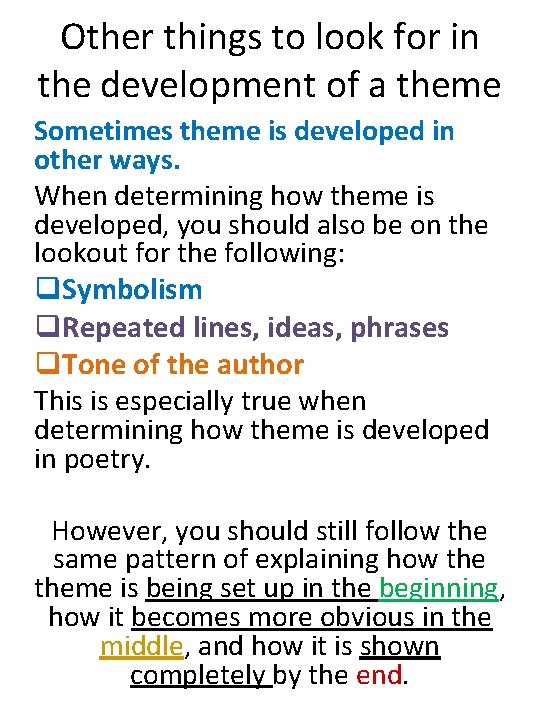
Other things to look for in the development of a theme Sometimes theme is developed in other ways. When determining how theme is developed, you should also be on the lookout for the following: q. Symbolism q. Repeated lines, ideas, phrases q. Tone of the author This is especially true when determining how theme is developed in poetry. However, you should still follow the same pattern of explaining how theme is being set up in the beginning, how it becomes more obvious in the middle, and how it is shown completely by the end.