
How to Administer PEDS Parents Evaluation of Developmental










- Slides: 64
How to Administer PEDS: Parents’ Evaluation of Developmental Status Frances Page Glascoe Adjunct Professor of Pediatrics Vanderbilt University
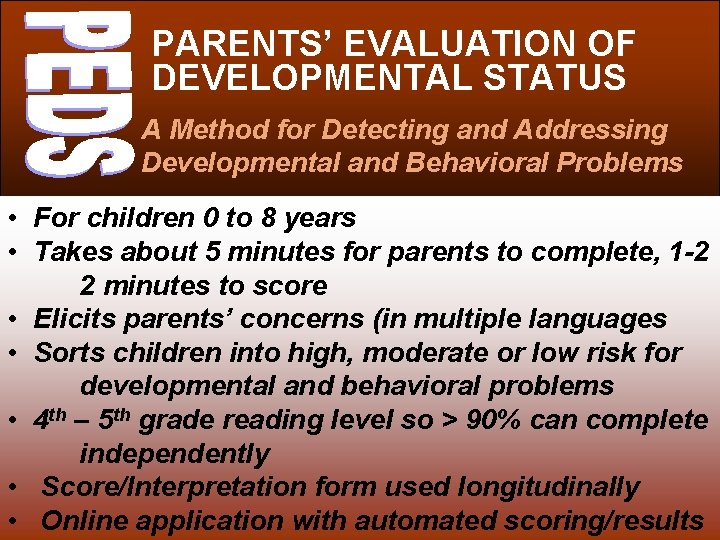
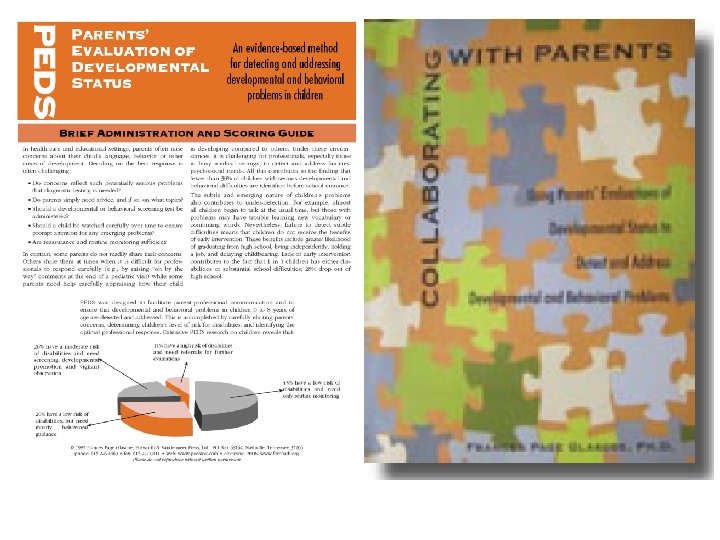
PARENTS’ EVALUATION OF DEVELOPMENTAL STATUS A Method for Detecting and Addressing Developmental and Behavioral Problems • For children 0 to 8 years • Takes about 5 minutes for parents to complete, 1 -2 2 minutes to score • Elicits parents’ concerns (in multiple languages • Sorts children into high, moderate or low risk for developmental and behavioral problems • 4 th – 5 th grade reading level so > 90% can complete independently • Score/Interpretation form used longitudinally • Online application with automated scoring/results
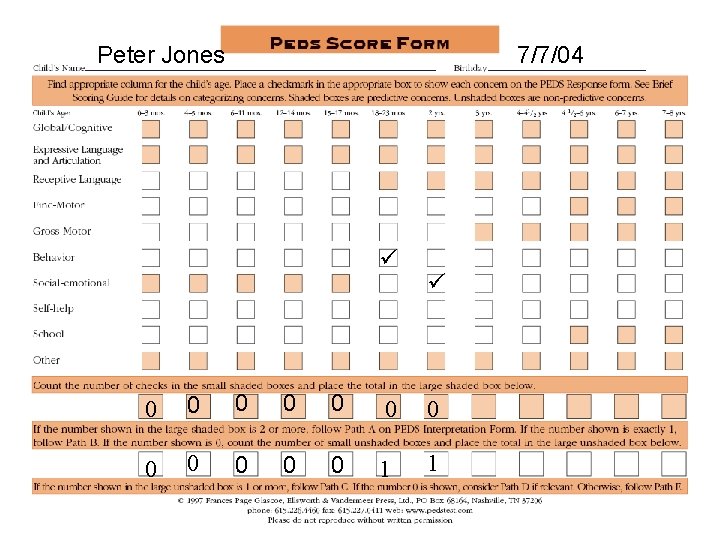
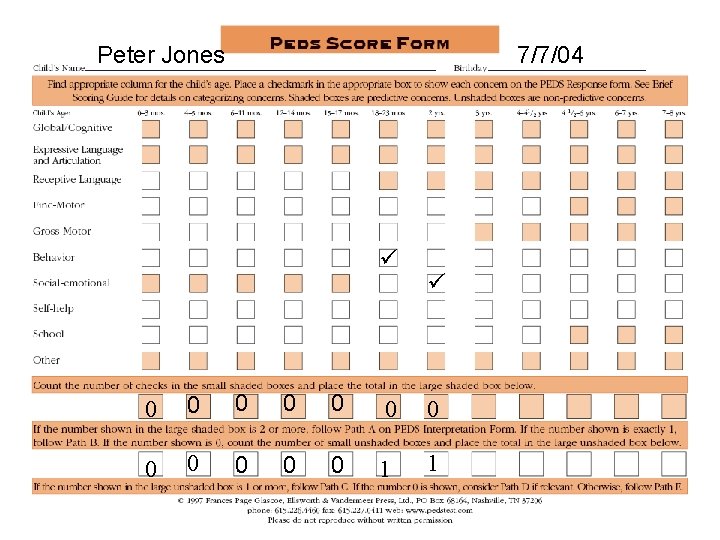
Peter Jones 7/7/04 0 0 0 1 1
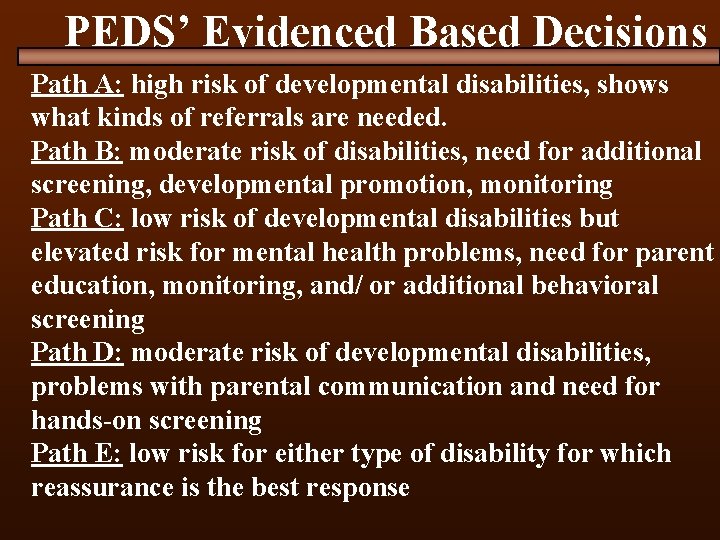
PEDS’ Evidenced Based Decisions Path A: high risk of developmental disabilities, shows what kinds of referrals are needed. Path B: moderate risk of disabilities, need for additional screening, developmental promotion, monitoring Path C: low risk of developmental disabilities but elevated risk for mental health problems, need for parent education, monitoring, and/ or additional behavioral screening Path D: moderate risk of developmental disabilities, problems with parental communication and need for hands-on screening Path E: low risk for either type of disability for which reassurance is the best response
“Oh, by the way…. . ” Reduces “doorknob concerns” Focuses visit and facilitates patient flow Improves parent satisfaction and positive parenting practices Increases provider confidence in decisionmaking Survey version used in evaluation of health care plans by FACCT and NSECH
How to Administer PEDS
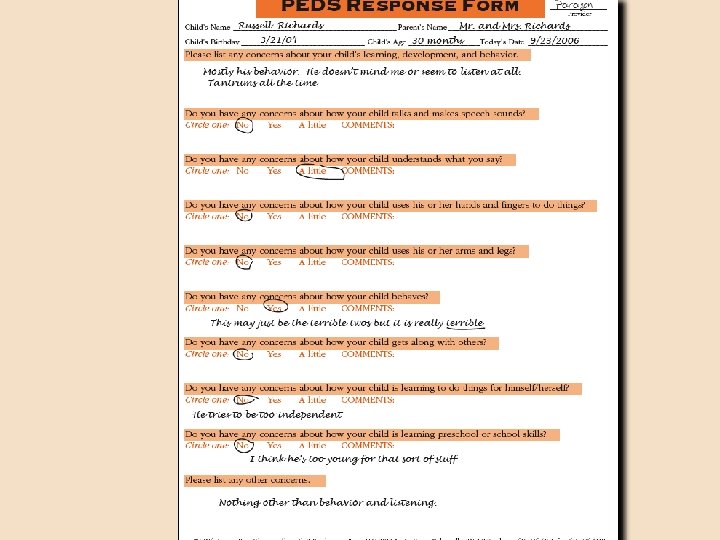
1. Ask parents whether they would like to complete the Response Form on their own or have someone go through it with them.
! If, in writing, parents only circle answers and don’t write anything on the form, you cannot be sure of literacy and should readminister PEDS as an interview
Once parents have completed the Response Form, begin the scoring process by Computing the Child’s Age Correct for prematurity if less than 24 months old
SCORING: Find Age Column Find the correct column for the child’s age on the PEDS Score Form
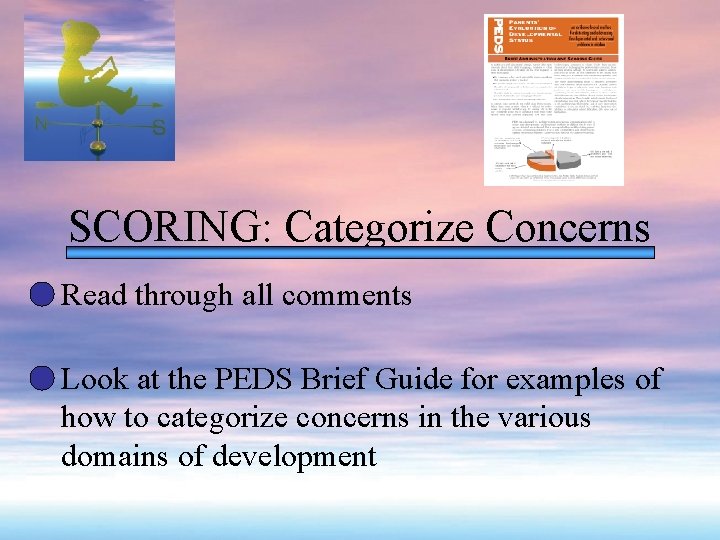
SCORING: Categorize Concerns Read through all comments Look at the PEDS Brief Guide for examples of how to categorize concerns in the various domains of development
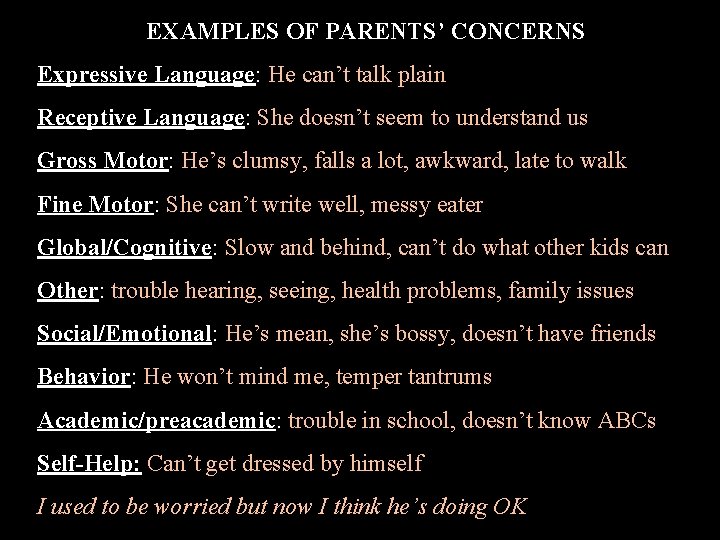
EXAMPLES OF PARENTS’ CONCERNS Expressive Language: He can’t talk plain Receptive Language: She doesn’t seem to understand us Gross Motor: He’s clumsy, falls a lot, awkward, late to walk Fine Motor: She can’t write well, messy eater Global/Cognitive: Slow and behind, can’t do what other kids can Other: trouble hearing, seeing, health problems, family issues Social/Emotional: He’s mean, she’s bossy, doesn’t have friends Behavior: He won’t mind me, temper tantrums Academic/preacademic: trouble in school, doesn’t know ABCs Self-Help: Can’t get dressed by himself I used to be worried but now I think he’s doing OK
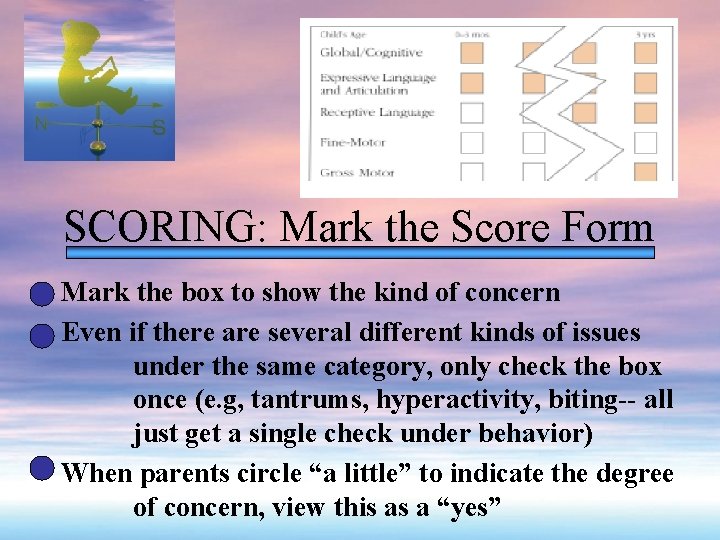
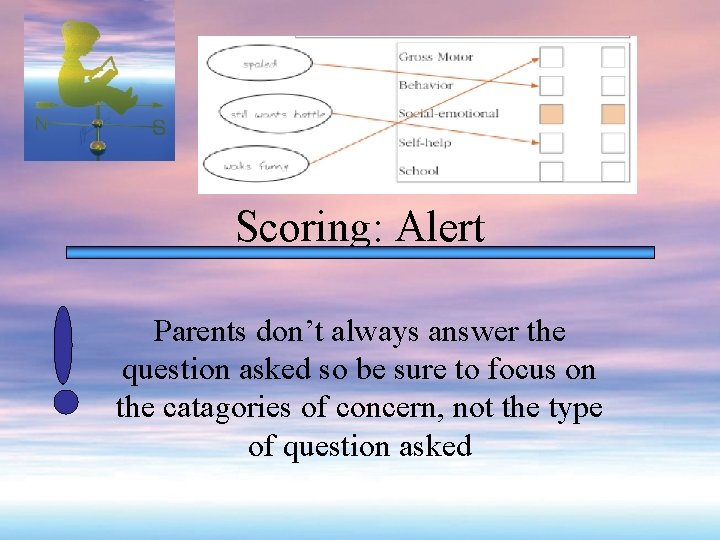
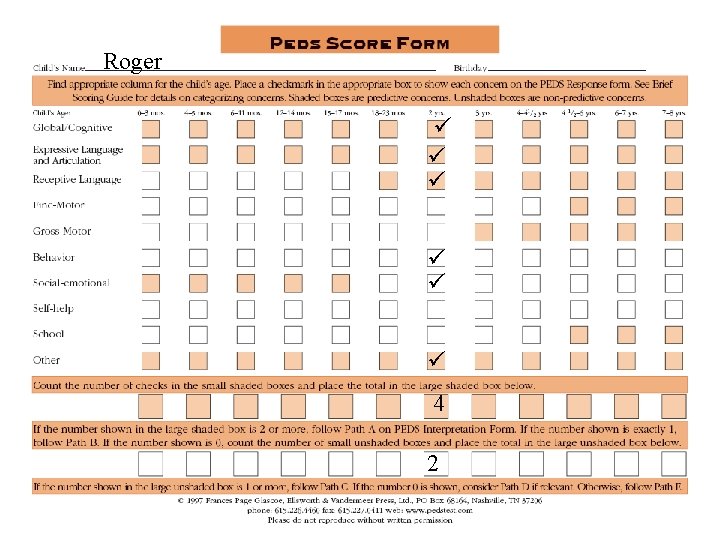
SCORING: Mark the Score Form Mark the box to show the kind of concern Even if there are several different kinds of issues under the same category, only check the box once (e. g, tantrums, hyperactivity, biting-- all just get a single check under behavior) When parents circle “a little” to indicate the degree of concern, view this as a “yes”
Scoring: Alert Parents don’t always answer the question asked so be sure to focus on the catagories of concern, not the type of question asked
Scoring: Add your concerns too If you have a concern about a child, you can add checks to the boxes However, don’t remove or ignore the parents concerns
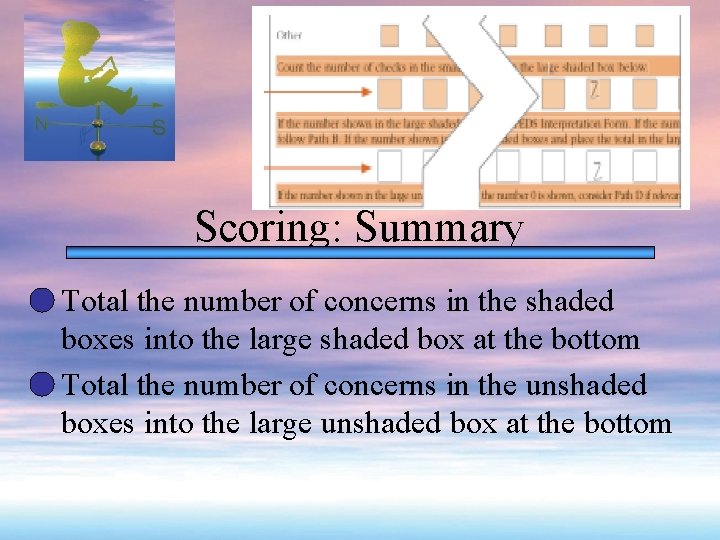
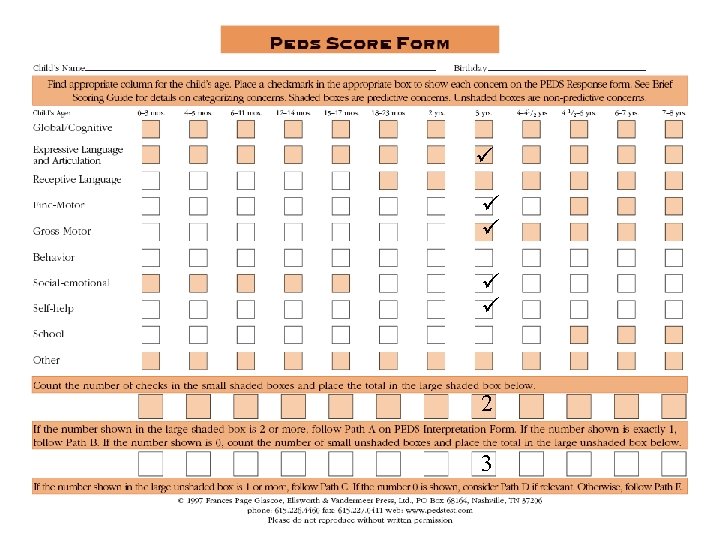
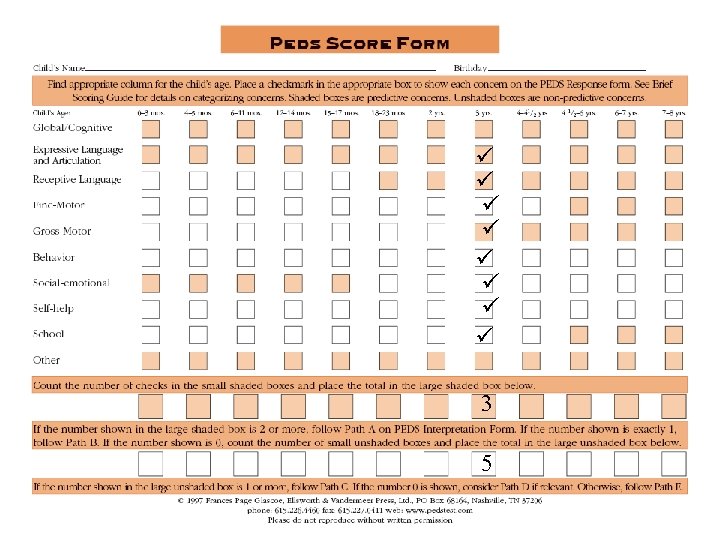
Scoring: Summary Total the number of concerns in the shaded boxes into the large shaded box at the bottom Total the number of concerns in the unshaded boxes into the large unshaded box at the bottom
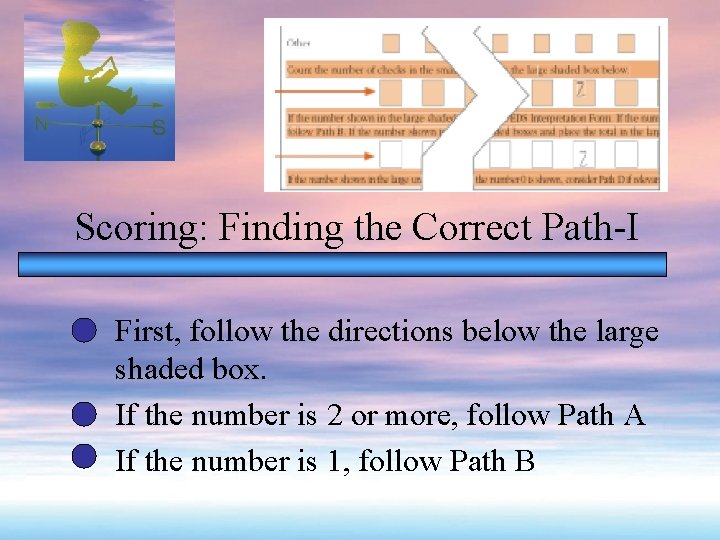
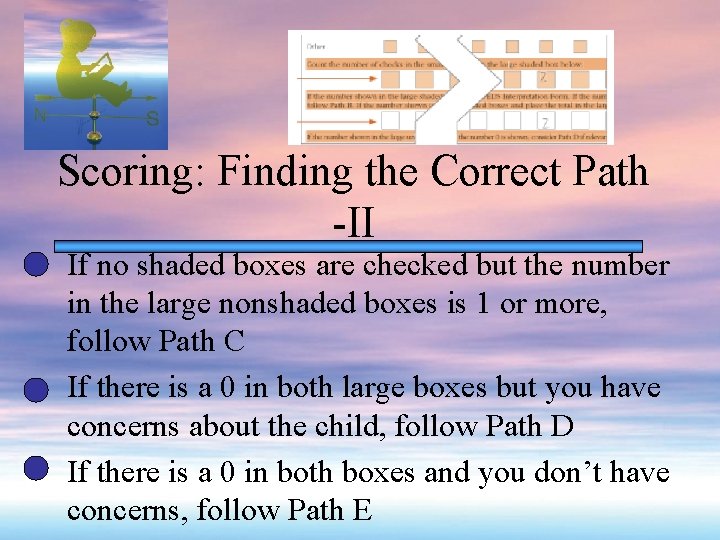
Scoring: Finding the Correct Path-I First, follow the directions below the large shaded box. If the number is 2 or more, follow Path A If the number is 1, follow Path B
Scoring: Finding the Correct Path -II If no shaded boxes are checked but the number in the large nonshaded boxes is 1 or more, follow Path C If there is a 0 in both large boxes but you have concerns about the child, follow Path D If there is a 0 in both boxes and you don’t have concerns, follow Path E
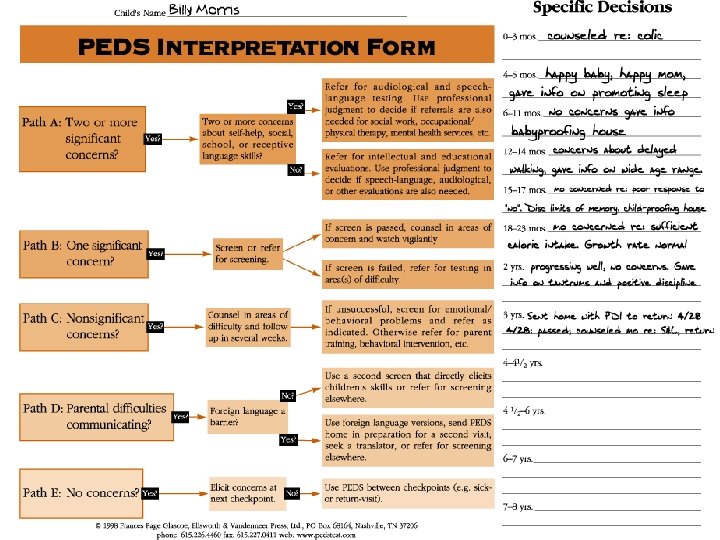
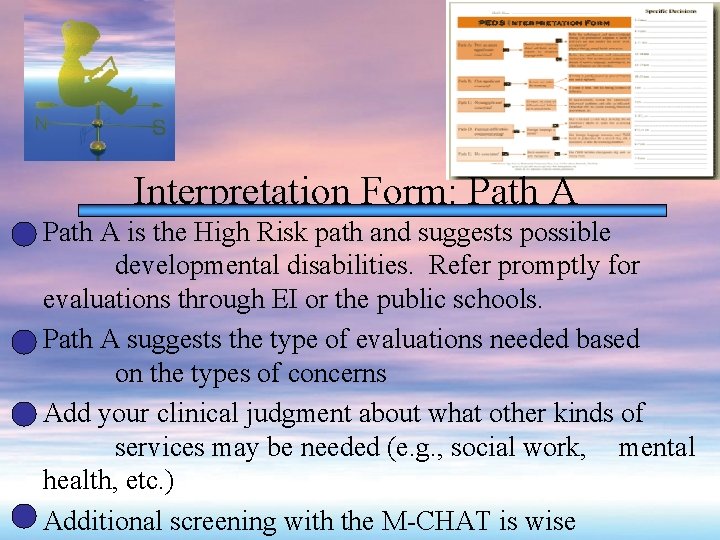
Interpretation Form: Path A is the High Risk path and suggests possible developmental disabilities. Refer promptly for evaluations through EI or the public schools. Path A suggests the type of evaluations needed based on the types of concerns Add your clinical judgment about what other kinds of services may be needed (e. g. , social work, mental health, etc. ) Additional screening with the M-CHAT is wise
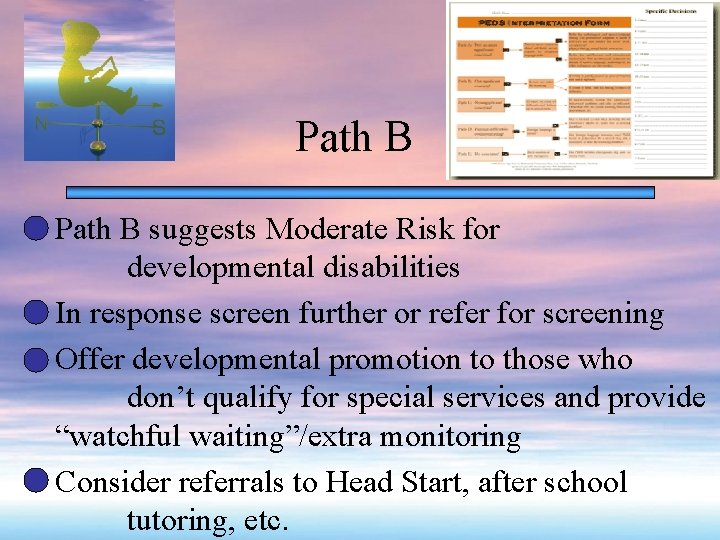
Path B suggests Moderate Risk for developmental disabilities In response screen further or refer for screening Offer developmental promotion to those who don’t qualify for special services and provide “watchful waiting”/extra monitoring Consider referrals to Head Start, after school tutoring, etc.
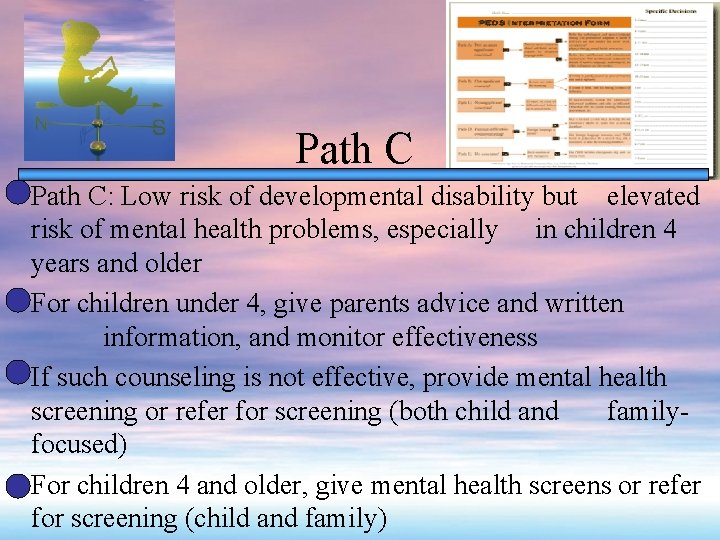
Path C: Low risk of developmental disability but elevated risk of mental health problems, especially in children 4 years and older For children under 4, give parents advice and written information, and monitor effectiveness If such counseling is not effective, provide mental health screening or refer for screening (both child and familyfocused) For children 4 and older, give mental health screens or refer for screening (child and family)
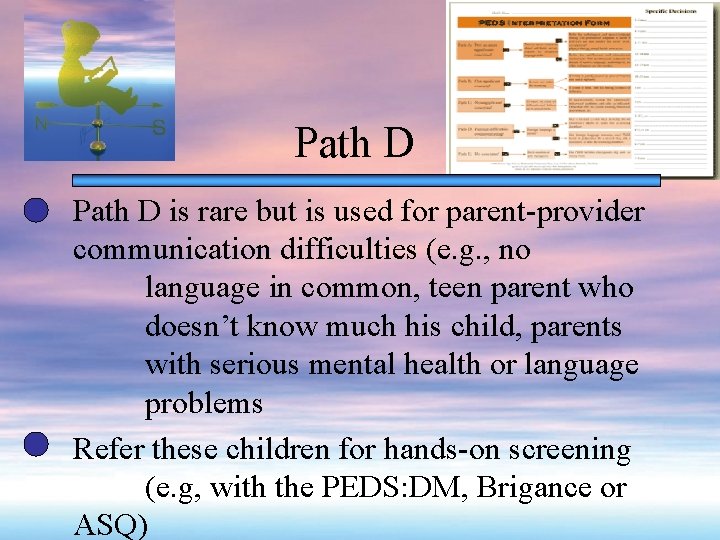
Path D is rare but is used for parent-provider communication difficulties (e. g. , no language in common, teen parent who doesn’t know much his child, parents with serious mental health or language problems Refer these children for hands-on screening (e. g, with the PEDS: DM, Brigance or ASQ)
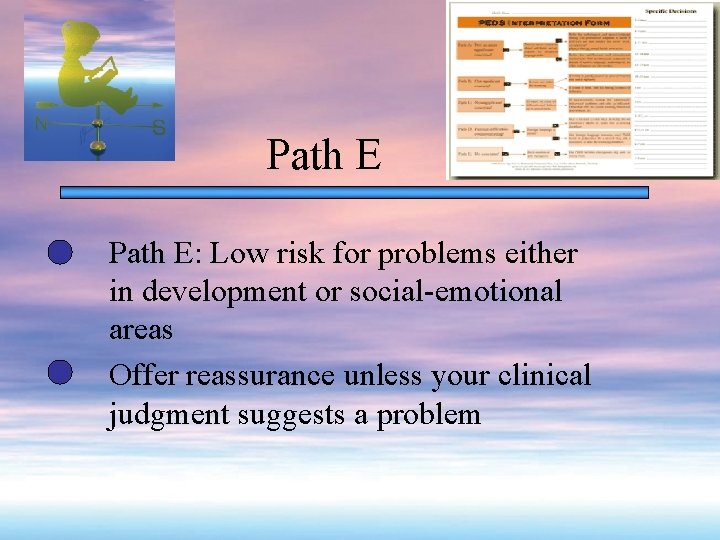
Path E: Low risk for problems either in development or social-emotional areas Offer reassurance unless your clinical judgment suggests a problem
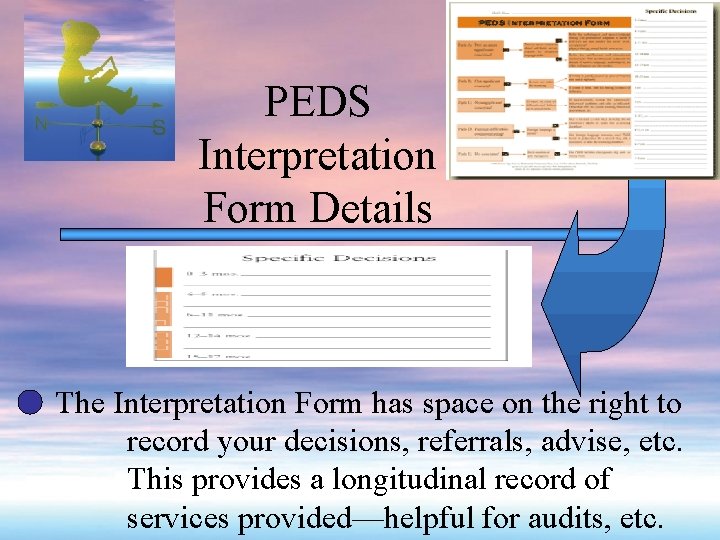
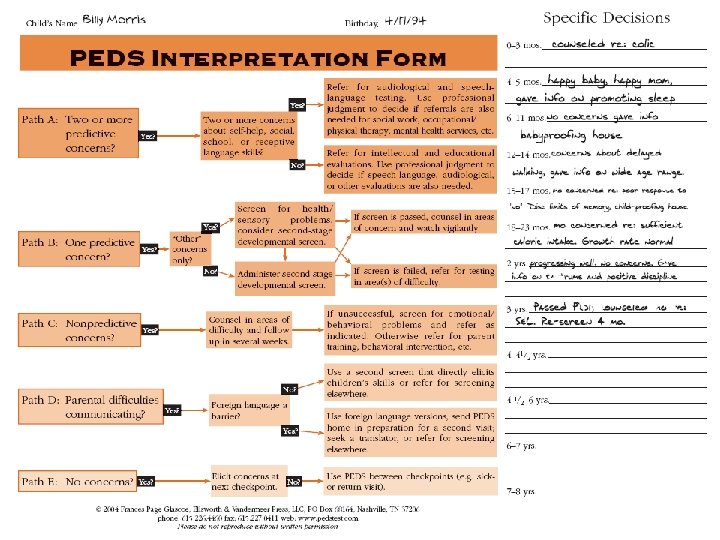
PEDS Interpretation Form Details The Interpretation Form has space on the right to record your decisions, referrals, advise, etc. This provides a longitudinal record of services provided—helpful for audits, etc.
Case Examples
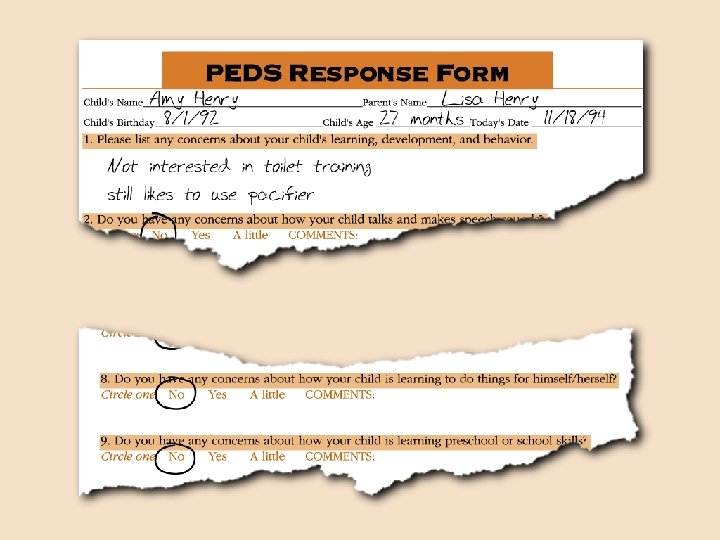
Practice Examples: Amy
Amy Response
Peter Jones 7/7/04 0 0 0 1 1
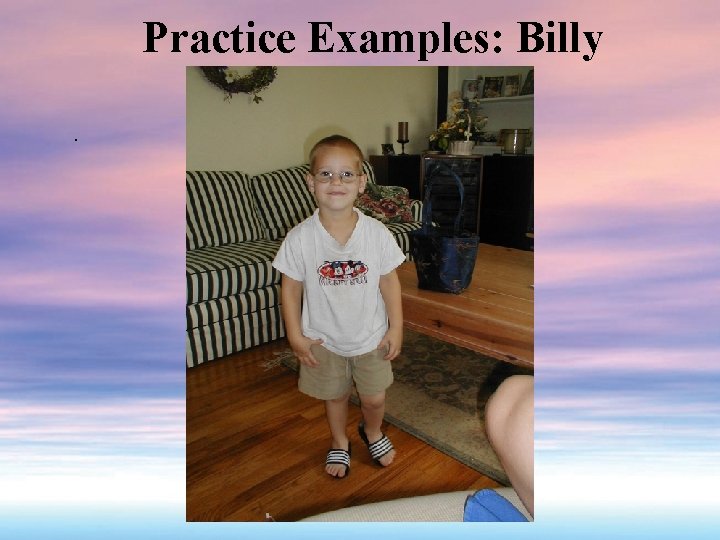
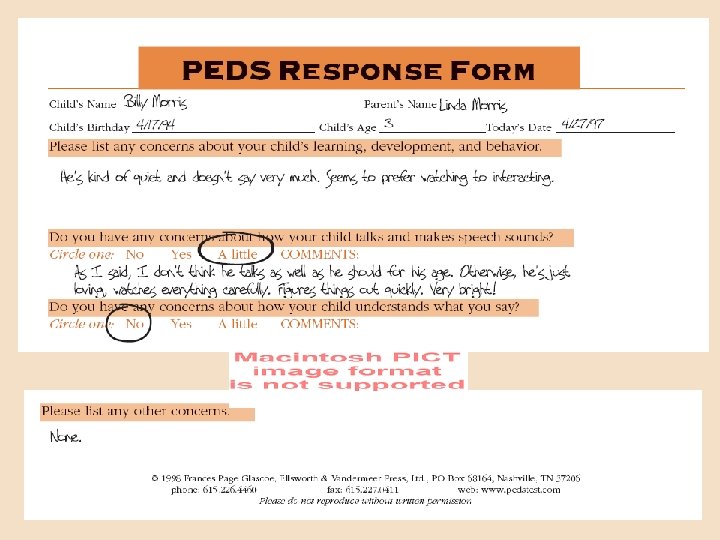
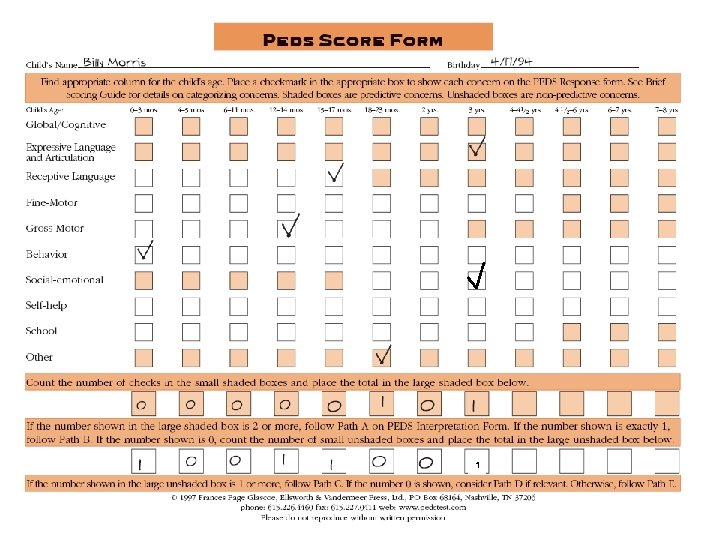
Practice Examples: Billy.
1
Practice Examples: Roger
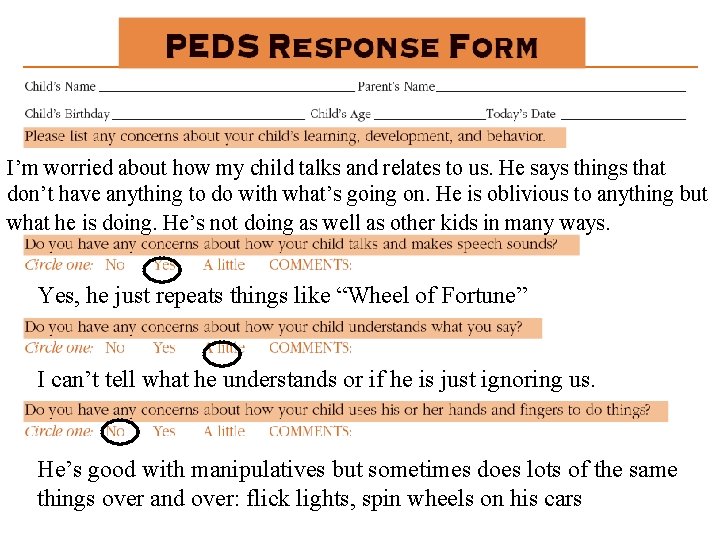
I’m worried about how my child talks and relates to us. He says things that don’t have anything to do with what’s going on. He is oblivious to anything but what he is doing. He’s not doing as well as other kids in many ways. Yes, he just repeats things like “Wheel of Fortune” I can’t tell what he understands or if he is just ignoring us. He’s good with manipulatives but sometimes does lots of the same things over and over: flick lights, spin wheels on his cars
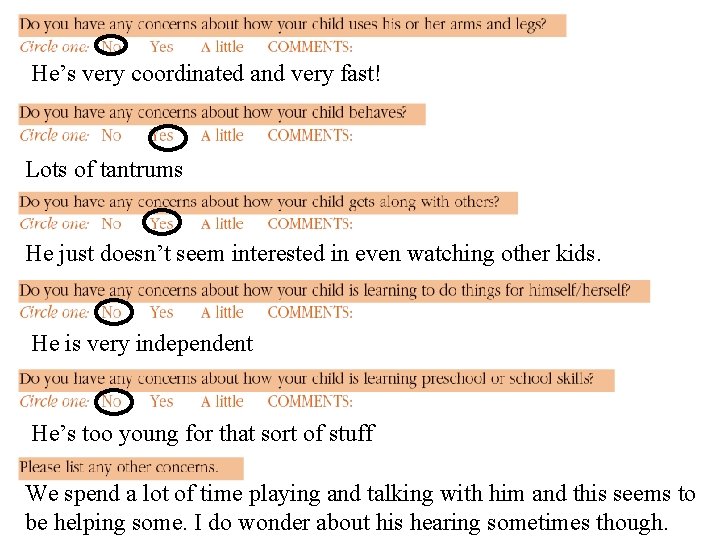
He’s very coordinated and very fast! Lots of tantrums He just doesn’t seem interested in even watching other kids. He is very independent He’s too young for that sort of stuff We spend a lot of time playing and talking with him and this seems to be helping some. I do wonder about his hearing sometimes though.
Roger 4 2
What next?
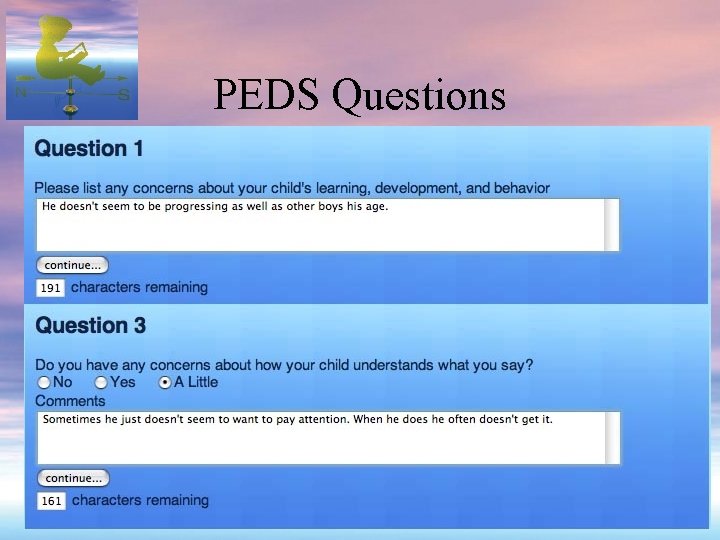
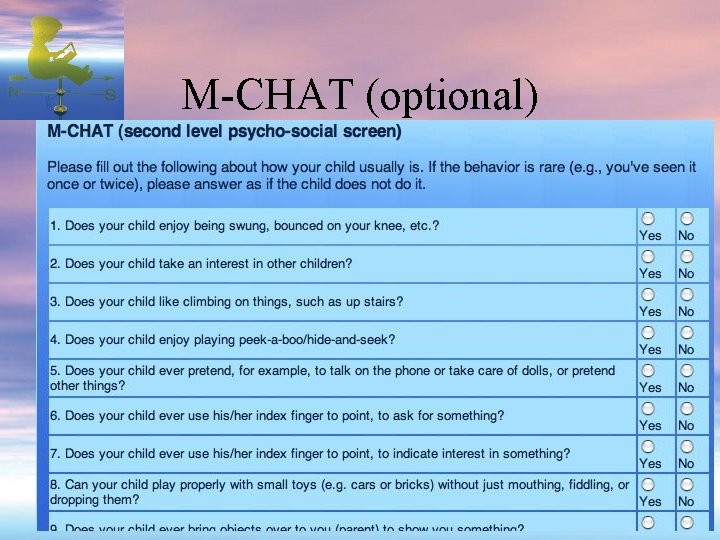
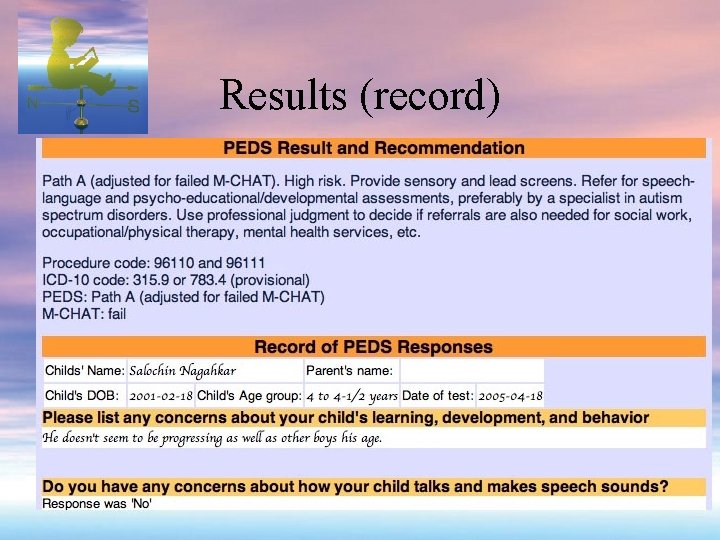
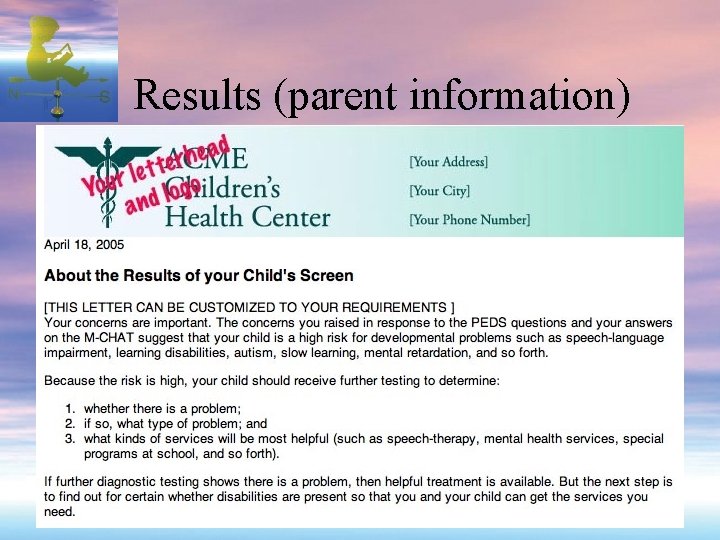
Electronic PEDS • www. forepath. org • Web accessible PEDS for – Licensed PEDS users – Self-selected parents • PEDS scoring Web service for EMR/EHR and other electronic systems
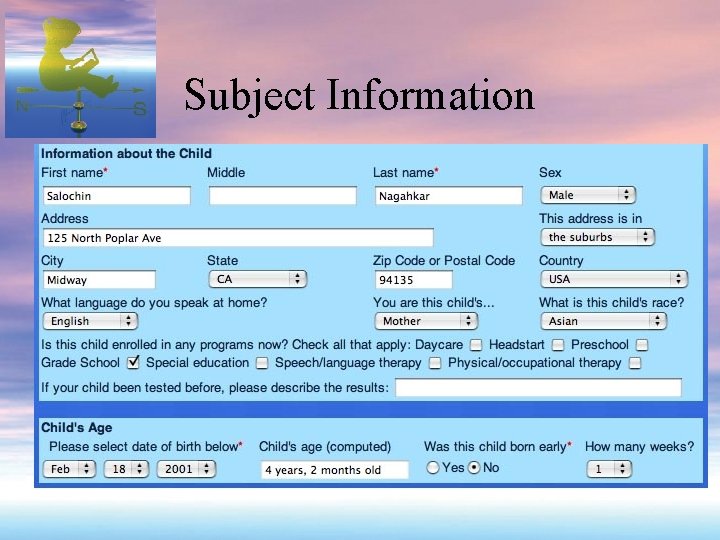
Subject Information
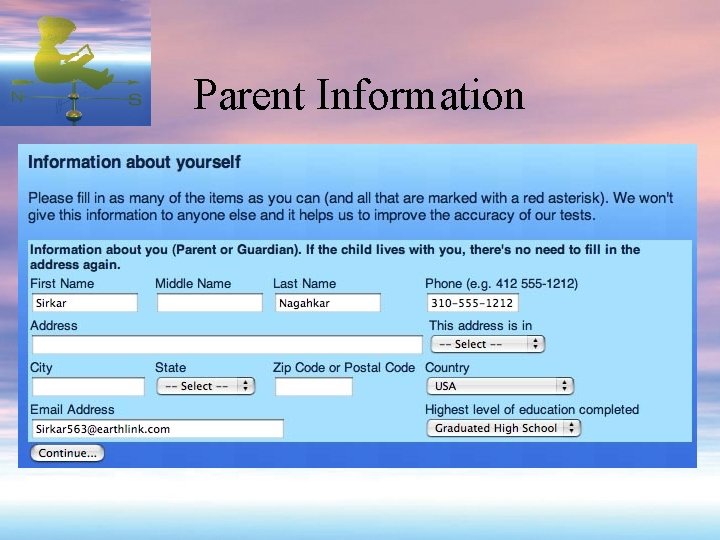
Parent Information
PEDS Questions
M-CHAT (optional)
Results (record)
Results (parent information)
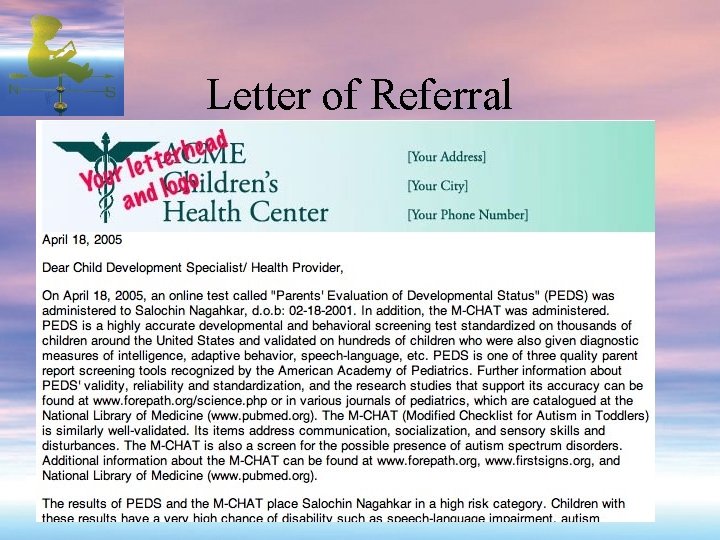
Letter of Referral
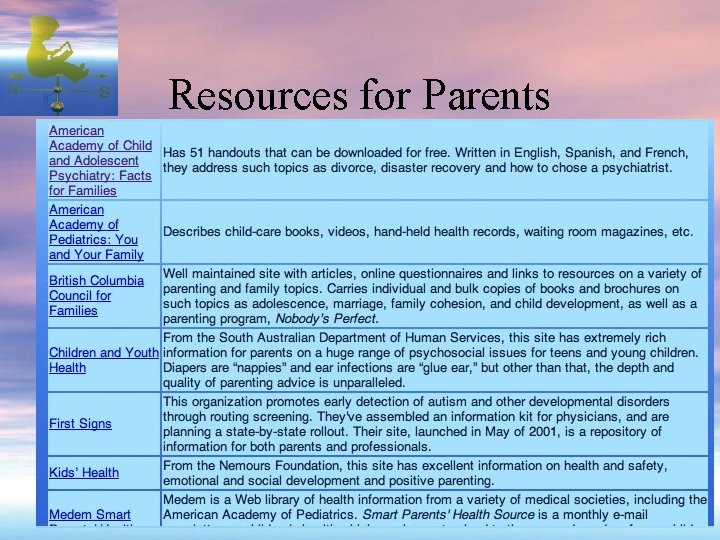
Resources for Parents
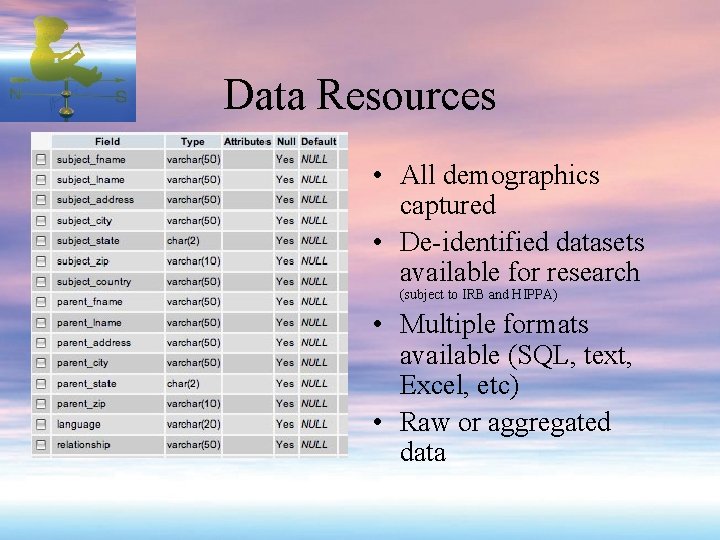
Data Resources • All demographics captured • De-identified datasets available for research (subject to IRB and HIPPA) • Multiple formats available (SQL, text, Excel, etc) • Raw or aggregated data
Flexible • Works with several workflow approaches • Adaptable to licensee’s level of automation – Faster screening and analysis for paper-based organizations – Can be fully integrated with licensee’s electronic systems – – or anything in between • Referral letters and parent information sheets are fully customizable for each licensee or locale • Many options for collection of research data
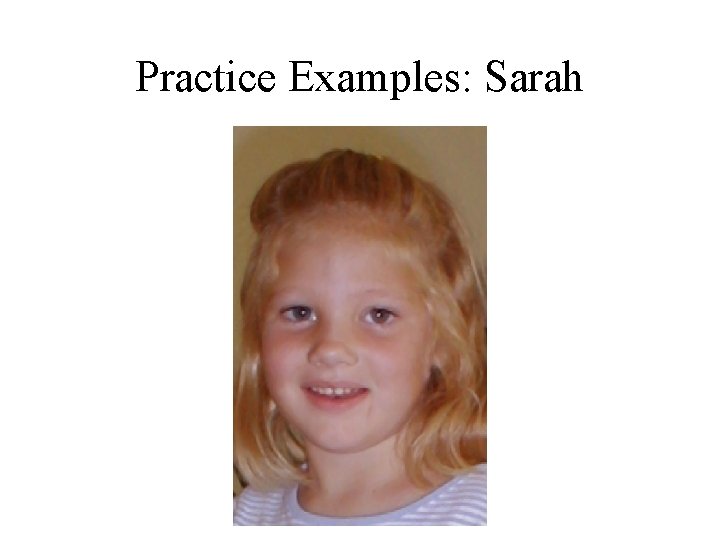
Practice Examples: Sarah
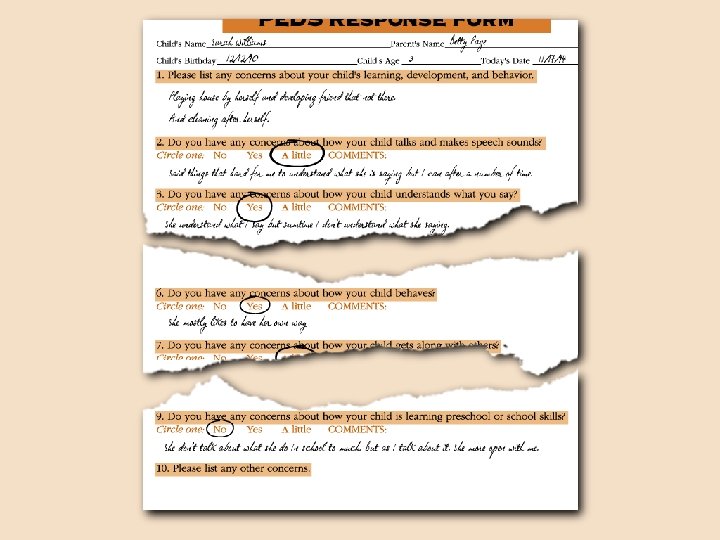
Sarah Response Form
2 3
Practice Examples: Jeremy
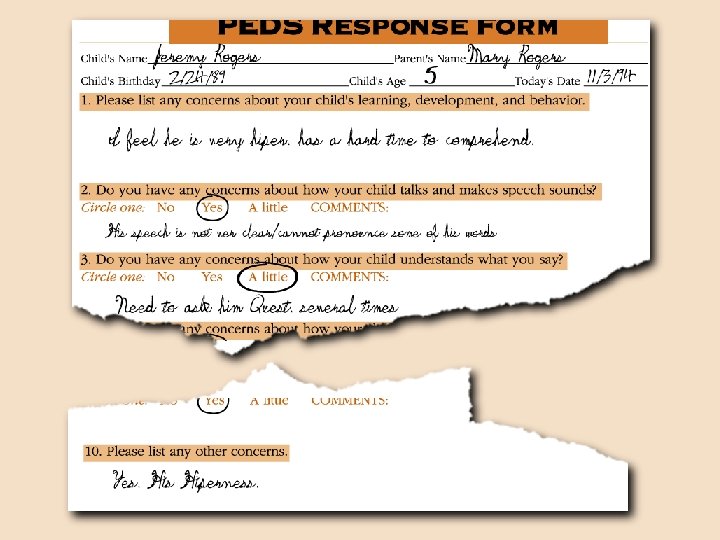
Jeremy response
3 5
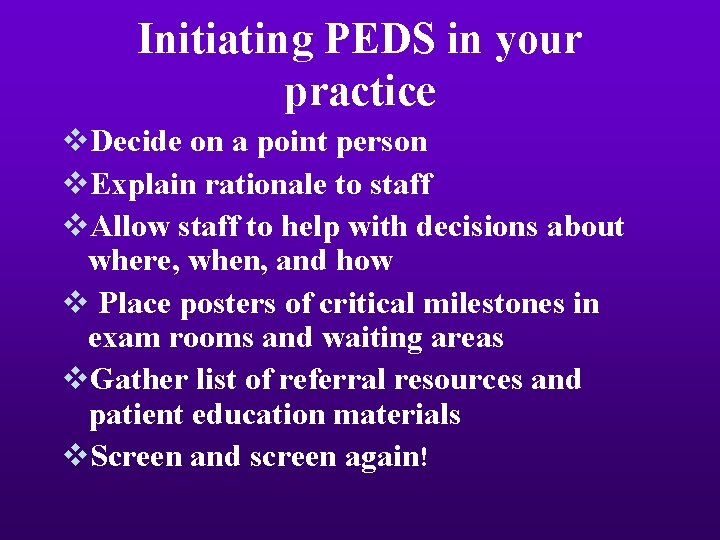
Initiating PEDS in your practice v. Decide on a point person v. Explain rationale to staff v. Allow staff to help with decisions about where, when, and how v Place posters of critical milestones in exam rooms and waiting areas v. Gather list of referral resources and patient education materials v. Screen and screen again!
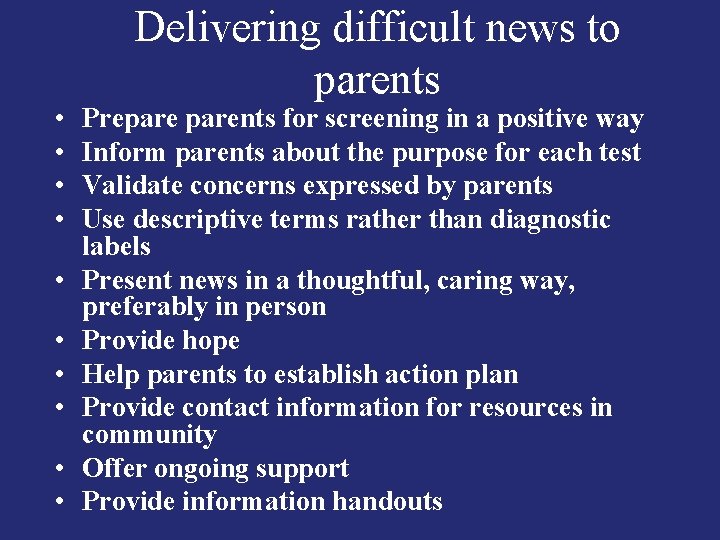
• • • Delivering difficult news to parents Preparents for screening in a positive way Inform parents about the purpose for each test Validate concerns expressed by parents Use descriptive terms rather than diagnostic labels Present news in a thoughtful, caring way, preferably in person Provide hope Help parents to establish action plan Provide contact information for resources in community Offer ongoing support Provide information handouts
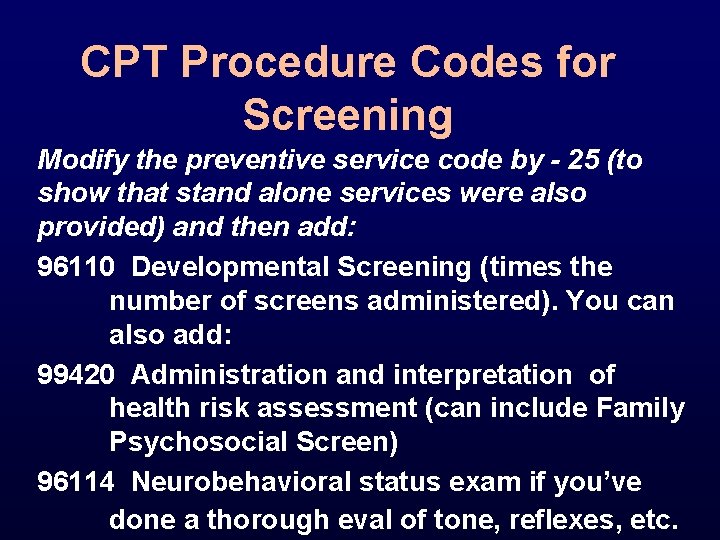
CPT Procedure Codes for Screening Modify the preventive service code by - 25 (to show that stand alone services were also provided) and then add: 96110 Developmental Screening (times the number of screens administered). You can also add: 99420 Administration and interpretation of health risk assessment (can include Family Psychosocial Screen) 96114 Neurobehavioral status exam if you’ve done a thorough eval of tone, reflexes, etc.
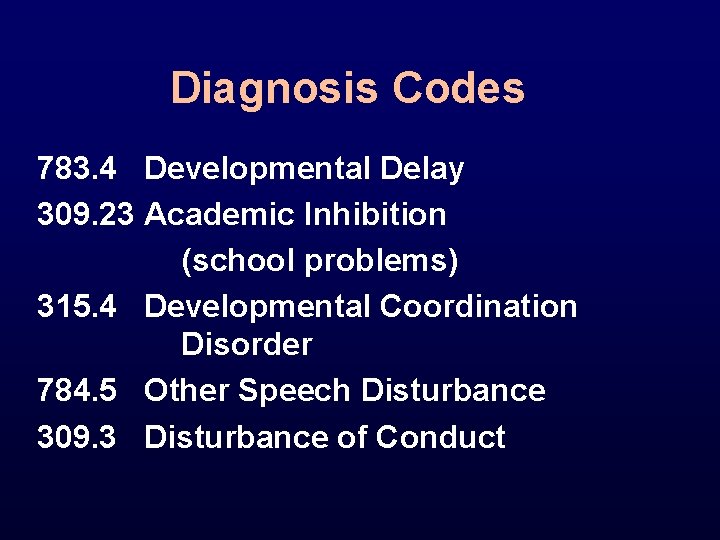
Diagnosis Codes 783. 4 Developmental Delay 309. 23 Academic Inhibition (school problems) 315. 4 Developmental Coordination Disorder 784. 5 Other Speech Disturbance 309. 3 Disturbance of Conduct
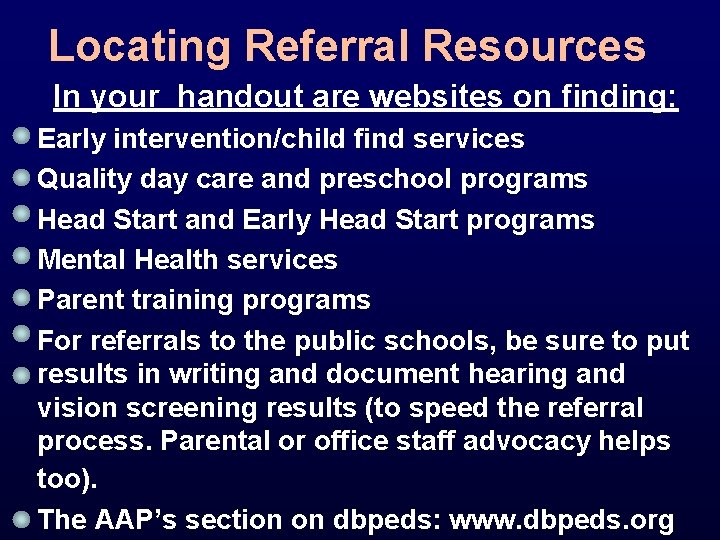
Locating Referral Resources In your handout are websites on finding: Early intervention/child find services Quality day care and preschool programs Head Start and Early Head Start programs Mental Health services Parent training programs For referrals to the public schools, be sure to put results in writing and document hearing and vision screening results (to speed the referral process. Parental or office staff advocacy helps too). The AAP’s section on dbpeds: www. dbpeds. org