
How to address a Problem 1 State the
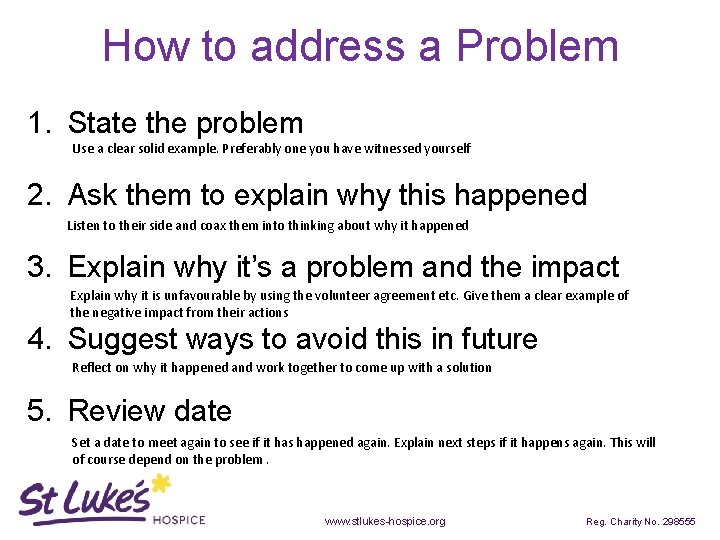
How to address a Problem 1. State the problem Use a clear solid example. Preferably one you have witnessed yourself 2. Ask them to explain why this happened Listen to their side and coax them into thinking about why it happened 3. Explain why it’s a problem and the impact Explain why it is unfavourable by using the volunteer agreement etc. Give them a clear example of the negative impact from their actions 4. Suggest ways to avoid this in future Reflect on why it happened and work together to come up with a solution 5. Review date Set a date to meet again to see if it has happened again. Explain next steps if it happens again. This will of course depend on the problem. www. stlukes-hospice. org Reg. Charity No. 298555

Problem Solving Table Problem/issue Why could this be happening? What could have What can be been done to prevent this? remedy this? Gardening volunteer is continuously speaking to the inpatients and staff about their recent loss of a family member at the hospice. They often get very emotional staff feel they need support Volunteer has recently been bereaved and they were not ready to be at the hospice. Ensuring that volunteers are not recruited if they have been recently bereaved (see policy) Also coming in on days they are not scheduled for. Volunteer was allowed to volunteer although they were recently bereaved (Policy ignored) Volunteer did not disclose they recent loss on application or interview. Depending on the reason, the policy should be explained to them and steps be taken to remedy the situation e. g. Request the volunteer accesses bereavement support and continue their volunteering after a period of time.
- Slides: 2