
How the adoption of the NRich Strip has
- Slides: 17
How the adoption of the N-Rich Strip has changed N Management Brian Arnall Precision Nutrient Management Oklahoma State University
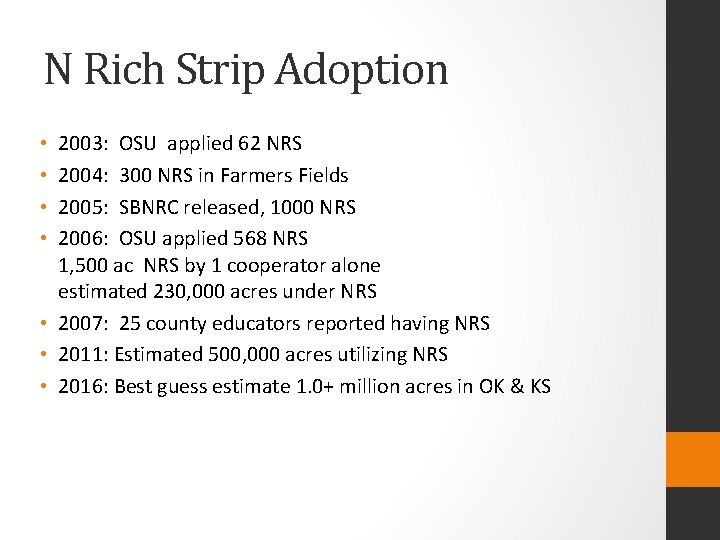
N Rich Strip Adoption 2003: OSU applied 62 NRS 2004: 300 NRS in Farmers Fields 2005: SBNRC released, 1000 NRS 2006: OSU applied 568 NRS 1, 500 ac NRS by 1 cooperator alone estimated 230, 000 acres under NRS • 2007: 25 county educators reported having NRS • 2011: Estimated 500, 000 acres utilizing NRS • 2016: Best guess estimate 1. 0+ million acres in OK & KS • •
Nitrogen Rich Strip Pamplet • We commonly recommend that farmers apply ½ of the anticipated total N needed at planting and wait to make the decision on added N until the middle of the season. In general for winter wheat, if no differences can be visually detected prior to jointing (Feekes 6, Figure 4), it is unlikely that added N will result in increased yields. Alternatively if differences are large, there is a high demand for added N. When no differences exist between the N Rich Strip and the farmer practice it means one of two things. • Wait until early February or March to sense yield potential and apply top-dress N for winter wheat. Wait until the 8 or 10 leaf stage in corn to sense and apply fertilizer.
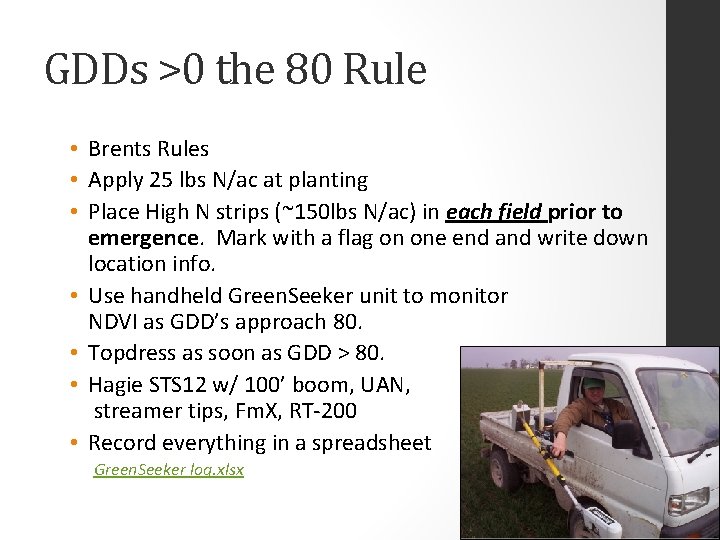
GDDs >0 the 80 Rule • Brents Rules • Apply 25 lbs N/ac at planting • Place High N strips (~150 lbs N/ac) in each field prior to emergence. Mark with a flag on one end and write down location info. • Use handheld Green. Seeker unit to monitor NDVI as GDD’s approach 80. • Topdress as soon as GDD > 80. • Hagie STS 12 w/ 100’ boom, UAN, streamer tips, Fm. X, RT-200 • Record everything in a spreadsheet Green. Seeker log. xlsx
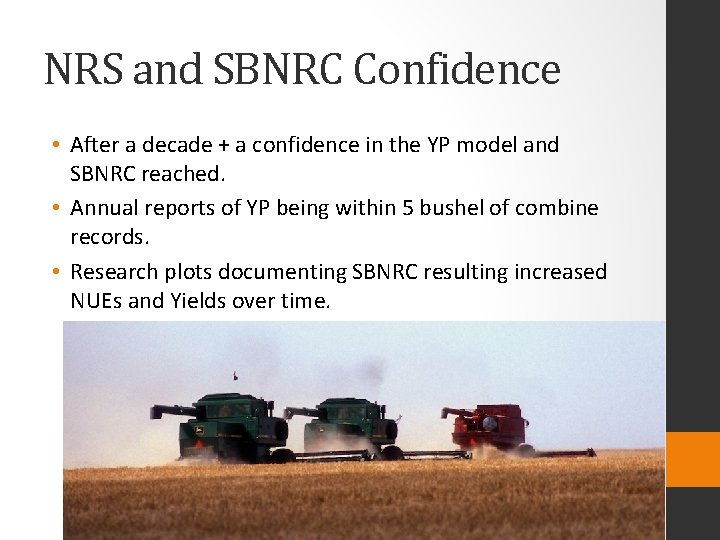
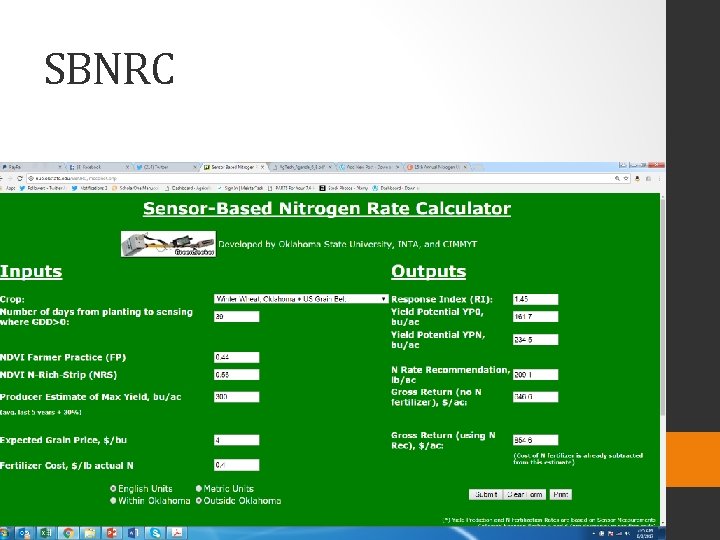
NRS and SBNRC Confidence • After a decade + a confidence in the YP model and SBNRC reached. • Annual reports of YP being within 5 bushel of combine records. • Research plots documenting SBNRC resulting increased NUEs and Yields over time.
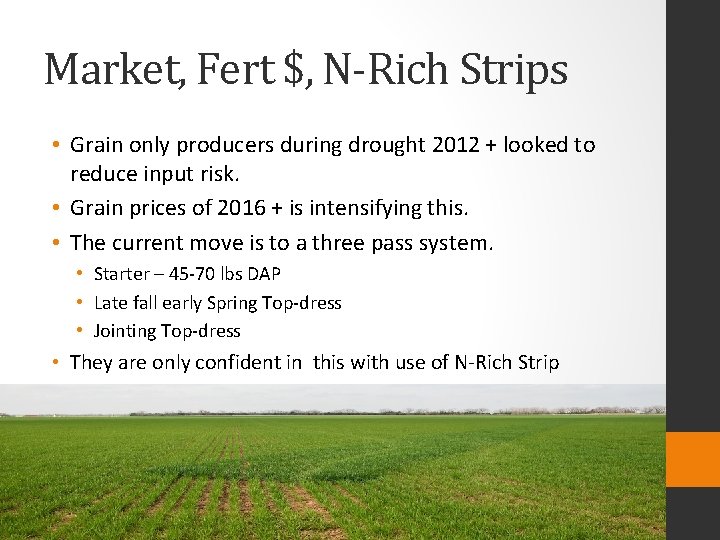
Market, Fert $, N-Rich Strips • Grain only producers during drought 2012 + looked to reduce input risk. • Grain prices of 2016 + is intensifying this. • The current move is to a three pass system. • Starter – 45 -70 lbs DAP • Late fall early Spring Top-dress • Jointing Top-dress • They are only confident in this with use of N-Rich Strip
Case Studies • • Four Producers and one Consultant Been working closely with for past six plus years. After the 2017 harvest we have looked at inputs and yields. Grain yields running 50 to 90 bpa. Some farms averaging 65+ Since Adoption of SBNRC and 3 pass system Averaging 1. 3 -1. 5 lbs N per bushel.
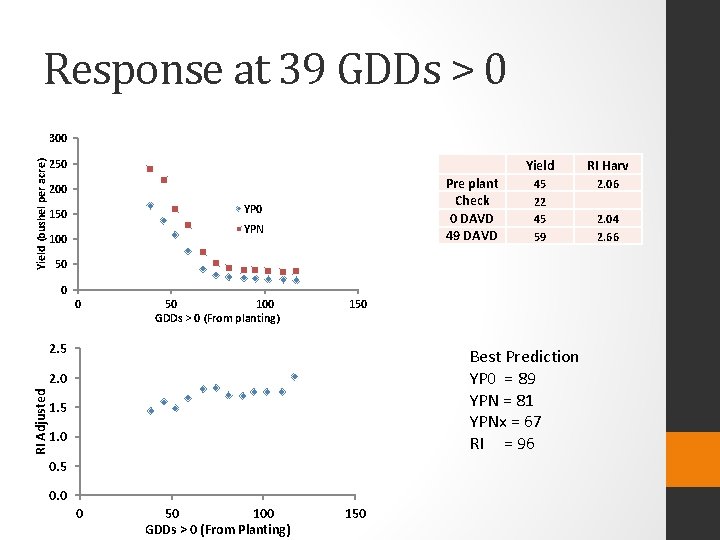
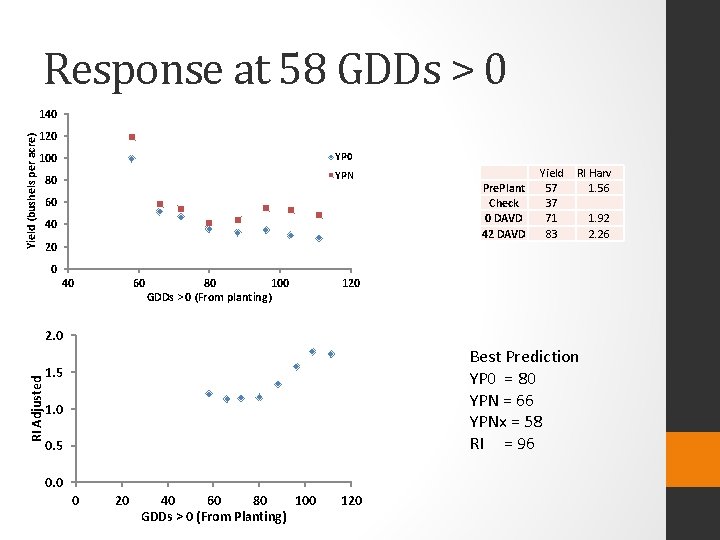
Our Challenge. • The YP model and SBNRC built on a 50/50 N management system • N recommendations being made near stem elongation 80+ GDDs>0 • Because of the shift in management over the past three seasons more and more N-Rich Strips are showing up earlier. • 35+ days, November- December.
Response at 39 GDDs > 0 Yield (bushel per acre) 300 250 Pre plant Check 0 DAVD 49 DAVD 200 YP 0 150 YPN 100 Yield RI Harv 45 22 45 59 2. 06 50 0 0 50 100 GDDs > 0 (From planting) 150 2. 5 Best Prediction YP 0 = 89 YPN = 81 YPNx = 67 RI = 96 RI Adjusted 2. 0 1. 5 1. 0 0. 5 0. 0 0 50 100 GDDs > 0 (From Planting) 150 2. 04 2. 66
Response at 58 GDDs > 0 Yield (bushels per acre) 140 120 100 YP 0 80 YPN 60 40 20 Pre. Plant Check 0 DAVD 42 DAVD Yield 57 37 71 83 RI Harv 1. 56 0 40 60 80 100 GDDs > 0 (From planting) 120 RI Adjusted 2. 0 Best Prediction YP 0 = 80 YPN = 66 YPNx = 58 RI = 96 1. 5 1. 0 0. 5 0. 0 0 20 40 60 80 100 GDDs > 0 (From Planting) 120 1. 92 2. 26
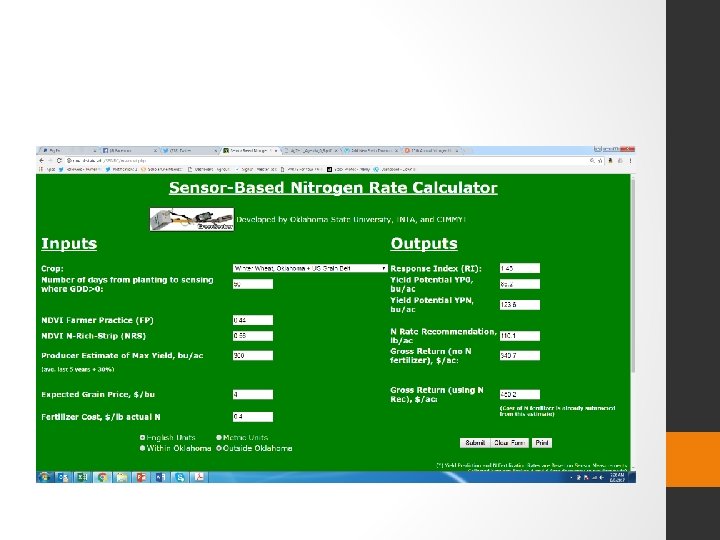
SBNRC
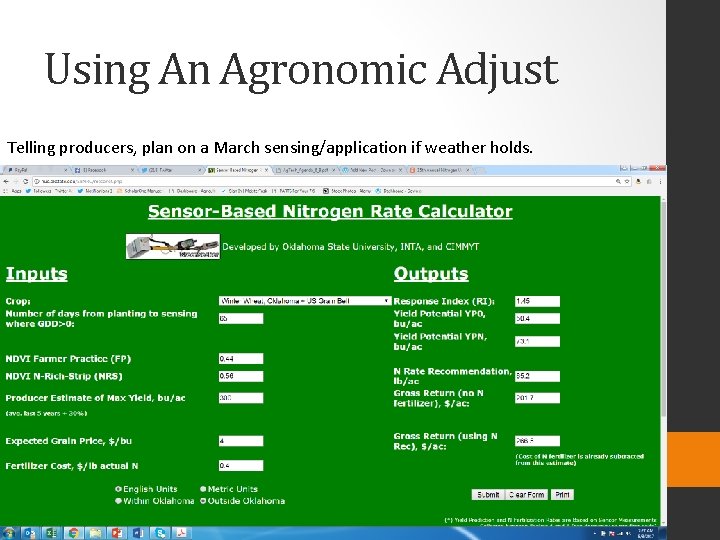
Using An Agronomic Adjust Telling producers, plan on a March sensing/application if weather holds.
Brian Arnall 373 Ag Hall 405 -744 -1722 b. arnall@okstate. edu Presentation available @ www. npk. okstate. edu Twitter: @OSU_NPK www. Facebook/OSUNPK You. Tube Channel: OSUNPK Blog: OSUNPK. com www. Aglandlease. info
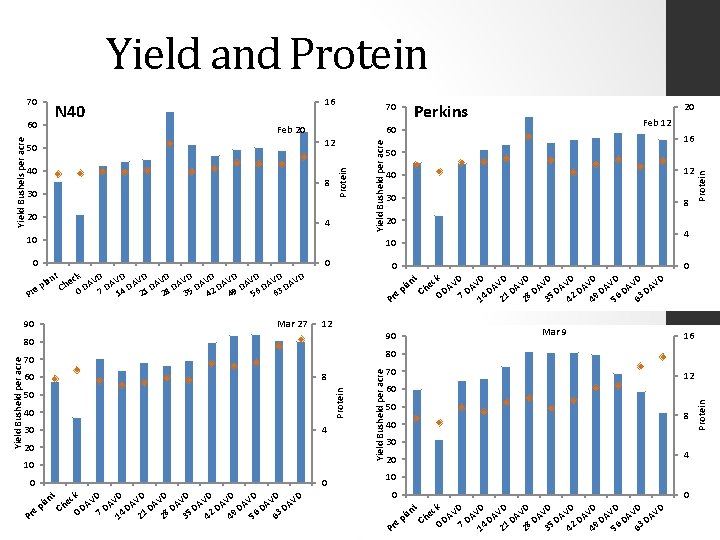
Yield and Protein 50 40 20 12 4 10 0 16 50 40 12 30 8 20 4 0 nt k D D D D D la Chec DAV DAV DAV p e 0 7 4 1 8 5 2 9 6 3 r 1 2 2 3 4 4 5 6 P Mar 27 90 0 t k D D D D D lan hec AV AV AV p D D D D D C e 7 14 21 28 35 42 49 56 63 0 Pr 12 90 80 Mar 9 16 80 8 50 40 30 4 20 10 0 0 nt la ep ck VD VD VD A A A A A 0 D 7 D 14 D 21 D 28 D 35 D 42 D 49 D 56 D 63 D e Ch 70 12 60 50 40 8 30 20 4 10 0 t k D D D D D lan hec AV AV AV p D D D D D C e 0 7 14 21 28 35 42 49 56 63 Pr 0 Protein 60 Yield Busheld per acre 70 Protein Yield Busheld per acre Feb 12 10 0 Pr 20 60 8 30 Perkins Protein Feb 20 70 Yield Busheld per acre 60 Yield Bushels per acre 16 N 40 Protein 70
N timing Studies • Looking at delaying of N app after N-Rich strip visual Diff • One aspect, All 90 lbs N as NH 4 NO 3, N-Rich ran out. • Did this so we could evaluate timing of app in the study.
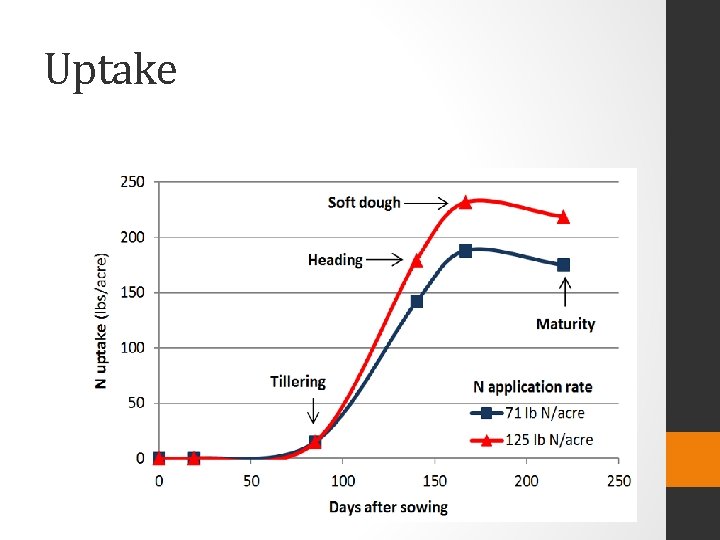
Uptake