
HOW TECHNOLOGY REMOVES LEARNING BARRIERS IN ONLINE LEARNING
HOW TECHNOLOGY REMOVES LEARNING BARRIERS IN ONLINE LEARNING MARK DOZE, M. ED. MDOZE@MONTGOMERYCOLLEGE. EDU
TOPICS OF DISCUSSION LEARNING STYLES TECHNOLOGICAL APPROACH TECHNOLOGICAL RESOURCES UNDERSTANDING UNIVERSAL DESIGN FOR LEARNING (UDL) APPLYING UDL WITH CONTINUING EDUCATION CURRICULUM PARTNERSHIP BETWEEN UDL AND TECHNOLOGY
LEARNING STYLES • Learning Styles- Can be understood simply as the verity of techniques preferred by students to help them perceive and process information and interact with the learning environment (Moussa, 2014). • Types of Different Learners 1. Theorist- Learns by analyzing and compiling facts. This type of learner learns best by models, concepts, and facts. These type of students need to understand the “WHY” 2. Pragmatist- Learns by practicing and application. Real world scenarios and learning is best for this type of student. 3. Activist- Learns best by doing 4. Reflector – Learns best by having everything presented before they activate
TECHNOLOGICAL APPROACH • Technology – The application of scientific knowledge for practical purposes. • Technology is only beneficial if you have determined the “why” 1. How will implementing technology enhance the learning of students? 2. What skills will students learn from using technology? 3. Will students need prerequisite skills in order to use the technology? 4. Will it help to eliminate the learning barriers of some or all students in class? • Technology may not be beneficial for all learners, lessons, or help to accomplish the desired outcome of the lesson
TECHNOLOGICAL FRAMEWORK • P- Technology must be useful and available to the people that are using it • O- The purpose of using technology must be objective and serve a purpose • S- A clear strategy that is essential to the overall use • T- Is the technology appropriate for the lesson and people expected to use it
TECHNOLOGICAL RESOURCES • Identifying technological resources that will help enhance instruction is critical when planning. Although there are many resources to use, not all resources are the best for the learning styles and needs of students. • Khan Academy – Educational videos • Facebook Groups – Opportunities to practice writing skills and techniques • Pinterest- Students have the opportunity to create vision boards or presentations using pictures and practice oratorical skills • Survey Monkey- Students have the opportunity to use this app to respond to questions which removes the barrier of fear or anxiety some students may have about learning new content • Voice Recorders- Allows students to hear and remove the barrier of reading difficulty
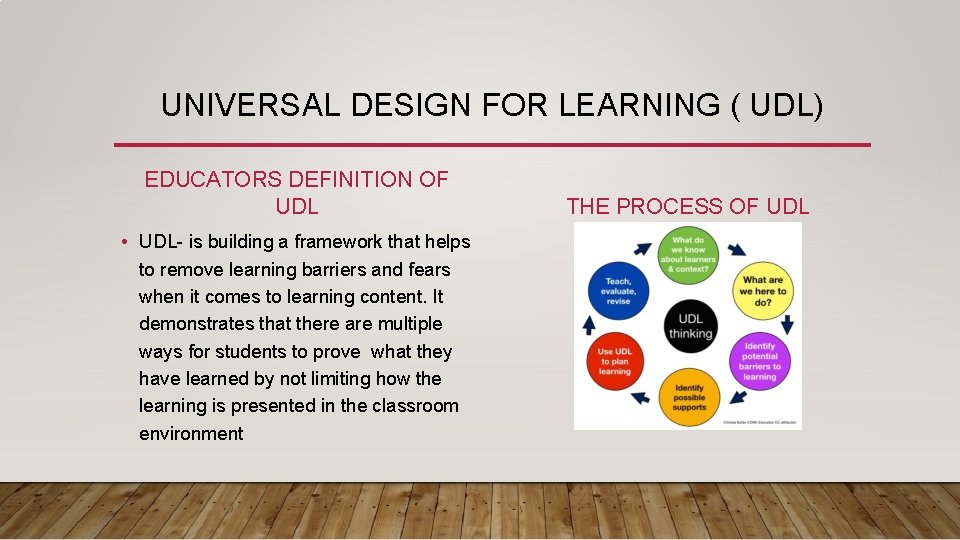
UNIVERSAL DESIGN FOR LEARNING ( UDL) EDUCATORS DEFINITION OF UDL • UDL- is building a framework that helps to remove learning barriers and fears when it comes to learning content. It demonstrates that there are multiple ways for students to prove what they have learned by not limiting how the learning is presented in the classroom environment THE PROCESS OF UDL
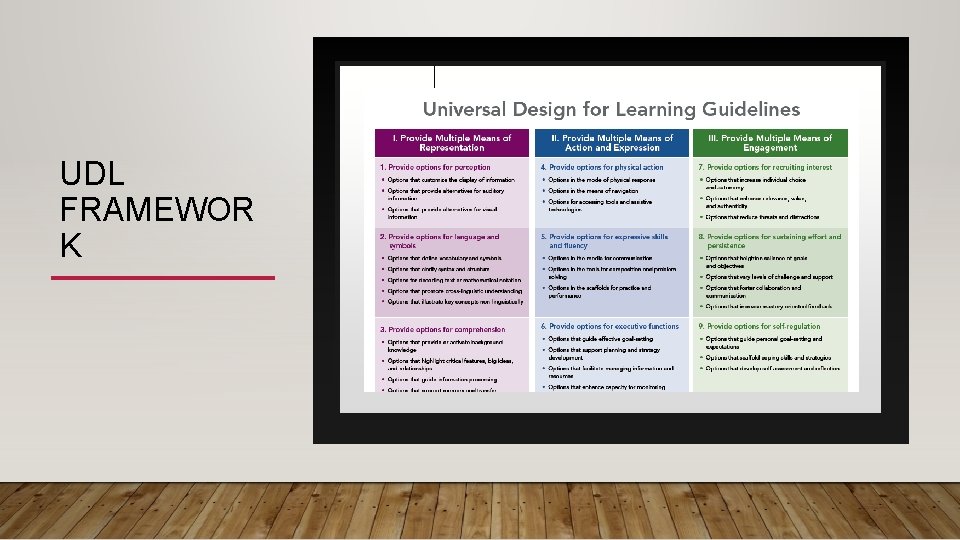
UDL FRAMEWOR K
UDL- TAKING THE LIMITS OFF
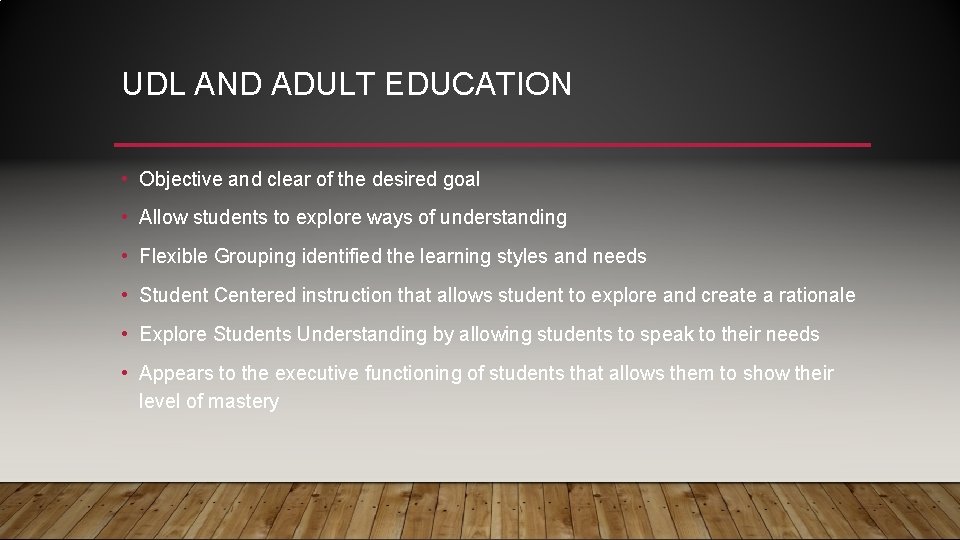
UDL AND ADULT EDUCATION • Objective and clear of the desired goal • Allow students to explore ways of understanding • Flexible Grouping identified the learning styles and needs • Student Centered instruction that allows student to explore and create a rationale • Explore Students Understanding by allowing students to speak to their needs • Appears to the executive functioning of students that allows them to show their level of mastery
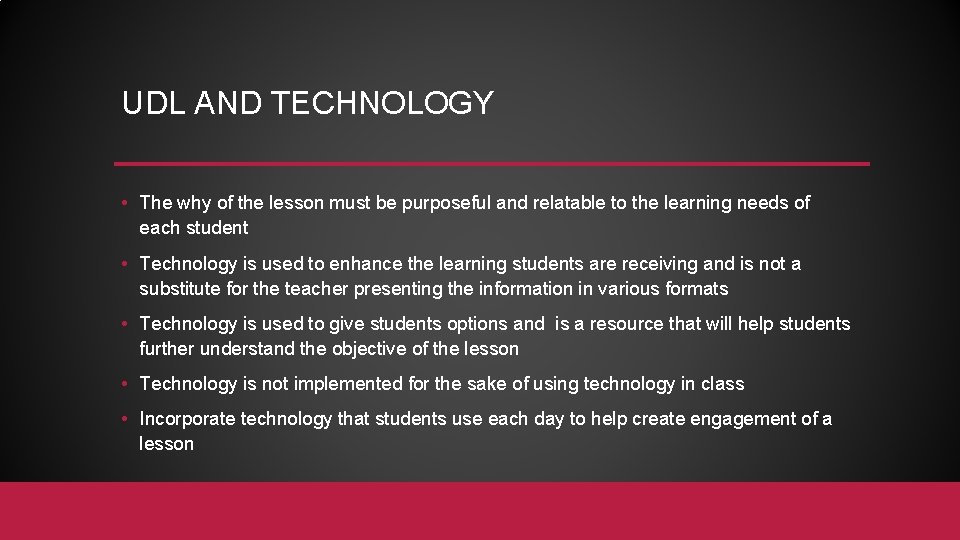
UDL AND TECHNOLOGY • The why of the lesson must be purposeful and relatable to the learning needs of each student • Technology is used to enhance the learning students are receiving and is not a substitute for the teacher presenting the information in various formats • Technology is used to give students options and is a resource that will help students further understand the objective of the lesson • Technology is not implemented for the sake of using technology in class • Incorporate technology that students use each day to help create engagement of a lesson
REFERENCES • Integrating Technology in the Adult Education Classroom. https: //courses. lincs. ed. gov/mod/book/view. php? id=282&chapterid=8 • Moussa, N. M. (2014). The importance of learning styles in education. Institute for Learning Styles Journal, 1, 19 -27.
- Slides: 12