
How species interact 6 3 Species interaction Five
- Slides: 8
How species interact: 6 -3 Species interaction
. Five basic species interactions n n n competition, predation, parasitism, mutualism commensalism.
Competition n n Competition between species for food, sunlight, water, soil, space, nest sites, etc. is interspecific competition. With intense competition for limited resources, one species must migrate; shift its feeding habits/behavior or fact extinction.
Competition n As humans take more and more space, other species are compromised. Over a long time, species evolve more specialized traits that allow them to use shared resources at different times or in different ways or in different places; this is termed resource partitioning. An example is that of insect-eating warblers in Maine forests that eat insects in specific parts of a spruce tree. Owls hunt at night; hawks hunt during the day.
Predator-prey relationships n n Individually prey is harmed, but predation can help the population by eliminating the sick, weak and old. Carnivores use pursuit of prey or ambush to capture prey. Some predators use camouflage and others use chemicals (venom) to capture prey Prey species escape predators in a number of different ways such as swift movement, protective shells, camouflage or use of chemicals to repel or poison.
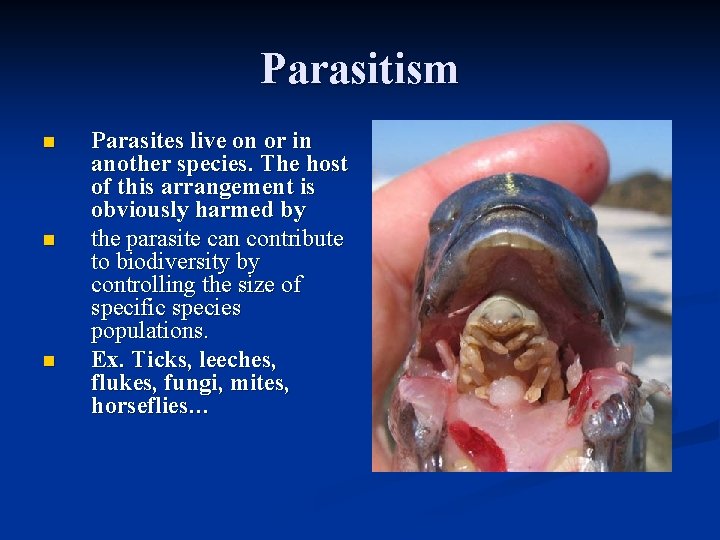
Parasitism n n n Parasites live on or in another species. The host of this arrangement is obviously harmed by the parasite can contribute to biodiversity by controlling the size of specific species populations. Ex. Ticks, leeches, flukes, fungi, mites, horseflies…
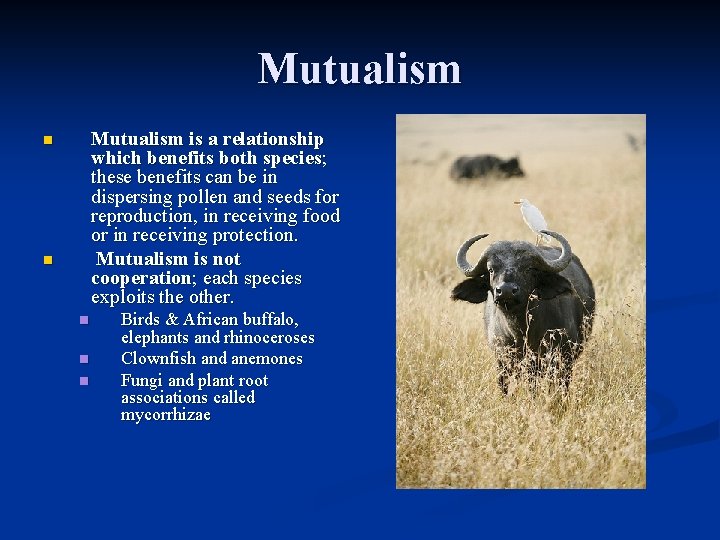
Mutualism is a relationship which benefits both species; these benefits can be in dispersing pollen and seeds for reproduction, in receiving food or in receiving protection. Mutualism is not cooperation; each species exploits the other. n n n Birds & African buffalo, elephants and rhinoceroses Clownfish and anemones Fungi and plant root associations called mycorrhizae
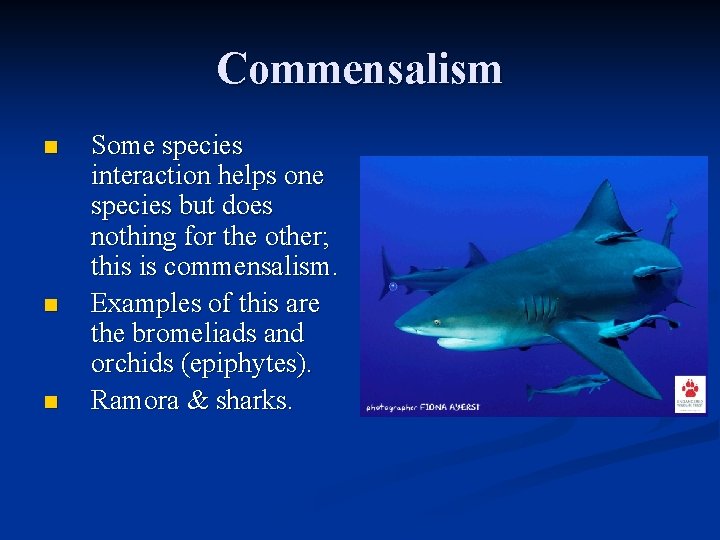
Commensalism n n n Some species interaction helps one species but does nothing for the other; this is commensalism. Examples of this are the bromeliads and orchids (epiphytes). Ramora & sharks.