
How Soil Forms A look at what soil
- Slides: 14
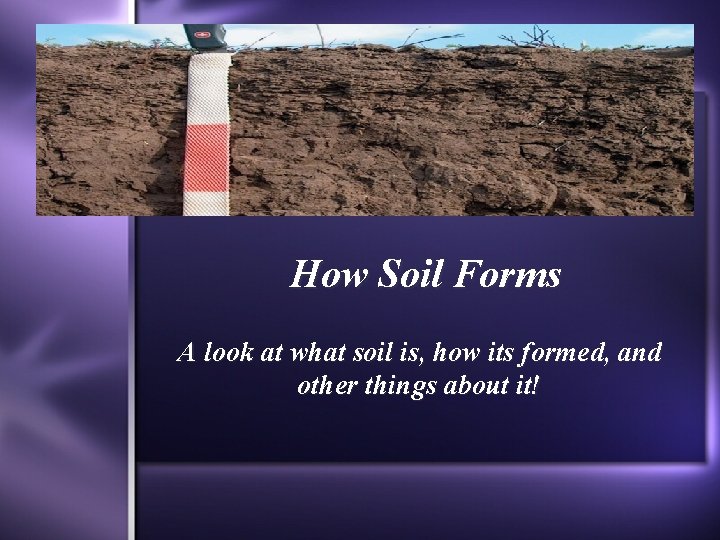
How Soil Forms A look at what soil is, how its formed, and other things about it!
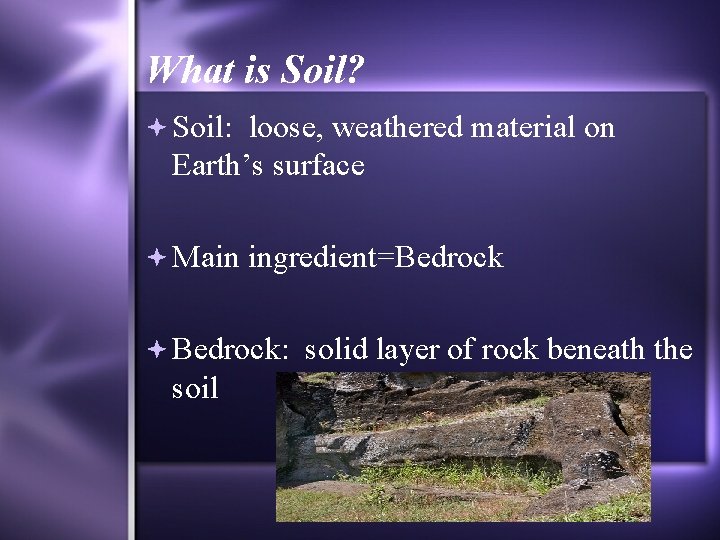
What is Soil? Soil: loose, weathered material on Earth’s surface Main ingredient=Bedrock Bedrock: solid layer of rock beneath the soil
Soil Composition Soil is a mixture of rock particles, minerals, decayed organic materials, water, and air Mixture of weathered rock particles made up of sand, silt, and clay Decayed organic material in soil is called hummus Humus helps create spaces in soil for the air and water the plants must have and contains nutrients
Soil Composition Fertility: measure of how well the soil supports plant growth Soil rich in hummus has high fertility Sandy soil contains little humus and has low fertility
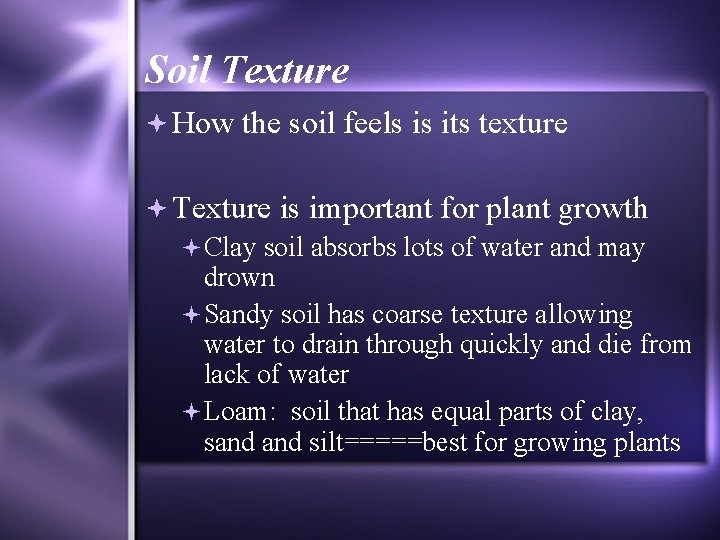
Soil Texture How the soil feels is its texture Texture is important for plant growth Clay soil absorbs lots of water and may drown Sandy soil has coarse texture allowing water to drain through quickly and die from lack of water Loam: soil that has equal parts of clay, sand silt=====best for growing plants
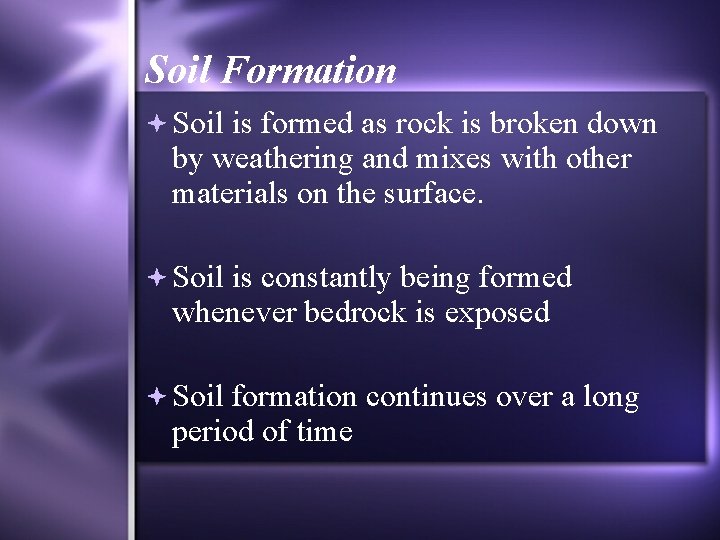
Soil Formation Soil is formed as rock is broken down by weathering and mixes with other materials on the surface. Soil is constantly being formed whenever bedrock is exposed Soil formation continues over a long period of time
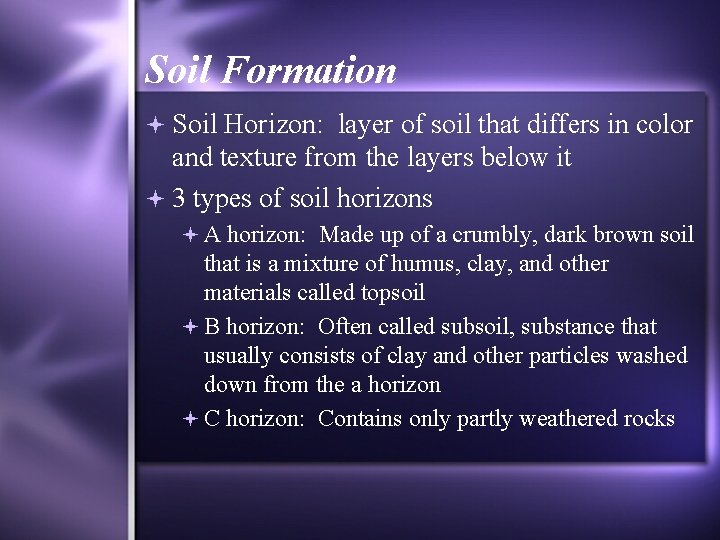
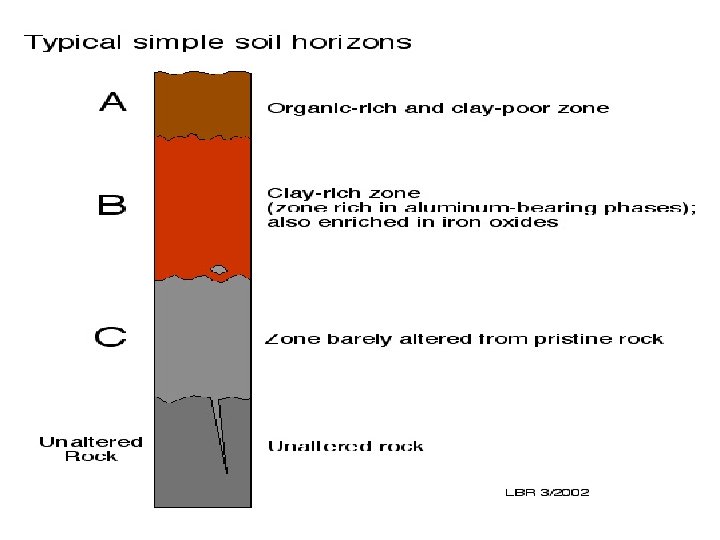
Soil Formation Soil Horizon: layer of soil that differs in color and texture from the layers below it 3 types of soil horizons A horizon: Made up of a crumbly, dark brown soil that is a mixture of humus, clay, and other materials called topsoil B horizon: Often called subsoil, substance that usually consists of clay and other particles washed down from the a horizon C horizon: Contains only partly weathered rocks
Soil Types Scientists classify the different types of soil into major groups based on climate, plants, and soil composition Major soil types of North America: Tundra Mountain Desert Prairie Forest Tropical
Living Organisms in Soil Plants contribute most of the organic remains that form humus by shedding their leaves As plants shed their leaves, they form a loose layer called litter Humus forms in a process called decomposition Decomposers: Organisms that break the remains of dead organisms into smaller pieces and digest them with chemicals Animals also mix the soil with their movements----Ex) Earthworms
Soil Conservation Natural resource is anything in the environment that humans use Soil is one of Earth’s most valuable natural resources because everything that lives on land, including humans, depends directly or indirectly on soil Plants-live and grow Humans and animals for food
Value of Soil Fertile soil is important Less than 1/8 th of the land on Earth has soils that are well suited for farming Takes a long time to form
Soil Damage and Loss Value of soil is reduced when soil loses its fertility and when topsoil is lost due to erosion Long drought can cause a Dust Bowl Area of the Great Plains where wind erosion caused soil loss during 1930 s
Soil Conservation Soil conservation is the management of soil to prevent its destruction Soil can be conserved through contour plowing, conservation plowing, and crop rotation Contour plowing: farmers plow their fields along the curves of a slope Conservation Plowing: farmers disturb the soil and its plant cover as little as possible Crop Rotation: farmers plant different crops in a field every year