
How science works The pendulum Galileo Galilei 1564
- Slides: 10
How science works The pendulum
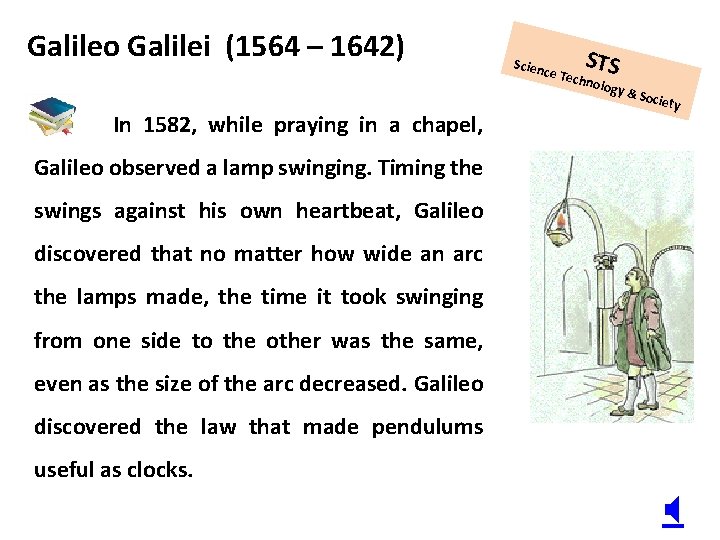
Galileo Galilei (1564 – 1642) In 1582, while praying in a chapel, Scien ce Te STS chnol ogy & Socie ty Galileo observed a lamp swinging. Timing the swings against his own heartbeat, Galileo discovered that no matter how wide an arc the lamps made, the time it took swinging from one side to the other was the same, even as the size of the arc decreased. Galileo discovered the law that made pendulums useful as clocks.
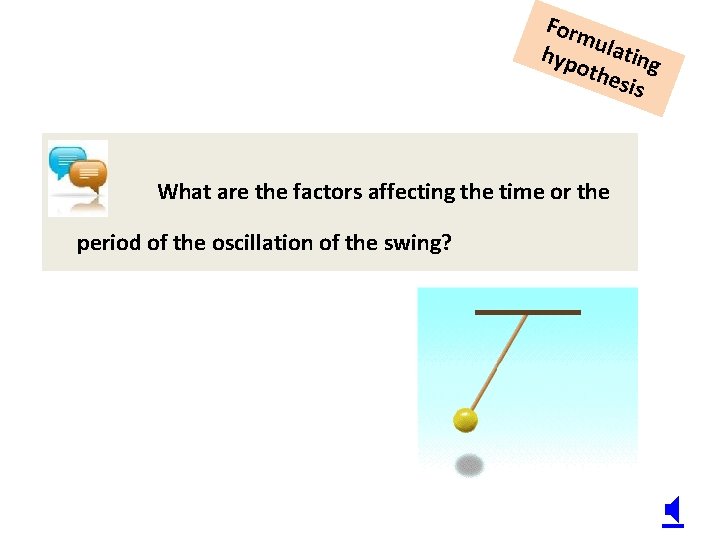
Form hyp ulating othe sis What are the factors affecting the time or the period of the oscillation of the swing?
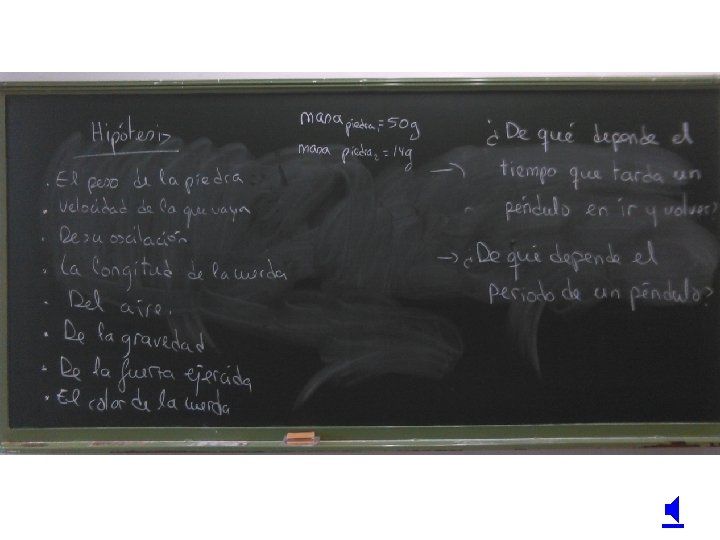
Form hyp ulating othe sis The period of the pendulum is: • dependent on /independent of the colour of the ball • dependent on/independent of the amplitude of the swing • dependent on/independent of the mass of the ball • dependent on/independent of the length of the pendulum • dependent of. . .
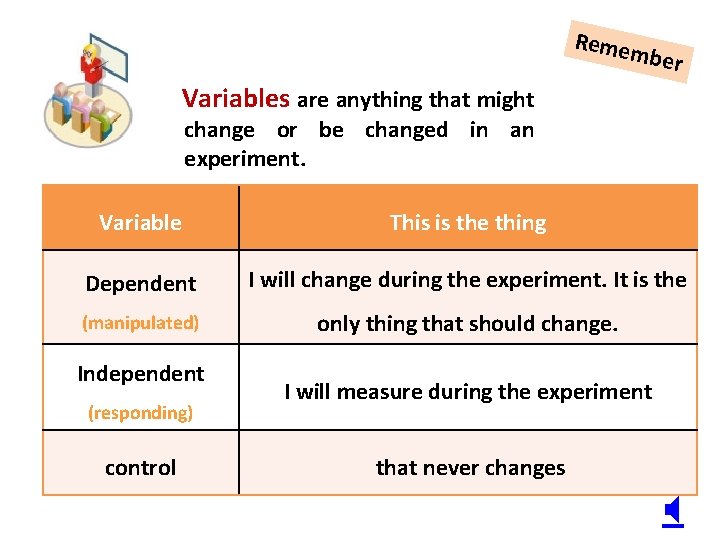
Reme mber Variables are anything that might change or be changed in an experiment. Variable This is the thing Dependent I will change during the experiment. It is the (manipulated) only thing that should change. Independent (responding) control I will measure during the experiment that never changes
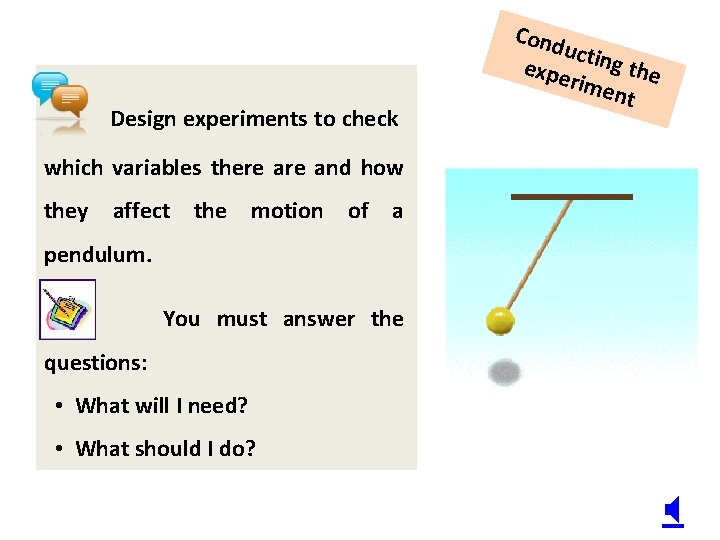
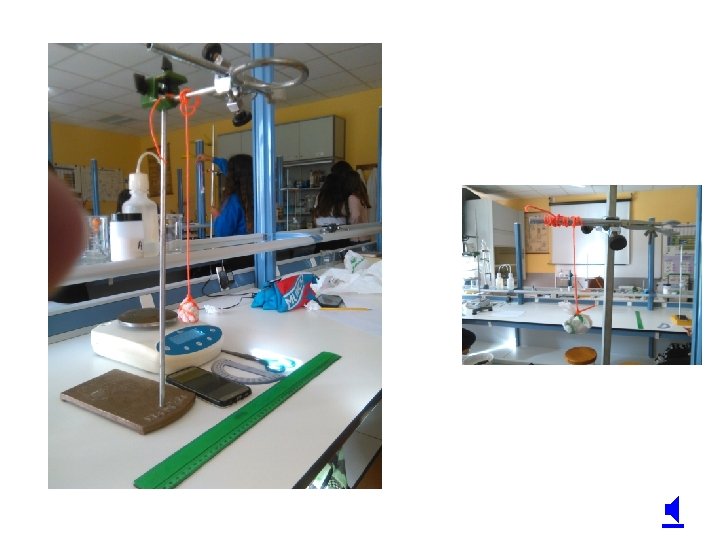
Design experiments to check Cond uctin g the expe rime nt which variables there and how they affect the motion of a pendulum. You must answer the questions: • What will I need? • What should I do?
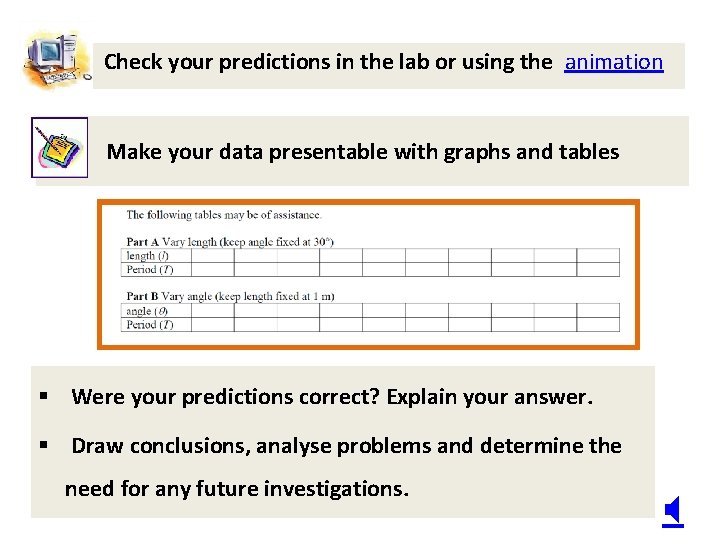
Check your predictions in the lab or using the animation Make your data presentable with graphs and tables § Were your predictions correct? Explain your answer. § Draw conclusions, analyse problems and determine the need for any future investigations.
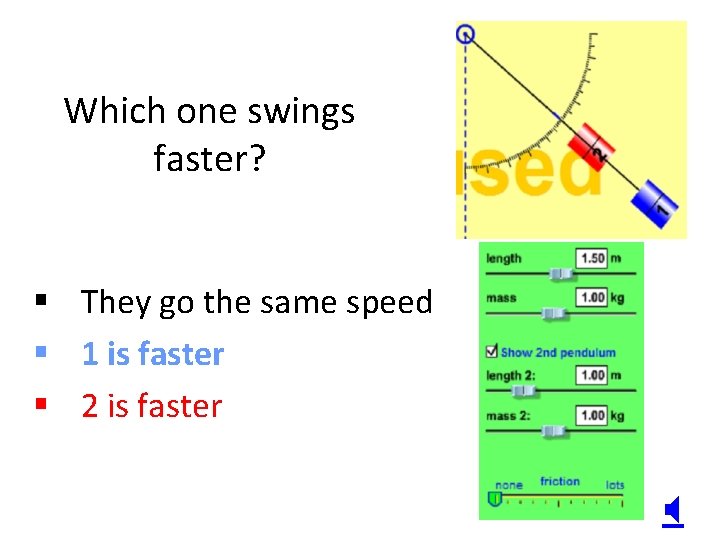
Which one swings faster? § They go the same speed § 1 is faster § 2 is faster