
How REMARKABLE is the Earth Some amazing Geology
How REMARKABLE is the Earth? Some amazing Geology facts

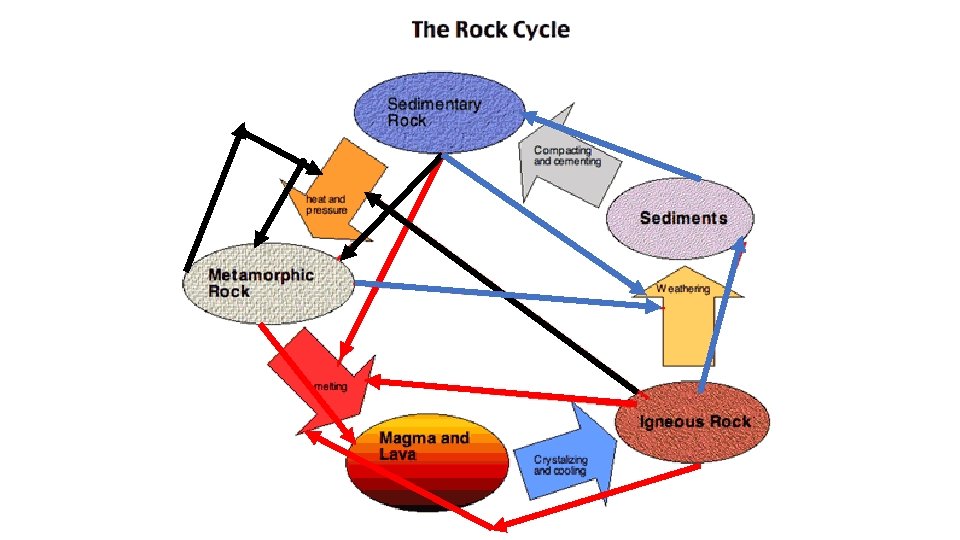
It’s a Cycle We can START and END ANY WHERE!!!!
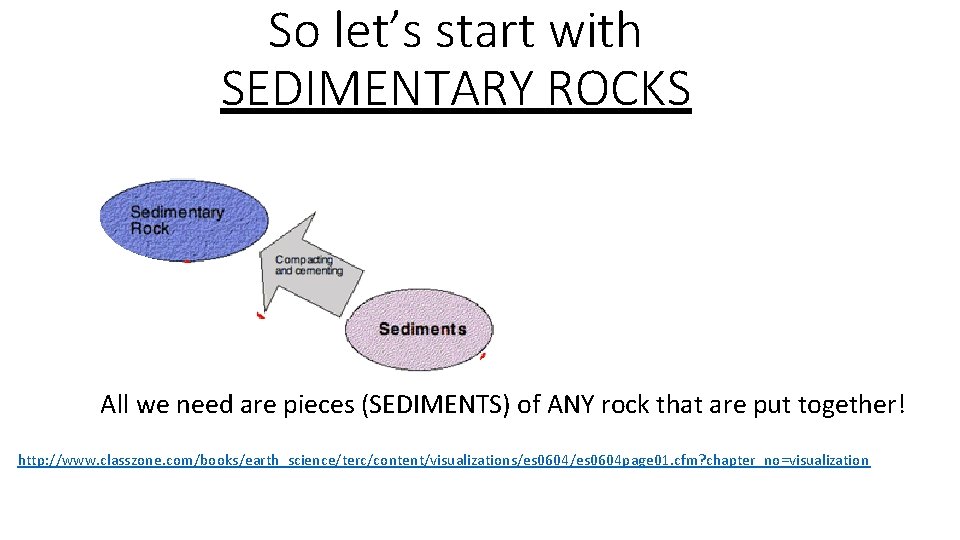
So let’s start with SEDIMENTARY ROCKS All we need are pieces (SEDIMENTS) of ANY rock that are put together! http: //www. classzone. com/books/earth_science/terc/content/visualizations/es 0604 page 01. cfm? chapter_no=visualization
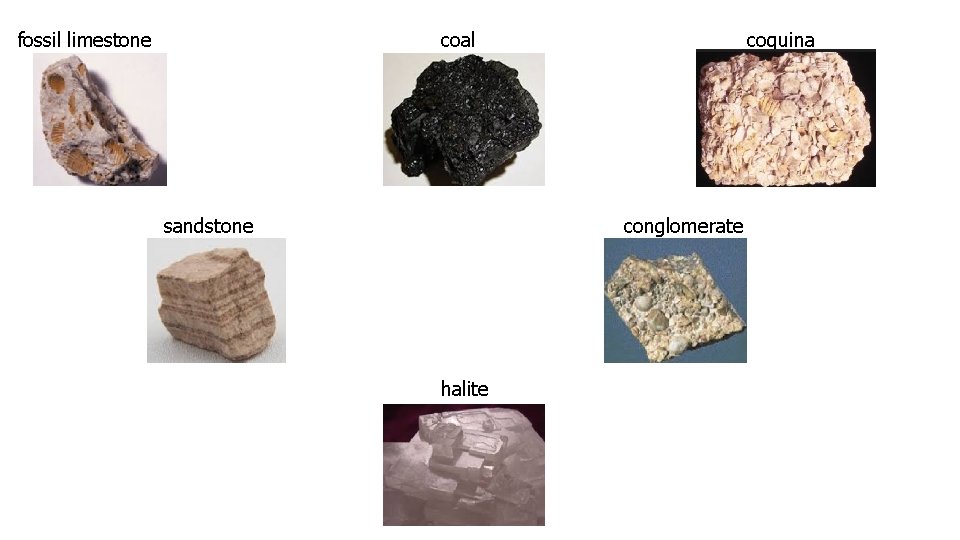
fossil limestone coal sandstone coquina conglomerate halite
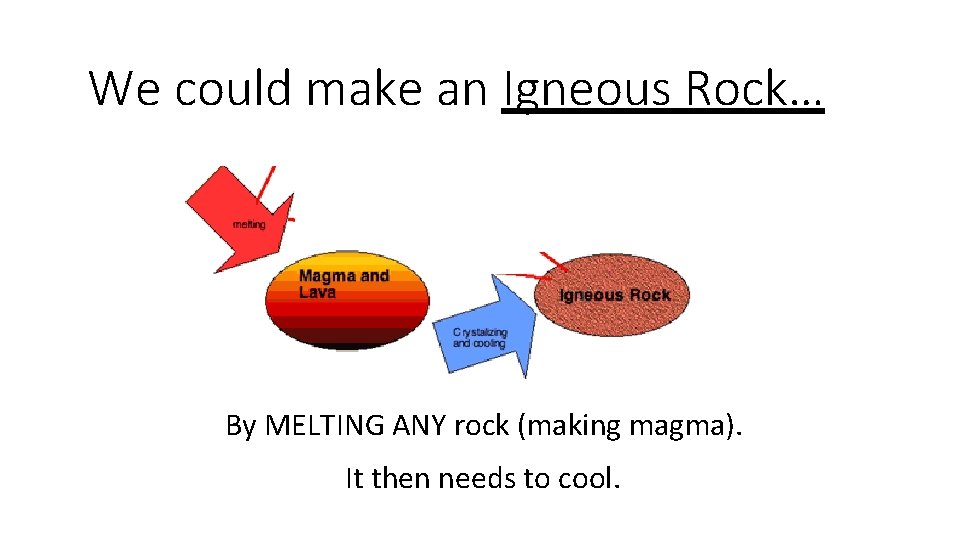
We could make an Igneous Rock… By MELTING ANY rock (making magma). It then needs to cool.
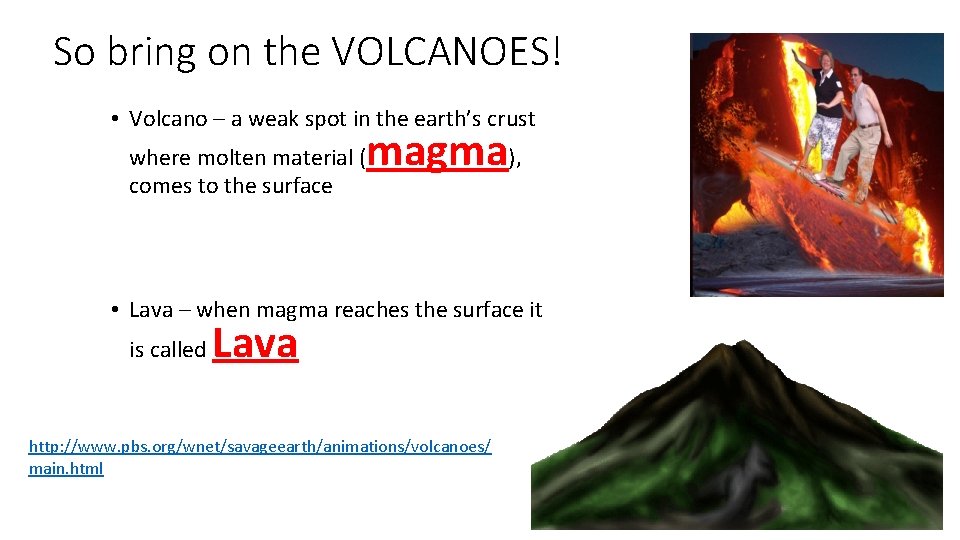
So bring on the VOLCANOES! • Volcano – a weak spot in the earth’s crust where molten material ( comes to the surface magma), • Lava – when magma reaches the surface it is called Lava http: //www. pbs. org/wnet/savageearth/animations/volcanoes/ main. html
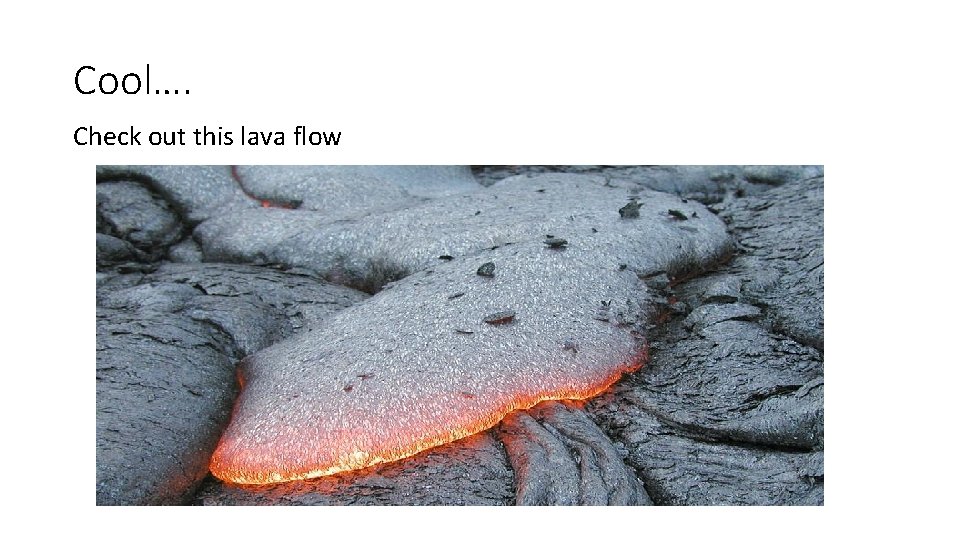
Cool…. Check out this lava flow
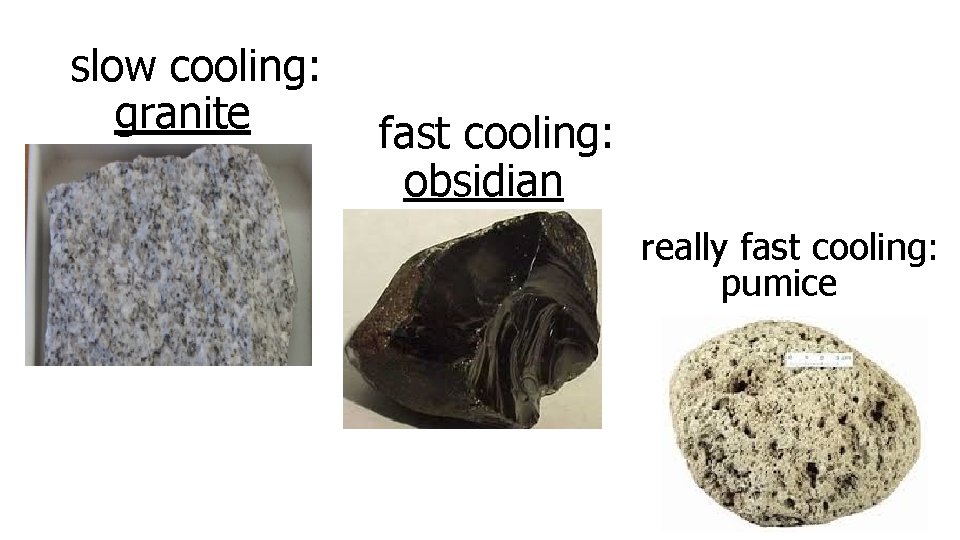
slow cooling: granite fast cooling: obsidian really fast cooling: pumice
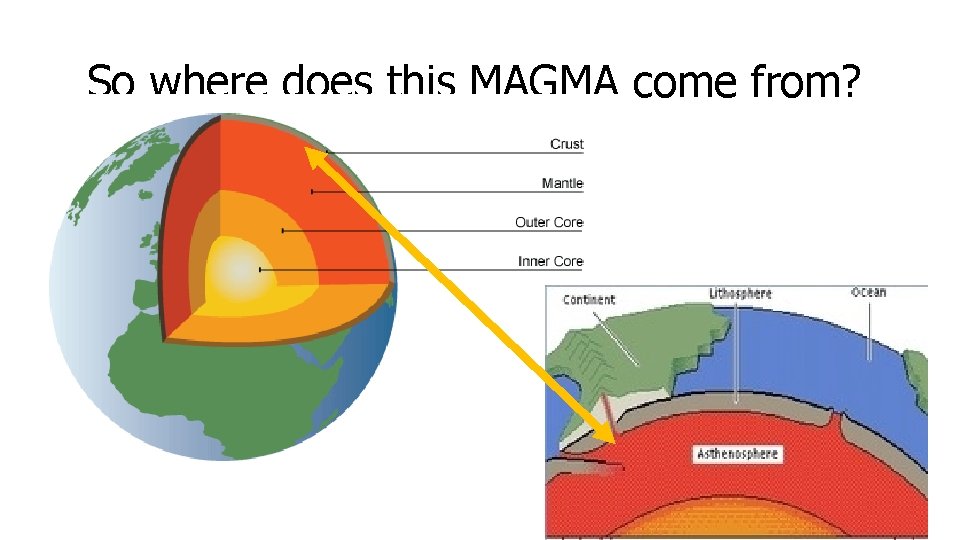
So where does this MAGMA come from?
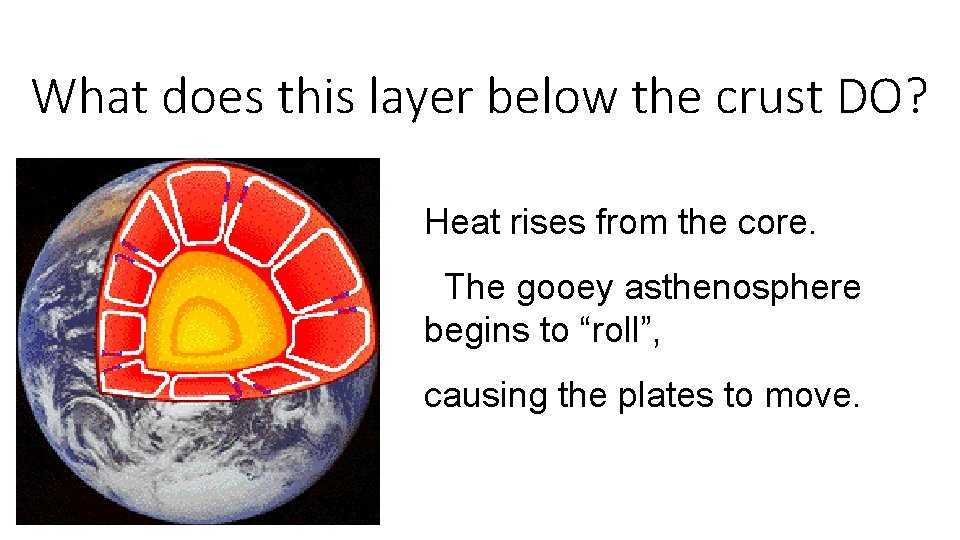
What does this layer below the crust DO? Heat rises from the core. The gooey asthenosphere begins to “roll”, causing the plates to move.
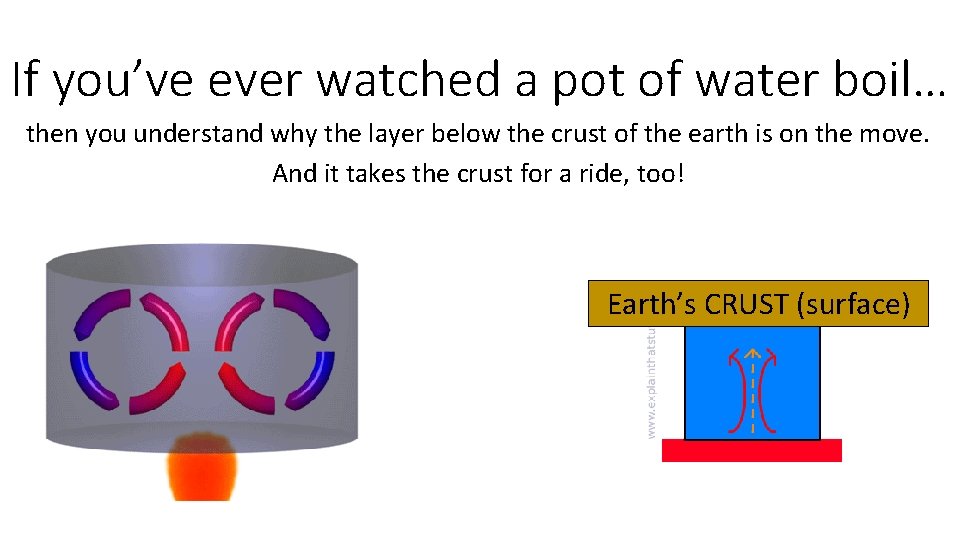
If you’ve ever watched a pot of water boil… then you understand why the layer below the crust of the earth is on the move. And it takes the crust for a ride, too! Earth’s CRUST (surface)
It SHAKES and BENDS things up! Making: Earthquakes Volcanoes Mountains Valleys
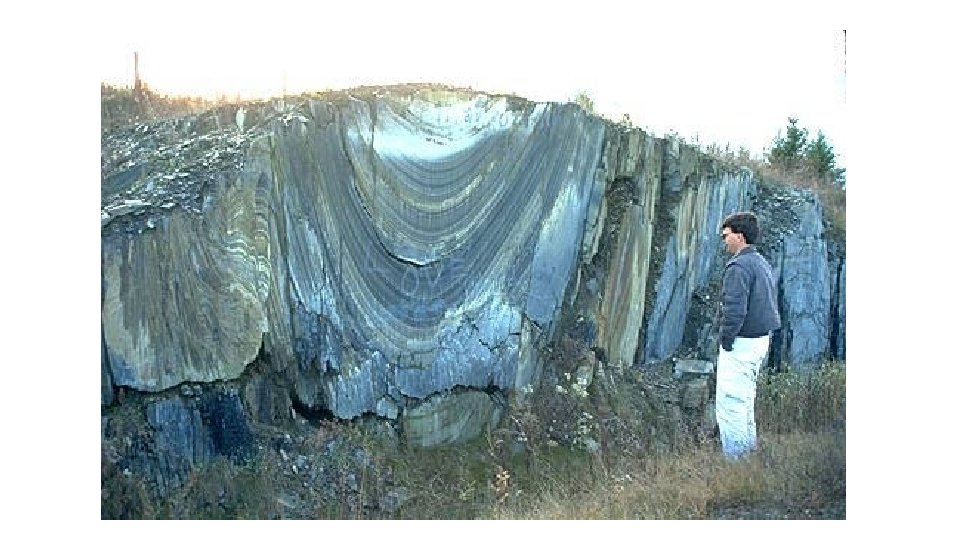
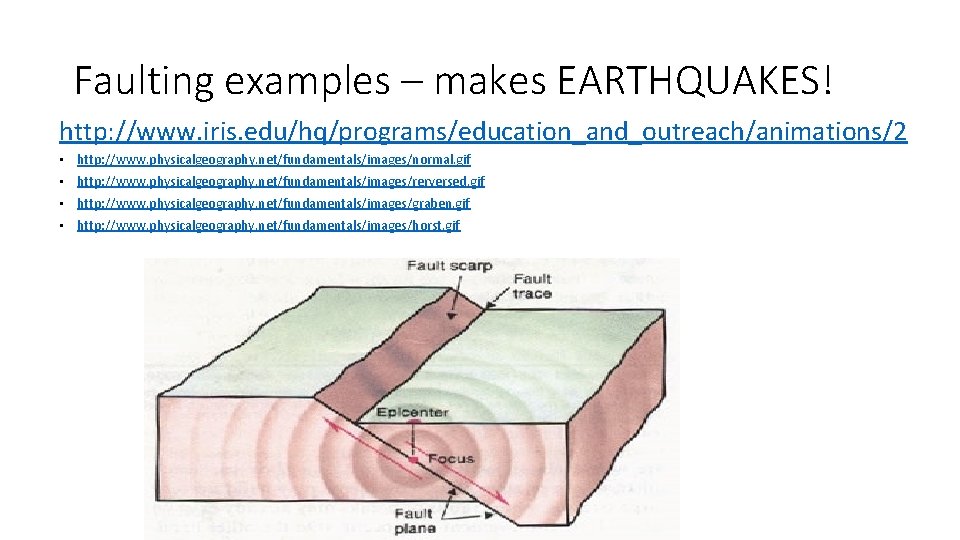
Faulting examples – makes EARTHQUAKES! http: //www. iris. edu/hq/programs/education_and_outreach/animations/2 • http: //www. physicalgeography. net/fundamentals/images/normal. gif • http: //www. physicalgeography. net/fundamentals/images/rerversed. gif • http: //www. physicalgeography. net/fundamentals/images/graben. gif • http: //www. physicalgeography. net/fundamentals/images/horst. gif
Now what happens WAY under the crust or all those places where the crust is smashing and bashing together? Bring on the Metamorphic Rocks!
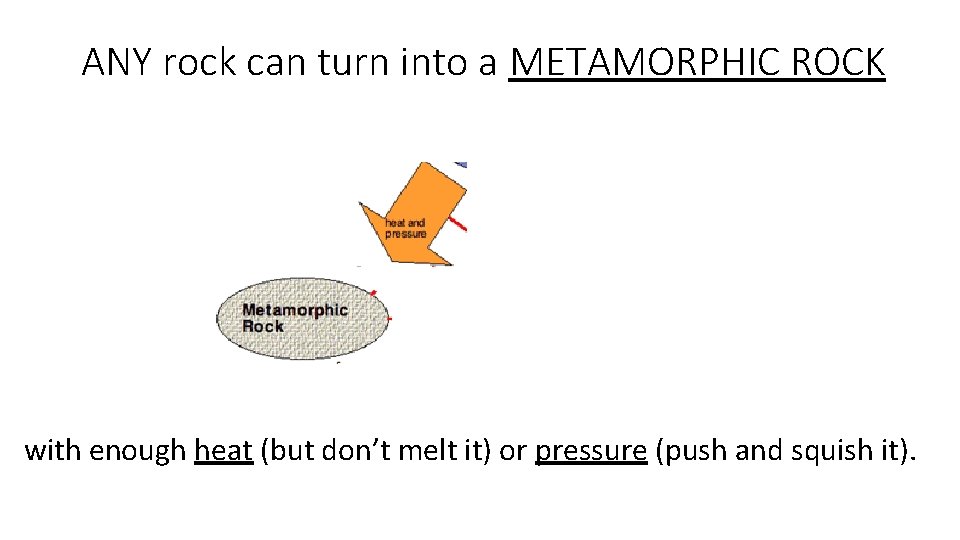
ANY rock can turn into a METAMORPHIC ROCK with enough heat (but don’t melt it) or pressure (push and squish it).
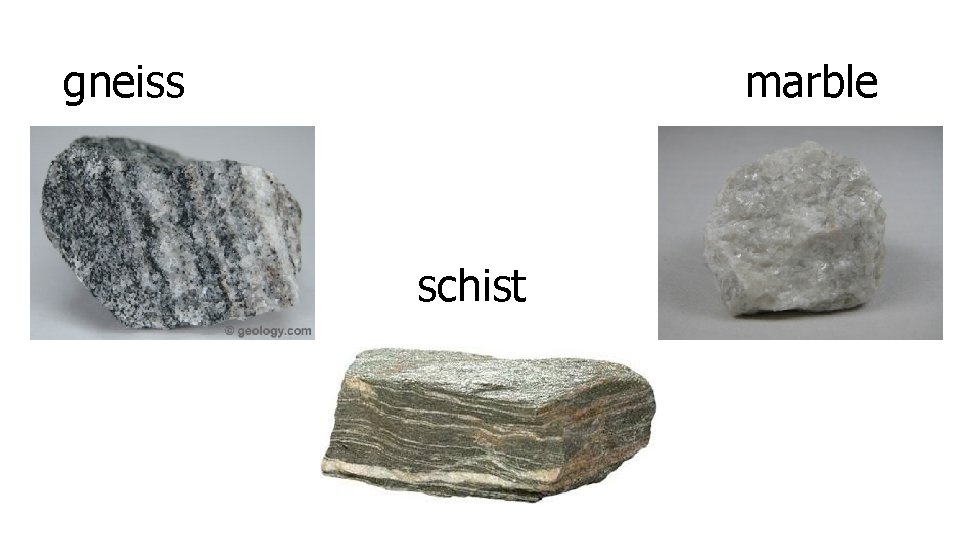
gneiss marble schist
Watch me use the WHOLE rock cycle! sediment Sedimentary Rock Igneous Rock sandstone granite Metamorphic Rock gneiss Metamorphic Rock schist
And what MAKES up all these rocks? MINERALS
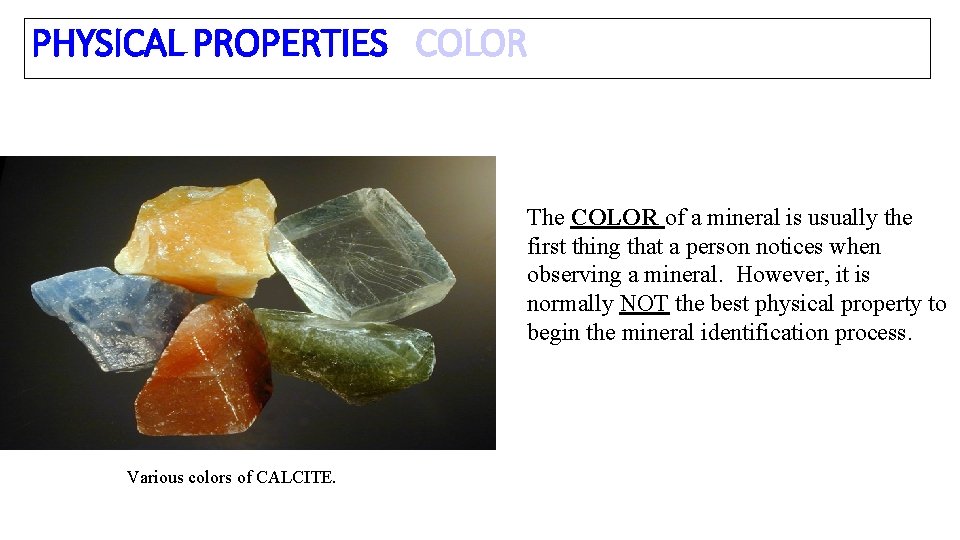
PHYSICAL PROPERTIES COLOR The COLOR of a mineral is usually the first thing that a person notices when observing a mineral. However, it is normally NOT the best physical property to begin the mineral identification process. Various colors of CALCITE.
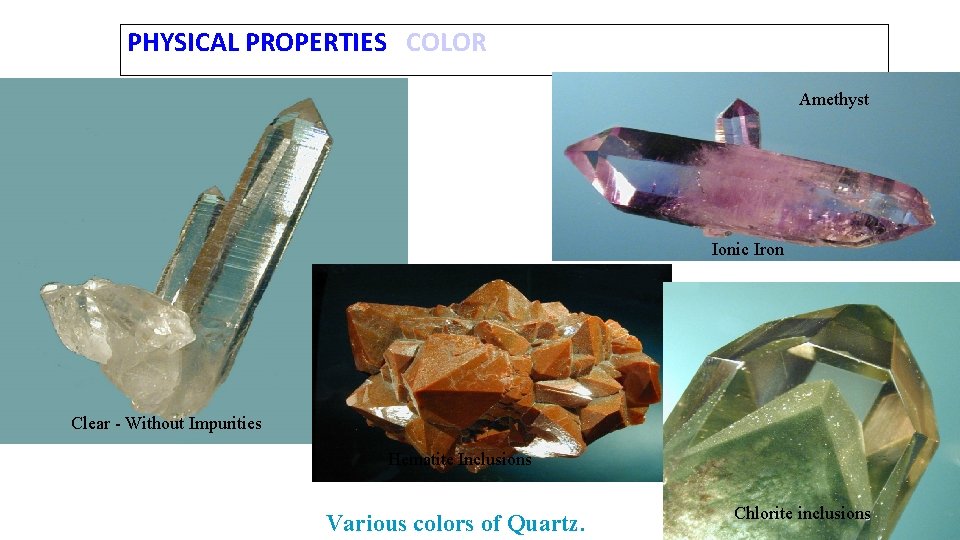
PHYSICAL PROPERTIES COLOR Amethyst Ionic Iron Clear - Without Impurities Hematite Inclusions Various colors of Quartz. Chlorite inclusions
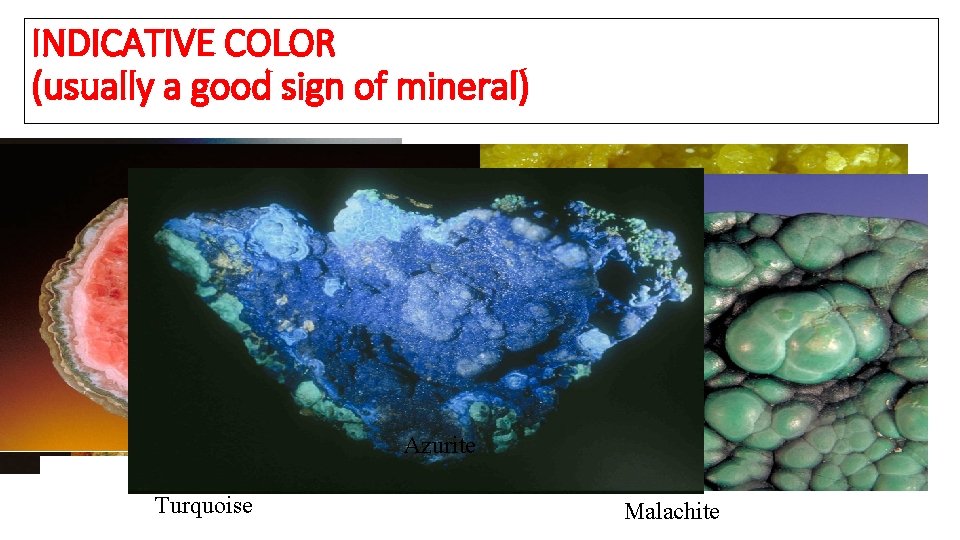
INDICATIVE COLOR (usually a good sign of mineral) Azurite Rhodochrosite Turquoise Sulfur Malachite
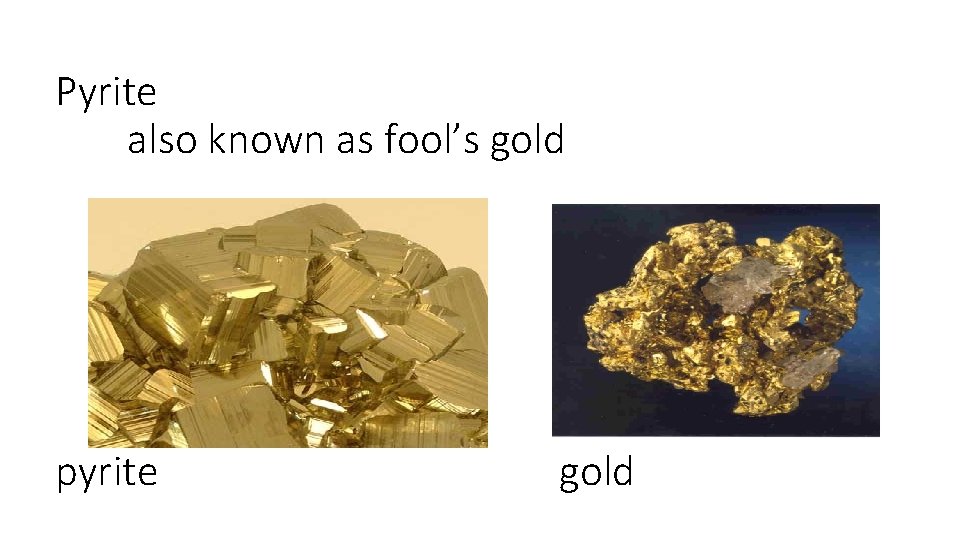
Pyrite also known as fool’s gold pyrite gold
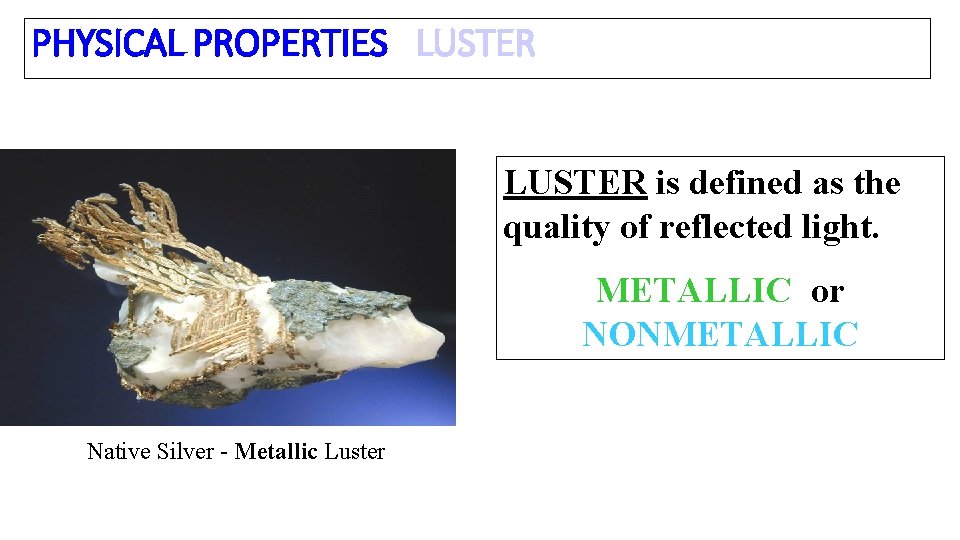
PHYSICAL PROPERTIES LUSTER is defined as the quality of reflected light. METALLIC or NONMETALLIC Native Silver - Metallic Luster
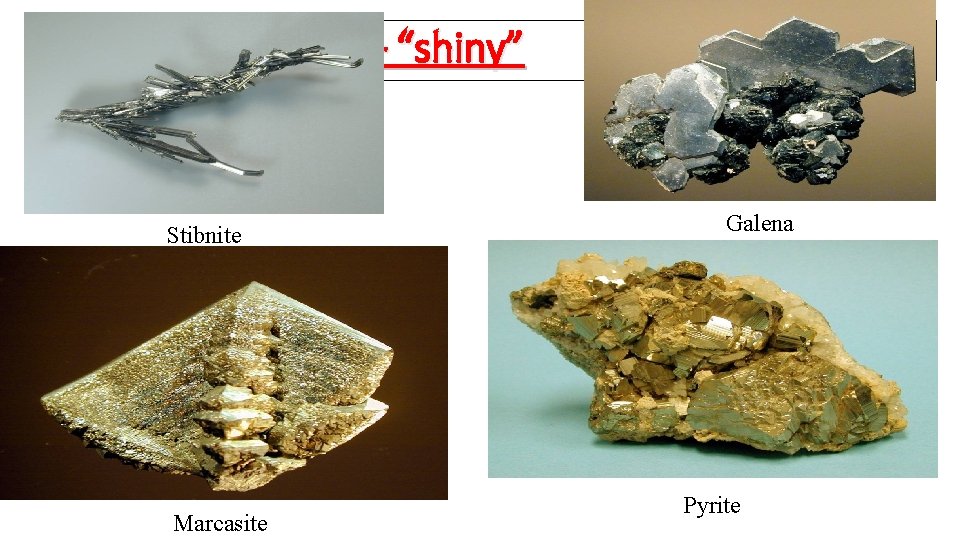
METALLIC LUSTER – “shiny” Stibnite Marcasite Galena Pyrite
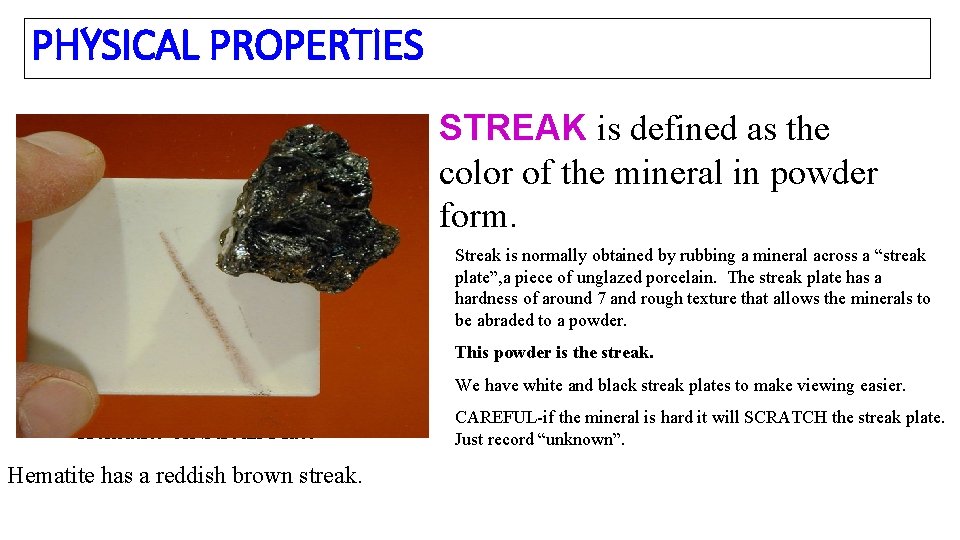
PHYSICAL PROPERTIES STREAK is defined as the color of the mineral in powder form. Streak is normally obtained by rubbing a mineral across a “streak plate”, a piece of unglazed porcelain. The streak plate has a hardness of around 7 and rough texture that allows the minerals to be abraded to a powder. This powder is the streak. We have white and black streak plates to make viewing easier. Hematite on Streak Plate Hematite has a reddish brown streak. CAREFUL-if the mineral is hard it will SCRATCH the streak plate. Just record “unknown”.
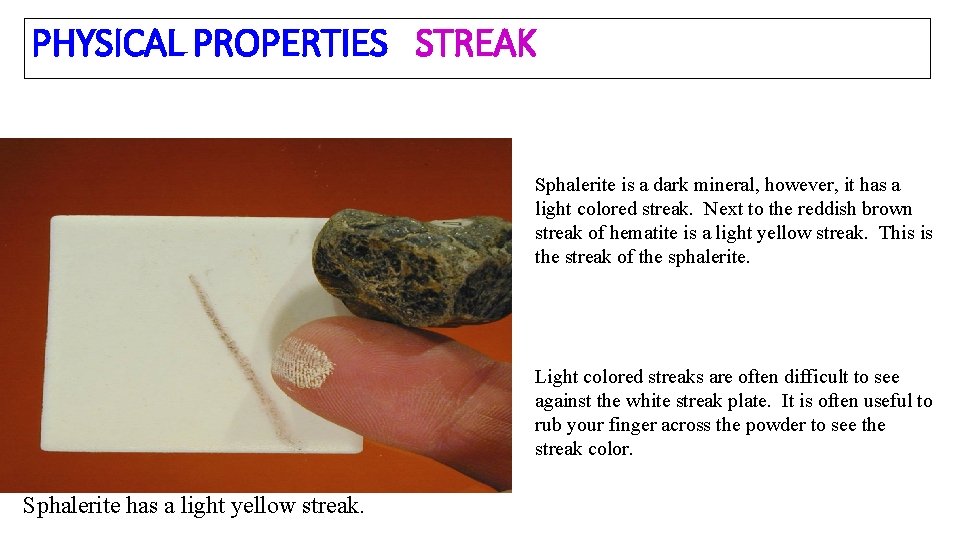
PHYSICAL PROPERTIES STREAK Sphalerite is a dark mineral, however, it has a light colored streak. Next to the reddish brown streak of hematite is a light yellow streak. This is the streak of the sphalerite. Light colored streaks are often difficult to see against the white streak plate. It is often useful to rub your finger across the powder to see the streak color. Sphalerite has a light yellow streak.
How does it naturally break? Cleavage or Fracture
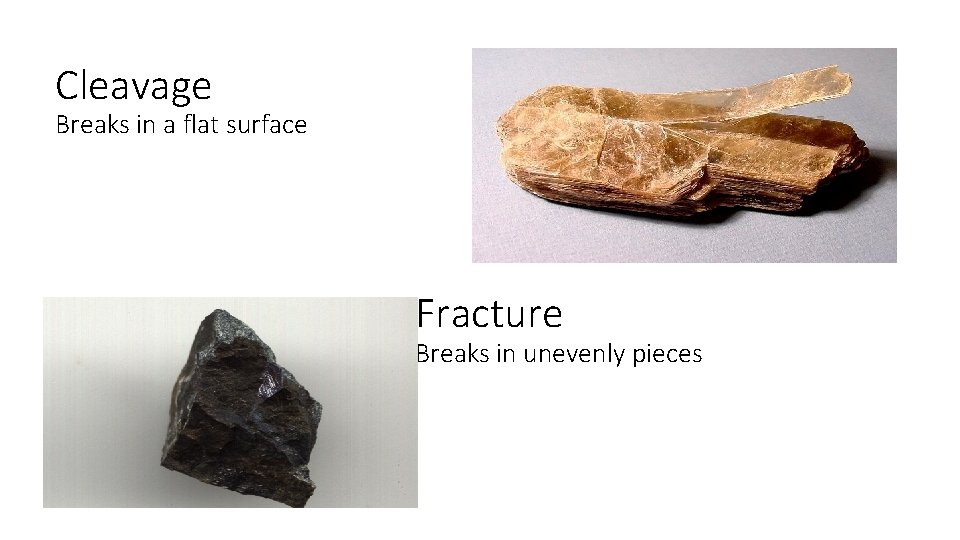
Cleavage Breaks in a flat surface Fracture Breaks in unevenly pieces
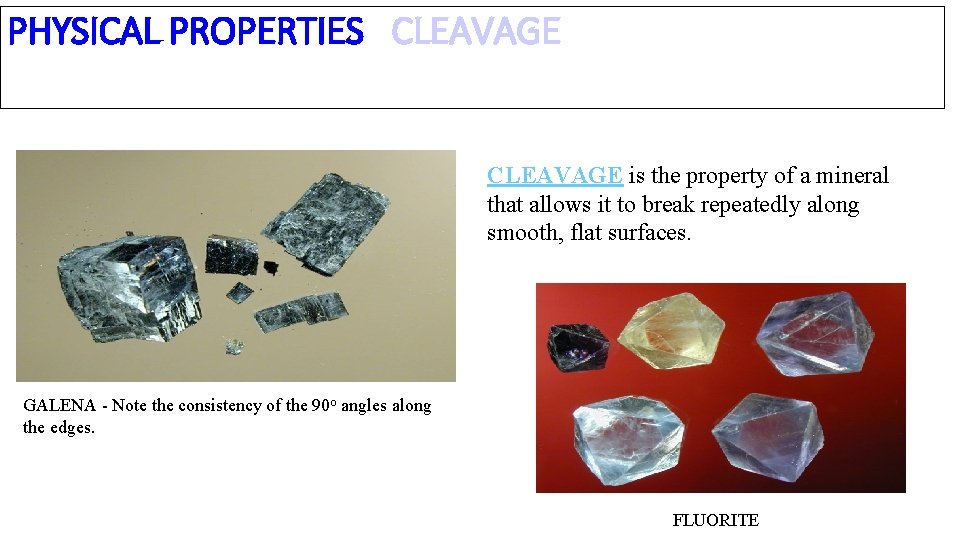
PHYSICAL PROPERTIES CLEAVAGE is the property of a mineral that allows it to break repeatedly along smooth, flat surfaces. GALENA - Note the consistency of the 90 o angles along the edges. FLUORITE
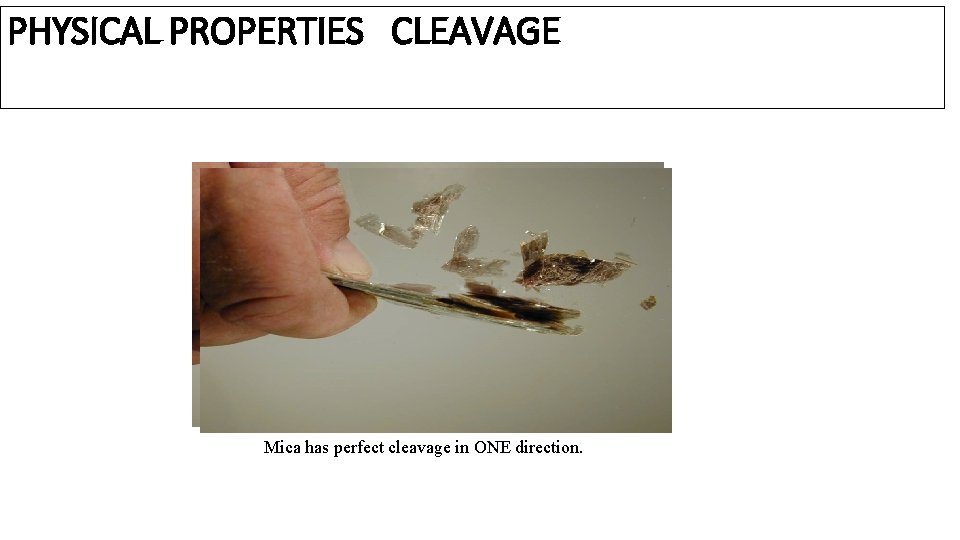
PHYSICAL PROPERTIES CLEAVAGE Mica A thin has perfect sheet ofcleavage Muscovite in ONE seen on direction. edge.
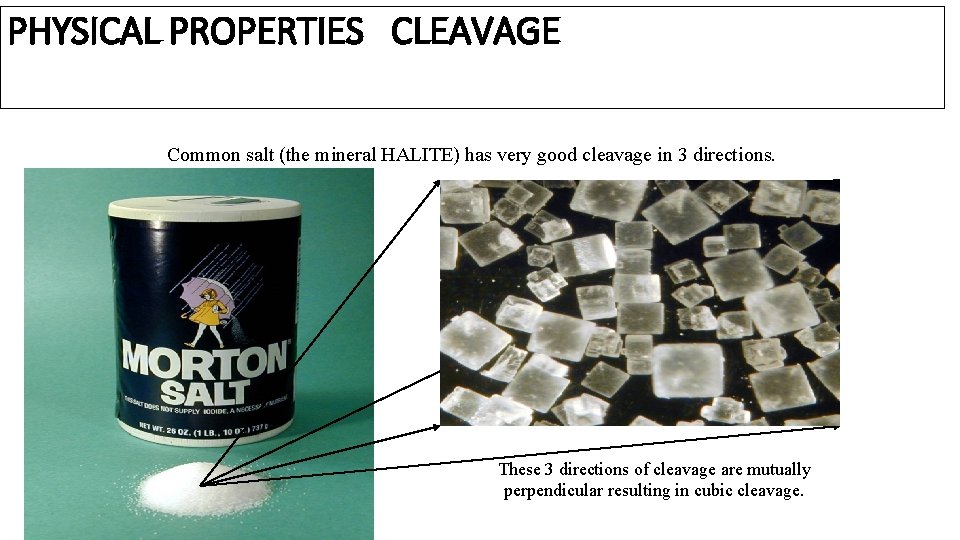
PHYSICAL PROPERTIES CLEAVAGE Common salt (the mineral HALITE) has very good cleavage in 3 directions. These 3 directions of cleavage are mutually perpendicular resulting in cubic cleavage.
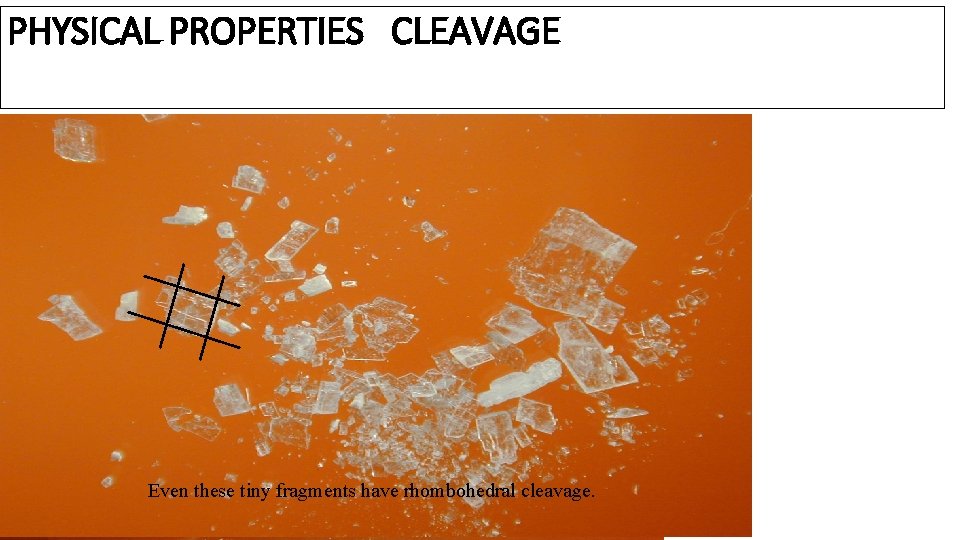
PHYSICAL PROPERTIES CLEAVAGE Rhombohedral Cleavage - 3 directions CALCITE Even these tiny fragments have rhombohedral cleavage.
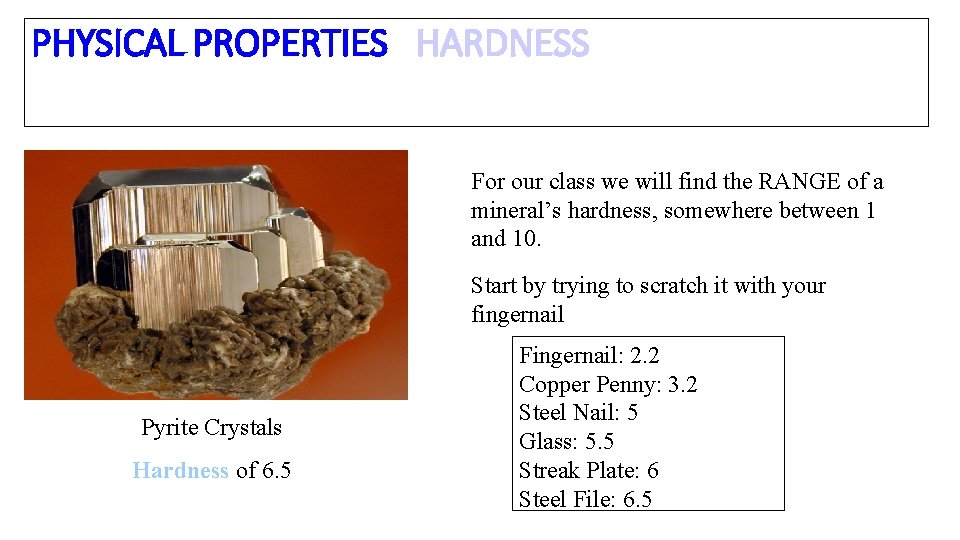
PHYSICAL PROPERTIES HARDNESS For our class we will find the RANGE of a mineral’s hardness, somewhere between 1 and 10. Start by trying to scratch it with your fingernail Pyrite Crystals Hardness of 6. 5 Fingernail: 2. 2 Copper Penny: 3. 2 Steel Nail: 5 Glass: 5. 5 Streak Plate: 6 Steel File: 6. 5
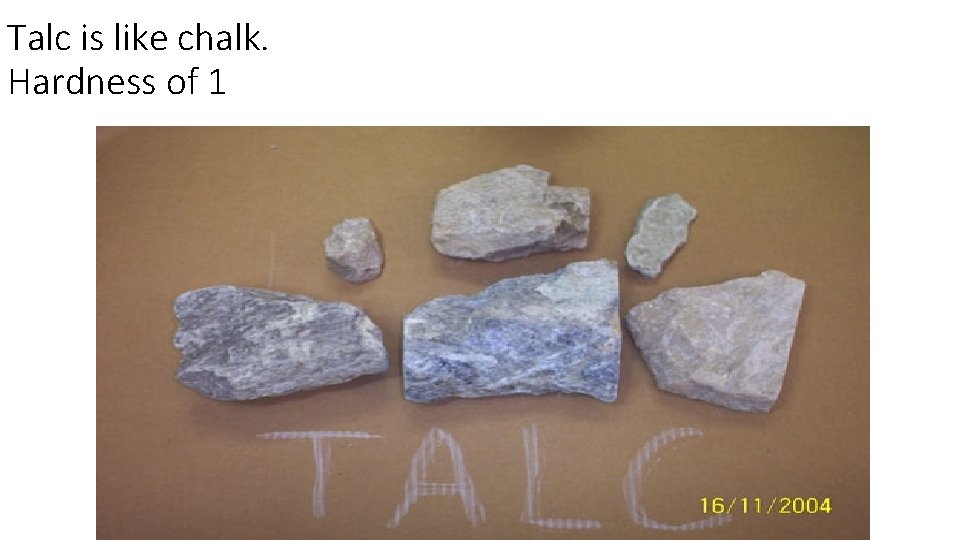
Talc is like chalk. Hardness of 1
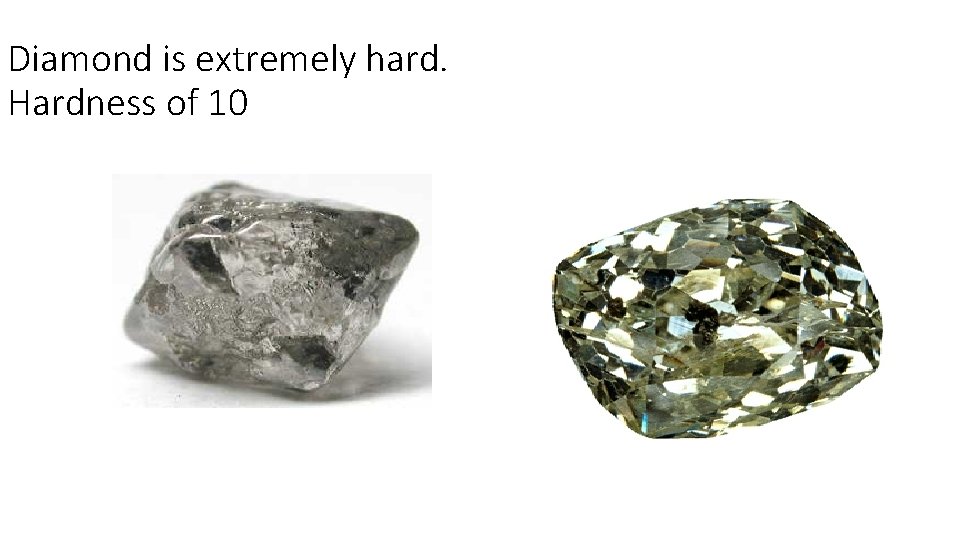
Diamond is extremely hard. Hardness of 10

Others Tests…
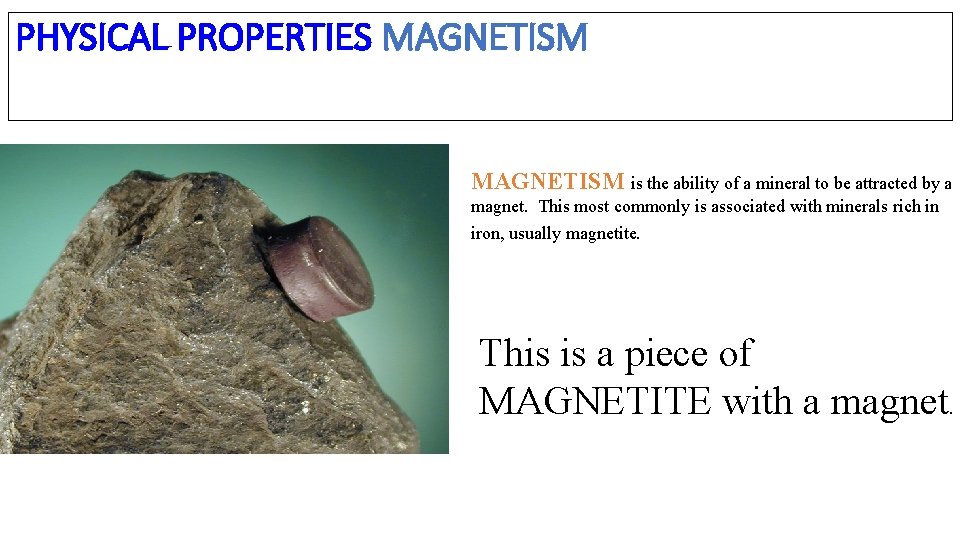
PHYSICAL PROPERTIES MAGNETISM is the ability of a mineral to be attracted by a magnet. This most commonly is associated with minerals rich in iron, usually magnetite. This is a piece of MAGNETITE with a magnet.
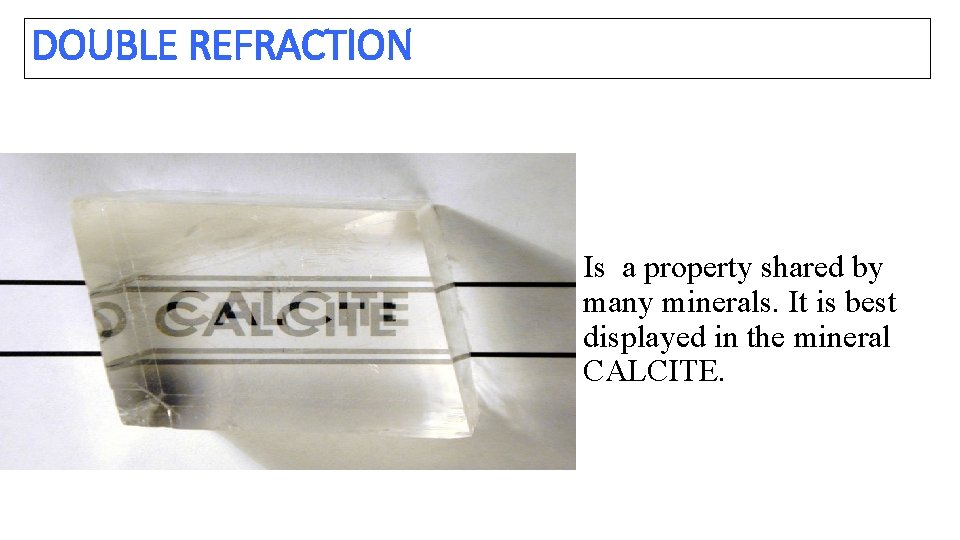
DOUBLE REFRACTION Is a property shared by many minerals. It is best displayed in the mineral CALCITE.
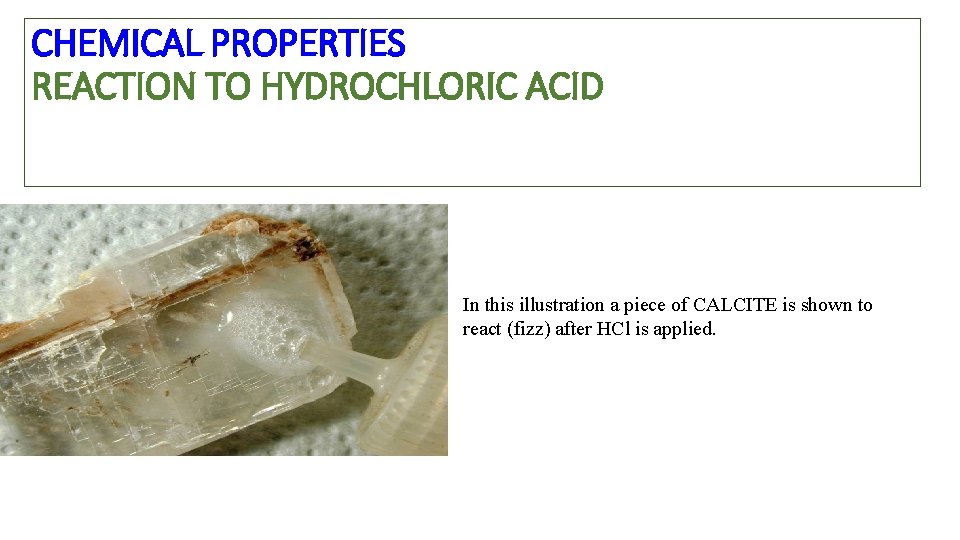
CHEMICAL PROPERTIES REACTION TO HYDROCHLORIC ACID In this illustration a piece of CALCITE is shown to react (fizz) after HCl is applied.
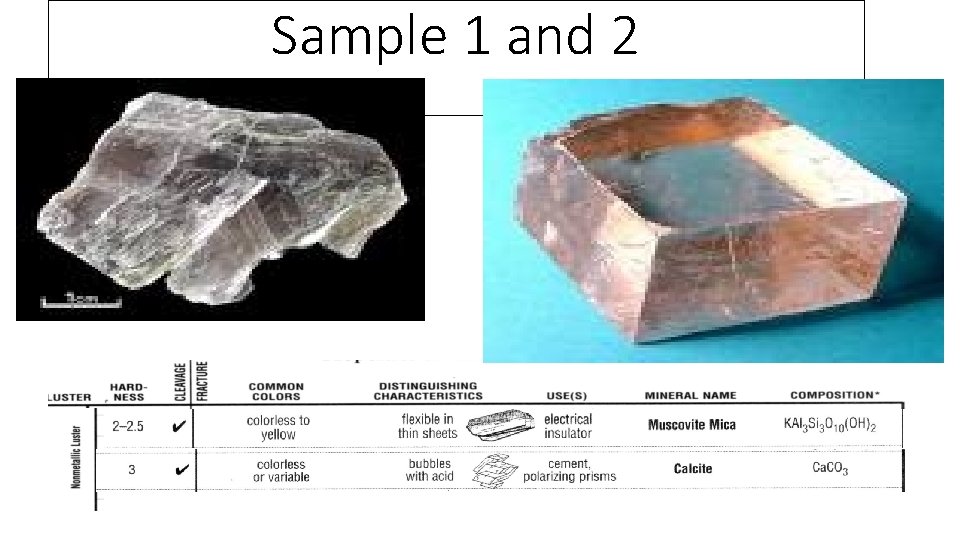
Sample 1 and 2
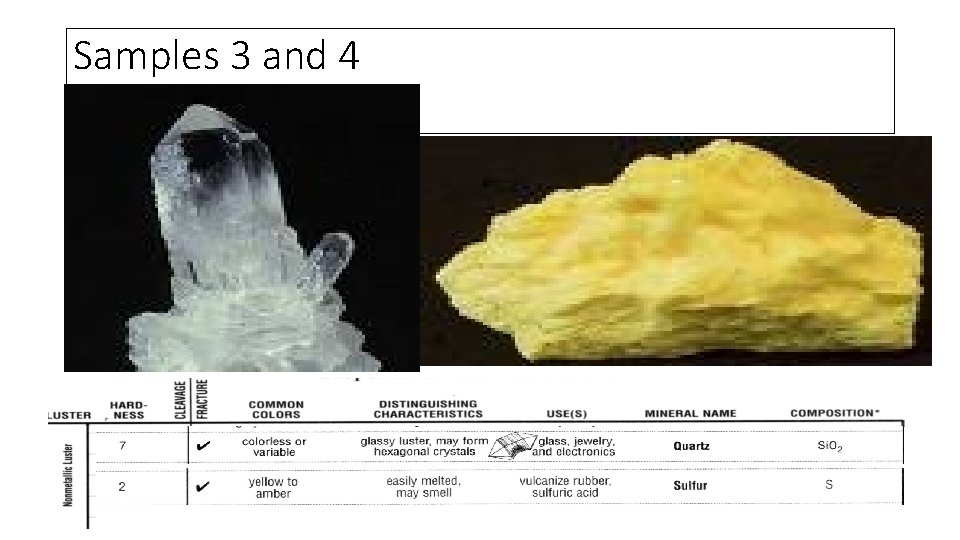
Samples 3 and 4
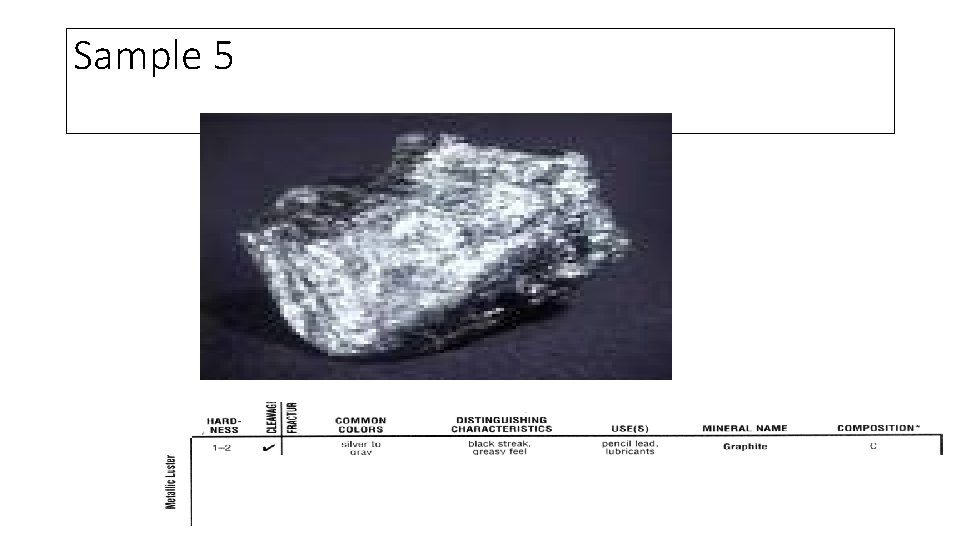
Sample 5
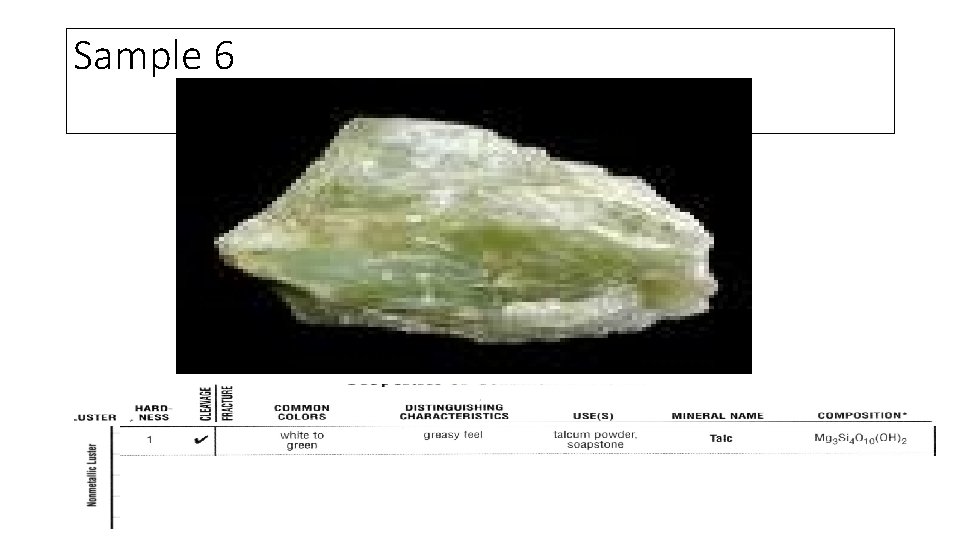
Sample 6
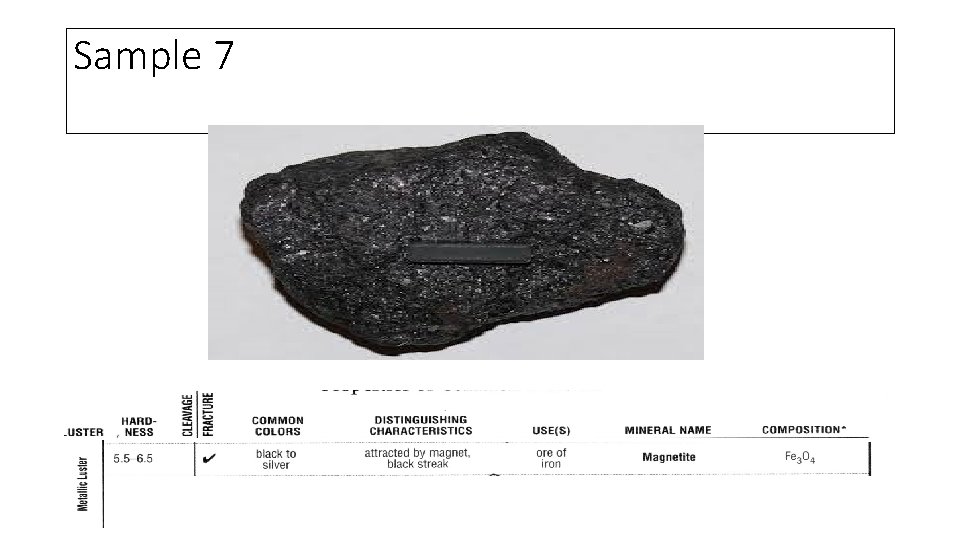
Sample 7
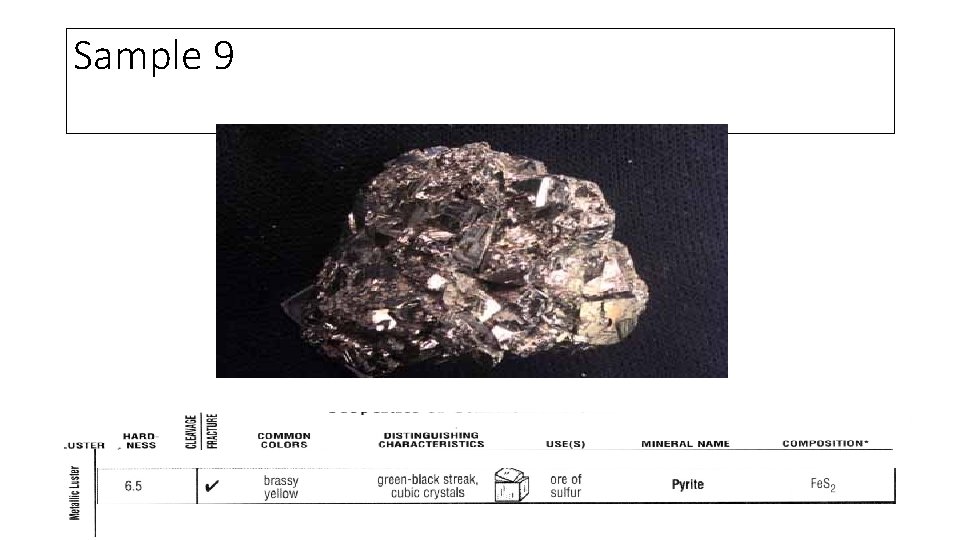
Sample 9
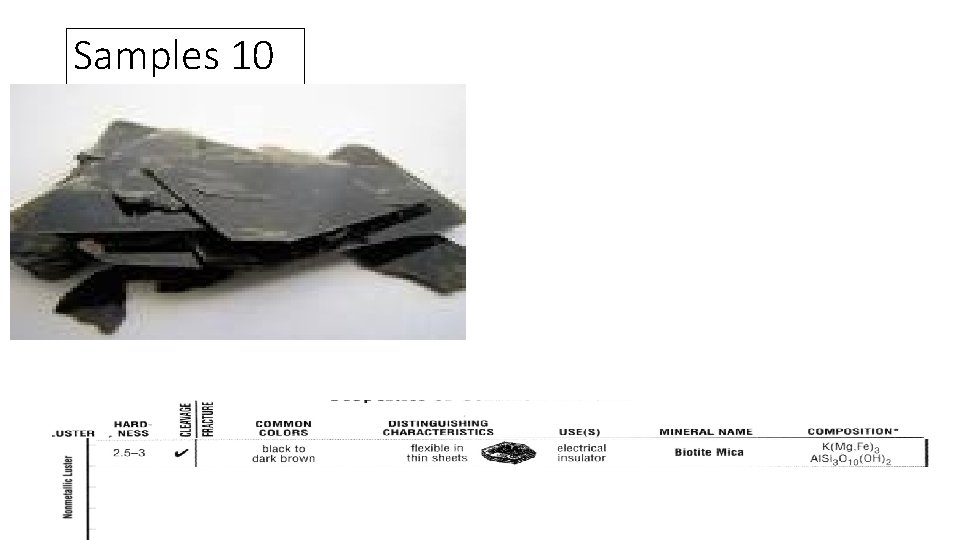
Samples 10
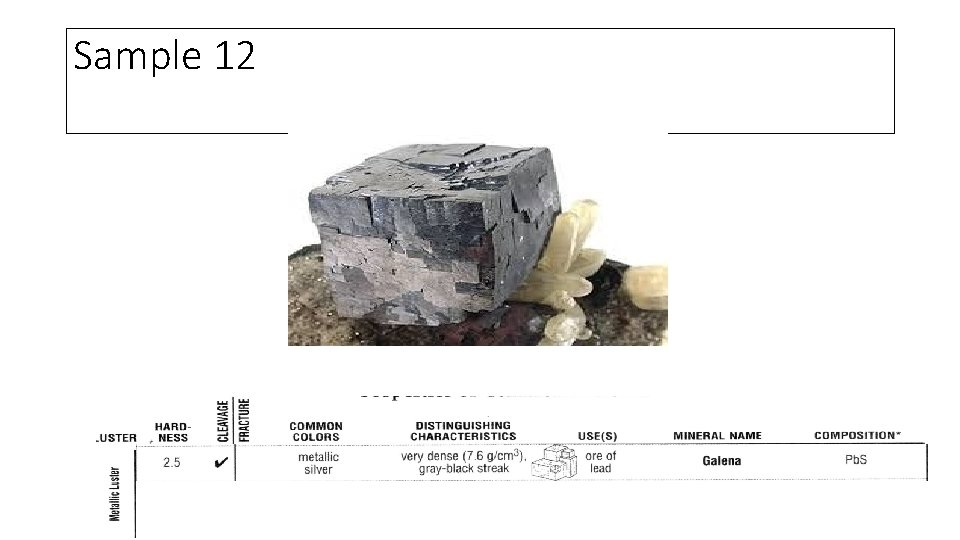
Sample 12
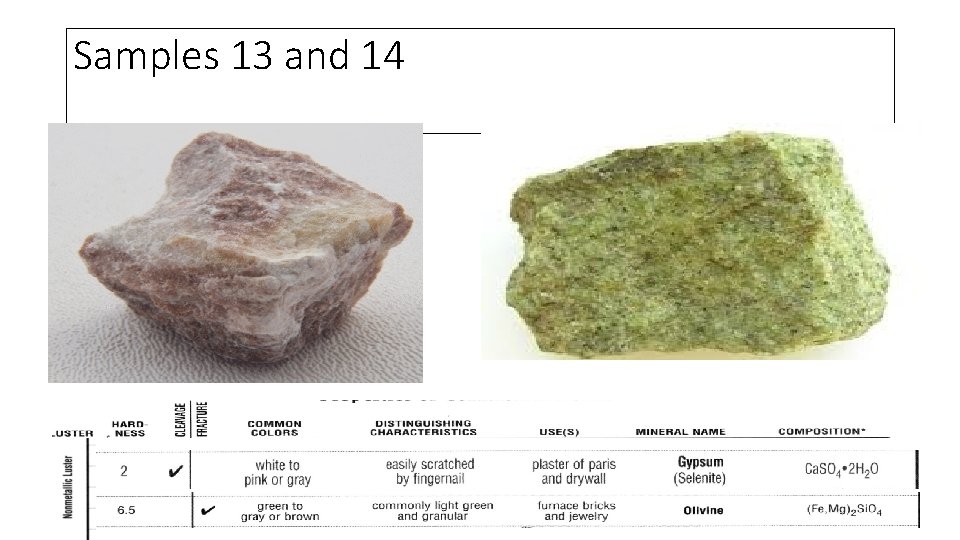
Samples 13 and 14
- Slides: 50