
How Positive Pressure Ventilation Affects Vital Organs Functions


- Slides: 39
How Positive Pressure Ventilation Affects Vital Organs Functions Shao-Hsuan Hsia, MD. Pediatric Critical Care Medicine, Chang Gung Children’s Hospital
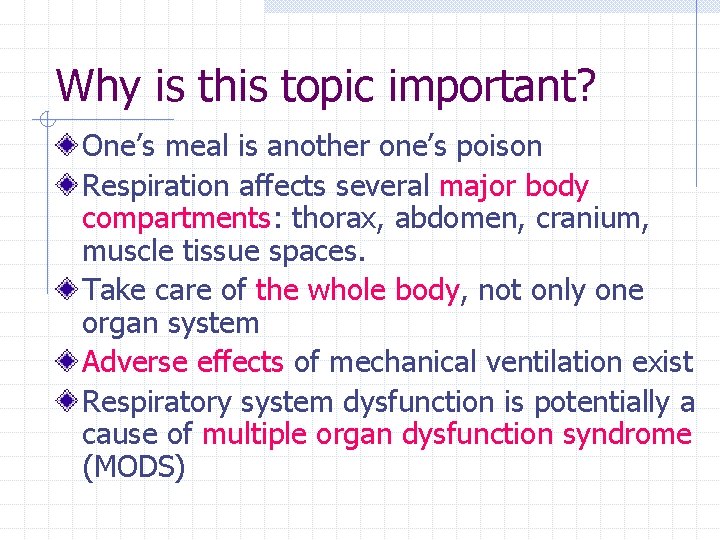
Why is this topic important? One’s meal is another one’s poison Respiration affects several major body compartments: thorax, abdomen, cranium, muscle tissue spaces. Take care of the whole body, not only one organ system Adverse effects of mechanical ventilation exist Respiratory system dysfunction is potentially a cause of multiple organ dysfunction syndrome (MODS)
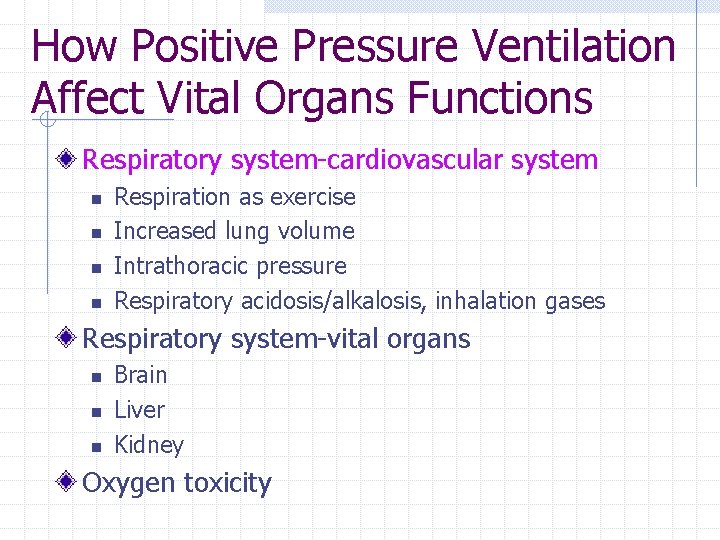
How Positive Pressure Ventilation Affect Vital Organs Functions Respiratory system-cardiovascular system n n Respiration as exercise Increased lung volume Intrathoracic pressure Respiratory acidosis/alkalosis, inhalation gases Respiratory system-vital organs n n n Brain Liver Kidney Oxygen toxicity
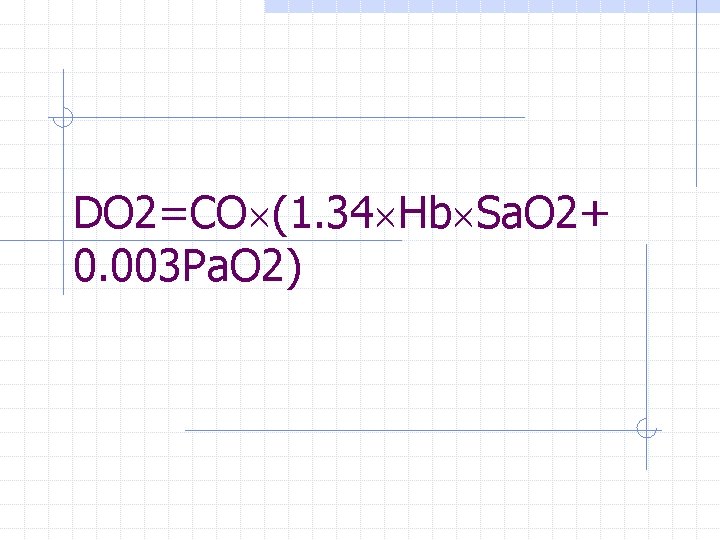
DO 2=CO (1. 34 Hb Sa. O 2+ 0. 003 Pa. O 2)
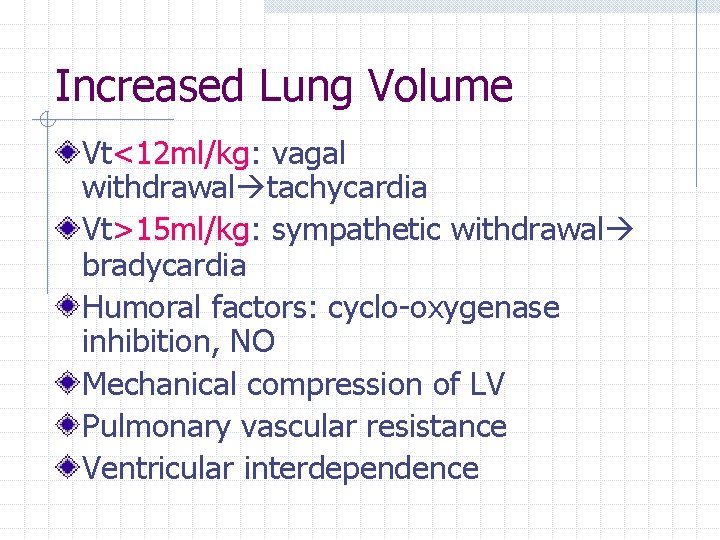
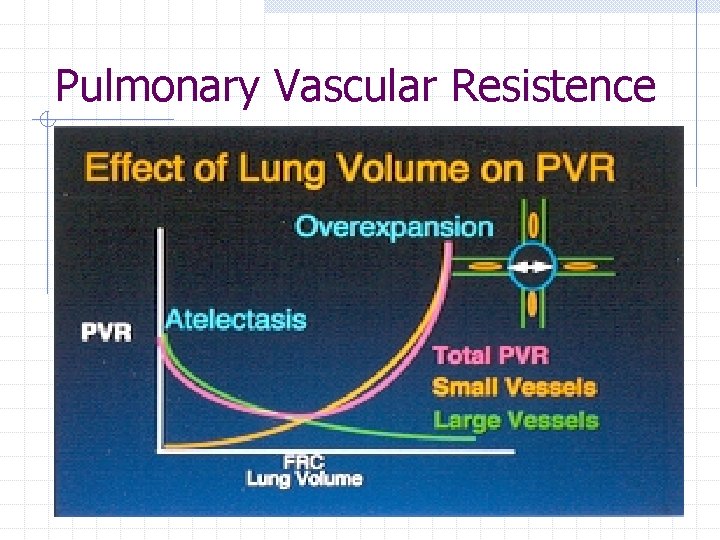
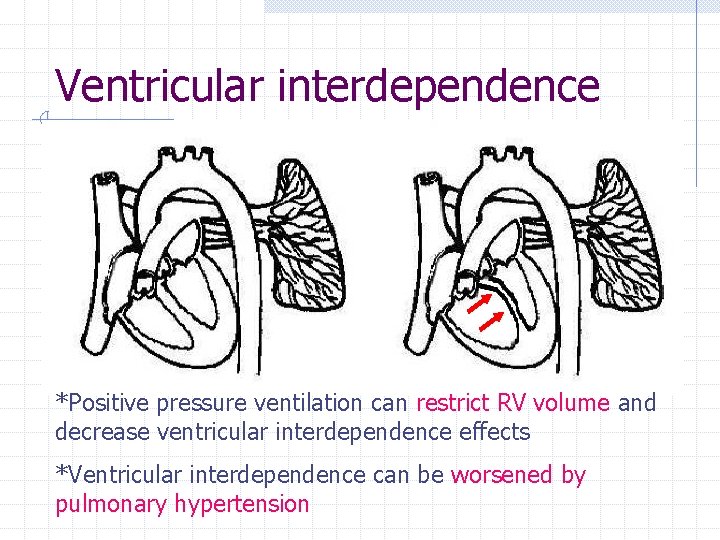
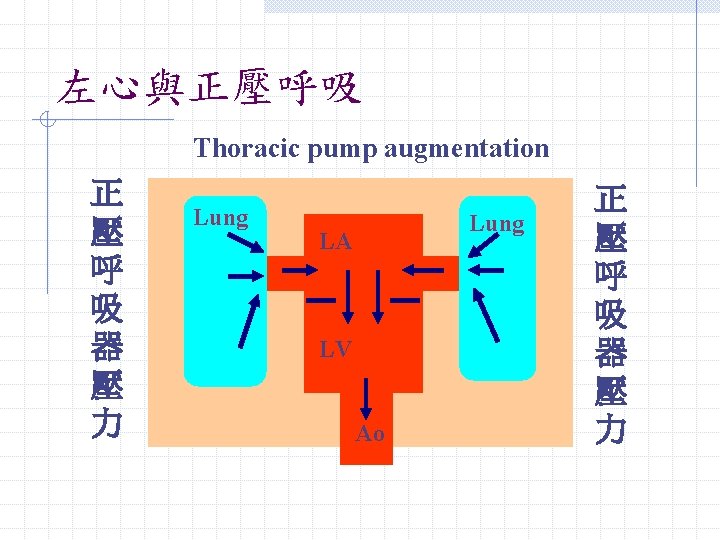
Increased Lung Volume Vt<12 ml/kg: vagal withdrawal tachycardia Vt>15 ml/kg: sympathetic withdrawal bradycardia Humoral factors: cyclo-oxygenase inhibition, NO Mechanical compression of LV Pulmonary vascular resistance Ventricular interdependence
Pulmonary Vascular Resistence
Ventricular interdependence *Positive pressure ventilation can restrict RV volume and decrease ventricular interdependence effects *Ventricular interdependence can be worsened by pulmonary hypertension
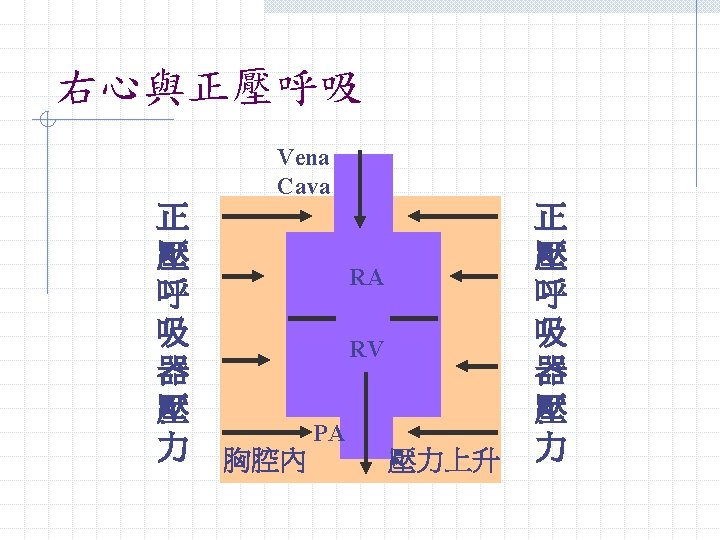
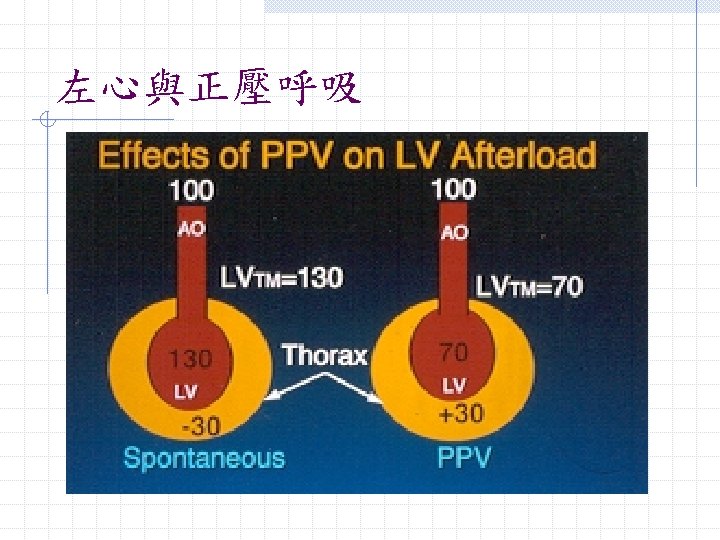
Intrathoracic Pressure Venous return RV preload and afterload LV preload and afterload Pulmonary resistence
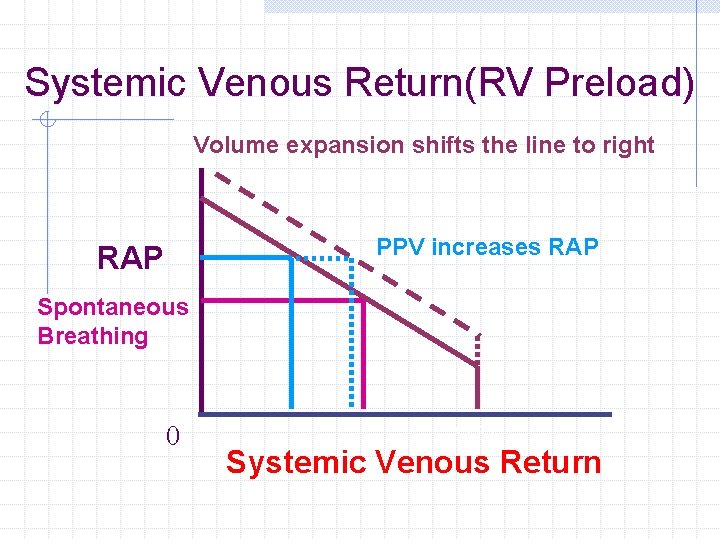
Systemic Venous Return(RV Preload) Volume expansion shifts the line to right PPV increases RAP Spontaneous Breathing 0 Max Systemic Venous Return
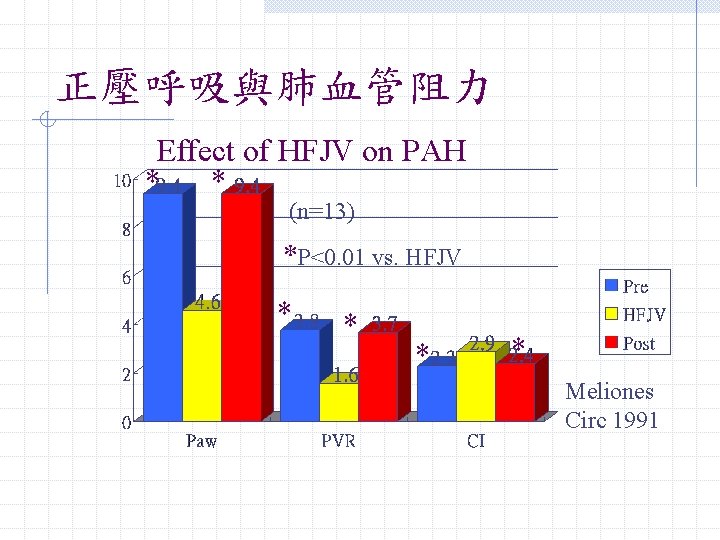
正壓呼吸與肺血管阻力 Effect of HFJV on PAH * * (n=13) *P<0. 01 vs. HFJV * * Meliones Circ 1991
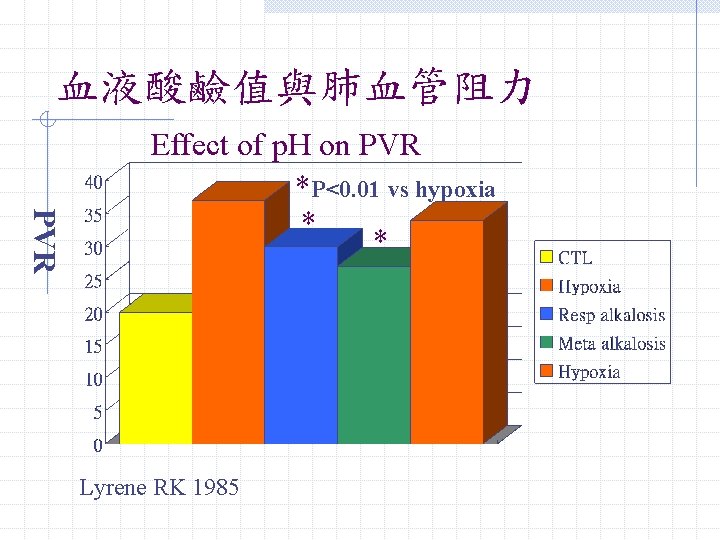
血液酸鹼值與肺血管阻力 PVR Effect of p. H on PVR *P<0. 01 vs hypoxia * * Lyrene RK 1985
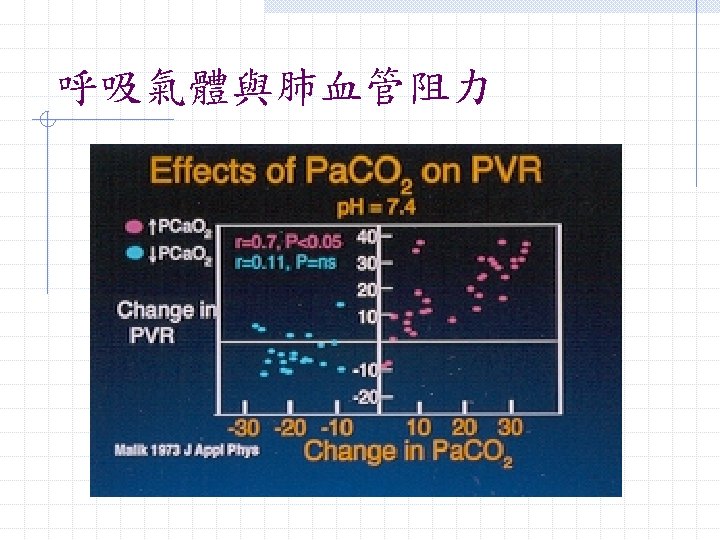
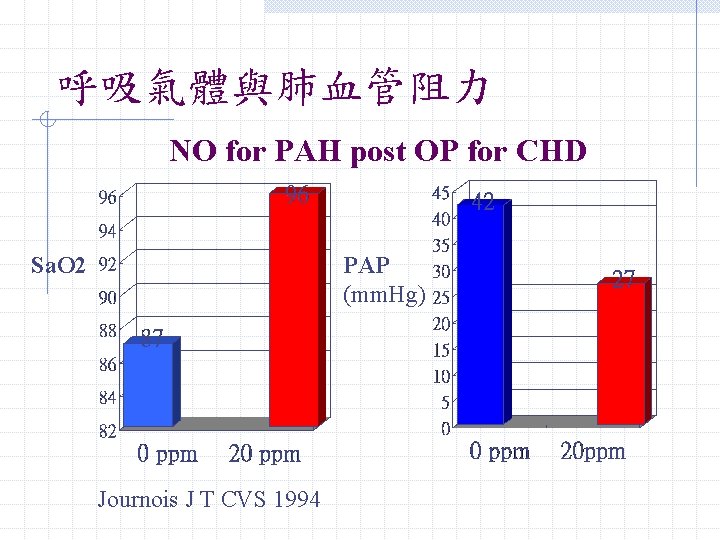
呼吸氣體與肺血管阻力 NO for PAH post OP for CHD Sa. O 2 PAP (mm. Hg) Journois J T CVS 1994
How Positive Pressure Ventilation Affect Vital Organs Functions Respiratory system-cardiovascular system n n n Increased lung volume Intrathoracic pressure Respiratory acidosis/alkalosis, inhalation gases Respiratory system-vital organs n n n Brain Liver Kidney Oxygen toxicity
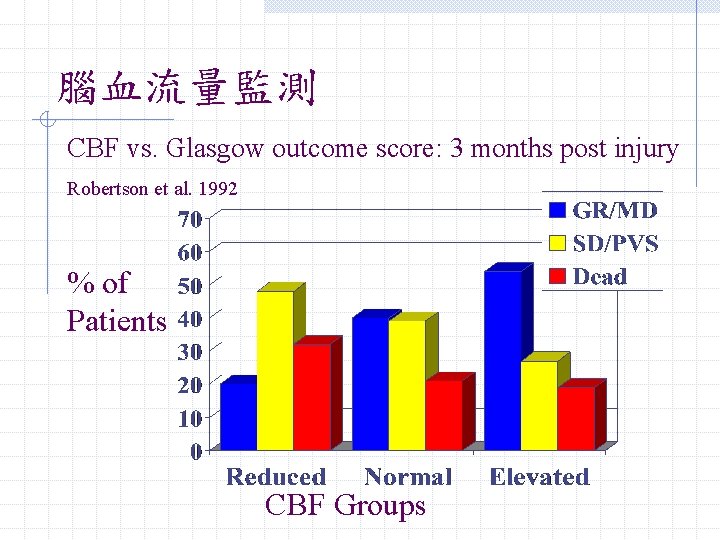
腦血流量監測 CBF vs. Glasgow outcome score: 3 months post injury Robertson et al. 1992 % of Patients CBF Groups
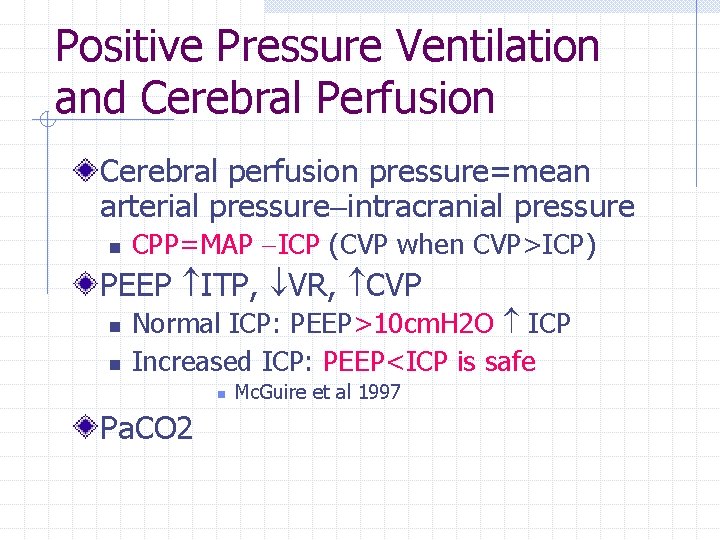
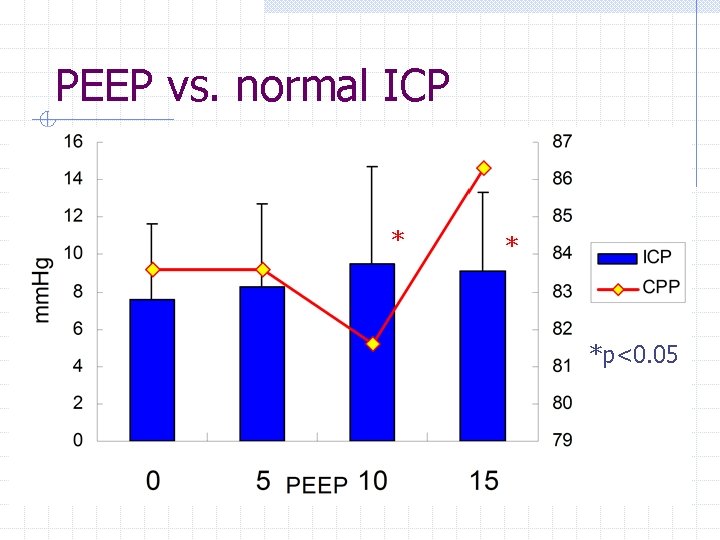
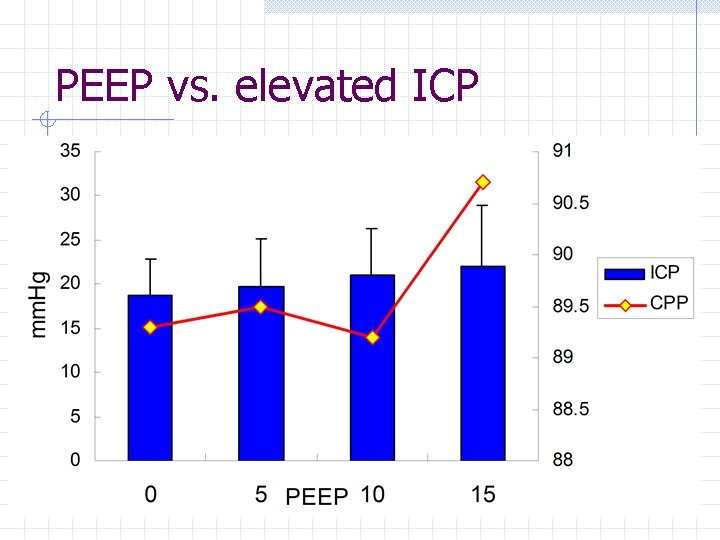
Positive Pressure Ventilation and Cerebral Perfusion Cerebral perfusion pressure=mean arterial pressure intracranial pressure n CPP=MAP ICP (CVP when CVP>ICP) PEEP ITP, VR, CVP n n Normal ICP: PEEP>10 cm. H 2 O ICP Increased ICP: PEEP<ICP is safe n Pa. CO 2 Mc. Guire et al 1997
PEEP vs. normal ICP * * *p<0. 05
PEEP vs. elevated ICP
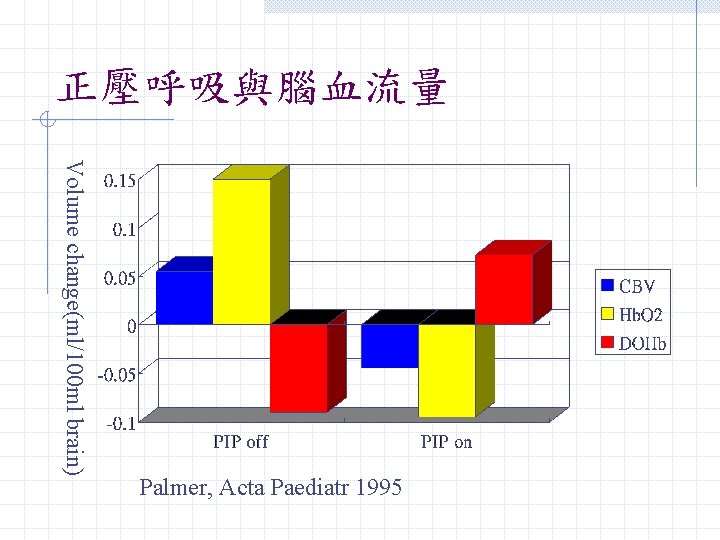
正壓呼吸與腦血流量 Volume change(ml/100 ml brain) Palmer, Acta Paediatr 1995
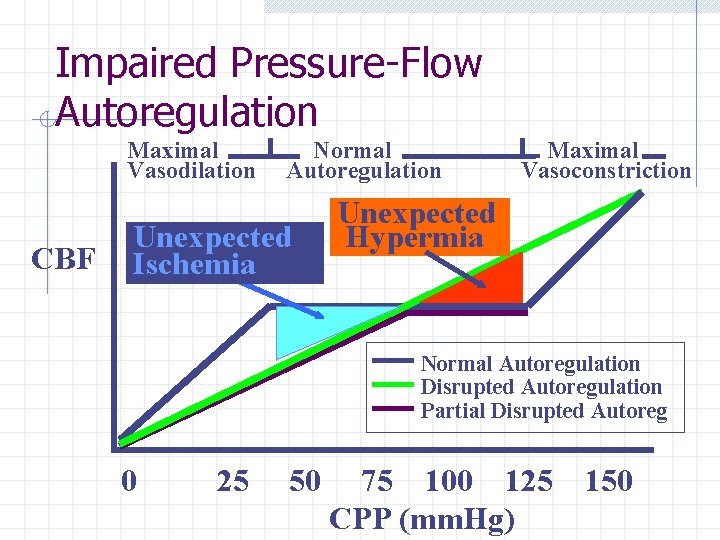
Impaired Pressure-Flow Autoregulation Maximal Vasodilation CBF Normal Autoregulation Unexpected Ischemia Maximal Vasoconstriction Unexpected Hypermia Normal Autoregulation Disrupted Autoregulation Partial Disrupted Autoreg 0 25 50 75 100 125 CPP (mm. Hg) 150
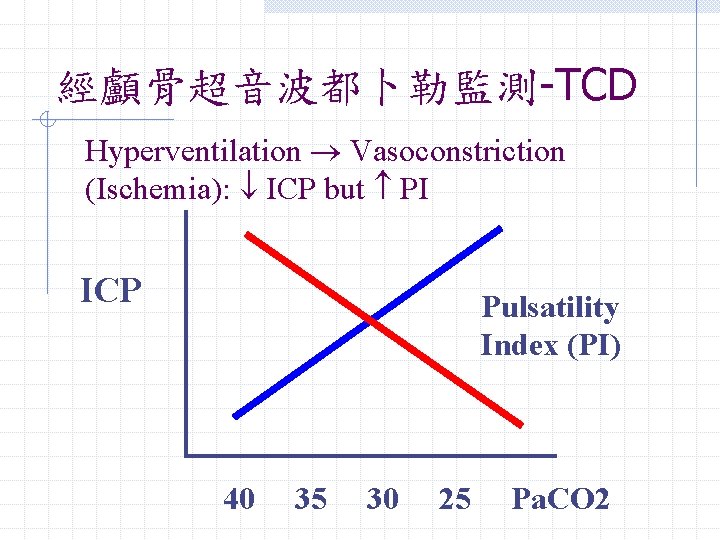
經顱骨超音波都卜勒監測-TCD Hyperventilation Vasoconstriction (Ischemia): ICP but PI ICP Pulsatility Index (PI) 40 35 30 25 Pa. CO 2
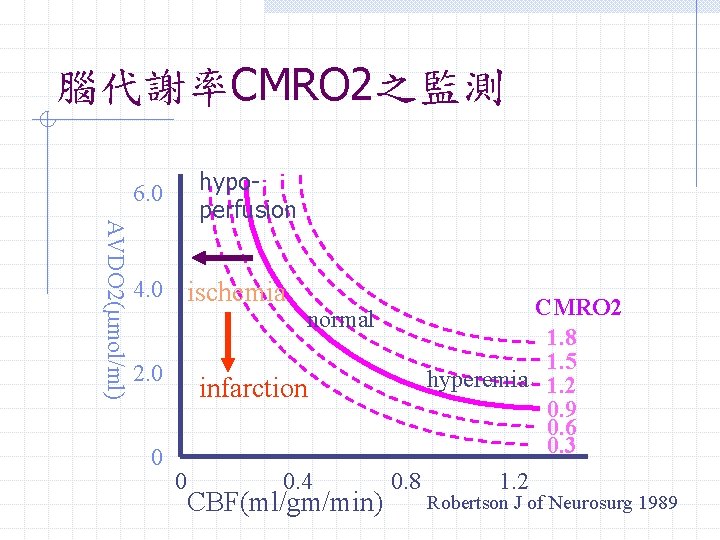
腦代謝率CMRO 2之監測 hypoperfusion 6. 0 AVDO 2( mol/ml) 4. 0 ischemia 2. 0 0 normal infarction 0 0. 4 CBF(ml/gm/min) CMRO 2 1. 8 1. 5 hyperemia 1. 2 0. 9 0. 6 0. 3 0. 8 1. 2 Robertson J of Neurosurg 1989
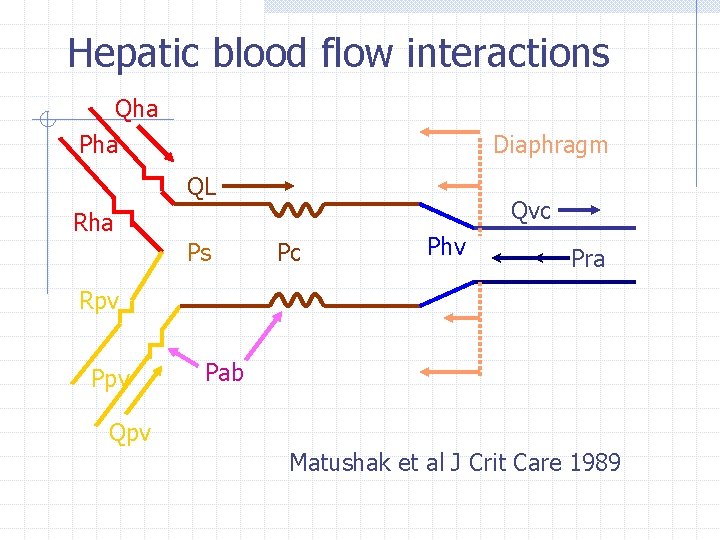
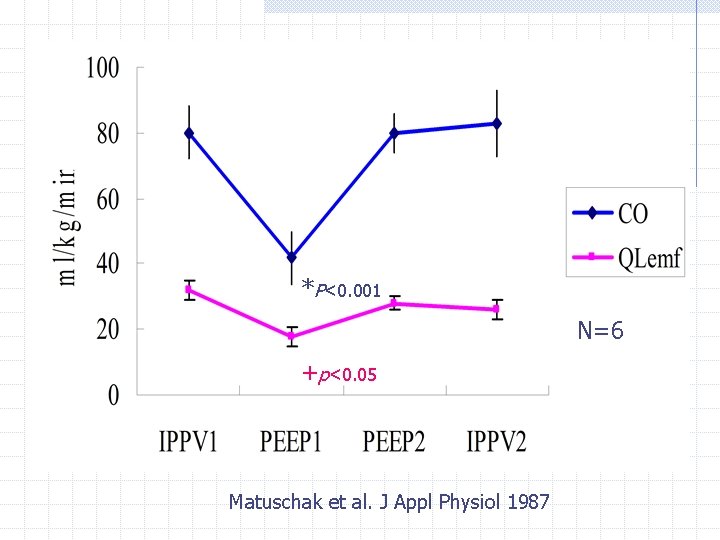
Positive Pressure Ventilation and Liver Function Patients with sepsis, trauma and ARDS usually combine liver dysfunction—endotoxin, shock, hypoxemia and DIC CO hepatic artery and portal vein blood flow ITP hepatic vein pressure (Phv) hepatic flow Descending diaphragm compression intrahepatic closing pressure (Pc) sinusoidal cell-blood contact time Peak-inspiratory RAP hepatic blood flow pressure gradient abdominal pressure Ppv, and Pc
Hepatic blood flow interactions Qha Pha Diaphragm QL Qvc Rha Ps Pc Phv Pra Rpv Pab Qpv Matushak et al J Crit Care 1989
*P<0. 001 N=6 +p<0. 05 Matuschak et al. J Appl Physiol 1987
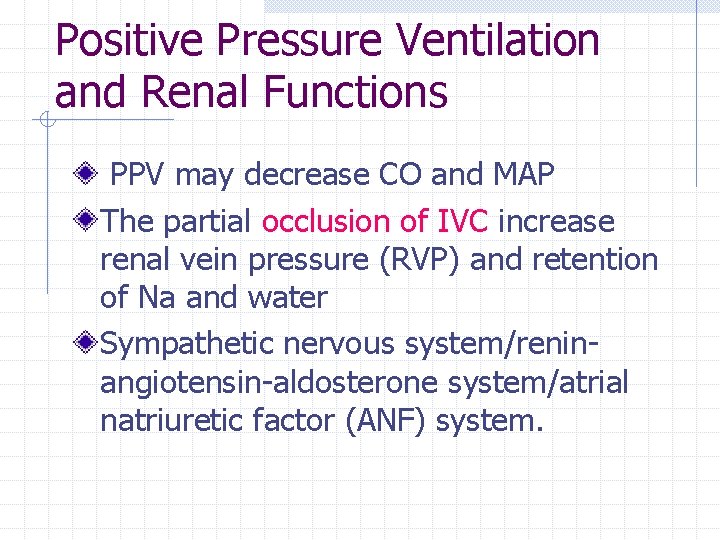
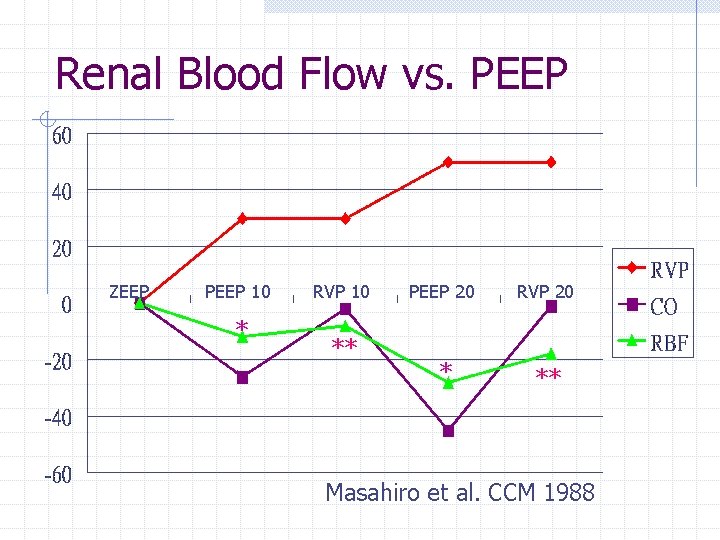
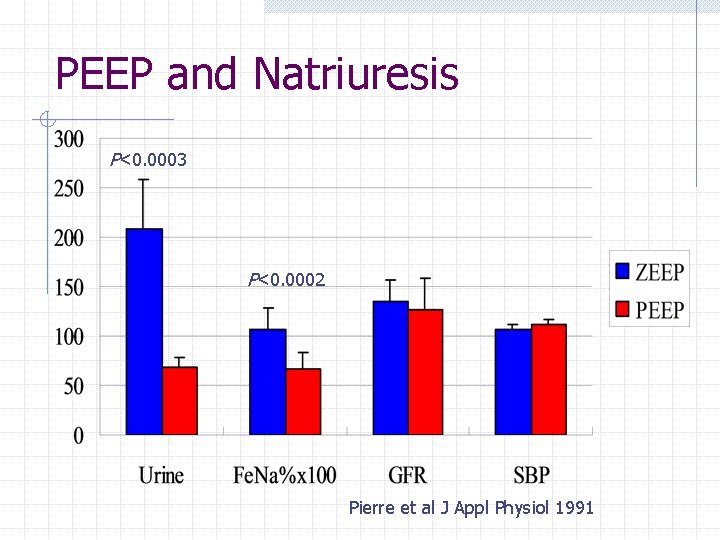
Positive Pressure Ventilation and Renal Functions PPV may decrease CO and MAP The partial occlusion of IVC increase renal vein pressure (RVP) and retention of Na and water Sympathetic nervous system/reninangiotensin-aldosterone system/atrial natriuretic factor (ANF) system.
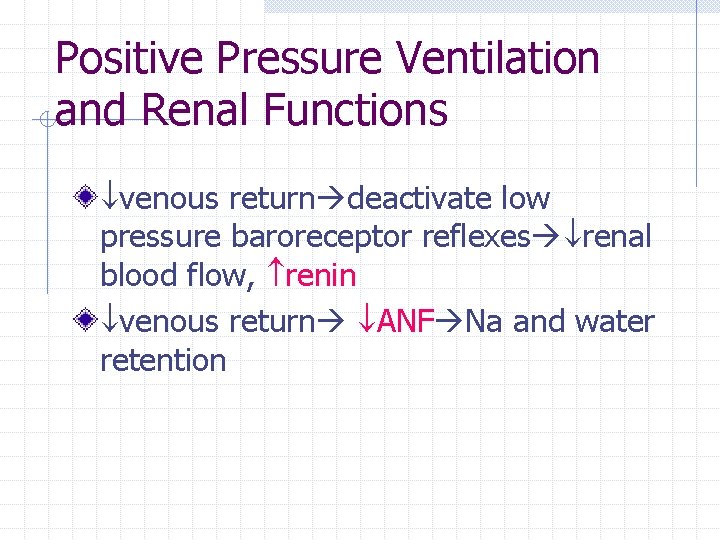
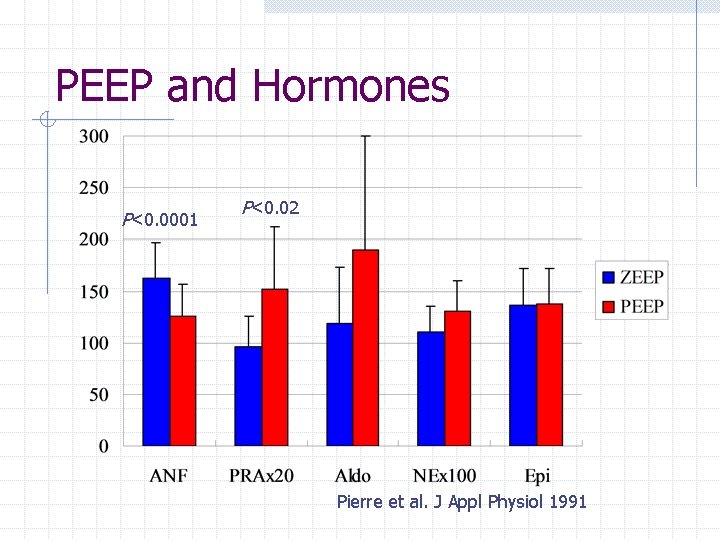
Positive Pressure Ventilation and Renal Functions venous return deactivate low pressure baroreceptor reflexes renal blood flow, renin venous return ANF Na and water retention
Renal Blood Flow vs. PEEP ZEEP PEEP 10 * RVP 10 ** PEEP 20 RVP 20 * ** Masahiro et al. CCM 1988
PEEP and Hormones P<0. 0001 P<0. 02 Pierre et al. J Appl Physiol 1991
PEEP and Natriuresis P<0. 0003 P<0. 0002 Pierre et al J Appl Physiol 1991
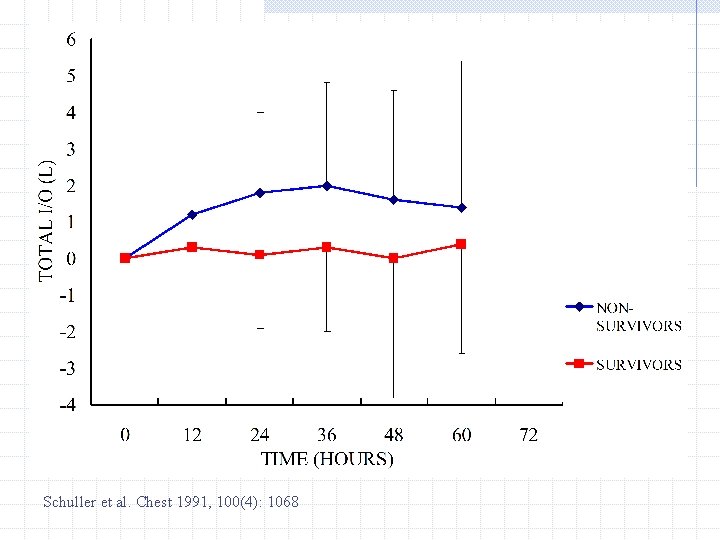
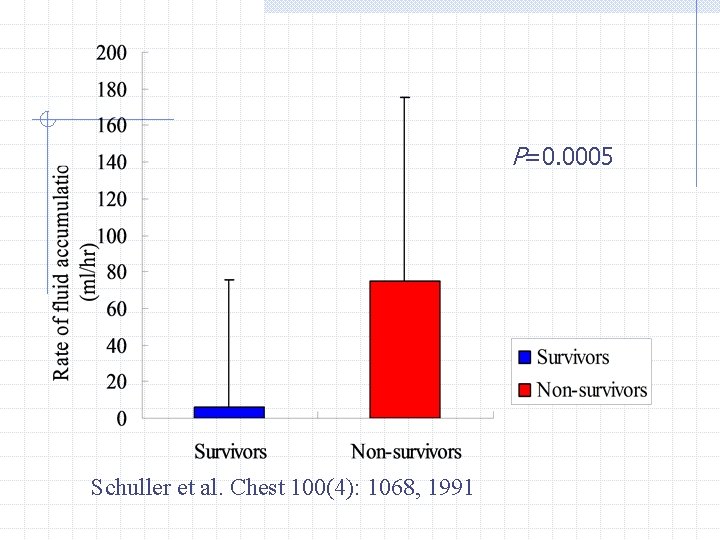
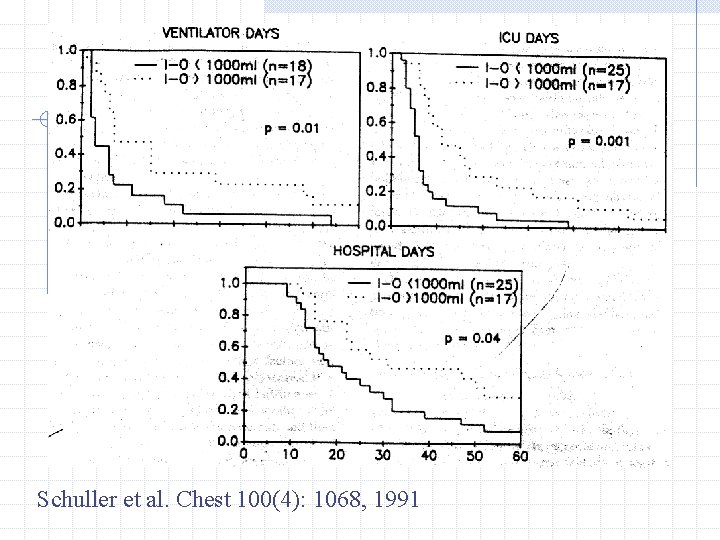
Schuller et al. Chest 1991, 100(4): 1068
P=0. 0005 Schuller et al. Chest 100(4): 1068, 1991
Schuller et al. Chest 100(4): 1068, 1991
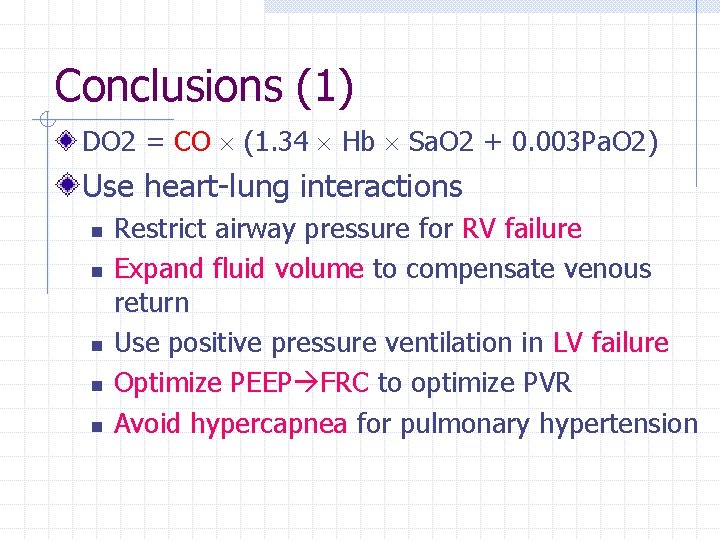
Conclusions (1) DO 2 = CO (1. 34 Hb Sa. O 2 + 0. 003 Pa. O 2) Use heart-lung interactions n n n Restrict airway pressure for RV failure Expand fluid volume to compensate venous return Use positive pressure ventilation in LV failure Optimize PEEP FRC to optimize PVR Avoid hypercapnea for pulmonary hypertension
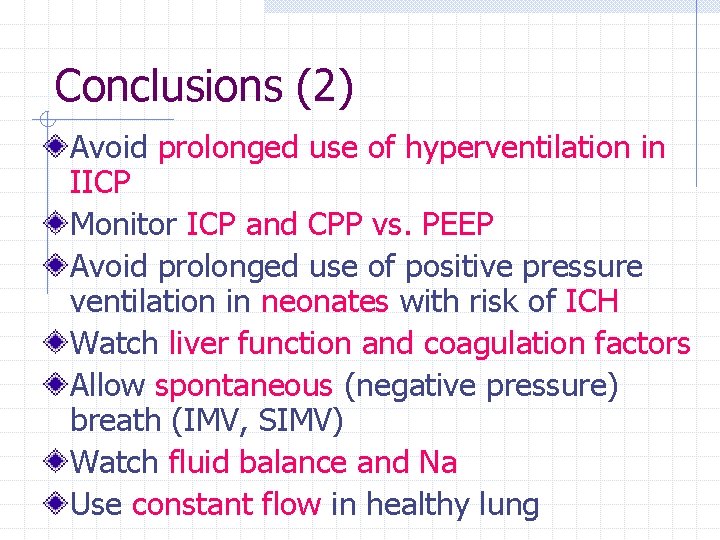
Conclusions (2) Avoid prolonged use of hyperventilation in IICP Monitor ICP and CPP vs. PEEP Avoid prolonged use of positive pressure ventilation in neonates with risk of ICH Watch liver function and coagulation factors Allow spontaneous (negative pressure) breath (IMV, SIMV) Watch fluid balance and Na Use constant flow in healthy lung
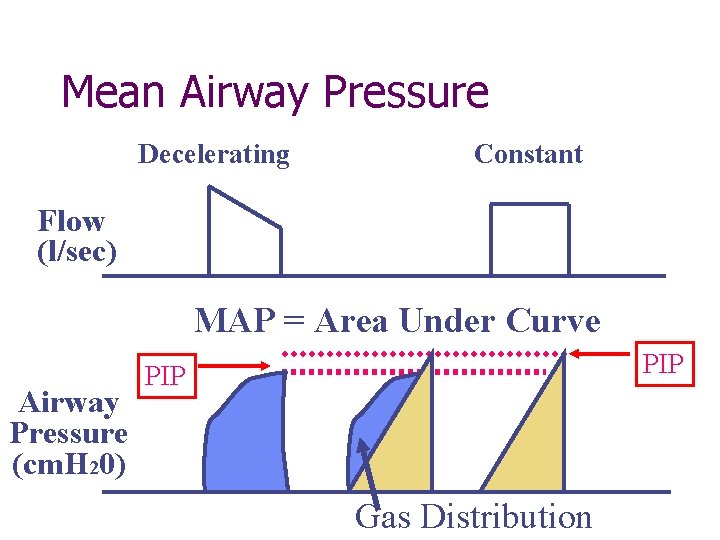
Mean Airway Pressure Decelerating Constant Flow (l/sec) MAP = Area Under Curve Airway Pressure (cm. H 20) PIP Gas Distribution