
How Populations Evolve Ch 23 Individuals are selected

- Slides: 19
How Populations Evolve Ch. 23 • Individuals are selected but populations evolve • i. e. English Peppered Moth • Populations (not individual organisms) are smallest units that can evolve • Population = group of individuals of same species at same place and time • Species = individuals that can reproduce and produce fertile offspring
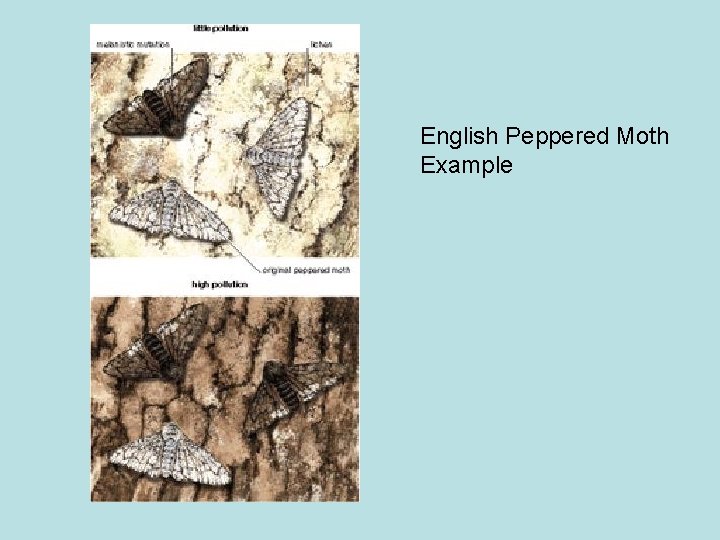
English Peppered Moth Example
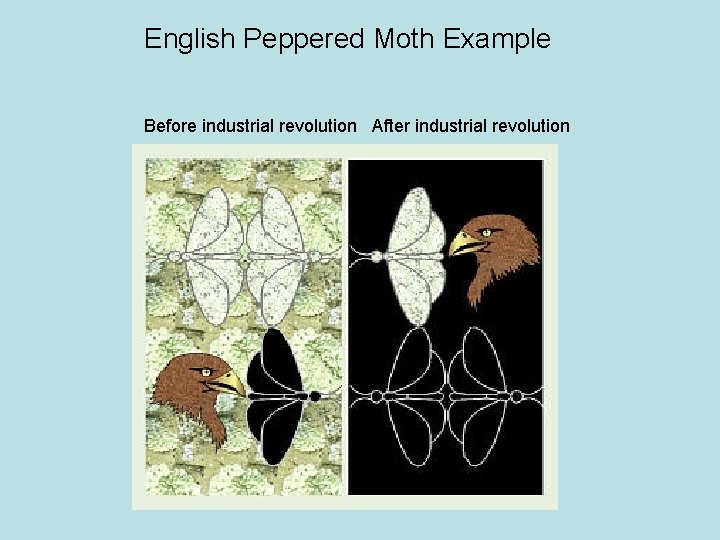
English Peppered Moth Example Before industrial revolution After industrial revolution
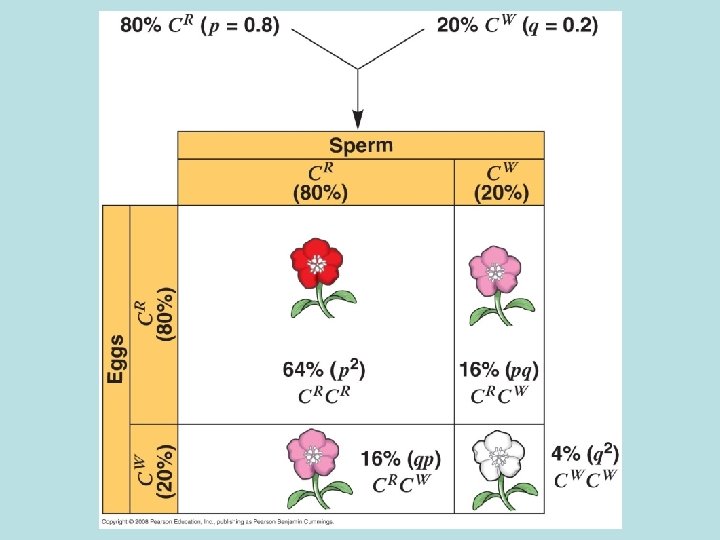
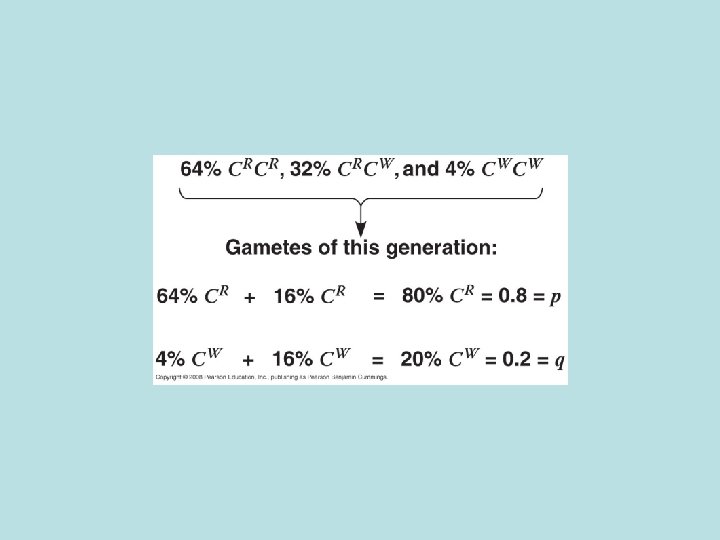
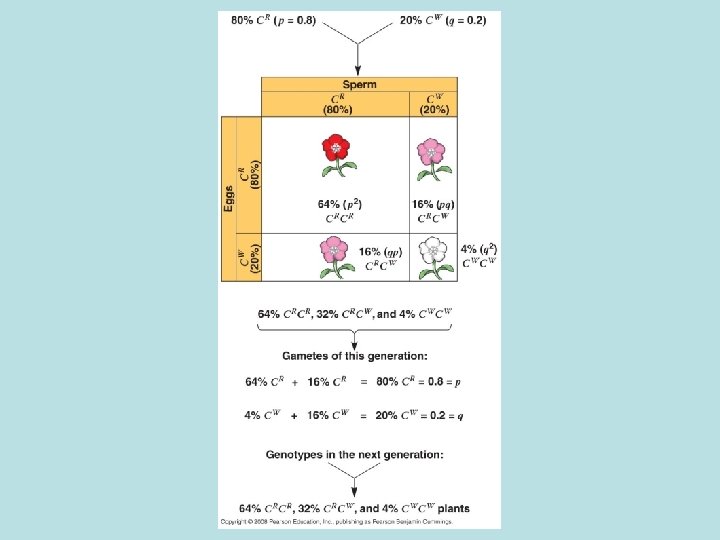
Population Genetics • Genome = total genes for individual (or species) • Gene pool = total genes of population • Population Genetics = Mendel + Darwin (Genetics) + (natural selection) • Microevolution = change in allele frequency (same as population genetics) • Hardy-Weinberg Law mathematical concepts to represent alleles in population Baseline for comparison
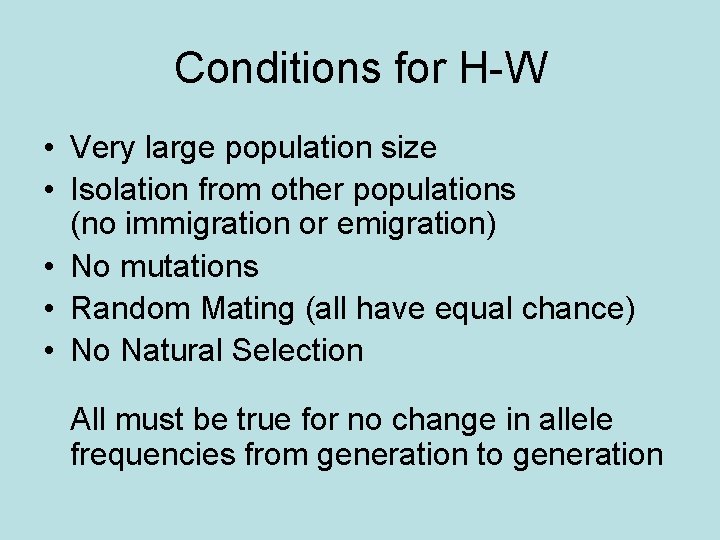
Conditions for H-W • Very large population size • Isolation from other populations (no immigration or emigration) • No mutations • Random Mating (all have equal chance) • No Natural Selection All must be true for no change in allele frequencies from generation to generation
Agents of Microevolution (If one condition of H-W not true) • Genetic drift (random changes in small populations) • Gene Flow (immigration and emigration) • Mutation • Nonrandom Mating (selecting for traits) • Natural selection
Genetic drift • Founder Effect: a few leave the larger population to start a new colony and thereby change the allele frequencies i. e. 1814 British colony founded on an island One individual was a carrier for retinitis pigmentosa which causes blindness Harmful recessive (aa) By the 1960’s 4 people had disease, 9 others carriers
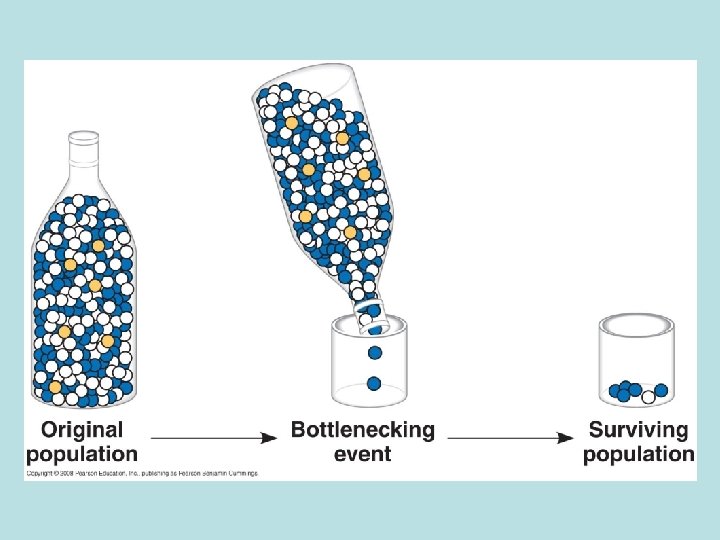
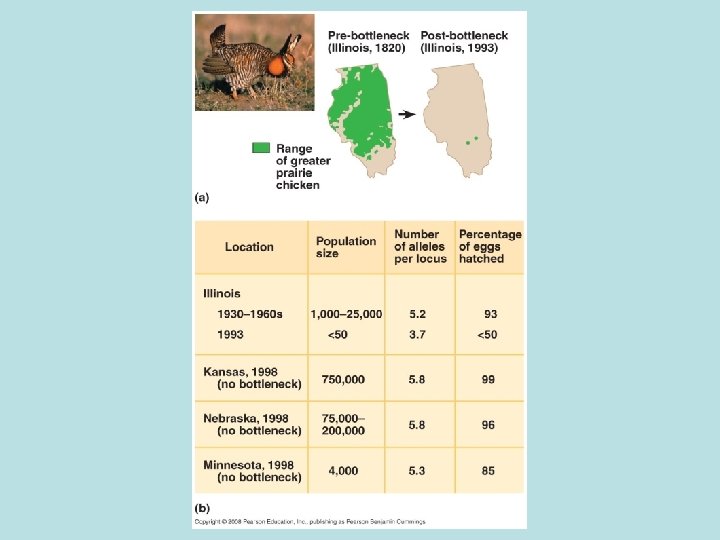
Genetic drift • Bottleneck Effect: some survive and some don’t by chance (not because they are more adapted) i. e. overhunting of northern elephant seals 1890’s hunters decreased population to 20 individuals, now even though population has increased to 30, 000, no genetic variation
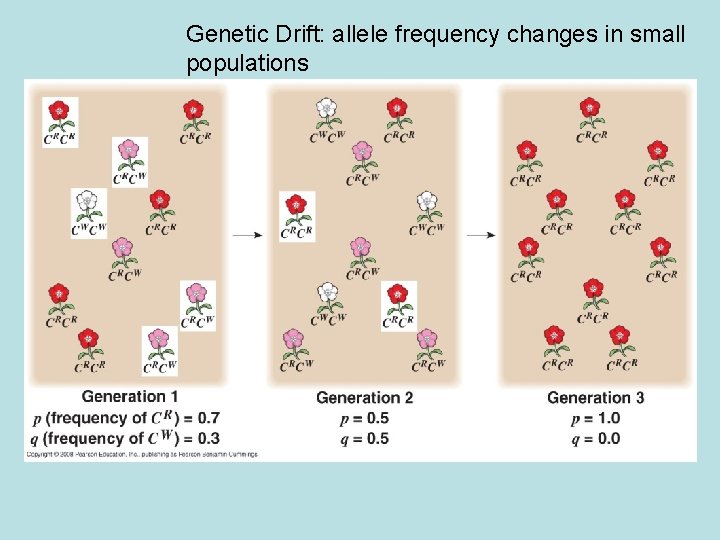
Genetic Drift: allele frequency changes in small populations
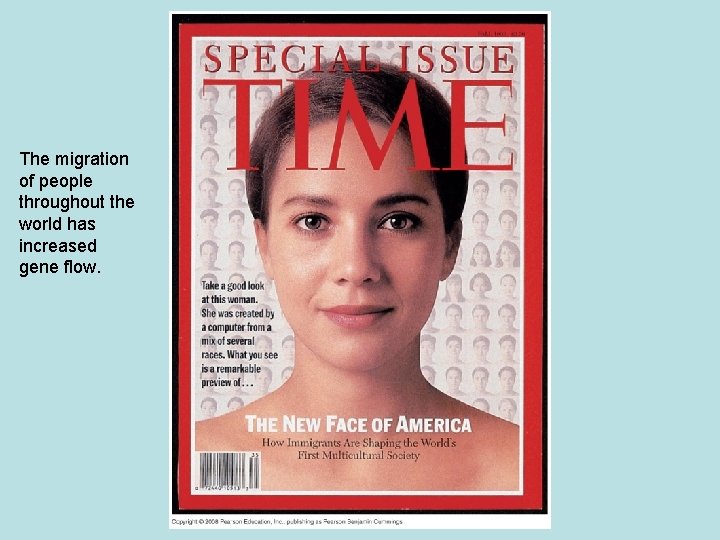
The migration of people throughout the world has increased gene flow.
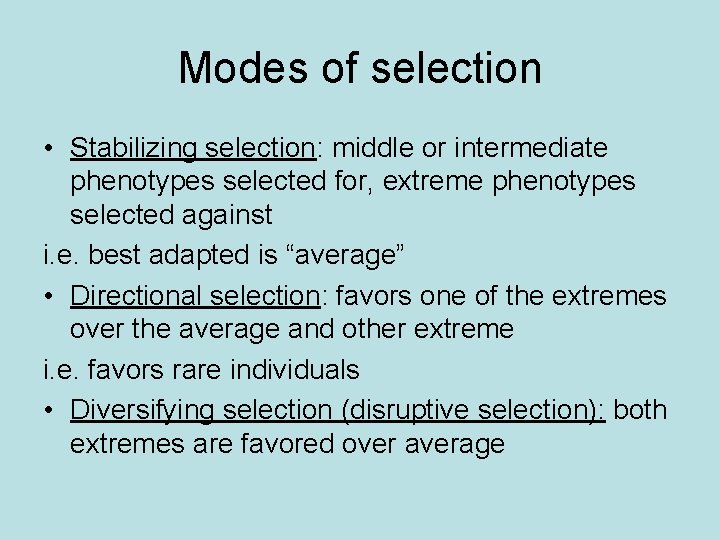
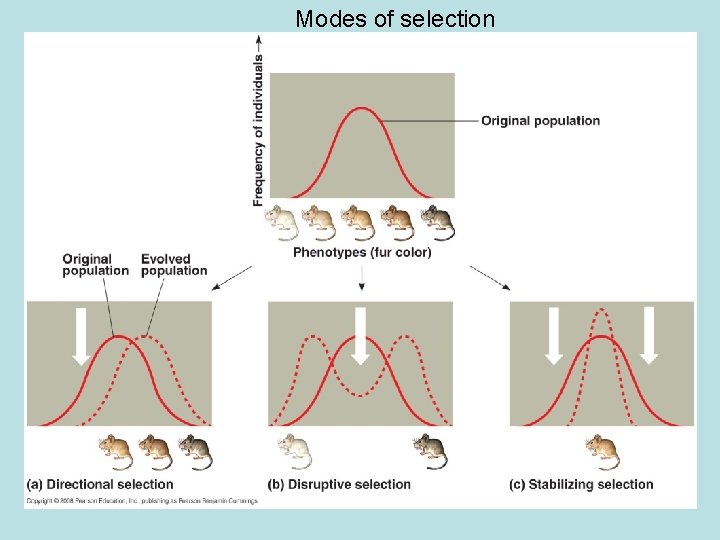
Modes of selection • Stabilizing selection: middle or intermediate phenotypes selected for, extreme phenotypes selected against i. e. best adapted is “average” • Directional selection: favors one of the extremes over the average and other extreme i. e. favors rare individuals • Diversifying selection (disruptive selection): both extremes are favored over average
Modes of selection