
How Personality Types Impact Communication and Leadership Five

- Slides: 39
How Personality Types Impact Communication and Leadership
Five Principles of Interpersonal Communication • We cannot communicate. • Communication is irreversible. • Interpersonal communication involves ethical choices. • Meanings are constructed in interpersonal communication. • Metacommunication (everything) affects meaning.
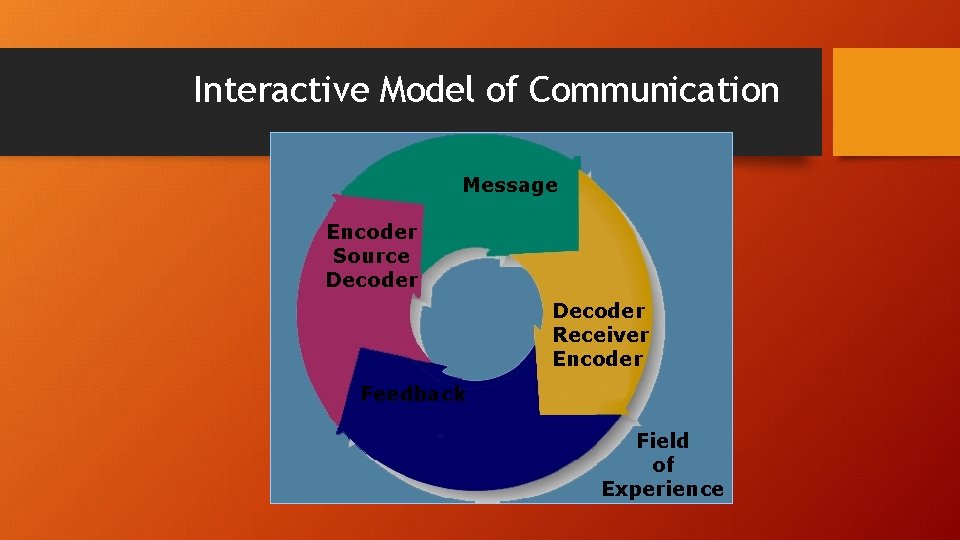
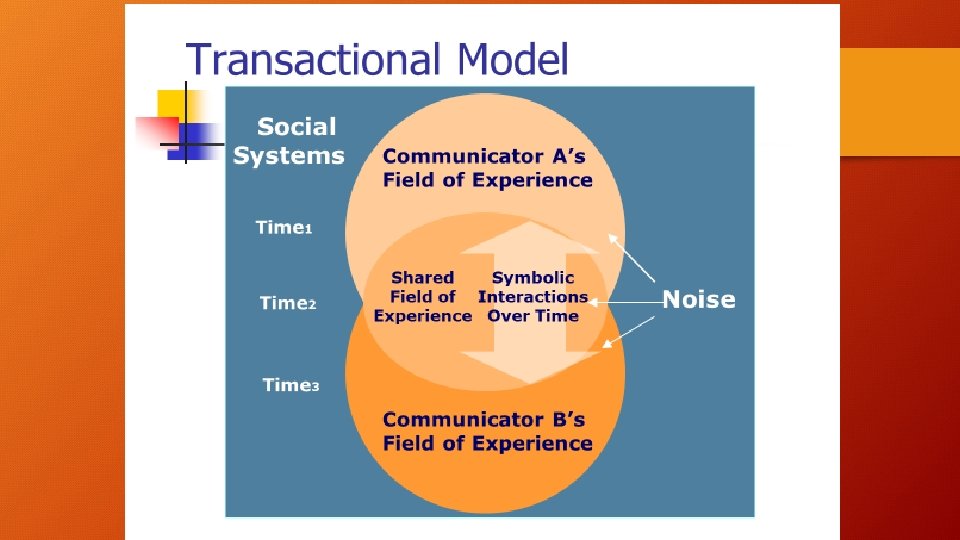
Communication models • Linear • Interactive • Transactional • Continuum
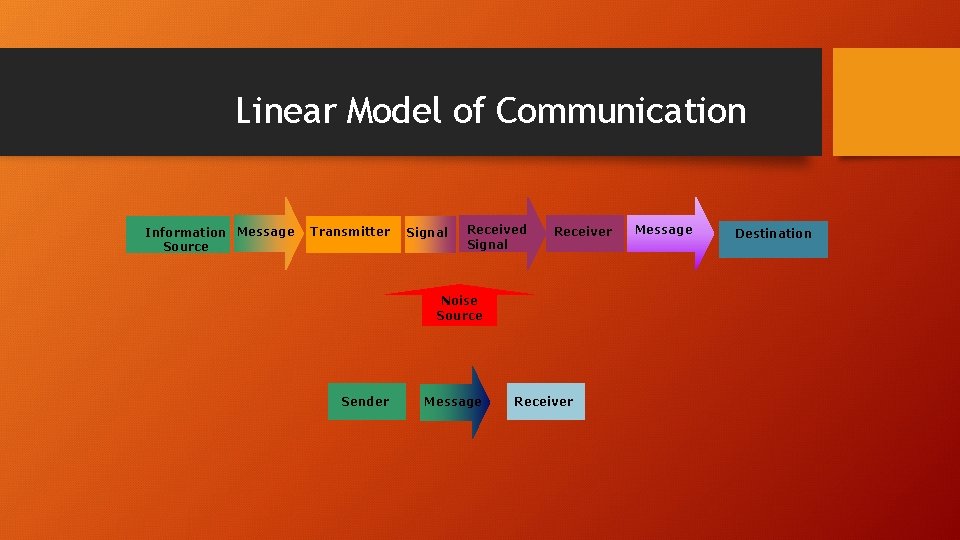
Linear Model of Communication Information Message Source Transmitter Signal Received Signal Receiver Noise Source Sender Message Receiver Message Destination
Linear Model Shortcomings • They portray communication as flowing in only one direction from sender to receiver. • They suggest that listeners passively absorb senders’ messages and do not respond. • They represent communication as a sequential set of actions in which one step (listening) follows an earlier step (talking).
Interactive Model of Communication Message Encoder Source Decoder Receiver Encoder Feedback Field of Experience
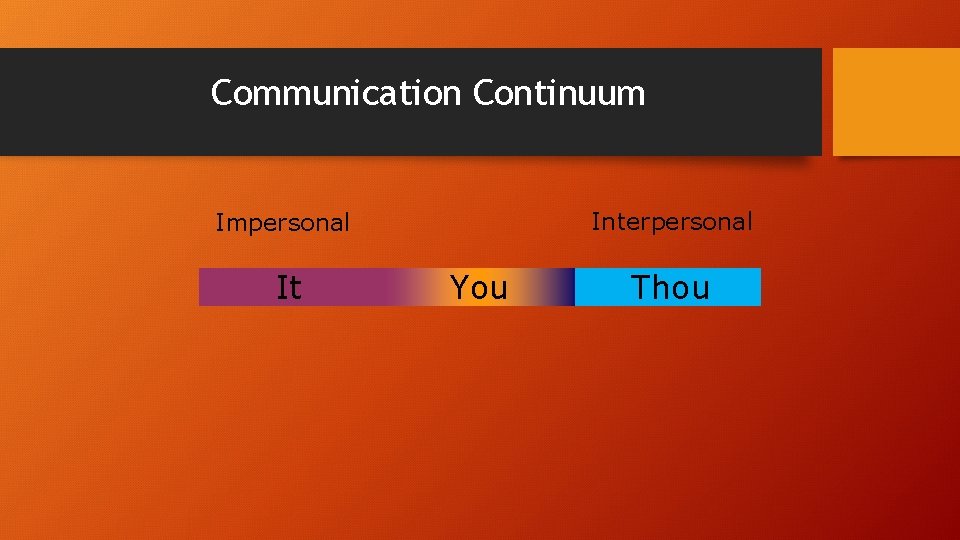
Communication Continuum Interpersonal Impersonal It You Thou
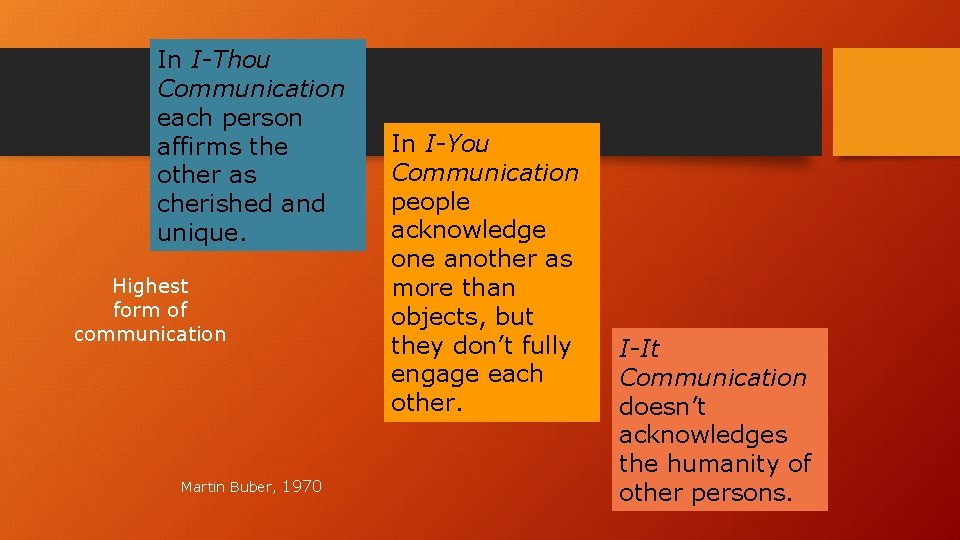
In I-Thou Communication each person affirms the other as cherished and unique. Highest form of communication Martin Buber, 1970 In I-You Communication people acknowledge one another as more than objects, but they don’t fully engage each other. I-It Communication doesn’t acknowledges the humanity of other persons.
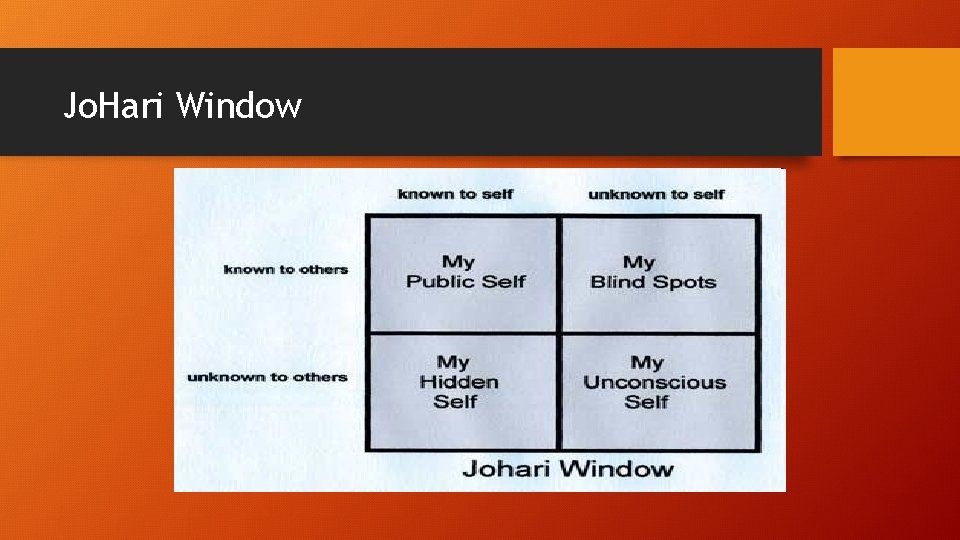
Jo. Hari Window
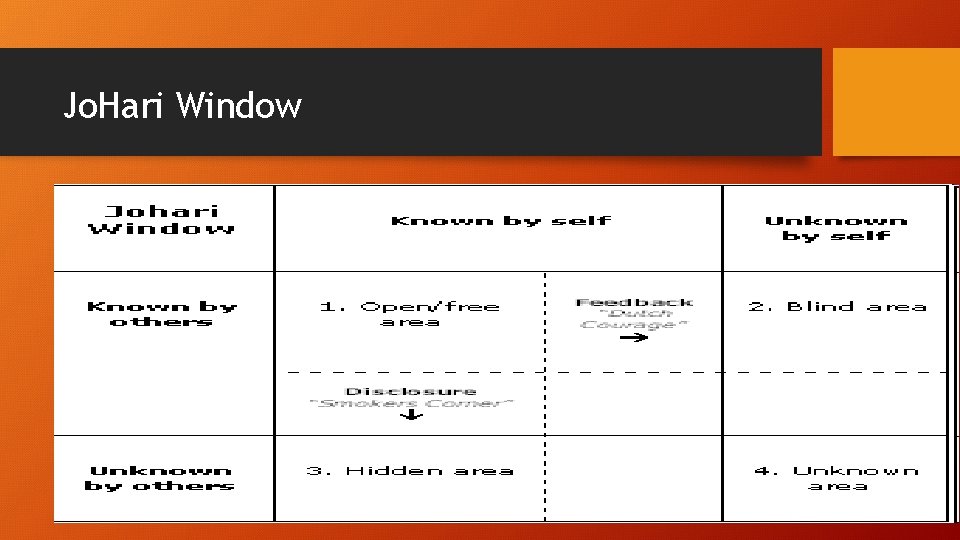
Jo. Hari Window
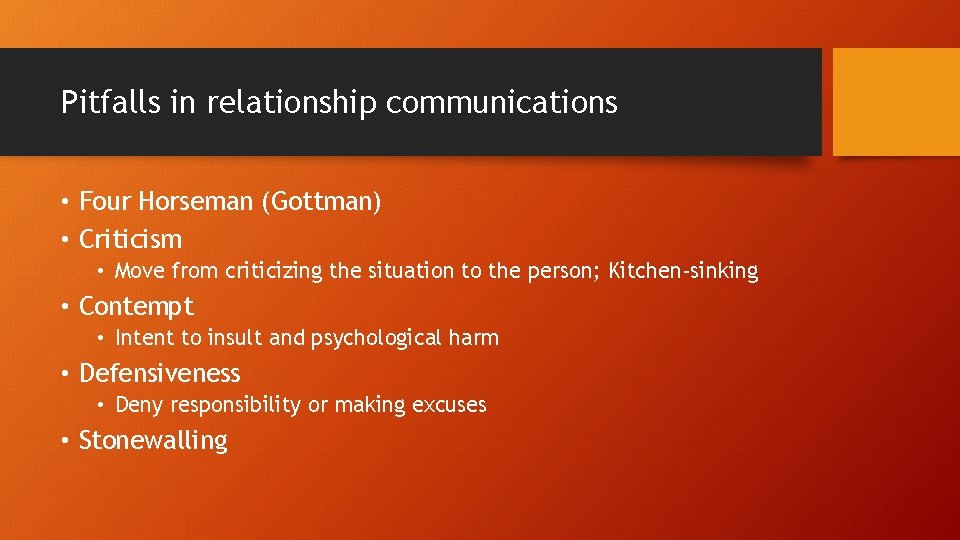
Pitfalls in relationship communications • Four Horseman (Gottman) • Criticism • Move from criticizing the situation to the person; Kitchen-sinking • Contempt • Intent to insult and psychological harm • Defensiveness • Deny responsibility or making excuses • Stonewalling
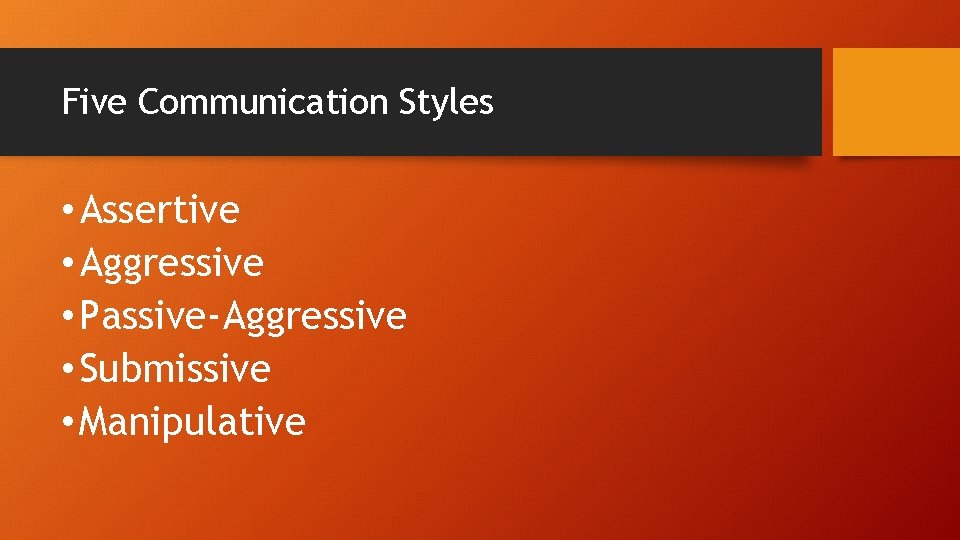
Five Communication Styles • Assertive • Aggressive • Passive-Aggressive • Submissive • Manipulative
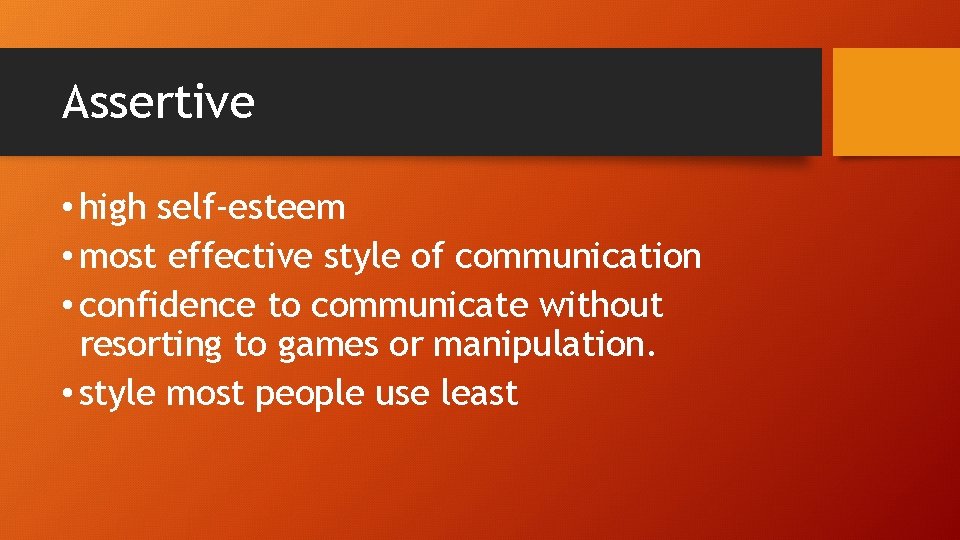
Assertive • high self-esteem • most effective style of communication • confidence to communicate without resorting to games or manipulation. • style most people use least
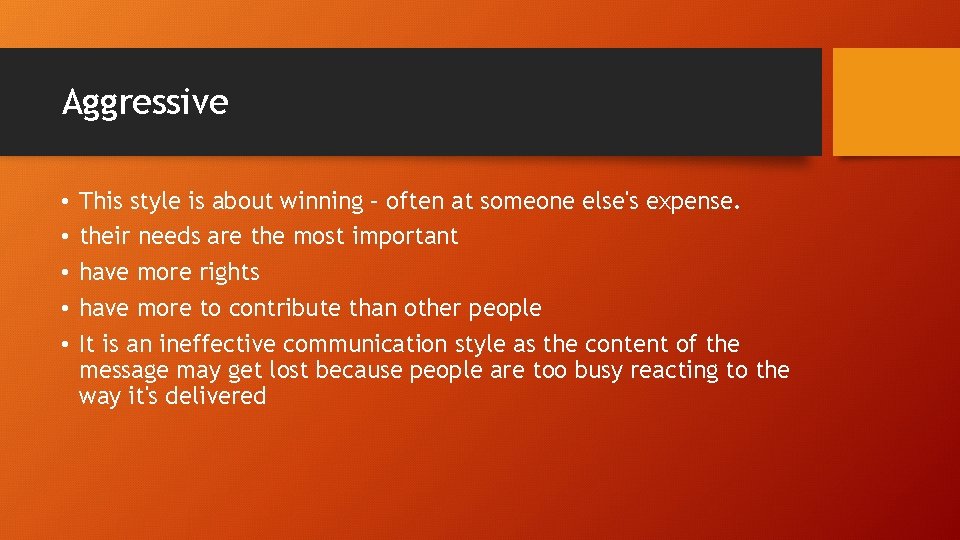
Aggressive • • • This style is about winning – often at someone else's expense. their needs are the most important have more rights have more to contribute than other people It is an ineffective communication style as the content of the message may get lost because people are too busy reacting to the way it's delivered
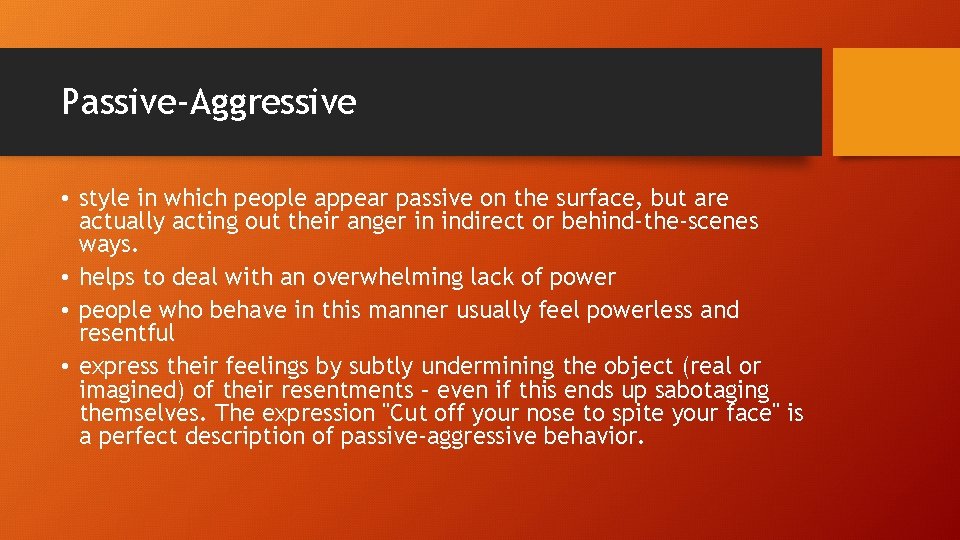
Passive-Aggressive • style in which people appear passive on the surface, but are actually acting out their anger in indirect or behind-the-scenes ways. • helps to deal with an overwhelming lack of power • people who behave in this manner usually feel powerless and resentful • express their feelings by subtly undermining the object (real or imagined) of their resentments – even if this ends up sabotaging themselves. The expression "Cut off your nose to spite your face" is a perfect description of passive-aggressive behavior.
Submissive • This style is about pleasing other people and avoiding conflict. A submissive person behaves as if other peoples' needs are more important, and other people have more rights and more to contribute.
Manipulative • This style is scheming, calculating and shrewd. Manipulative communicators are skilled at influencing or controlling others to their own advantage. • Their spoken words hide an underlying message, of which the other person may be totally unaware. • Often, the difference between this style and Passive. Aggressive is the underlying message
In reality… • We all use most, if not all of these communication styles. • As managers, supervisors, and leaders – need to learn to recognize how we communicate. • When dealing with employees and customers we really need to focus on using the assertive style of communication
In reality…. • Most disagreements and misunderstandings start with the phrase “but you said…” (or something similar) • Using the assertive style of communication puts the emphasis on you, the speaker, rather than on the listener which may make them defensive. This is in terms of requests not achievements!!! • “I felt bad when I heard that I might have hurt your feelings” rather than “you hurt my feelings” • Give the listener room to walk something back. Yes, it was said but context is important.
Assessments • There are many assessments available commercially. • They are all excellent • Which to choose? • Find one that matches your intended culture • Find one that is easy to administer • Who to administer? – most, if not all, require some sort of certification • What to do with the results
Red/Blue • Originally part of the R. S. A. P. Instrument (Runner Studies of Attitude Patterns) by Kenyon Runner • Used in textbook by Marcic, Seltzer and Vaill (no longer in print) • Puts individuals in one of three categories by their perception of time (time ignorers, clock-watchers and striped). • Look at similarities and differences – usually just a difference in viewpoint rather than the word (both groups like and dislike many of the same things just view them differently)
Personality Puzzle • Based on the work of Littauer and Littauer (similar to La. Haye’s work) • Groups people into overall groups of 4 • Perfect Melancholy, Powerful Choleric, Popular Sanguine, Peaceful Phlegmatic (Greek bodily humors) • One plus is that it is the only assessment that encourages the taker to solicit information from others if needed • Gives exact word definitons • Another plus - Spanish language version as well • Groups in Strengths and Weaknesses • Provides excellent communications overview • Negative – not validated (but still a very good instrument)
Gregorc Style Delineator • Based on the work of Anthony Gregorc • Groups of 4 (should start to see a pattern) • Perceptual Quality (Concrete or Abstract) and Ordering Ability (Sequential or Random) • CS, CR, AS, or AR • Easy to use, quick and timed (10 minutes) • Well validated • Good materials
Myers-Briggs Type Indicator Based on the original work of Carl Jung (grouped in 4) Added extra dimensions to give one of sixteen types Tons of material available Most are somewhat familiar with the instrument Long version is more accurate than the short instrument Can take some time to get results back – depends upon mode of delivery and contractor used • “Here’s to type” and other computer based programs can give individualized “feel” back to the participant • • •
Di. SC • Work of Marsten (yes – he of Wonder Woman fame) and Clarke • Marsten’s idea and Clarke worked it into an assessment • Groups people into 4 main groups - Dominance (D), Influence (I), Steadiness (S), and Conscientiousness (C) that are influenced by the other groups • Certification nice but not required! • 20 – 30 minutes • Available in Spanish • Scarily accurate
SAL • Self-Assessment Library • Supplement to Organizational Behavior textbook by Stephen Robbins • Collection of several self-assessments used to guide the student to better self-awareness • Owned by Pearson Publishing (they own most assessments used in Counseling) • Computer based • Immediate personalized feedback and grouped together – just a really good overview of where you are as a person and employee
Use of Personality Assessments in HR • Be CAREFUL • You cannot base promotions or job assignments on these assessments • You can use them as team builders or professional development • Be careful with the results • Excellent tools to give supervisors and managers • Excellent tools to give ALL employees
Use of Personality Assessments in HR • Be aware of the propensity for participant bias • These are mostly self reflections – hard to see the “real me” • Be aware of observer bias as well – we see what we want to see as well in employees • Do not use in performance appraisals • Use as a tool of reference NOT as a tool for improvement • This may really be a case that the “Expert” is from outside • Not any more “expert” just will not be seen as being manipulative
Leadership Styles • • • Leaders are born, created, taught and mentored Anyone can lead if they truly desire Leaders are not always supervisors, managers and executives Not all supervisors, managers and executives are leaders Leadership, at times, is an ambiguous concept
Leadership Styles • • Transformational (Downton) very intrinsic process Transactional (Kuhnert; Hersey and Blanchard) Theory X and Theory Y (Mac. Gregor) Situational Leadership (Hersey and Blanchard) Many more – these are just the easiest to discuss Just as in communications – we use all of them Keep in mind the idea of Social Exchange Theory (Equity Theory)
How to coach and use • First, you need to decide on what it is you want to accomplish • You may want to get input from unbiased and unconcerned third parties – MSU Small Business development. • Management Professors, Counseling Professors or Psychology professors at MSU. Several area consultants available • Determine the amount of upper management support you have for the project – is it redefining company culture (massive task) or just providing some good feedback for a particular group (not as massive) • Immediate results do not always translate into long term results • Provide both group and individualized feedback and training sessions
Three Sad but true Case Studies • I gave a presentation to a leadership group with all the warnings • A manager decided to use the instrument at place of business • Graded all employees not the same as the manager as “needs improvement” – morale was low – went even lower • Undergrad student gave classroom instruments to spouse. Told spouse this is what you are doing wrong. • Spouse was very upset. Spouse came to visit me. • I worked in a high functioning, high performance work team. New member brought in. High functioning went to non-functioning. Corporate I/O brought in to work out issues. • All members quit but one.
Wrap up • • • Learning Objective 1 The participant will be familiar with different personality types. Enabling Objective 1 Presentation will cover basic personality assessments commercially available Red/Blue Personality puzzle MBTI Gregorc Style Delineator Enabling Objective 2 Use of personality assessments in HR
Wrap up • • • Learning Objective 2 The participant will be familiar with different communication systems Enabling Objective 1 Presentation will cover Principle of Interpersonal Communication Presentation will cover basic communication model theories Enabling Objective 2 Presentation will cover pitfalls in communication Basic pitfalls Jo. Hari Window Passive-Aggressive
Wrap up • Learning Objective 3 • The participant will be familiar with basic Leadership styles • Enabling Objective 1 • Presentation will cover basic leadership theories
Wrap up • Learning Objective 4 • The participant will be familiar with the role of communication in leadership • Enabling Objective 1 • Use of personality assessment results with individual members of management • Use of case studies to aid in the implementation of various communication styles • Enabling Objective 2 • When to use personality assessments • How to coach employees on the use of assessment results
I am…. • Dr. Don Knox • Professor of Behavioral and Social Sciences; Education and Management • Wayland Baptist University • knox@wbu. edu • 806. 292. 7021
I was…. • Former HR Manager • Former Production Line Supervisor • Former Startup Engineer • Former Vibration Analyst • Former Power Plant Auxiliary Operator • Former Staff Trainer and Leading Electrical Petty Officer - USN • Former stocker of shelves, waxer of floors and cleaner of restrooms • Former cleaner of tables and short order cook