
How Oregon State University manages Large Scale Drupal



- Slides: 46
How Oregon State University manages Large Scale Drupal and how to learn from our mistakes Paul Lieberman Non-Profit, Government, and Higher Education. May 21, 2013 Building Bridges, Connecting Communities
Oregon State University Corvallis, OR USA http: //oregonstate. edu http: //drupal. oregonstate. edu Paul Lieberman paul. lieberman@oregonstate. edu Sher Fenn sherri. fenn@oregonstate. edu OSU Open Source Lab We host Drupal. org! http: //osuosl. org/services/hosting/communities
Today’s Presentation • How OSU was successful in deploying and maintaining a large Drupal installation. • What we are working on currently. • What we have in development for the future.
Drupal at OSU • We’ve done a lot of things right that have allowed us to scale to over a thousand installed Drupal sites. • We’ve been victims of our own success – we don’t need that many sites. • Having to support our legacy environment is holding us back.
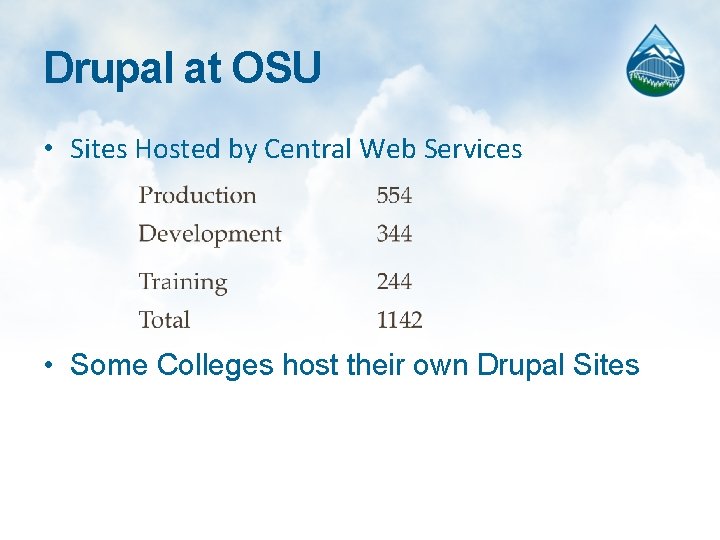
Drupal at OSU • Sites Hosted by Central Web Services • Some Colleges host their own Drupal Sites
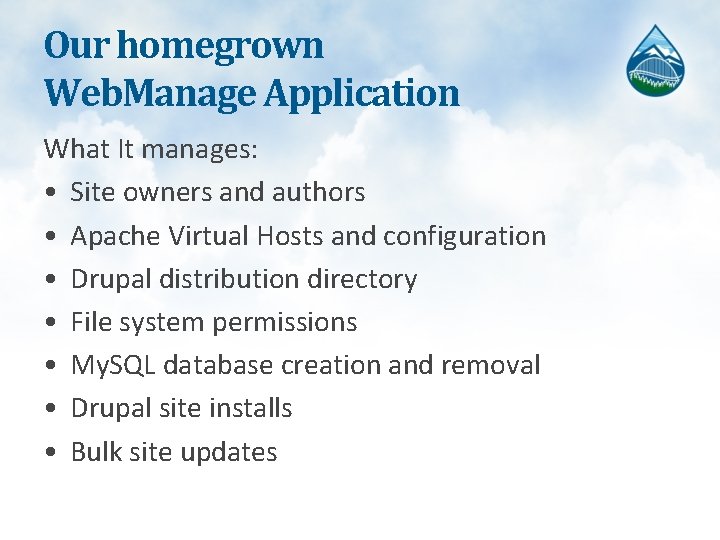
Our homegrown Web. Manage Application What It manages: • Site owners and authors • Apache Virtual Hosts and configuration • Drupal distribution directory • File system permissions • My. SQL database creation and removal • Drupal site installs • Bulk site updates
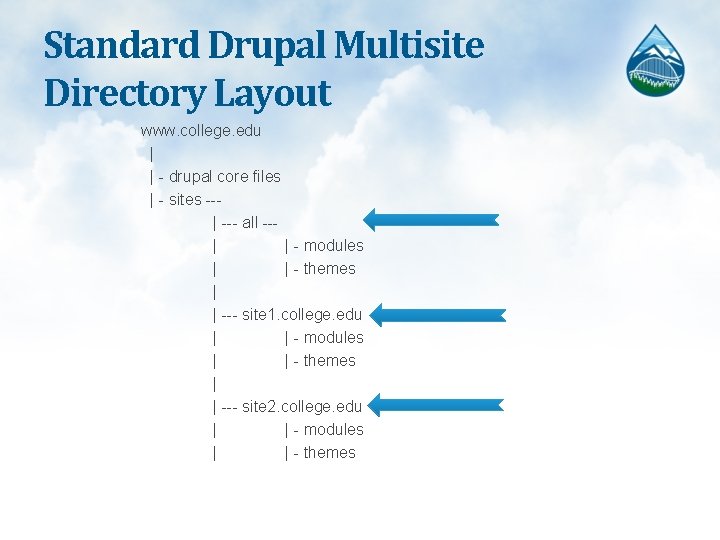
Standard Drupal Multisite Directory Layout www. college. edu | | - drupal core files | - sites --| --- all --| | - modules | | - themes | | --- site 1. college. edu | | - modules | | - themes | | --- site 2. college. edu | | - modules | | - themes
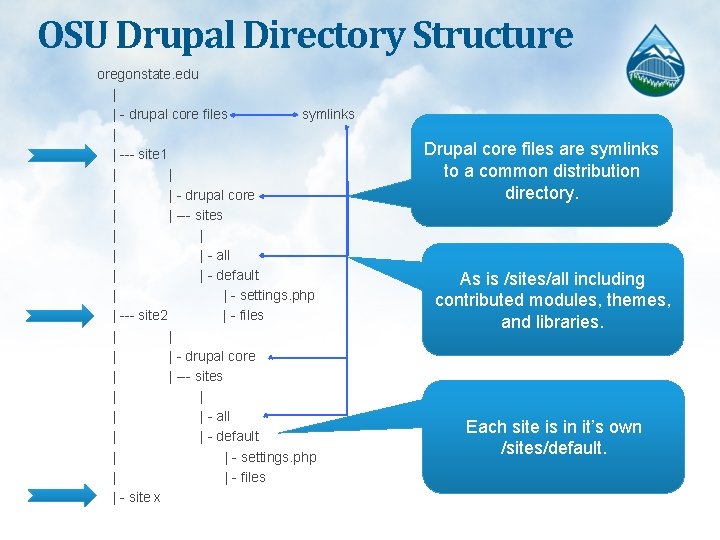
OSU Drupal Directory Structure oregonstate. edu | | - drupal core files symlinks | | --- site 1 | | - drupal core | | --- sites | | - all | | - default | | - settings. php | --- site 2 | - files | | - drupal core | | --- sites | | - all | | - default | | - settings. php | | - files | - site x Drupal core files are symlinks to a common distribution directory. As is /sites/all including contributed modules, themes, and libraries. Each site is in it’s own /sites/default.
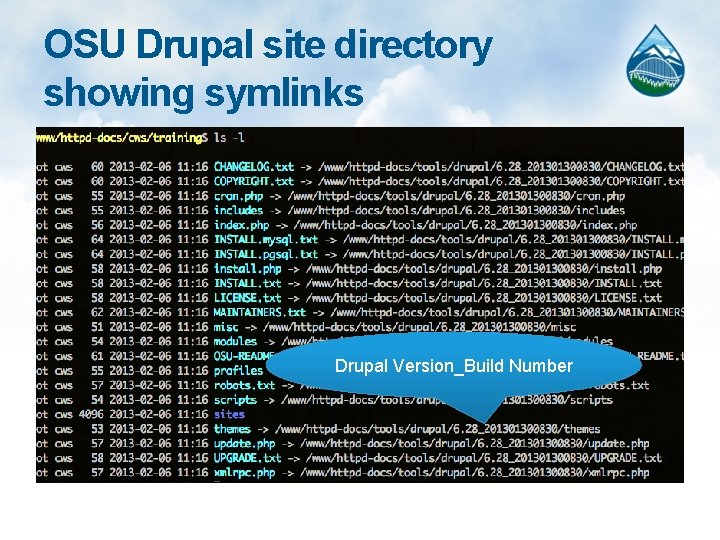
OSU Drupal site directory showing symlinks Drupal Version_Build Number
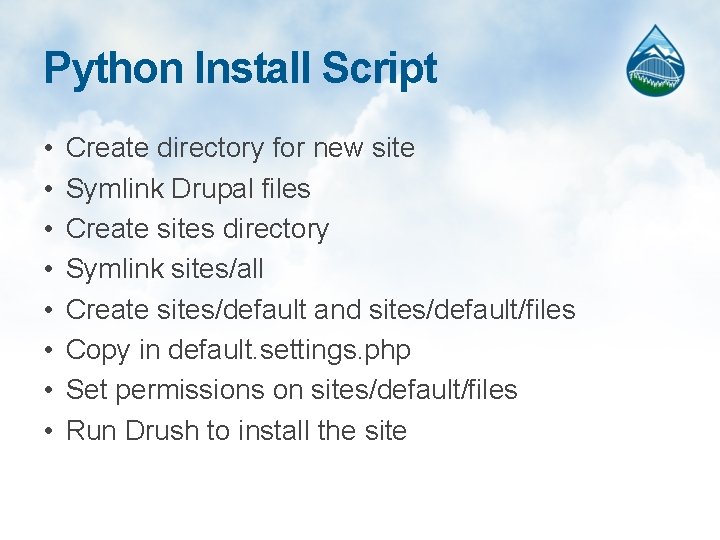
Python Install Script • • Create directory for new site Symlink Drupal files Create sites directory Symlink sites/all Create sites/default and sites/default/files Copy in default. settings. php Set permissions on sites/default/files Run Drush to install the site
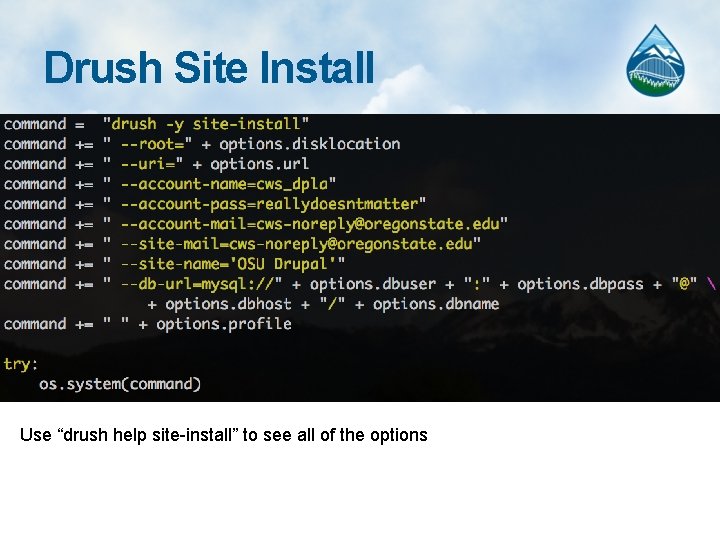
Drush Site Install Use “drush help site-install” to see all of the options
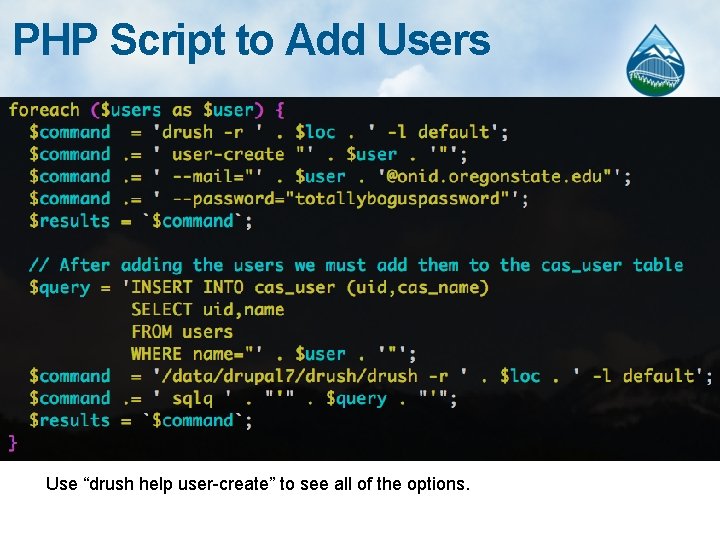
PHP Script to Add Users Use “drush help user-create” to see all of the options.
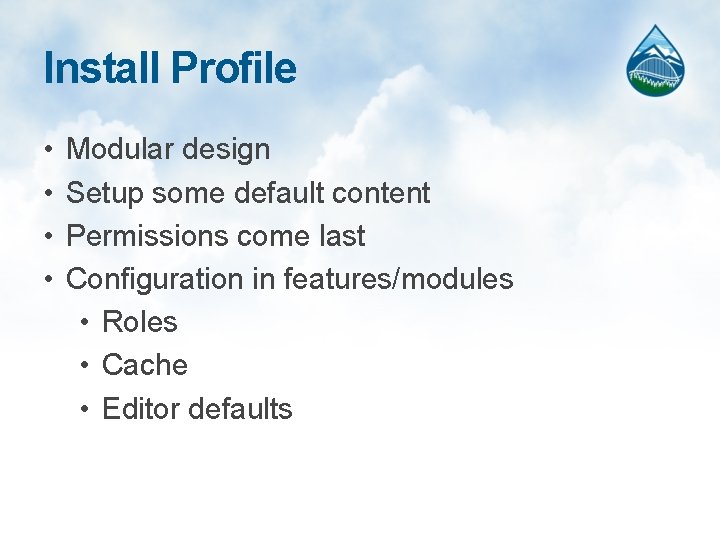
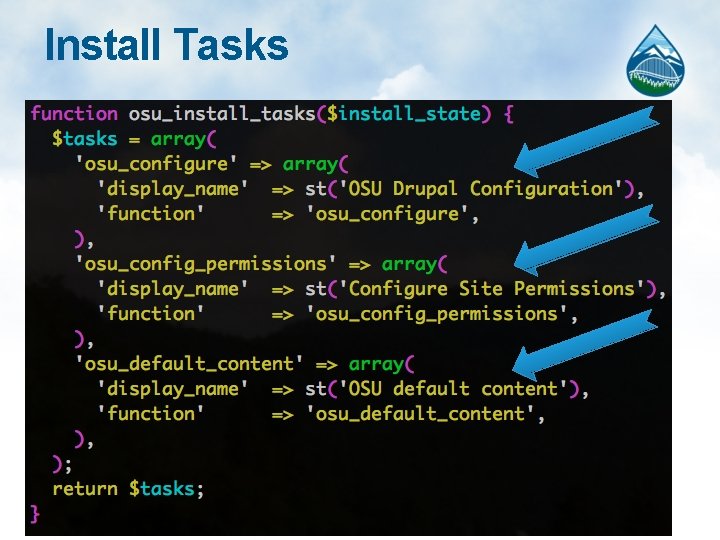
Install Profile • • Modular design Setup some default content Permissions come last Configuration in features/modules • Roles • Cache • Editor defaults
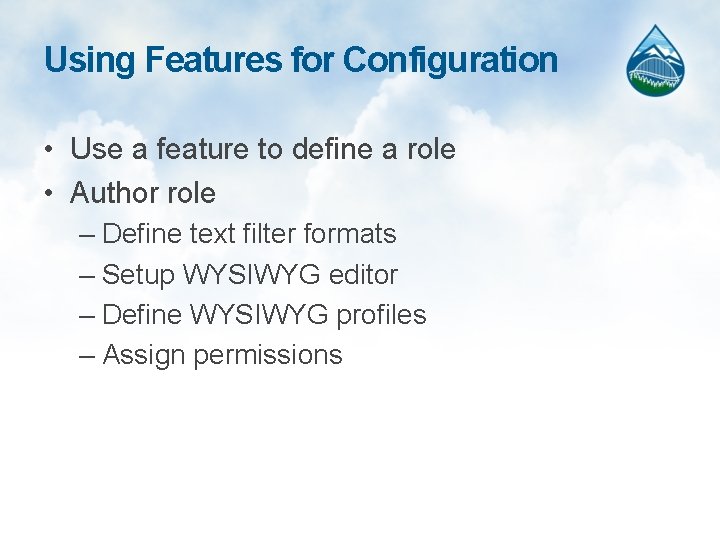
Using Features for Configuration • Use a feature to define a role • Author role – Define text filter formats – Setup WYSIWYG editor – Define WYSIWYG profiles – Assign permissions
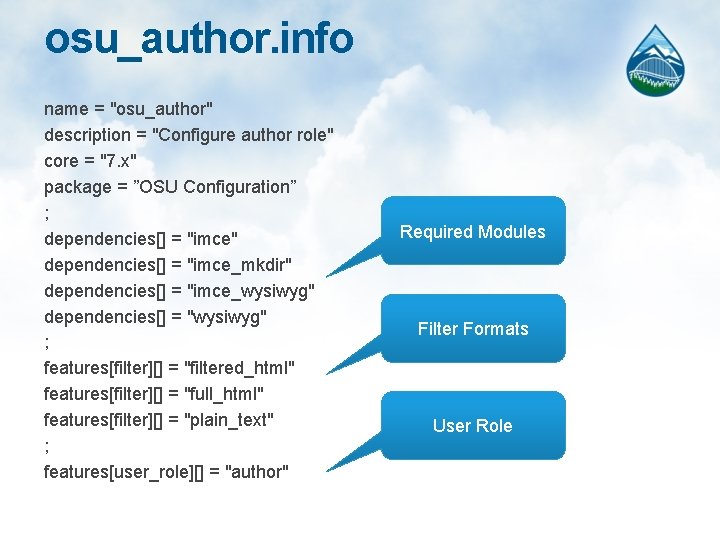
osu_author. info name = "osu_author" description = "Configure author role" core = "7. x" package = ”OSU Configuration” ; dependencies[] = "imce" dependencies[] = "imce_mkdir" dependencies[] = "imce_wysiwyg" dependencies[] = "wysiwyg" ; features[filter][] = "filtered_html" features[filter][] = "full_html" features[filter][] = "plain_text" ; features[user_role][] = "author" Required Modules Filter Formats User Role
Install Tasks
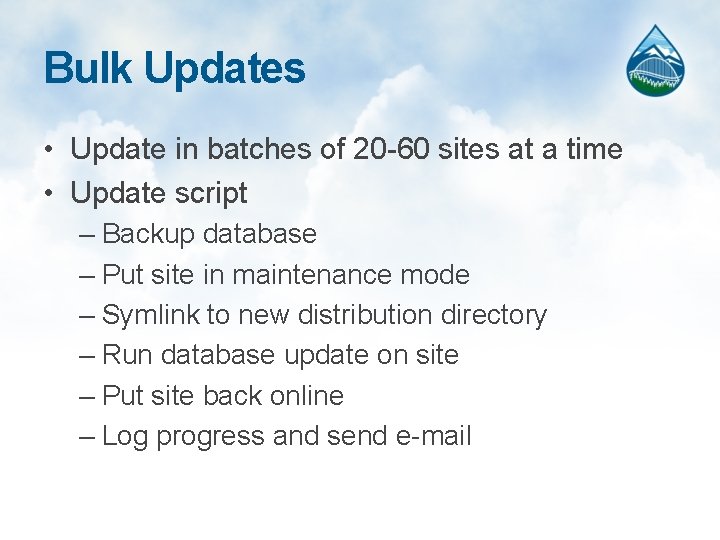
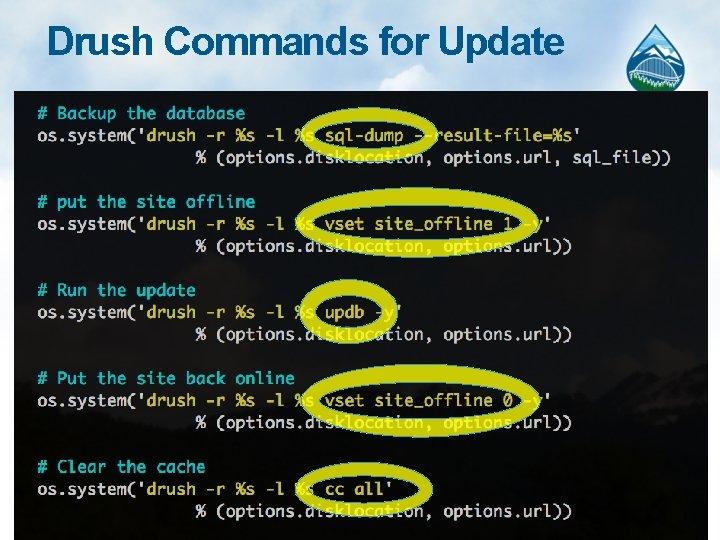
Bulk Updates • Update in batches of 20 -60 sites at a time • Update script – Backup database – Put site in maintenance mode – Symlink to new distribution directory – Run database update on site – Put site back online – Log progress and send e-mail
Drush Commands for Update
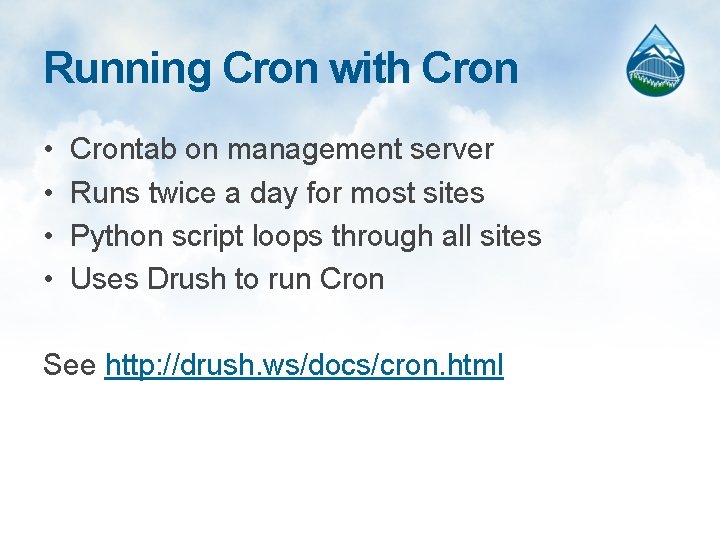
Running Cron with Cron • • Crontab on management server Runs twice a day for most sites Python script loops through all sites Uses Drush to run Cron See http: //drush. ws/docs/cron. html
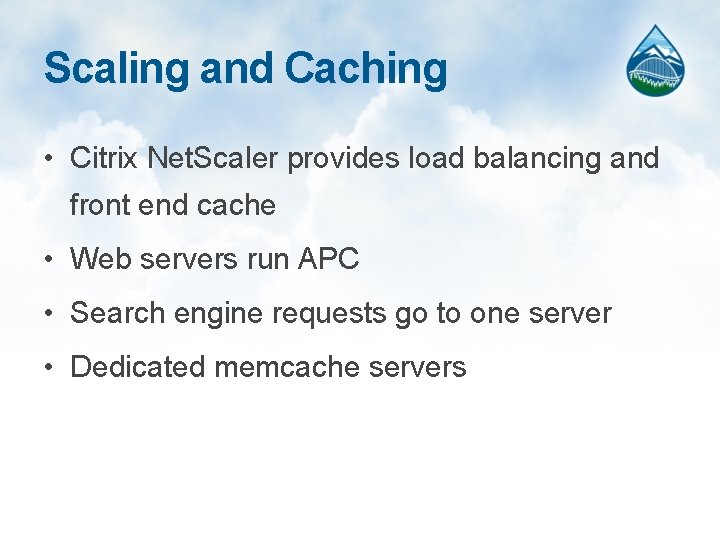
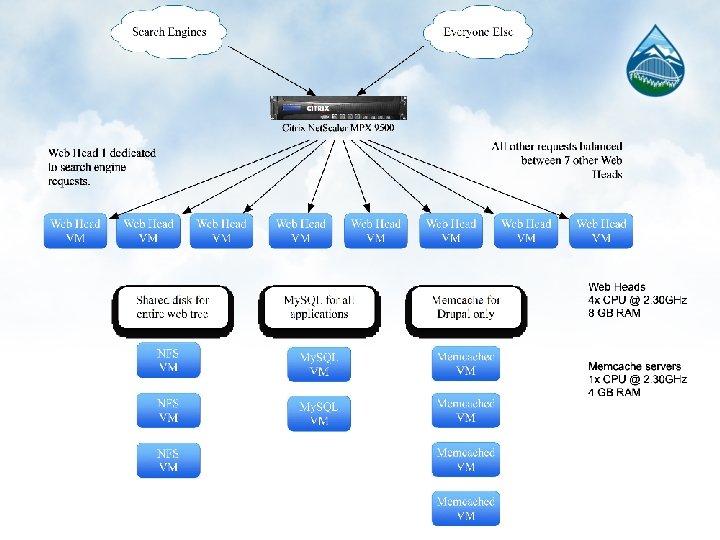
Scaling and Caching • Citrix Net. Scaler provides load balancing and front end cache • Web servers run APC • Search engine requests go to one server • Dedicated memcache servers
Managing our distribution • Drupal 6 still using SVN – Entire distribution in repository • Drupal 7 using Drush Make and Git – Makefile updated for each release – Custom modules and themes in Git – Core and Contrib pulled from drupal. org – Local Git. Lab for custom projects
Drush Make File • • Specific version of core Specific versions of contributed modules Core and contrib pulled from drupal. org Local git repo for custom modules and themes • Libraries pulled from respective repos with git, or get (for. zip, . tar. gz files).
Some of our weaknesses • • Shared infrastructure Administrative overhead Learning curve for site maintainers Manual clone dev to production Manual distribution maintenance Updates take a long time No automated site removal
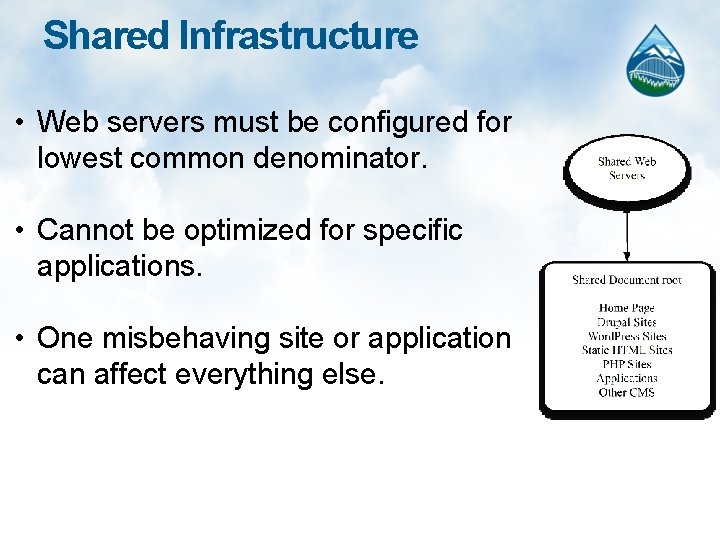
Shared Infrastructure • Web servers must be configured for lowest common denominator. • Cannot be optimized for specific applications. • One misbehaving site or application can affect everything else.
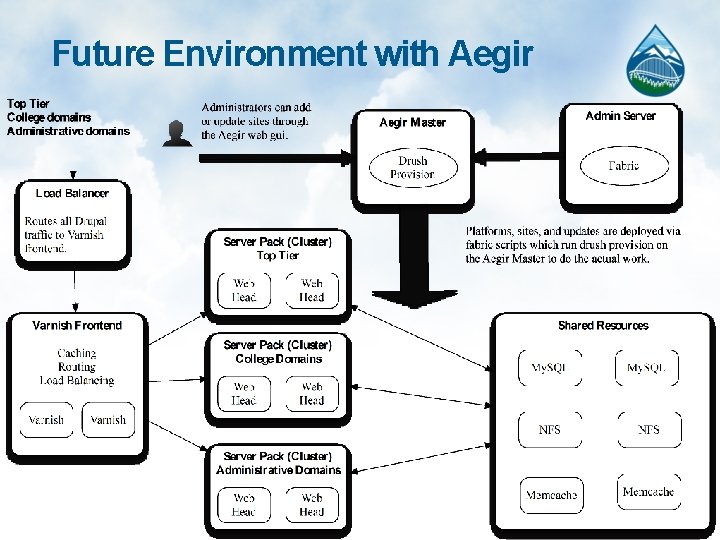
In Progress • Site consolidation in Drupal 7 • Dedicated infrastructure for Drupal • Phase out Web. Manage in favor of Aegir • Leverage Aegir backend (Provision)
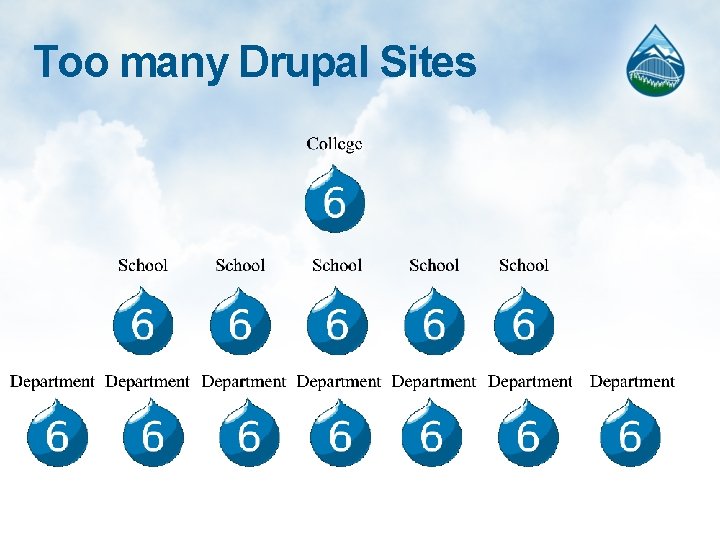
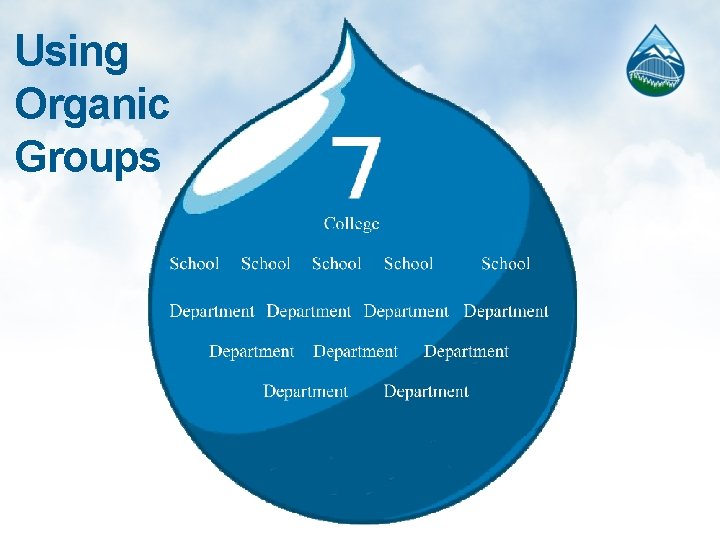
Site Consolidation • Too many Drupal sites leads to: – Unnecessary administrative overhead – Inability to share data between units – Disjointed navigation within large units • With Drupal 7 we are using Organic Groups to enable us to consolidate large sites.
Too many Drupal Sites
Using Organic Groups
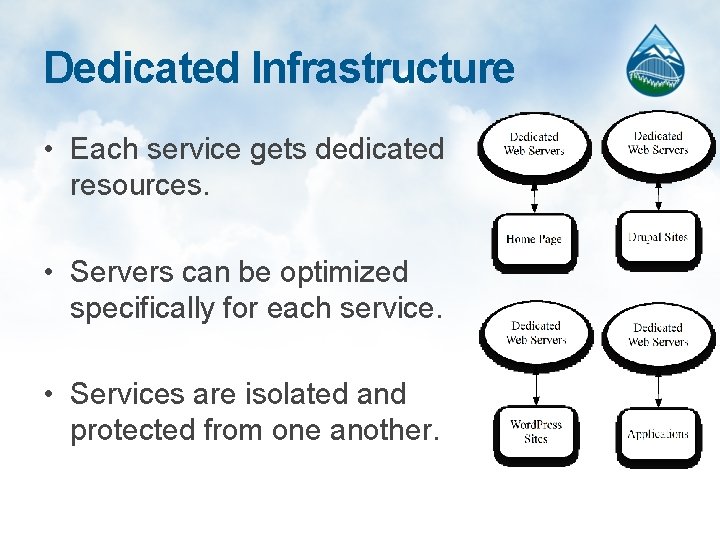
Dedicated Infrastructure • Each service gets dedicated resources. • Servers can be optimized specifically for each service. • Services are isolated and protected from one another.
Future Environment with Aegir
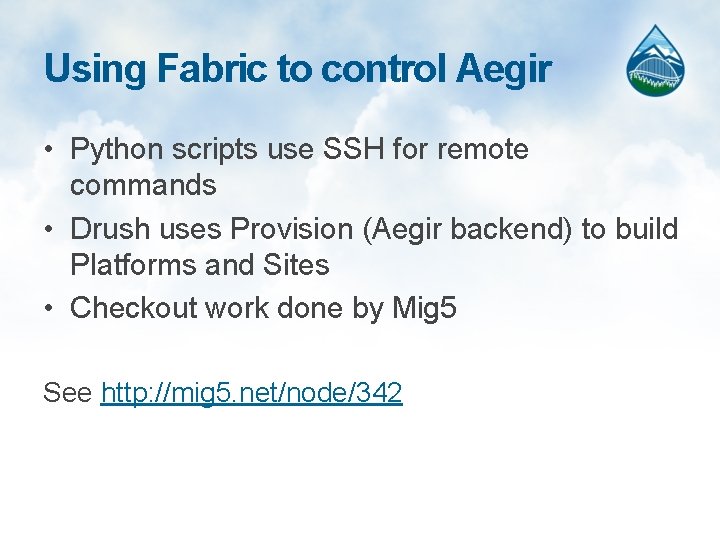
Using Fabric to control Aegir • Python scripts use SSH for remote commands • Drush uses Provision (Aegir backend) to build Platforms and Sites • Checkout work done by Mig 5 See http: //mig 5. net/node/342
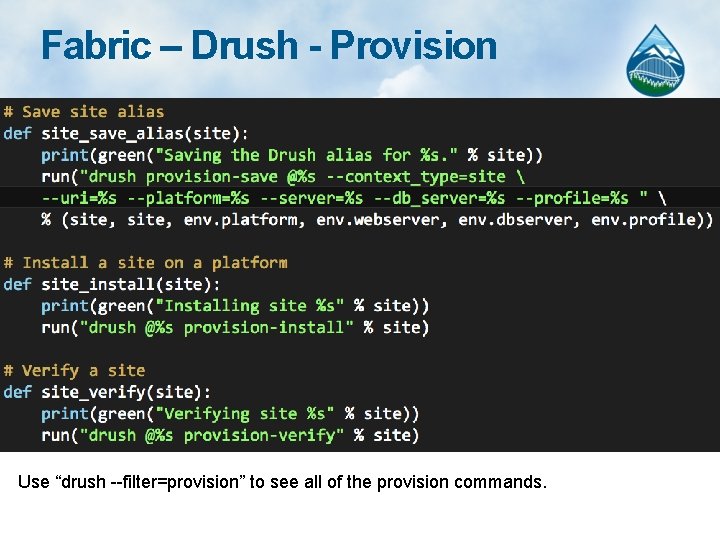
Fabric – Drush - Provision Use “drush --filter=provision” to see all of the provision commands.
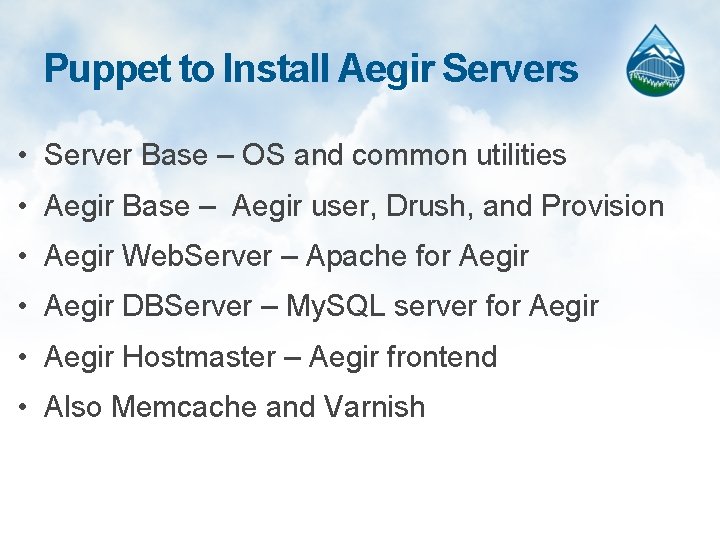
Puppet to Install Aegir Servers • Server Base – OS and common utilities • Aegir Base – Aegir user, Drush, and Provision • Aegir Web. Server – Apache for Aegir • Aegir DBServer – My. SQL server for Aegir • Aegir Hostmaster – Aegir frontend • Also Memcache and Varnish
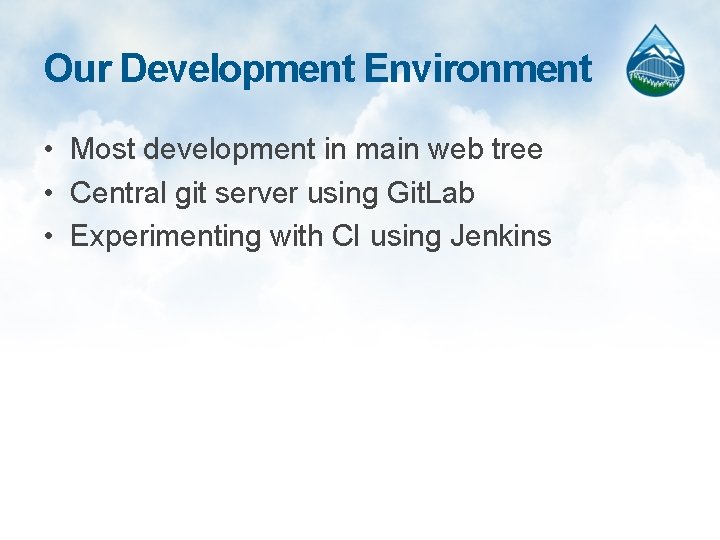
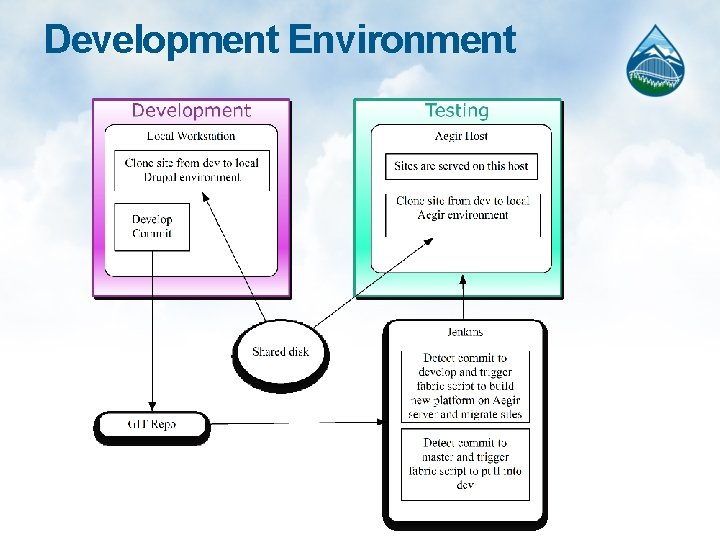
Our Development Environment • Most development in main web tree • Central git server using Git. Lab • Experimenting with CI using Jenkins
Development Environment
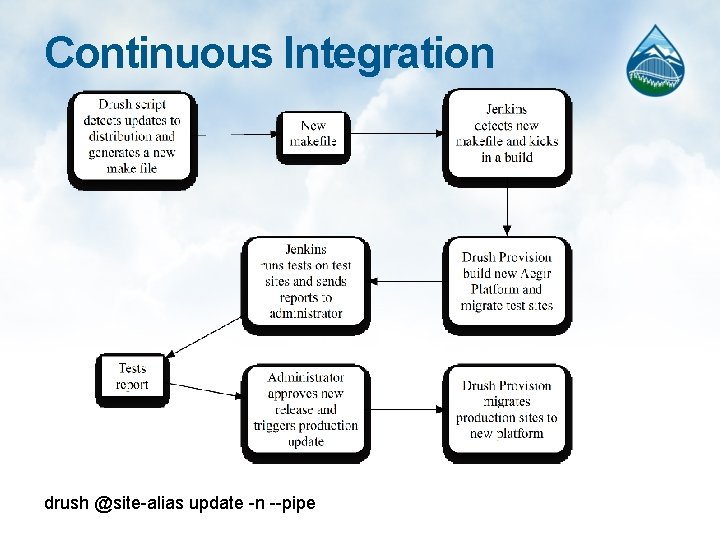
Continuous Integration drush @site-alias update -n --pipe
Looking Ahead • Self service site provisioning • Auto expire/delete for training and dev sites • Drupal site Control Panel • Drupal systems dashboard
Self Service Site Provisioning • Pilot using training sites • Drupal form to request a site • Drush Provision creates the site • Site monitored for inactivity • Warning sent to site owner for inactive sites • If no activity after a set period sites are archived and deleted.
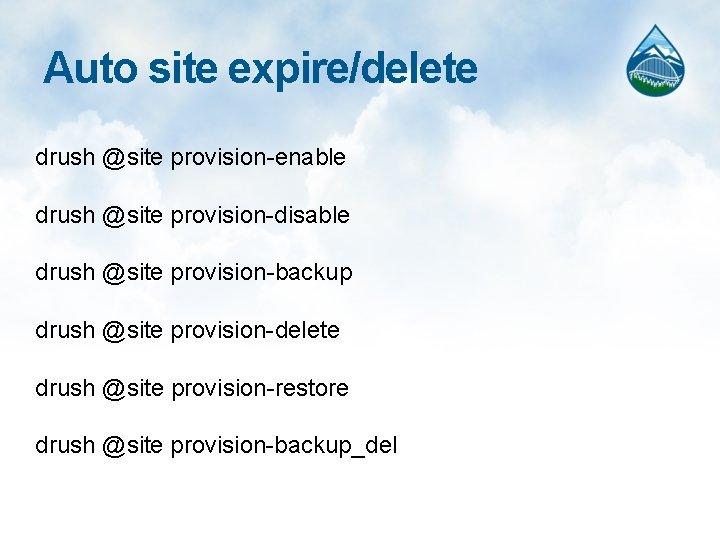
Auto site expire/delete drush @site provision-enable drush @site provision-disable drush @site provision-backup drush @site provision-delete drush @site provision-restore drush @site provision-backup_del
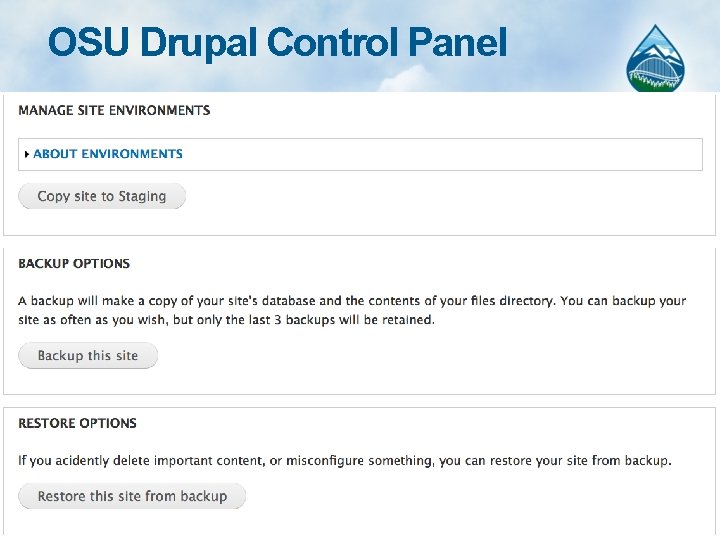
OSU Drupal Control Panel
Control Panel Backend • Copy site to dev, staging, or production – Drush provision-clone • Backup site – Drush provision-backup • Restore site – Drush provision-restore
What really makes us successful? • All the great people working on Drupal at OSU. • The Drupal community.
Resources • Mig 5’s Zero Touch Drupal Deployment – http: //mig 5. net/node/342 • Code Driven Development – http: //nuvole. org/blog/2011/mar/25/code-drivendevelopment-cheatsheet • OSU code on Github – https: //github. com/oregonstateuniv/puppet-aegir – https: //github. com/oregonstateuniv/fabric-aegir – https: //github. com/oregonstateuniv/drupal-install-profile
Questions?
What did you think? Evaluate this session at: portland 2013. drupal. org/schedule. Thank you! Building Bridges, Connecting Communities