
How old is the Earth The 1600s Archbishop
How old is the Earth?
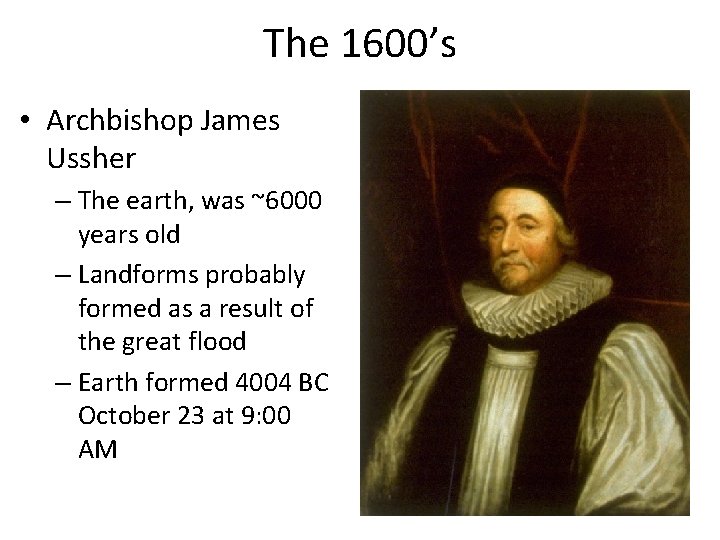
The 1600’s • Archbishop James Ussher – The earth, was ~6000 years old – Landforms probably formed as a result of the great flood – Earth formed 4004 BC October 23 at 9: 00 AM
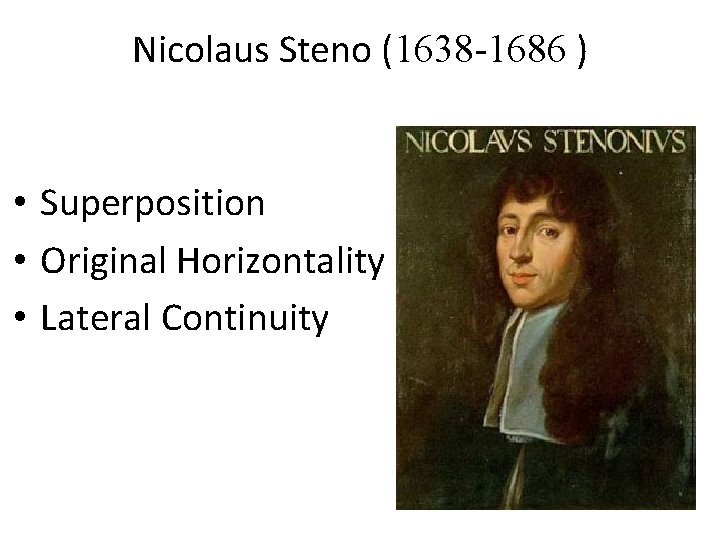
Nicolaus Steno (1638 -1686 ) • Superposition • Original Horizontality • Lateral Continuity
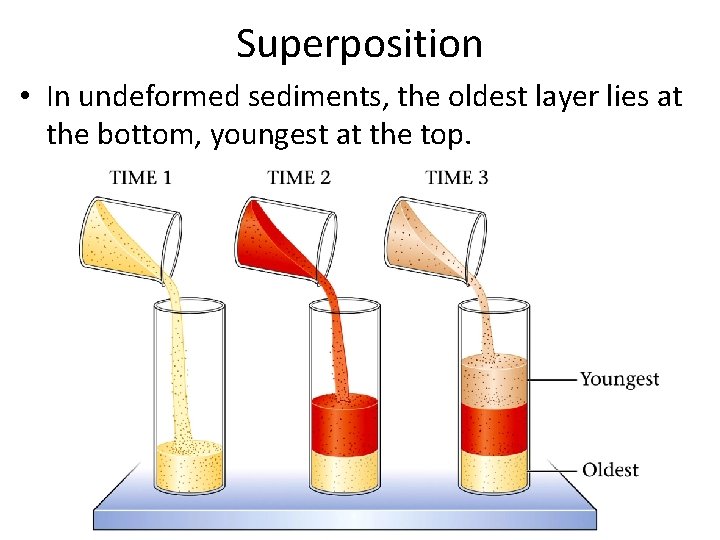
Superposition • In undeformed sediments, the oldest layer lies at the bottom, youngest at the top.
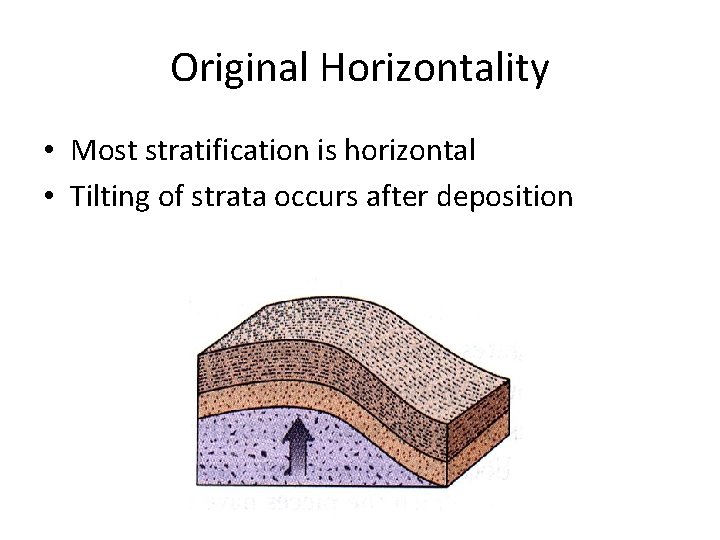
Original Horizontality • Most stratification is horizontal • Tilting of strata occurs after deposition
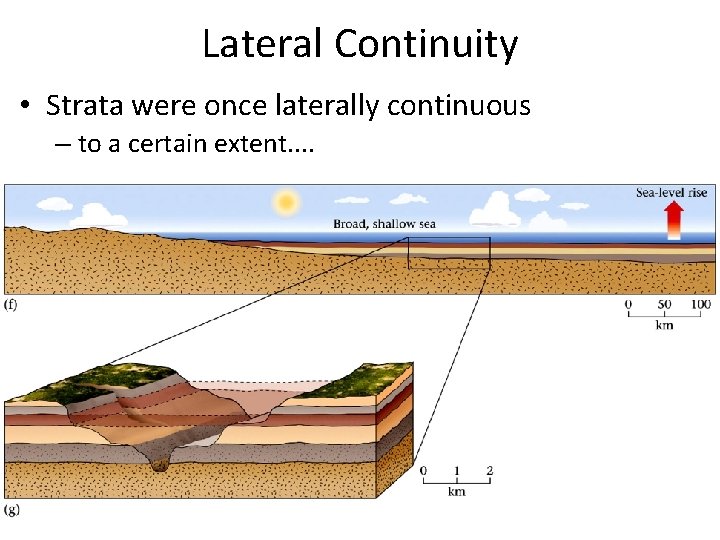
Lateral Continuity • Strata were once laterally continuous – to a certain extent. .
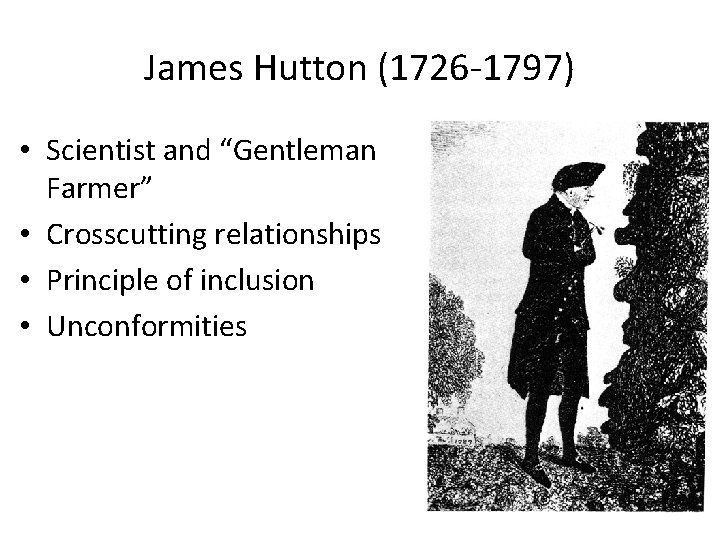
James Hutton (1726 -1797) • Scientist and “Gentleman Farmer” • Crosscutting relationships • Principle of inclusion • Unconformities
Crosscutting Relationships • Something that cuts across another must be younger than the material being crosscut. – Examples: Faulting and Igneous Intrusion
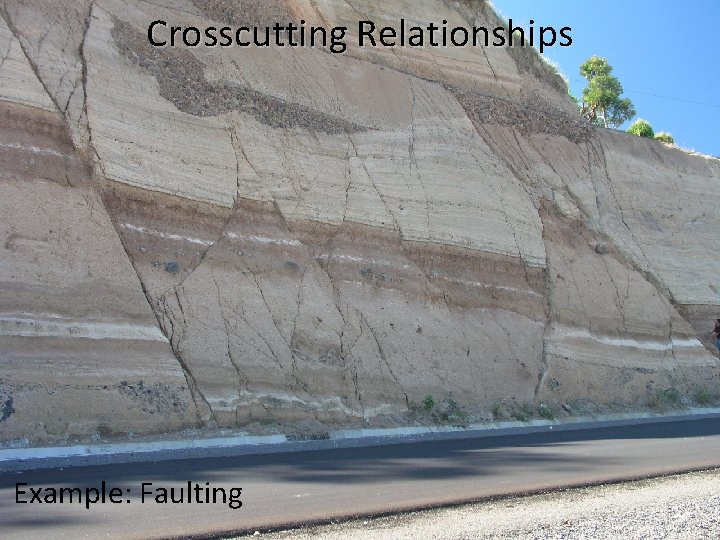
Crosscutting Relationships Example: Faulting
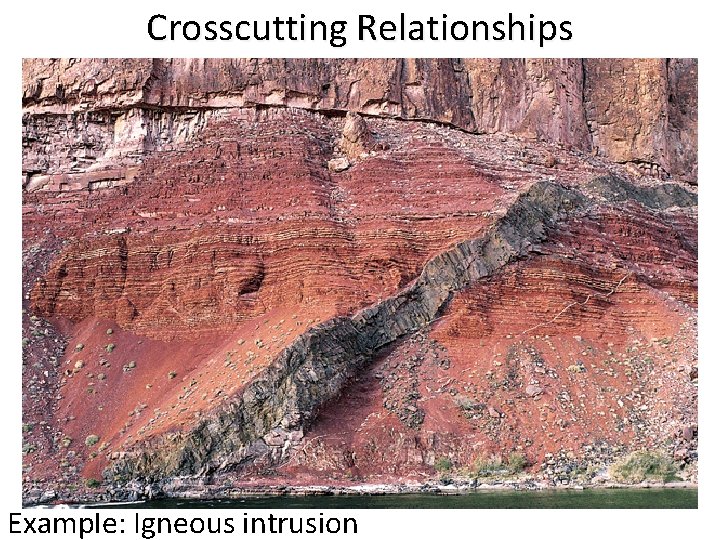
Crosscutting Relationships Example: Igneous intrusion
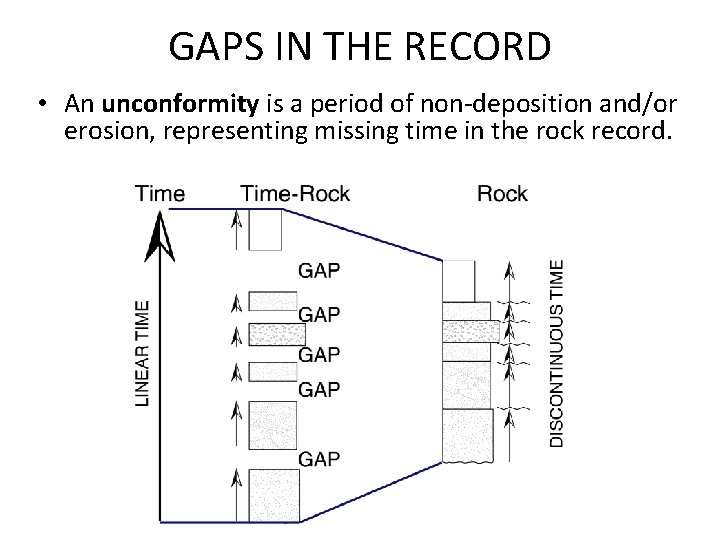
GAPS IN THE RECORD • An unconformity is a period of non-deposition and/or erosion, representing missing time in the rock record.
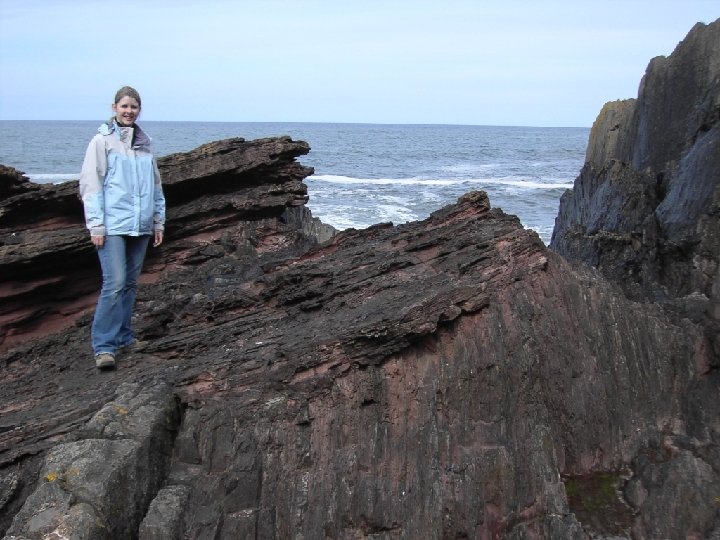
12_08 a. jpg
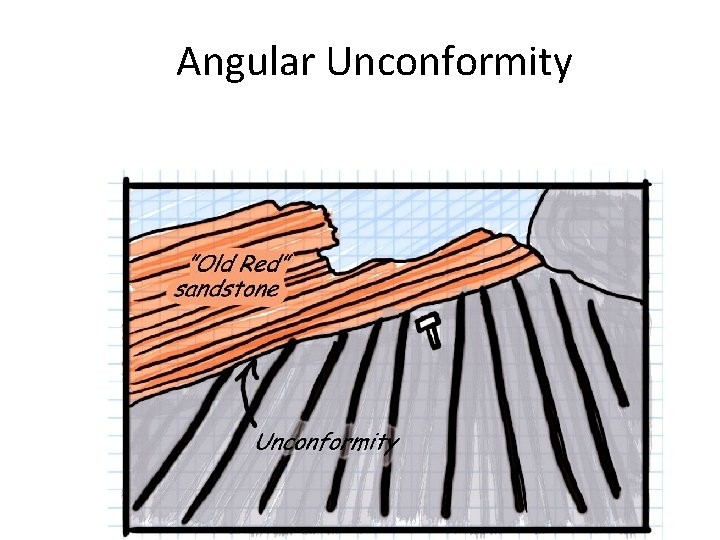
Angular Unconformity
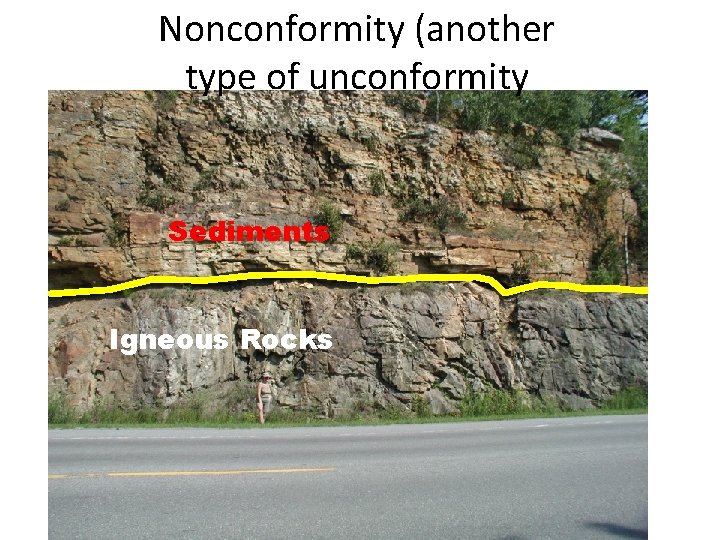
Nonconformity (another type of unconformity Sediments Igneous Rocks
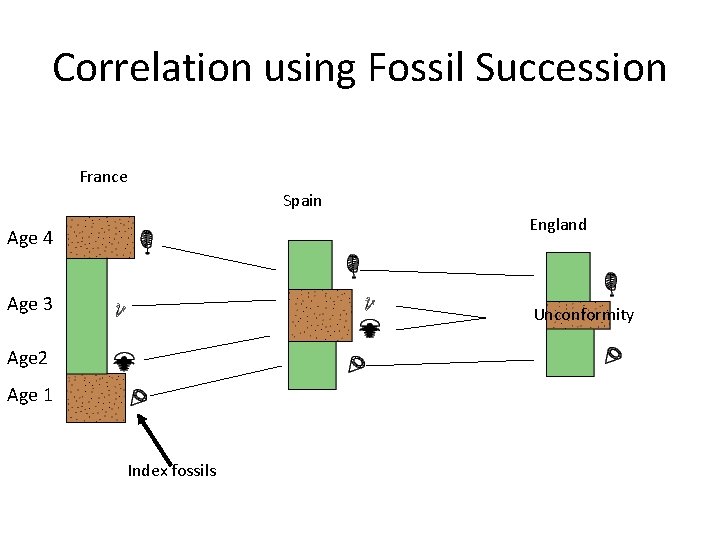
Correlation using Fossil Succession France Spain England Age 4 Age 3 Unconformity Age 2 Age 1 Index fossils
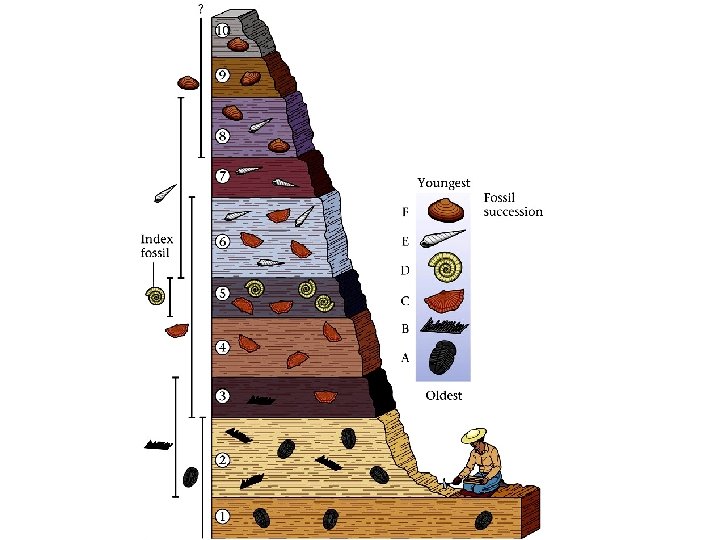
12_07. jpg
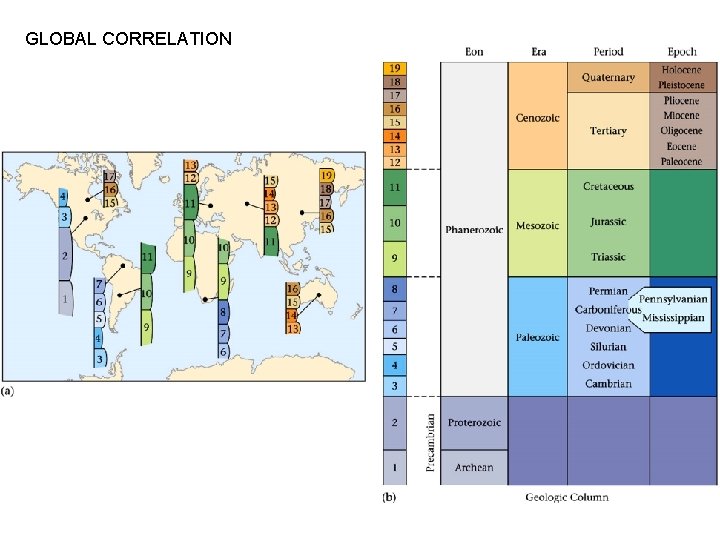
GLOBAL CORRELATION
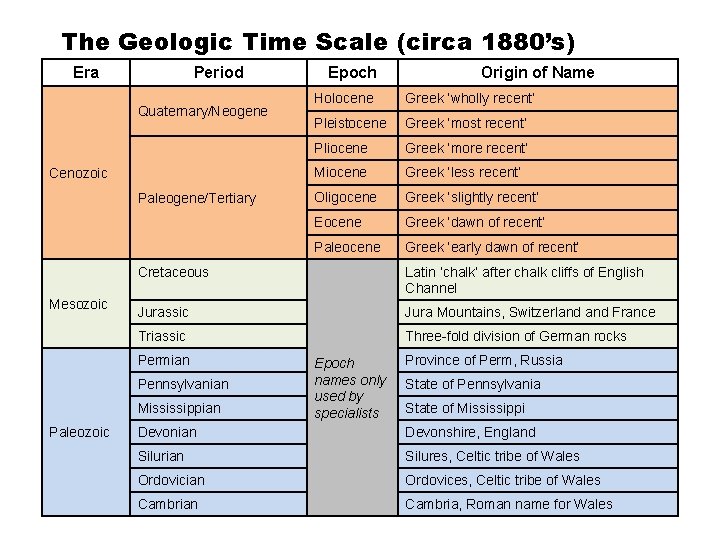
The Geologic Time Scale (circa 1880’s) Era Period Quaternary/Neogene Cenozoic Paleogene/Tertiary Mesozoic Origin of Name Holocene Greek ‘wholly recent’ Pleistocene Greek ‘most recent’ Pliocene Greek ‘more recent’ Miocene Greek ‘less recent’ Oligocene Greek ‘slightly recent’ Eocene Greek ‘dawn of recent’ Paleocene Greek ‘early dawn of recent’ Cretaceous Latin ‘chalk’ after chalk cliffs of English Channel Jurassic Jura Mountains, Switzerland France Triassic Three-fold division of German rocks Permian Pennsylvanian Mississippian Paleozoic Epoch names only used by specialists Province of Perm, Russia State of Pennsylvania State of Mississippi Devonian Devonshire, England Silurian Silures, Celtic tribe of Wales Ordovician Ordovices, Celtic tribe of Wales Cambrian Cambria, Roman name for Wales
The geologic time scale was made as a RELATIVE time scale • The time scale was constructed using basic geologic principles (not "dates") – Superposition – Lateral Continuity – Original Horizontality – Cross-Cutting Relationships – Included fragments – Fossils Succession (index fossils)
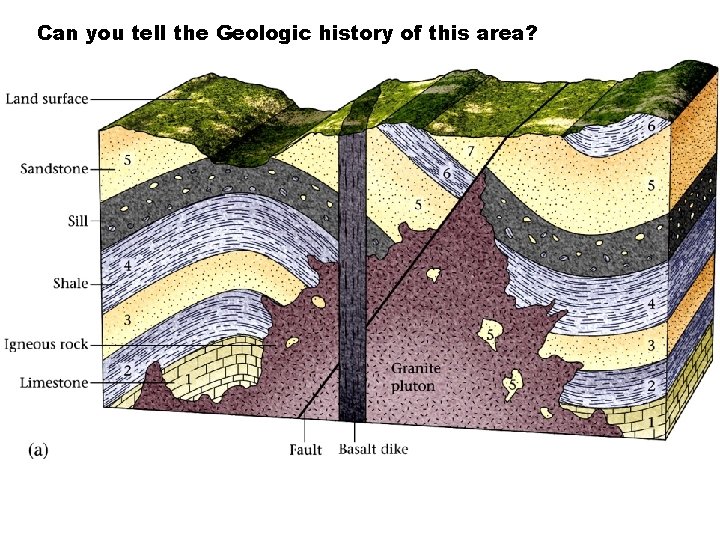
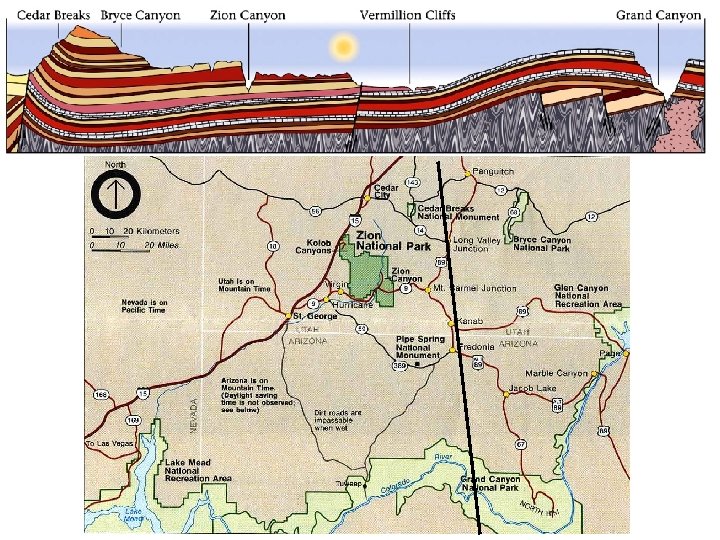
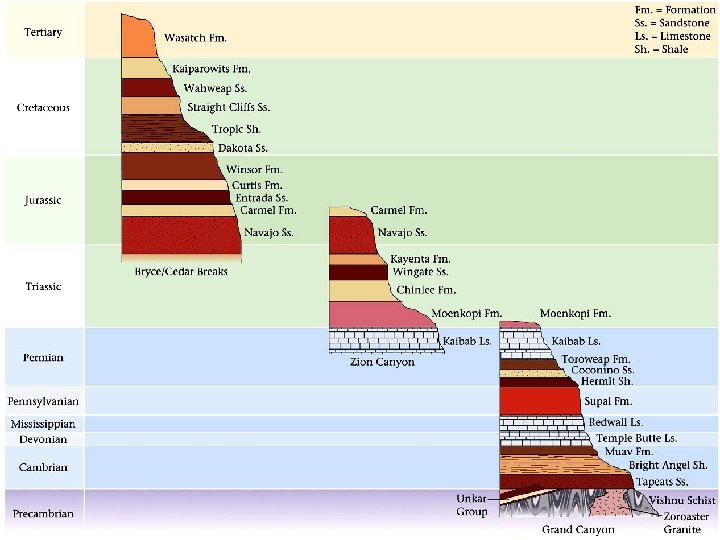
Can you tell the Geologic history of this area?
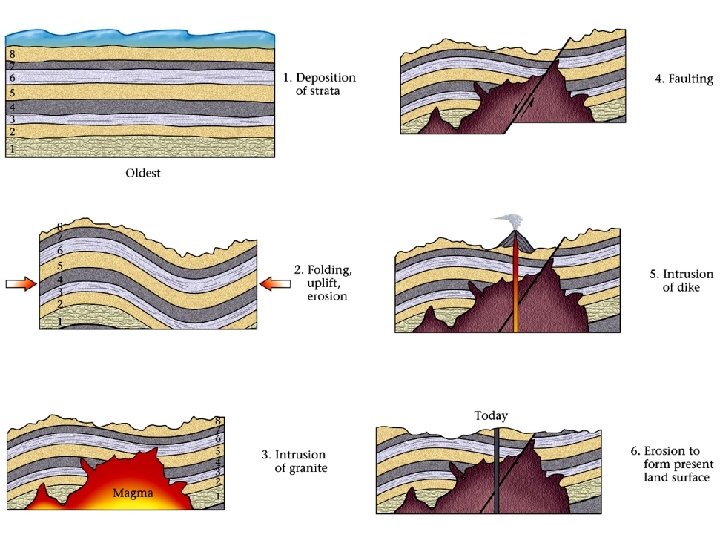
12_05 b. jpg
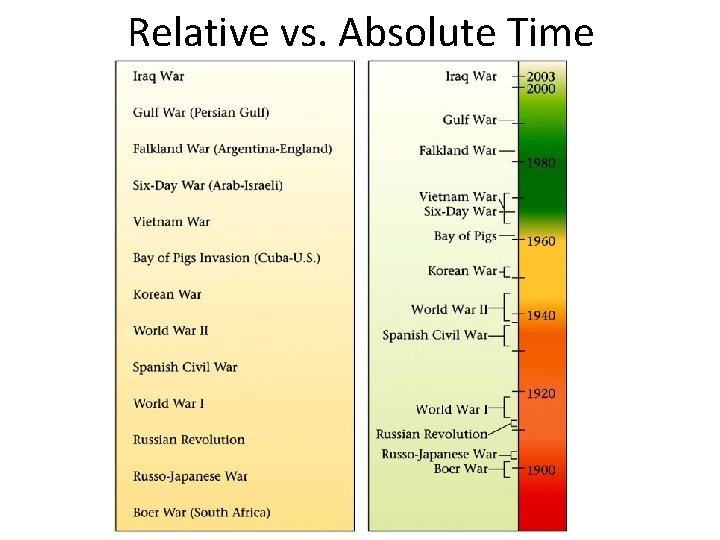
Relative vs. Absolute Time
Hutton’s contributions – Uniformitarianism • Processes operating today operated in the past. – Renamed “Actualism” • “Amid all the revolutions of the globe, the economy of Nature has been uniform, and her laws are the only thing that have resisted the general movement. The rivers and rocks, the seas and the continents have changed in all their parts; but the laws that describe those changes, and the rules to which they are subject, have remained invariably the same. ” –Playfair (p. 19) – The Earth is much older than 6000 years.
Visualizing Geologic Time • Geologic time is a long time. . . much longer than we can perceive without a lot of imagination. – Our lifetimes are puny compared to geologic time. If 1 inch = 1 year: • 4, 600, 000 years = 72, 601 miles – Three times around the Earth, but by inches! • 75 years = 6. 25 feet • How do we know the actual age of the Earth? – We measure ratios of radioactive atoms in minerals!
Radioactivity Some isotopes are stable, but others may be unstable–radioactive. For example, the element carbon has 3 isotopes: 12 C has 6 protons and 6 neutrons–STABLE 13 C has 6 protons and 7 neutrons–STABLE 14 C has 6 protons and 8 neutrons–RADIOACTIVE Carbon-14 changes into Nitrogen-14 at a known rate.
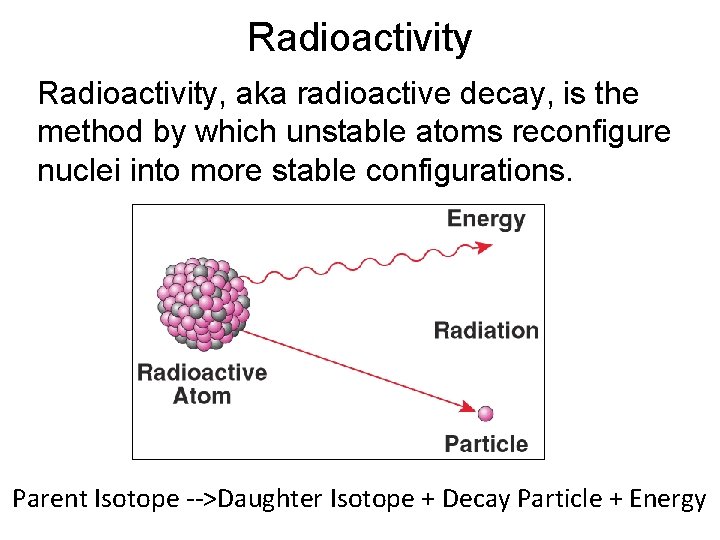
Radioactivity, aka radioactive decay, is the method by which unstable atoms reconfigure nuclei into more stable configurations. Parent Isotope -->Daughter Isotope + Decay Particle + Energy
RADIOMETRIC DATING • The time it takes for half a given group of radioisotopes to decay is called the half-life. – Parent = that which decays – Daughter = decay product • Half-lives are constant for a given isotope system. • The regular decay of atoms is like the ticking of a clock that can measure time. – The proportion of parent-daughter isotopes in a given sample is unique to its age.
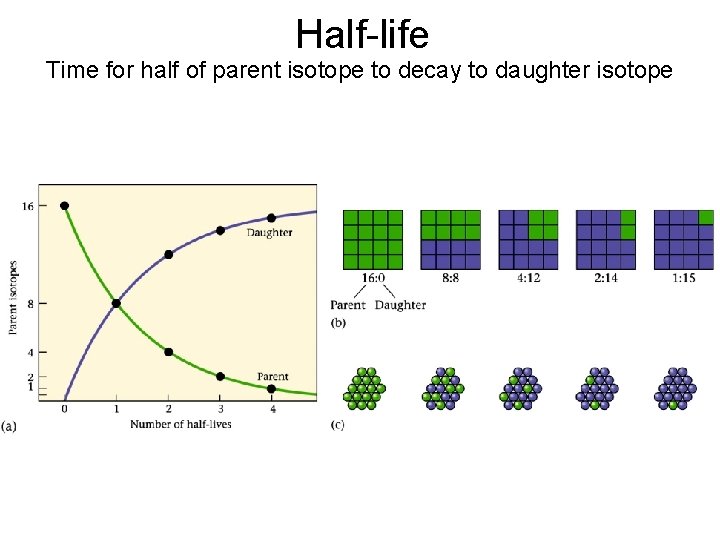
Half-life Time for half of parent isotope to decay to daughter isotope
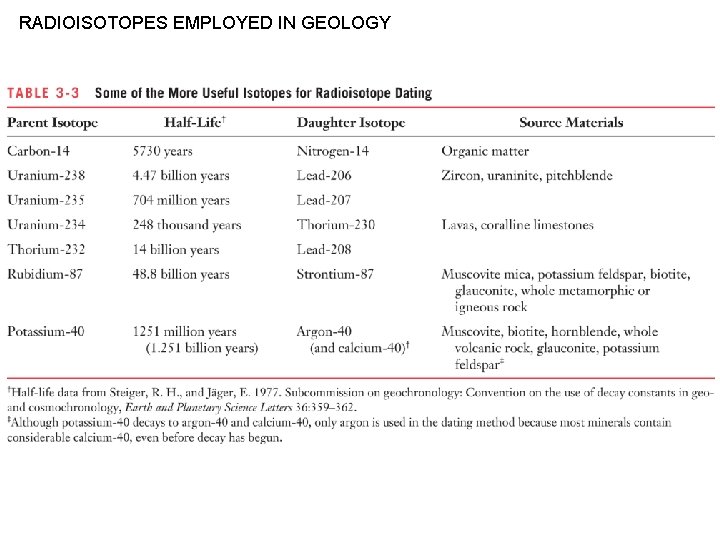
RADIOISOTOPES EMPLOYED IN GEOLOGY
RADIOMETRIC DATING • Once identified, parent-daughter isotopes are physically and chemically separated from a mineral. • Once isolated, the ratio of parent-daughter isotopes is determined in a mass spectrometer. • The parent-daughter ratio is used to calculate a radiometric age.
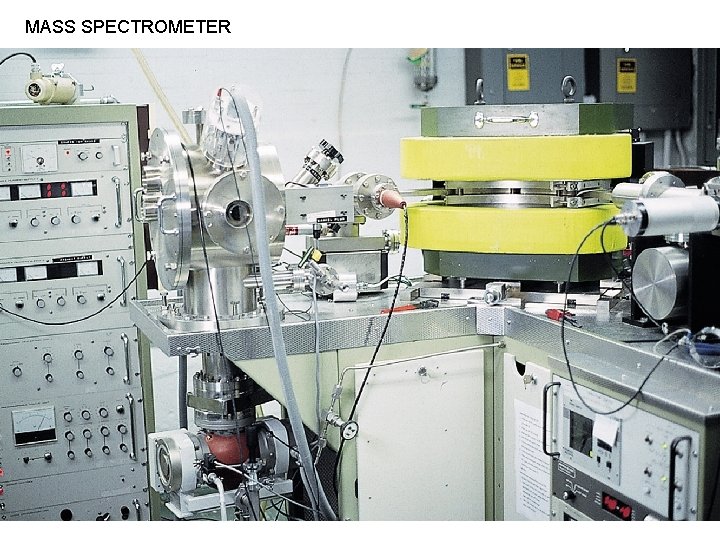
MASS SPECTROMETER
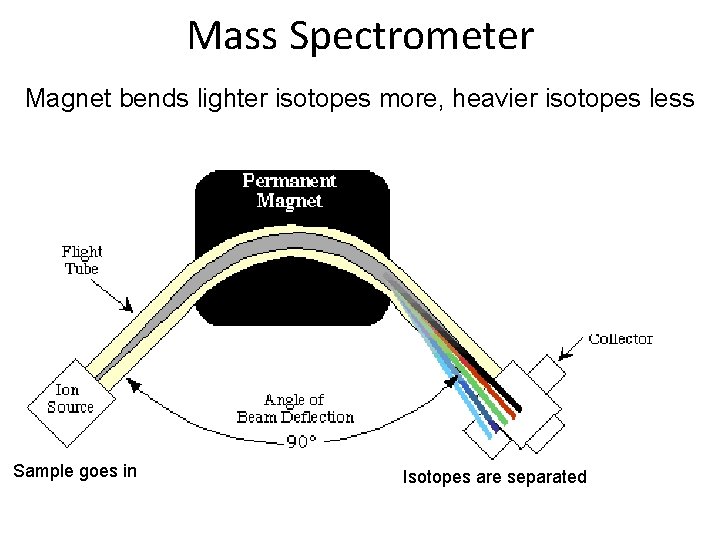
Mass Spectrometer Magnet bends lighter isotopes more, heavier isotopes less Sample goes in Isotopes are separated
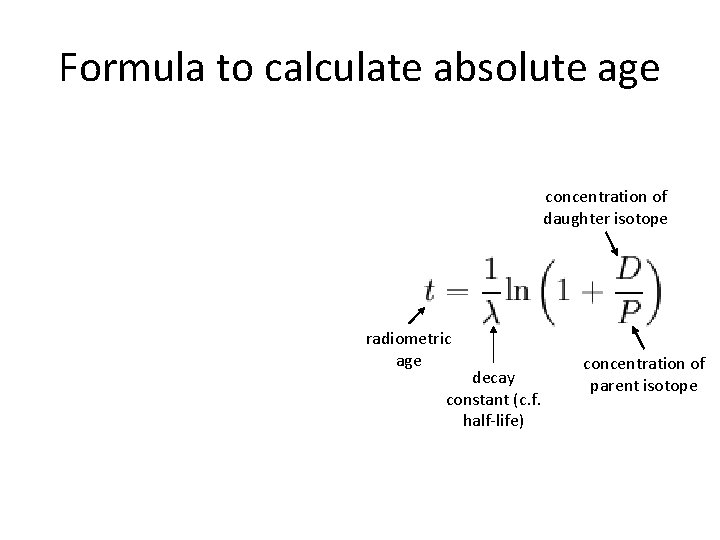
Formula to calculate absolute age concentration of daughter isotope radiometric age decay constant (c. f. half-life) concentration of parent isotope
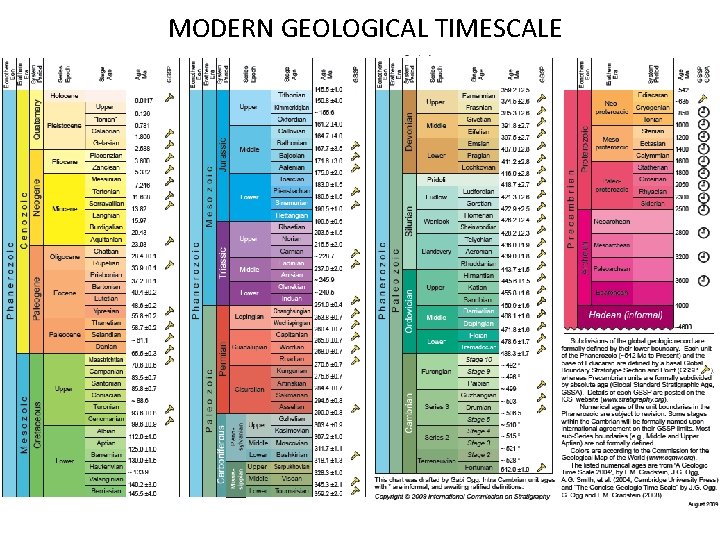
MODERN GEOLOGICAL TIMESCALE
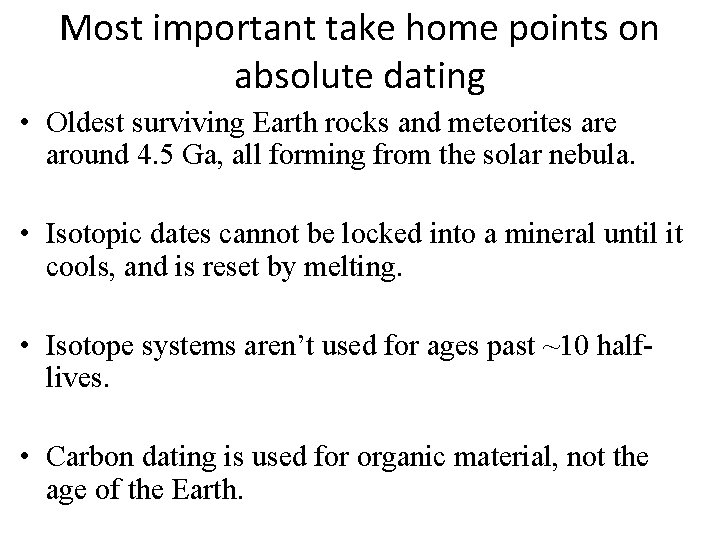
Most important take home points on absolute dating • Oldest surviving Earth rocks and meteorites are around 4. 5 Ga, all forming from the solar nebula. • Isotopic dates cannot be locked into a mineral until it cools, and is reset by melting. • Isotope systems aren’t used for ages past ~10 halflives. • Carbon dating is used for organic material, not the age of the Earth.
Video on Geological Time (24 minutes) • Video #10 http: //www. learner. org/resources/series 78. html
- Slides: 38