
How Materials Fail ShearBendBuckleTwist Forces at Work External
How Materials Fail Shear/Bend/Buckle/Twist

Forces at Work External forces can cause internal forces in structures Each type of internal force can cause particular types of damage to the structure
Shear (Sliding) Solid materials nearly always have microscopic cracks or weaknesses When a solid material is compressed, cracks can enlarge or break apart One section may shear (slide over another section along a weakness
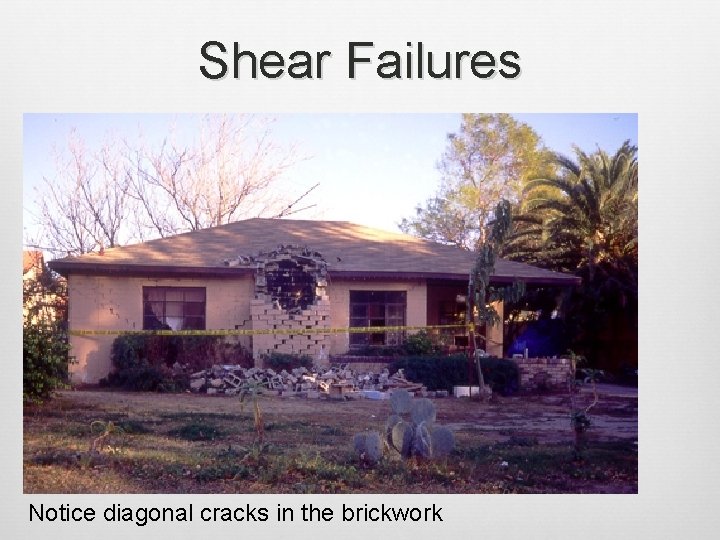
Shear Failures Notice diagonal cracks in the brickwork
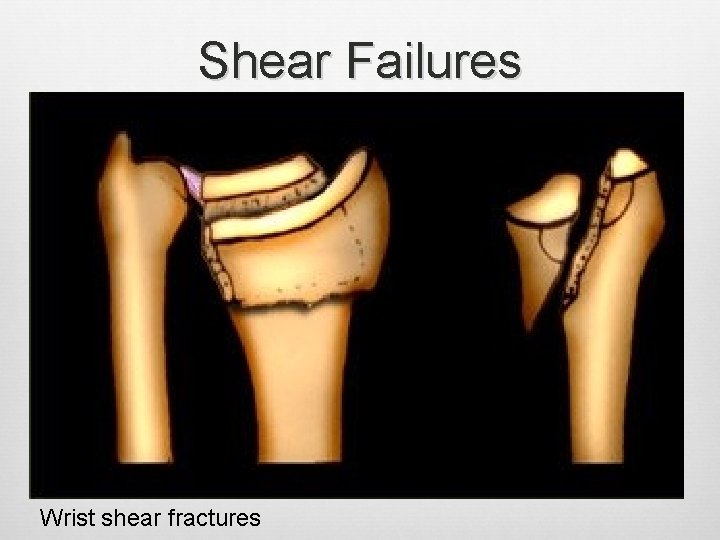
Shear Failures Wrist shear fractures
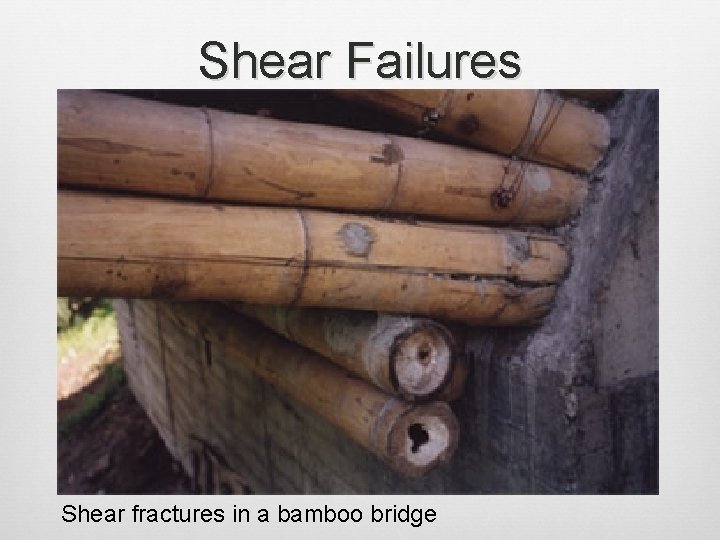
Shear Failures Shear fractures in a bamboo bridge
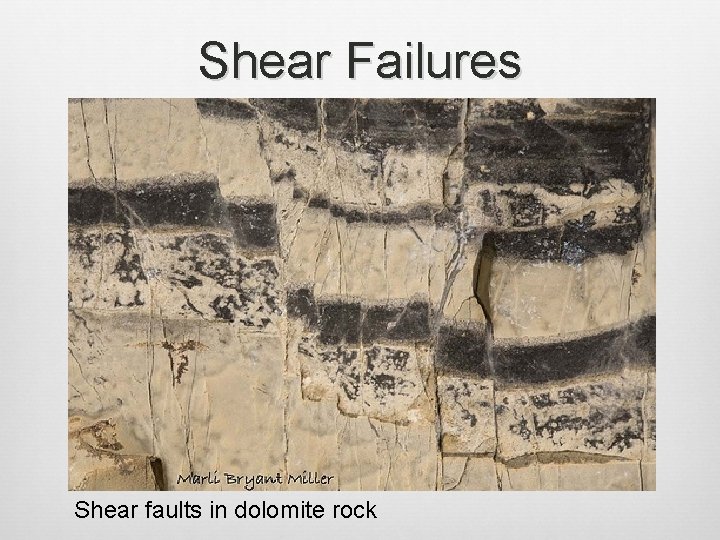
Shear Failures Shear faults in dolomite rock
Bending or Buckling If you put pressure on a metal can, the thin metal folds and the can buckles under the compressive force All thin panels tend to bend and buckle when they are compressed Compression forces cause materials to bend on the inside of the curve and pull and snap on the outside of the curve.
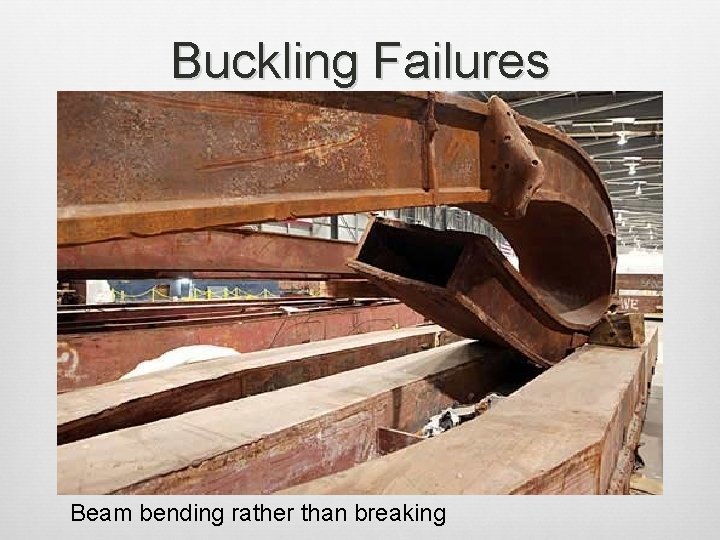
Buckling Failures Beam bending rather than breaking
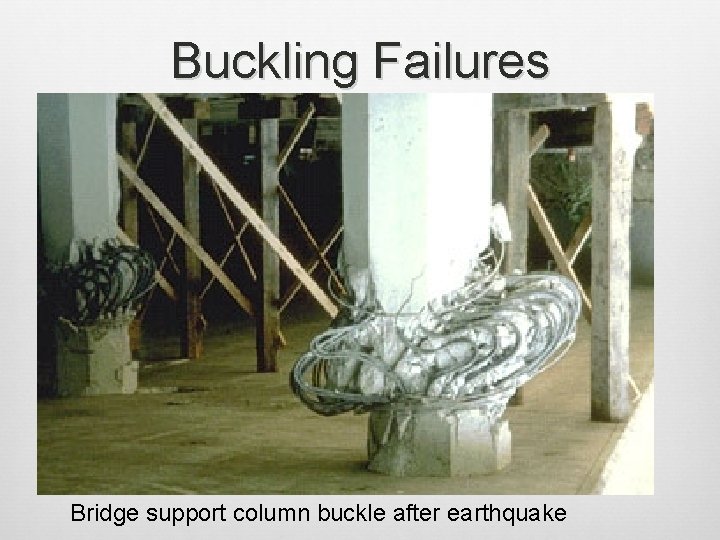
Buckling Failures Bridge support column buckle after earthquake
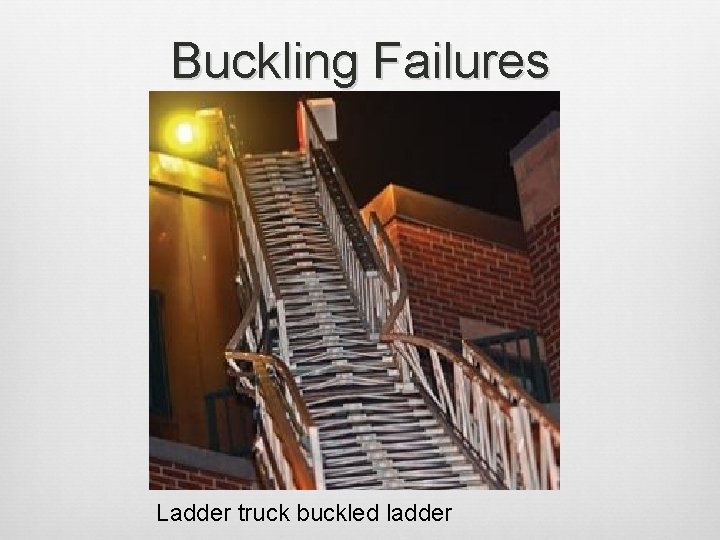
Buckling Failures Ladder truck buckled ladder
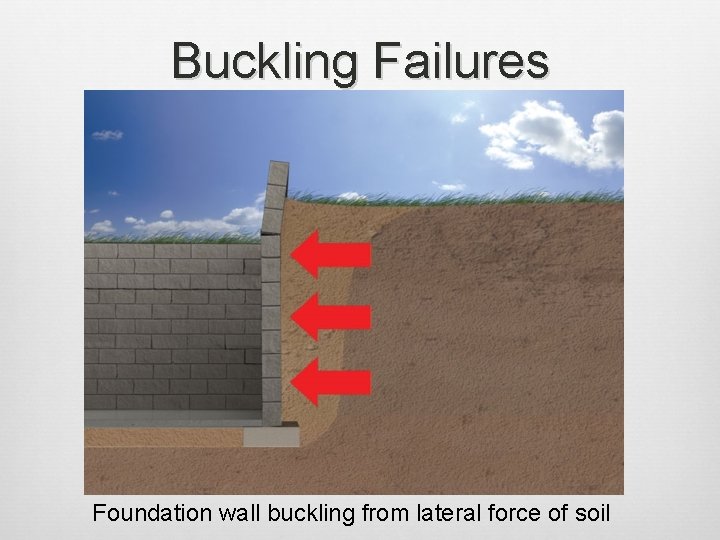
Buckling Failures Foundation wall buckling from lateral force of soil
Torsion (Twisting) Twisting forces can cause material failure Brittle structures often shear when they are twisted (plastic cutlery) Very flexible structures (rubber bands, hoses) will fold up and twist into tangles and knots Although these structures are unbroken, they have lost their shape, which is a form of failure
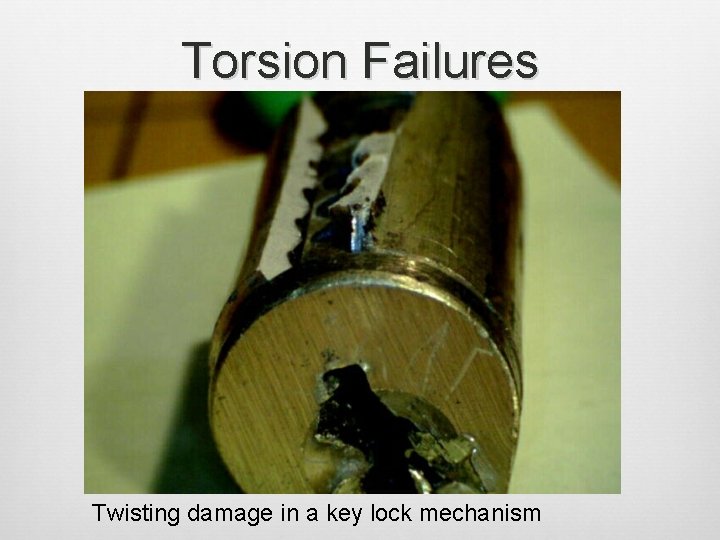
Torsion Failures Twisting damage in a key lock mechanism
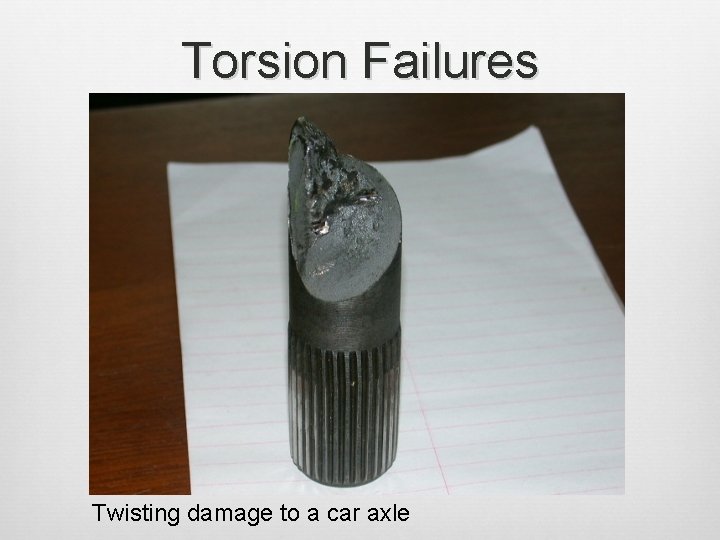
Torsion Failures Twisting damage to a car axle
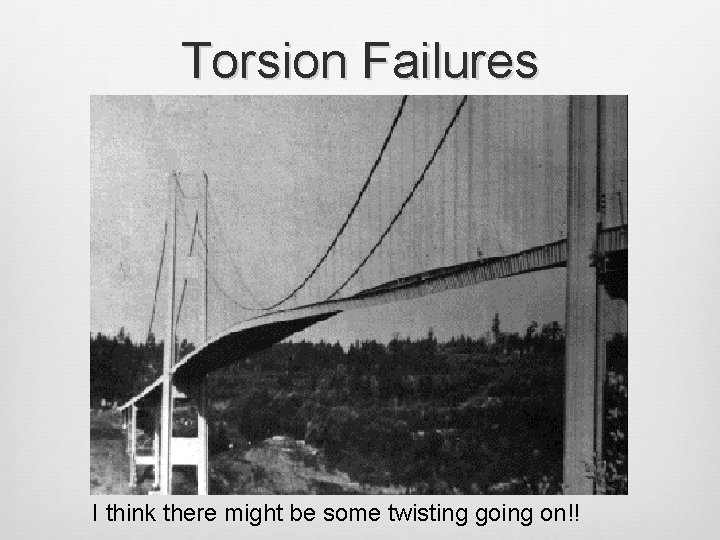
Torsion Failures I think there might be some twisting going on!!
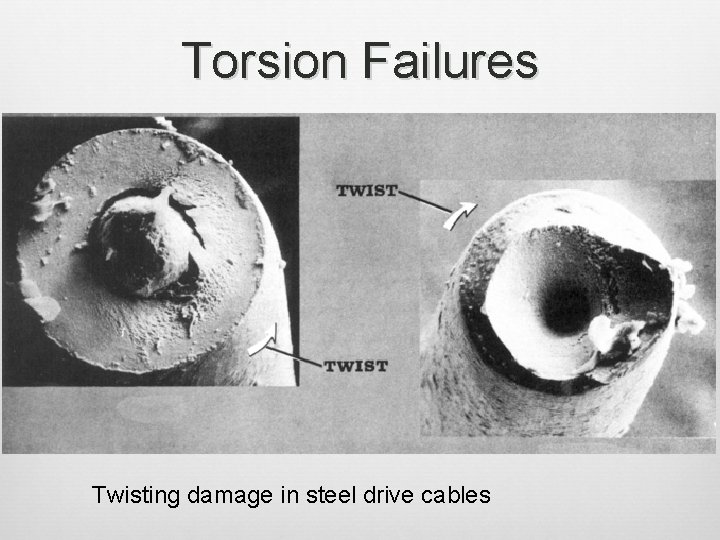
Torsion Failures Twisting damage in steel drive cables
Designing With Purposeful Failure Shear/Bend/Buckle/Twist
Making Use of Stress Snapping, twisting, buckling, bending and shearing: that is what materials do when they fail These same “problems” can be put to good use Bending in cross country skis is obviously a good thing Here are some more….
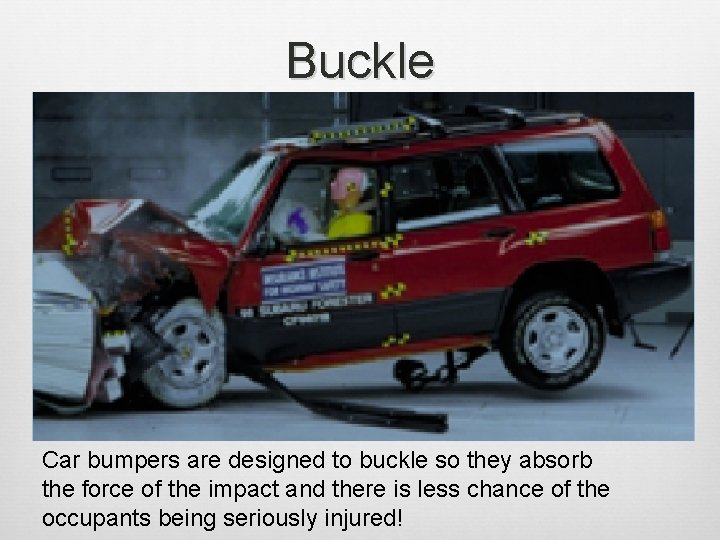
Buckle Car bumpers are designed to buckle so they absorb the force of the impact and there is less chance of the occupants being seriously injured!
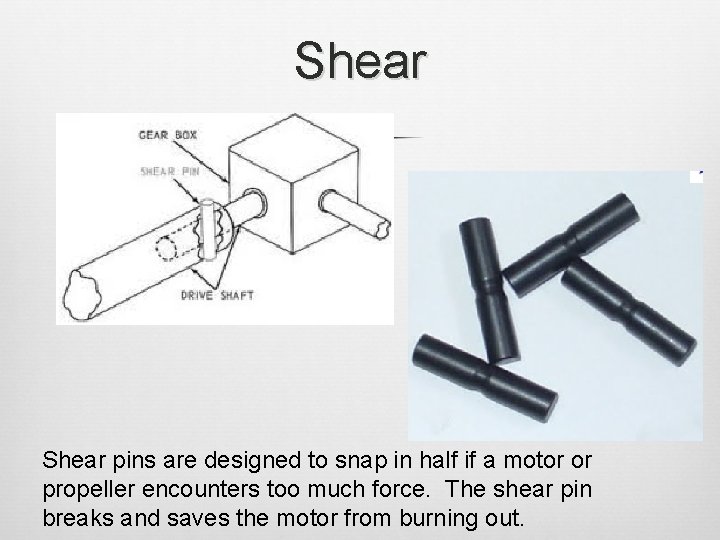
Shear pins are designed to snap in half if a motor or propeller encounters too much force. The shear pin breaks and saves the motor from burning out.
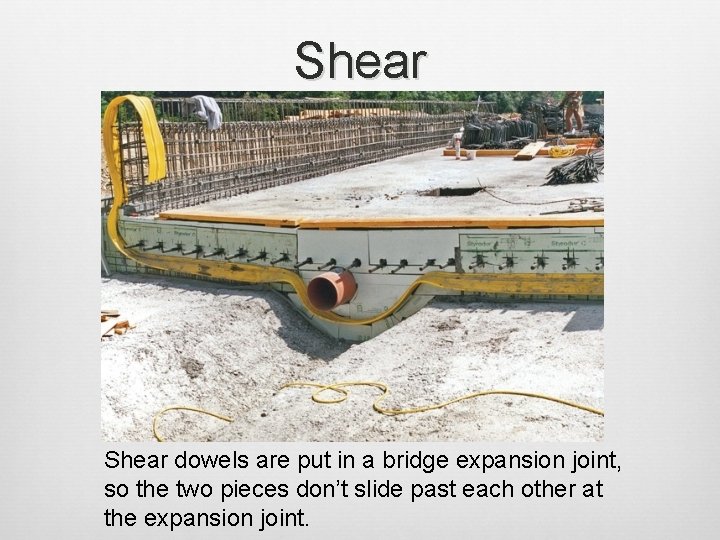
Shear dowels are put in a bridge expansion joint, so the two pieces don’t slide past each other at the expansion joint.
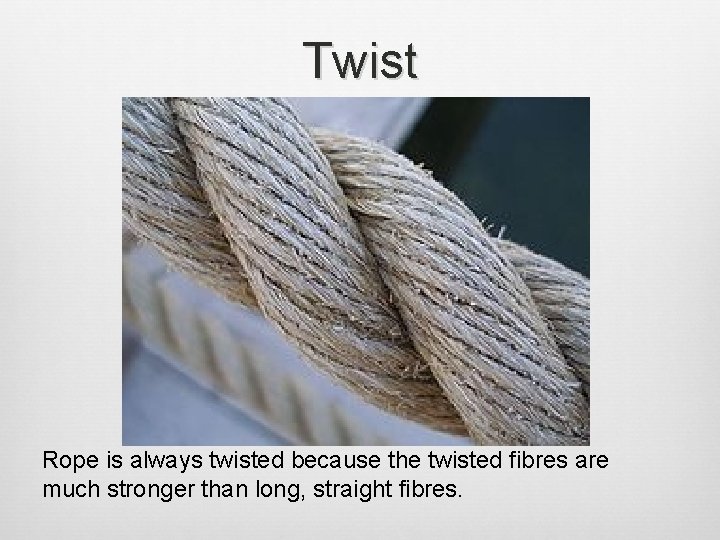
Twist Rope is always twisted because the twisted fibres are much stronger than long, straight fibres.
- Slides: 23