
How many different species are shown below The
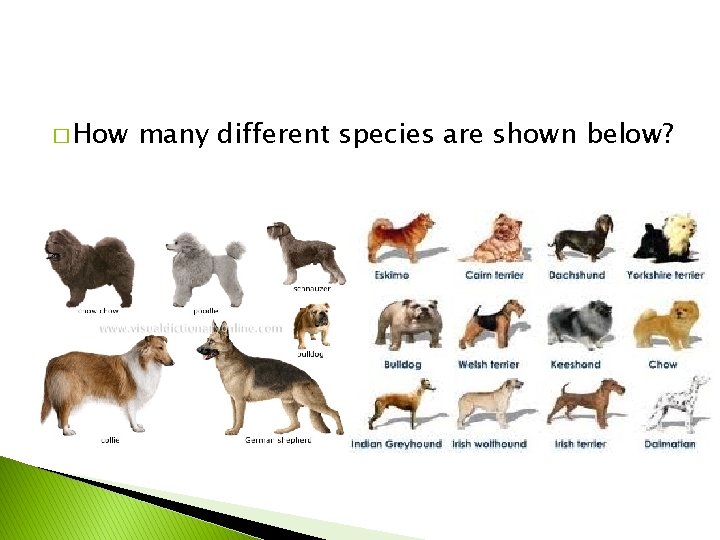
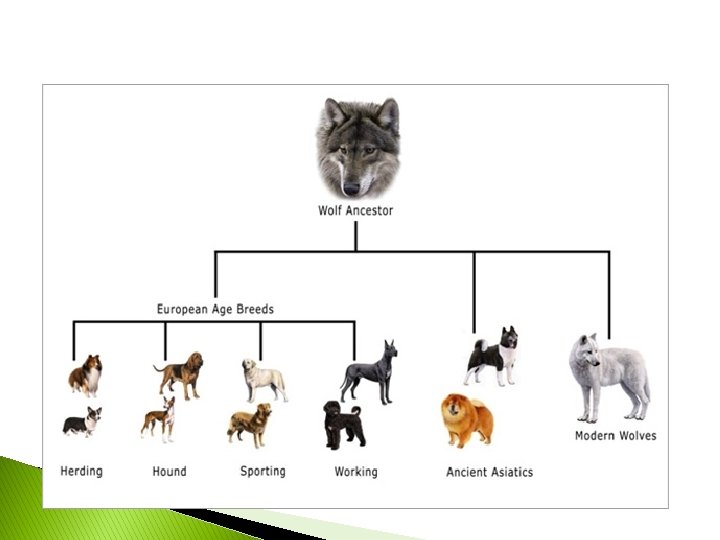
� How many different species are shown below?
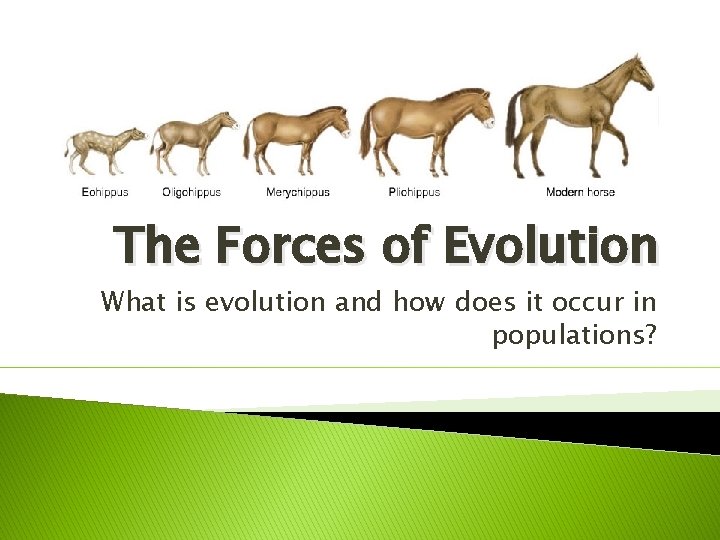
The Forces of Evolution What is evolution and how does it occur in populations?
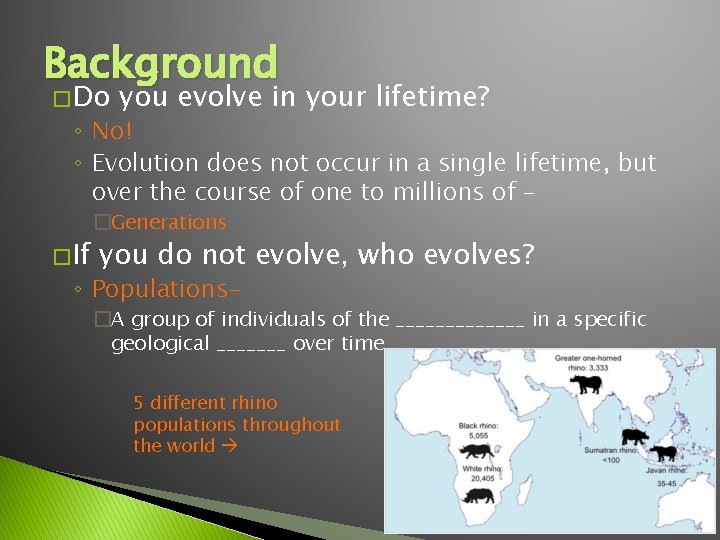
Background � Do you evolve in your lifetime? ◦ No! ◦ Evolution does not occur in a single lifetime, but over the course of one to millions of – � If �Generations you do not evolve, who evolves? ◦ Populations- �A group of individuals of the _______ in a specific geological _______ over time 5 different rhino populations throughout the world
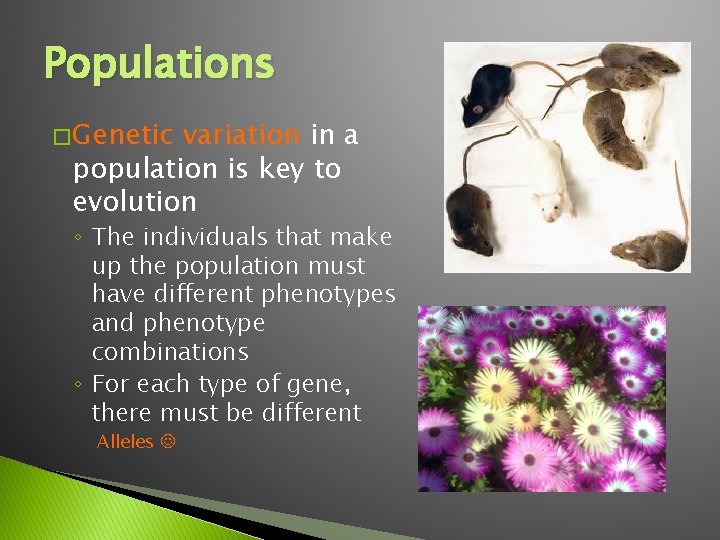
Populations � Genetic variation in a population is key to evolution ◦ The individuals that make up the population must have different phenotypes and phenotype combinations ◦ For each type of gene, there must be different Alleles
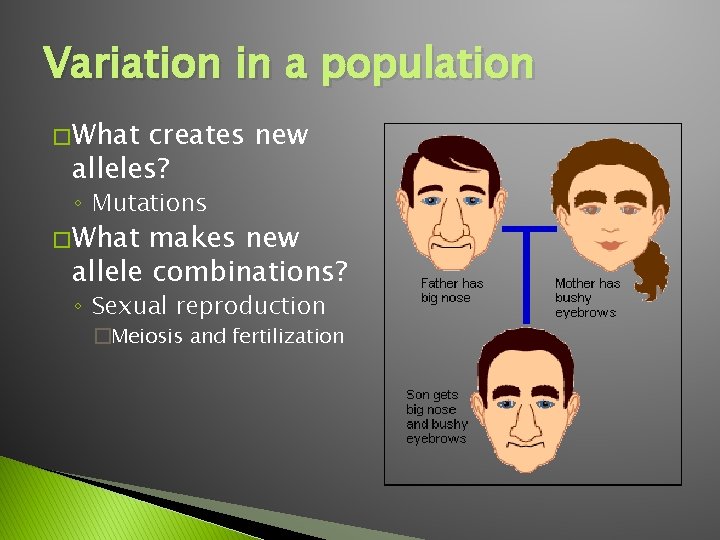
Variation in a population � What creates new alleles? ◦ Mutations � What makes new allele combinations? ◦ Sexual reproduction �Meiosis and fertilization
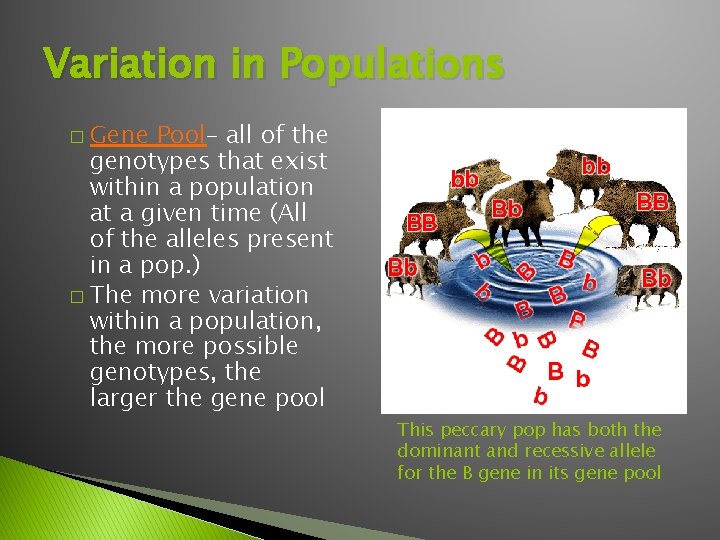
Variation in Populations � Gene Pool– all of the genotypes that exist within a population at a given time (All of the alleles present in a pop. ) � The more variation within a population, the more possible genotypes, the larger the gene pool This peccary pop has both the dominant and recessive allele for the B gene in its gene pool
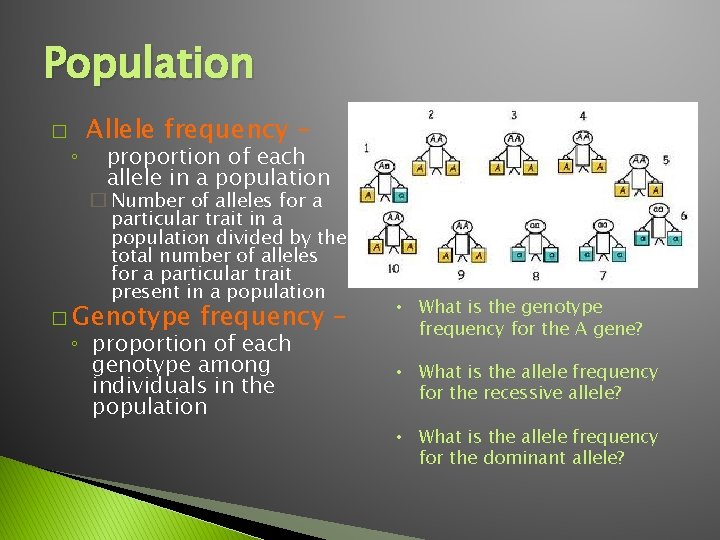
Population � ◦ Allele frequency – proportion of each allele in a population � Number of alleles for a particular trait in a population divided by the total number of alleles for a particular trait present in a population � Genotype frequency – ◦ proportion of each genotype among individuals in the population • What is the genotype frequency for the A gene? • What is the allele frequency for the recessive allele? • What is the allele frequency for the dominant allele?
Genotype and allele frequency Practice – PTC Tasting 1. § § § 2. Determine your genotype 3. Calculate the allele frequencies in our class �T – Calculate class genotype frequencies � t- TT – strong taste Tt – slightly bitter taste tt – no taste (just taste paper)
Evolution � Two types of evolution: 1. Microevolution – �changes in the genetic makeup and allele frequencies in a population over generations 2. Macroevolution – the accumulation of microevolution events over thousands to millions of generations leading to large changes in species and the formation of new species (speciation)
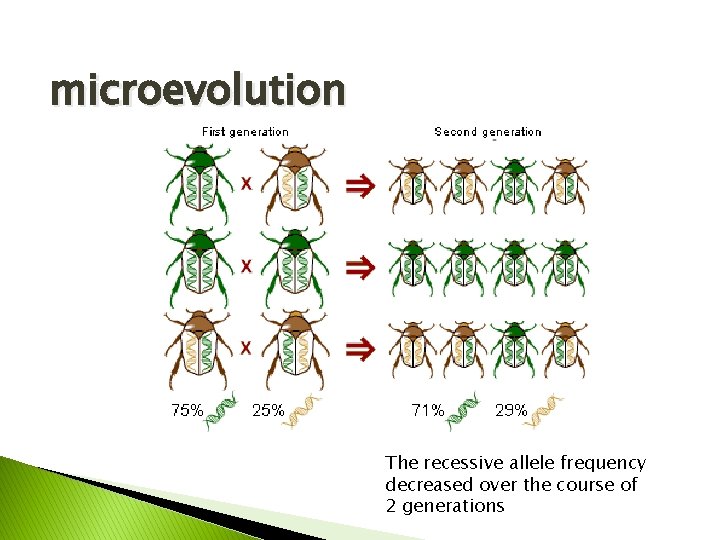
microevolution The recessive allele frequency decreased over the course of 2 generations

macroevolution

Evolution � Microevolution ◦ Small scale evolution ◦ Occurs frequently and continually over each generation ◦ Occurs in single populations ◦ Easily observed and measurable ◦ Can lead to macroevolution given enough time � Macroevolution ◦ Large scale evolution ◦ Substantial changes and developments to species that occur over millions of generations ◦ Its occurrence is most easily observed through evidence, such as the fossil record, and in organisms with very fast generation times. (Why? )
The 5 forces of evolution � The 1. 2. 3. 4. 5. forces that change allele frequencies: Mutation Gene flow Genetic drift Natural (and artificial)selection Sexual selection
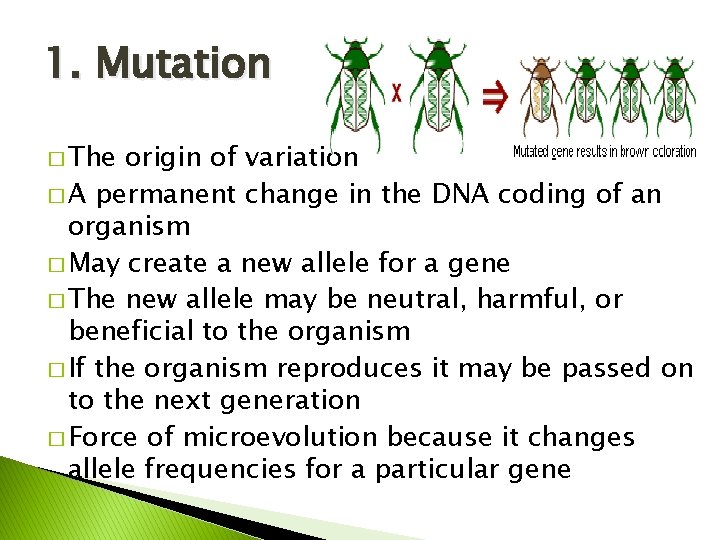
1. Mutation � The origin of variation � A permanent change in the DNA coding of an organism � May create a new allele for a gene � The new allele may be neutral, harmful, or beneficial to the organism � If the organism reproduces it may be passed on to the next generation � Force of microevolution because it changes allele frequencies for a particular gene
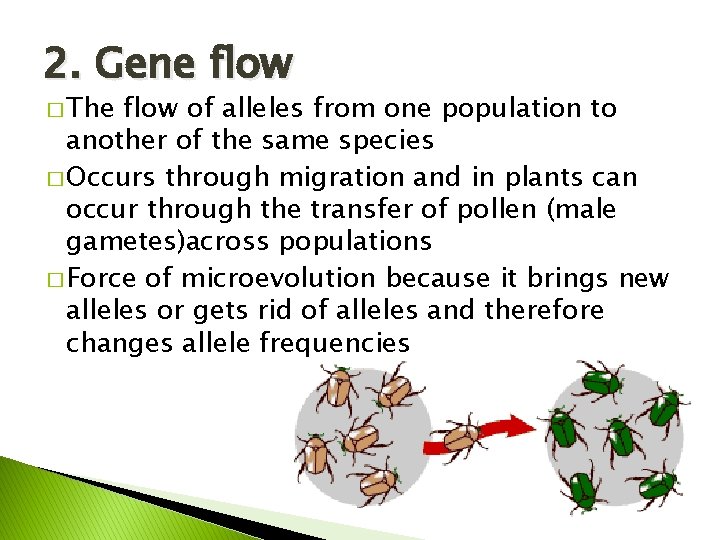
2. Gene flow � The flow of alleles from one population to another of the same species � Occurs through migration and in plants can occur through the transfer of pollen (male gametes)across populations � Force of microevolution because it brings new alleles or gets rid of alleles and therefore changes allele frequencies
3. Genetic Drift � Random changes in allele frequencies that result from one generation to the next � Has more of an effect in small populations � Because it is random, harmful alleles may increase and beneficial alleles may decrease � Ex. 1) in a very small population all individuals are heterozygous or homozygous dominant for the A gene. When males and females pair up and reproduce, by chance all of the offspring are homozygous dominant. Then the a allele is lost from the population
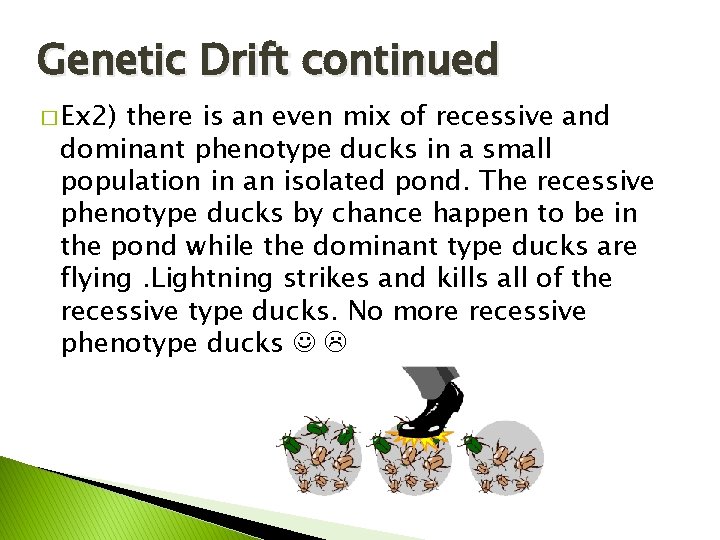
Genetic Drift continued � Ex 2) there is an even mix of recessive and dominant phenotype ducks in a small population in an isolated pond. The recessive phenotype ducks by chance happen to be in the pond while the dominant type ducks are flying. Lightning strikes and kills all of the recessive type ducks. No more recessive phenotype ducks
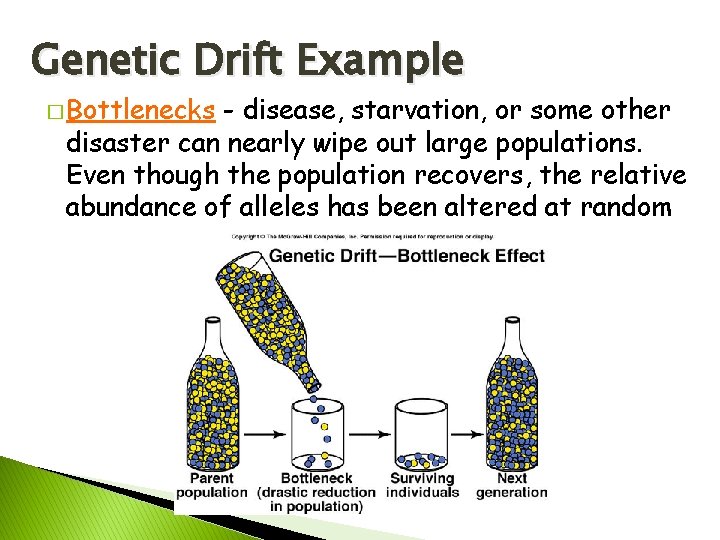
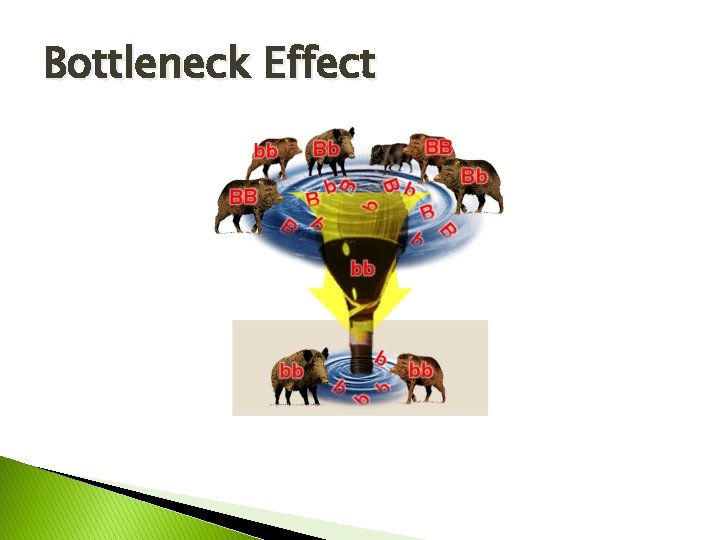
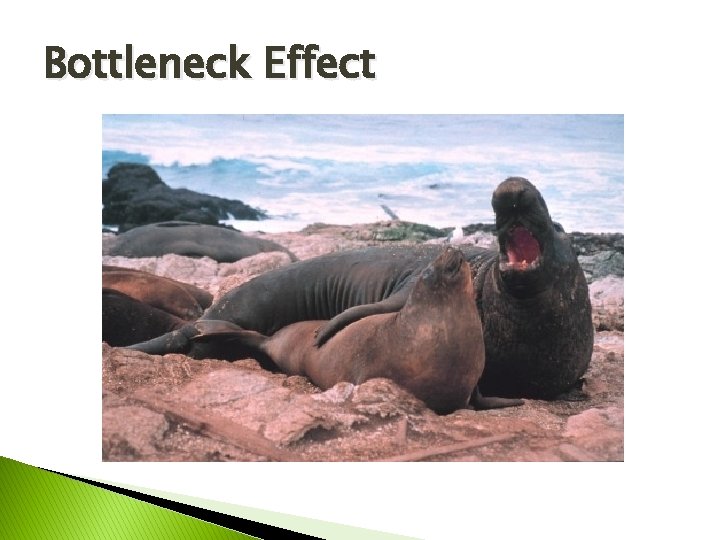
Genetic Drift Example � Bottlenecks - disease, starvation, or some other disaster can nearly wipe out large populations. Even though the population recovers, the relative abundance of alleles has been altered at random
Bottleneck Effect
Bottleneck Effect
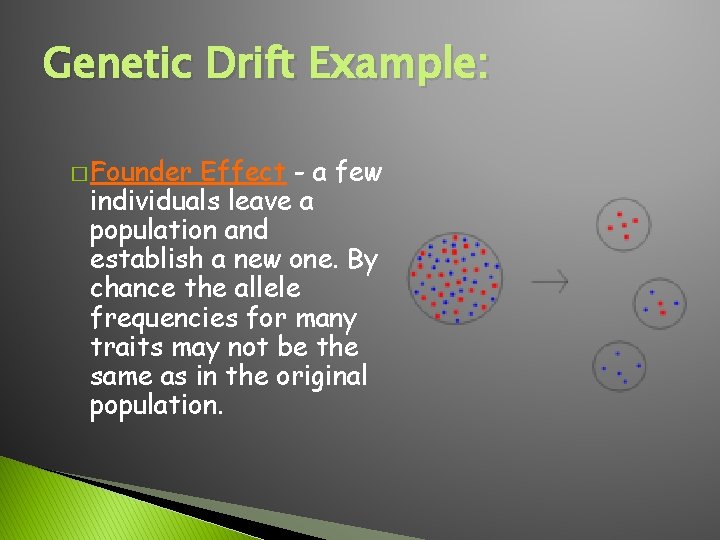
Genetic Drift Example: � Founder Effect - a few individuals leave a population and establish a new one. By chance the allele frequencies for many traits may not be the same as in the original population.
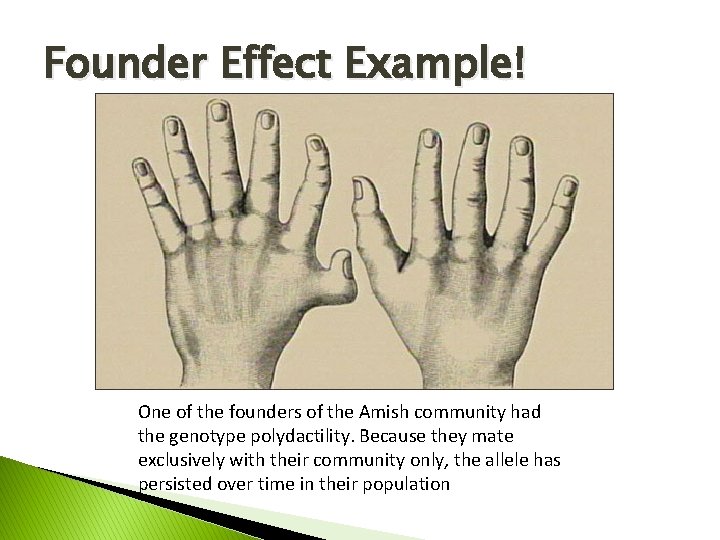
Founder Effect Example! One of the founders of the Amish community had the genotype polydactility. Because they mate exclusively with their community only, the allele has persisted over time in their population
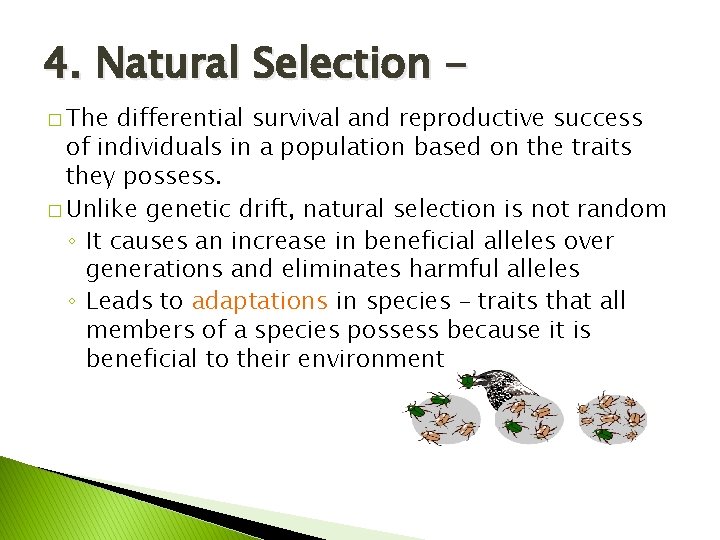
4. Natural Selection � The differential survival and reproductive success of individuals in a population based on the traits they possess. � Unlike genetic drift, natural selection is not random ◦ It causes an increase in beneficial alleles over generations and eliminates harmful alleles ◦ Leads to adaptations in species – traits that all members of a species possess because it is beneficial to their environment
N. Selection Requirements: 1. 2. Genetic ________ of individuals in a population Environmental _________ that limits survival and reproduction Leads to __________ - those with favorable traits will survive and reproduce more (they are said to have a higher “_______”) Favorable traits are increased over generations. Unfavorable traits are decreased Populations become ________ to their environment through natural selection. As environments change, so do favorable traits.
Natural selection � If flying would be helpful to monkeys, why cant they evolve to fly through natural selection? � Natural selection can only act on the variation that already exists in a population ◦ Arises through mutation, gene flow, and sexual reproduction

Sexual selection � Nonrandom mating in a population in which an organism’s phenotype influences its ability to attract mates � The traits increase chances of reproducing do not necessarily increase survival
Evolution forces summary � Evolution is the change in the genetic make up of a population over time � It can be small-scale (microevolution) or large -scale (macroevolution) � Mutation, gene flow, genetic drift, natural selection, and sexual selection all cause evolution � The combination of all of the above forces over many generations can result in big changes in species or the formation of new species
- Slides: 28