
How living things interact with their environment Ecology
- Slides: 13
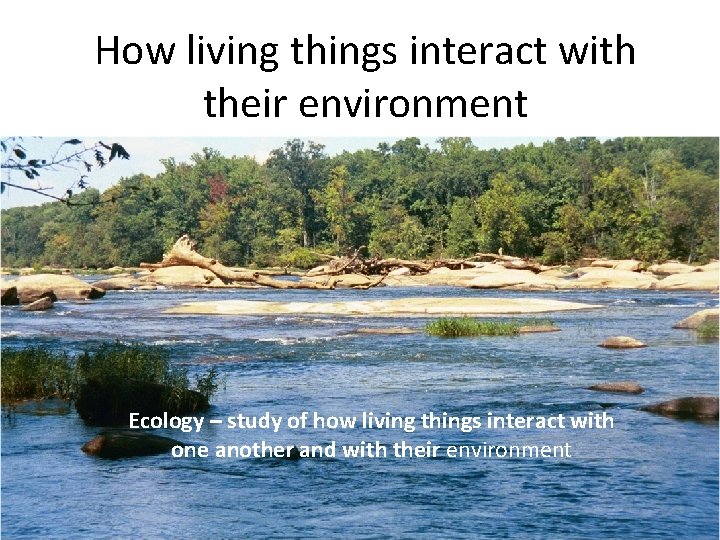
How living things interact with their environment Ecology – study of how living things interact with one another and with their environment
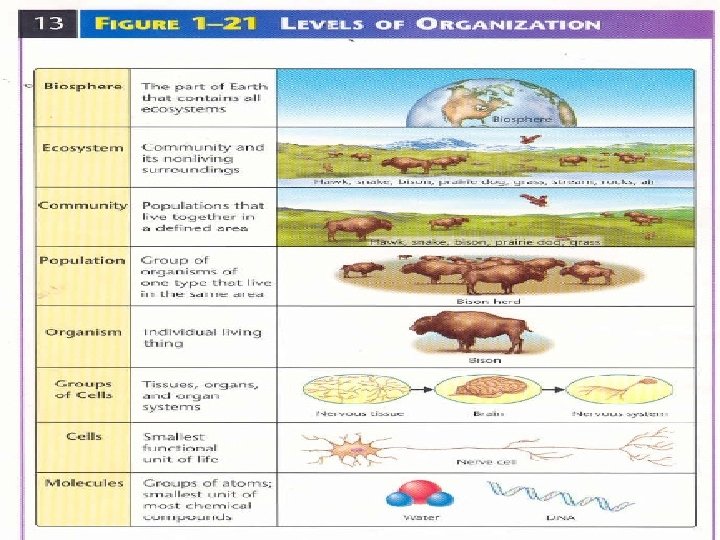
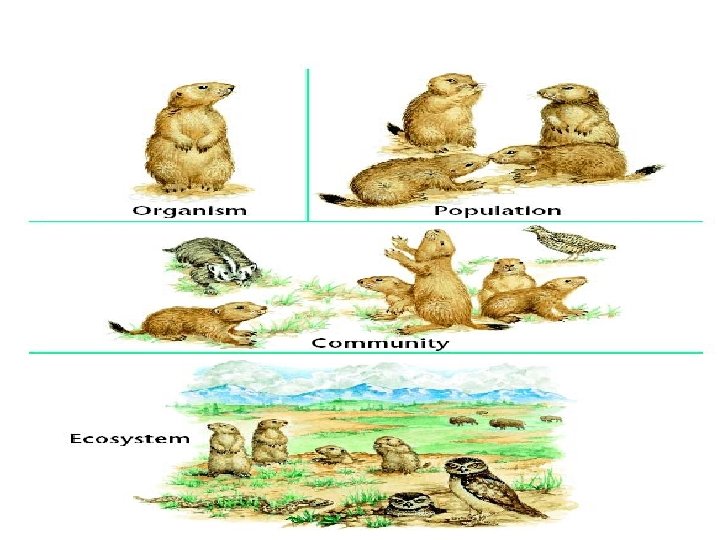
• Ecosystem – Living and non-living things that interact in a particular area – The type of place an organism lives is the ecosystem, the specific part of the ecosystem that meets the organism’s needs is its habitat: • Forest Ecosystem – woodpeckers habitat is different from that of a mushrooms
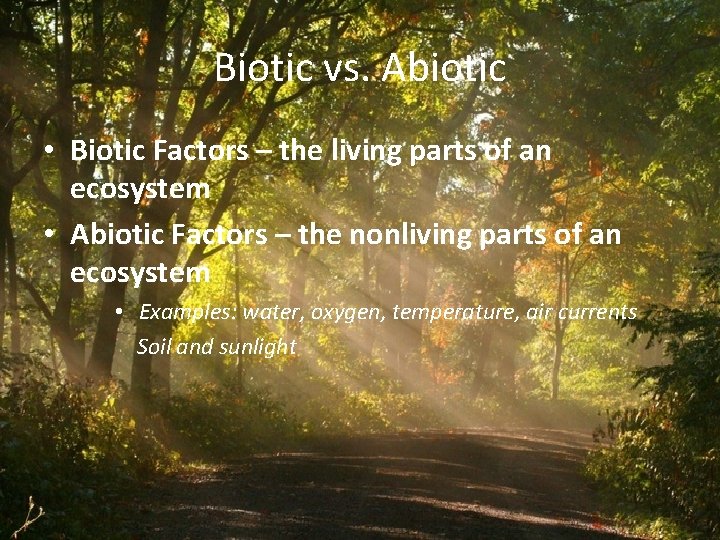
Biotic vs. Abiotic • Biotic Factors – the living parts of an ecosystem • Abiotic Factors – the nonliving parts of an ecosystem • Examples: water, oxygen, temperature, air currents Soil and sunlight
Water is an important abiotic factor because most organisms are made up of 50 -95% water. – Respiration, photosynthesis, digestion, and other important life processes can take place only in the presence of water.
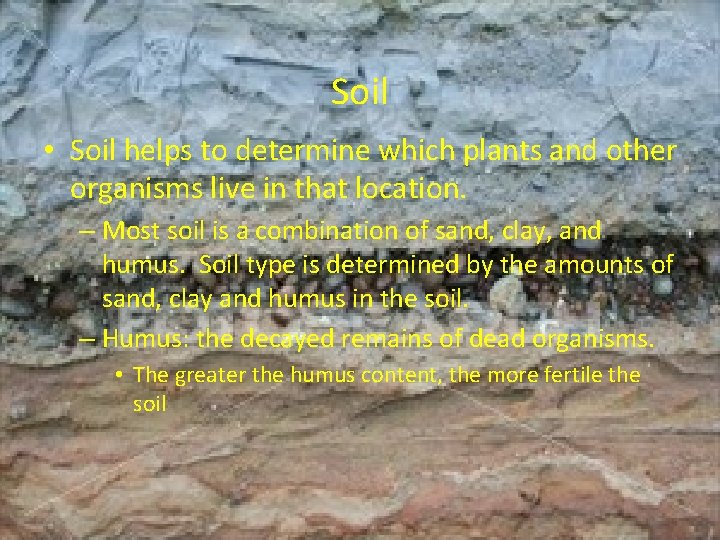
Soil • Soil helps to determine which plants and other organisms live in that location. – Most soil is a combination of sand, clay, and humus. Soil type is determined by the amounts of sand, clay and humus in the soil. – Humus: the decayed remains of dead organisms. • The greater the humus content, the more fertile the soil
Light and Temperature • Through the process of photosyntheisis, the radiant energy of sunlight is transformed into chemical energy that drives virtually all of life’s processes. • How much sunlight is available affects where green plants and other photosynthetic plants live. • Most organisms can survive only if their body temperatures stay within the range of 0°C to 50°C.
Biotic Factors • Abiotic factors don’t provide everything an organism needs for survival. • Example: mushrooms would not be able to grow without the decaying bodies of other organisms to feed on. • Example: honeybees couldn’t survive without pollen from flowers. • Organisms depend on other organisms for food, shelter, protection or reproduction. • Living or once living organisms in the environment are called biotic factors.
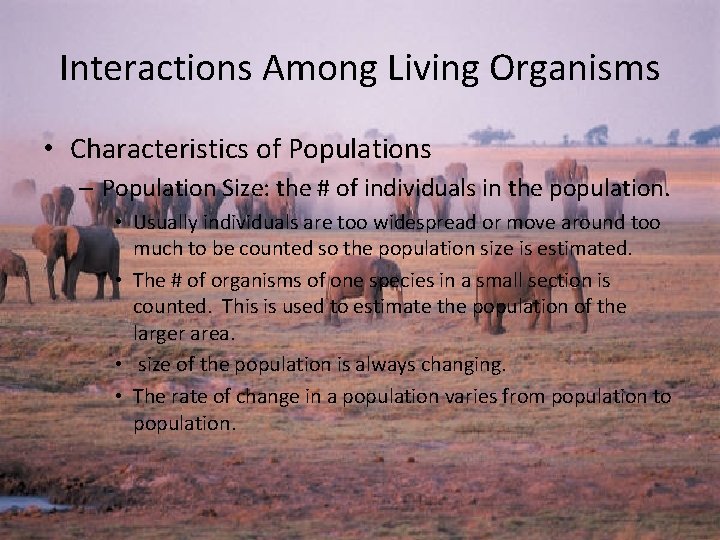
Interactions Among Living Organisms • Characteristics of Populations – Population Size: the # of individuals in the population. • Usually individuals are too widespread or move around too much to be counted so the population size is estimated. • The # of organisms of one species in a small section is counted. This is used to estimate the population of the larger area. • size of the population is always changing. • The rate of change in a population varies from population to population.
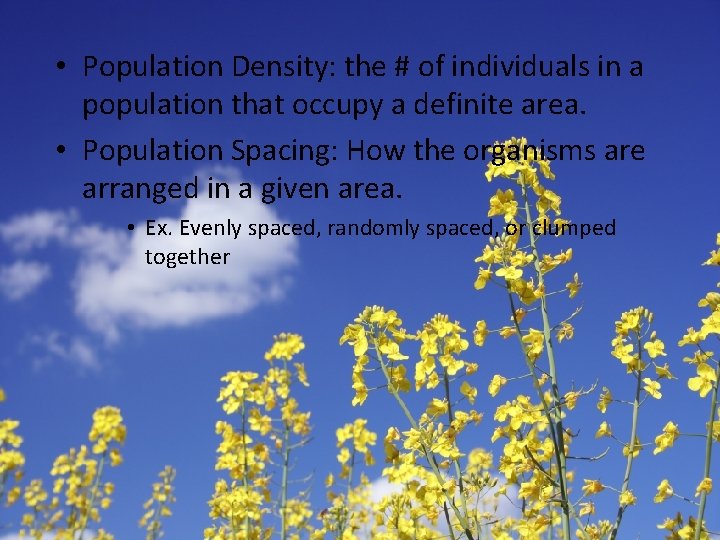
• Population Density: the # of individuals in a population that occupy a definite area. • Population Spacing: How the organisms are arranged in a given area. • Ex. Evenly spaced, randomly spaced, or clumped together
Limiting Factors • Any biotic or abiotic factor that limits the # of individuals in a population. • A LF can affect other populations in the community indirectly. – Ex. A drought might reduce the # of seed producing plants in a forest. Fewer plants means that food can become a LF for deer that eat the plants and the bird that feeds on the seeds of these plants. – LF may include: Food, Shelter, Water, Space, Disease, Parasitis, Predation, Nesting Sites.
Limiting Factors Affecting the Everglades • • Water Flow Pesticides and Herbicides Invasive species