
How is the geography curriculum made Exploring the
- Slides: 19
How is the geography curriculum made? Exploring the concepts of ‘curriculum coherence’ and ‘curriculum control’ David Mitchell Institute of Education, London
My research: How is the geography curriculum made? My key positions • ‘curriculum’ as enacted • Focus on teacher • Theory of a society – curriculum power relationship
Exploring the concepts of ‘curriculum coherence’ and ‘curriculum control’ for how the geography curriculum is made “The England National Curriculum is, in law, an expression of content, and of aims and values. It cannot do everything. To expect it so to do will most likely result in failure. ” Oates, 2011: 134
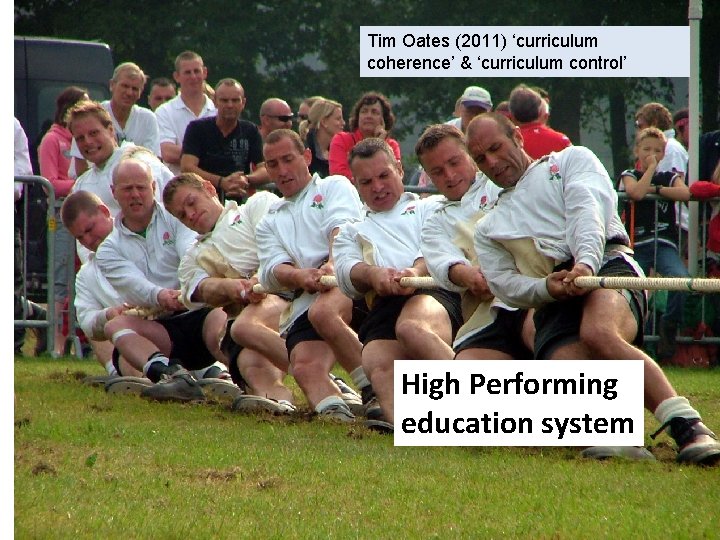
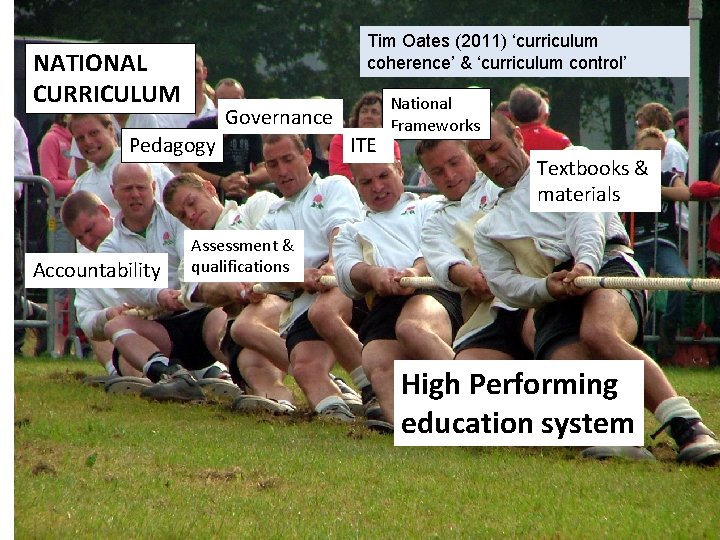
Tim Oates (2011) ‘curriculum coherence’ & ‘curriculum control’ High Performing education system
Tim Oates (2011) ‘curriculum coherence’ & ‘curriculum control’ NATIONAL CURRICULUM Governance Pedagogy Accountability ITE National Frameworks Textbooks & materials Assessment & qualifications High Performing education system
“A system is regarded as ‘coherent’ when the national curriculum content, textbooks, teaching content, pedagogy, assessment and drivers and incentives all are aligned and reinforce one another. ” Oates, 2011: 141
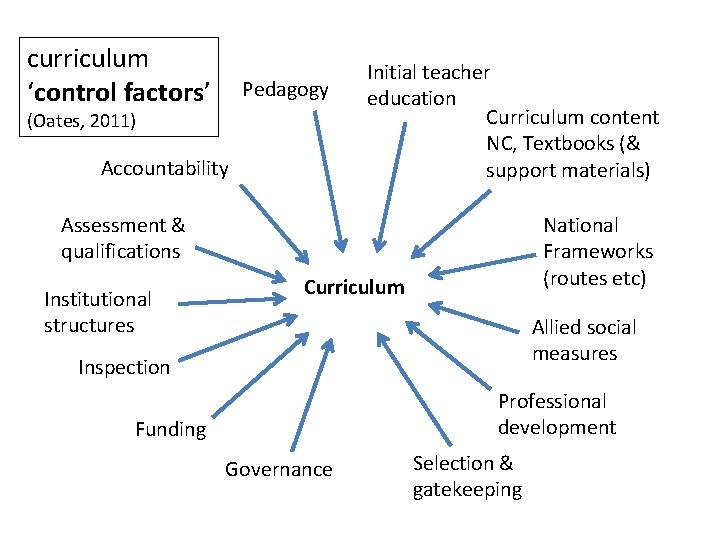
curriculum ‘control factors’ Pedagogy (Oates, 2011) Accountability Initial teacher education Curriculum content NC, Textbooks (& support materials) Assessment & qualifications Institutional structures National Frameworks (routes etc) Curriculum Allied social measures Inspection Professional development Funding Governance Selection & gatekeeping
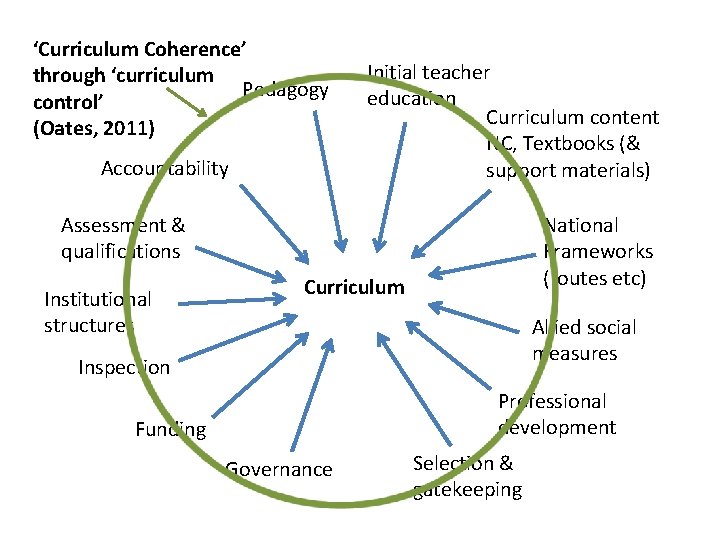
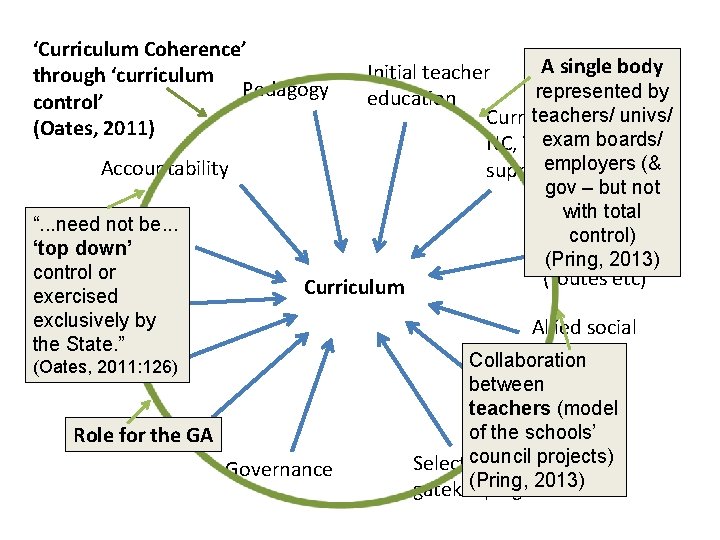
‘Curriculum Coherence’ through ‘curriculum Pedagogy control’ (Oates, 2011) Accountability Initial teacher education Curriculum content NC, Textbooks (& support materials) Assessment & qualifications Institutional structures National Frameworks (routes etc) Curriculum Allied social measures Inspection Professional development Funding Governance Selection & gatekeeping
‘Curriculum Coherence’ through ‘curriculum Pedagogy control’ (Oates, 2011) Accountability “. . . need not be. . . & Assessment ‘topqualifications down’ control or exercised Institutional exclusively structuresby the State. ” A single body Initial teacher represented by education teachers/ univs/ Curriculum content exam boards/ NC, Textbooks (& employers support materials)(& gov – but not with total National control) Frameworks (Pring, 2013) Curriculum (routes etc) Allied social measures Collaboration (Oates, 2011: 126) Inspection Role for. Funding the GA Governance between Professional teachers (model development of the schools’ council Selection & projects) (Pring, 2013) gatekeeping
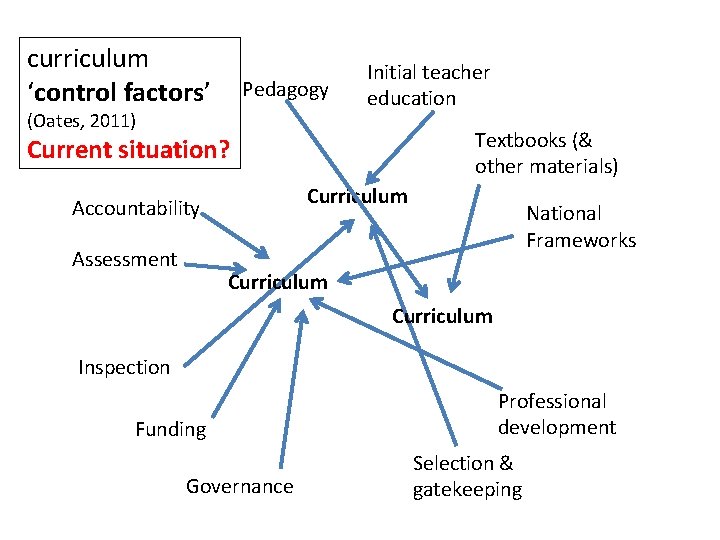
curriculum ‘control factors’ Pedagogy (Oates, 2011) Initial teacher education Textbooks (& other materials) Current situation? Curriculum Accountability Assessment National Frameworks Curriculum Inspection Funding Governance Professional development Selection & gatekeeping
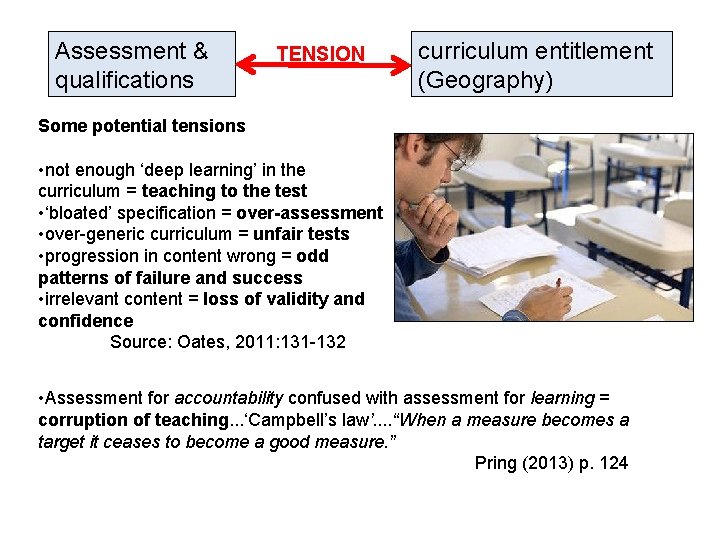
Assessment & qualifications TENSION curriculum entitlement (Geography) Some potential tensions • not enough ‘deep learning’ in the curriculum = teaching to the test • ‘bloated’ specification = over-assessment • over-generic curriculum = unfair tests • progression in content wrong = odd patterns of failure and success • irrelevant content = loss of validity and confidence Source: Oates, 2011: 131 -132 • Assessment for accountability confused with assessment for learning = corruption of teaching. . . ‘Campbell’s law’. . “When a measure becomes a target it ceases to become a good measure. ” Pring (2013) p. 124
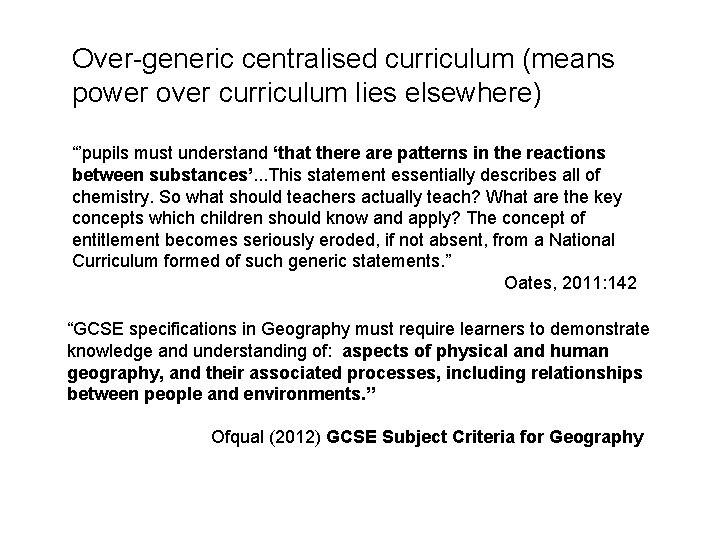
Over-generic centralised curriculum (means power over curriculum lies elsewhere) “’pupils must understand ‘that there are patterns in the reactions between substances’. . . This statement essentially describes all of chemistry. So what should teachers actually teach? What are the key concepts which children should know and apply? The concept of entitlement becomes seriously eroded, if not absent, from a National Curriculum formed of such generic statements. ” Oates, 2011: 142 “GCSE specifications in Geography must require learners to demonstrate knowledge and understanding of: aspects of physical and human geography, and their associated processes, including relationships between people and environments. ” Ofqual (2012) GCSE Subject Criteria for Geography
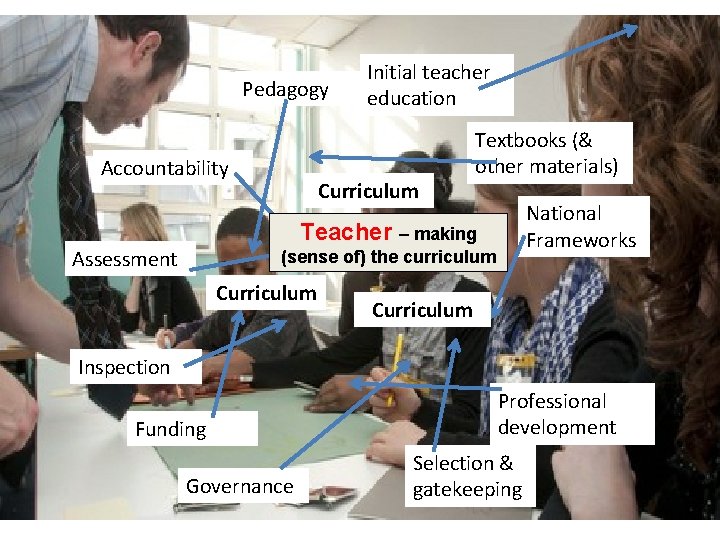
Pedagogy Accountability Initial teacher education Curriculum Textbooks (& other materials) National Frameworks Teacher – making Assessment (sense of) the curriculum Curriculum Inspection Funding Governance Professional development Selection & gatekeeping
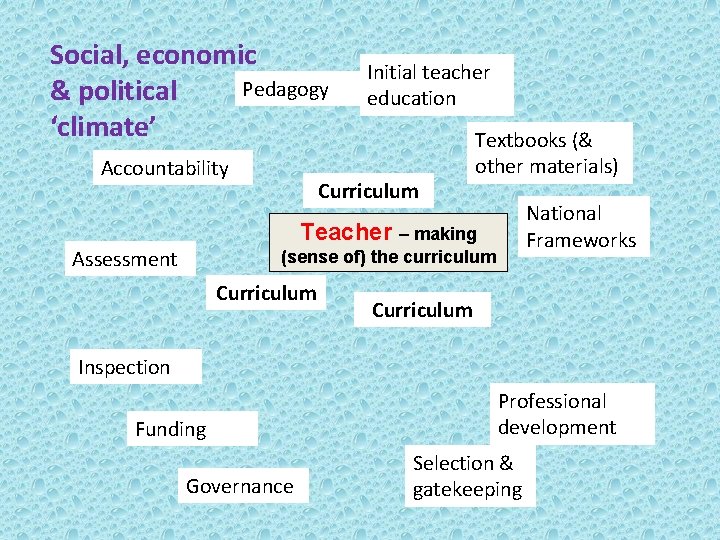
Social, economic Pedagogy & political ‘climate’ Accountability Initial teacher education Curriculum Textbooks (& other materials) National Frameworks Teacher – making Assessment (sense of) the curriculum Curriculum Inspection Funding Governance Professional development Selection & gatekeeping
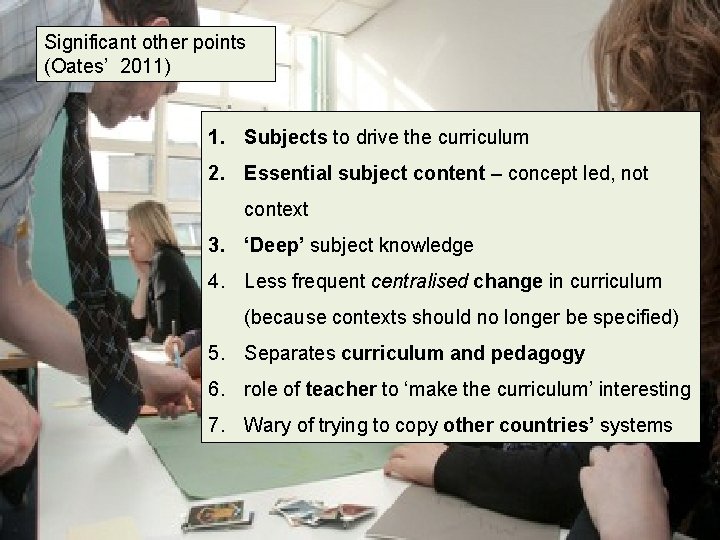
Significant other points (Oates’ 2011) 1. Subjects to drive the curriculum 2. Essential subject content – concept led, not context 3. ‘Deep’ subject knowledge 4. Less frequent centralised change in curriculum (because contexts should no longer be specified) 5. Separates curriculum and pedagogy 6. role of teacher to ‘make the curriculum’ interesting 7. Wary of trying to copy other countries’ systems
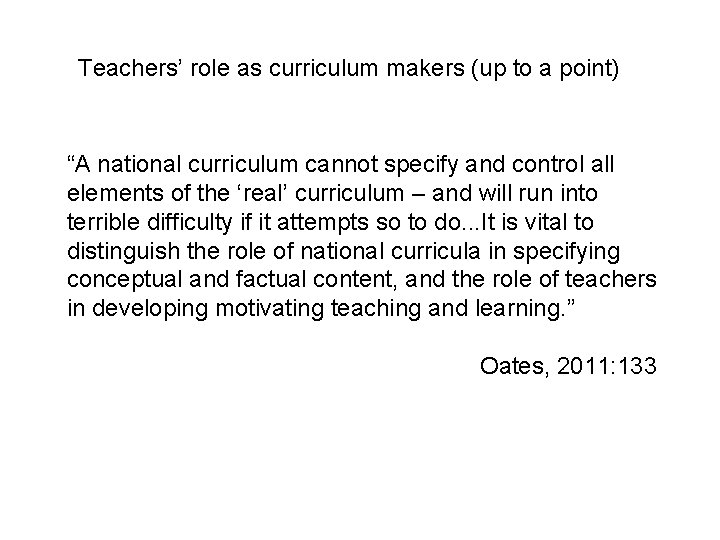
Teachers’ role as curriculum makers (up to a point) “A national curriculum cannot specify and control all elements of the ‘real’ curriculum – and will run into terrible difficulty if it attempts so to do. . . It is vital to distinguish the role of national curricula in specifying conceptual and factual content, and the role of teachers in developing motivating teaching and learning. ” Oates, 2011: 133
Finally. . . Some issues raised • Role of university geography – how is the ‘change in the structure and content of knowledge’ to be fed into the curriculum? • How autonomous should teachers be in choosing content? • What is the role of the child in curriculum choices? • Is Oates’ over emphasising the power of the NC over the ‘real’ curriculum? • Are different value & belief positions (which create difference in ‘real’ curricula) sufficiently recognised? • How realistic is coherence in English education system?
We must not work alone. . .
References • • • Mansell, W. (2007) Education by numbers. The damaging treadmill of school tests. Politico’s. Oates, T. (2011): Could do better: using international comparisons to refinethe National Curriculum in England, Curriculum Journal, 22, 2, 121 -150 Ofqual (2012) GCSE Subject Criteria for Geography http: //www. ofqual. gov. uk/qualifications-and-assessments/ online: last accessed 24. 01. 13 Pring, R. (2013) The Life and Death of Secondary Education for all. Abingdon: Routledge Roberts, M. (1995) ‘Interpretations of the geography national curriculum: a common curriculum for all? ’, Journal of Curriculum Studies, 27, 2, pp. 187 -205