
HOW INHERITED TRAITS ARE TRANSMITTED Chapter 11 Genetics
- Slides: 35
HOW INHERITED TRAITS ARE TRANSMITTED Chapter 11
Genetics is the science of heredity.
Gregor Mendel • • • Austrian monk with a strong mathematical background. Interested in how certain traits were passed from parents to offspring. Worked with pea plants (1857 -1863): • easy to grow & developed quickly • exhibited many traits that had 2 easily distinguishable forms • could manipulate fertilizations
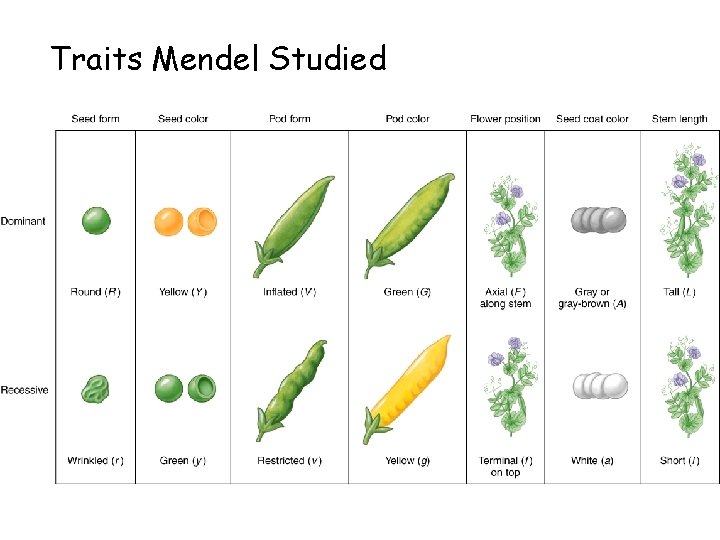
Traits Mendel Studied
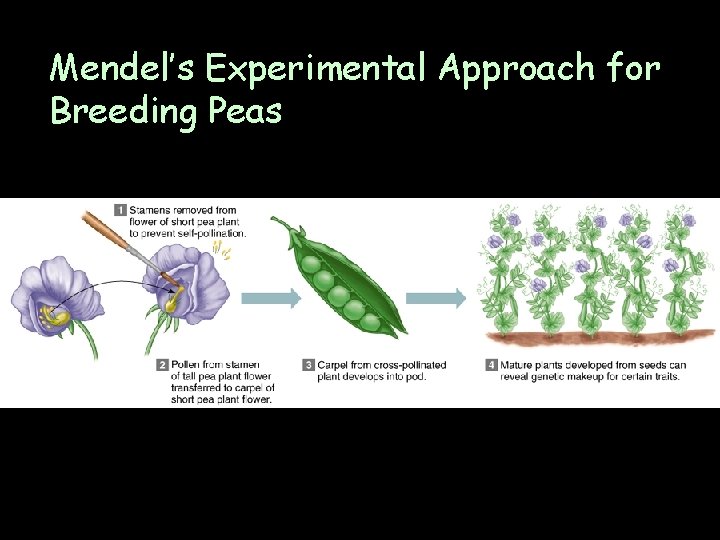
Mendel’s Experimental Approach for Breeding Peas
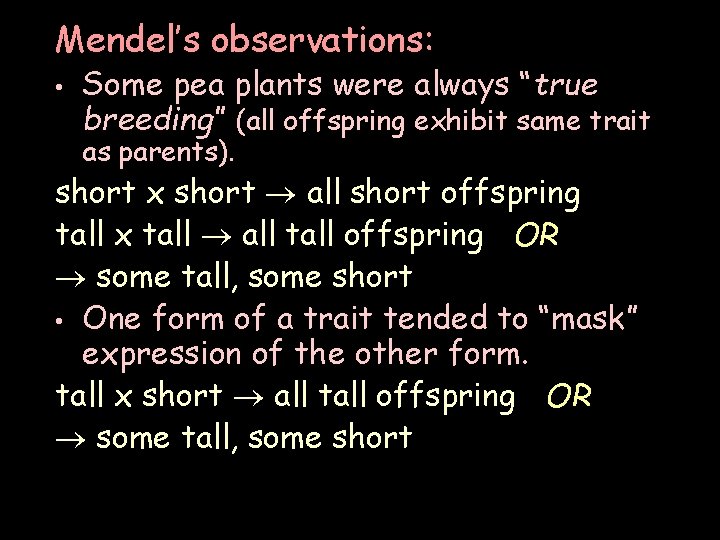
Mendel’s observations: • Some pea plants were always “true breeding” (all offspring exhibit same trait as parents). short x short all short offspring tall x tall tall offspring OR some tall, some short • One form of a trait tended to “mask” expression of the other form. tall x short all tall offspring OR some tall, some short
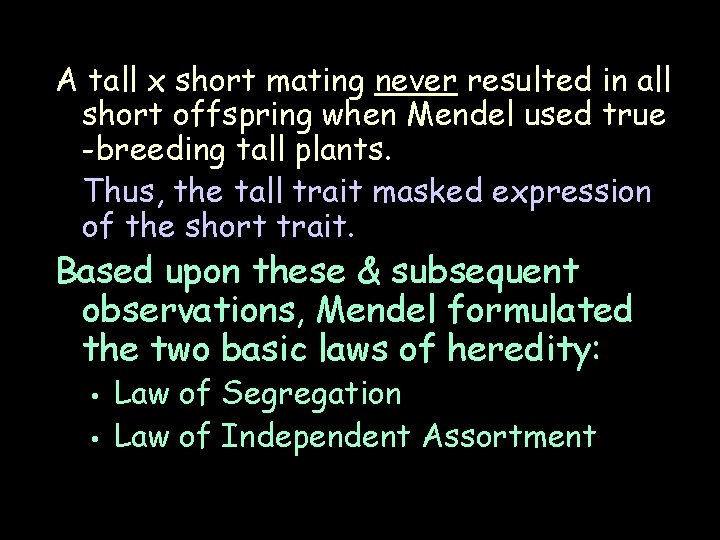
A tall x short mating never resulted in all short offspring when Mendel used true -breeding tall plants. Thus, the tall trait masked expression of the short trait. Based upon these & subsequent observations, Mendel formulated the two basic laws of heredity: • • Law of Segregation Law of Independent Assortment
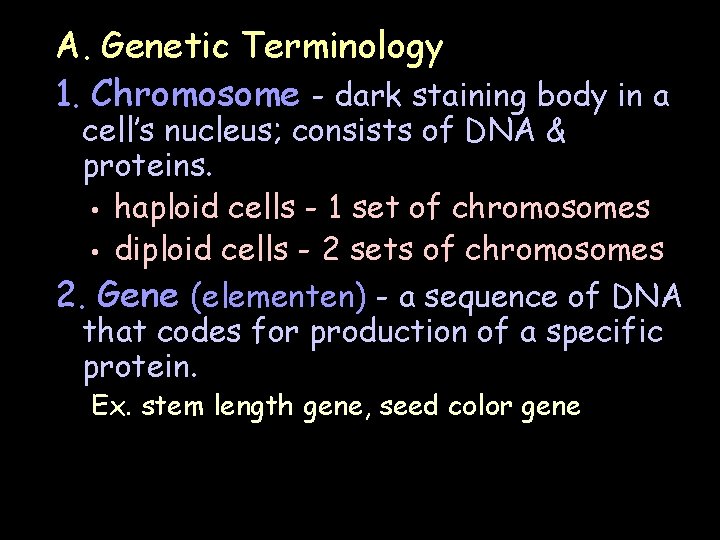
A. Genetic Terminology 1. Chromosome - dark staining body in a cell’s nucleus; consists of DNA & proteins. • haploid cells - 1 set of chromosomes • diploid cells - 2 sets of chromosomes 2. Gene (elementen) - a sequence of DNA that codes for production of a specific protein. Ex. stem length gene, seed color gene
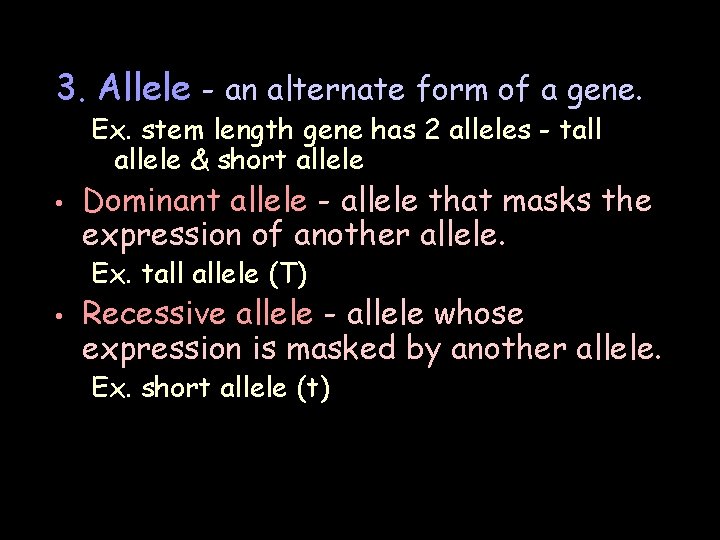
3. Allele - an alternate form of a gene. Ex. stem length gene has 2 alleles - tall allele & short allele • Dominant allele - allele that masks the expression of another allele. Ex. tall allele (T) • Recessive allele - allele whose expression is masked by another allele. Ex. short allele (t)
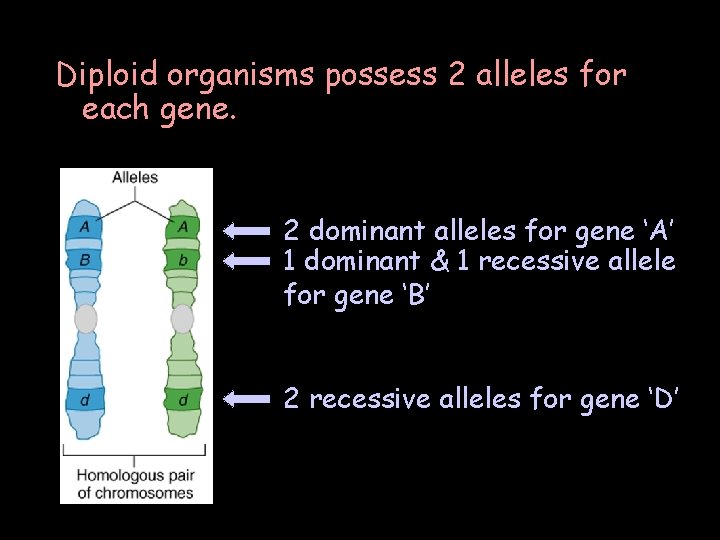
Diploid organisms possess 2 alleles for each gene. 2 dominant alleles for gene ‘A’ 1 dominant & 1 recessive allele for gene ‘B’ 2 recessive alleles for gene ‘D’
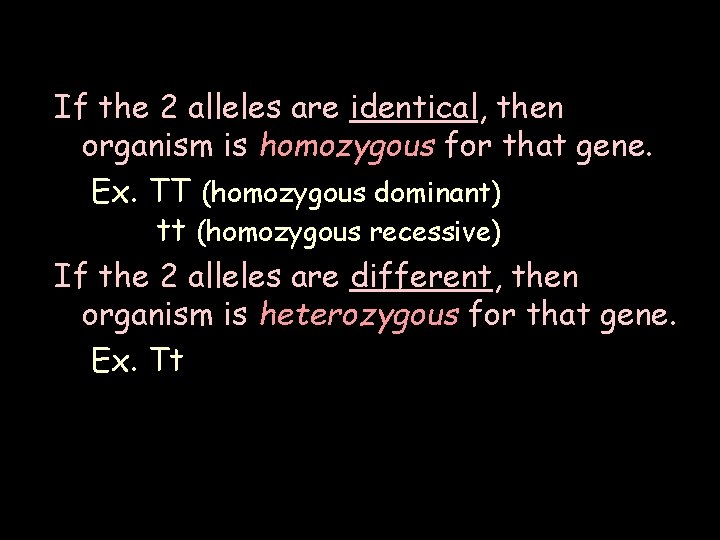
If the 2 alleles are identical, then organism is homozygous for that gene. Ex. TT (homozygous dominant) tt (homozygous recessive) If the 2 alleles are different, then organism is heterozygous for that gene. Ex. Tt
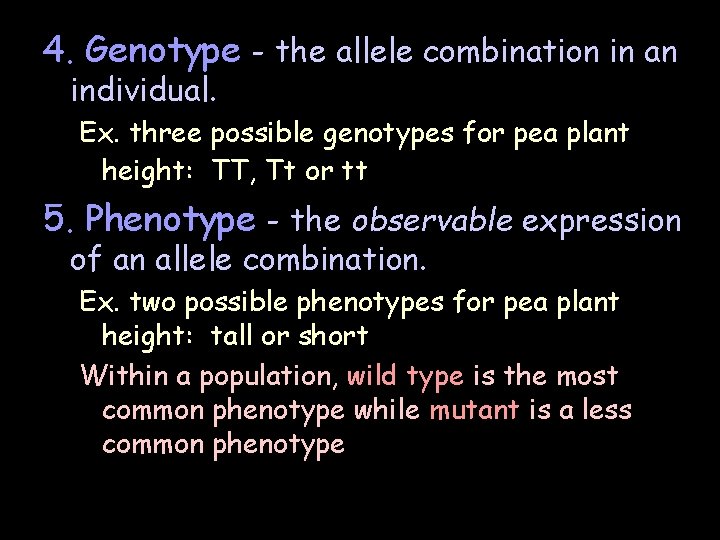
4. Genotype - the allele combination in an individual. Ex. three possible genotypes for pea plant height: TT, Tt or tt 5. Phenotype - the observable expression of an allele combination. Ex. two possible phenotypes for pea plant height: tall or short Within a population, wild type is the most common phenotype while mutant is a less common phenotype
If you know an individual’s phenotype, do you automatically know their genotype? • • Yes, if the trait is recessive • short pea plants must be tt • round-seeded plants must be rr No, if the trait is dominant • tall pea plants can be either TT or Tt • wrinkled-seeded plants can be either RR or Rr
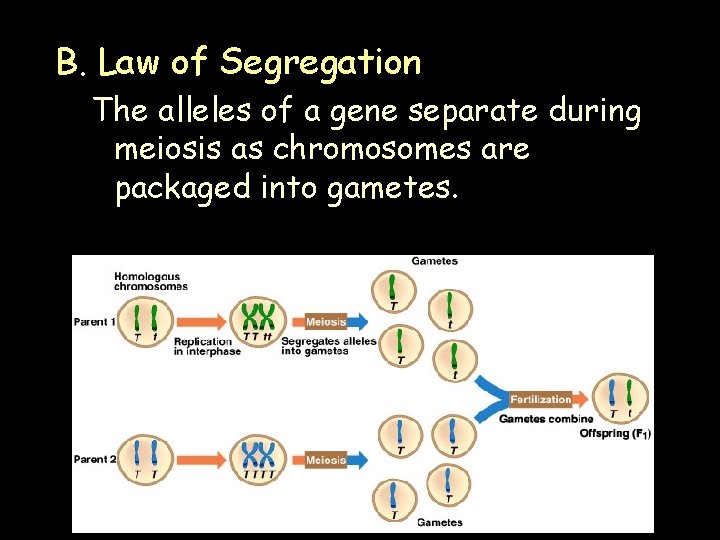
B. Law of Segregation The alleles of a gene separate during meiosis as chromosomes are packaged into gametes.
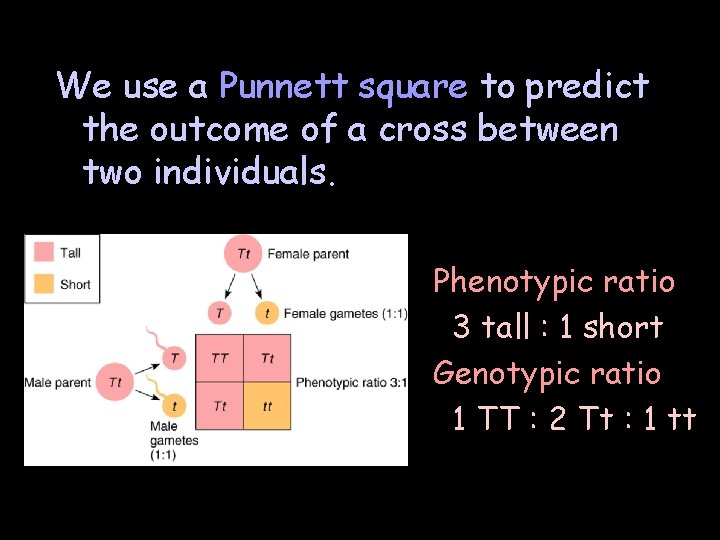
We use a Punnett square to predict the outcome of a cross between two individuals. Phenotypic ratio 3 tall : 1 short Genotypic ratio 1 TT : 2 Tt : 1 tt
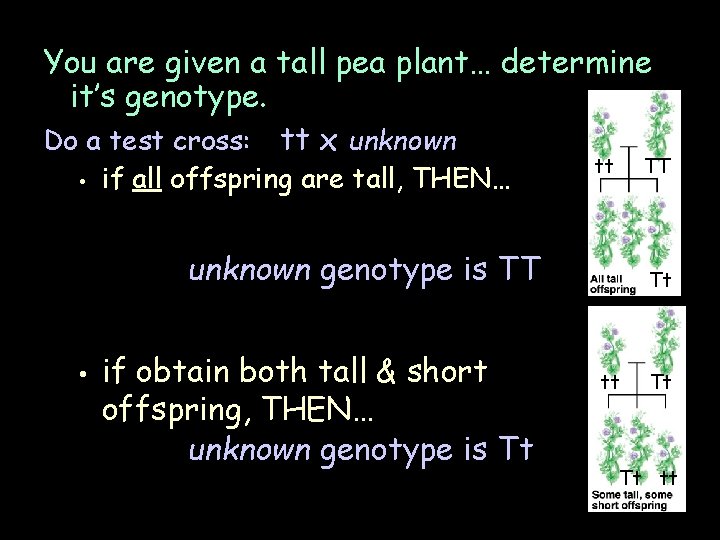
We use a test cross to determine an unknown genotype. Test cross = a cross between an individual of unknown genotype and an individual that is homozygous recessive for the trait in question.
You are given a tall pea plant… determine it’s genotype. Do a test cross: tt x unknown • if all offspring are tall, THEN… tt TT unknown genotype is TT • if obtain both tall & short offspring, THEN… unknown genotype is Tt Tt tt
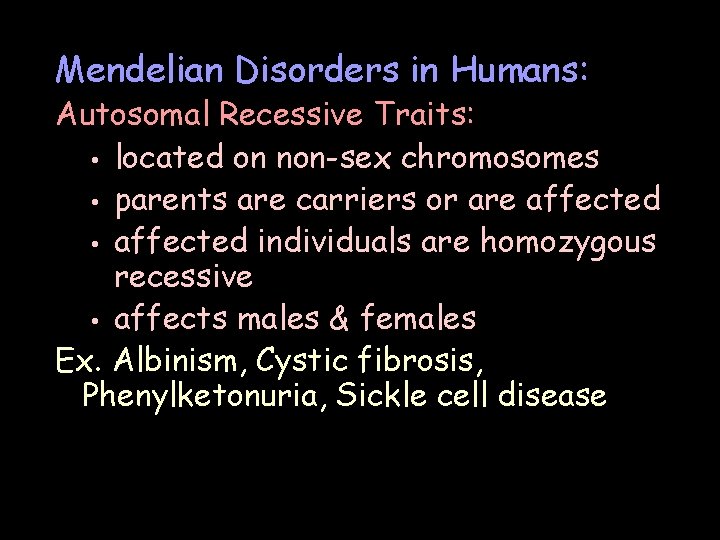
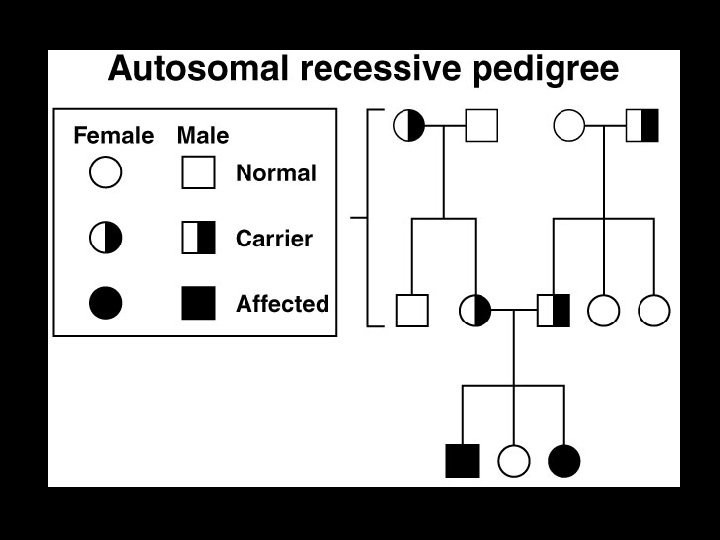
Mendelian Disorders in Humans: Autosomal Recessive Traits: • located on non-sex chromosomes • parents are carriers or are affected • affected individuals are homozygous recessive • affects males & females Ex. Albinism, Cystic fibrosis, Phenylketonuria, Sickle cell disease
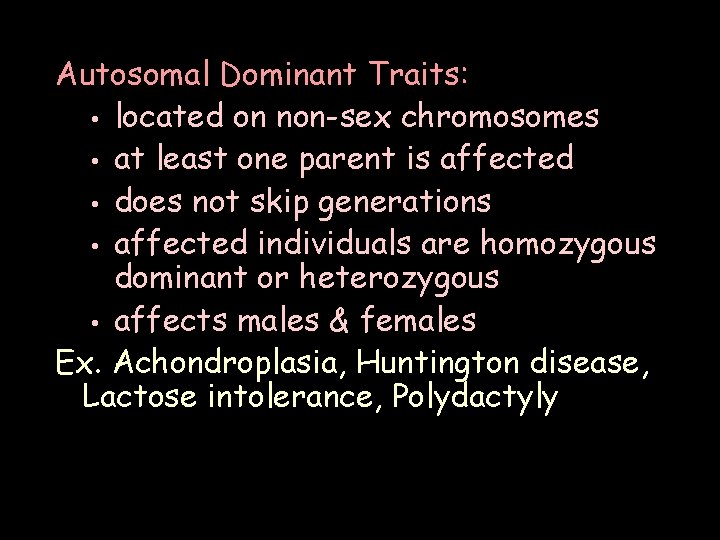
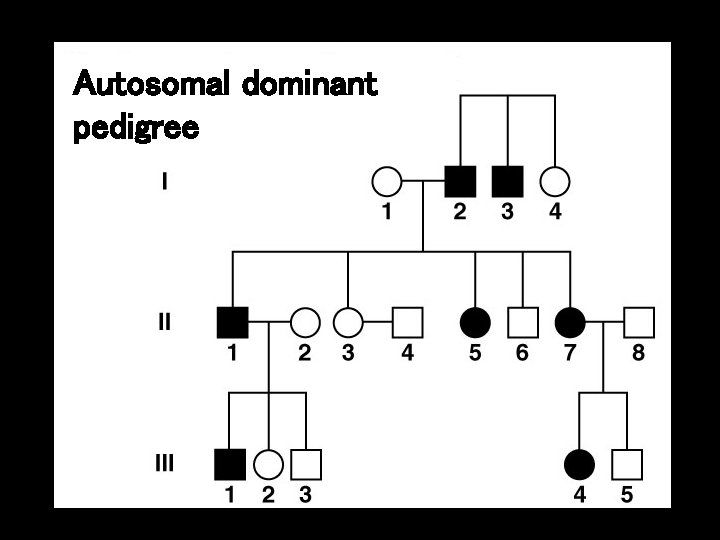
Autosomal Dominant Traits: • located on non-sex chromosomes • at least one parent is affected • does not skip generations • affected individuals are homozygous dominant or heterozygous • affects males & females Ex. Achondroplasia, Huntington disease, Lactose intolerance, Polydactyly
Autosomal dominant pedigree
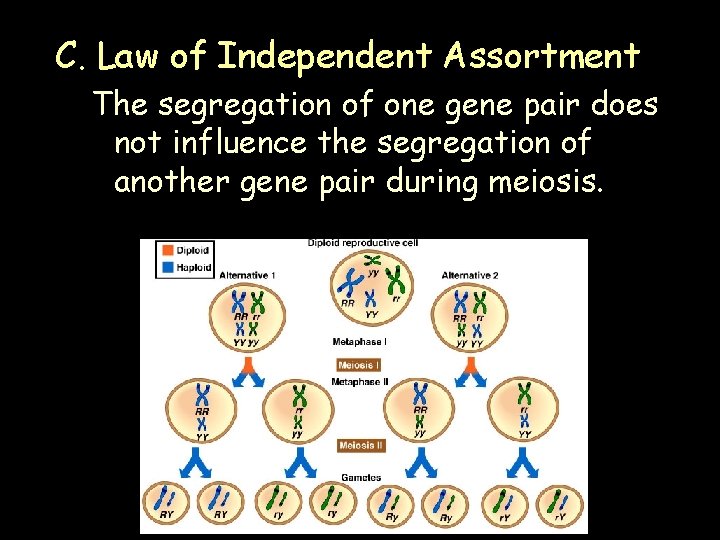
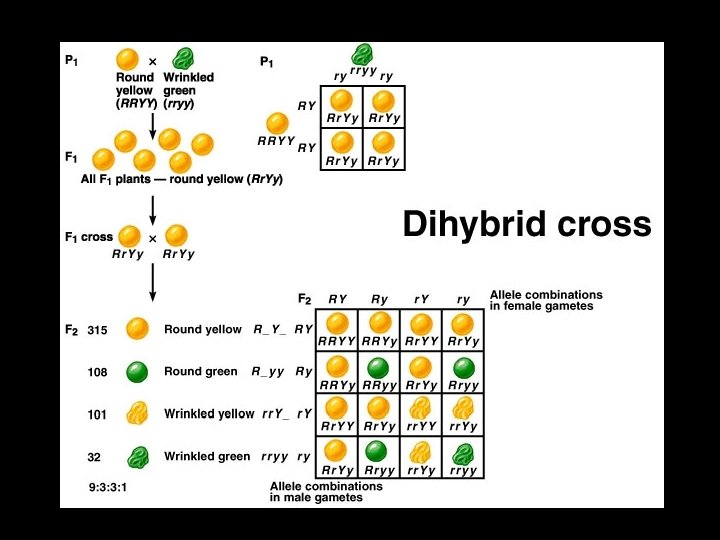
C. Law of Independent Assortment The segregation of one gene pair does not influence the segregation of another gene pair during meiosis.
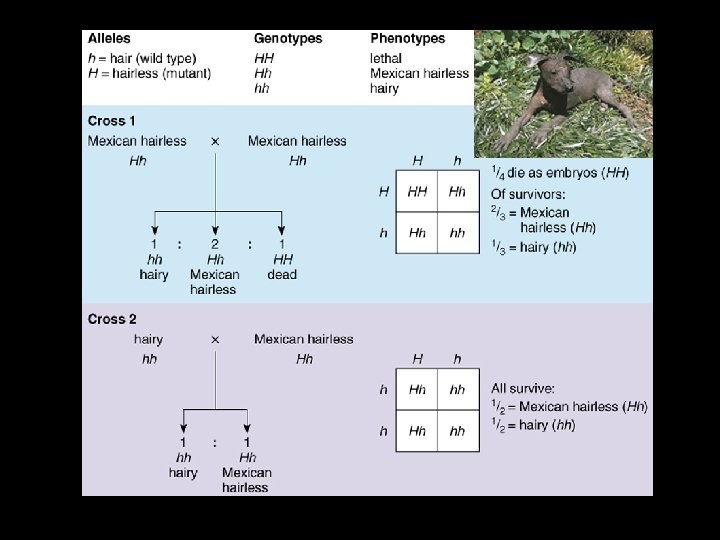
D. Factors Appearing to Violate Mendel’s Laws 1. Lethal Alleles - certain allele combination causes death of an entire phenotypic class very early in development. Ex. hairless trait in dogs [homozygous dominant (HH) individuals die as embryos]
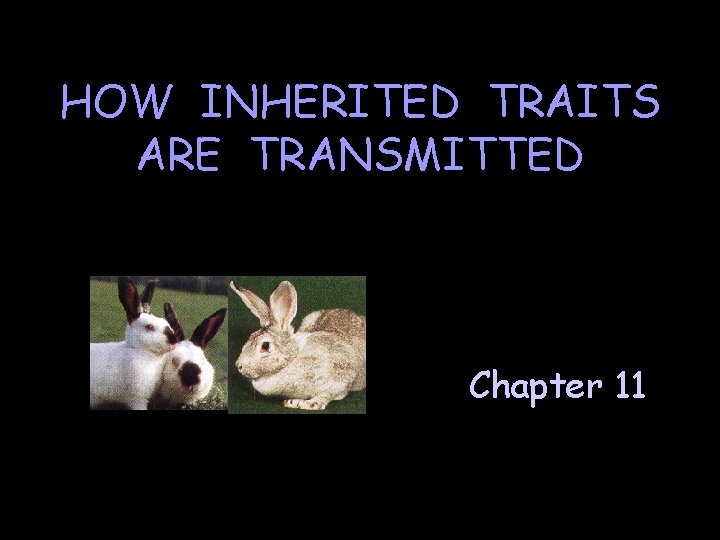
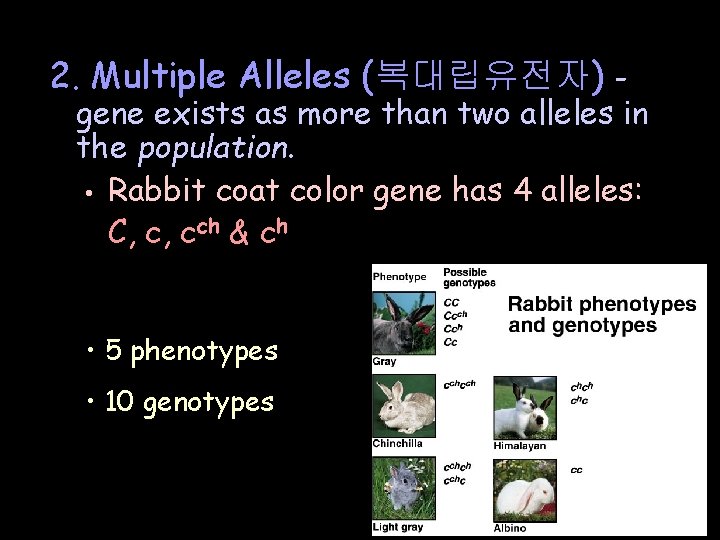
2. Multiple Alleles (복대립유전자) - gene exists as more than two alleles in the population. • Rabbit coat color gene has 4 alleles: C, c, cch & ch • 5 phenotypes • 10 genotypes
3. Pleiotropy (다면발현) – a single gene is responsible for more than one trait A single protein made by a single gene is important in various biochemical pathways or affects more than one process within the body.
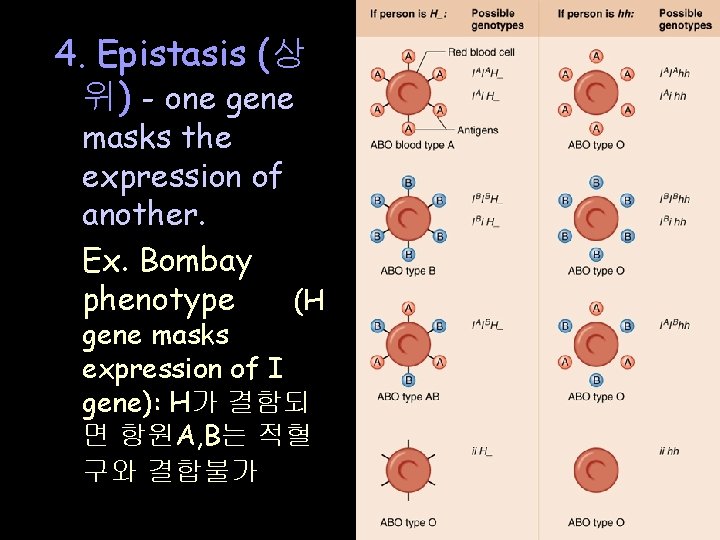
4. Epistasis (상 위) - one gene masks the expression of another. Ex. Bombay phenotype (H gene masks expression of I gene): H가 결함되 면 항원A, B는 적혈 구와 결합불가
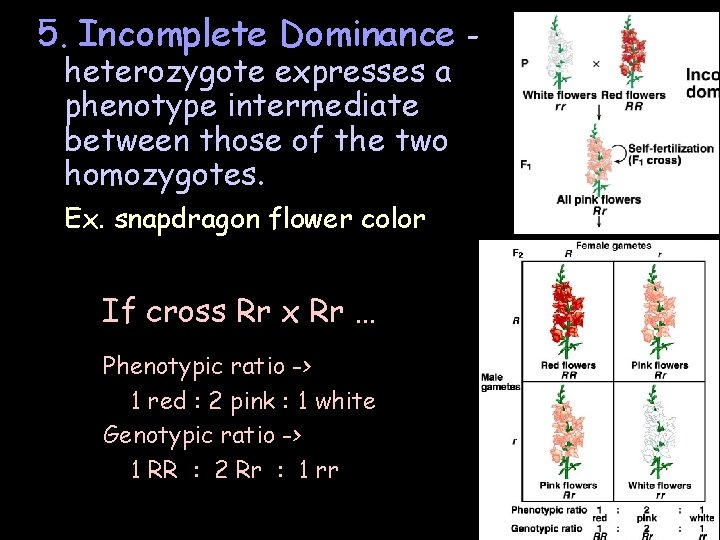
5. Incomplete Dominance heterozygote expresses a phenotype intermediate between those of the two homozygotes. Ex. snapdragon flower color If cross Rr x Rr … Phenotypic ratio -> 1 red : 2 pink : 1 white Genotypic ratio -> 1 RR : 2 Rr : 1 rr
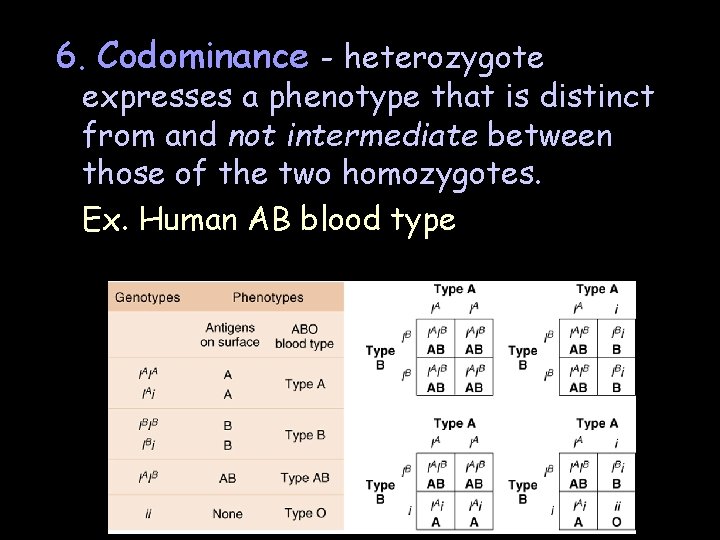
6. Codominance - heterozygote expresses a phenotype that is distinct from and not intermediate between those of the two homozygotes. Ex. Human AB blood type
7. Phenocopy – a trait that appears to be inherited but is really caused by an environmental factor Ex. Children who become infected with HIV from an infected mother
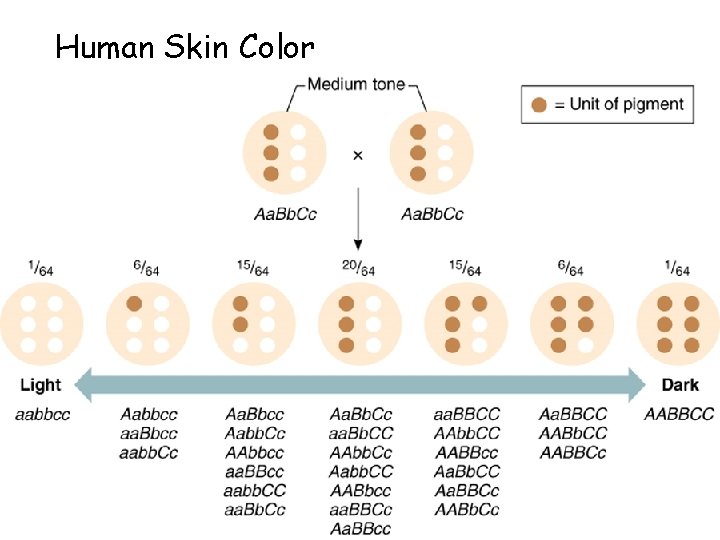
E. Complex Traits that do not follow Mendel’s laws, but tend to “run in families”. 1. Polygenic Traits - determined by the combined effect of more than one gene. Ex. height, eye color & skin color
Human Skin Color
2. Multifactorial Traits - determined by the combined effect of one or more genes plus the environment. Ex. heart disease, body weight, intelligence Heritability is the proportion of phenotypic variation in a population attributed to genes The incidence of a multifactorial trait within a population can be used to calculate the empiric risk (a prediction of recurrence)
How can genetic and environmental influences be studied? Adoption studies – allows for the study of environmental influences among individuals who are not related Twin studies – allows for the study of genetic influences, separated twins allow for comparison between genetic and environmental influences