
How I treat Functional Mitral Regurgitation The Surgeons


- Slides: 30
How I treat Functional Mitral Regurgitation: The Surgeon’s perspective Thierry MESANA, MD, Ph. D President and CEO Professor Cardiac Surgery Valve Surgery Research Chair University of Ottawa Heart Institute Ottawa, Ontario, Canada
I have no relevant financial relationships
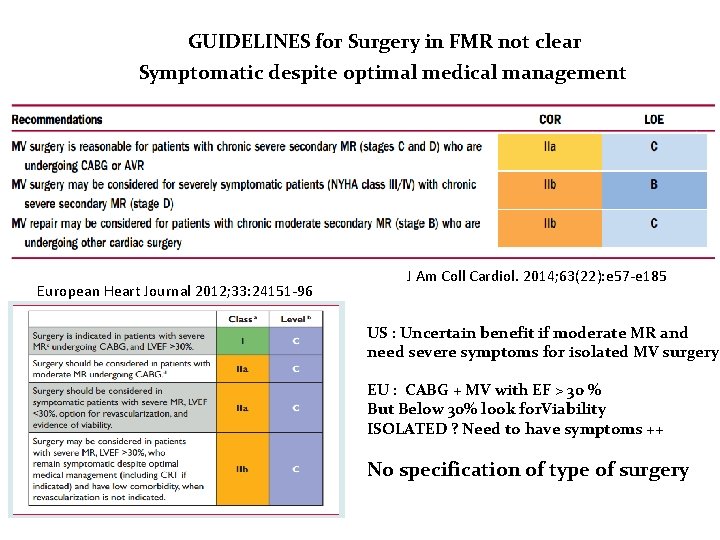
GUIDELINES for Surgery in FMR not clear Symptomatic despite optimal medical management European Heart Journal 2012; 33: 24151 -96 J Am Coll Cardiol. 2014; 63(22): e 57 -e 185 US : Uncertain benefit if moderate MR and need severe symptoms for isolated MV surgery EU : CABG + MV with EF > 30 % But Below 30% look for. Viability ISOLATED ? Need to have symptoms ++ No specification of type of surgery
FACT: RECURRENT MR FOLLOWING REPAIR IS COMMON and no clear advantage on survival
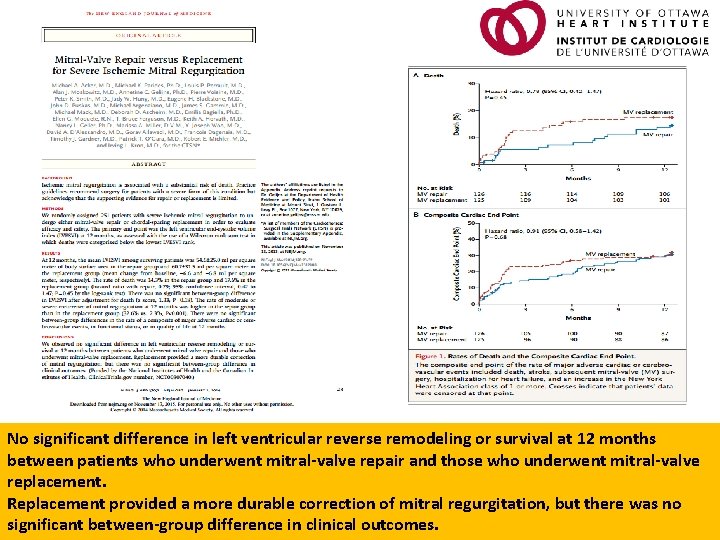
No significant difference in left ventricular reverse remodeling or survival at 12 months between patients who underwent mitral-valve repair and those who underwent mitral-valve replacement. Replacement provided a more durable correction of mitral regurgitation, but there was no significant between-group difference in clinical outcomes.
FACT: UNDERSTANDING FUNCTIONAL MR IS CHALLENGING “ALL FMR ARE NOT EQUAL”
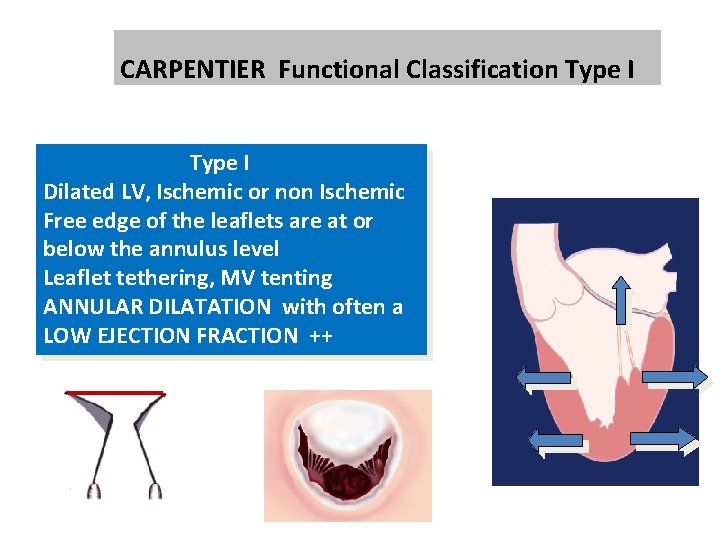
CARPENTIER Functional Classification Type I Dilated LV, Ischemic or non Ischemic Free edge of the leaflets are at or below the annulus level Leaflet tethering, MV tenting ANNULAR DILATATION with often a LOW EJECTION FRACTION ++
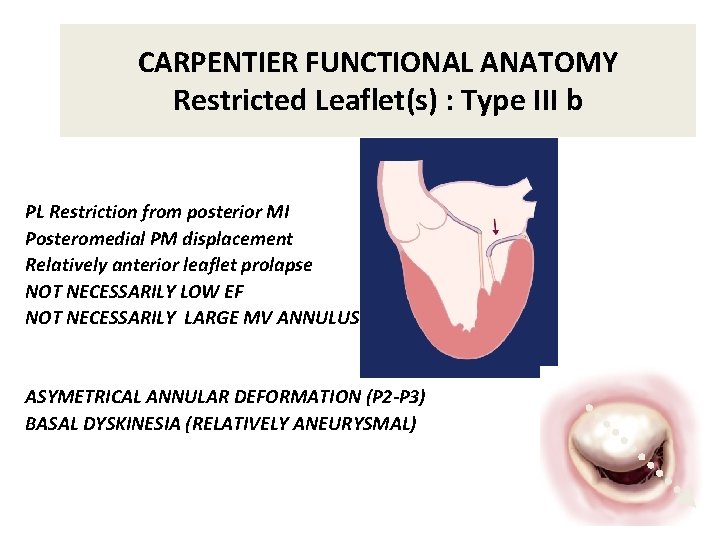
CARPENTIER FUNCTIONAL ANATOMY Restricted Leaflet(s) : Type III b PL Restriction from posterior MI Posteromedial PM displacement Relatively anterior leaflet prolapse NOT NECESSARILY LOW EF NOT NECESSARILY LARGE MV ANNULUS ASYMETRICAL ANNULAR DEFORMATION (P 2 -P 3) BASAL DYSKINESIA (RELATIVELY ANEURYSMAL)
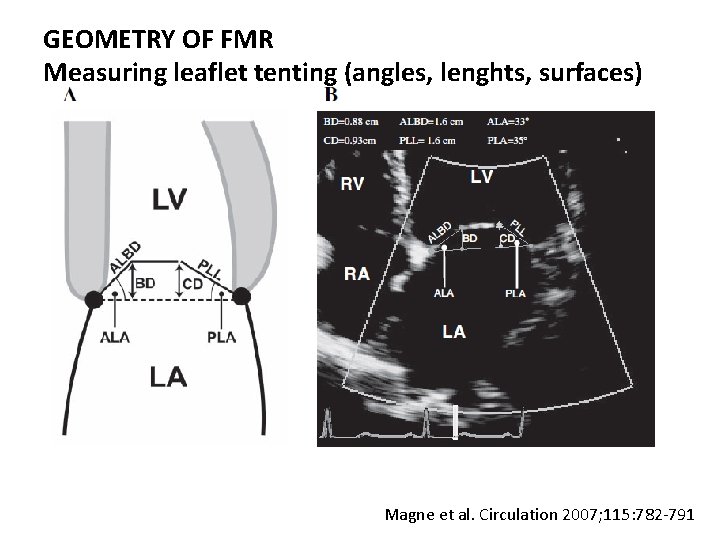
GEOMETRY OF FMR Measuring leaflet tenting (angles, lenghts, surfaces) Magne et al. Circulation 2007; 115: 782 -791
FACT : SURGICAL REPAIR STRATEGIES ADDRESSING RESTRICTION ARE LIMITED
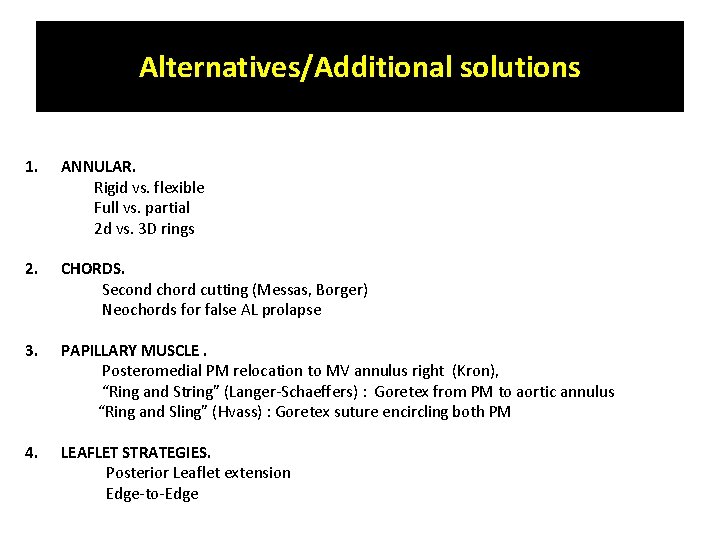
Alternatives/Additional solutions 1. ANNULAR. Rigid vs. flexible Full vs. partial 2 d vs. 3 D rings 2. CHORDS. Second chord cutting (Messas, Borger) Neochords for false AL prolapse 3. PAPILLARY MUSCLE. Posteromedial PM relocation to MV annulus right (Kron), “Ring and String” (Langer-Schaeffers) : Goretex from PM to aortic annulus “Ring and Sling” (Hvass) : Goretex suture encircling both PM 4. LEAFLET STRATEGIES. Posterior Leaflet extension Edge-to-Edge
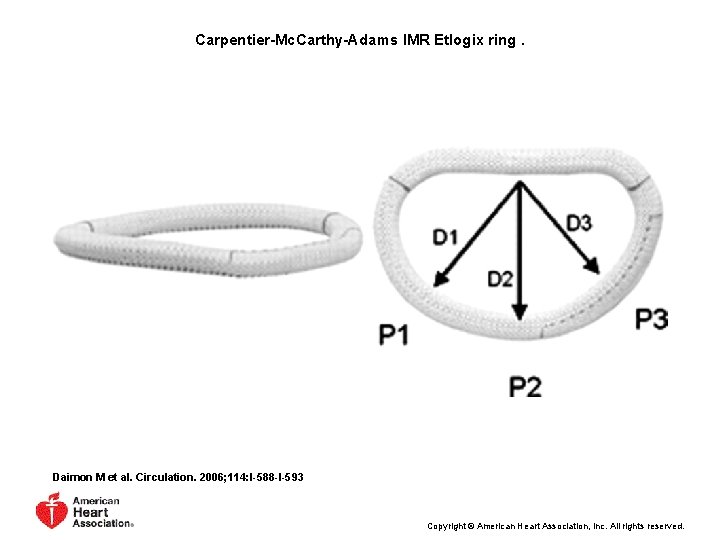
Carpentier-Mc. Carthy-Adams IMR Etlogix ring. Daimon M et al. Circulation. 2006; 114: I-588 -I-593 Copyright © American Heart Association, Inc. All rights reserved.
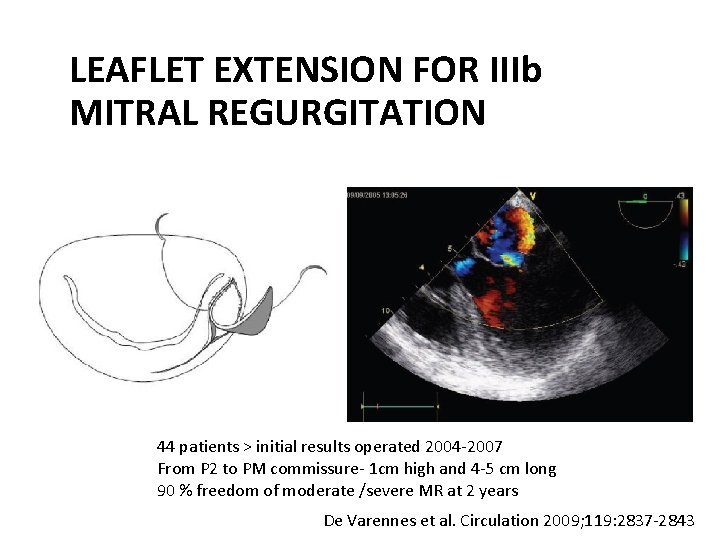
LEAFLET EXTENSION FOR IIIb MITRAL REGURGITATION 44 patients > initial results operated 2004 -2007 From P 2 to PM commissure- 1 cm high and 4 -5 cm long 90 % freedom of moderate /severe MR at 2 years De Varennes et al. Circulation 2009; 119: 2837 -2843
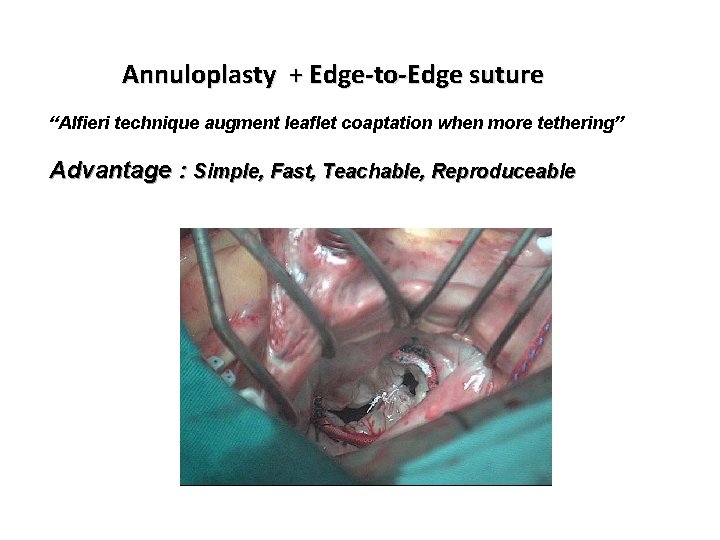
Annuloplasty + Edge-to-Edge suture “Alfieri technique augment leaflet coaptation when more tethering” Advantage : Simple, Fast, Teachable, Reproduceable
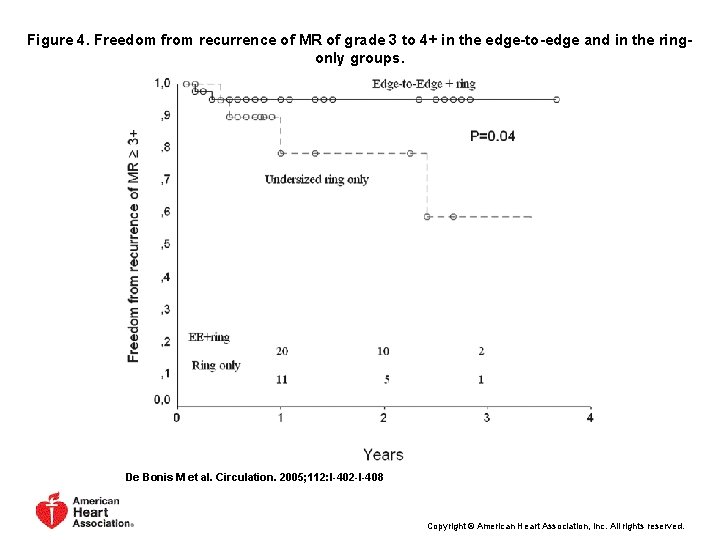
Figure 4. Freedom from recurrence of MR of grade 3 to 4+ in the edge-to-edge and in the ringonly groups. De Bonis M et al. Circulation. 2005; 112: I-402 -I-408 Copyright © American Heart Association, Inc. All rights reserved.
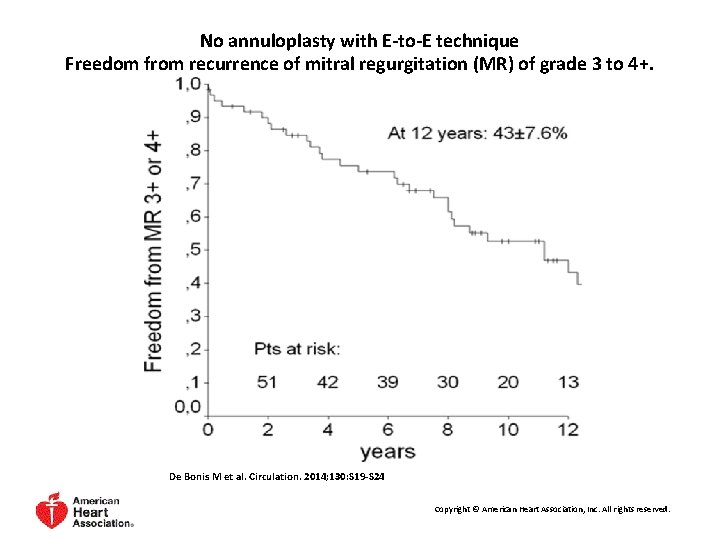
No annuloplasty with E-to-E technique Freedom from recurrence of mitral regurgitation (MR) of grade 3 to 4+. De Bonis M et al. Circulation. 2014; 130: S 19 -S 24 Copyright © American Heart Association, Inc. All rights reserved.
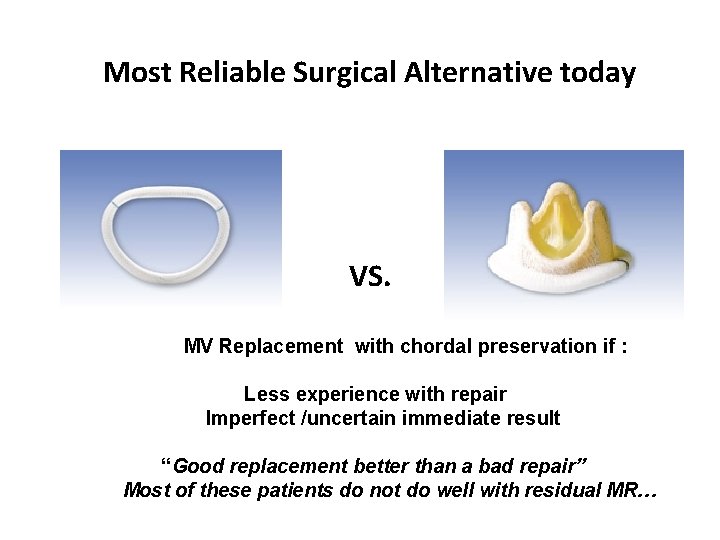
Most Reliable Surgical Alternative today VS. MV Replacement with chordal preservation if : Less experience with repair Imperfect /uncertain immediate result “Good replacement better than a bad repair” Most of these patients do not do well with residual MR…
Mitral Valve Surgery Operative Risk Alternatives to surgery in selected patients with a high Euro. SCORE II and the STS risk score • Risk calculators do not accurately predict outcomes for a high volume center of MV surgery • Mitraclip should be developed by Heart teams in centers of excellence with high volumes of MV disease refferral and surgical expertise
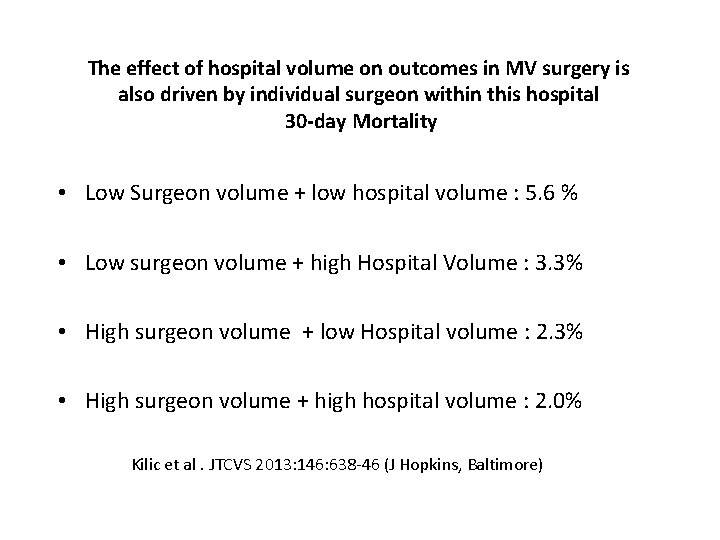
The effect of hospital volume on outcomes in MV surgery is also driven by individual surgeon within this hospital 30 -day Mortality • Low Surgeon volume + low hospital volume : 5. 6 % • Low surgeon volume + high Hospital Volume : 3. 3% • High surgeon volume + low Hospital volume : 2. 3% • High surgeon volume + high hospital volume : 2. 0% Kilic et al. JTCVS 2013: 146: 638 -46 (J Hopkins, Baltimore)
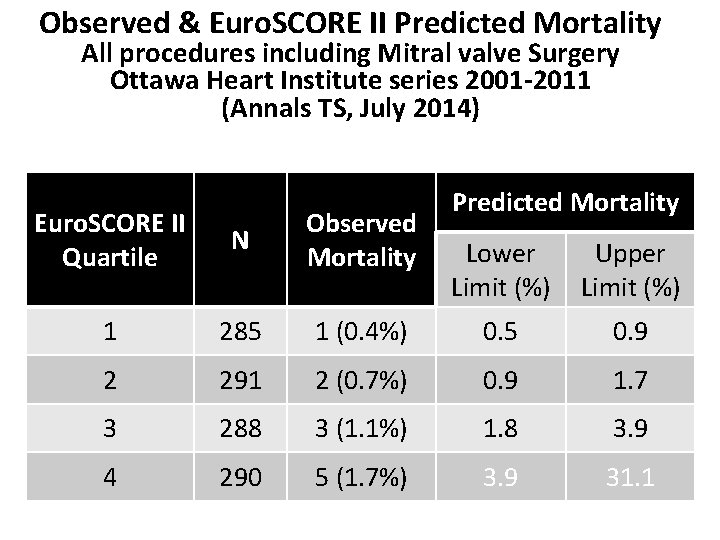
Observed & Euro. SCORE II Predicted Mortality All procedures including Mitral valve Surgery Ottawa Heart Institute series 2001 -2011 (Annals TS, July 2014) Euro. SCORE II Quartile N Observed Mortality 1 285 2 Predicted Mortality Lower Limit (%) Upper Limit (%) 1 (0. 4%) 0. 5 0. 9 291 2 (0. 7%) 0. 9 1. 7 3 288 3 (1. 1%) 1. 8 3. 9 4 290 5 (1. 7%) 3. 9 31. 1
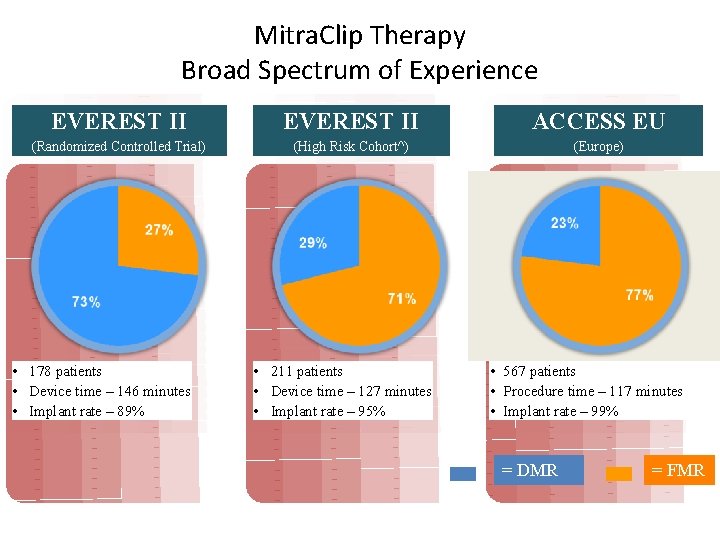
Mitra. Clip Therapy Broad Spectrum of Experience EVEREST II ACCESS EU (Randomized Controlled Trial) (High Risk Cohort^) (Europe) • 178 patients • Device time – 146 minutes • Implant rate – 89% • 211 patients • Device time – 127 minutes • Implant rate – 95% • 567 patients • Procedure time – 117 minutes • Implant rate – 99% = DMR = FMR
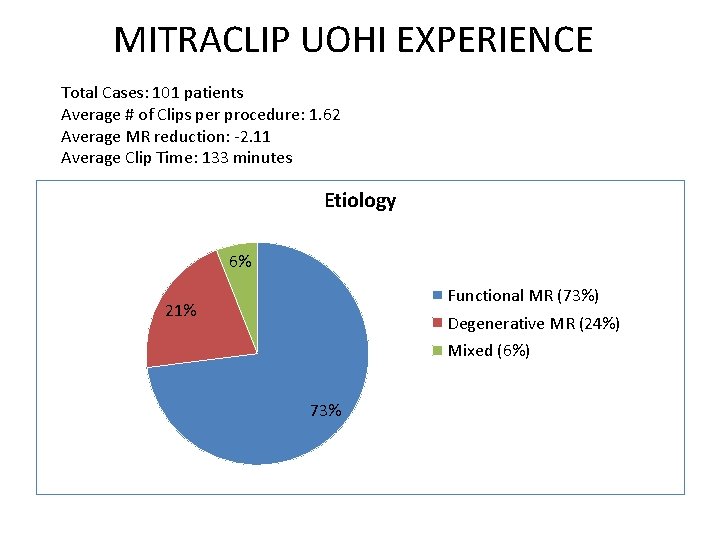
MITRACLIP UOHI EXPERIENCE Total Cases: 101 patients Average # of Clips per procedure: 1. 62 Average MR reduction: -2. 11 Average Clip Time: 133 minutes Etiology 6% Functional MR (73%) 21% Degenerative MR (24%) Mixed (6%) 73%
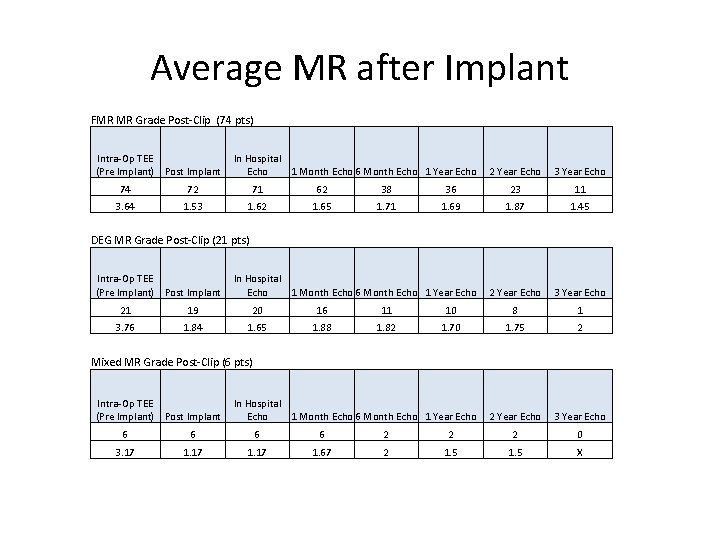
Average MR after Implant FMR MR Grade Post-Clip (74 pts) Intra-Op TEE (Pre Implant) Post Implant In Hospital Echo 1 Month Echo 6 Month Echo 1 Year Echo 2 Year Echo 3 Year Echo 74 72 71 62 38 36 23 11 3. 64 1. 53 1. 62 1. 65 1. 71 1. 69 1. 87 1. 45 2 Year Echo 3 Year Echo DEG MR Grade Post-Clip (21 pts) Intra-Op TEE (Pre Implant) Post Implant In Hospital Echo 1 Month Echo 6 Month Echo 1 Year Echo 21 19 20 16 11 10 8 1 3. 76 1. 84 1. 65 1. 88 1. 82 1. 70 1. 75 2 2 Year Echo 3 Year Echo Mixed MR Grade Post-Clip (6 pts) Intra-Op TEE (Pre Implant) Post Implant In Hospital Echo 1 Month Echo 6 Month Echo 1 Year Echo 6 6 2 2 2 0 3. 17 1. 67 2 1. 5 X
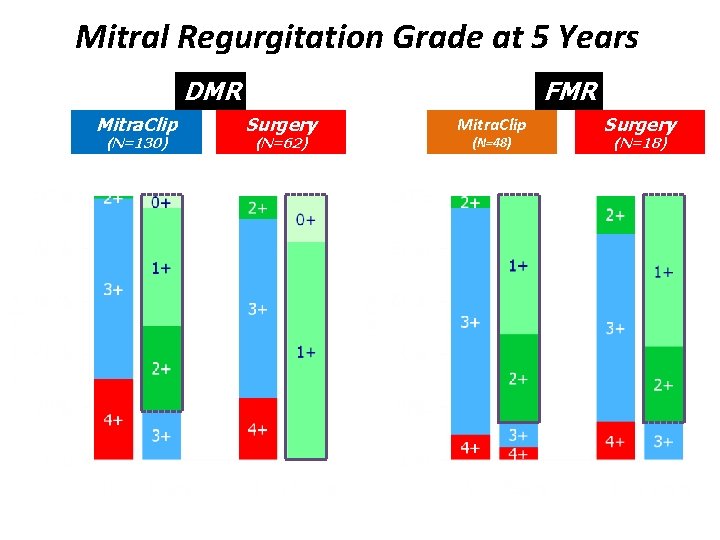
Mitral Regurgitation Grade at 5 Years DMR Mitra. Clip (N=130) p<0. 005 81 % N=85 FMR Surgery (N=62) p<0. 005 100 % Mitra. Clip (N=48) p<0. 05 86 % Surgery (N=18) p=0. 82 86 %
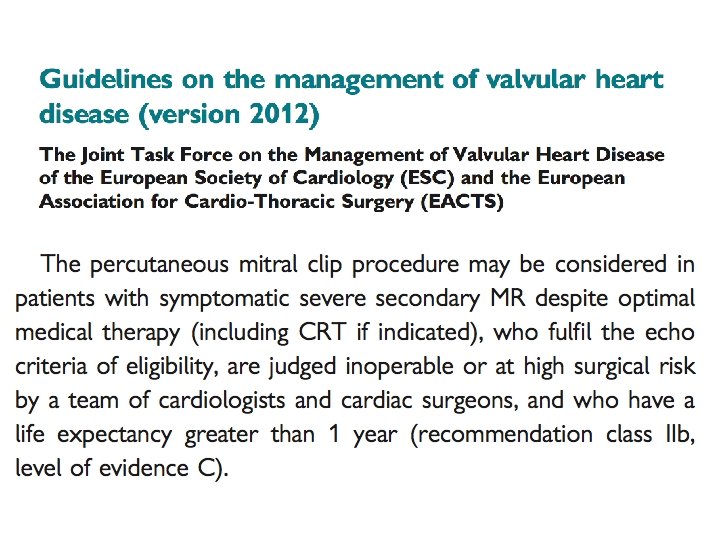
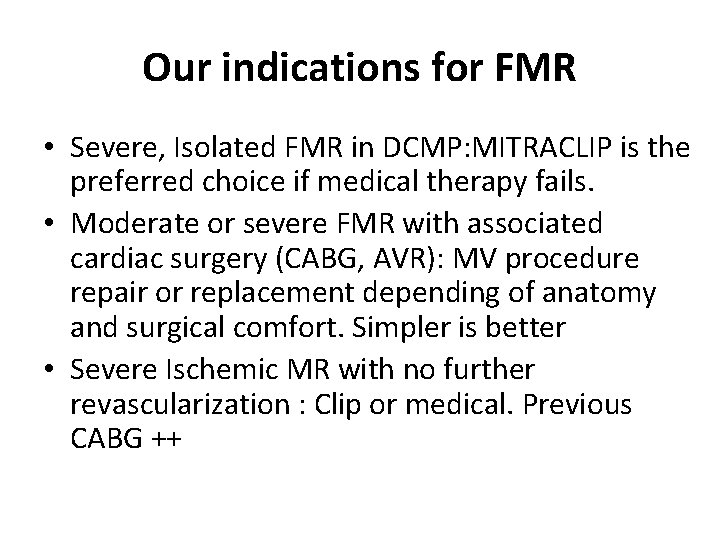
Our indications for FMR • Severe, Isolated FMR in DCMP: MITRACLIP is the preferred choice if medical therapy fails. • Moderate or severe FMR with associated cardiac surgery (CABG, AVR): MV procedure repair or replacement depending of anatomy and surgical comfort. Simpler is better • Severe Ischemic MR with no further revascularization : Clip or medical. Previous CABG ++
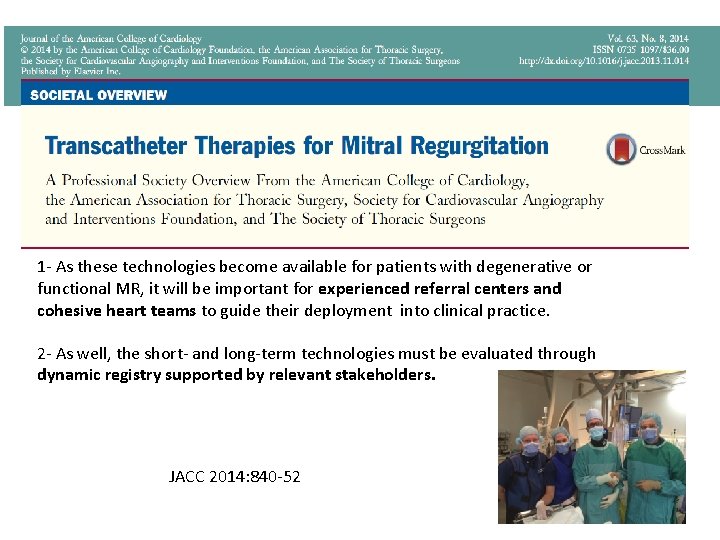
1 - As these technologies become available for patients with degenerative or functional MR, it will be important for experienced referral centers and cohesive heart teams to guide their deployment into clinical practice. 2 - As well, the short- and long-term technologies must be evaluated through dynamic registry supported by relevant stakeholders. JACC 2014: 840 -52
THANK YOU
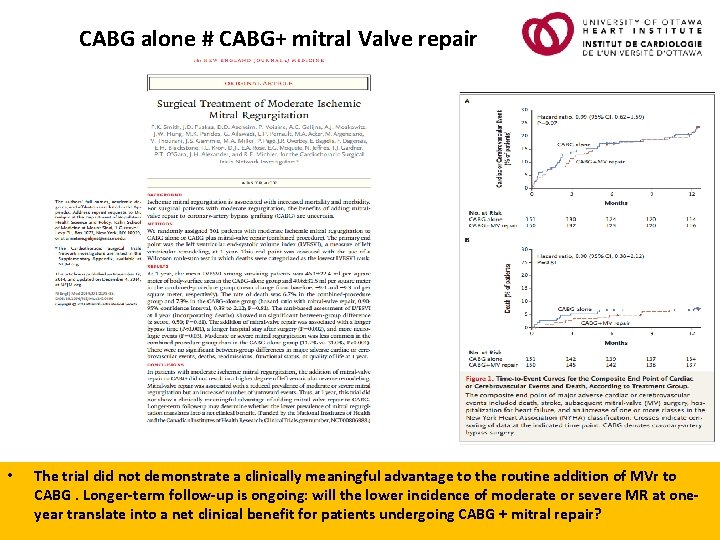
CABG alone # CABG+ mitral Valve repair • The trial did not demonstrate a clinically meaningful advantage to the routine addition of MVr to CABG. Longer-term follow-up is ongoing: will the lower incidence of moderate or severe MR at oneyear translate into a net clinical benefit for patients undergoing CABG + mitral repair?
Mitral valve replacement is a viable alternative to mitral valve repair for ischemic mitral regurgitation: A case-matched study Vincent Chan, MD, MPH; Marc Ruel, MD, MPH; Thierry G. Mesana, MD , Ph. D Ann Thorac Surg. 2011 Oct; 92(4): 1358 -65; discussion 1365 -67 Our experience of Edge-to Edge + annuloplasty in FMR 29% recurrent 2+ MR after one year echo FU 4% MR 3+ or 4+ Same survival at 5 years Limited Clinical impact of residual 2+ MR