
How good is OUR school A resource to
- Slides: 12
How good is OUR school? A resource to support learner participation in selfevaluation and school improvement Patricia Watson, HMI 25 th April 2018 #HGIOS
We have we published this resource to: • support improvement in learner participation in self-evaluation and school improvement. • build on existing good practice in giving learners a strong voice in shaping their school. • promote children’s rights within the school context. • support schools to achieve the aims of Curriculum for Excellence. • contribute to Scotland’s Year of Young People. #HGIOS
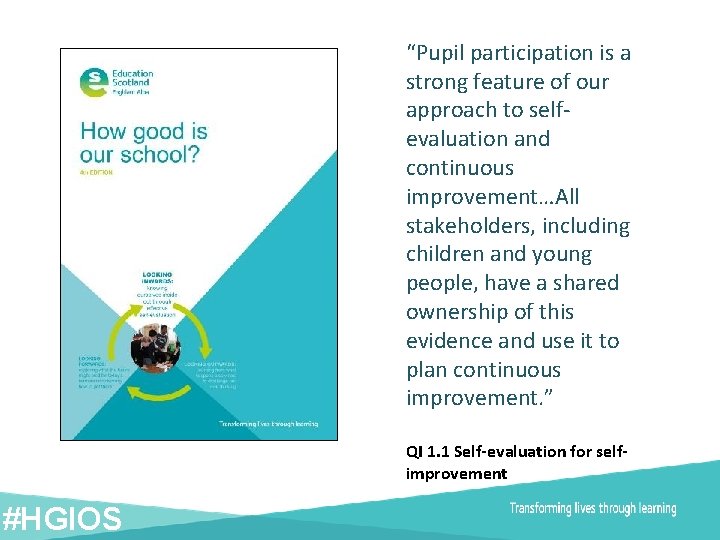
“Pupil participation is a strong feature of our approach to selfevaluation and continuous improvement…All stakeholders, including children and young people, have a shared ownership of this evidence and use it to plan continuous improvement. ” QI 1. 1 Self-evaluation for selfimprovement #HGIOS
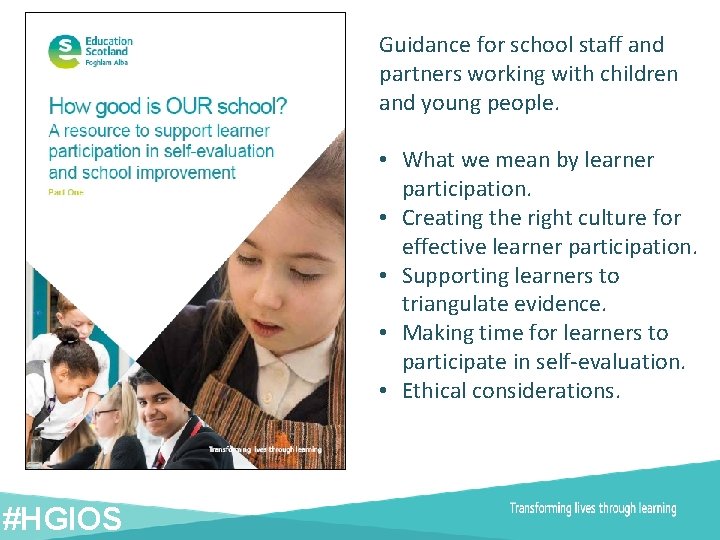
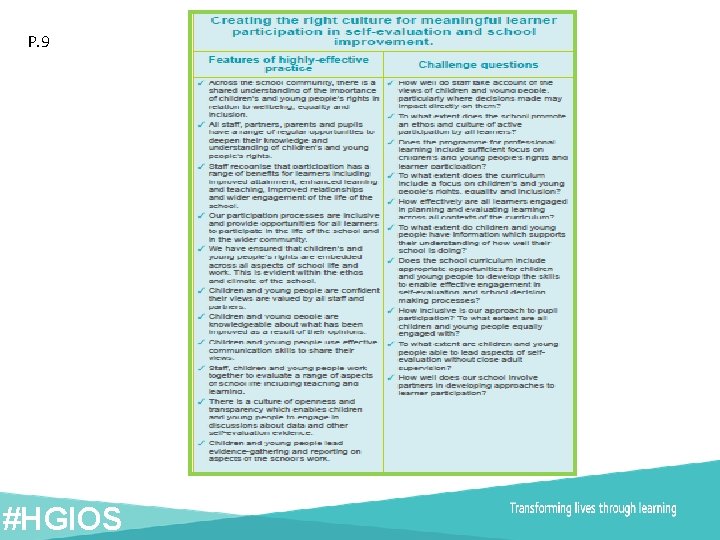
Guidance for school staff and partners working with children and young people. • What we mean by learner participation. • Creating the right culture for effective learner participation. • Supporting learners to triangulate evidence. • Making time for learners to participate in self-evaluation. • Ethical considerations. #HGIOS
P. 9 #HGIOS
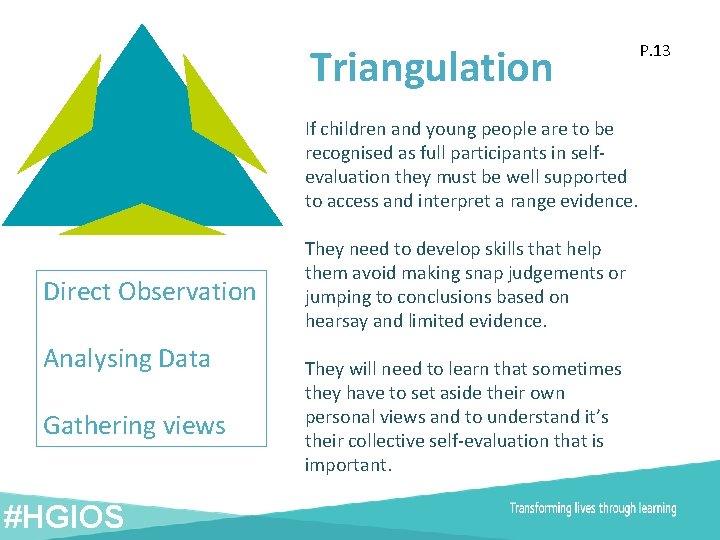
Triangulation P. 13 If children and young people are to be recognised as full participants in selfevaluation they must be well supported to access and interpret a range evidence. Direct Observation Analysing Data Gathering views #HGIOS They need to develop skills that help them avoid making snap judgements or jumping to conclusions based on hearsay and limited evidence. They will need to learn that sometimes they have to set aside their own personal views and to understand it’s their collective self-evaluation that is important.
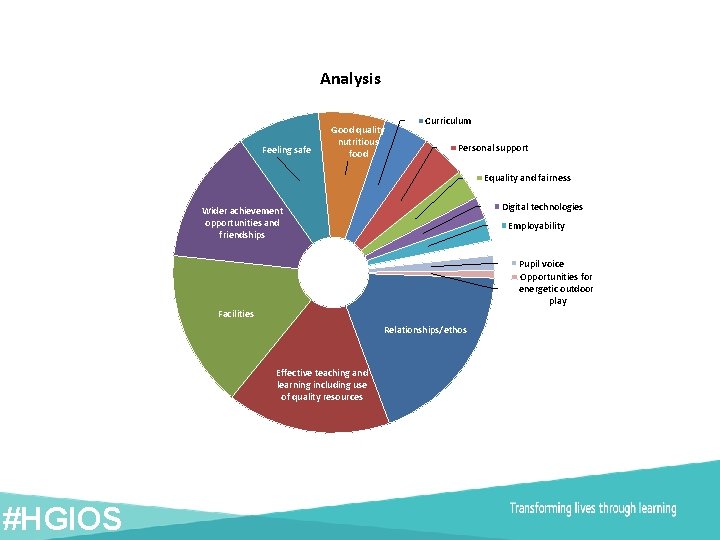
In schools and local authorities across Scotland, children and young people took part in workshops to tell us the things about school that are most important to them. #HGIOS
Analysis Feeling safe Good quality nutritious food Curriculum Personal support Equality and fairness Digital technologies Wider achievement opportunities and friendships Employability Pupil voice Opportunities for energetic outdoor play Facilities Relationships/ethos Effective teaching and learning including use of quality resources #HGIOS
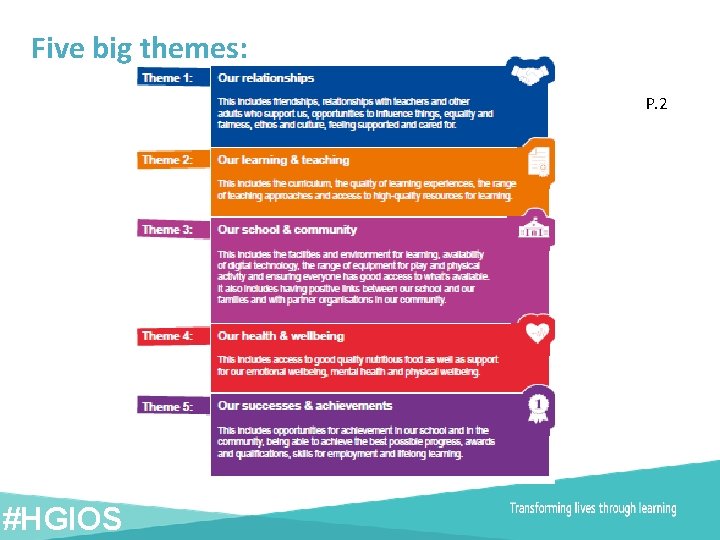
Five big themes: P. 2 #HGIOS
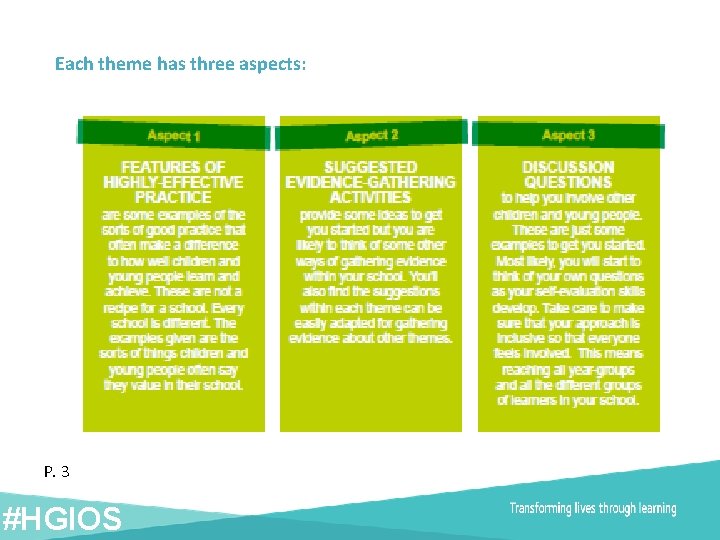
Each theme has three aspects: P. 3 #HGIOS
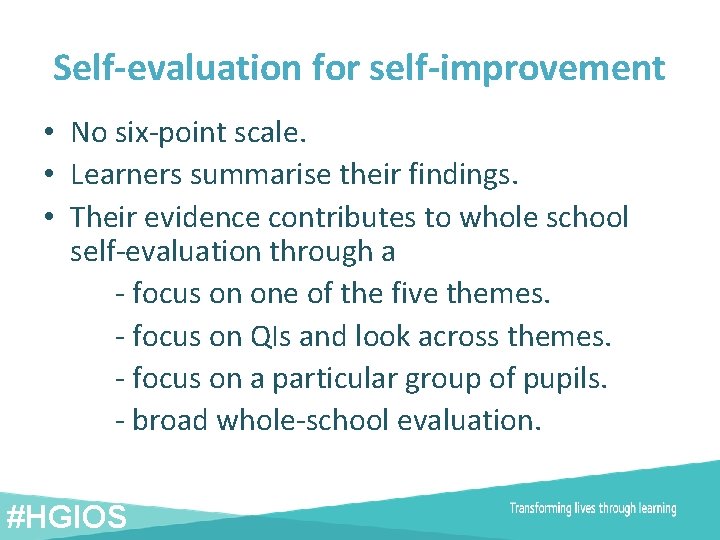
Self-evaluation for self-improvement • No six-point scale. • Learners summarise their findings. • Their evidence contributes to whole school self-evaluation through a - focus on one of the five themes. - focus on QIs and look across themes. - focus on a particular group of pupils. - broad whole-school evaluation. #HGIOS
Education Scotland Denholm House Almondvale Business Park Almondvale Way Livingston EH 54 6 GA T +44 (0)141 282 5000 E enquiries@educationscotland. gov. uk www. educationscotland. gov. uk