
How Genes Are Transmitted from Generation to Generation
- Slides: 52
How Genes Are Transmitted from Generation to Generation Chapter 4
Central Points § Genes are transmitted from generation to generation § Traits are inherited according to predictable rules
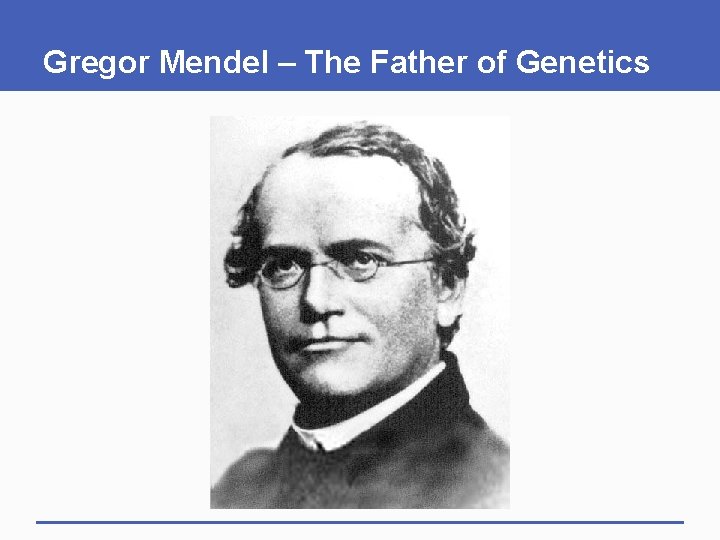
Gregor Mendel – The Father of Genetics
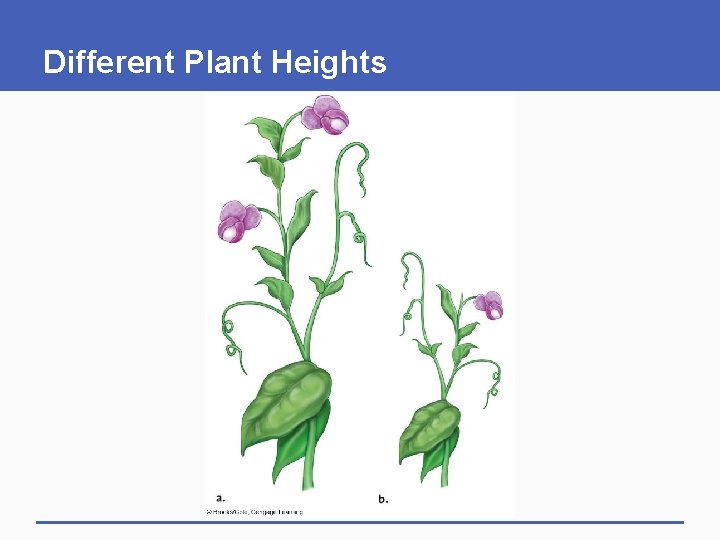
4. 1 How Are Genes Transmitted? § Experiments with pea plants in 1800 s § Traits, distinguishing characteristics § Specific patterns in the way traits were passed from parent to offspring
Different Plant Heights
Mendel’s Experiments § Some traits disappeared in the first generation of offspring (all tall) § Reappeared in 3: 1 ratio (tall: short) § Dominant trait present in the first-generation offspring (tall) § Recessive trait absent in first generation but reappeared in the next generation (short)
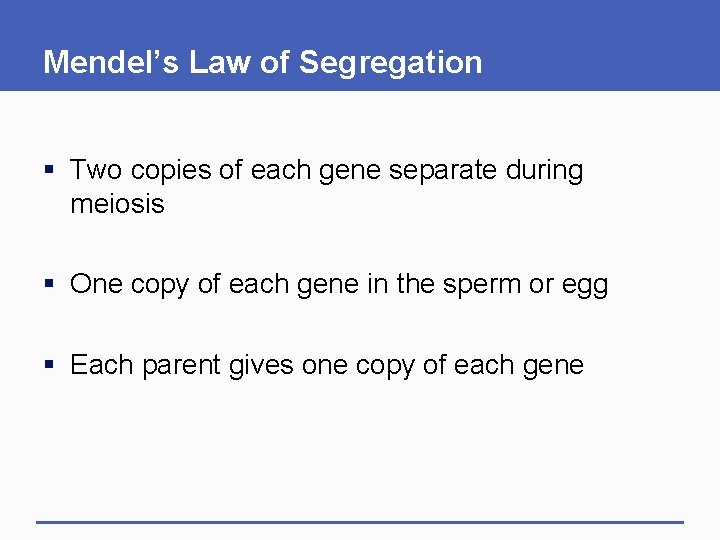
Traits Are Passed by Genes § “Factors” or genes transmitted from parent to offspring § Each parent carries a pair of genes for a trait but contributes only one gene to each offspring § Separation of gene pair occurs during meiosis
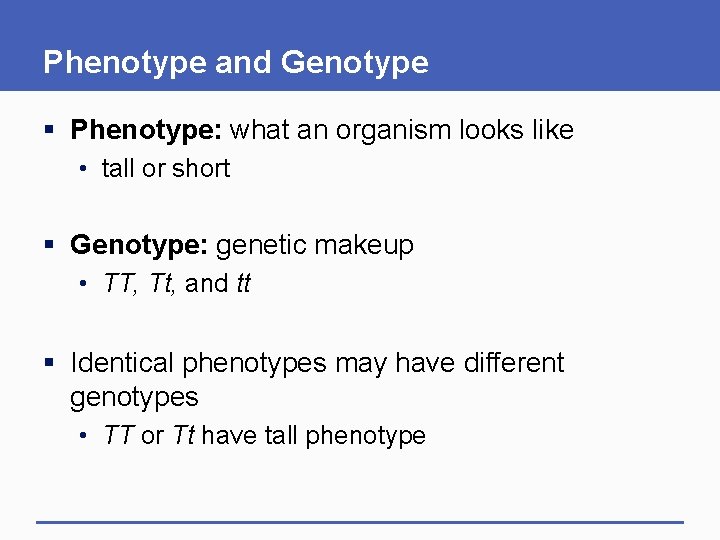
Genes § Alleles: variations of a gene § Geneticists use letters for each allele. § Homozygous: identical alleles of a gene • TT or tt § Heterozygous: nonidentical alleles • Tt
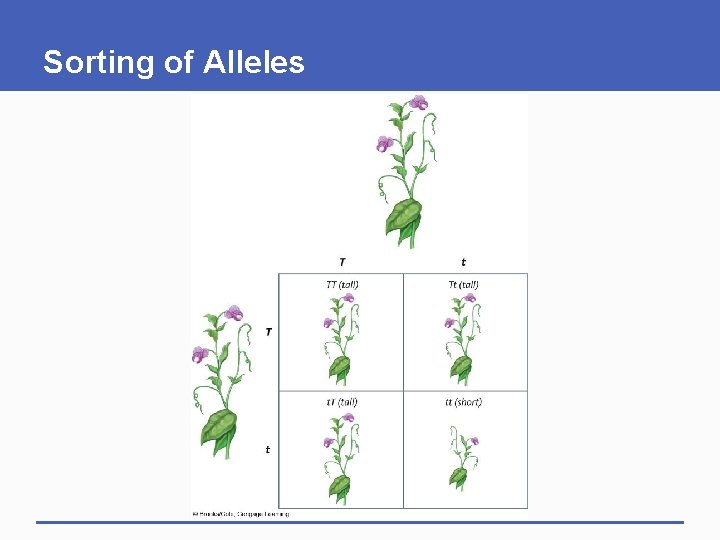
Phenotype and Genotype § Phenotype: what an organism looks like • tall or short § Genotype: genetic makeup • TT, Tt, and tt § Identical phenotypes may have different genotypes • TT or Tt have tall phenotype
Mendel’s Law of Segregation § Two copies of each gene separate during meiosis § One copy of each gene in the sperm or egg § Each parent gives one copy of each gene
Sorting of Alleles
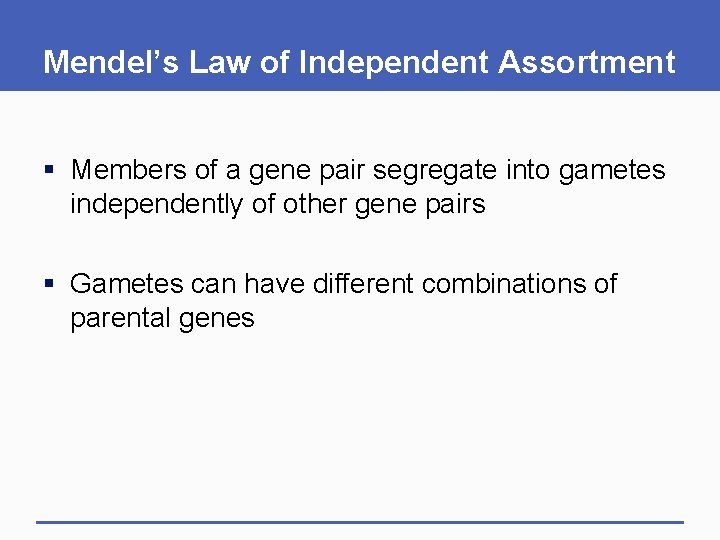
Mendel’s Law of Independent Assortment § Members of a gene pair segregate into gametes independently of other gene pairs § Gametes can have different combinations of parental genes
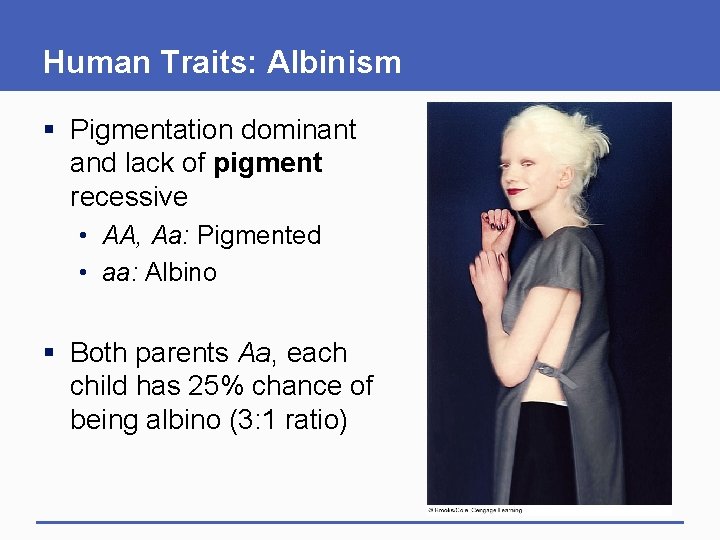
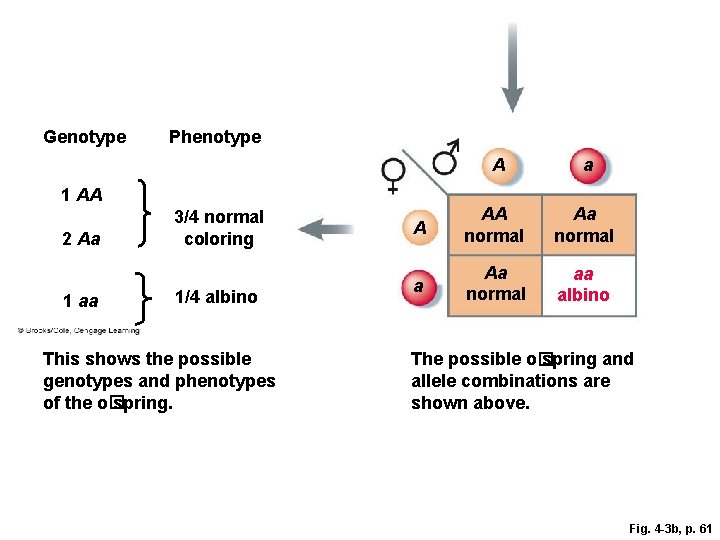
Human Traits: Albinism § Pigmentation dominant and lack of pigment recessive • AA, Aa: Pigmented • aa: Albino § Both parents Aa, each child has 25% chance of being albino (3: 1 ratio)
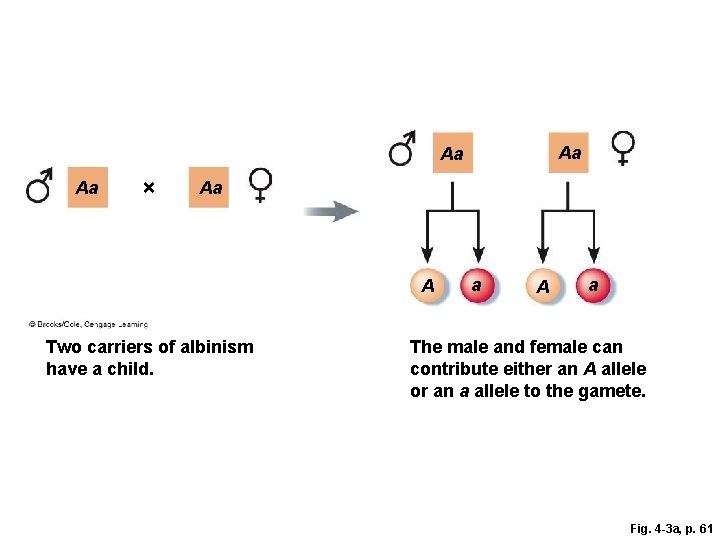
Aa Aa Aa × Aa A Two carriers of albinism have a child. a A a The male and female can contribute either an A allele or an a allele to the gamete. Fig. 4 -3 a, p. 61
Genotype Phenotype A a A AA normal Aa normal aa albino 1 AA 2 Aa 1 aa 3/4 normal coloring 1/4 albino This shows the possible genotypes and phenotypes of the o� spring. The possible o� spring and allele combinations are shown above. Fig. 4 -3 b, p. 61
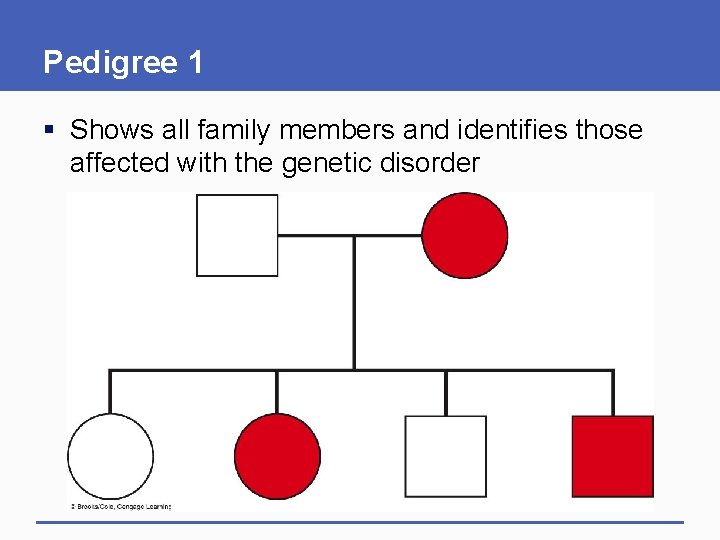
Pedigree 1 § Shows all family members and identifies those affected with the genetic disorder
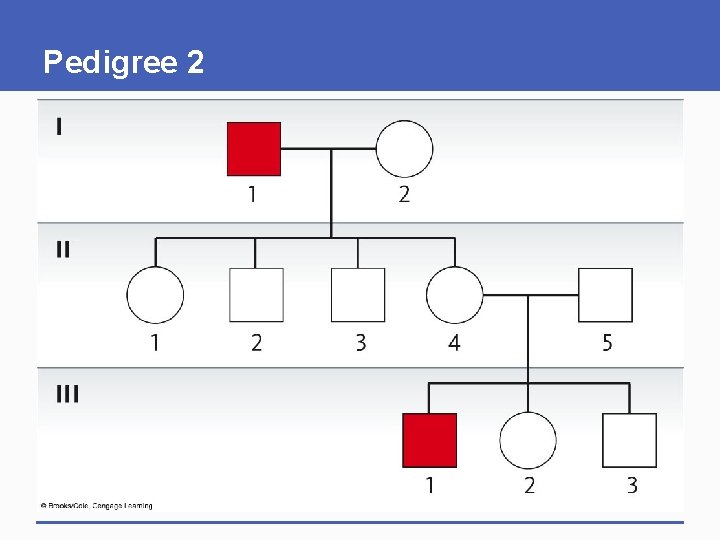
Pedigree 2
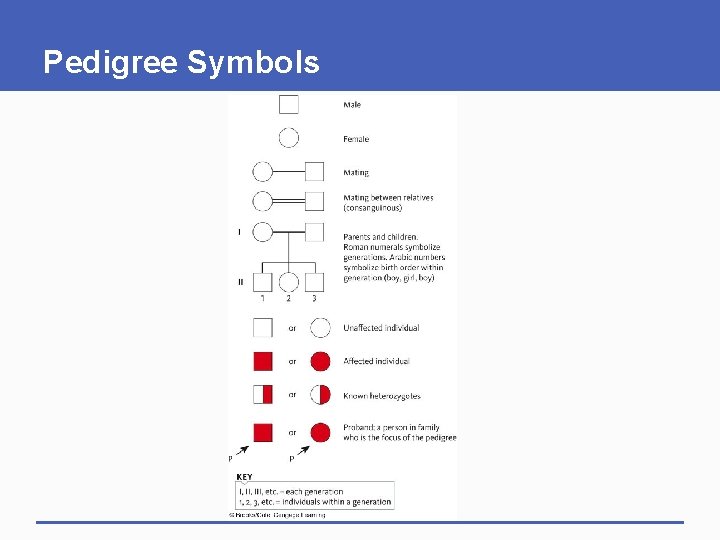
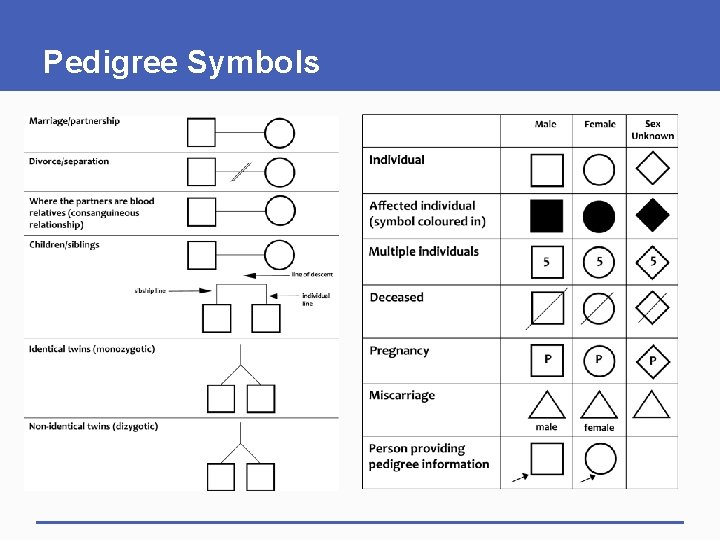
Pedigree Symbols
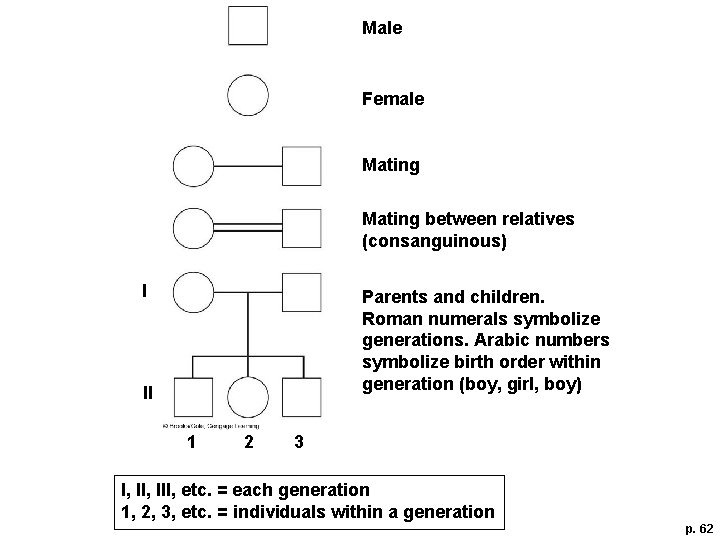
Male Female Mating between relatives (consanguinous) I Parents and children. Roman numerals symbolize generations. Arabic numbers symbolize birth order within generation (boy, girl, boy) II 1 2 3 I, III, etc. = each generation 1, 2, 3, etc. = individuals within a generation p. 62
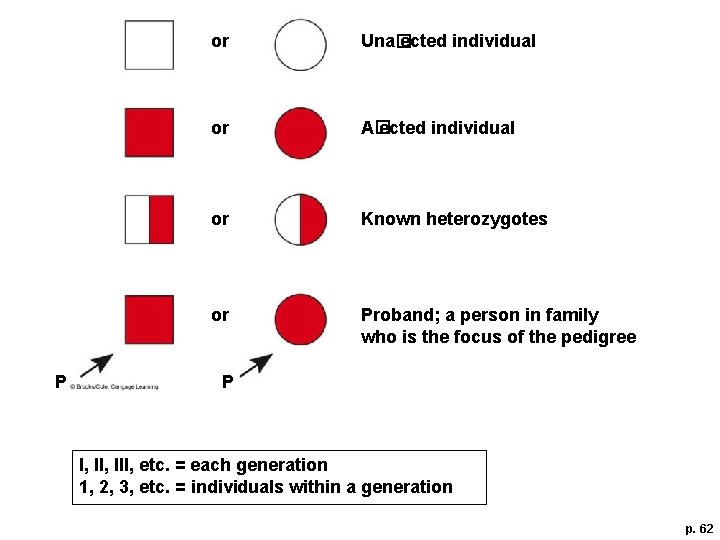
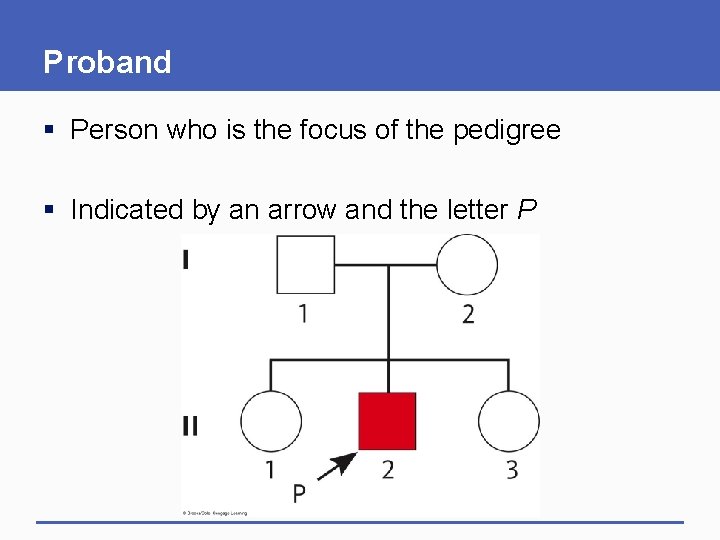
P or Una� ected individual or A� ected individual or Known heterozygotes or Proband; a person in family who is the focus of the pedigree P I, III, etc. = each generation 1, 2, 3, etc. = individuals within a generation p. 62
Pedigree Symbols
Proband § Person who is the focus of the pedigree § Indicated by an arrow and the letter P
4. 2 Examining Human Pedigrees § Determine trait has dominant or recessive inheritance pattern § Predict genetic risk for: • Pregnancy outcome • Adult-onset disorder • In future offspring
Three Possible Patterns of Inheritance § Autosomal recessive § Autosomal dominant § X-linked recessive § Autosomal on chromosomes 1– 22 § X-linked traits on the X chromosome
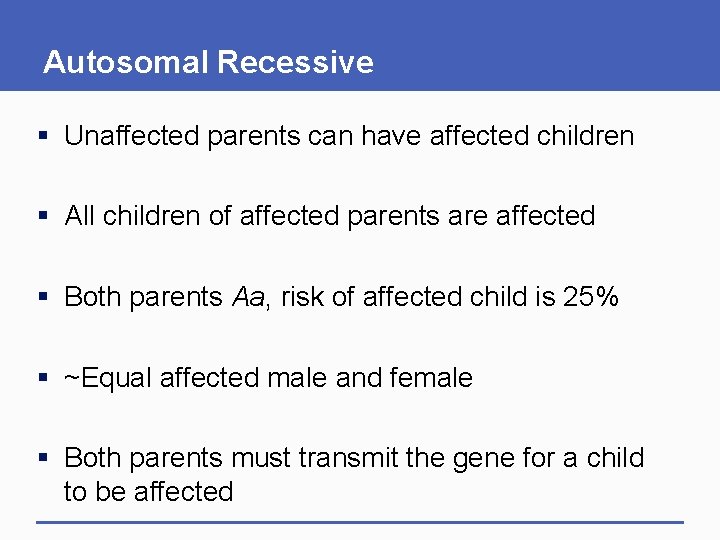
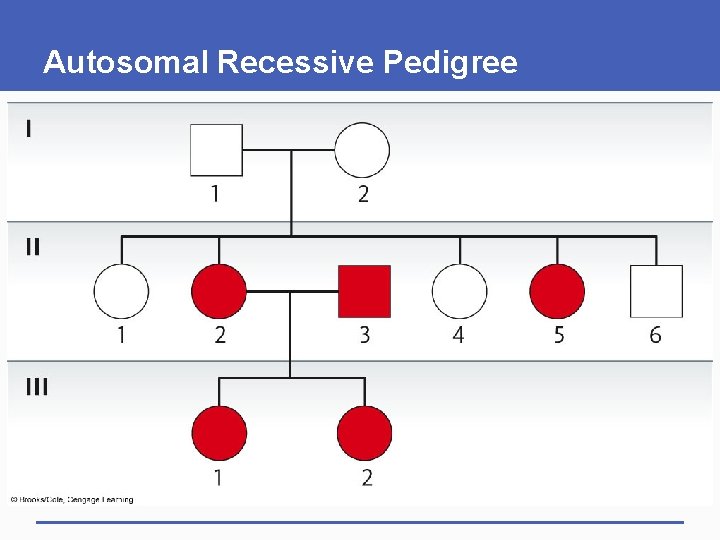
Autosomal Recessive § Unaffected parents can have affected children § All children of affected parents are affected § Both parents Aa, risk of affected child is 25% § ~Equal affected male and female § Both parents must transmit the gene for a child to be affected
Autosomal Recessive Pedigree
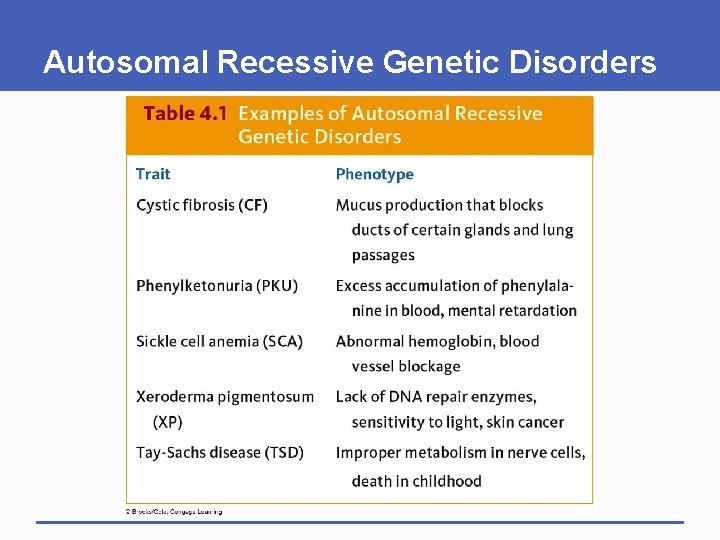
Autosomal Recessive Genetic Disorders
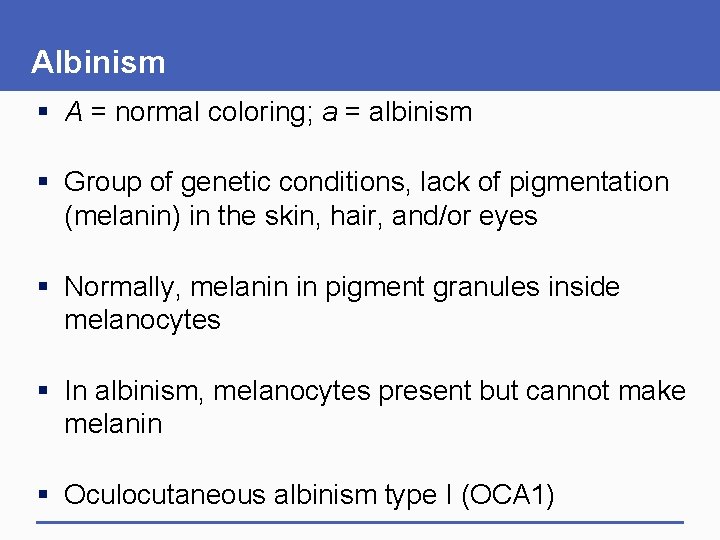
Albinism § A = normal coloring; a = albinism § Group of genetic conditions, lack of pigmentation (melanin) in the skin, hair, and/or eyes § Normally, melanin in pigment granules inside melanocytes § In albinism, melanocytes present but cannot make melanin § Oculocutaneous albinism type I (OCA 1)
Cystic Fibrosis (CF) § C = normal; c = cystic fibrosis § CF affects glands that produce mucus and digestive enzyme § CF causes production of thick mucus in lungs blocks airways § Develop obstructive lung diseases and infections § Identified CF gene and protein (CFTR)
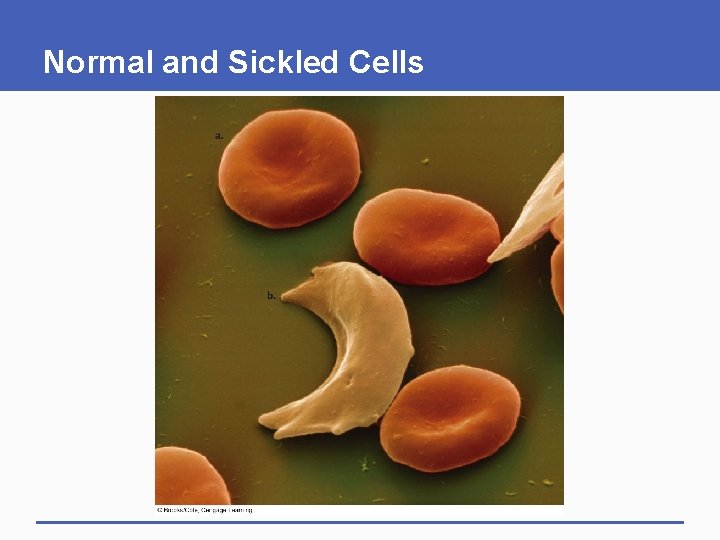
Sickle Cell Anemia (SCA) § S = normal red blood cells; s = sickle § High frequency in areas of West Africa, Mediterranean Sea, India § Abnormal hemoglobin molecules aggregate to form rods § Red blood cells, crescent- or sickle-shaped, fragile and break open
Normal and Sickled Cells
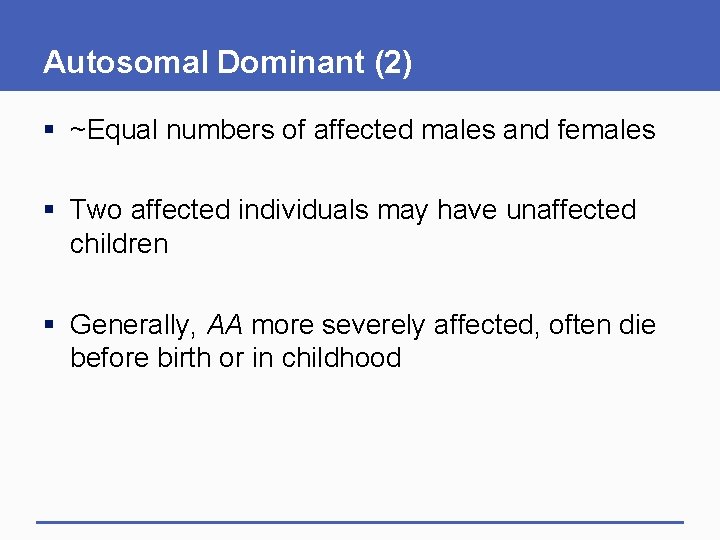
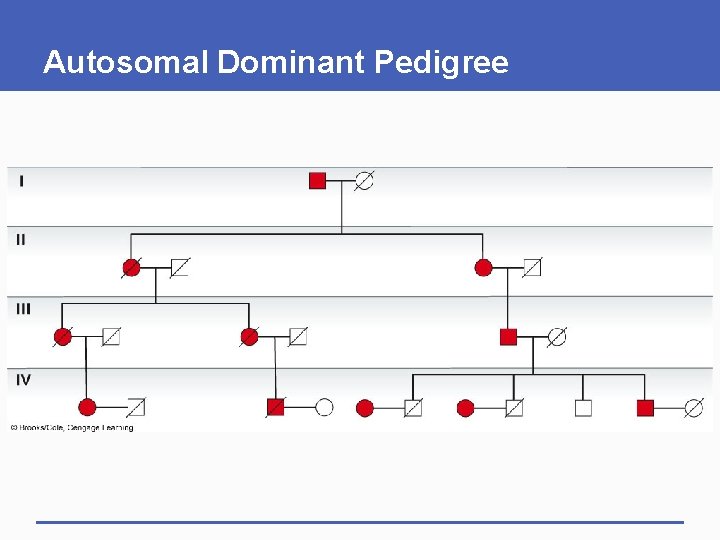
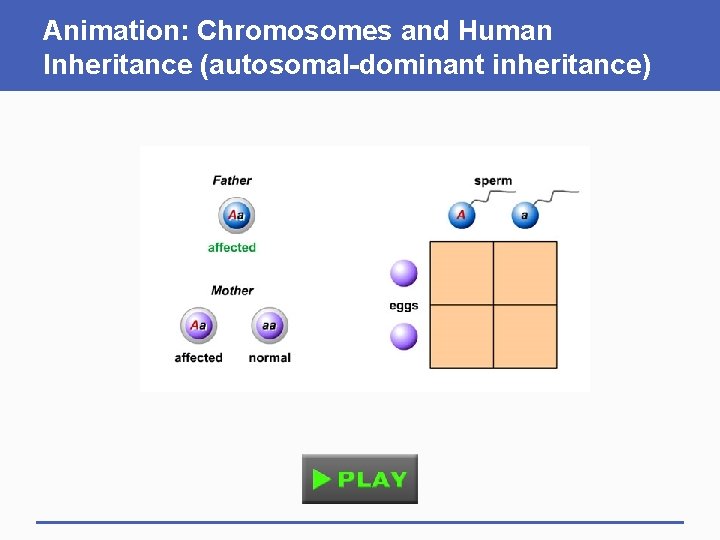
Autosomal Dominant (1) § Requires one copy of the allele (Aa) rarely present in a homozygous condition (AA) § aa: Unaffected individuals § Affected individual has at least one affected parent § Aa X aa: Each child has 50% chance of being affected
Autosomal Dominant (2) § ~Equal numbers of affected males and females § Two affected individuals may have unaffected children § Generally, AA more severely affected, often die before birth or in childhood
Autosomal Dominant Pedigree
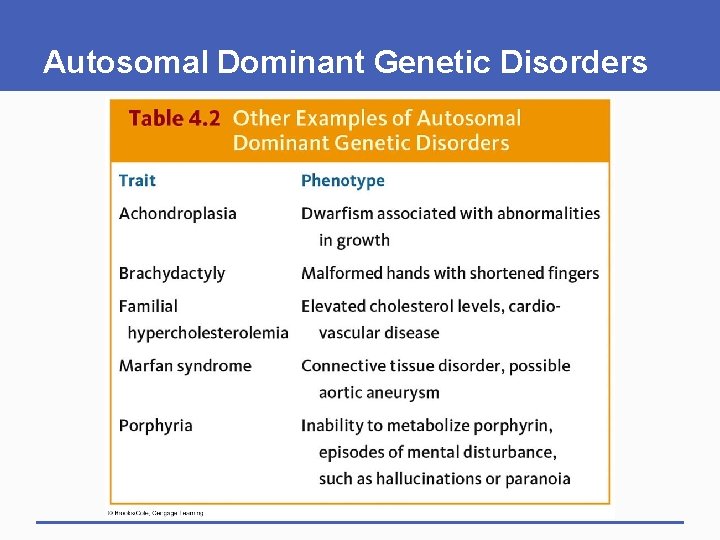
Autosomal Dominant Genetic Disorders
Animation: Chromosomes and Human Inheritance (autosomal-dominant inheritance)
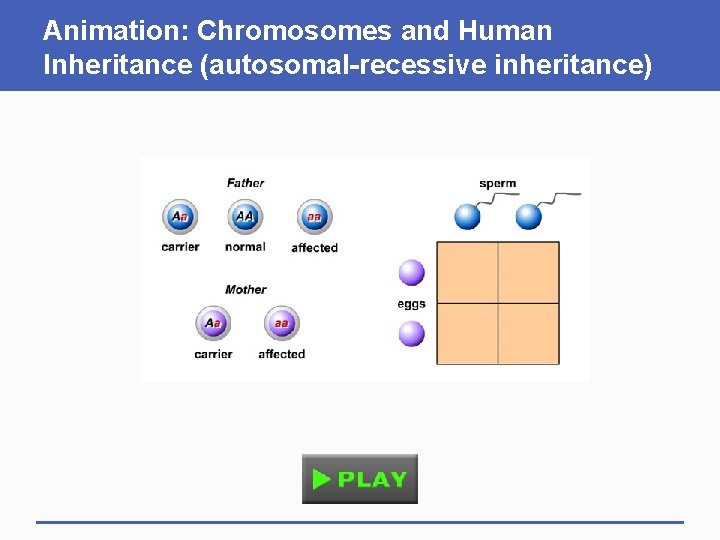
Animation: Chromosomes and Human Inheritance (autosomal-recessive inheritance)
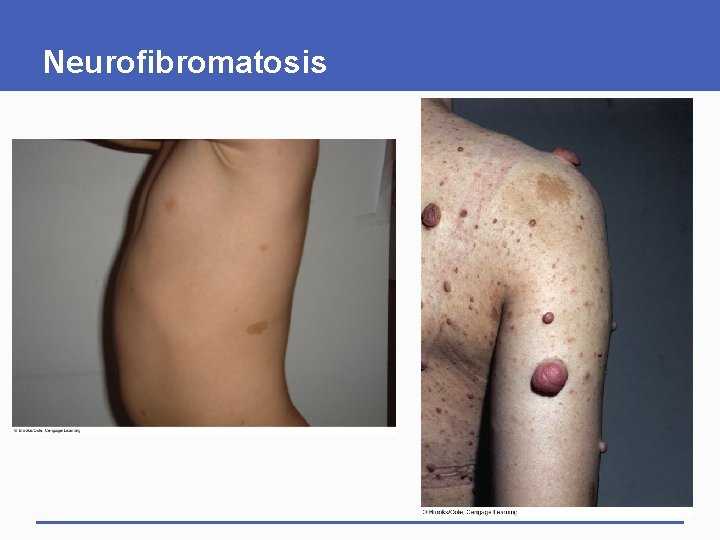
Neurofibromatosis (NF) § N = Neurofibromatosis 1; n = normal § Many different phenotypes § Café-au-lait spots, or noncancerous tumors in the nervous system can be large and press on nerves § Deformities of the face or other body parts (rarely) § NF gene has a very high mutation rate
Neurofibromatosis
Huntington Disease (HD) § H = Huntington disease; h = normal § Causes damage in brain from accumulation of huntingtin protein § Symptoms begin slowly (30– 50 years old) § Affected individuals may have already had children (50% chance with one Hh parent) § Progressive neurological signs, no treatment, die within 10– 25 years after symptoms
Adult-Onset Disorders § Expressed later in life § Present problems in pedigree analysis, genetic testing may be required § Examples: • Huntington disease (HD) • Adult polycystic kidney disease (ADPKD) § Both examples are autosomal dominant
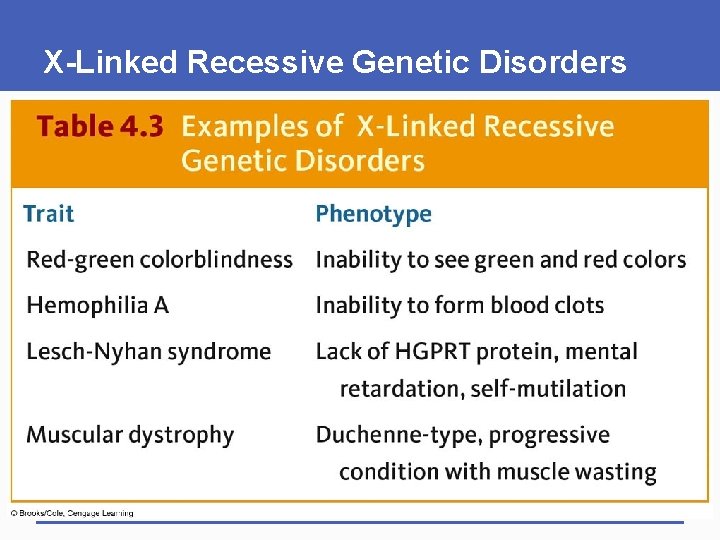
4. 3 X-Linked Recessive Traits § Genes on X chromosome: X-linked § Genes on Y chromosome: Y-linked § For X-linked traits: • Females XX, XX*, or X*X* • Males XY or X*Y • Males cannot be homozygous or heterozygous, they are hemizygous for genes on X • Distinctive pattern of inheritance
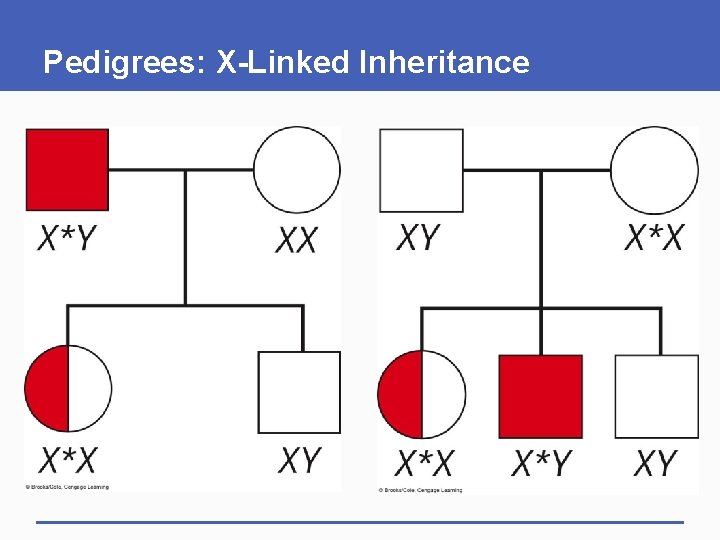
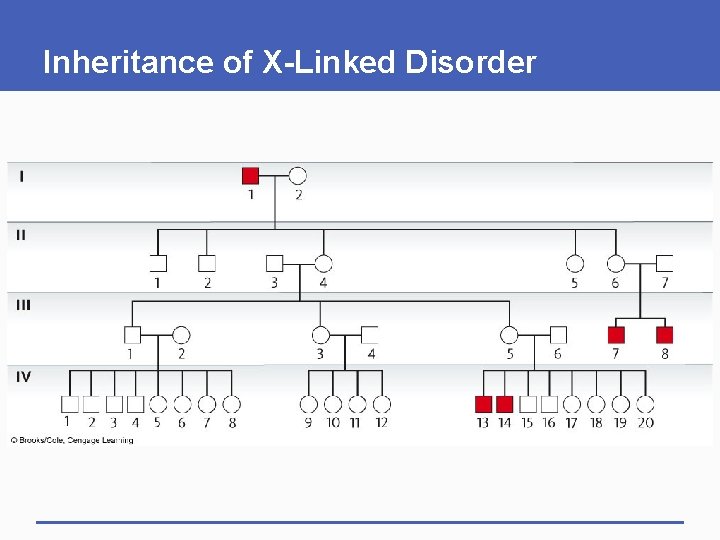
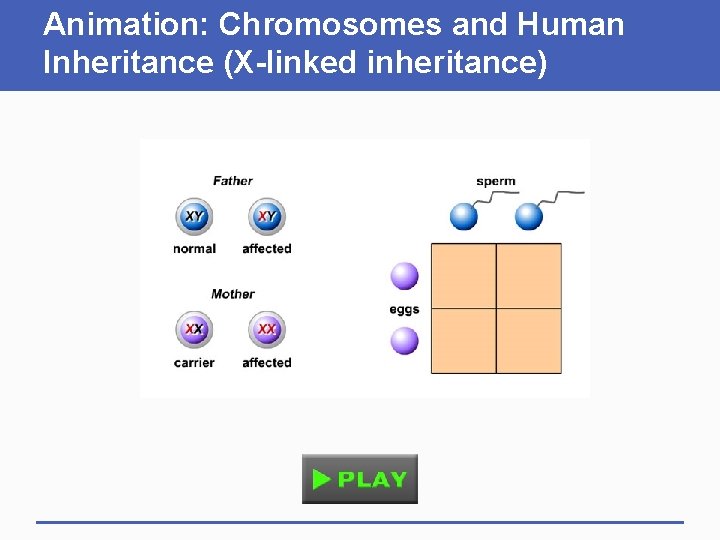
X-Linked Recessive Inheritance § Mother gives one X chromosome to offspring § Father gives X to daughters and Y to sons § Sons carry X from mother § For recessive traits, X*X* and X*Y affected § More males affected
Pedigrees: X-Linked Inheritance
X-Linked Recessive Genetic Disorders
Inheritance of X-Linked Disorder
Animation: Chromosomes and Human Inheritance (X-linked inheritance)
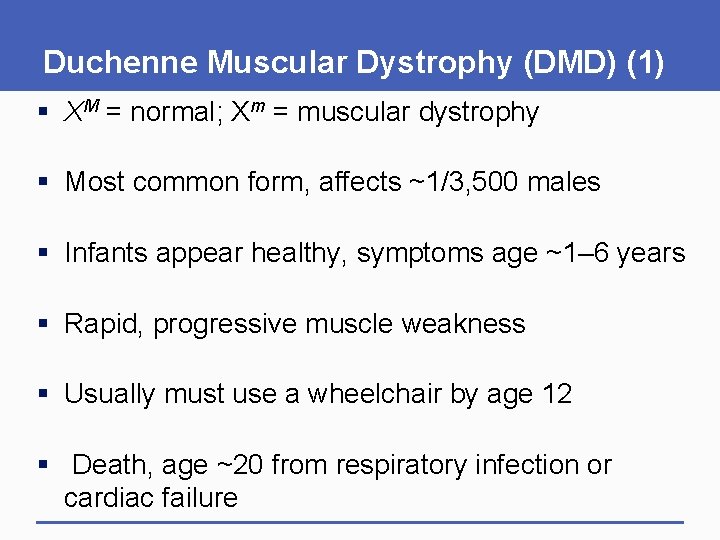
Duchenne Muscular Dystrophy (DMD) (1) § XM = normal; Xm = muscular dystrophy § Most common form, affects ~1/3, 500 males § Infants appear healthy, symptoms age ~1– 6 years § Rapid, progressive muscle weakness § Usually must use a wheelchair by age 12 § Death, age ~20 from respiratory infection or cardiac failure
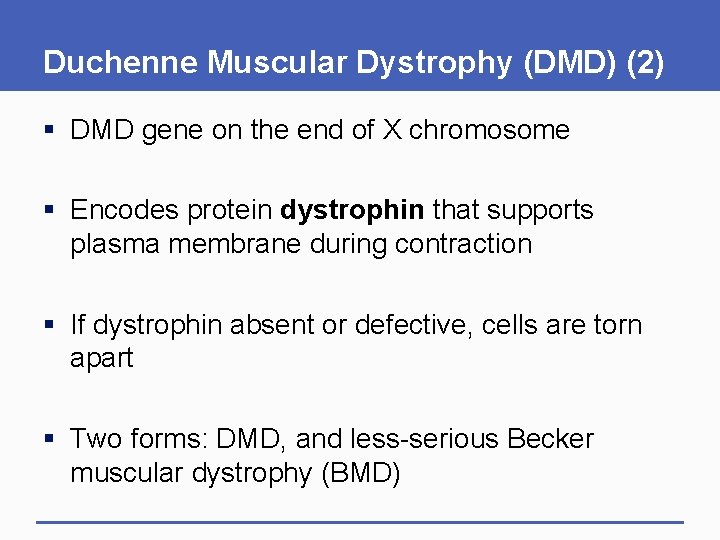
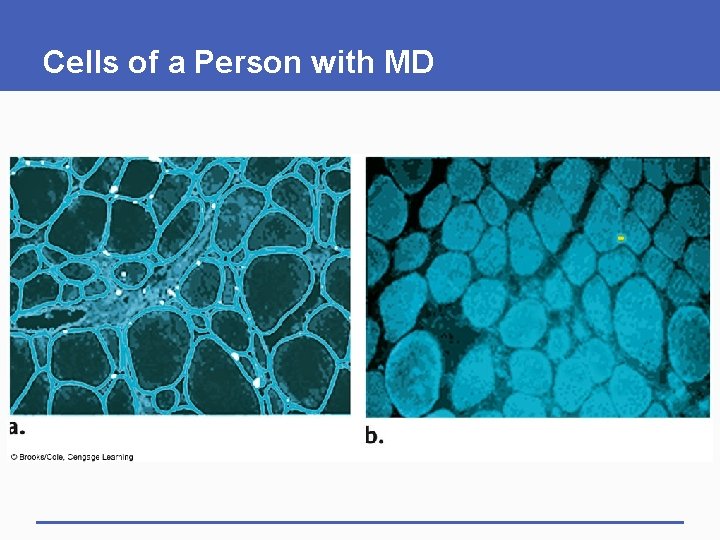
Duchenne Muscular Dystrophy (DMD) (2) § DMD gene on the end of X chromosome § Encodes protein dystrophin that supports plasma membrane during contraction § If dystrophin absent or defective, cells are torn apart § Two forms: DMD, and less-serious Becker muscular dystrophy (BMD)
Cells of a Person with MD
Hemophilia § XH = normal; Xh = hemophilia § Lack of clotting: factor VIII in blood § Affected individuals hemorrhage, often require hospitalization to treat bleeding § Hemophilia A most common form of X-linked hemophilia § Females affected if Xh. Xh, both parents must carry the trait
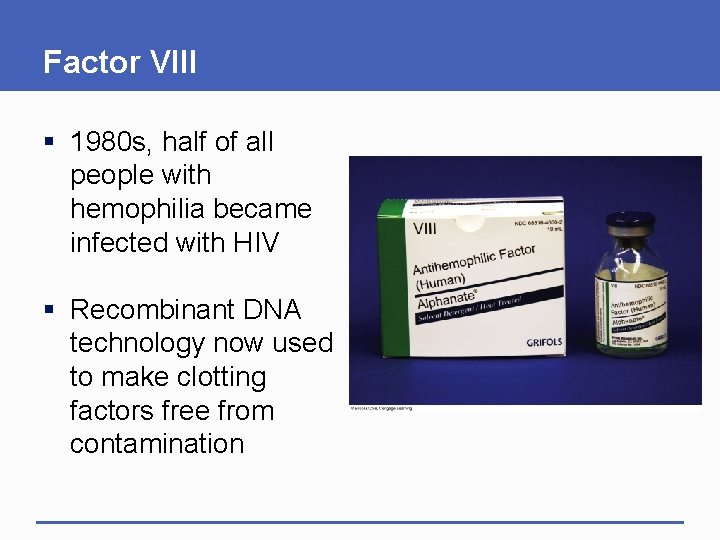
Factor VIII § 1980 s, half of all people with hemophilia became infected with HIV § Recombinant DNA technology now used to make clotting factors free from contamination