
HOW FISH TISSUE DATA IS USED TO DEVELOP

- Slides: 25
HOW FISH TISSUE DATA IS USED TO DEVELOP A FISH ADVISORY SRRTTF Workshop February 9, 2016 Dave Mc. Bride, Toxicologist Office of Environmental Public Health Sciences Public Health – Always Working for a Safer and Healthier Washington
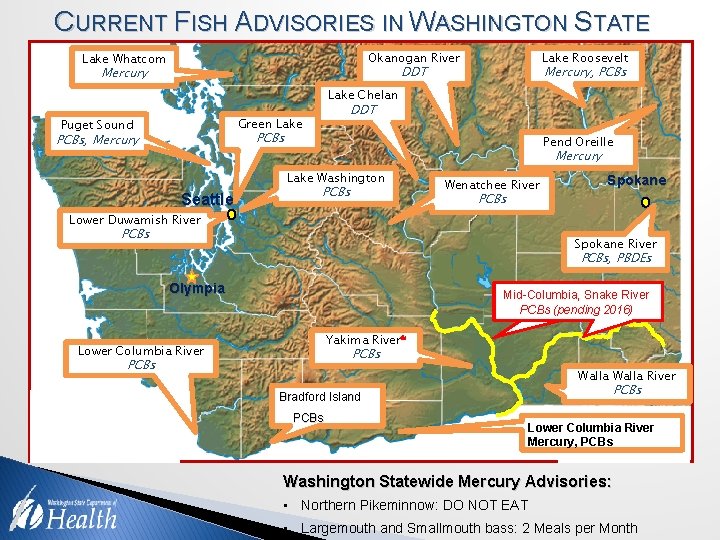
CURRENT FISH ADVISORIES IN WASHINGTON STATE Lake Roosevelt Okanogan River Lake Whatcom Mercury, PCBs DDT Mercury Lake Chelan DDT Green Lake Puget Sound PCBs, Mercury Pend Oreille Mercury Lake Washington Seattle PCBs Wenatchee River Spokane PCBs Lower Duwamish River PCBs Spokane River PCBs, PBDEs Olympia Mid-Columbia, Snake River PCBs (pending 2016) Yakima River* Lower Columbia River PCBs Walla River PCBs Bradford Island PCBs Lower Columbia River Mercury, PCBs Washington Statewide Mercury Advisories: • Northern Pikeminnow: DO NOT EAT • Largemouth and Smallmouth bass: 2 Meals per Month
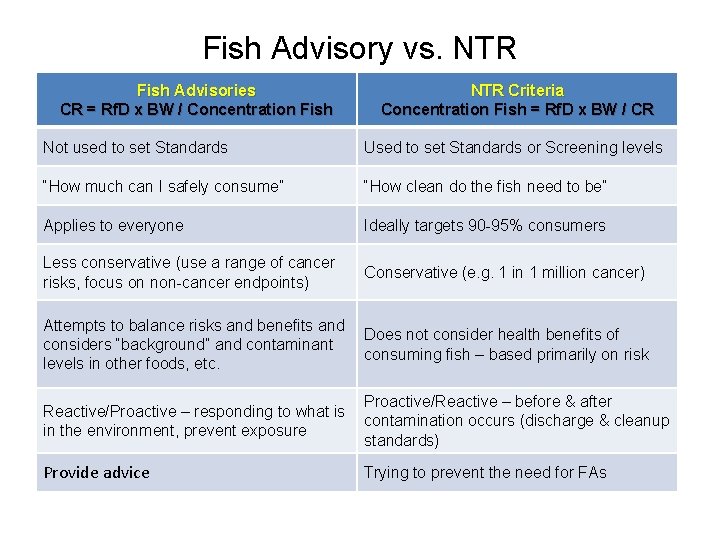
Fish Advisory vs. NTR Fish Advisories CR = Rf. D x BW / Concentration Fish NTR Criteria Concentration Fish = Rf. D x BW / CR Not used to set Standards Used to set Standards or Screening levels “How much can I safely consume” “How clean do the fish need to be” Applies to everyone Ideally targets 90 -95% consumers Less conservative (use a range of cancer risks, focus on non-cancer endpoints) Conservative (e. g. 1 in 1 million cancer) Attempts to balance risks and benefits and considers “background” and contaminant levels in other foods, etc. Does not consider health benefits of consuming fish – based primarily on risk Reactive/Proactive – responding to what is in the environment, prevent exposure Proactive/Reactive – before & after contamination occurs (discharge & cleanup standards) Provide advice Trying to prevent the need for FAs
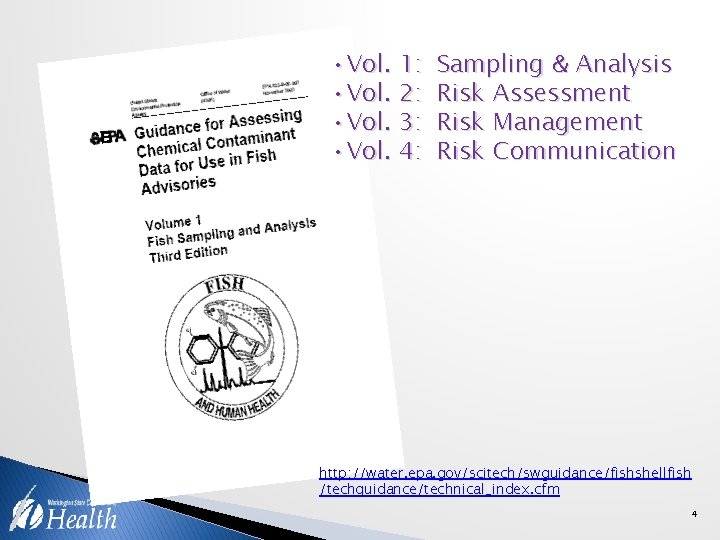
• Vol. 1: • Vol. 2: • Vol. 3: • Vol. 4: Sampling & Analysis Risk Assessment Risk Management Risk Communication http: //water. epa. gov/scitech/swguidance/fishshellfish /techguidance/technical_index. cfm 4
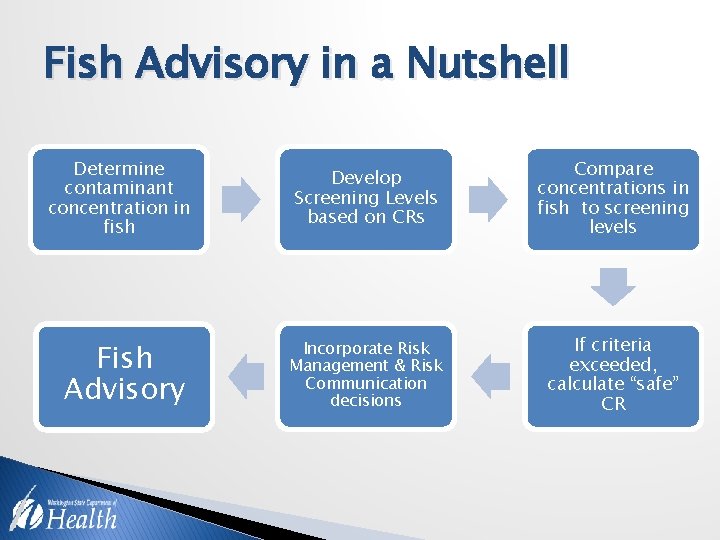
Fish Advisory in a Nutshell Determine contaminant concentration in fish Fish Advisory Develop Screening Levels based on CRs Compare concentrations in fish to screening levels Incorporate Risk Management & Risk Communication decisions If criteria exceeded, calculate “safe” CR
PCBs - Why the Concern � Fish are a primary source of exposure to PCBs � PCBs known to impact the immune system, cause neurological and developmental problems, and have reproductive effects. Evidence for carcinogenicity in animals, potential carcinogen in humans � We’re all exposed to PCBs • PCB detected in serum of 100% of U. S. population sampled 2003 -04 by CDC
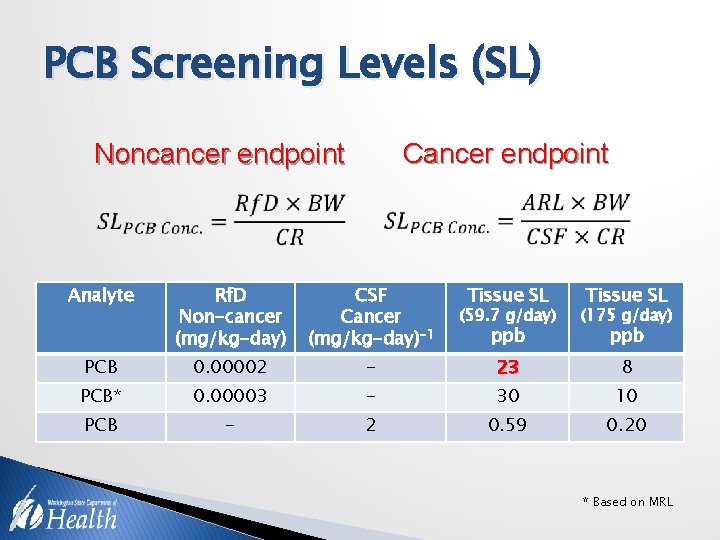
Approach(es) to PCBs � Evaluate Total PCBS based on: • Single or combined Aroclors • Adding congeners or subset of congeners � Utilize EPA’s IRIS values & ATSDR’s MRL • Non-cancer Reference Dose (Rf. D)* • Based on Aroclor 1254 • Minimal Risk Level (MRL)** • Dioxin-like TEF • Cancer – Cancer Slope Factor (CSF)* • Based on Aroclor mixtures *http: //www. epa. gov/iris **http: //www. atsdr. cdc. gov/toxprofiles/tp 17. pdf
Screening Levels � Can be developed for cancer and non-cancer endpoints and for differing consumption rates � DOH uses two consumption rates • 59. 7 g/day = 2 meals per week • Based on AHA & ADA recommendations • Fish Advisory Action level • 175 g/day = 23. 5 meals per month • Based on proposed FCR • Fish Advisory Public Health Goal (PHG) Much like Drinking Water Standards, we can have action levels (MCLs) & Goals (MCLGs) but with no regulatory authority
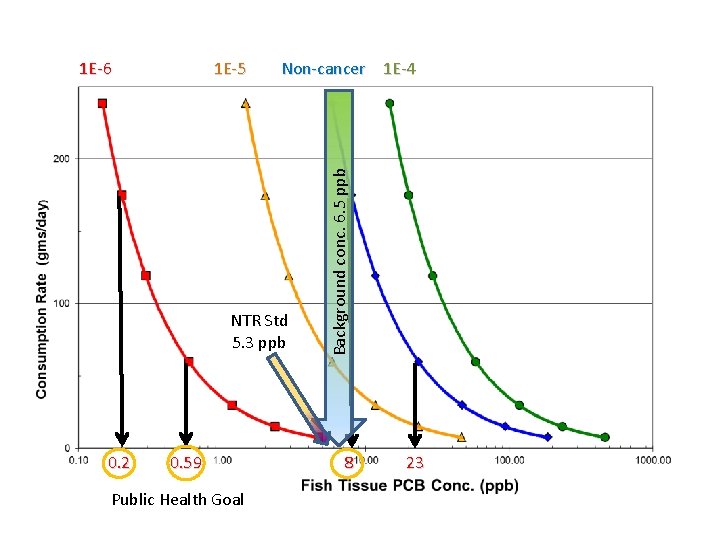
PCB Screening Levels (SL) Cancer endpoint Noncancer endpoint Analyte Rf. D Non-cancer (mg/kg-day) CSF Cancer (mg/kg-day)-1 Tissue SL (59. 7 g/day) (175 g/day) PCB 0. 00002 - 23 8 PCB* 0. 00003 - 30 10 PCB - 2 0. 59 0. 20 ppb Tissue SL ppb * Based on MRL
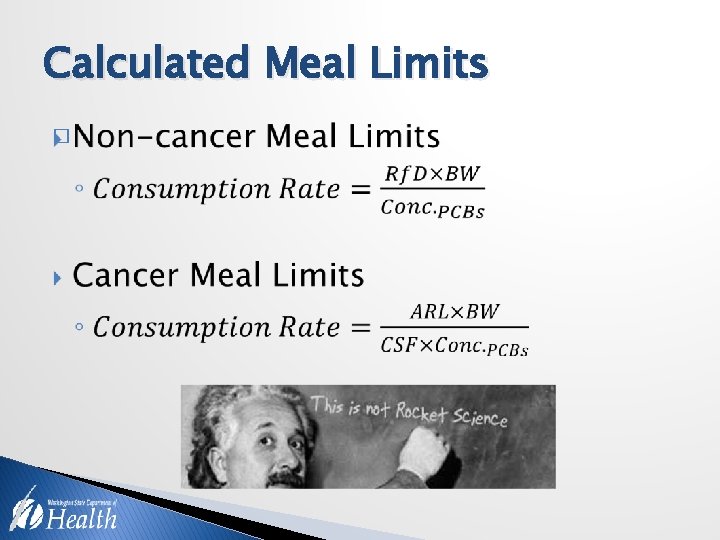
Calculated Meal Limits �
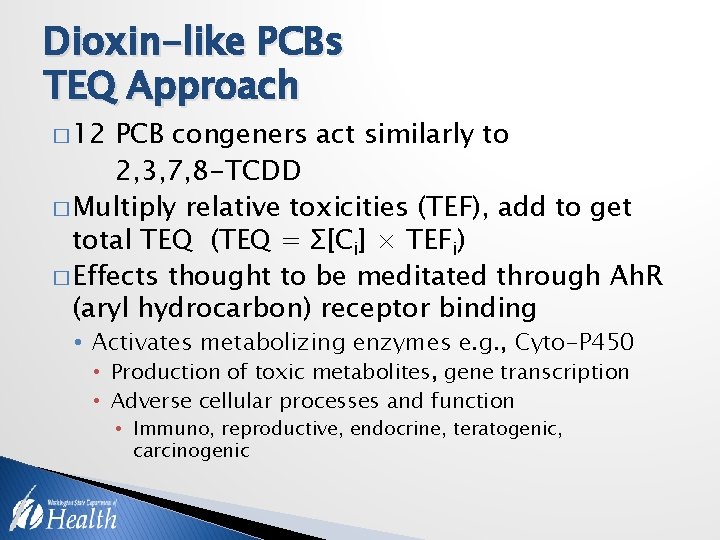
Dioxin-like PCBs TEQ Approach � 12 PCB congeners act similarly to 2, 3, 7, 8 -TCDD � Multiply relative toxicities (TEF), add to get total TEQ (TEQ = Σ[Ci] × TEFi) � Effects thought to be meditated through Ah. R (aryl hydrocarbon) receptor binding • Activates metabolizing enzymes e. g. , Cyto-P 450 • Production of toxic metabolites, gene transcription • Adverse cellular processes and function • Immuno, reproductive, endocrine, teratogenic, carcinogenic
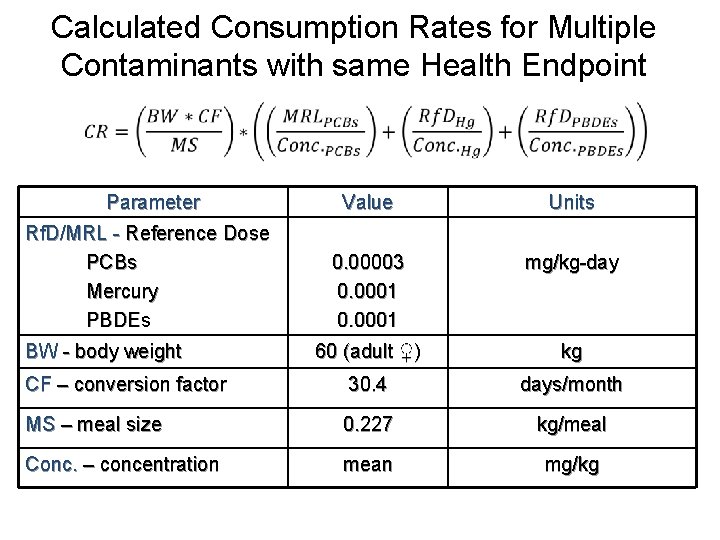
Calculated Consumption Rates for Multiple Contaminants with same Health Endpoint Parameter Value Units Rf. D/MRL - Reference Dose PCBs Mercury PBDEs 0. 00003 0. 0001 mg/kg-day 60 (adult ♀) kg CF – conversion factor 30. 4 days/month MS – meal size 0. 227 kg/meal Conc. – concentration mean mg/kg BW - body weight
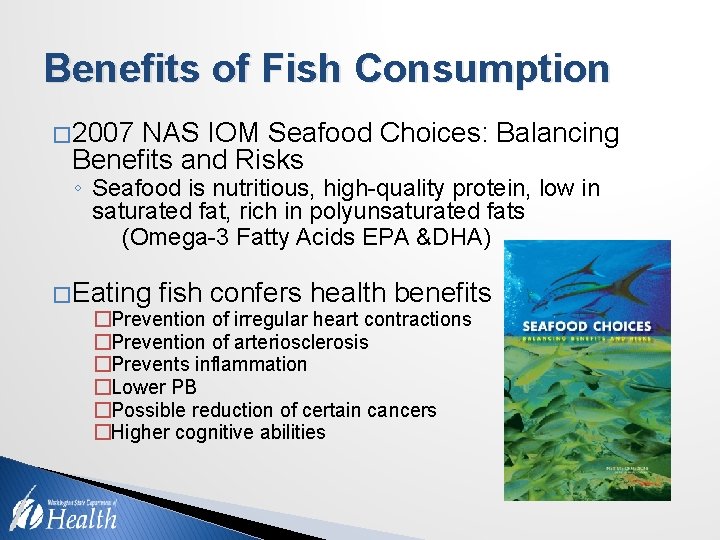
Benefits of Fish Consumption � 2007 NAS IOM Seafood Choices: Balancing Benefits and Risks ◦ Seafood is nutritious, high-quality protein, low in saturated fat, rich in polyunsaturated fats (Omega-3 Fatty Acids EPA &DHA) � Eating fish confers health benefits �Prevention of irregular heart contractions �Prevention of arteriosclerosis �Prevents inflammation �Lower PB �Possible reduction of certain cancers �Higher cognitive abilities
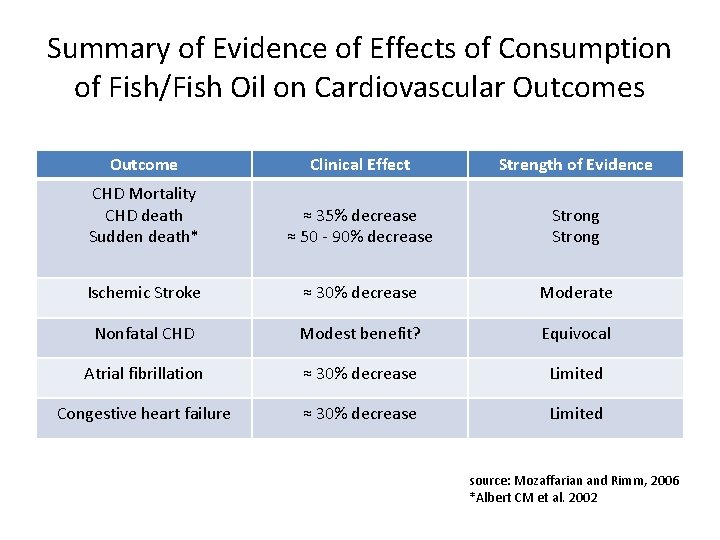
Summary of Evidence of Effects of Consumption of Fish/Fish Oil on Cardiovascular Outcomes Outcome Clinical Effect Strength of Evidence CHD Mortality CHD death Sudden death* ≈ 35% decrease ≈ 50 - 90% decrease Strong Ischemic Stroke ≈ 30% decrease Moderate Nonfatal CHD Modest benefit? Equivocal Atrial fibrillation ≈ 30% decrease Limited Congestive heart failure ≈ 30% decrease Limited source: Mozaffarian and Rimm, 2006 *Albert CM et al. 2002
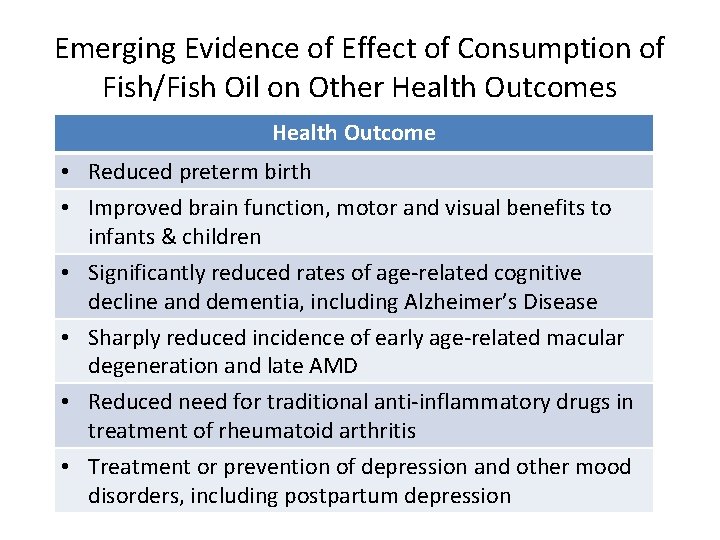
Emerging Evidence of Effect of Consumption of Fish/Fish Oil on Other Health Outcomes Health Outcome • Reduced preterm birth • Improved brain function, motor and visual benefits to infants & children • Significantly reduced rates of age-related cognitive decline and dementia, including Alzheimer’s Disease • Sharply reduced incidence of early age-related macular degeneration and late AMD • Reduced need for traditional anti-inflammatory drugs in treatment of rheumatoid arthritis • Treatment or prevention of depression and other mood disorders, including postpartum depression
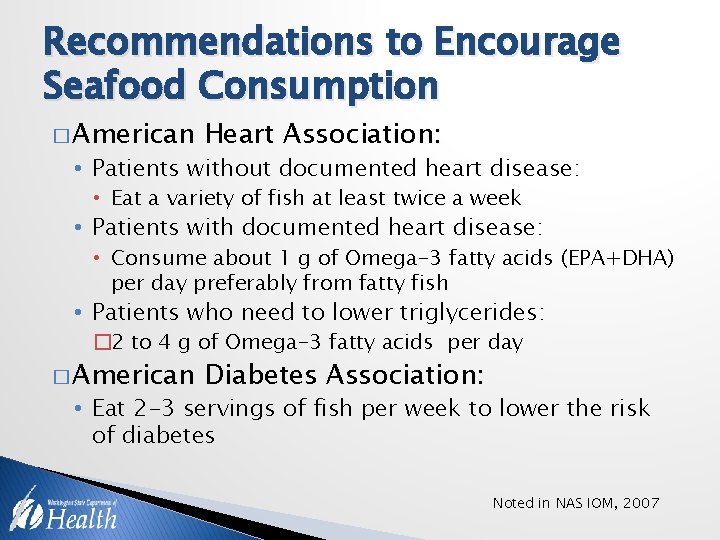
Recommendations to Encourage Seafood Consumption � American Heart Association: • Patients without documented heart disease: • Eat a variety of fish at least twice a week • Patients with documented heart disease: • Consume about 1 g of Omega-3 fatty acids (EPA+DHA) per day preferably from fatty fish • Patients who need to lower triglycerides: � 2 to 4 g of Omega-3 fatty acids per day � American Diabetes Association: • Eat 2 -3 servings of fish per week to lower the risk of diabetes Noted in NAS IOM, 2007
Recommendations to Encourage Seafood Consumption* Dietary Guidelines Advisory Committee Report (DHHS and USDA): “Consumption of two servings (approximately eight ounces) per week of fish high in EPA and DHA is associated with reduced risk of both sudden death and heart disease death in adults. To benefit from the potential cardio-protective effects of EPA and DHA, the weekly consumption of two serving of fish, particularly fish rich in EPA and DHA, is suggested. ” Noted in NAS IOM, 2007
Recommendations to Encourage Seafood Consumption National Healthy Mothers, Healthy Babies Coalition: Pregnant, breastfeeding and postpartum women are recommended to consume a minimum of 12 ounces of seafood per week (salmon, tuna, sardines), or DHA-fortified eggs. Six ounces of the recommended fish per week can come from albacore tuna.
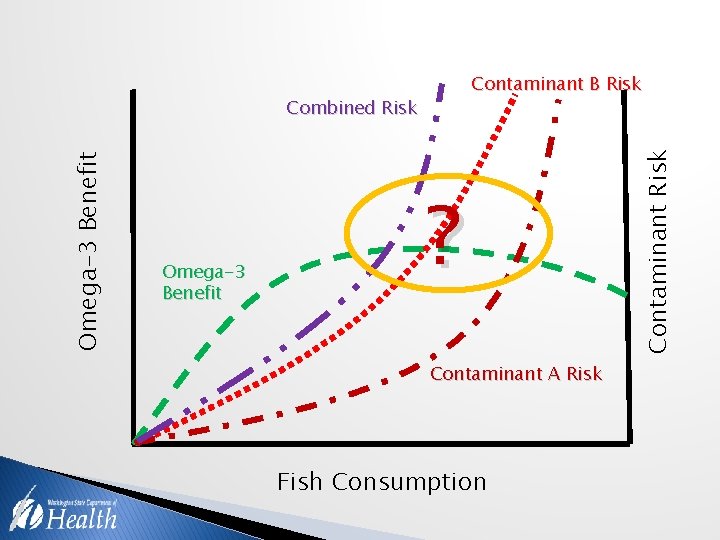
Omega-3 Benefit Combined Risk Omega-3 Benefit ? Contaminant A Risk Fish Consumption Contaminant Risk Contaminant B Risk
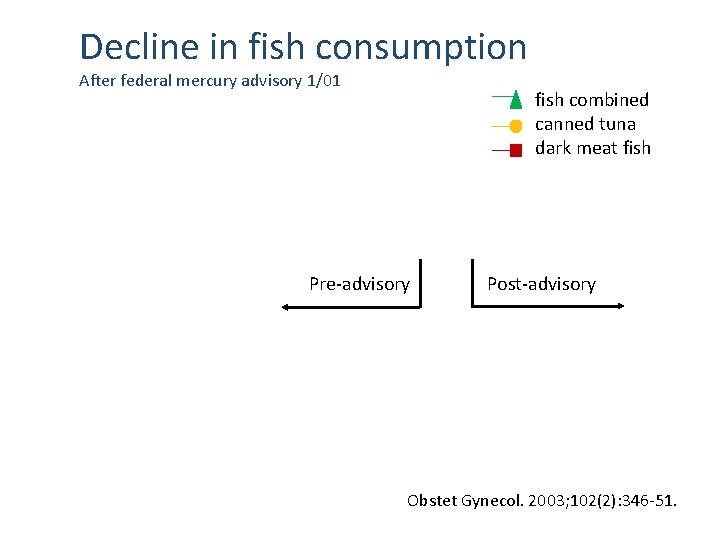
Decline in fish consumption After federal mercury advisory 1/01 fish combined canned tuna dark meat fish Pre-advisory Post-advisory Obstet Gynecol. 2003; 102(2): 346 -51.
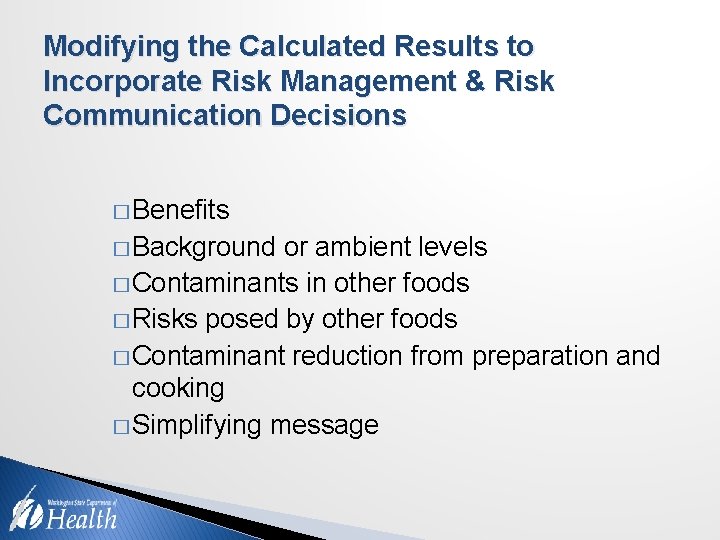
Modifying the Calculated Results to Incorporate Risk Management & Risk Communication Decisions � Benefits � Background or ambient levels � Contaminants in other foods � Risks posed by other foods � Contaminant reduction from preparation and cooking � Simplifying message
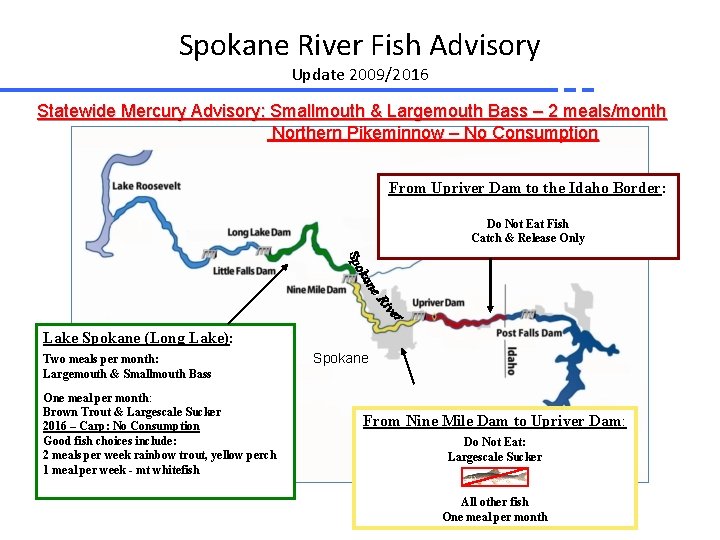
Spokane River Fish Advisory Update 2009/2016 Statewide Mercury Advisory: Smallmouth & Largemouth Bass – 2 meals/month Northern Pikeminnow – No Consumption From Upriver Dam to the Idaho Border: Do Not Eat Fish Catch & Release Only Lake Spokane (Long Lake): Two meals per month: Largemouth & Smallmouth Bass One meal per month: Brown Trout & Largescale Sucker 2016 – Carp: No Consumption Good fish choices include: 2 meals per week rainbow trout, yellow perch 1 meal per week - mt whitefish Spokane From Nine Mile Dam to Upriver Dam: Do Not Eat: Largescale Sucker All other fish One meal per month
1 E-5 Non-cancer 1 E-4 NTR Std 5. 3 ppb 0. 2 0. 59 Public Health Goal Background conc. 6. 5 ppb 1 E-6 8 23
Eat Fish, Be Smart, Choose Wisely Questions Dave Mc. Bride Office of Environmental Public Health Sciences dave. mcbride@doh. wa. gov (360) 236 -3176 Public Health – Always Working for a Safer and Healthier Washington