
How far weve come Parts of Speech Noun

- Slides: 10
How far we’ve come… Parts of Speech Noun Groups Nominalisation • Nouns (C, C, P, A) • Pronouns • Verbs (A, B, H) • Adverbs • Adjectives • Conjunctions • Prepositions (location & which, for, that) • Give more info about main noun • Pre-Modifiers (Adjectivals – D, Q, D, C) • Post-Modifiers (Phrases & Clauses) • Process Noun • Verb Noun • Adjective Noun • Condenses information • More focus on noun (usually abstract) Evaluative Vocab • Attitudinal/ Evaluative Vocab • Modality • Contrast • Concession • Using Citation • Active and Passive Voice
Pre & Post Modifiers
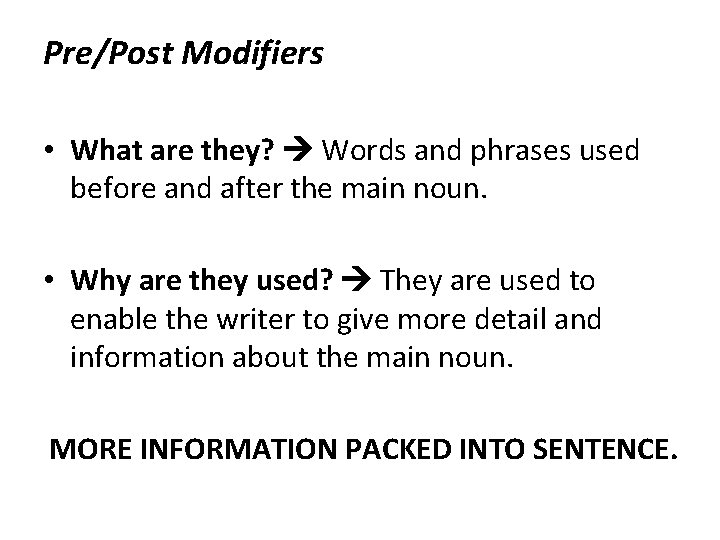
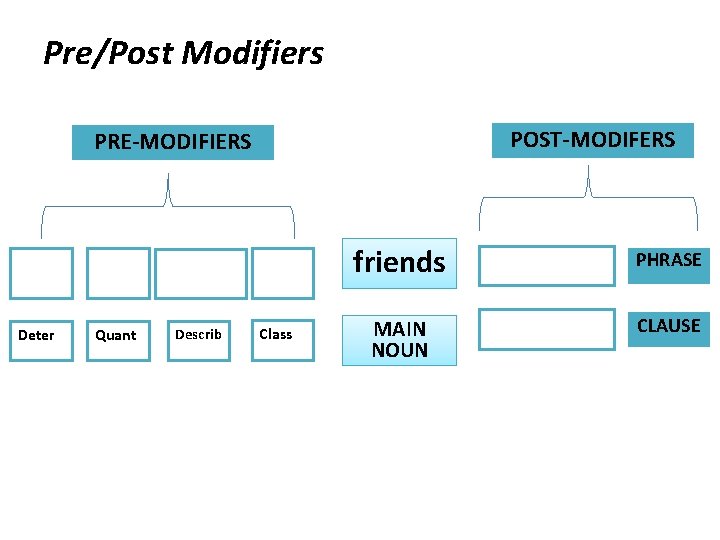
Pre/Post Modifiers • What are they? Words and phrases used before and after the main noun. • Why are they used? They are used to enable the writer to give more detail and information about the main noun. MORE INFORMATION PACKED INTO SENTENCE.
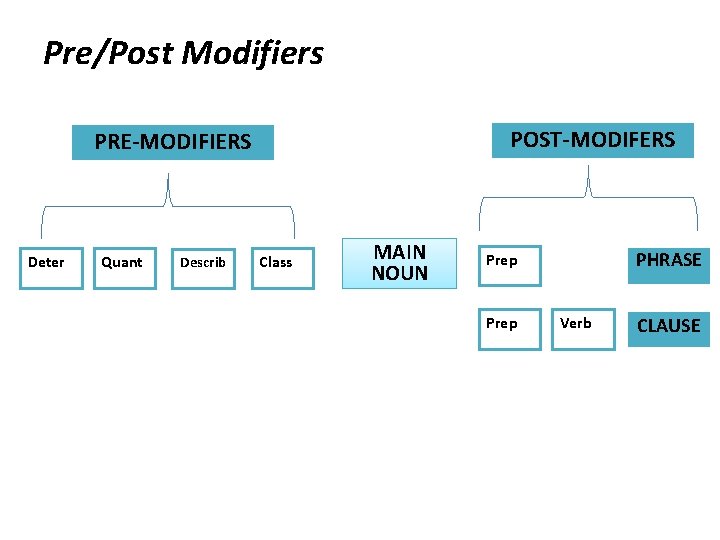
Pre/Post Modifiers POST-MODIFERS PRE-MODIFIERS Deter Quant Describ Class MAIN NOUN PHRASE Prep Verb CLAUSE
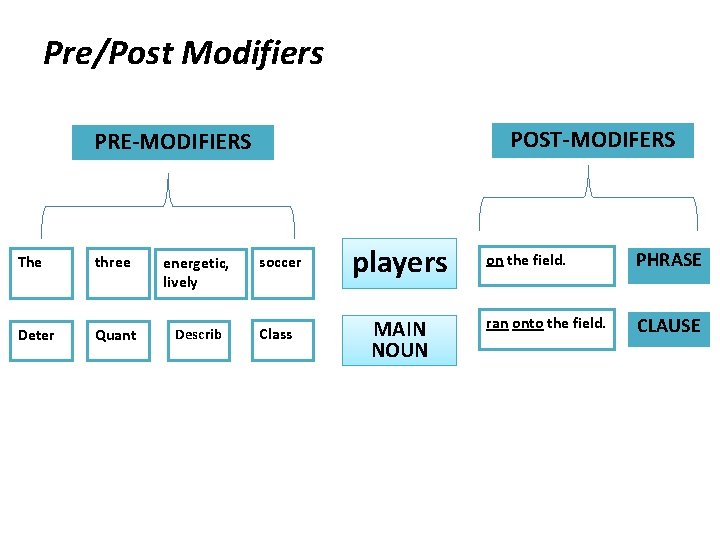
Pre/Post Modifiers POST-MODIFERS PRE-MODIFIERS The three energetic, lively Deter Quant Describ soccer players Class MAIN NOUN on the field. PHRASE ran onto the field. CLAUSE
Pre/Post Modifiers POST-MODIFERS PRE-MODIFIERS Deter Quant Describ Class friends PHRASE MAIN NOUN CLAUSE
Modality
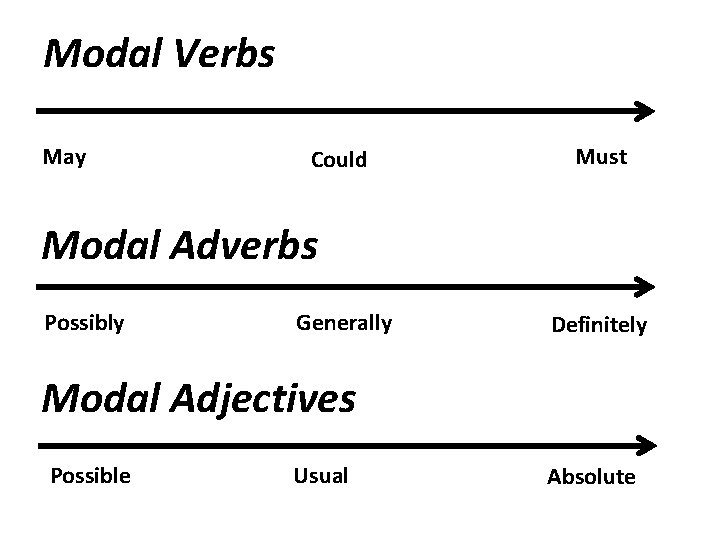
Modal Verbs May Could Must Modal Adverbs Possibly Generally Definitely Modal Adjectives Possible Usual Absolute
Contrast VS. Concession
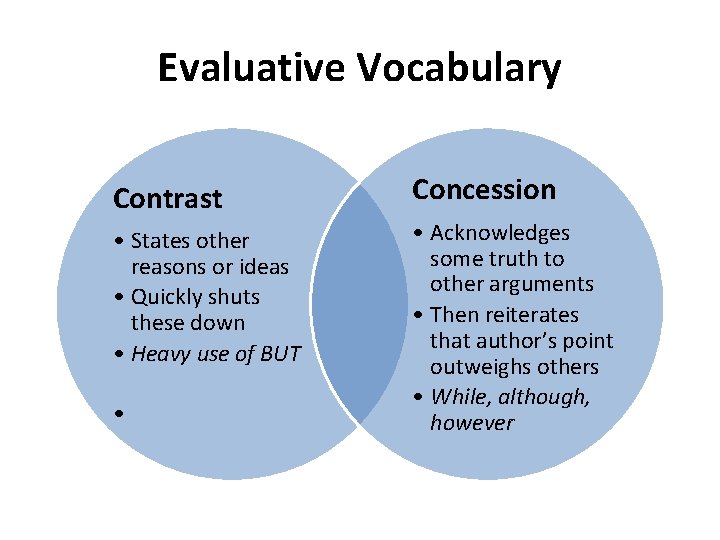
Evaluative Vocabulary Contrast Concession • States other reasons or ideas • Quickly shuts these down • Heavy use of BUT • Acknowledges some truth to other arguments • Then reiterates that author’s point outweighs others • While, although, however •