
How effective are the NT Spatial Transformation Instruments



- Slides: 19
How effective are the NT Spatial Transformation Instruments?
Presentation Framework • • Introduction What are the instruments? How effective are they? How can we improve effectiveness? 2
Introduction 3
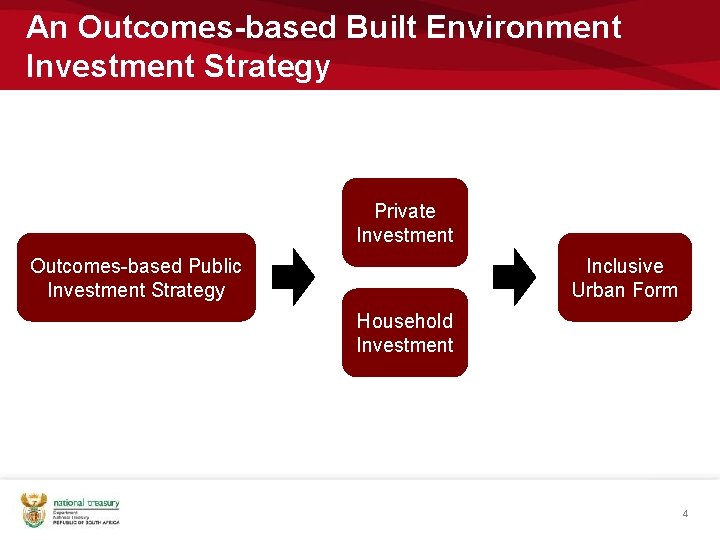
An Outcomes-based Built Environment Investment Strategy Private Investment Outcomes-based Public Investment Strategy Inclusive Urban Form Household Investment 4
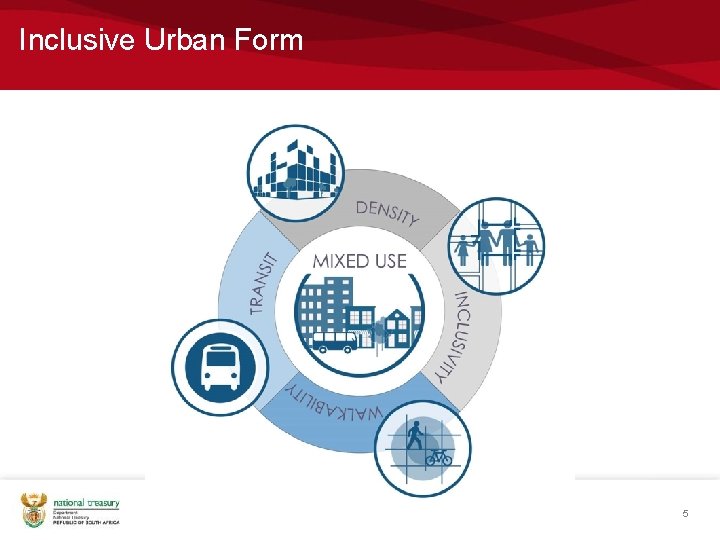
Inclusive Urban Form 5
6
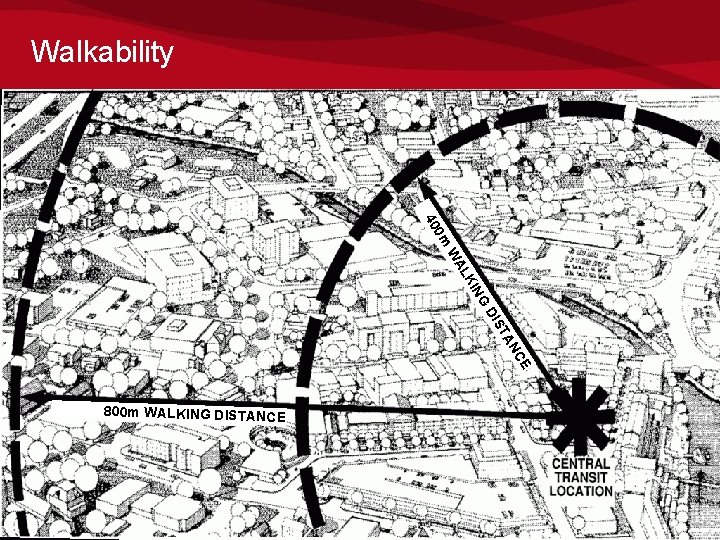
Walkability 0 m 40 NG KI AL W E C AN ST DI 800 m WALKING DISTANCE 7
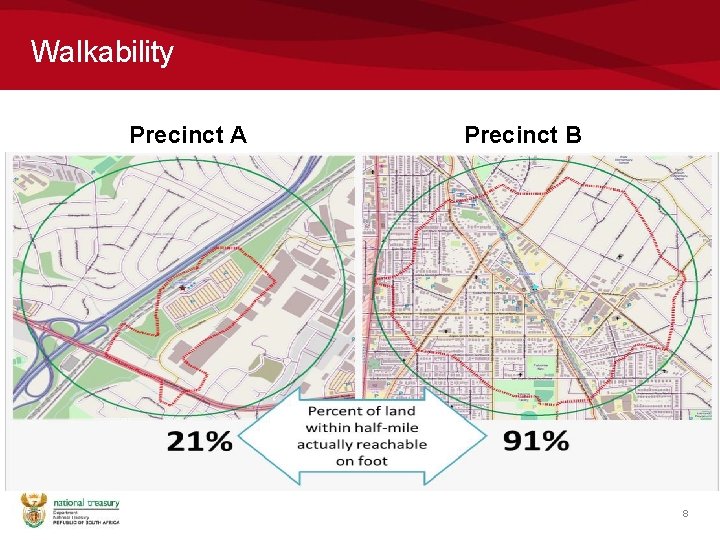
Walkability Precinct A Precinct B 8
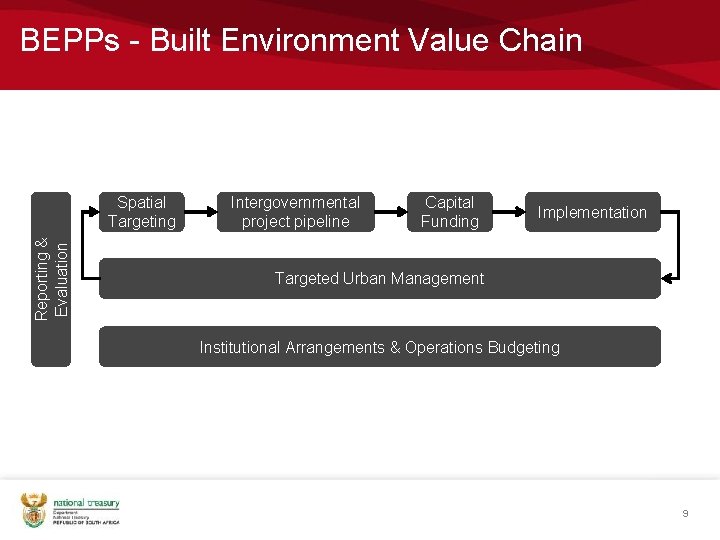
BEPPs - Built Environment Value Chain Reporting & Evaluation Spatial Targeting Intergovernmental project pipeline Capital Funding Implementation Targeted Urban Management Institutional Arrangements & Operations Budgeting 9
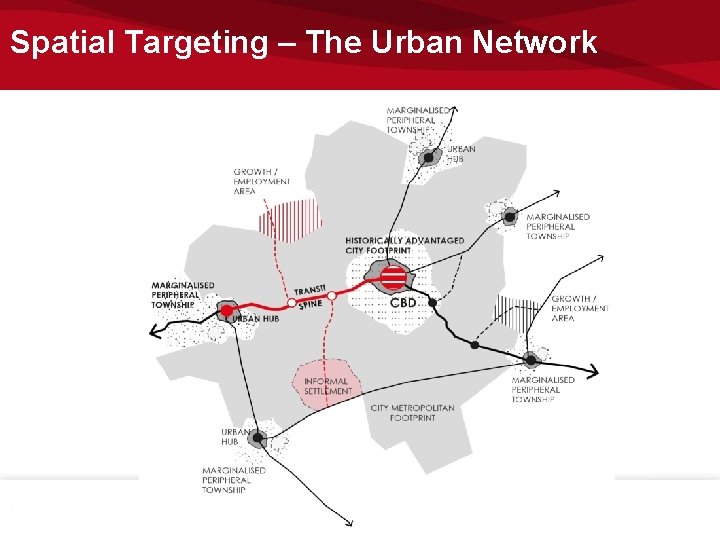
Spatial Targeting – The Urban Network
What are the instruments? 11
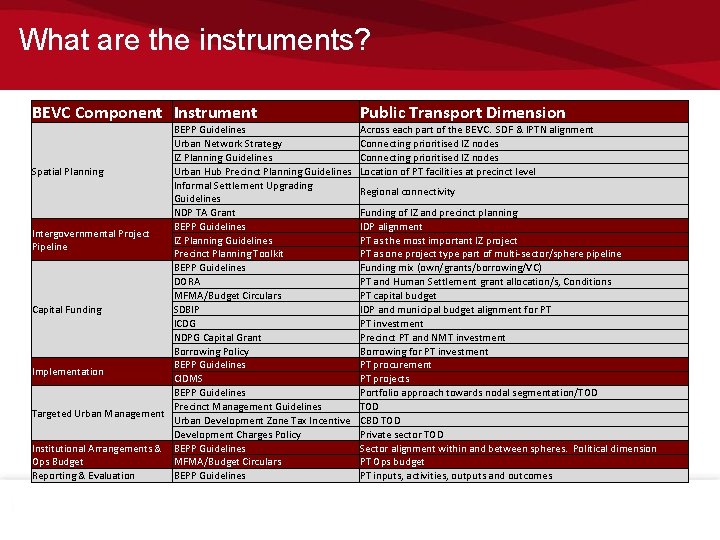
What are the instruments? BEVC Component Instrument Public Transport Dimension BEPP Guidelines Urban Network Strategy IZ Planning Guidelines Spatial Planning Urban Hub Precinct Planning Guidelines Informal Settlement Upgrading Guidelines NDP TA Grant BEPP Guidelines Intergovernmental Project IZ Planning Guidelines Pipeline Precinct Planning Toolkit BEPP Guidelines DORA MFMA/Budget Circulars SDBIP Capital Funding ICDG NDPG Capital Grant Borrowing Policy BEPP Guidelines Implementation CIDMS BEPP Guidelines Precinct Management Guidelines Targeted Urban Management Urban Development Zone Tax Incentive Development Charges Policy Institutional Arrangements & BEPP Guidelines Ops Budget MFMA/Budget Circulars Reporting & Evaluation BEPP Guidelines Across each part of the BEVC. SDF & IPTN alignment Connecting prioritised IZ nodes Location of PT facilities at precinct level Regional connectivity Funding of IZ and precinct planning IDP alignment PT as the most important IZ project PT as one project type part of multi-sector/sphere pipeline Funding mix (own/grants/borrowing/VC) PT and Human Settlement grant allocation/s, Conditions PT capital budget IDP and municipal budget alignment for PT PT investment Precinct PT and NMT investment Borrowing for PT investment PT procurement PT projects Portfolio approach towards nodal segmentation/TOD CBD TOD Private sector TOD Sector alignment within and between spheres. Political dimension PT Ops budget PT inputs, activities, outputs and outcomes
How effective are the instruments? 13
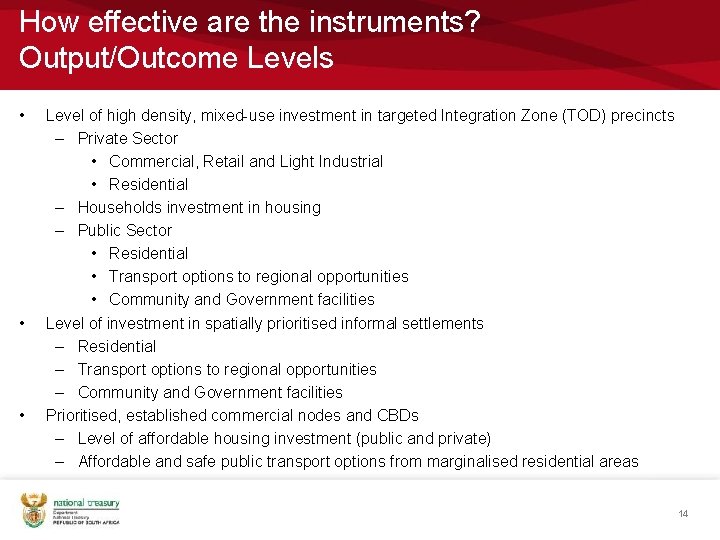
How effective are the instruments? Output/Outcome Levels • • • Level of high density, mixed-use investment in targeted Integration Zone (TOD) precincts – Private Sector • Commercial, Retail and Light Industrial • Residential – Households investment in housing – Public Sector • Residential • Transport options to regional opportunities • Community and Government facilities Level of investment in spatially prioritised informal settlements – Residential – Transport options to regional opportunities – Community and Government facilities Prioritised, established commercial nodes and CBDs – Level of affordable housing investment (public and private) – Affordable and safe public transport options from marginalised residential areas 14
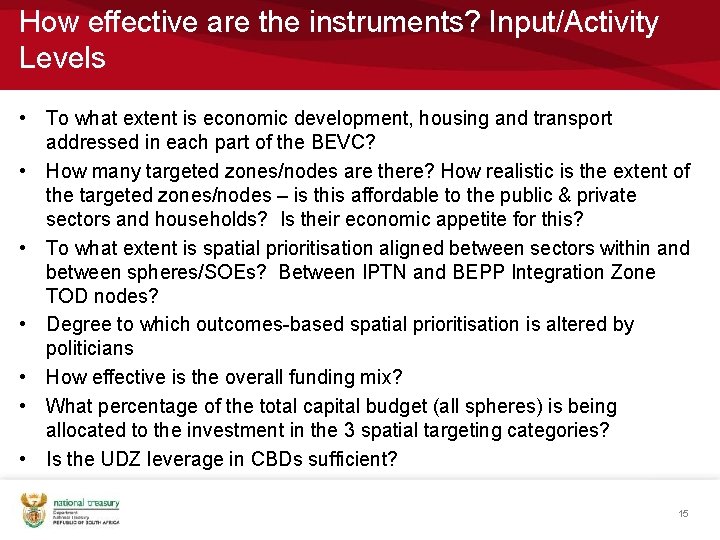
How effective are the instruments? Input/Activity Levels • To what extent is economic development, housing and transport addressed in each part of the BEVC? • How many targeted zones/nodes are there? How realistic is the extent of the targeted zones/nodes – is this affordable to the public & private sectors and households? Is their economic appetite for this? • To what extent is spatial prioritisation aligned between sectors within and between spheres/SOEs? Between IPTN and BEPP Integration Zone TOD nodes? • Degree to which outcomes-based spatial prioritisation is altered by politicians • How effective is the overall funding mix? • What percentage of the total capital budget (all spheres) is being allocated to the investment in the 3 spatial targeting categories? • Is the UDZ leverage in CBDs sufficient? 15
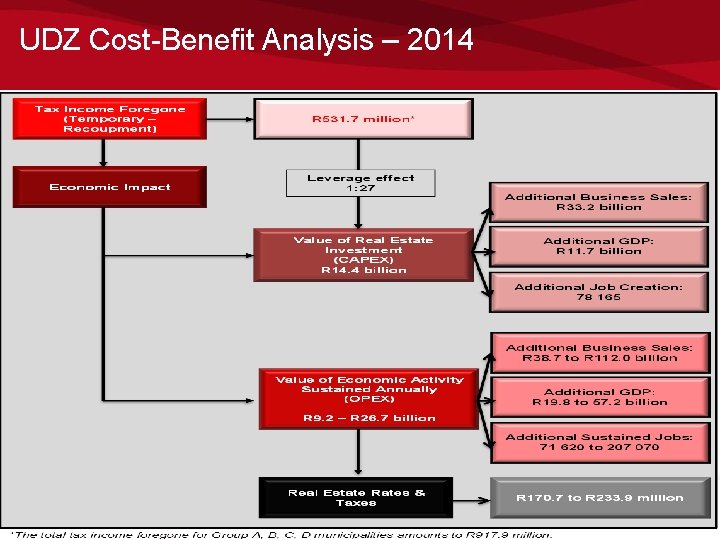
UDZ Cost-Benefit Analysis – 2014 16
How can we improve the effectiveness of the instruments? 17
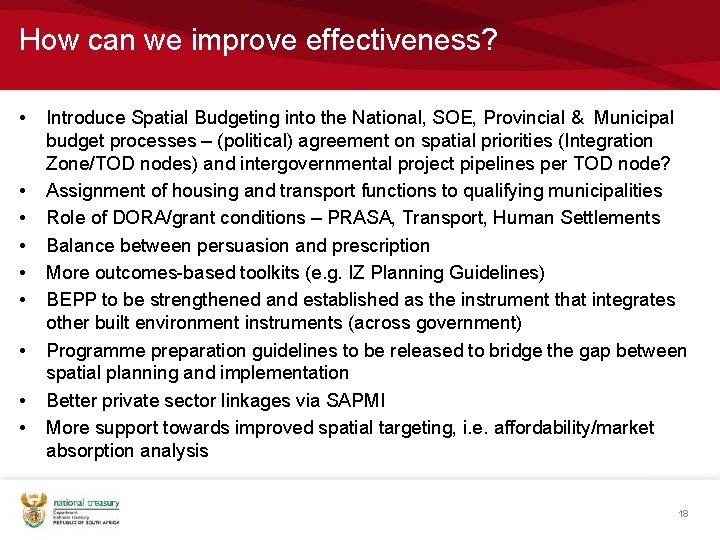
How can we improve effectiveness? • • • Introduce Spatial Budgeting into the National, SOE, Provincial & Municipal budget processes – (political) agreement on spatial priorities (Integration Zone/TOD nodes) and intergovernmental project pipelines per TOD node? Assignment of housing and transport functions to qualifying municipalities Role of DORA/grant conditions – PRASA, Transport, Human Settlements Balance between persuasion and prescription More outcomes-based toolkits (e. g. IZ Planning Guidelines) BEPP to be strengthened and established as the instrument that integrates other built environment instruments (across government) Programme preparation guidelines to be released to bridge the gap between spatial planning and implementation Better private sector linkages via SAPMI More support towards improved spatial targeting, i. e. affordability/market absorption analysis 18
Thank You 19