
How Ecosystems Work Section 2 5 CHAPTER HOW
- Slides: 28
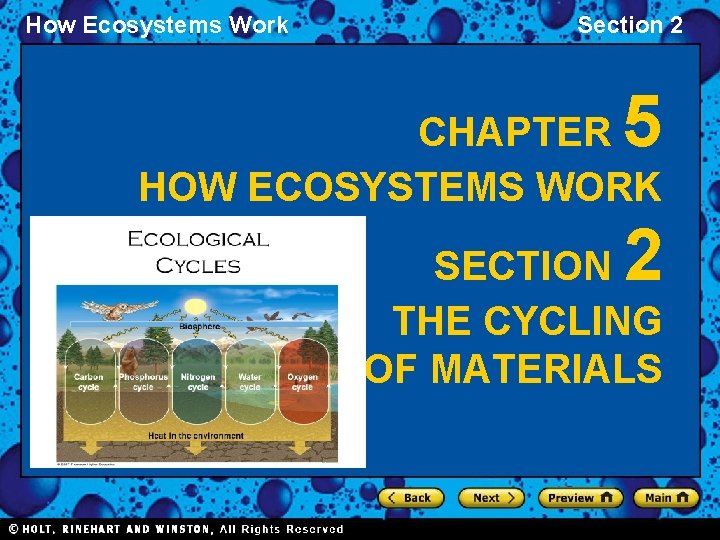
How Ecosystems Work Section 2 5 CHAPTER HOW ECOSYSTEMS WORK 2 SECTION THE CYCLING OF MATERIALS
How Ecosystems Work Section 2 Objectives In this Section we will: • List the three stages of the carbon cycle. • Describe where fossil fuels are located. • Identify one way that humans are affecting the carbon cycle. • List the three stages of the nitrogen cycle. • Describe the role that nitrogen fixing bacteria play in the nitrogen cycle. • Explain how the excess use of fertilizer can affect the nitrogen and phosphorus cycles
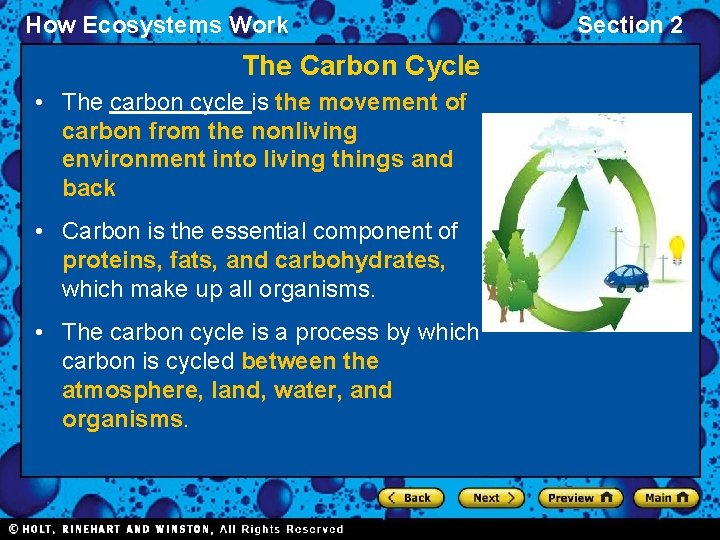
How Ecosystems Work The Carbon Cycle • The carbon cycle is the movement of carbon from the nonliving environment into living things and back • Carbon is the essential component of proteins, fats, and carbohydrates, which make up all organisms. • The carbon cycle is a process by which carbon is cycled between the atmosphere, land, water, and organisms. Section 2
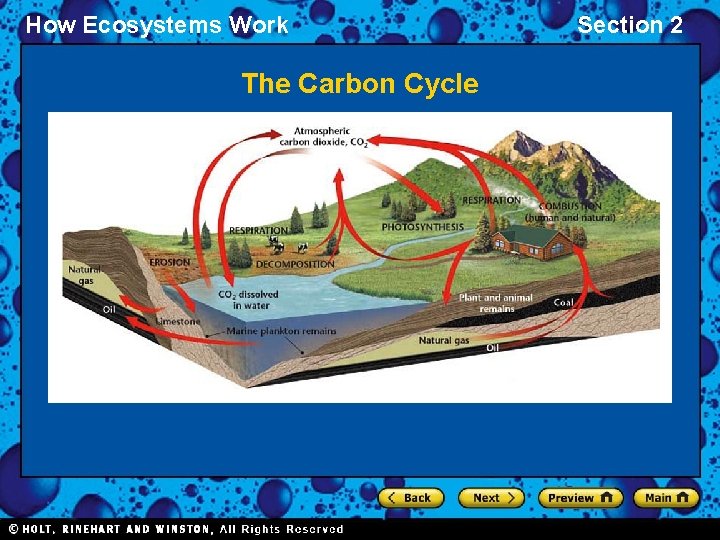
How Ecosystems Work The Carbon Cycle Section 2
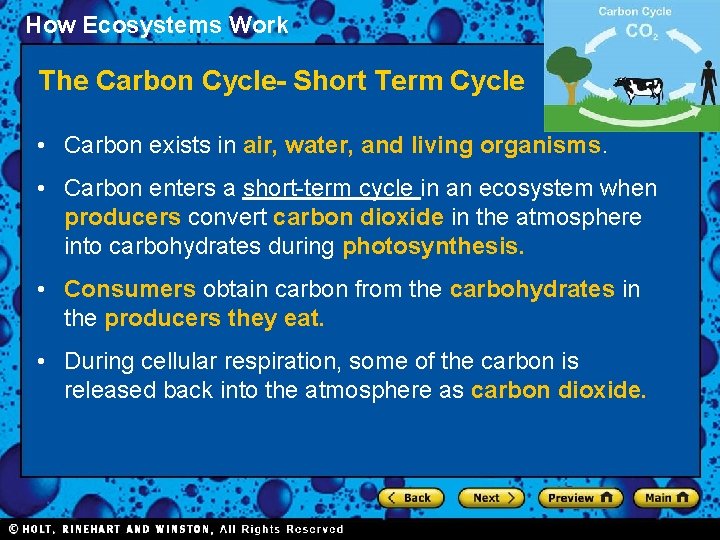
How Ecosystems Work Section 2 The Carbon Cycle- Short Term Cycle • Carbon exists in air, water, and living organisms. • Carbon enters a short-term cycle in an ecosystem when producers convert carbon dioxide in the atmosphere into carbohydrates during photosynthesis. • Consumers obtain carbon from the carbohydrates in the producers they eat. • During cellular respiration, some of the carbon is released back into the atmosphere as carbon dioxide.
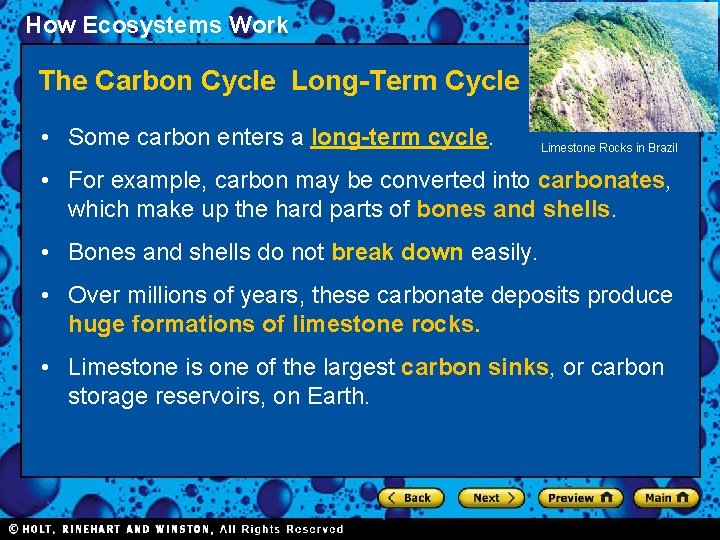
How Ecosystems Work Section 2 The Carbon Cycle Long-Term Cycle • Some carbon enters a long-term cycle. Limestone Rocks in Brazil • For example, carbon may be converted into carbonates, which make up the hard parts of bones and shells. • Bones and shells do not break down easily. • Over millions of years, these carbonate deposits produce huge formations of limestone rocks. • Limestone is one of the largest carbon sinks, or carbon storage reservoirs, on Earth.
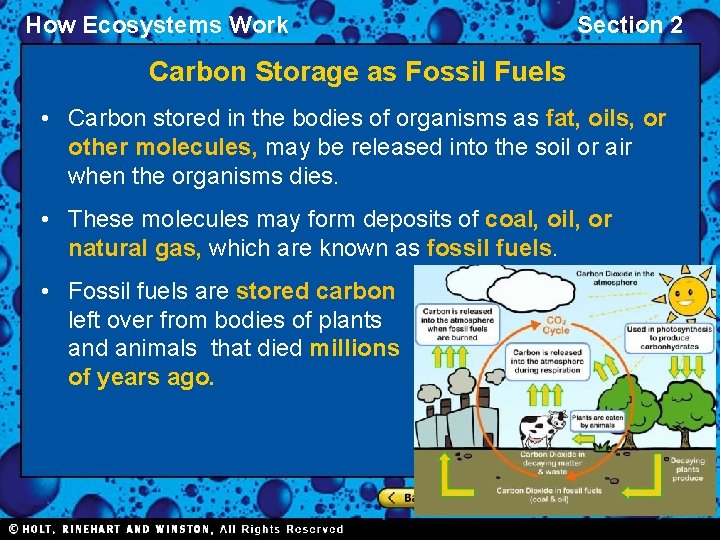
How Ecosystems Work Section 2 Carbon Storage as Fossil Fuels • Carbon stored in the bodies of organisms as fat, oils, or other molecules, may be released into the soil or air when the organisms dies. • These molecules may form deposits of coal, oil, or natural gas, which are known as fossil fuels. • Fossil fuels are stored carbon left over from bodies of plants and animals that died millions of years ago.
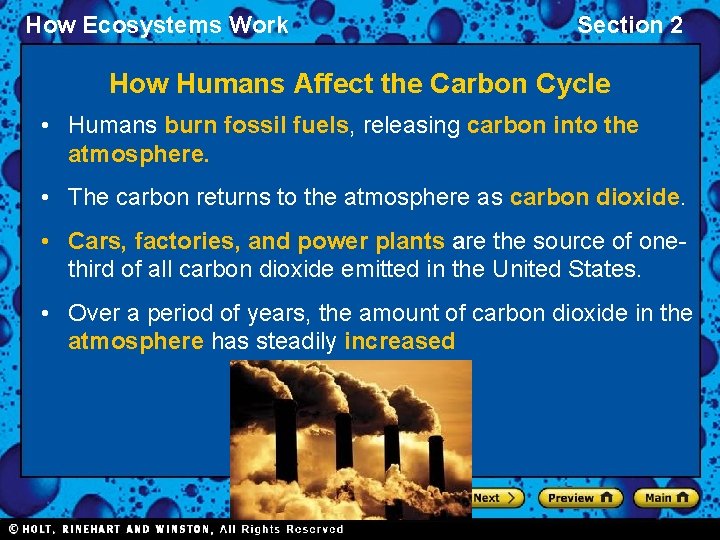
How Ecosystems Work Section 2 How Humans Affect the Carbon Cycle • Humans burn fossil fuels, releasing carbon into the atmosphere. • The carbon returns to the atmosphere as carbon dioxide. • Cars, factories, and power plants are the source of onethird of all carbon dioxide emitted in the United States. • Over a period of years, the amount of carbon dioxide in the atmosphere has steadily increased
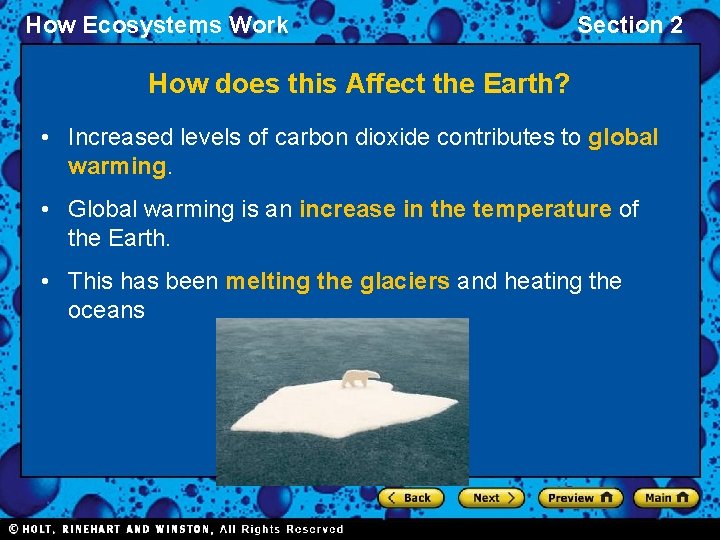
How Ecosystems Work Section 2 How does this Affect the Earth? • Increased levels of carbon dioxide contributes to global warming. • Global warming is an increase in the temperature of the Earth. • This has been melting the glaciers and heating the oceans
How Ecosystems Work VIDEO Real World: • The Carbon Cycle -- Essential for Life on Earth Section 2
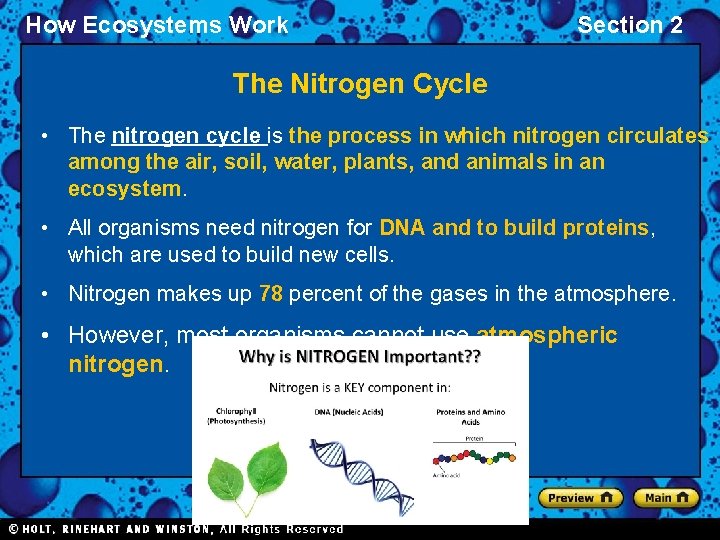
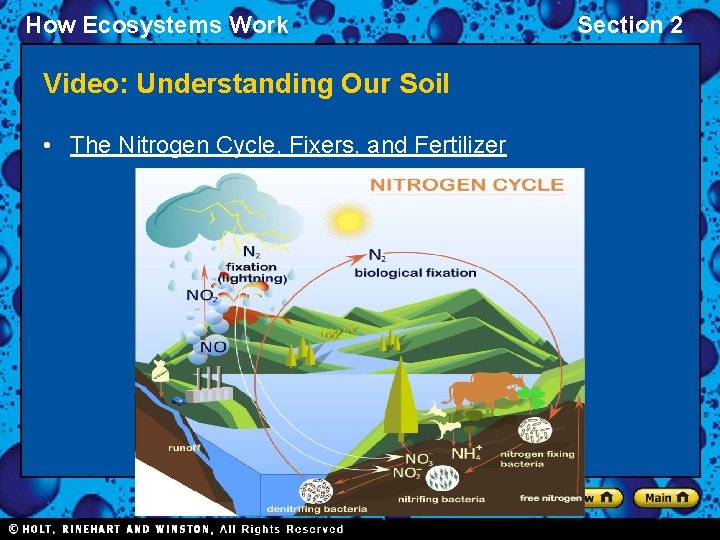
How Ecosystems Work Section 2 The Nitrogen Cycle • The nitrogen cycle is the process in which nitrogen circulates among the air, soil, water, plants, and animals in an ecosystem. • All organisms need nitrogen for DNA and to build proteins, which are used to build new cells. • Nitrogen makes up 78 percent of the gases in the atmosphere. • However, most organisms cannot use atmospheric nitrogen.
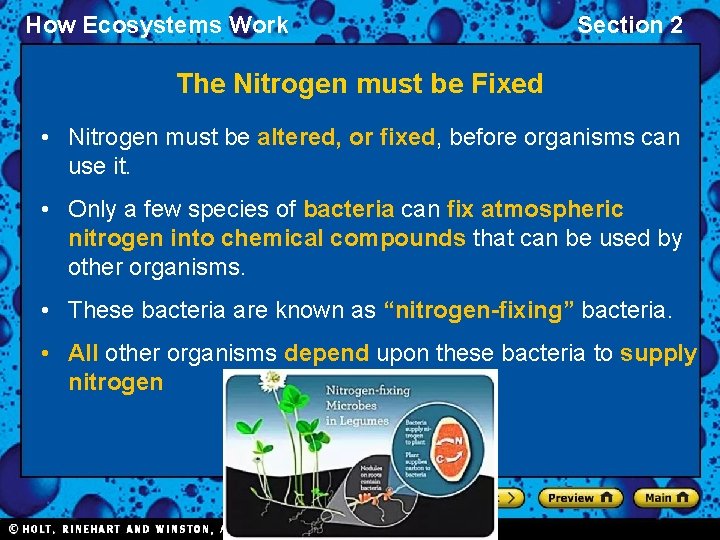
How Ecosystems Work Section 2 The Nitrogen must be Fixed • Nitrogen must be altered, or fixed, before organisms can use it. • Only a few species of bacteria can fix atmospheric nitrogen into chemical compounds that can be used by other organisms. • These bacteria are known as “nitrogen-fixing” bacteria. • All other organisms depend upon these bacteria to supply nitrogen
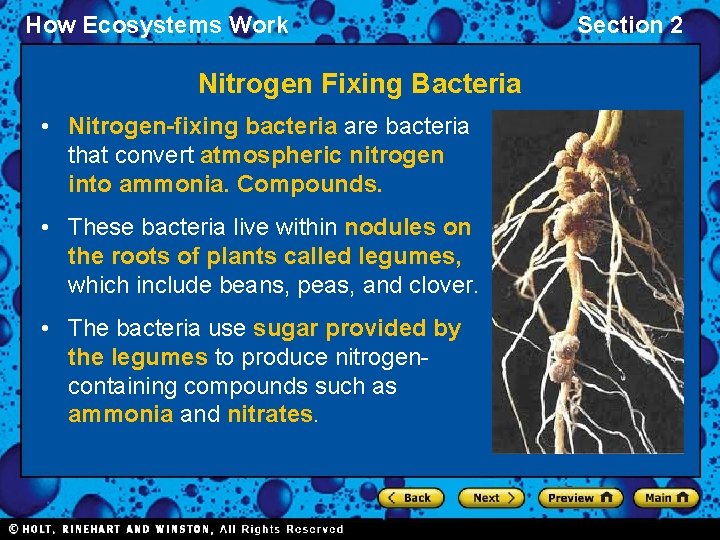
How Ecosystems Work Nitrogen Fixing Bacteria • Nitrogen-fixing bacteria are bacteria that convert atmospheric nitrogen into ammonia. Compounds. • These bacteria live within nodules on the roots of plants called legumes, which include beans, peas, and clover. • The bacteria use sugar provided by the legumes to produce nitrogencontaining compounds such as ammonia and nitrates. Section 2
How Ecosystems Work Section 2 How to get the nitrogen • Excess nitrogen fixed by the bacteria is released into the soil. • In addition, some nitrogen-fixing bacteria live in the soil rather than inside the roots of legumes. • Plants that do not have nitrogen-fixing bacteria in their roots get nitrogen from the soil. • Animals get nitrogen by eating plants or other animals, both of which are sources of usable nitrogen.
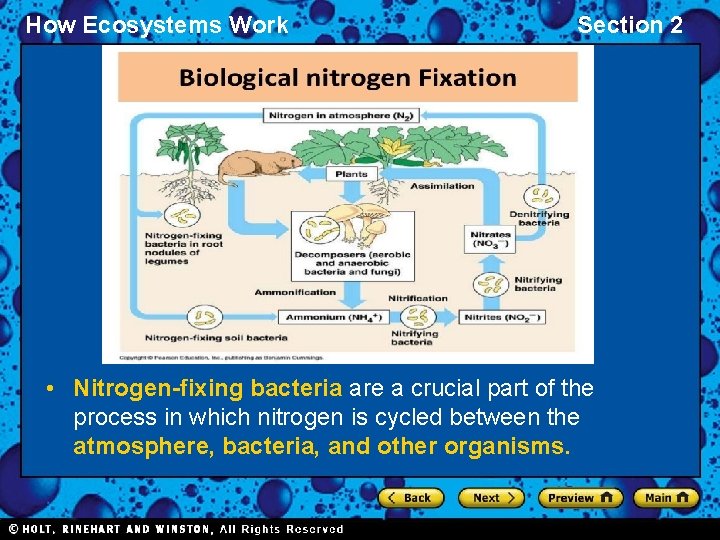
How Ecosystems Work Section 2 • Nitrogen-fixing bacteria are a crucial part of the process in which nitrogen is cycled between the atmosphere, bacteria, and other organisms.
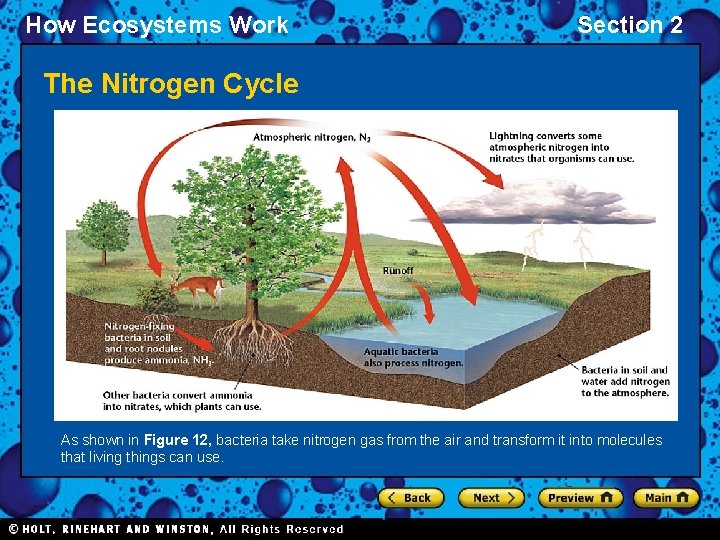
How Ecosystems Work Section 2 The Nitrogen Cycle As shown in Figure 12, bacteria take nitrogen gas from the air and transform it into molecules that living things can use.
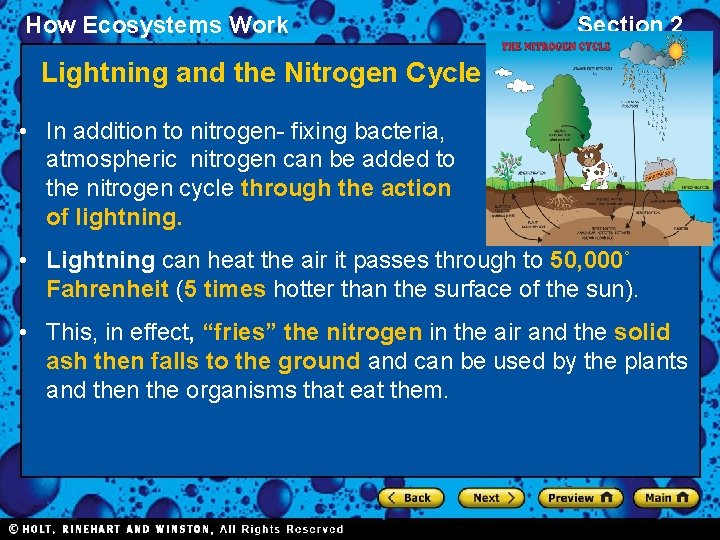
How Ecosystems Work Section 2 Lightning and the Nitrogen Cycle • In addition to nitrogen- fixing bacteria, atmospheric nitrogen can be added to the nitrogen cycle through the action of lightning. • Lightning can heat the air it passes through to 50, 000˚ Fahrenheit (5 times hotter than the surface of the sun). • This, in effect, “fries” the nitrogen in the air and the solid ash then falls to the ground and can be used by the plants and then the organisms that eat them.
How Ecosystems Work Section 2 Decomposers and the Nitrogen Cycle • Nitrogen stored within the bodies of living things is returned to the nitrogen cycle once those organisms die. • Decomposers break down decaying plants and animals, as well as plant and animal wastes. • After decomposers return nitrogen to the soil, bacteria transform a small amount of the nitrogen back into nitrogen gas, which then returns to the atmosphere to complete the nitrogen cycle. • So once nitrogen enters an ecosystem, most of it stays within the ecosystem, cycles between organisms and the soil, and is constantly reused.
How Ecosystems Work Video: Understanding Our Soil • The Nitrogen Cycle, Fixers, and Fertilizer Section 2
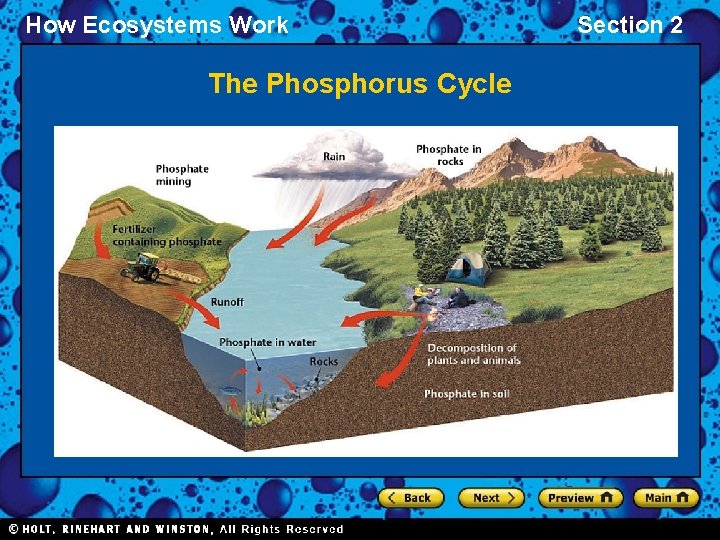
How Ecosystems Work Section 2 The Phosphorus Cycle • Phosphorus is an element that is part of many molecules that make up the cells of living organisms. • For example, phosphorus is an essential material needed to form bones and teeth in animals. • Plants get the phosphorus they need from soil and water, while animals get their phosphorus by eating plants or other animals that have eaten plants. • The phosphorus cycle is the cyclic movement of phosphorus in different chemical forms from the environment to organisms and then back to the environment.
How Ecosystems Work The Phosphorus Cycle Section 2
How Ecosystems Work Section 2 The Phosphorous Cycles Very Slowly • Phosphorous rarely occurs as a gas, therefore the phosphorous cycle has no atmospheric component. – Phosphorus moves from phosphate deposits in rock – to the land soil through erosion, – then to living organisms, – and finally to the ocean.
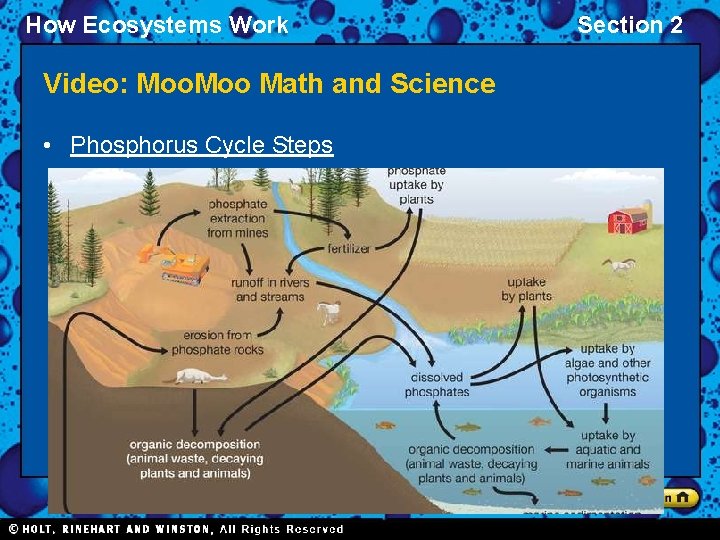
How Ecosystems Work Section 2 The Phosphorus Cycle • Phosphorus may enter soil and water when rocks erode. • Small amounts of phosphorus dissolve as phosphate, which moves into the soil. • Plants absorb phosphates in the soil through their roots. • Consumers ingest these phosphates and then excrete them in their wastes or return them to the soil when they die. • Some phosphorus washes off the land ends up in the ocean. • Because many phosphate salts are not soluble in water, they sink to the bottom and accumulate as sediment. , and become rocks again.
How Ecosystems Work Video: Moo Math and Science • Phosphorus Cycle Steps Section 2
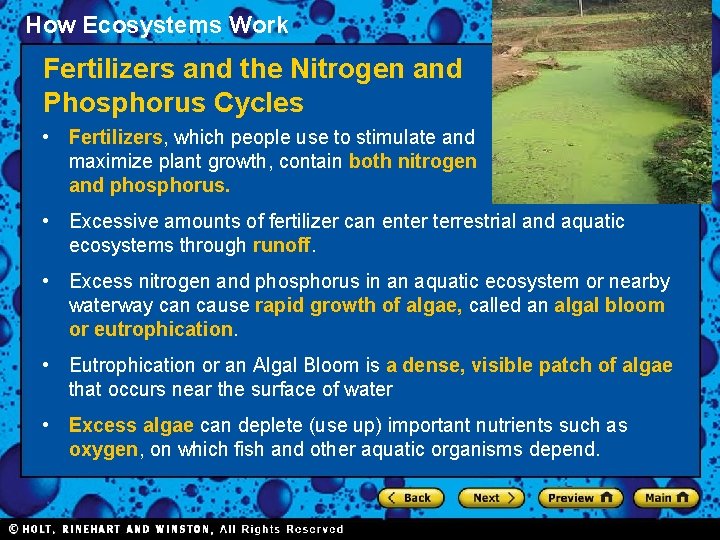
How Ecosystems Work Section 2 Fertilizers and the Nitrogen and Phosphorus Cycles • Fertilizers, which people use to stimulate and maximize plant growth, contain both nitrogen and phosphorus. • Excessive amounts of fertilizer can enter terrestrial and aquatic ecosystems through runoff. • Excess nitrogen and phosphorus in an aquatic ecosystem or nearby waterway can cause rapid growth of algae, called an algal bloom or eutrophication. • Eutrophication or an Algal Bloom is a dense, visible patch of algae that occurs near the surface of water • Excess algae can deplete (use up) important nutrients such as oxygen, on which fish and other aquatic organisms depend.
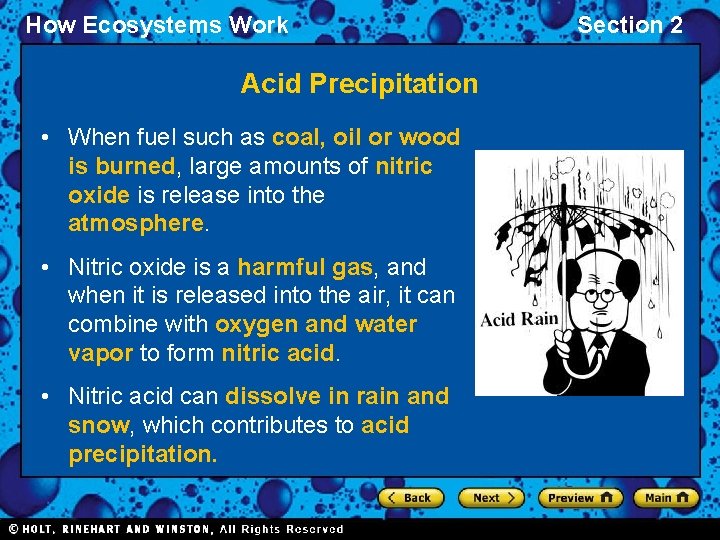
How Ecosystems Work Acid Precipitation • When fuel such as coal, oil or wood is burned, large amounts of nitric oxide is release into the atmosphere. • Nitric oxide is a harmful gas, and when it is released into the air, it can combine with oxygen and water vapor to form nitric acid. • Nitric acid can dissolve in rain and snow, which contributes to acid precipitation. Section 2
How Ecosystems Work Video Ted. Ed Whatever happened to Acid Rain? Acid Rain Explained Section 2
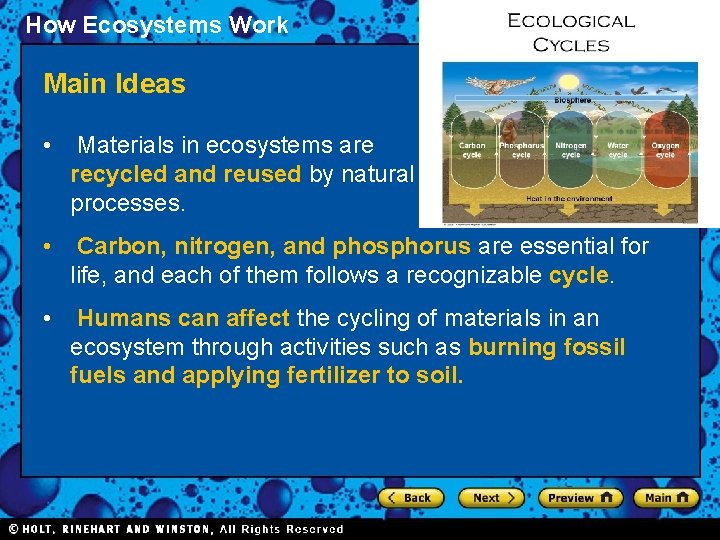
How Ecosystems Work Section 2 Main Ideas • Materials in ecosystems are recycled and reused by natural processes. • Carbon, nitrogen, and phosphorus are essential for life, and each of them follows a recognizable cycle. • Humans can affect the cycling of materials in an ecosystem through activities such as burning fossil fuels and applying fertilizer to soil.