
How Early Childhood Development Can Break the Cycle
How Early Childhood Development Can Break the Cycle of Violence Elisa Radisone Programme Manager ECCD and Child Rights Governance Save the Children Rwanda National Conference on Violence Against Children – Kigali – 3 -4 October 2011
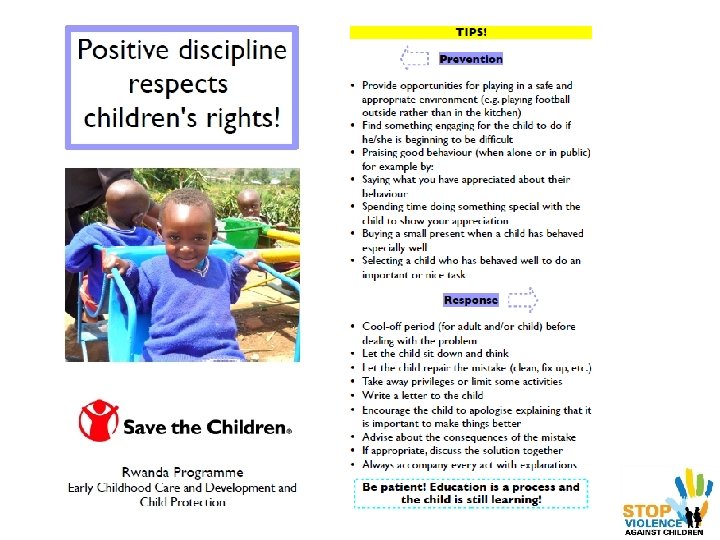
Overview of the presentation • Brief introduction on ECCD • Linkages between ECCD and Child Protection • Save the Children Toolkit on Positive Discipline for parents, ECCD care-givers and primary school teachers

…what is ECCD? Early childhood care and development (ECCD) focuses on supporting young children’s development from prenatal through the transition from home or ECCD centre into the early primary grades (prenatal – 8 years of age) Definition by The Consultative Group on Early Childhood Care and Development (ECD Group)
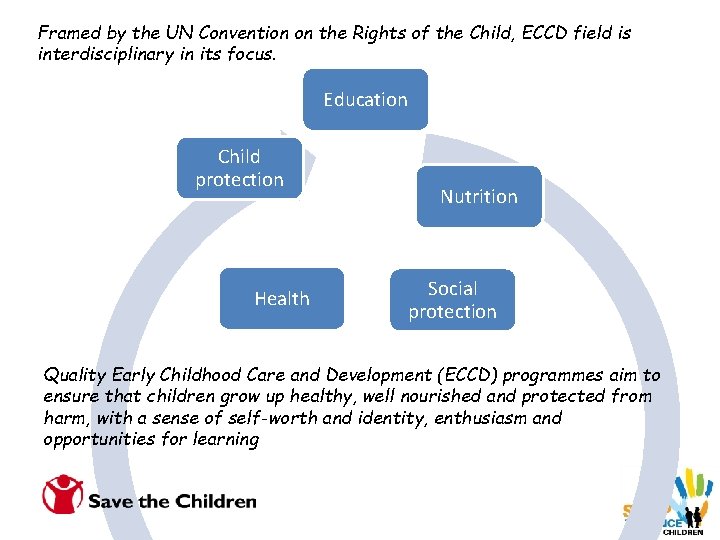
Framed by the UN Convention on the Rights of the Child, ECCD field is interdisciplinary in its focus. Education Child protection Health Nutrition Social protection Quality Early Childhood Care and Development (ECCD) programmes aim to ensure that children grow up healthy, well nourished and protected from harm, with a sense of self-worth and identity, enthusiasm and opportunities for learning
Linkages between ECCD and Child Protection Many child protection issues can be addressed early on through care offered in ECCD centres. - Children need a nurturing, caring and non abusive environment at home and centres as physical or psychological malpractices against children can lead to lifelong consequences. Baseline data -child protection lenses • Standard for provision very low (e. g. basic infrastructure, staff-pupil ratio, etc) • Lack of reliable records (e. g. dates of birth; birth registration, children with disabilities etc) with the exception of very few centers • Classroom management skills of care givers at an extremely low level. • Stakeholders’ understanding of ECCD very limited. • Parents Committees not existing or unaware of their roles and responsibilities • Lack of Parenting Education/Sensitization
Child Protection within an ECCD programme – how it works in practice: Prevention of violence and abuse– through sensitization and awareness to parents, care-givers and communities on child-rights and positive discipline as well as to children themselves (sessions run by local authorities, police officers or CPC/Nkundabana) ZERO TOLERANCE TO CORPORAL PUNISHMENT and STOP Discrimination and violence against children in any form -Prevention of neglect for those children who are left alone at home while parents go to work - Early detection of signs of abuse/neglect – through alerting CPC/Nkundabana - Birth registration; - through sensitization and advocacy with parents for those children who have not yet been registered - Tackle discrimination through inclusion of children with special needs or children from marginalized communities - Prevention of Child Labour – through the promotion of education and support during the transition period
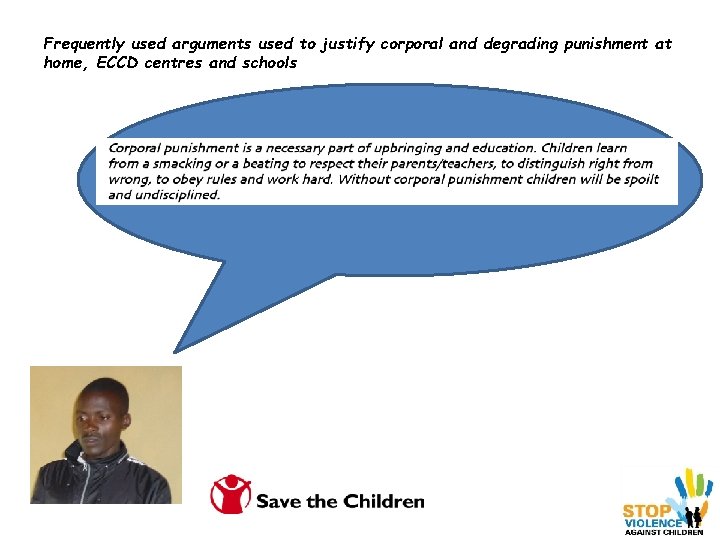
Frequently used arguments used to justify corporal and degrading punishment at home, ECCD centres and schools
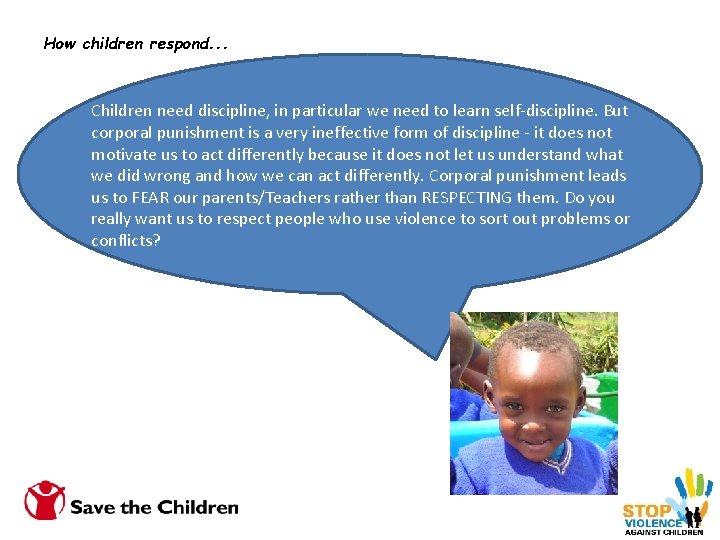
How children respond. . . Children need discipline, in particular we need to learn self-discipline. But corporal punishment is a very ineffective form of discipline - it does not motivate us to act differently because it does not let us understand what we did wrong and how we can act differently. Corporal punishment leads us to FEAR our parents/Teachers rather than RESPECTING them. Do you really want us to respect people who use violence to sort out problems or conflicts?
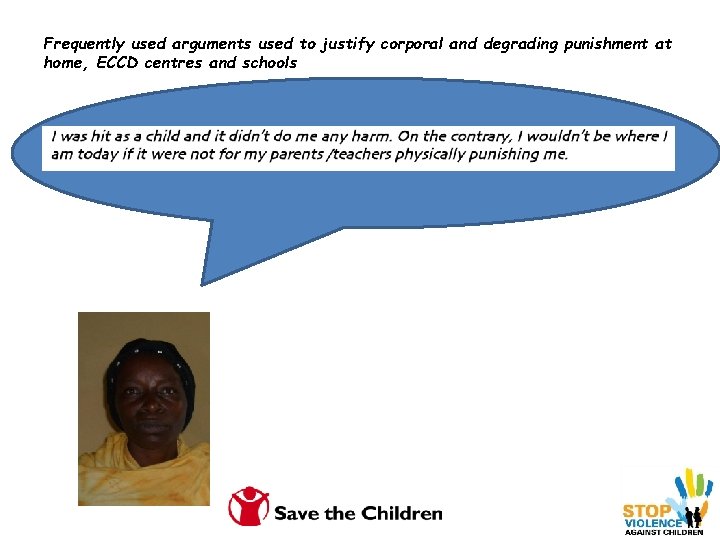
Frequently used arguments used to justify corporal and degrading punishment at home, ECCD centres and schools
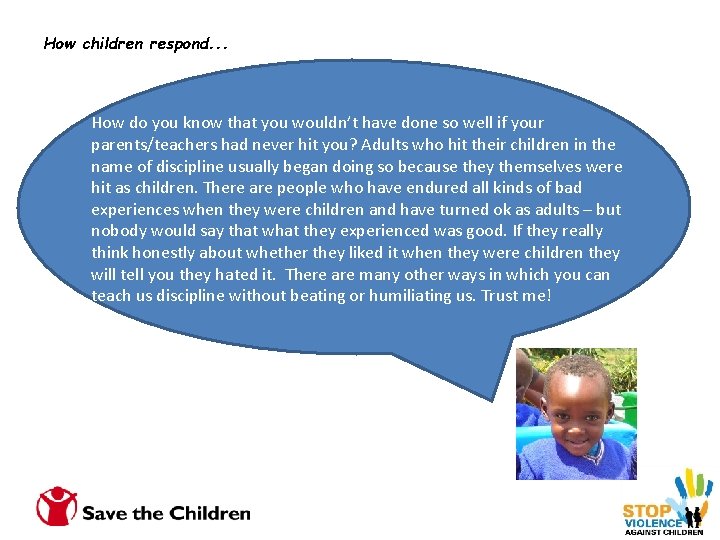
How children respond. . . How do you know that you wouldn’t have done so well if your parents/teachers had never hit you? Adults who hit their children in the name of discipline usually began doing so because they themselves were hit as children. There are people who have endured all kinds of bad experiences when they were children and have turned ok as adults – but nobody would say that what they experienced was good. If they really think honestly about whether they liked it when they were children they will tell you they hated it. There are many other ways in which you can teach us discipline without beating or humiliating us. Trust me!

- Slides: 13