
How does yoga help people Perceptions and experiences
- Slides: 9
How does yoga help people? Perceptions and experiences from a survey of UK yoga practitioners Dr Anna Cheshire & Dr Tina Cartwright School of Social Sciences, University of Westminster, UK Symposium on Yoga Research, October 2020 The authors have no conflicting interests to declare
Background – In 2016 a national survey of yoga practitioners in the UK was conducted by Cartwright et al. – Aim of the survey was to understand more about yoga practice in the UK: – characteristics of people who practise yoga; reasons for initiating and maintaining practice; perceived impact on health and well-being – 2434 yoga practitioners completed the survey – 87% were women, 91% white and 71% degree educated; mean age was 48. 7 years Reference: Cartwright T, Mason H, Porter A, et al. Yoga practice in the UK: a crosssectional survey of motivation, health benefits and behaviours. BMJ Open 2020; 10: e 031848. doi: 10. 1136/bmjopen-2019 -031848
Background & study aim – The survey contained 4 open ended questions asking about: – Impacts of yoga (general) – Use of yoga for health conditions (practices & impacts) – Is there anything else you would like to add about your yoga practice? – Final question: any further comments? – Aim: To understand more about the processes by which yoga impacts on healthy functioning, though UK practitioners’ experiences and perceptions of their practice
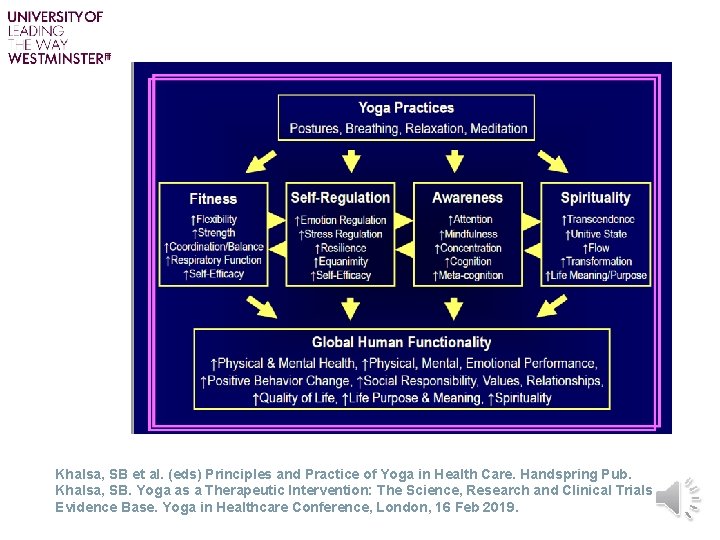
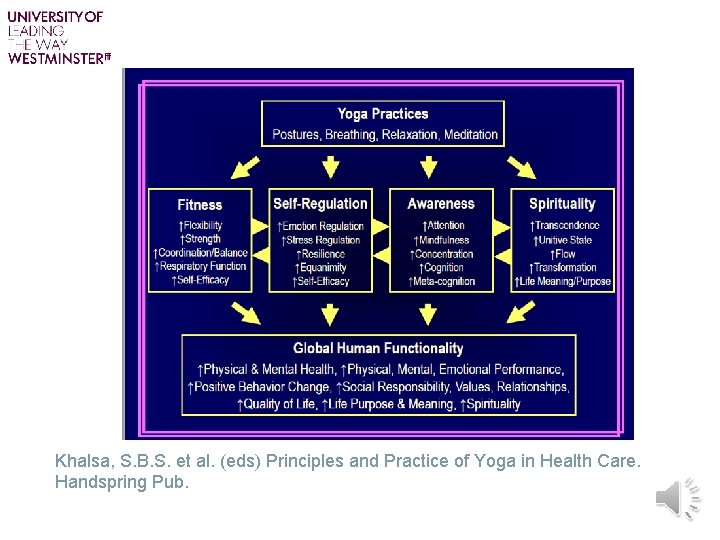
– Khalsa, SB et al. (eds) Principles and Practice of Yoga in Health Care. Handspring Pub. Khalsa, SB. Yoga as a Therapeutic Intervention: The Science, Research and Clinical Trials Evidence Base. Yoga in Healthcare Conference, London, 16 Feb 2019.
Yoga practices – Yoga practices described by the Khalsa framework (posture, breathing, meditation and relaxation) were commonly cited – Other practices from the 8 limbs of yoga were also often reported (e. g. philosophy, chanting) “Meditation, pranayama, spirituality & yoga philosophy for deeper understanding, acceptance & letting go of emotional suffering. ” – ‘Non-specific factors’ were also important, such as connection with teacher, commitment to yoga path, social elements of class
– Khalsa, S. B. S. et al. (eds) Principles and Practice of Yoga in Health Care. Handspring Pub.
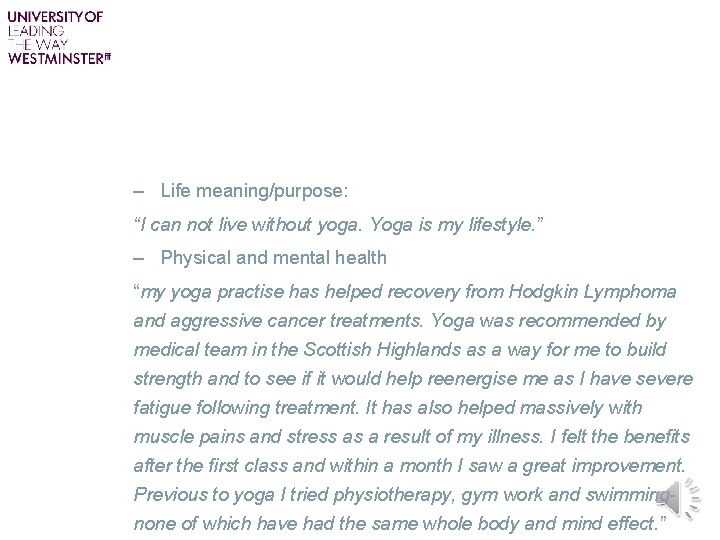
– Life meaning/purpose: “I can not live without yoga. Yoga is my lifestyle. ” – Physical and mental health “my yoga practise has helped recovery from Hodgkin Lymphoma and aggressive cancer treatments. Yoga was recommended by medical team in the Scottish Highlands as a way for me to build strength and to see if it would help reenergise me as I have severe fatigue following treatment. It has also helped massively with muscle pains and stress as a result of my illness. I felt the benefits after the first class and within a month I saw a great improvement. Previous to yoga I tried physiotherapy, gym work and swimmingnone of which have had the same whole body and mind effect. ”
Conclusions – The Khalsa model provides a useful framework through which to understand a broad range of UK practitioners’ experiences of yoga – We make recommendations for changes/additional inclusions to the model to reflect the full range of our participants’ experiences
Contact details Dr Anna Cheshire University of Westminster 115 New Cavendish Street London W 1 W 6 UW Tel: 0208 7911 5000 x 64834 Email: a. cheshire@wmin. ac. uk Twitter: @annacheshire 1